The "Invisible" Workforce: 5 Surprising Management Secrets from Big Cat Rescue
Most non-profits are dying by a thousand volunteer-inflicted cuts. It’s a tragic irony: the very human capital intended to fuel the mission often becomes a source of operational friction, requiring more oversight than the value it generates. In the struggle to scale, leadership frequently falls into a "burnout cycle," where managing unpaid help feels like a secondary, draining job rather than a strategic advantage.
Big Cat Rescue (BCR) provides the masterclass in breaking this cycle through human capital optimization. By 2014, their operational model reached a level of cultural scalability that allowed a volunteer and intern force to provide the equivalent of 37 full-time staff members in a single year.
This isn't merely a feel-good story about animal rescue; it is a blueprint for operational leverage. BCR’s ability to influence federal legislation and rescue hundreds of animals is the direct result of a counter-intuitive approach to people management. They prove that extraordinary impact isn’t just about the mission—it’s about professionalizing "free" labor until it becomes the organization's primary engine.
2. The 37-Person "Invisible" Team: Flipping the Script on Labor
In the traditional non-profit model, volunteers are treated as "extra help"—a peripheral luxury. BCR inverted this logic, treating their volunteer force as the core infrastructure. In 2014, the sanctuary’s manpower metrics revealed the staggering potential of a professionalized volunteer corps:
Volunteers: 89 individuals contributing 40,547 hours.
Interns: 54 individuals contributing 32,400 hours.
Volunteer Committee: 4,793 hours.
By synthesizing this data, BCR achieved a total equivalent workforce of 52 full-time staff members while maintaining only a small core of paid employees. This wasn't accidental; it was the result of viewing volunteers not as hobbyists, but as high-performance assets.
77,740 hours: The equivalent of a 37-person corporate department, built entirely on the back of unpaid, yet highly professionalized, labor. It is a testament to the fact that when you stop treating volunteers as "help" and start treating them as staff, the invisible workforce becomes your greatest competitive advantage.
3. Management by "No": The Power of Radical Focus
For a mission-driven leader, "No" is the most difficult word in the vocabulary. Sanctuaries are constantly bombarded by the emotional pull of the "Immediate Need"—the one cat that needs saving today. However, BCR’s leadership philosophy asserts that "Management by No" is the only way to protect the organization’s primary goals.
This requires a shift from "Immediate Need" to "Solving the Bigger Problem." While the former provides the temporary dopamine hit of a rescue, the latter involves the grueling work of changing federal laws to ensure thousands of cats are never abused in the first place. Distractions are defined as any activity that provides short-term relief at the expense of systemic change. By starting with the end in mind, BCR ensures that their limited resources are never sacrificed on the altar of "mission creep."
4. The "No-Exception" Culture: Rules as the Foundation of Trust
A successful culture isn't built on total inclusivity; it is built on radical discipline. BCR’s "No-Exception" management style dictates that rules must be written down, agreed upon via "Buy-In" before participation, and enforced without deviation.
This rigidity is actually a strategic mechanism for safety—both physical and digital. Internally, BCR "carefully chooses participants" rather than accepting every willing hand, ensuring that only those who align with the culture remain. Externally, this disciplined internal culture is the prerequisite for their digital community. Because they have a "No-Exception" standard for conduct, they can confidently "Ignore the Trolls" and "Not Tolerate Trolls" on social media. This internal discipline creates a "Safe Place" for their global community, where the rules of engagement are as clear as the rules of the sanctuary floor.
5. The 80/20 Rule of Content: Managing Public and Internal Perception
To maintain its status as a social media behemoth, BCR utilizes a sophisticated 80/20 rule for content distribution. They recognize that human attention is the currency of the modern non-profit, and it must be managed with psychological precision:
80% Fluff: Engaging, lighthearted content—cat photos, "purr-sonal" stories, and "daily struggles."
20% Important: Hard-hitting calls to action, legislative advocacy, and the brutal realities of cat abuse.
This strategy is as much about managing volunteers as it is about donors. Leaders must provide the "fluff"—the joy of being near these animals and the personal connection—to keep volunteers engaged enough to endure the "20%" of important, back-breaking labor and advocacy. The fluff is the hook that ensures the audience is present when it’s time to deliver the content that actually moves the needle on conservation.
6. Killing "Founder's Syndrome": Planning for Your Own Replacement
The ultimate test of a non-profit strategist is whether the organization can survive the founder’s departure. "Founder's Syndrome" is a terminal illness for many organizations where the mission is tied to a person rather than a process. BCR combats this by making the "Next Gen" hand-off a central pillar of their strategy.
Leadership here is a living document, requiring constant revision and a dual-track planning cycle:
A 25-Year Plan paired with specific annual goals to ensure long-term sustainability.
A 3-Year Plan paired with monthly goals to maintain operational agility.
By cultivating leaders specifically to replace them, the founders ensure that the sanctuary’s impact isn't a flash in the pan, but a permanent fixture in the conservation landscape.
7. Conclusion: Vulnerability as a Strategic Asset
Effective management is ultimately an exercise in trust-building. BCR operates on the principle that leadership must be "Open, Honest, and Vulnerable." By "Showing Daily Struggles," a leader isn't displaying weakness; they are employing an unconventional strategy to "Engage Fans To Join You." People do not support faceless institutions; they support people who are transparent about the difficulty of the mission.
The results of this disciplined, vulnerable approach are undeniable. Since 1992, BCR has rescued over 250 wildcats and 800 domestic cats. By their 15th year, they were disciplined enough to begin setting aside surplus funds, leading to a recent track record of donating $100,000 annually to global conservation efforts.
Impact of this scale is only possible when you stop managing for the day and start managing for the decade. If you were tasked with replacing yourself today, would your organization’s culture be strong enough to thrive without you?
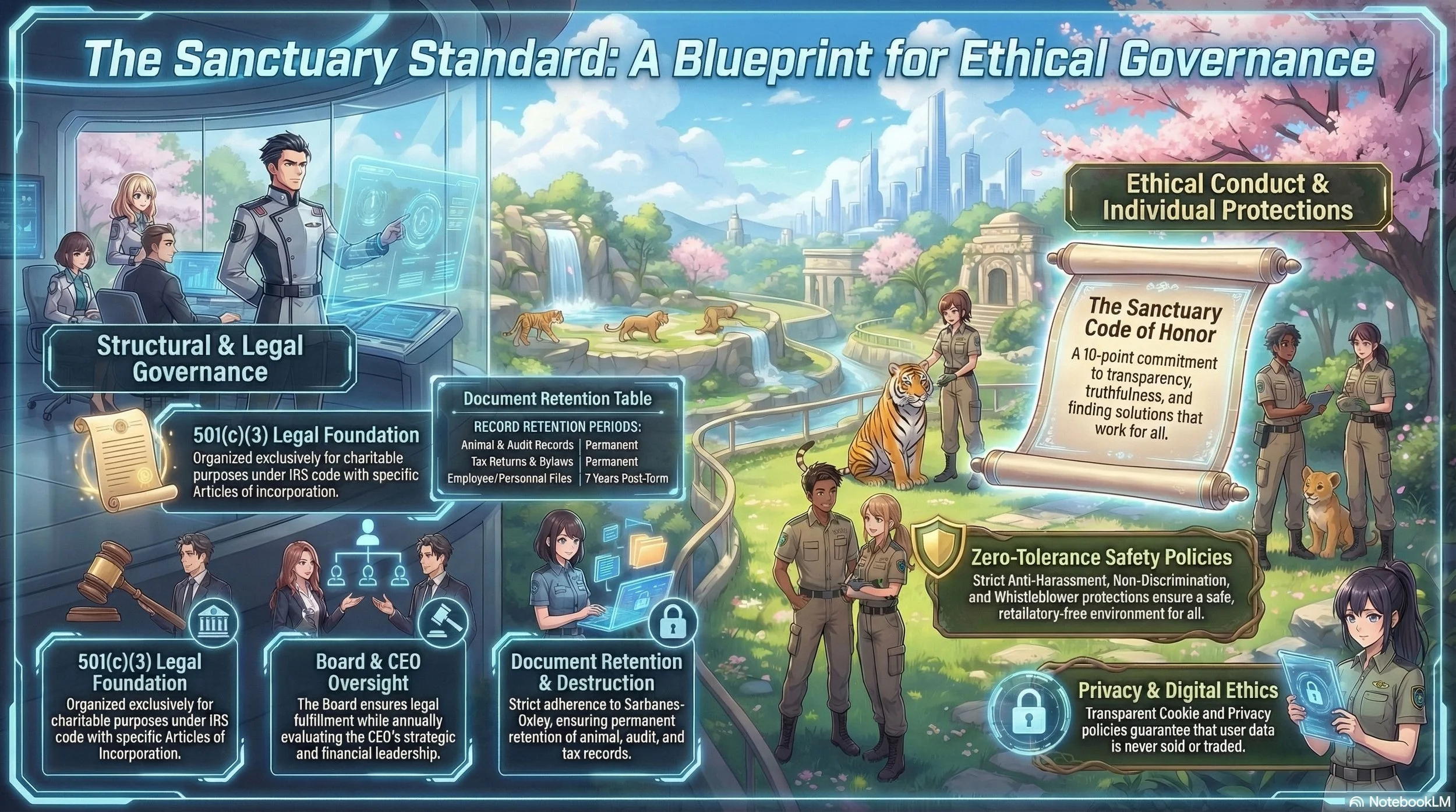
The provided documents outline the organizational structure and operational standards for Big Cat Rescue, a non-profit wildlife sanctuary dedicated to the welfare of exotic cats. Detailed governance policies establish rules for board conduct, executive evaluations, and strict legal compliance regarding financial transparency and document retention. The sanctuary also maintains rigorous workplace ethics, including explicit mandates against discrimination, harassment, and retaliation toward whistleblowers. Digital privacy is managed through comprehensive cookie and data protection guidelines, ensuring that supporter information is never sold or traded. Additionally, the text clarifies the organization's mission-driven approach to public education, advocacy for animal rights legislation, and the strategic importance of being an accredited, transparent facility. Together, these sources form a framework for maintaining institutional integrity while pursuing conservation goals.
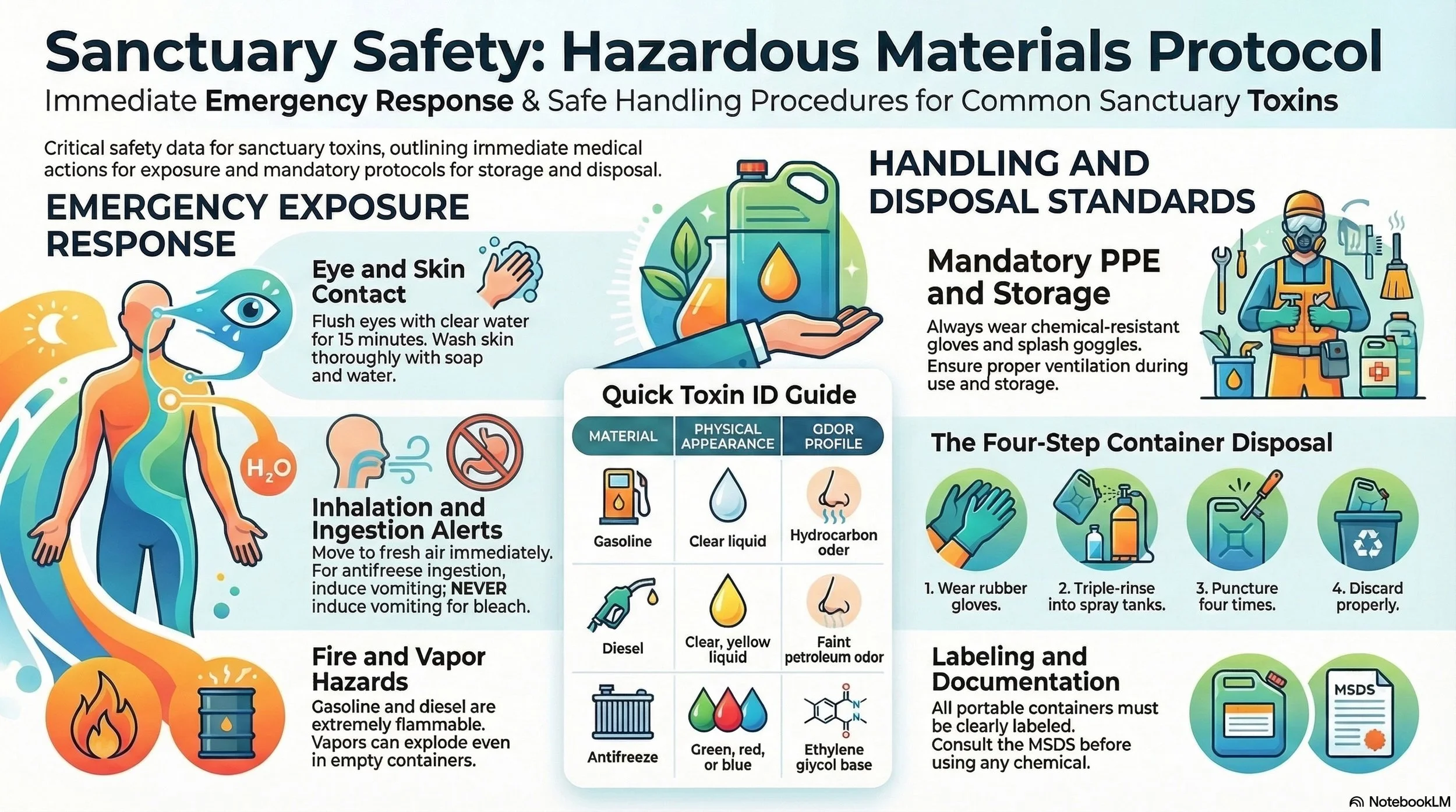
This document outlines the safety protocols and hazard communication strategies established by Big Cat Rescue for managing dangerous substances. It provides specific emergency procedures for accidental contact with various toxins, including automotive fluids, fuels, and industrial cleaners. Beyond immediate first aid, the text details a comprehensive workplace safety program that involves maintaining Material Safety Data Sheets and ensuring all chemical containers are correctly labeled. Detailed instructions are also provided regarding the legal disposal of hazardous waste and the mandatory safety training required for all staff and contractors. Ultimately, these guidelines serve as a structured framework to protect personnel and the environment from the risks associated with toxic materials.


These sources detail the quarantine and specialized care protocols used by Big Cat Rescue to protect both animals and staff from disease. The guidelines outline various reasons for isolation, such as medical recovery, new arrivals, or fragile immune systems, and describe the specific types of enclosures used for these cats. Significant emphasis is placed on rigorous sanitation procedures, including the use of dedicated tools, protective gear, and chemical foot baths to prevent cross-contamination. Workers must follow strict cleaning schedules and waste disposal methods, particularly for indoor hospital cages where animals may be highly agitated. The documents also provide a technical overview of disinfectants, explaining the safe application of bleach and other agents while warning against substances like phenol that are toxic to cats. Ultimately, the materials highlight the balance between maintaining high hygiene standards and ensuring the psychological well-being of the sanctuary's inhabitants.
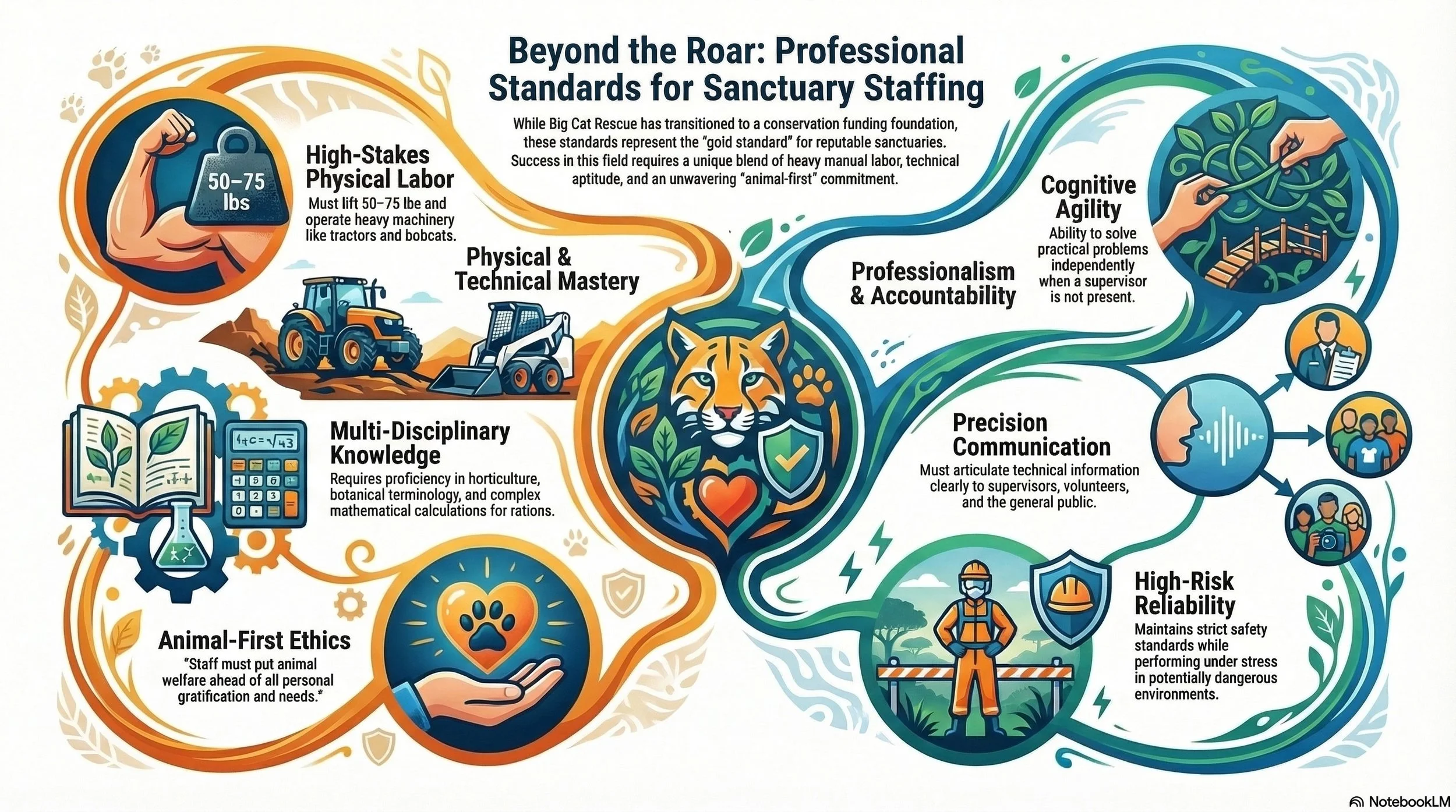
These documents outline the comprehensive requirements and professional standards necessary for individuals seeking employment at a wildlife sanctuary. While the specific organization, Big Cat Rescue, has transitioned into a conservation funding foundation, these guidelines serve as a universal benchmark for the industry. Success in these roles requires intense physical labor, such as operating heavy machinery and lifting significant weight, alongside specialized technical knowledge in horticulture and animal care. Candidates must demonstrate strong interpersonal skills, a disciplined work ethic, and the ability to maintain high safety standards under pressure. Above all, the materials emphasize that the welfare of the animals must always take precedence over personal needs. These sources provide a detailed blueprint of the diverse aptitudes—from mathematical literacy to emotional resilience—needed to manage a reputable animal refuge.

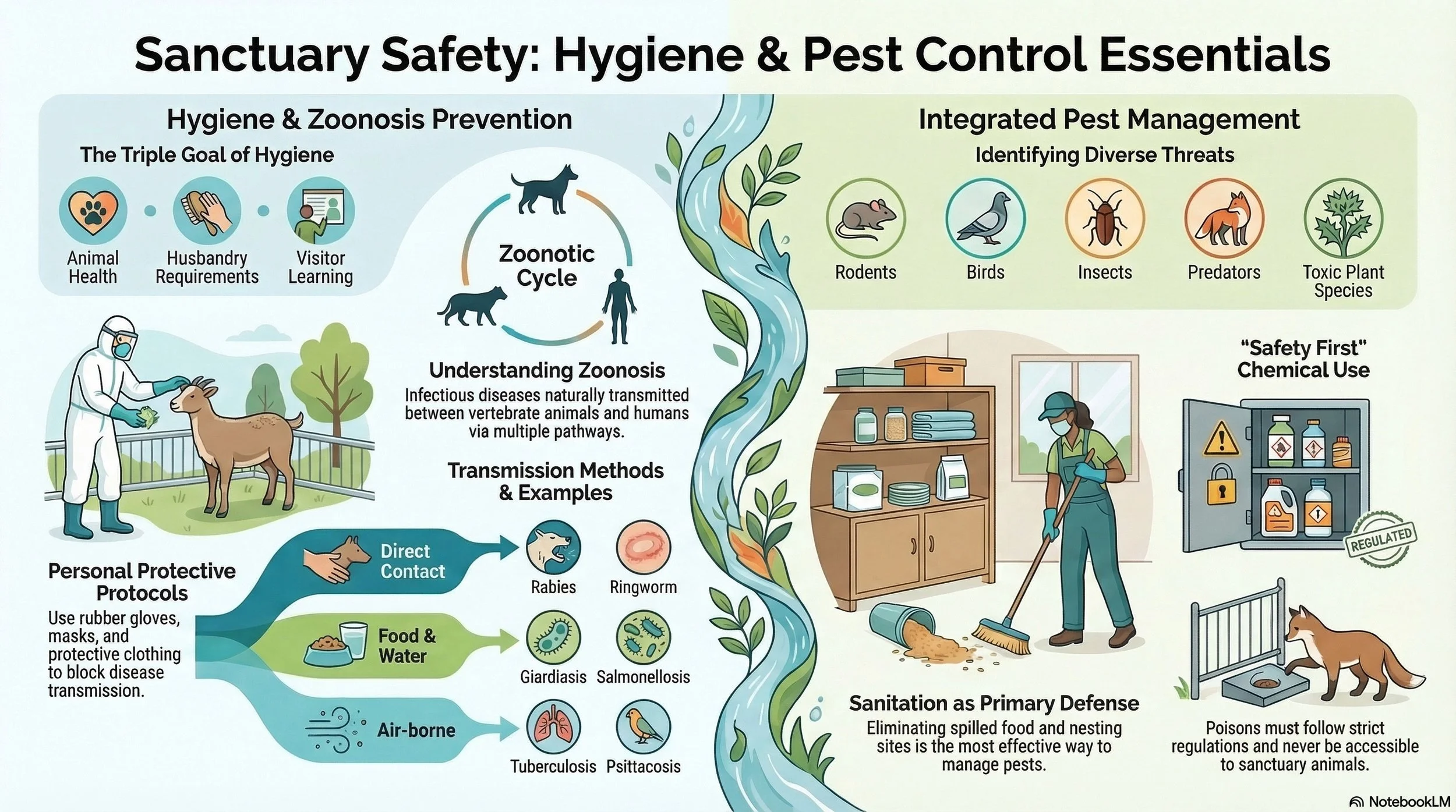
This resource outlines the strict hygiene and pest management protocols used at Big Cat Rescue to ensure the safety of animals, staff, and visitors. The text emphasizes that maintaining a sterile environment is vital for preventing the spread of zoonotic diseases, which are infections that can jump between species. Detailed instructions are provided for personal cleanliness, such as wearing protective gear and reporting minor injuries immediately. Additionally, the source identifies various biological threats like rodents, insects, and wild birds that can contaminate food supplies or act as disease vectors. To mitigate these risks, the organization employs a mix of physical barriers, sanitation routines, and chemical controls. Ultimately, these guidelines serve as a comprehensive manual for responsible sanctuary management and animal husbandry.
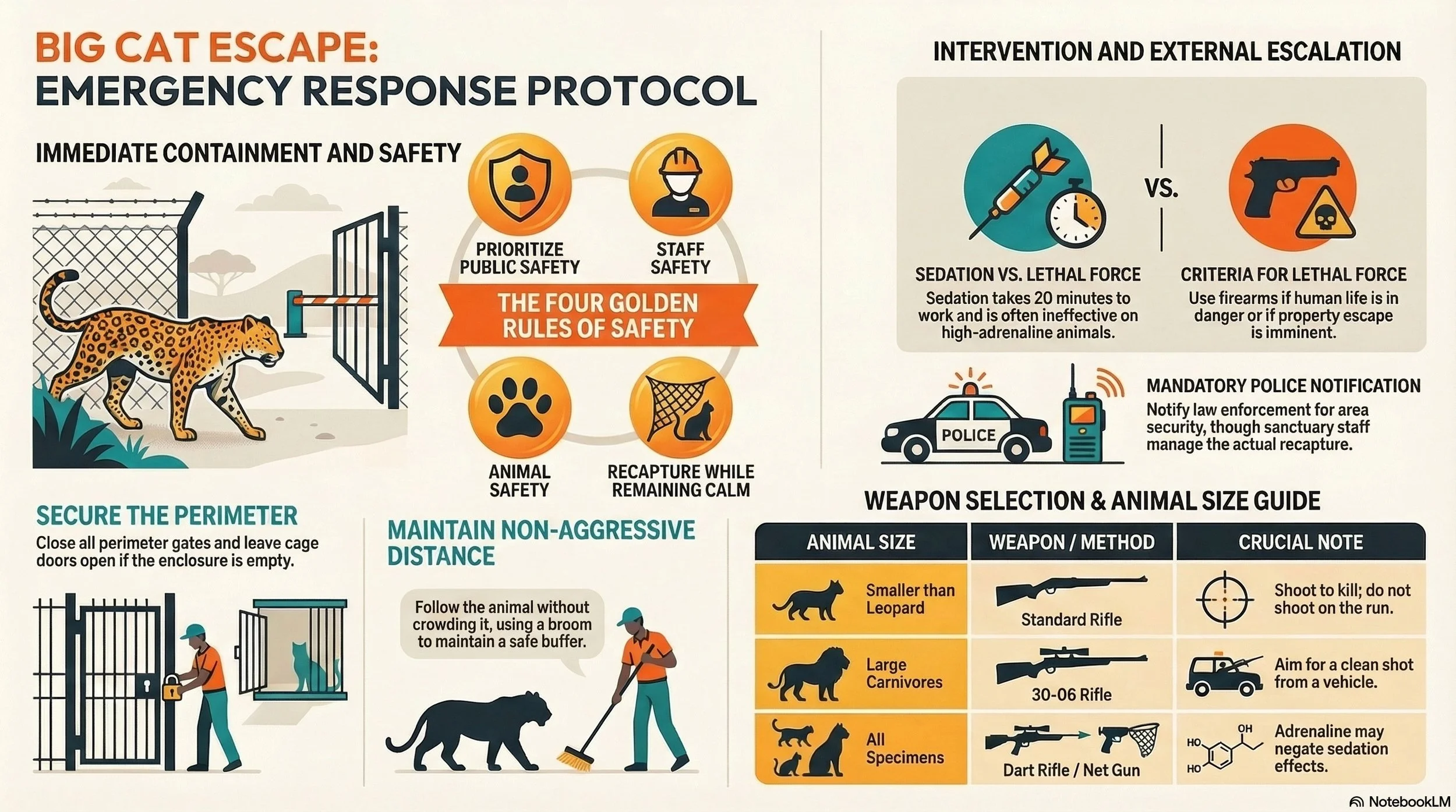
The video outlines the emergency safety procedures established by Big Cat Rescue to manage potential animal escapes. The primary objectives focus on protecting the public, staff, and the animals themselves while maintaining a calm environment to prevent escalation. Protocol instructions detail how to contain cats within perimeter fences using tools like brooms and when to utilize sedation or dart guns. However, the guidelines clarify that if a dangerous predator exits the property and cannot be safely tranquilized, lethal force is legally required to prevent human injury. Finally, the document specifies the necessity of notifying law enforcement to secure the surrounding area while trained sanctuary personnel lead the recovery efforts.
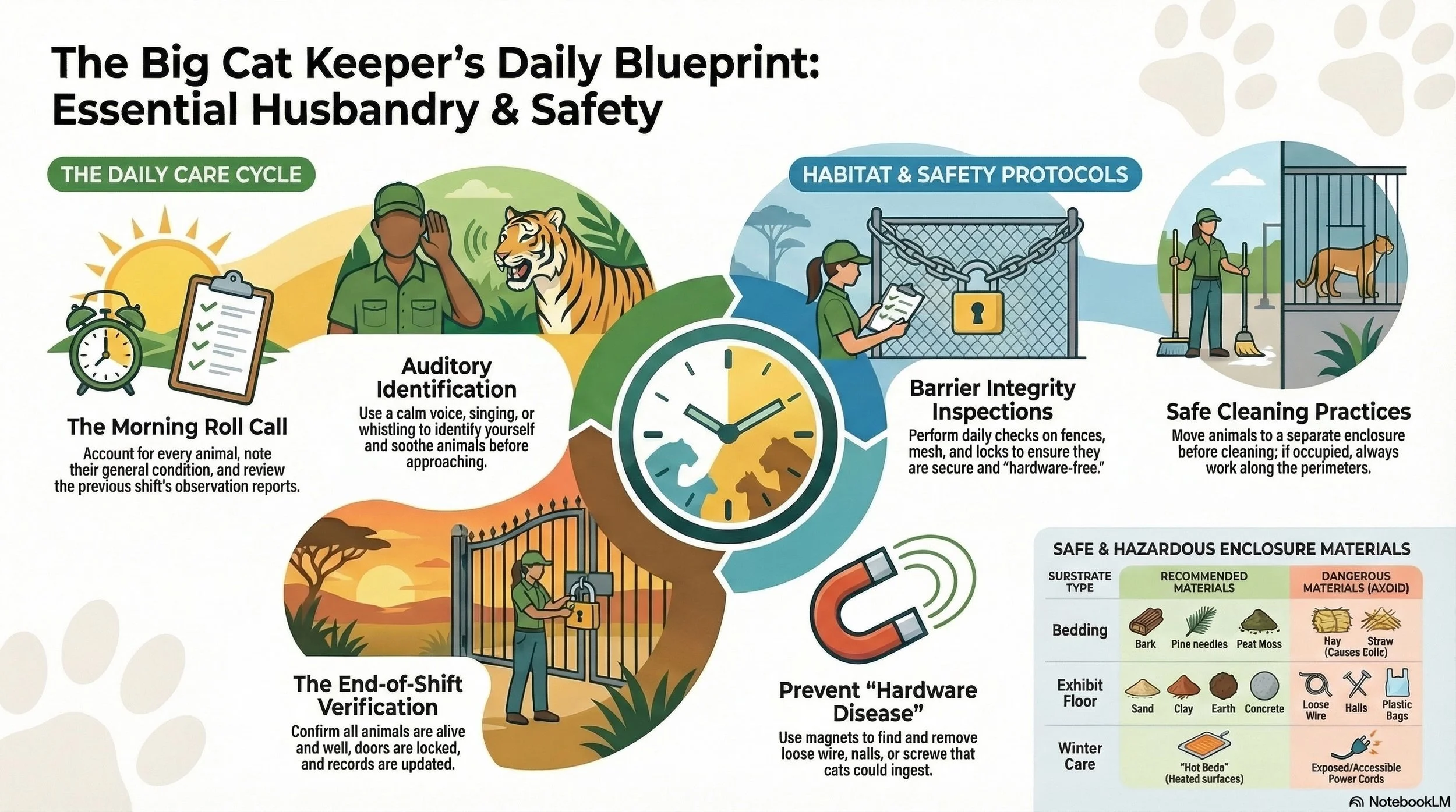
This guide outlines the essential husbandry protocols practiced at Big Cat Rescue to ensure the safety and health of both animals and staff. The text emphasizes that efficient daily routines, including thorough cleaning and scheduled feeding, are vital for minimizing animal stress and preventing accidents. Keepers are instructed to maintain high safety standards by inspecting barriers, removing hazardous foreign objects, and using specialized equipment correctly. Additionally, the manual highlights the importance of resource conservation and adapting care strategies to accommodate seasonal changes or individual animal temperaments. Ultimately, the documentation serves as a comprehensive operational framework for running a sanctuary with a focus on professional discipline and wildlife welfare.
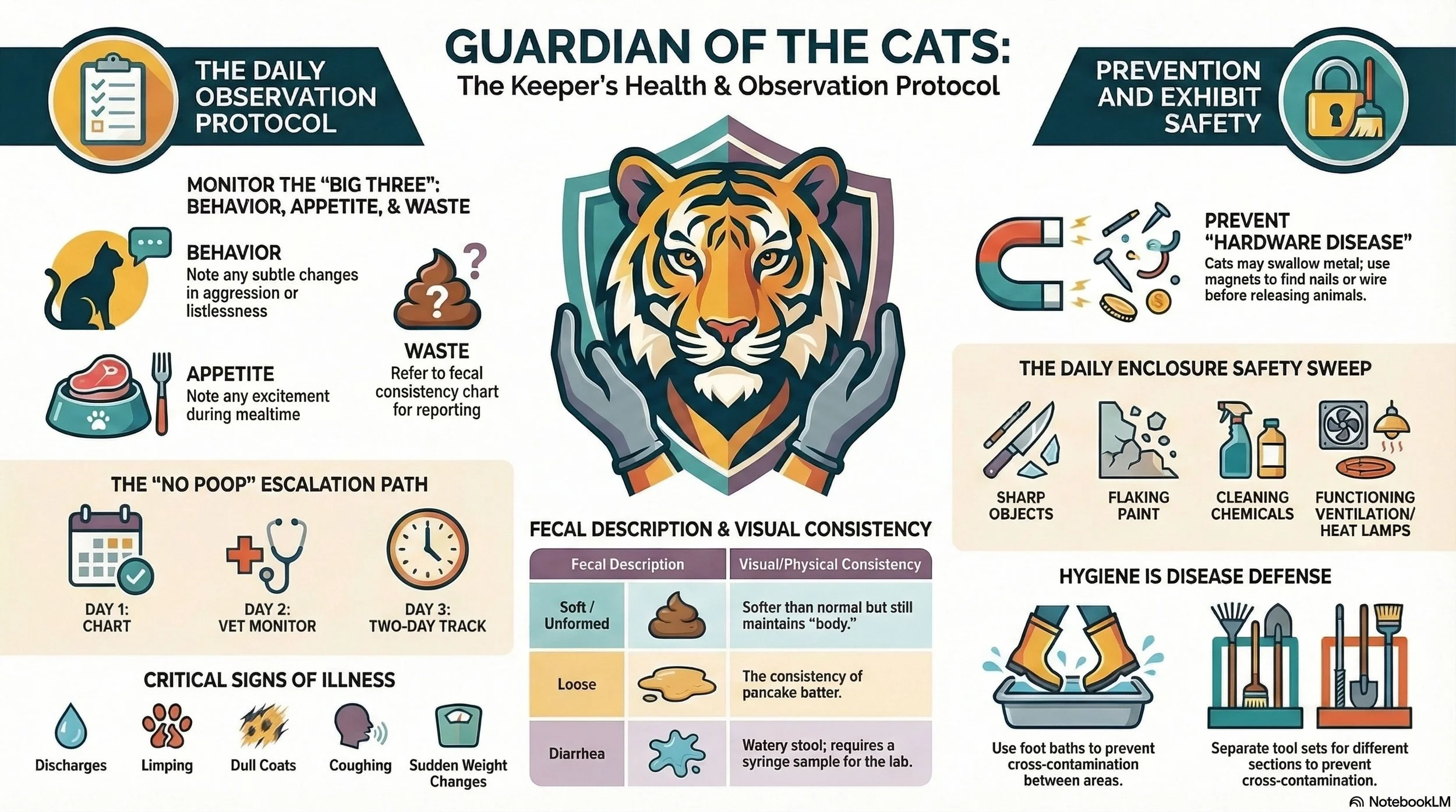
This text outlines the comprehensive animal health protocols and management strategies utilized by Big Cat Rescue to ensure the well-being of their captive exotic felines. It emphasizes that careful observation by keepers is the primary defense against illness, as wild cats instinctively mask symptoms of pain or disease. The documentation provides a detailed diagnostic checklist for monitoring changes in appetite, behavior, and waste production to facilitate early medical intervention. Furthermore, it covers essential sanctuary operations such as disease prevention, proper sanitation, and the logistical handling of medications or necropsies. By maintaining rigorous observation charts and specialized training, the facility aims to mitigate risks associated with the unique physiological and psychological needs of large predators.

This video outlines the comprehensive emergency preparedness protocols established by Big Cat Rescue to ensure the safety of both animals and the public. While the sanctuary relocated its final residents in 2023, the text serves as a best-practices guide for other facilities facing disasters like hurricanes, fires, and medical emergencies. It detail specific infrastructure strategies, such as reinforced "Cat-A-Tat" enclosures and solar-powered fencing, alongside stringent staff training for animal recapture and first aid. The organization maintains extensive on-site resources, including backup generators, specialized transport vehicles, and medical supplies to remain self-sufficient during a crisis. Ultimately, the plan emphasizes a clear chain of command and rigorous drills to mitigate risks associated with housing apex predators.
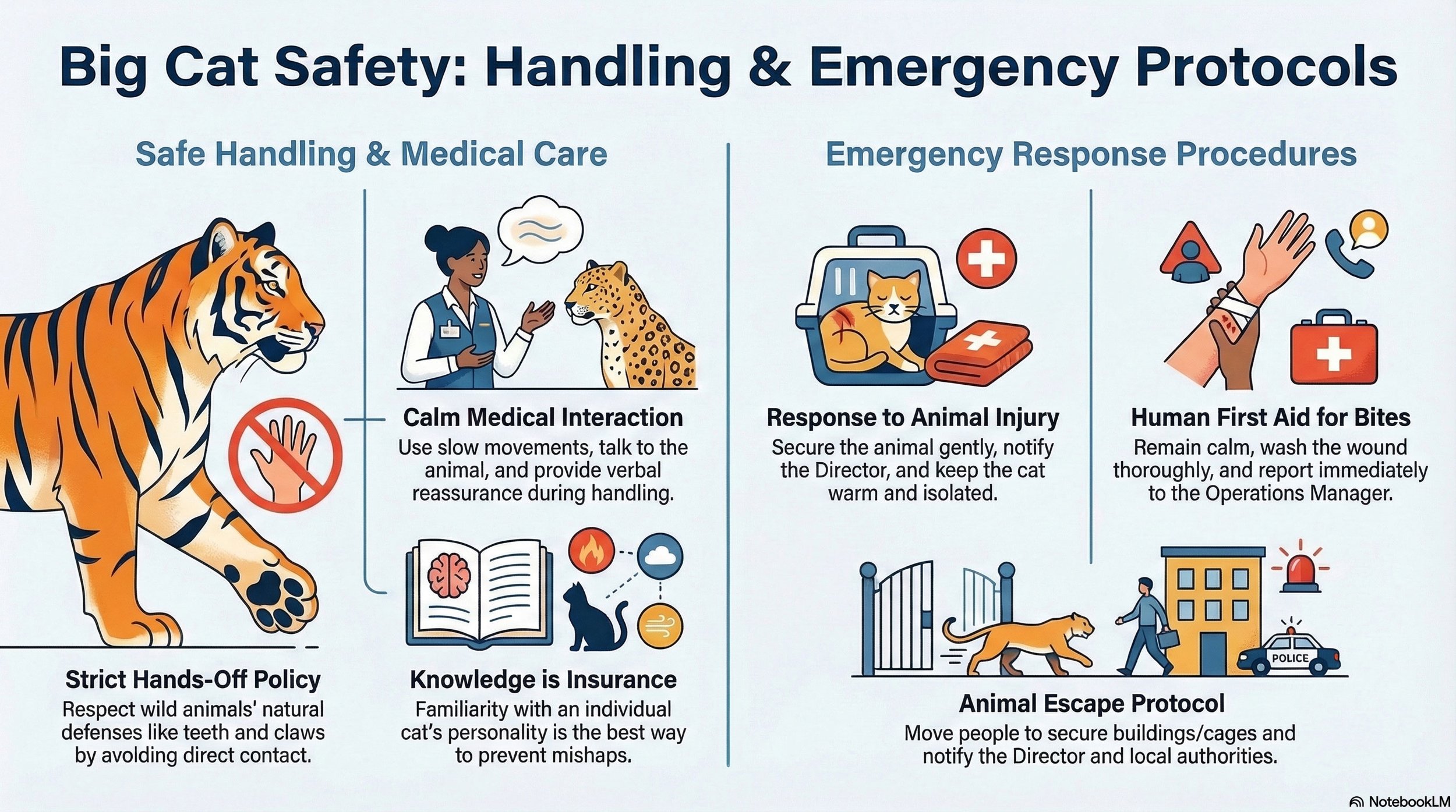
This document provides safety protocols and management guidelines for operating a wildlife sanctuary, specifically focusing on the welfare of large felines. The text emphasizes a hands-off approach to animal care, asserting that intimacy with an animal's unique personality is the best way to prevent physical injury. In the event of an emergency or escape, the guide outlines specific steps for securing the area and reporting the incident to authorities. Medical interactions are strictly limited to necessary health procedures conducted with patience and calm, deliberate movements. Furthermore, the source details first aid requirements for staff members who may experience a bite or scratch while on duty. Ultimately, the material serves as an educational framework for maintaining a secure environment for both captive predators and their human caretakers.
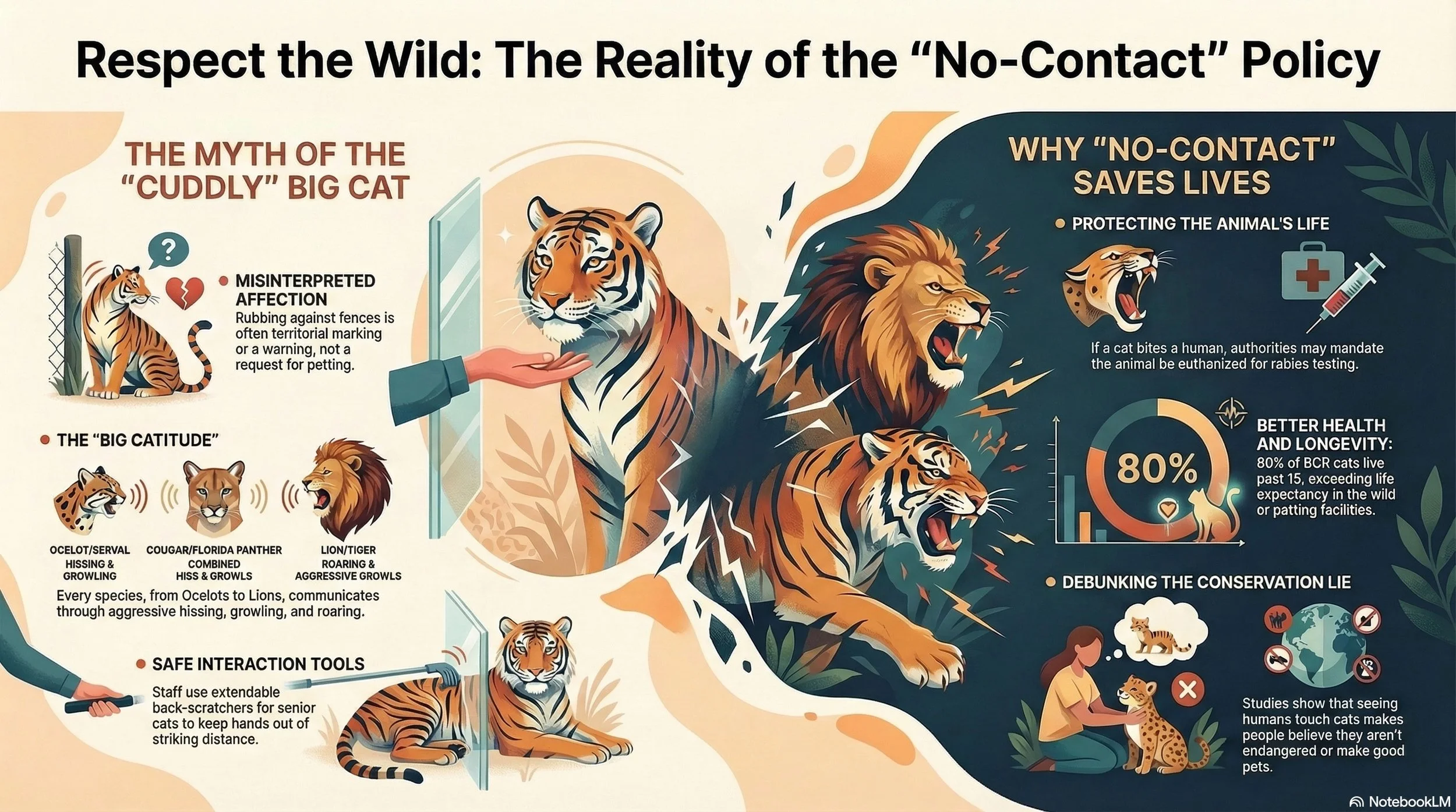
This source explores why Big Cat Rescue maintains a strict no-contact policy between humans and exotic felines. Written by Carole Baskin, the article argues that petting wild animals is a dangerous practice that promotes the exploitative exotic pet trade and spreads misinformation about conservation. While the facility uses long-reach tools to help elderly cats groom, they clarify that behaviors like rubbing against fences are signs of territorial marking rather than a desire for affection. The text systematically dismantles common justifications for physical interaction, labeling them as egotistical myths that prioritize human entertainment over animal welfare. Ultimately, the sanctuary emphasizes that respecting these solitary predators requires acknowledging their wild nature rather than treating them like domestic pets.
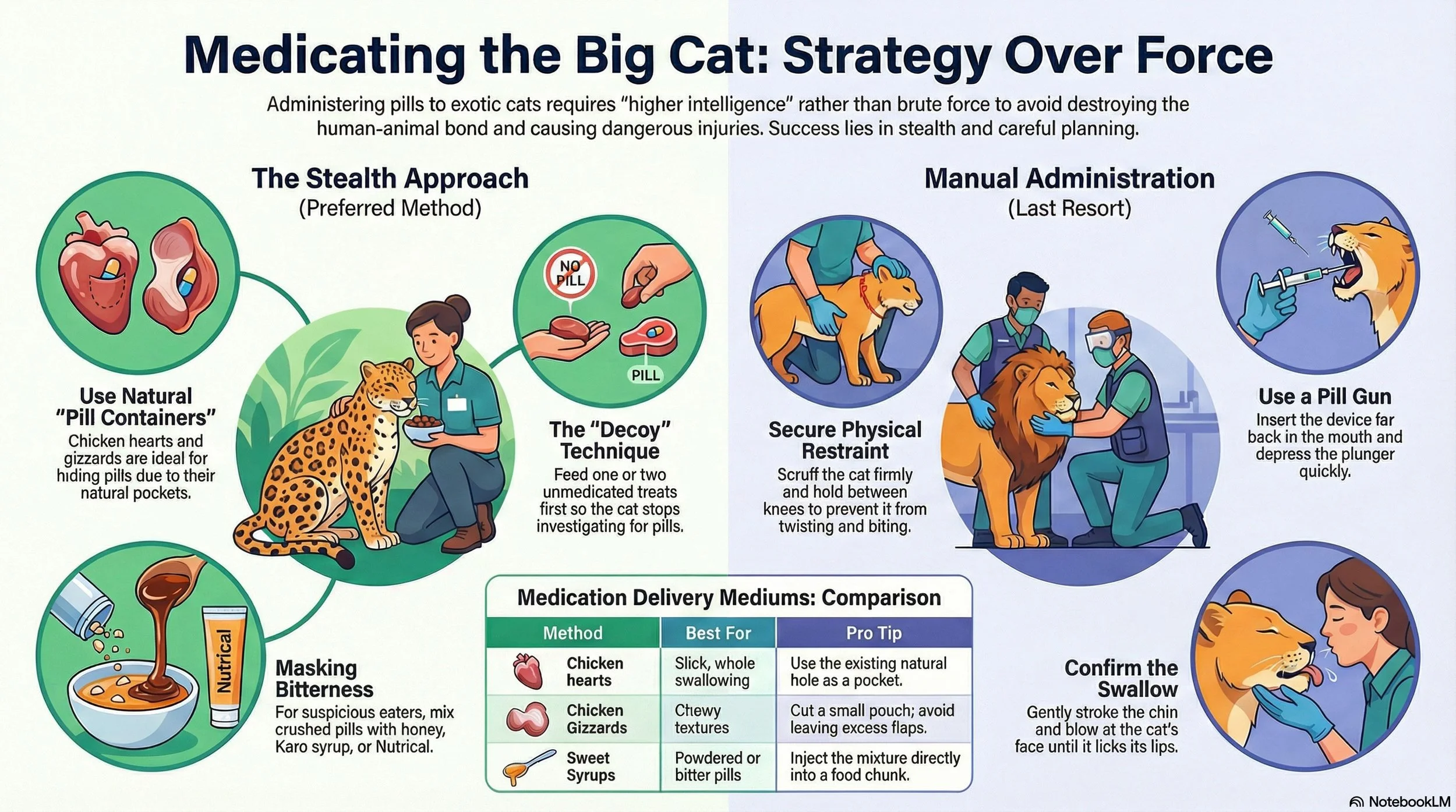
This source provides a guide on the challenges and techniques involved in administering medication to exotic cats within a sanctuary setting. Author Carole Baskin emphasizes using intelligence over force, noting that physically restraining these powerful animals can permanently damage the bond of trust between a keeper and a cat. To avoid trauma, the text recommends hiding pills in food like chicken hearts or gizzards, which allows the animal to ingest medicine without realizing it. If a cat is too suspicious to eat treats, the article suggests masking the taste with sweet syrups or using a pill gun as a last resort. Ultimately, the guide underscores that consistent dosing is vital for a cat's recovery, while warning that a negative experience during treatment can lead to long-term behavioral issues.
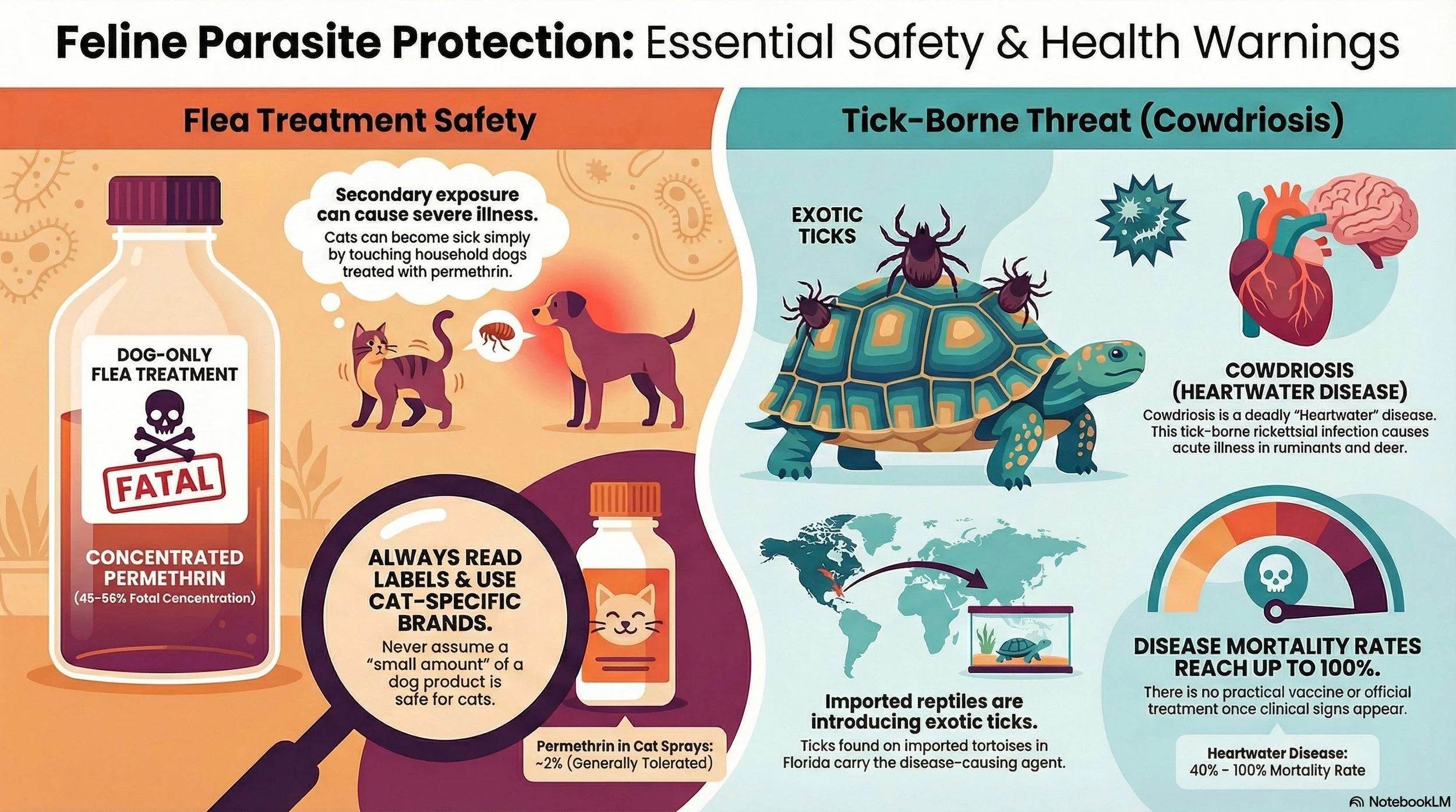
The provided text serves as a safety guide and ecological warning regarding the dangers parasites pose to domestic and wild animals. It highlights the critical risk of feline mortality when owners mistakenly apply flea treatments formulated specifically for dogs, emphasizing that even trace amounts of permethrin can be fatal to cats. Beyond household pets, the sources address the biosecurity threat of exotic ticks entering Florida via the reptile trade. These invasive pests carry heartwater disease, a condition that could devastate the American cattle and deer industries if it becomes established. Ultimately, the text advocates for vigilant label reading, stricter importation regulations, and continued veterinary research to prevent domestic poisoning and large-scale environmental outbreaks.
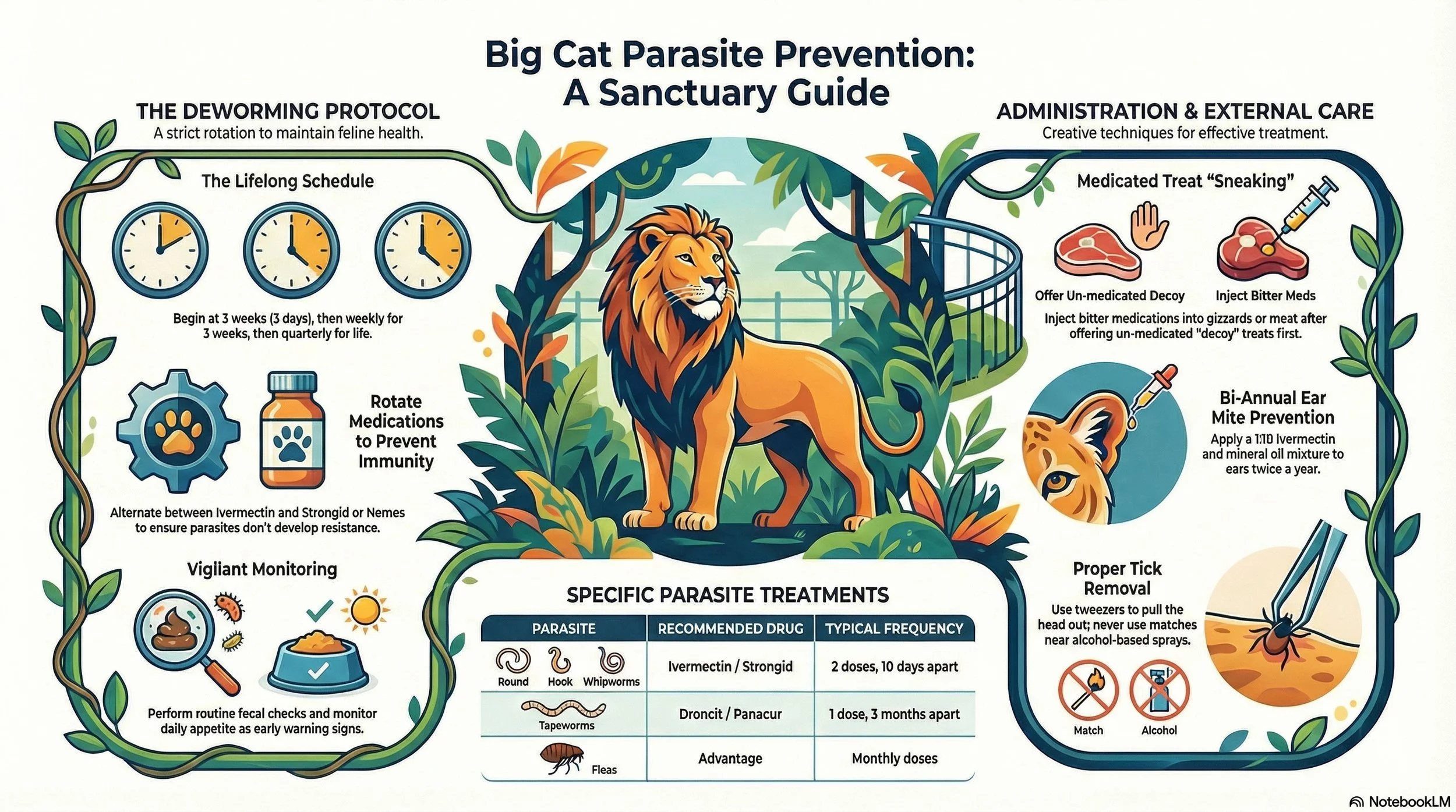
This resource details the comprehensive protocols used by a sanctuary to manage parasite prevention and treatment in exotic cats. The text emphasizes a rigorous schedule for administering dewormers to both kittens and adults, utilizing specific medications like Ivermectin and Strongid to combat internal pests. It also provides practical techniques for delivering medicine, such as hiding oral doses within meat treats or using physical restraint for ear treatments. Beyond internal worms, the guide addresses external threats like ear mites, fleas, and ticks, describing how to identify symptoms and apply preventative solutions. Ultimately, the author stresses the importance of vigilant monitoring to prevent severe health complications or death caused by heavy infestations.
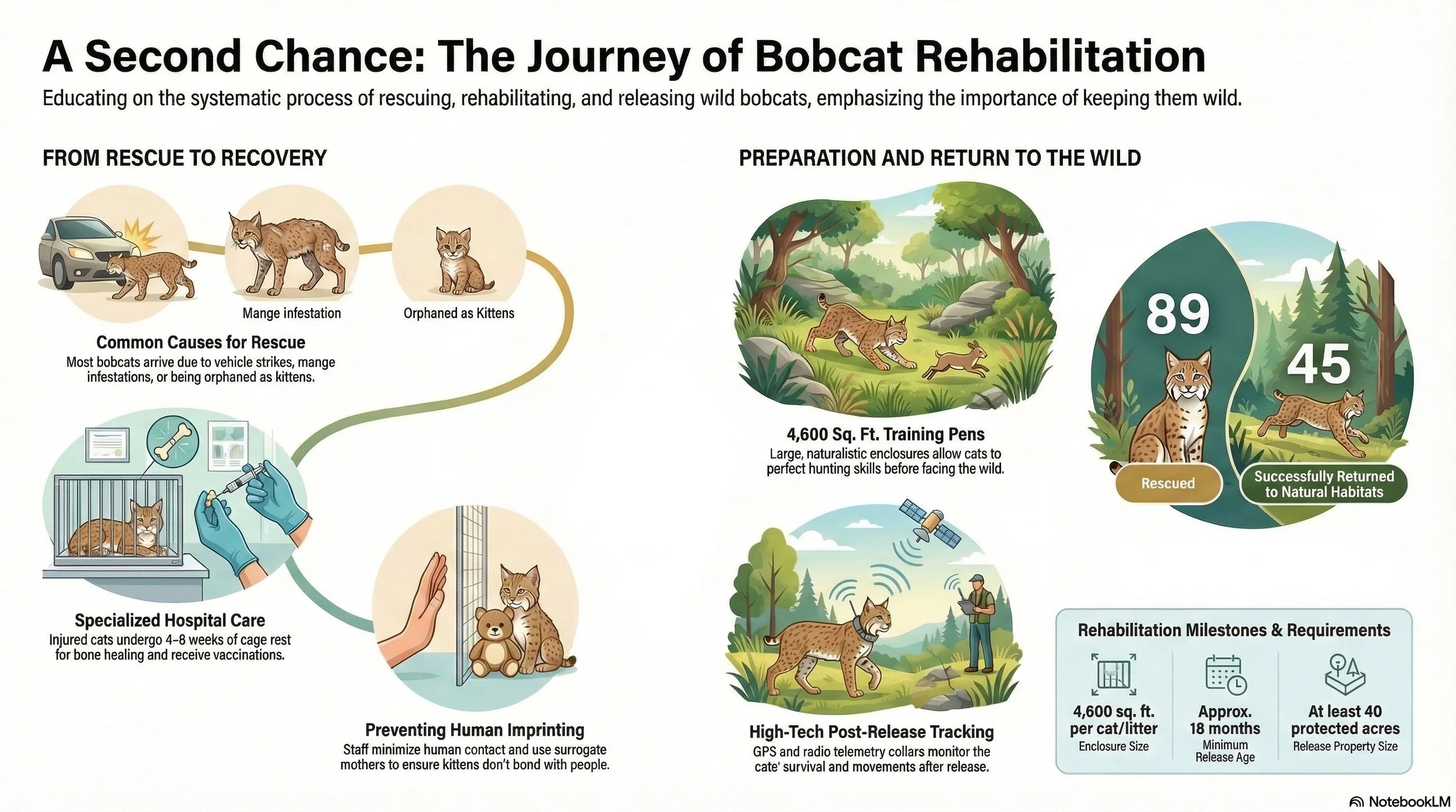
The provided sources detail the comprehensive rehabilitation and release program for wild bobcats managed by Big Cat Rescue. These records explain that the organization takes in animals suffering from car strikes, diseases, or maternal separation with the ultimate goal of returning them to their natural habitats. To ensure successful reintegration, rescuers use specialized medical equipment, naturalistic enclosures, and strict protocols to prevent human imprinting. The texts also highlight the use of GPS tracking collars to monitor the post-release survival and movements of the cats. Additionally, the materials serve to educate the public on how to coexist with these predators and emphasize the importance of protecting Florida’s native wildlife.
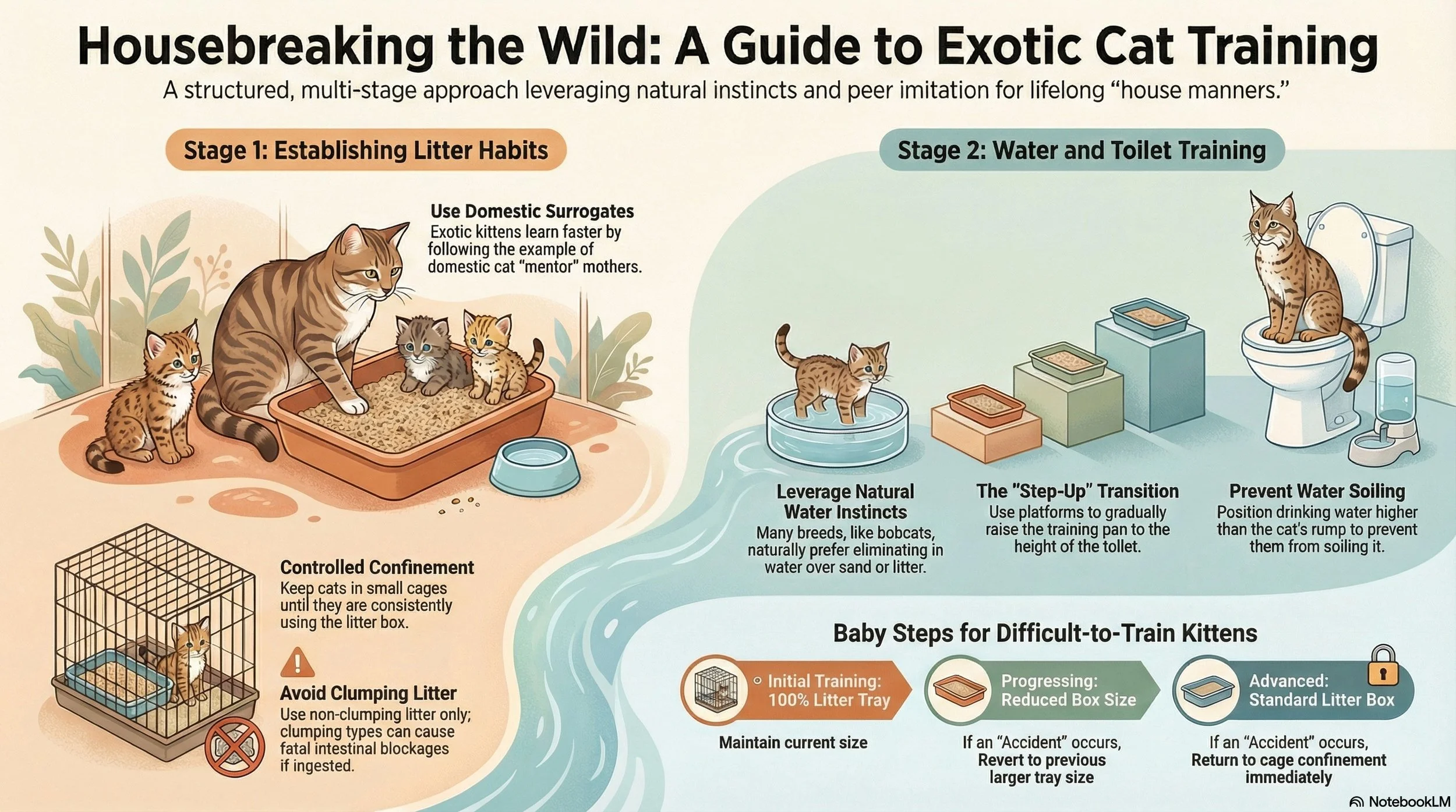
This guide from Big Cat Rescue provides detailed strategies for litter box training exotic cats by utilizing domestic surrogate mothers to model appropriate behavior. It suggests various methods for housebreaking different species, such as using water pans for bobcats or employing caged confinement to reinforce clean habits. Beyond practical training tips, the text highlights the significant behavioral challenges of keeping wild felines, including the unavoidable issue of territorial spraying. The author strongly advises against participating in the exotic pet trade, noting that many discarded animals end up in cruel hunting ranches. Ultimately, the resource emphasizes that while training is possible, these animals are better suited for specialized sanctuaries than private homes.
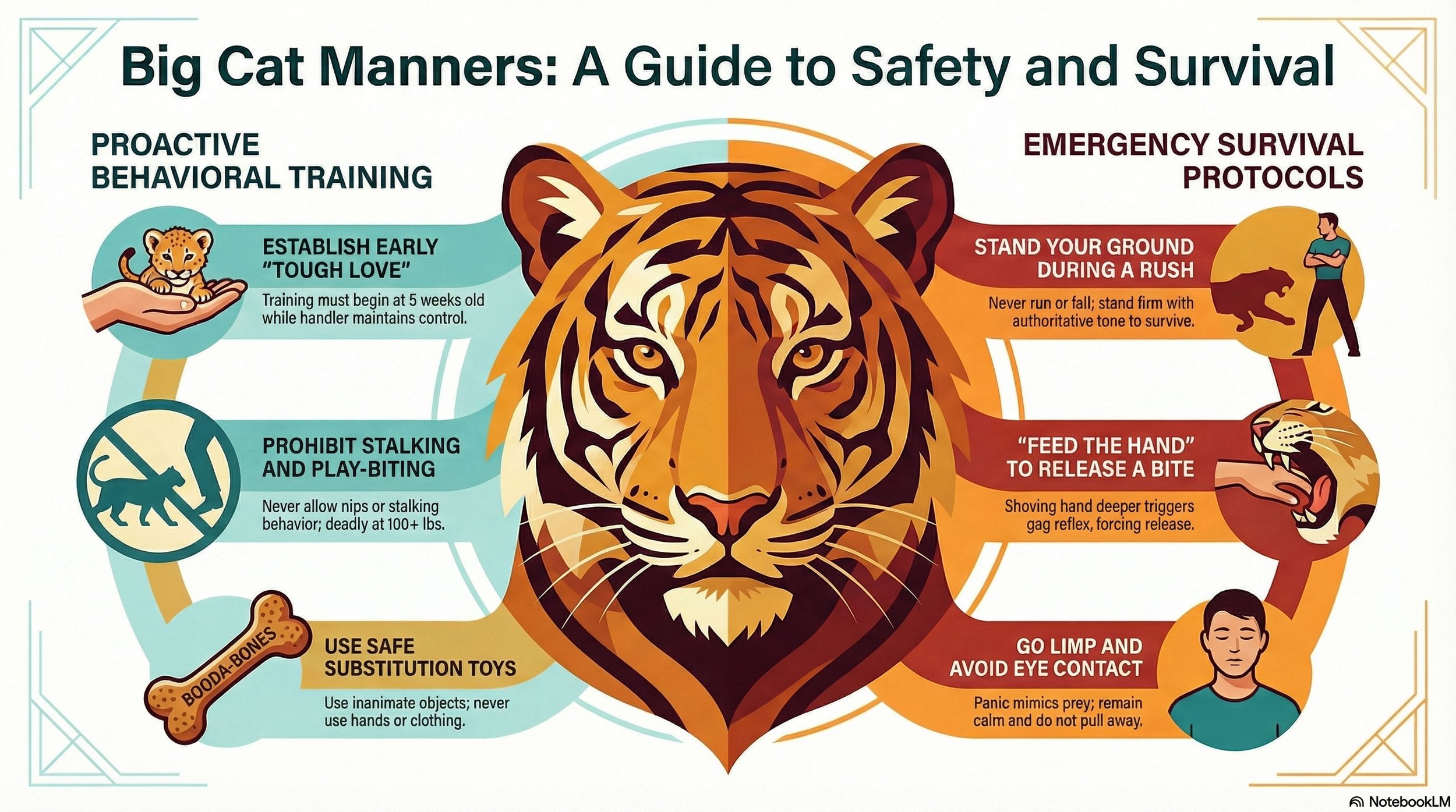
This text provides comprehensive guidance on the disciplined upbringing and behavioral management of captive big cats. It emphasizes that these animals can never be truly domesticated, requiring owners to establish firm boundaries and consistent rules from a very young age. The author outlines specific safety protocols for handling aggressive encounters, such as remaining calm during a "rush" and avoiding the instinct to pull away during a bite. Furthermore, the source offers practical advice on enrichment, recommending durable toys like hard plastic balls while warning against items that resemble human clothing. Ultimately, the guide advocates for a relationship built on respect and authority rather than physical force or dangerous attempts at taming.

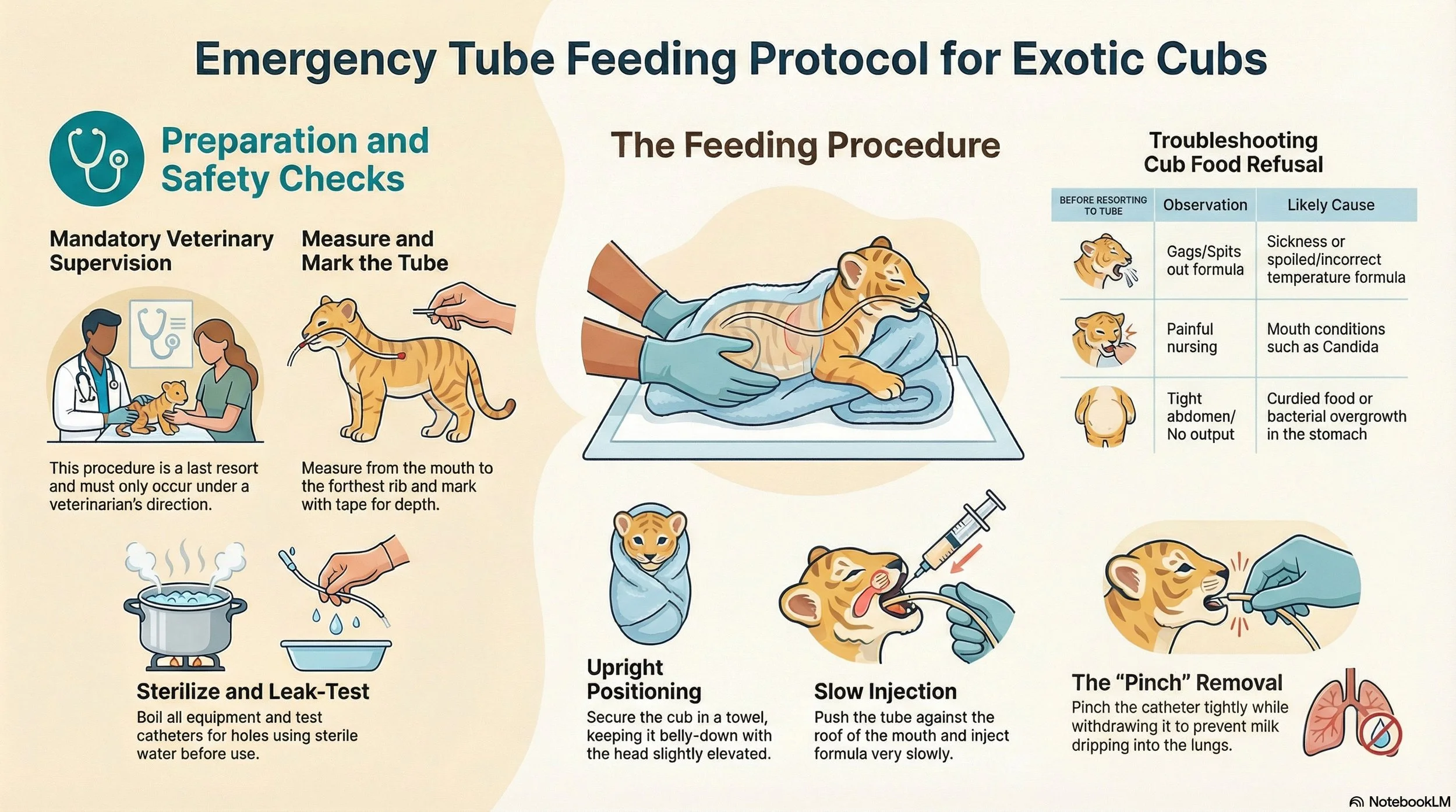
This guide from Big Cat Rescue provides detailed instructions on how to tube feed exotic kittens and cubs when they refuse to eat. The author emphasizes that this procedure is a dangerous last resort that should ideally be performed under professional veterinary supervision. Detailed safety protocols are outlined, including how to measure the catheter, avoid the lungs, and prevent the animal from biting the tube. The text also covers emergency measures for choking and explains how to remove spoiled food from a cub's stomach. Ultimately, the source serves as a technical resource for those caring for exotic cats in crisis while advocating for an end to the private pet trade.
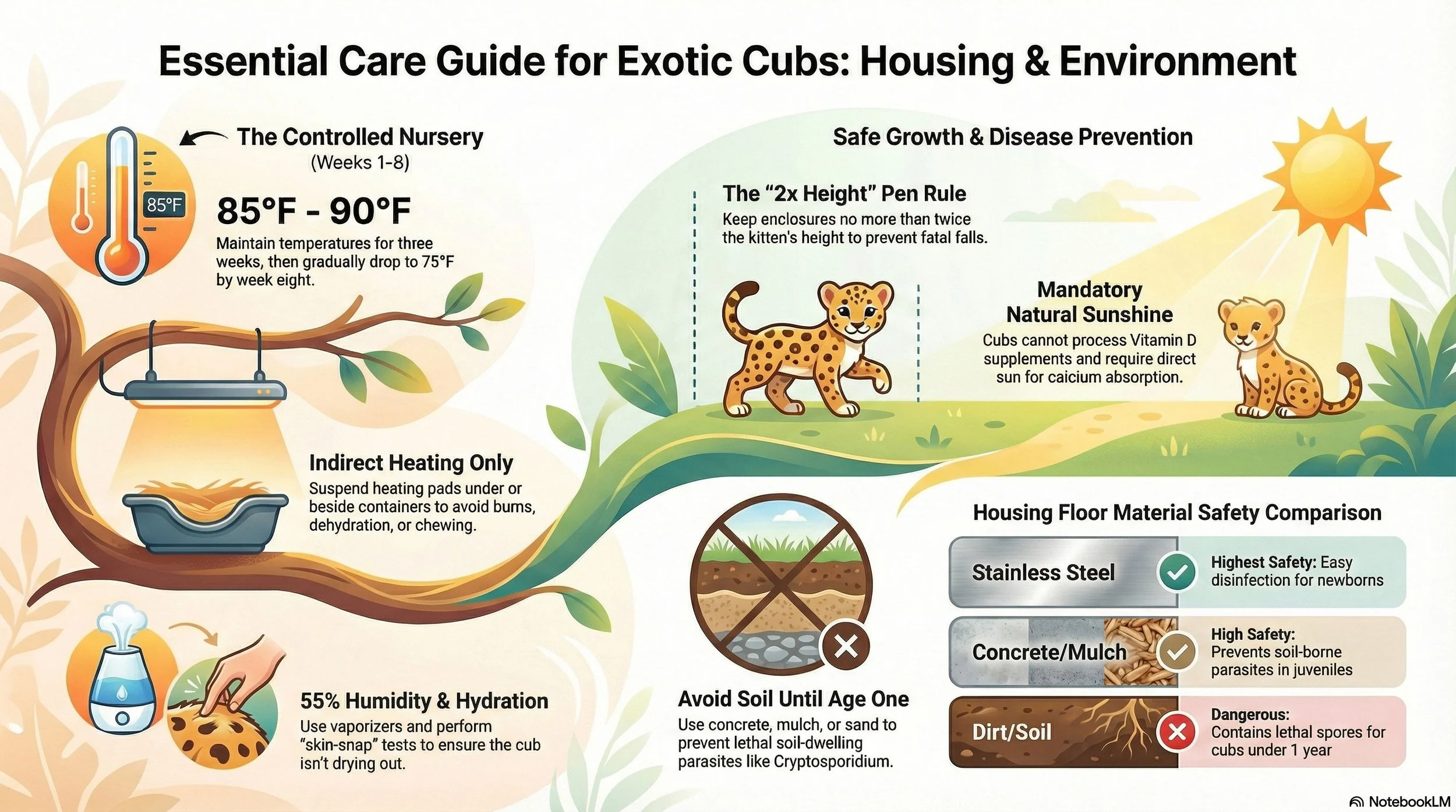
This resource from Big Cat Rescue provides essential instructions for the intensive care and housing of exotic feline kittens and cubs. The guide emphasizes the importance of precise temperature control, recommending that young cats be kept in specialized nurseries or containers between 85 and 90 degrees to survive. Practical advice is offered on sanitation and safety, highlighting the use of stainless steel materials and the prevention of physical injuries from climbing or falling. Additionally, the text addresses health risks such as dehydration, bacterial infections from nursing on littermates, and soil-borne parasites. Beyond physical care, the organization advocates for legislative change and education to end the private trade of these wild animals. Ultimately, the source serves as a specialized manual for those already tasked with raising exotic cats while discouraging the breeding of these species for captivity.
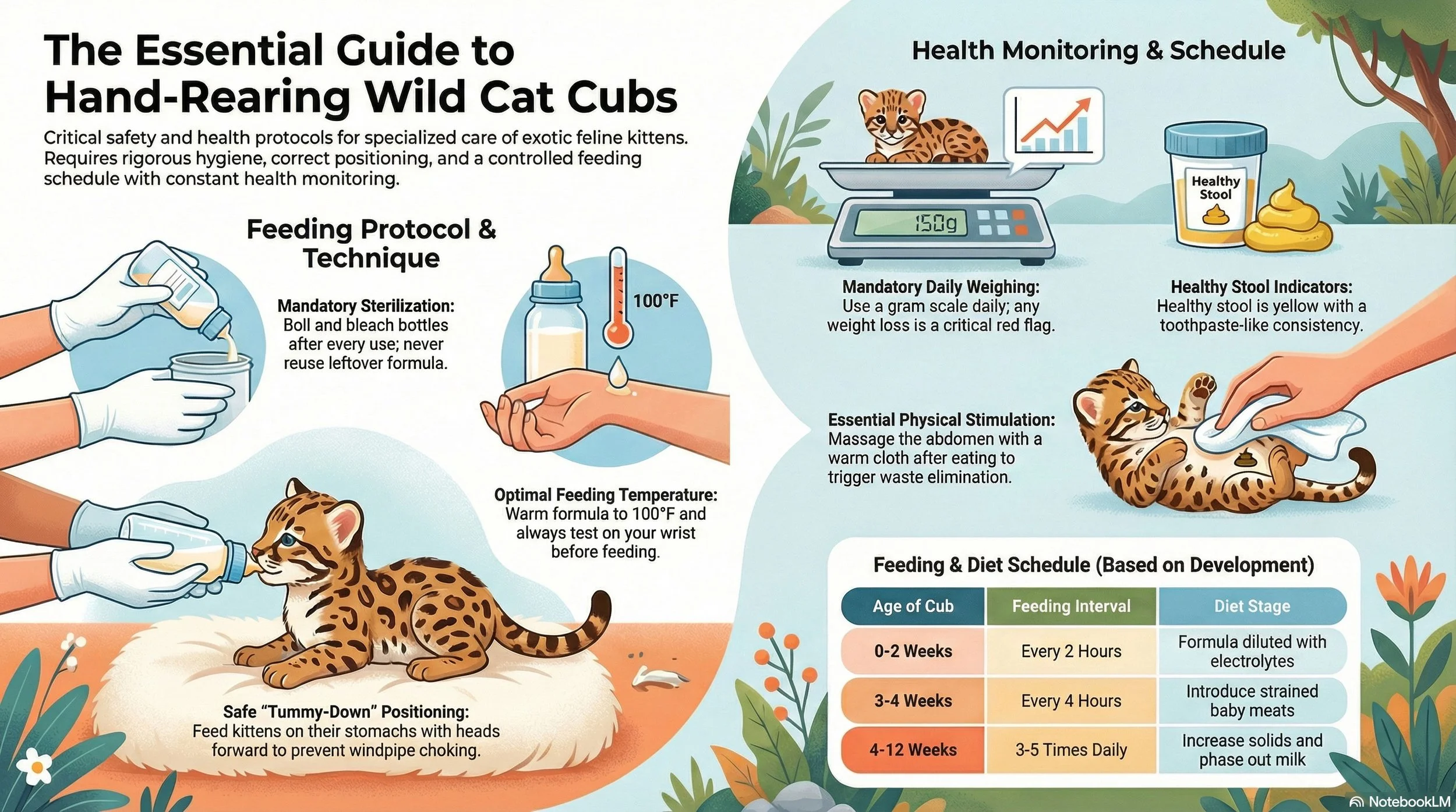
This guide from Big Cat Rescue provides comprehensive instructions on the specialized care and hand-rearing of wild cat kittens and cubs. While emphasizing that maternal care is always superior, the author details critical technical skills such as sterilizing equipment, modifying bottle nipples, and maintaining proper feeding postures. The text places a high priority on medical monitoring, urging caretakers to track weight precisely and observe waste for signs of bacterial infections or parasites. Beyond nutrition, the source covers essential hygiene practices, including stimulating waste elimination and safe methods for pest control. Throughout the manual, a strong conservationist stance is maintained, discouraging the exotic pet trade while offering life-saving advice for animals already in human custody.
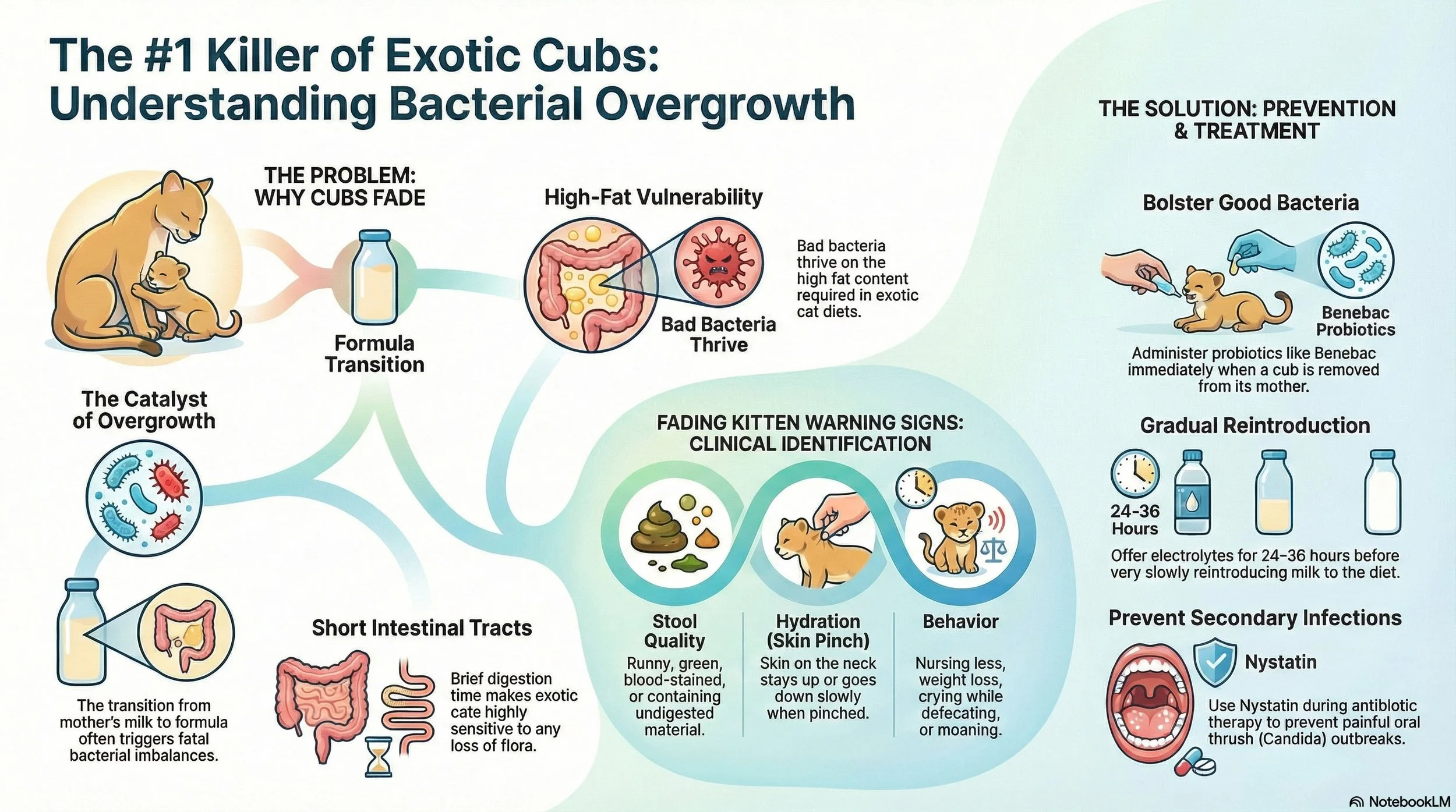
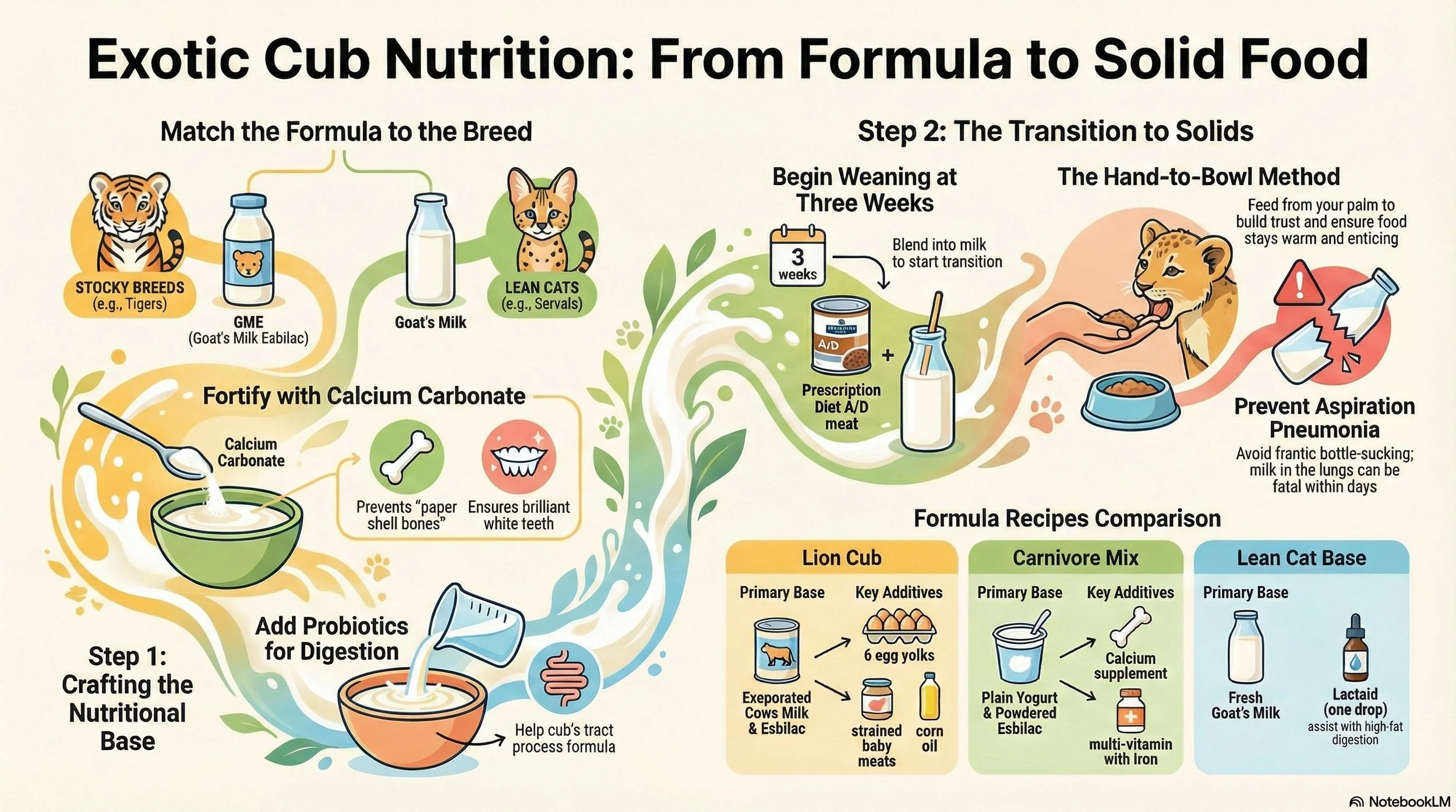
This source outlines the mission and medical observations of Big Cat Rescue, specifically focusing on the dangers of bacterial overgrowth in exotic kittens. After shifting from breeding to sanctuary operations, the organization now emphasizes that human interference in a cub's diet often disrupts the delicate intestinal flora essential for survival. The text explains that exotic cats possess short digestive tracts, making them highly susceptible to fatal infections and starvation when mother’s milk is replaced by formula. To combat these risks, the author suggests a strict regimen involving probiotics, specialized electrolytes, and antifungal medications to manage the side effects of antibiotics. Detailed clinical signs of fading kitten syndrome and inflammatory bowel disease are provided to help caregivers identify life-threatening symptoms early. Ultimately, the guide serves as a warning against the exotic pet trade while offering practical advice for the emergency care of vulnerable felines.
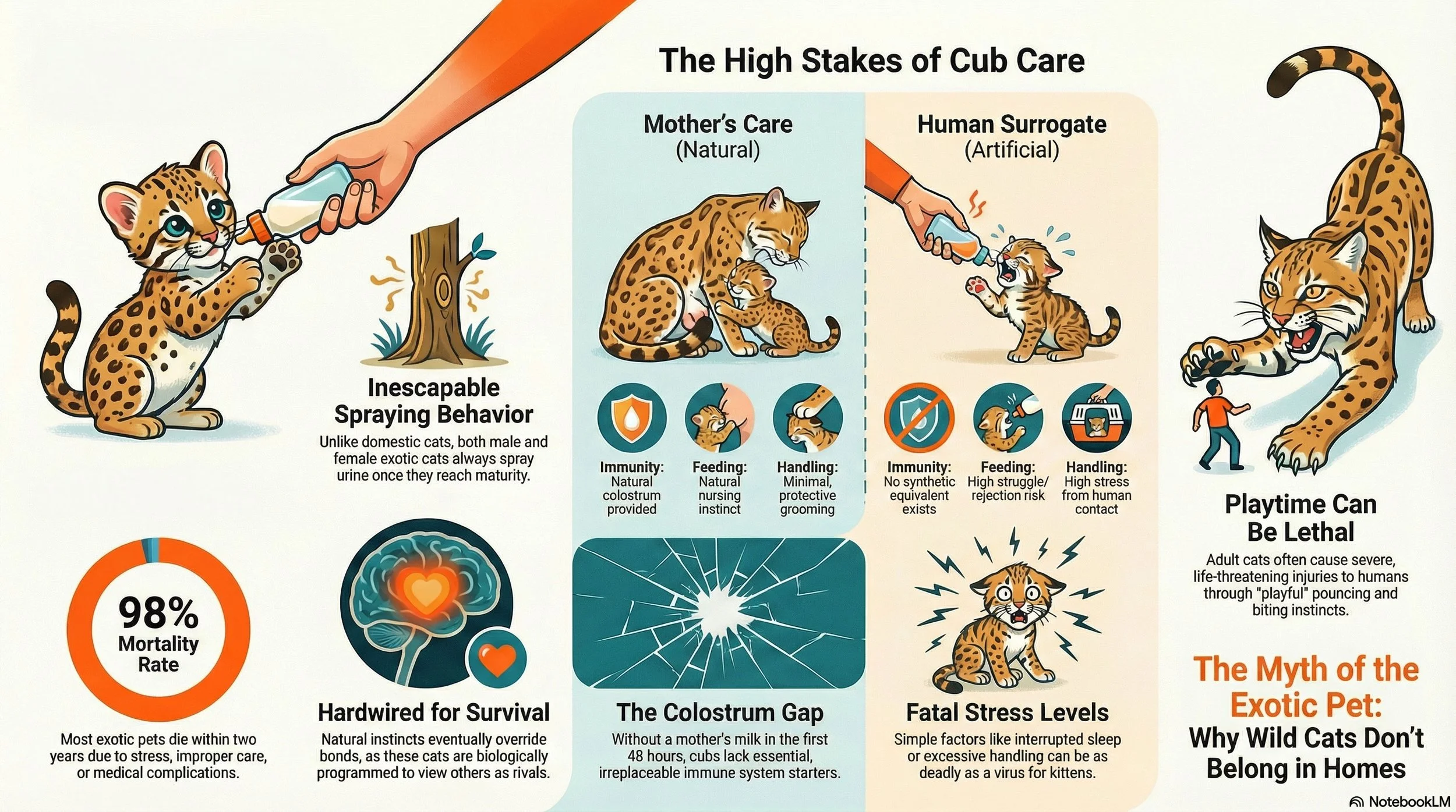
These sources outline the evolution and philosophy of Big Cat Rescue, moving from an involvement in the exotic pet trade to a mission focused on ending the breeding and ownership of wild cats. The text emphasizes that exotic cats cannot be domesticated and provides critical care instructions solely to prevent the death of kittens already displaced by the pet industry. It highlights the immense physical and emotional demands of hand-rearing these animals, including the necessity of natural colostrum for immunity and the dangers of human bonding. Furthermore, the documents warn of the inherent risks to owners, noting that mature cats retain wild instincts that make them dangerous even in play. Ultimately, the materials advocate for legislation and education to ensure these animals are no longer subjected to a life of captivity.
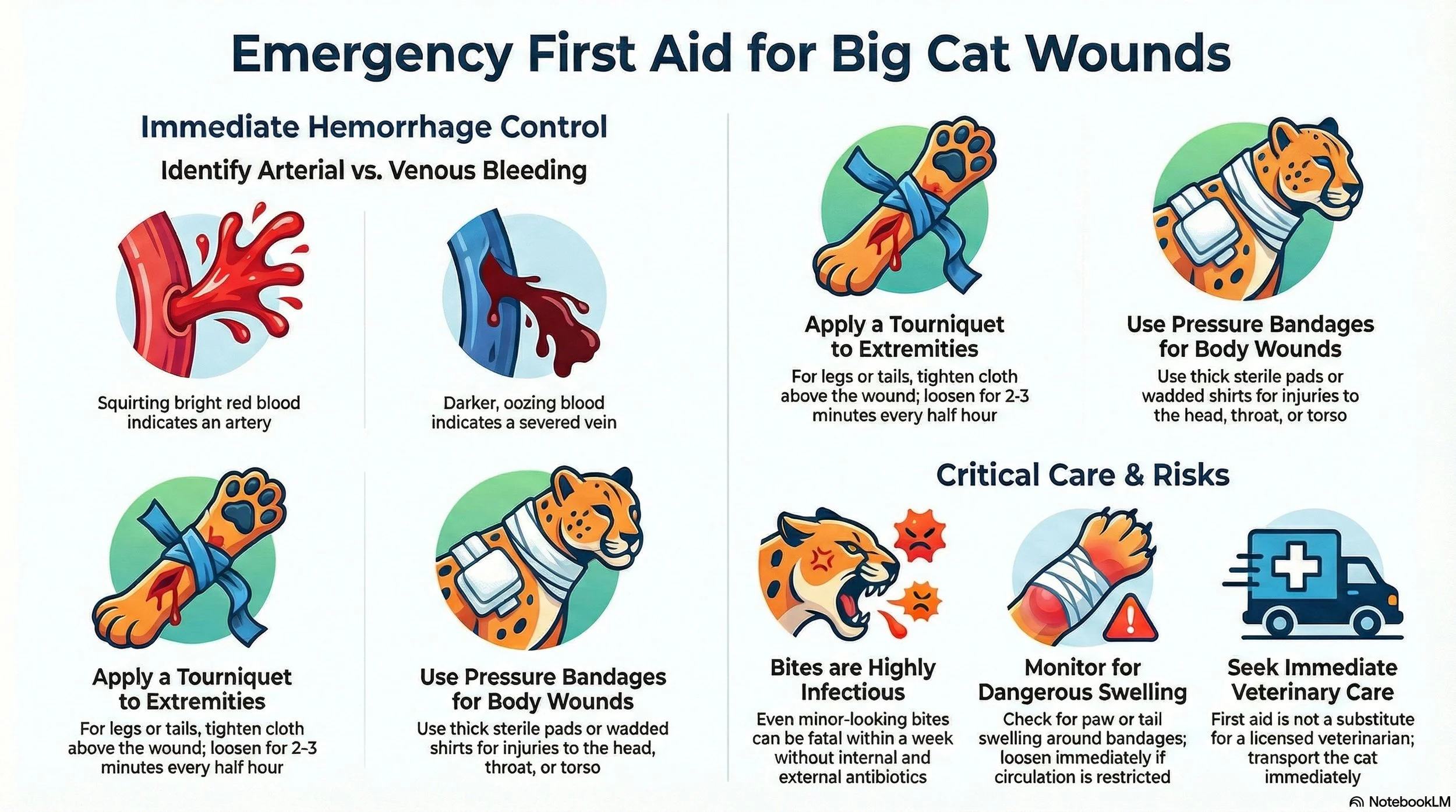
This text provides essential emergency first aid instructions for managing bleeding and injuries in large cats. It distinguishes between arterial and venous bleeding, offering specific techniques such as applying tourniquets or pressure bandages depending on the wound's location. The author emphasizes the hidden dangers of bite wounds, noting that they carry a high risk of lethal infection even when they appear minor. Throughout the guide, there is a strong focus on minimizing bacterial exposure and monitoring for physical complications like swelling. Ultimately, the source serves as a temporary guide for stabilizing an animal while stressing that professional veterinary intervention is always required for survival.
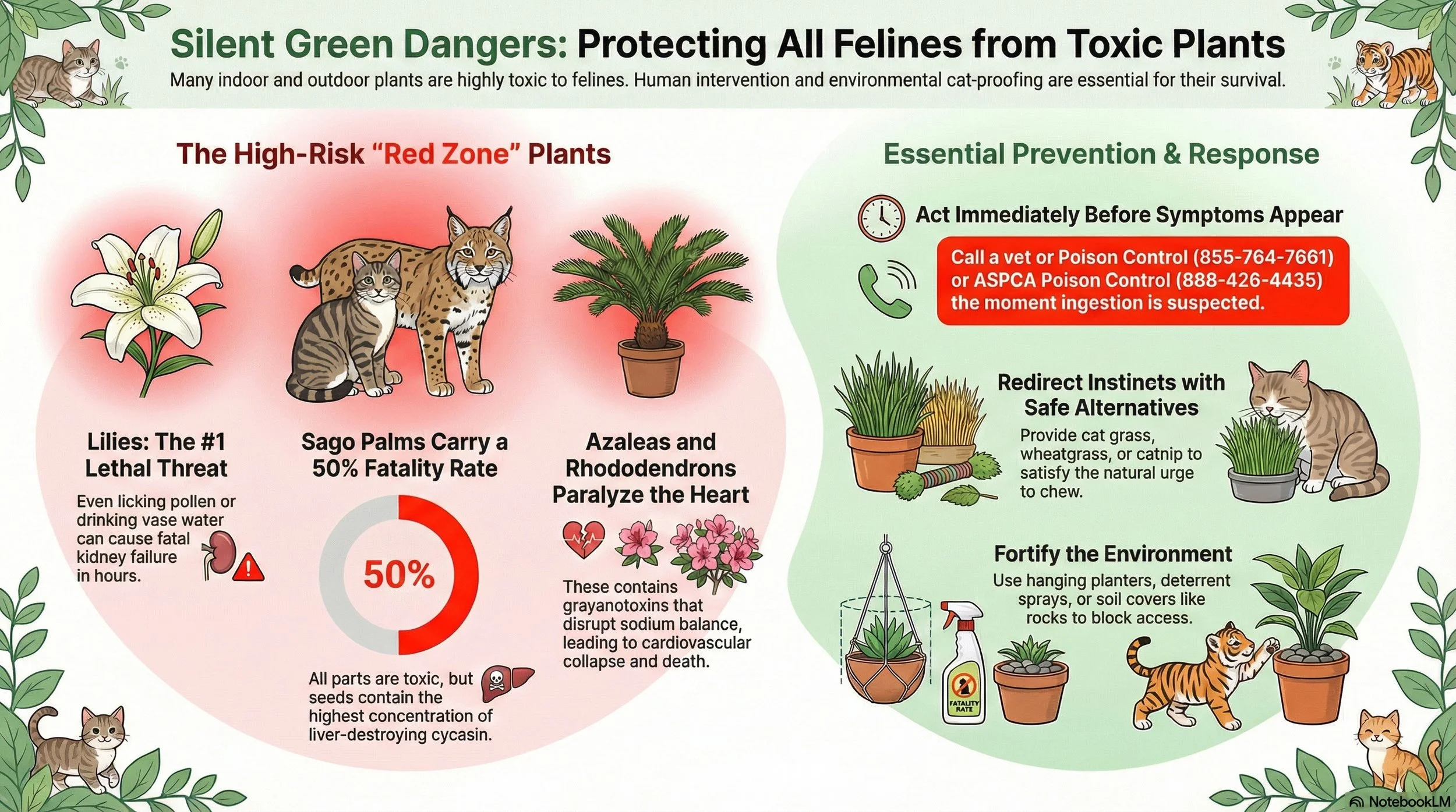
These professional resources highlight the serious dangers that numerous common indoor and outdoor plants pose to feline health. Organizations like the ASPCA and Chewy categorize various species—most notably lilies, sago palms, and azaleas—as highly toxic, often leading to organ failure or death. The guides detail critical poisoning symptoms such as vomiting and lethargy, while urging owners to seek immediate veterinary care after any suspected exposure. To foster a safe environment, experts suggest replacing hazardous greenery with non-toxic alternatives like cat grass or utilizing protective measures like deterrent sprays and elevated shelving. Ultimately, these documents serve as a comprehensive safety manual for pet owners to identify risks and prevent accidental domestic poisoning.

These materials provide a comprehensive framework for establishing and maintaining a successful animal sanctuary, drawing on the long-term experience of Big Cat Rescue. The sources highlight the importance of meticulous planning, suggesting that operators should draft multi-year goals and establish a disciplined organizational culture with strictly enforced rules. Financial sustainability is emphasized through the practice of setting aside monetary reserves and focusing on broad conservation impact rather than just immediate rescue needs. Additionally, the text underscores the vital role of volunteer management, noting that a large, dedicated workforce can provide labor equivalent to dozens of full-time employees. Finally, the guides advocate for a strong social media presence that utilizes storytelling and transparency to build donor trust and engage the public.