
Rules
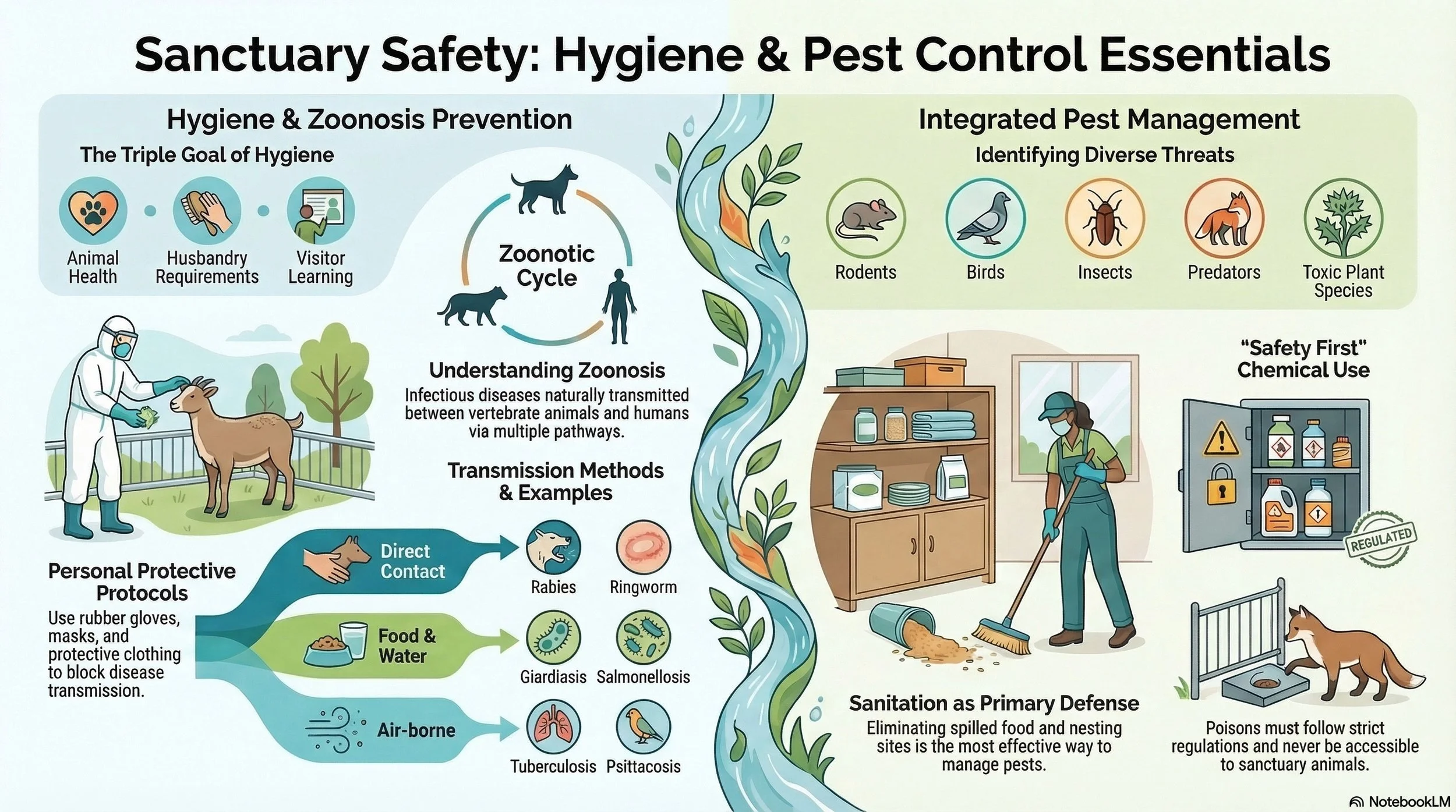
Hygiene and Pest Control
This resource outlines the strict hygiene and pest management protocols used at Big Cat Rescue to ensure the safety of animals, staff, and visitors. The text emphasizes that maintaining a sterile environment is vital for preventing the spread of zoonotic diseases, which are infections that can jump between species. Detailed instructions are provided for personal cleanliness, such as wearing protective gear and reporting minor injuries immediately. Additionally, the source identifies various biological threats like rodents, insects, and wild birds that can contaminate food supplies or act as disease vectors. To mitigate these risks, the organization employs a mix of physical barriers, sanitation routines, and chemical controls. Ultimately, these guidelines serve as a comprehensive manual for responsible sanctuary management and animal husbandry.
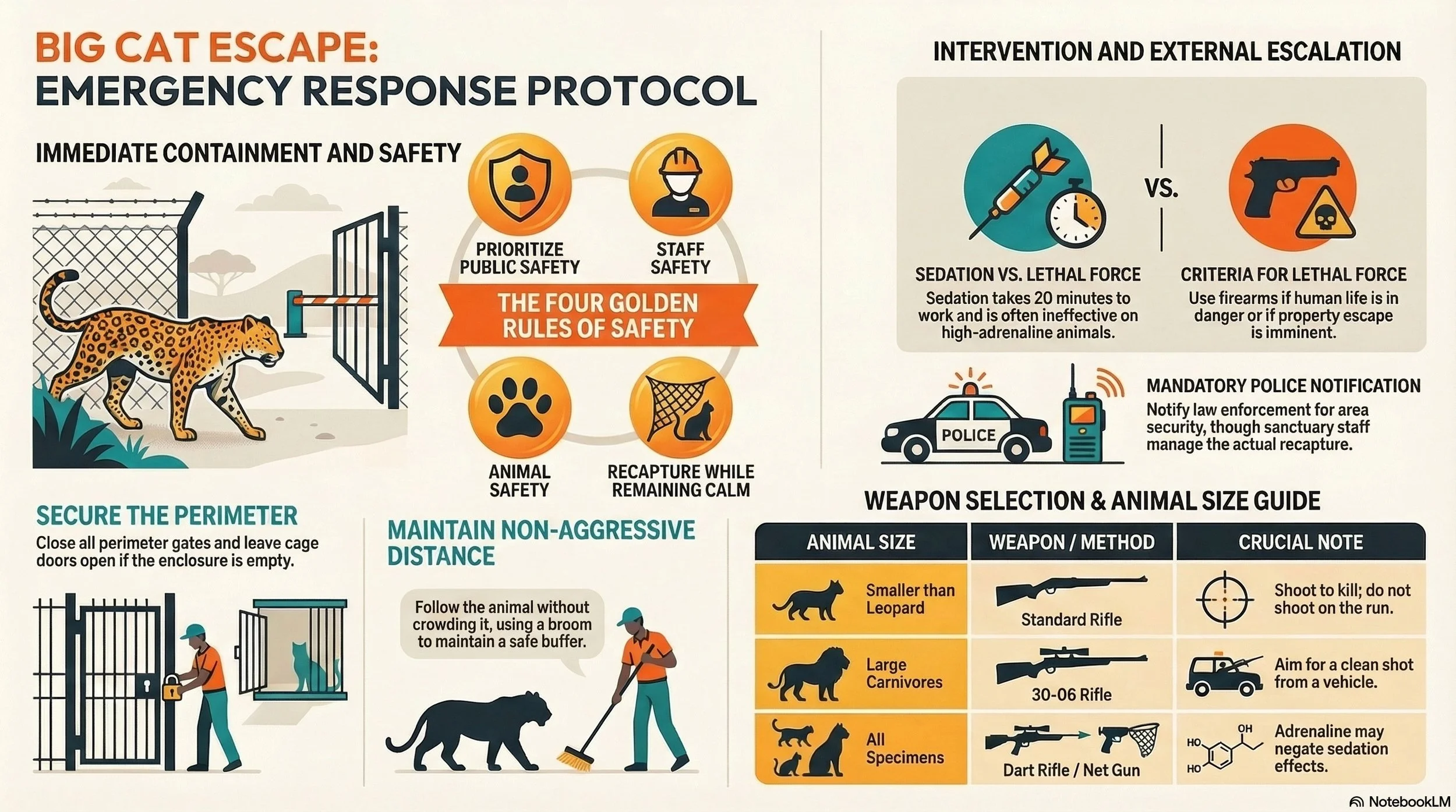
Escapes
The video outlines the emergency safety procedures established by Big Cat Rescue to manage potential animal escapes. The primary objectives focus on protecting the public, staff, and the animals themselves while maintaining a calm environment to prevent escalation. Protocol instructions detail how to contain cats within perimeter fences using tools like brooms and when to utilize sedation or dart guns. However, the guidelines clarify that if a dangerous predator exits the property and cannot be safely tranquilized, lethal force is legally required to prevent human injury. Finally, the document specifies the necessity of notifying law enforcement to secure the surrounding area while trained sanctuary personnel lead the recovery efforts.
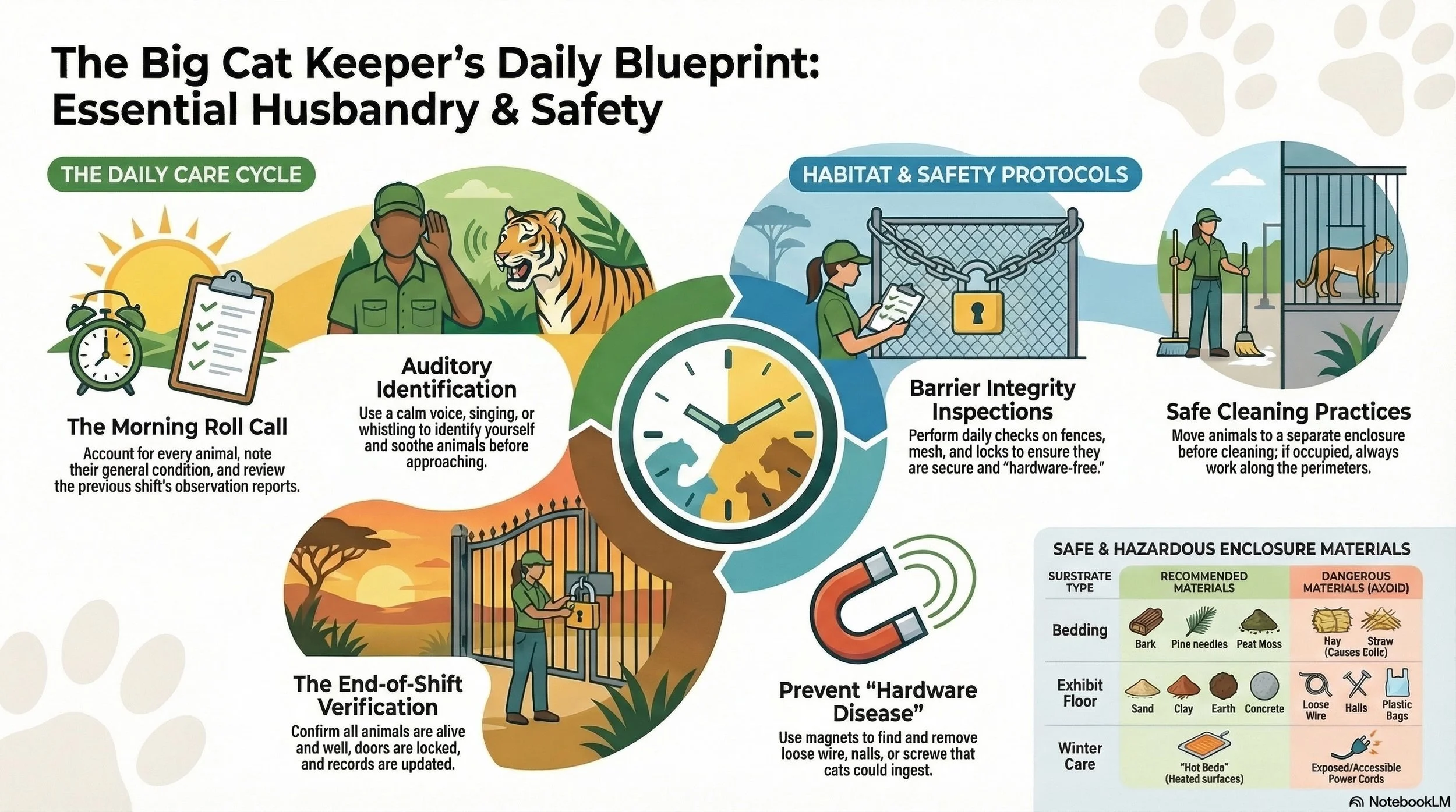
Animal Husbandry
This guide outlines the essential husbandry protocols practiced at Big Cat Rescue to ensure the safety and health of both animals and staff. The text emphasizes that efficient daily routines, including thorough cleaning and scheduled feeding, are vital for minimizing animal stress and preventing accidents. Keepers are instructed to maintain high safety standards by inspecting barriers, removing hazardous foreign objects, and using specialized equipment correctly. Additionally, the manual highlights the importance of resource conservation and adapting care strategies to accommodate seasonal changes or individual animal temperaments. Ultimately, the documentation serves as a comprehensive operational framework for running a sanctuary with a focus on professional discipline and wildlife welfare.
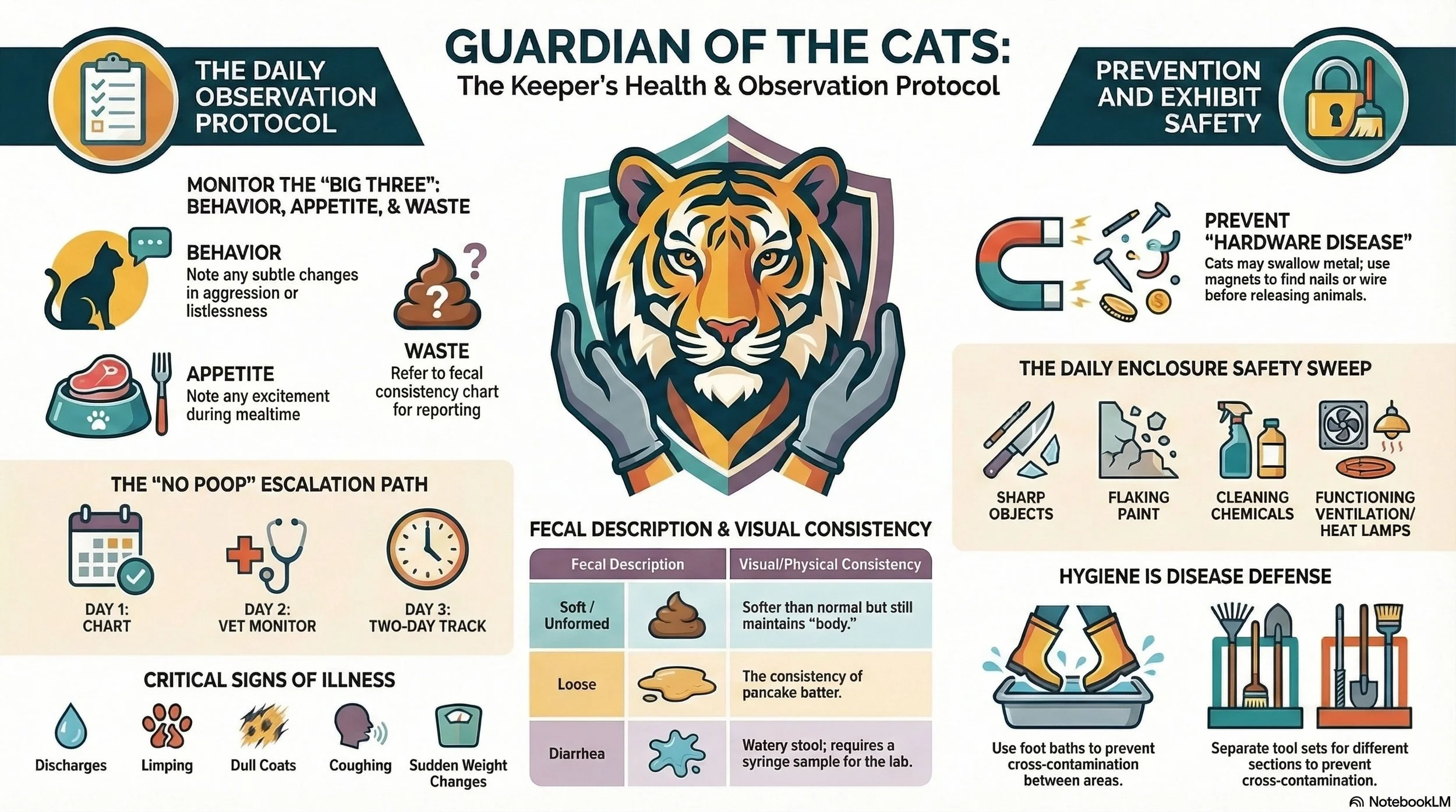
Animal Health
This text outlines the comprehensive animal health protocols and management strategies utilized by Big Cat Rescue to ensure the well-being of their captive exotic felines. It emphasizes that careful observation by keepers is the primary defense against illness, as wild cats instinctively mask symptoms of pain or disease. The documentation provides a detailed diagnostic checklist for monitoring changes in appetite, behavior, and waste production to facilitate early medical intervention. Furthermore, it covers essential sanctuary operations such as disease prevention, proper sanitation, and the logistical handling of medications or necropsies. By maintaining rigorous observation charts and specialized training, the facility aims to mitigate risks associated with the unique physiological and psychological needs of large predators.

Critical Incident Hurricane and Disaster Plan
This video outlines the comprehensive emergency preparedness protocols established by Big Cat Rescue to ensure the safety of both animals and the public. While the sanctuary relocated its final residents in 2023, the text serves as a best-practices guide for other facilities facing disasters like hurricanes, fires, and medical emergencies. It detail specific infrastructure strategies, such as reinforced "Cat-A-Tat" enclosures and solar-powered fencing, alongside stringent staff training for animal recapture and first aid. The organization maintains extensive on-site resources, including backup generators, specialized transport vehicles, and medical supplies to remain self-sufficient during a crisis. Ultimately, the plan emphasizes a clear chain of command and rigorous drills to mitigate risks associated with housing apex predators.