Toxins
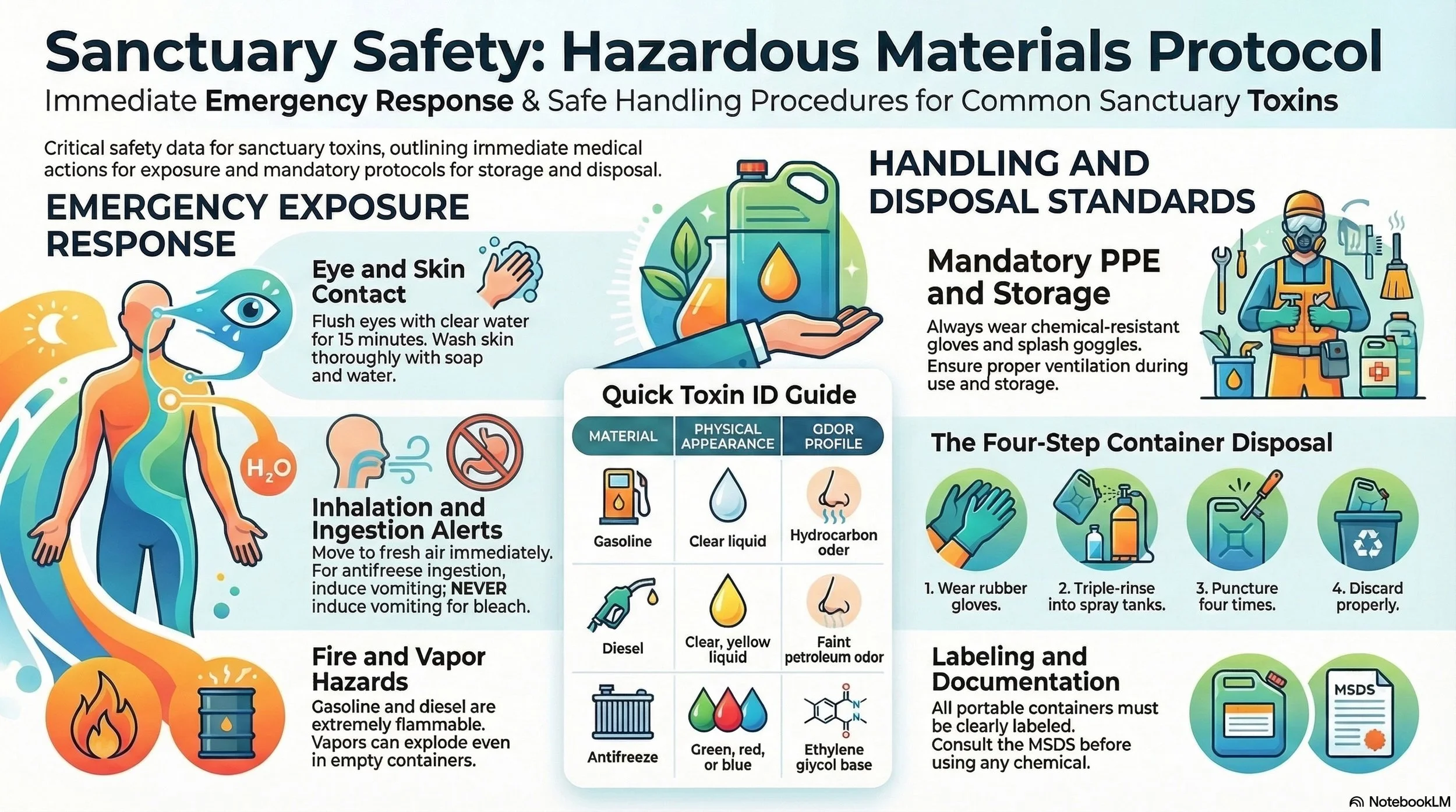
This document outlines the safety protocols and hazard communication strategies established by Big Cat Rescue for managing dangerous substances. It provides specific emergency procedures for accidental contact with various toxins, including automotive fluids, fuels, and industrial cleaners. Beyond immediate first aid, the text details a comprehensive workplace safety program that involves maintaining Material Safety Data Sheets and ensuring all chemical containers are correctly labeled. Detailed instructions are also provided regarding the legal disposal of hazardous waste and the mandatory safety training required for all staff and contractors. Ultimately, these guidelines serve as a structured framework to protect personnel and the environment from the risks associated with toxic materials.

Records

Quarantine
These sources detail the quarantine and specialized care protocols used by Big Cat Rescue to protect both animals and staff from disease. The guidelines outline various reasons for isolation, such as medical recovery, new arrivals, or fragile immune systems, and describe the specific types of enclosures used for these cats. Significant emphasis is placed on rigorous sanitation procedures, including the use of dedicated tools, protective gear, and chemical foot baths to prevent cross-contamination. Workers must follow strict cleaning schedules and waste disposal methods, particularly for indoor hospital cages where animals may be highly agitated. The documents also provide a technical overview of disinfectants, explaining the safe application of bleach and other agents while warning against substances like phenol that are toxic to cats. Ultimately, the materials highlight the balance between maintaining high hygiene standards and ensuring the psychological well-being of the sanctuary's inhabitants.
Job Requirements
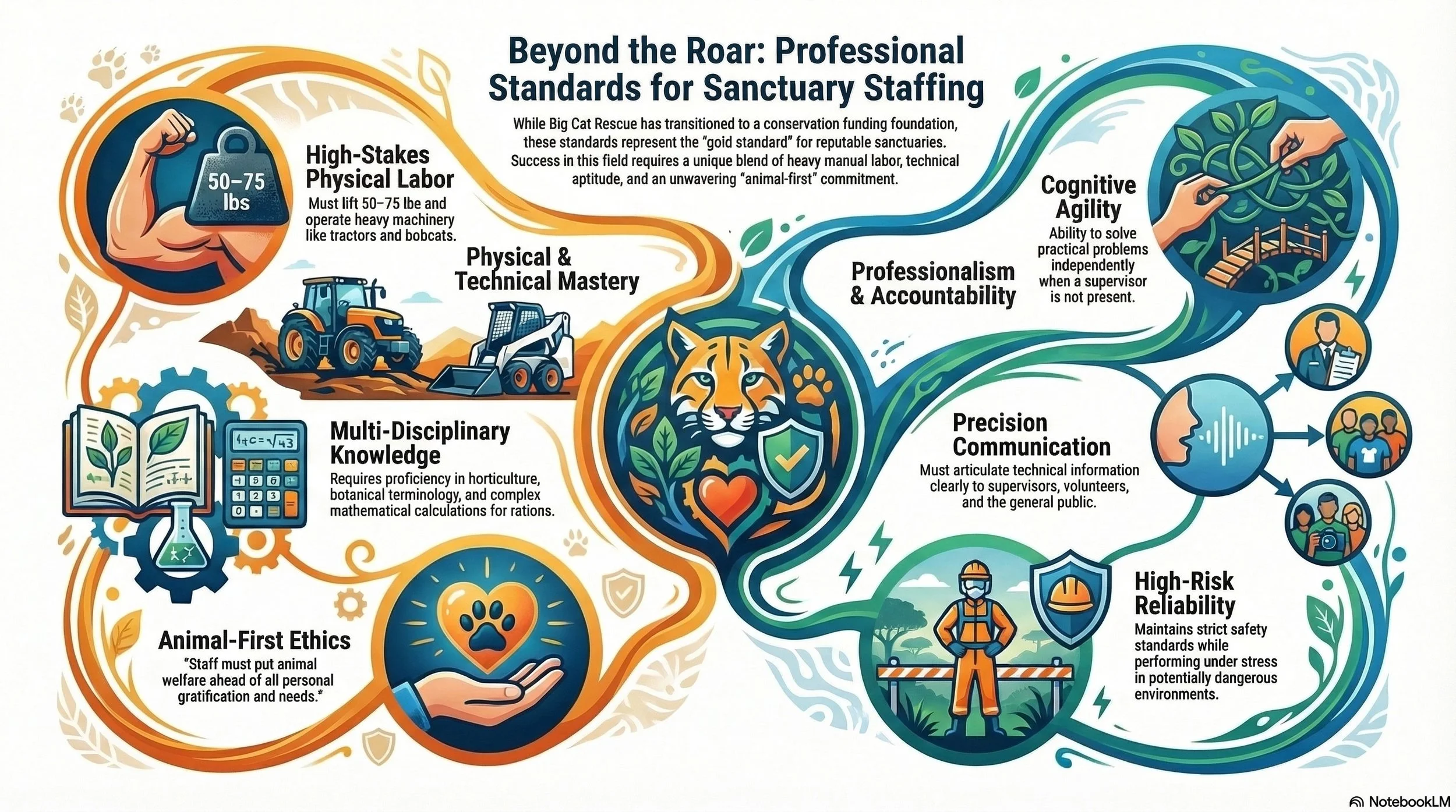
These documents outline the comprehensive requirements and professional standards necessary for individuals seeking employment at a wildlife sanctuary. While the specific organization, Big Cat Rescue, has transitioned into a conservation funding foundation, these guidelines serve as a universal benchmark for the industry. Success in these roles requires intense physical labor, such as operating heavy machinery and lifting significant weight, alongside specialized technical knowledge in horticulture and animal care. Candidates must demonstrate strong interpersonal skills, a disciplined work ethic, and the ability to maintain high safety standards under pressure. Above all, the materials emphasize that the welfare of the animals must always take precedence over personal needs. These sources provide a detailed blueprint of the diverse aptitudes—from mathematical literacy to emotional resilience—needed to manage a reputable animal refuge.
Operant Conditioning
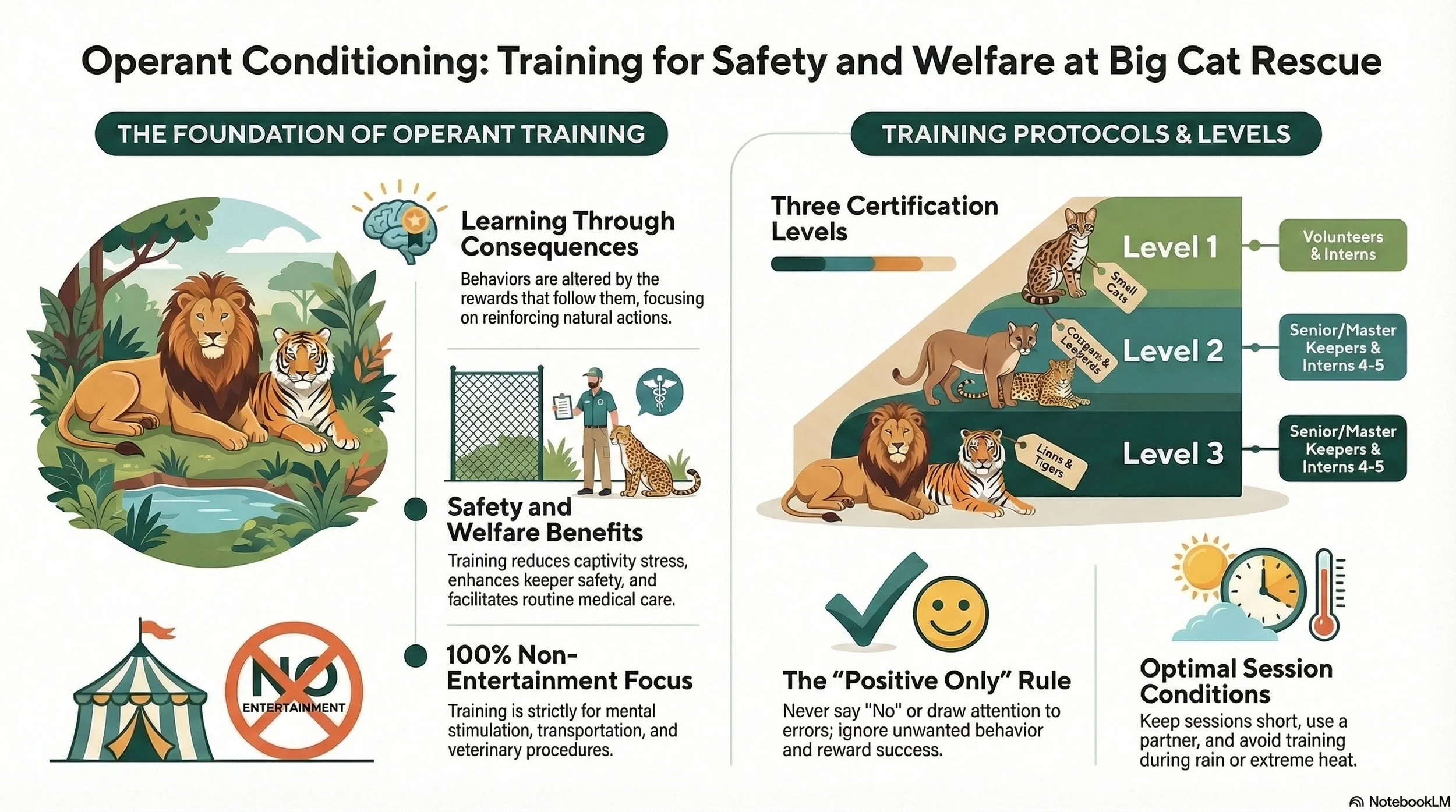
The provided sources detail the operant conditioning program at Big Cat Rescue, which uses positive reinforcement to manage captive animals without force. This system focuses on training natural behaviors to enhance safety, facilitate medical care, and reduce animal stress. Participation is organized into three certification levels based on the species' size and the trainer’s experience. The text outlines strict protocols, such as using specific hand signals and verbal commands while prohibiting negative corrections. Ultimately, the program aims to prioritize animal welfare by providing mental stimulation and ensuring routine husbandry tasks are efficient and calm.

Rules