Carmen del Playa
The Fall of Animalandia Maya: Playa del Carmen Shutdown In May 2026, Mexican law enforcement conducted a major raid on Animalandia Maya, a controversial tourist site in Playa del Carmen known for offering photos with exotic wildlife. The operation resulted in the arrest of the owner and several employees, as well as the seizure of tigers, lions, and monkeys that were allegedly being exploited. This intervention followed years of public outcry and pressure from animal welfare organizations regarding the suspected sedation and mistreatment of the animals. While the business has successfully used legal loopholes to reopen after past closures, the scale of this coordinated police action suggests a permanent shutdown. The incident highlights a significant victory for activists fighting against the commercial use of endangered species in the Riviera Maya.

Big Cat Bans Enacted
The Invisible Stripes
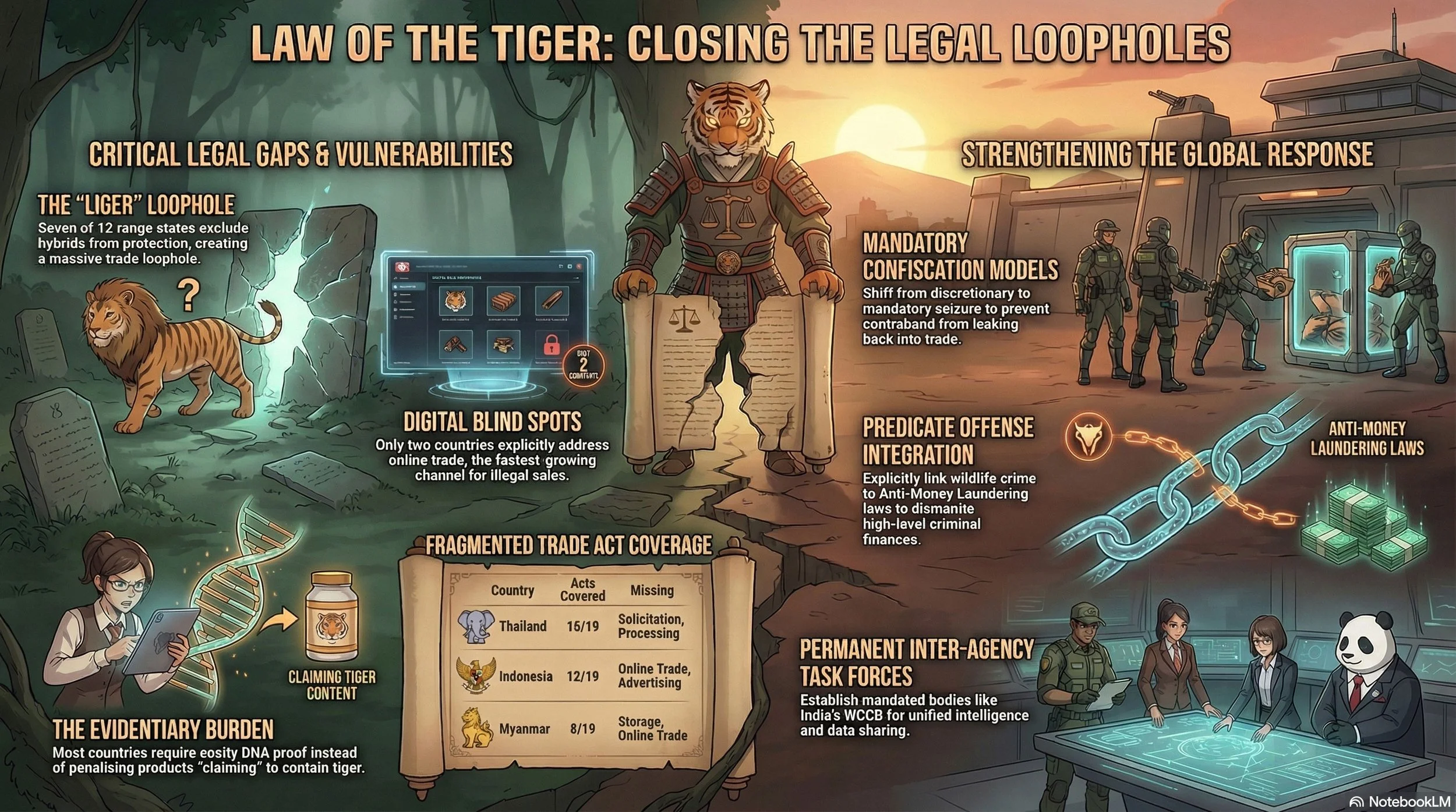
This report, titled Law of the Tiger, provides a comprehensive 2025 analysis of the legal frameworks governing tiger trafficking across twelve range states. It evaluates how national laws address critical issues such as interagency enforcement, mandatory confiscation, and the regulation of captive breeding facilities. The authors identify significant legal gaps regarding digital marketplaces, the status of hybrid tigers, and the management of confiscated stockpiles. To combat the transnational organized crime of wildlife trade, the document advocates for standardized definitions, enhanced investigative powers for frontline officers, and the integration of anti-money laundering tools. Ultimately, the publication serves as a guide for governments to harmonize their criminal justice responses and strengthen protections for wild tiger populations.
Why a Tiny Country Just Made a Massive Bet on Wildlife
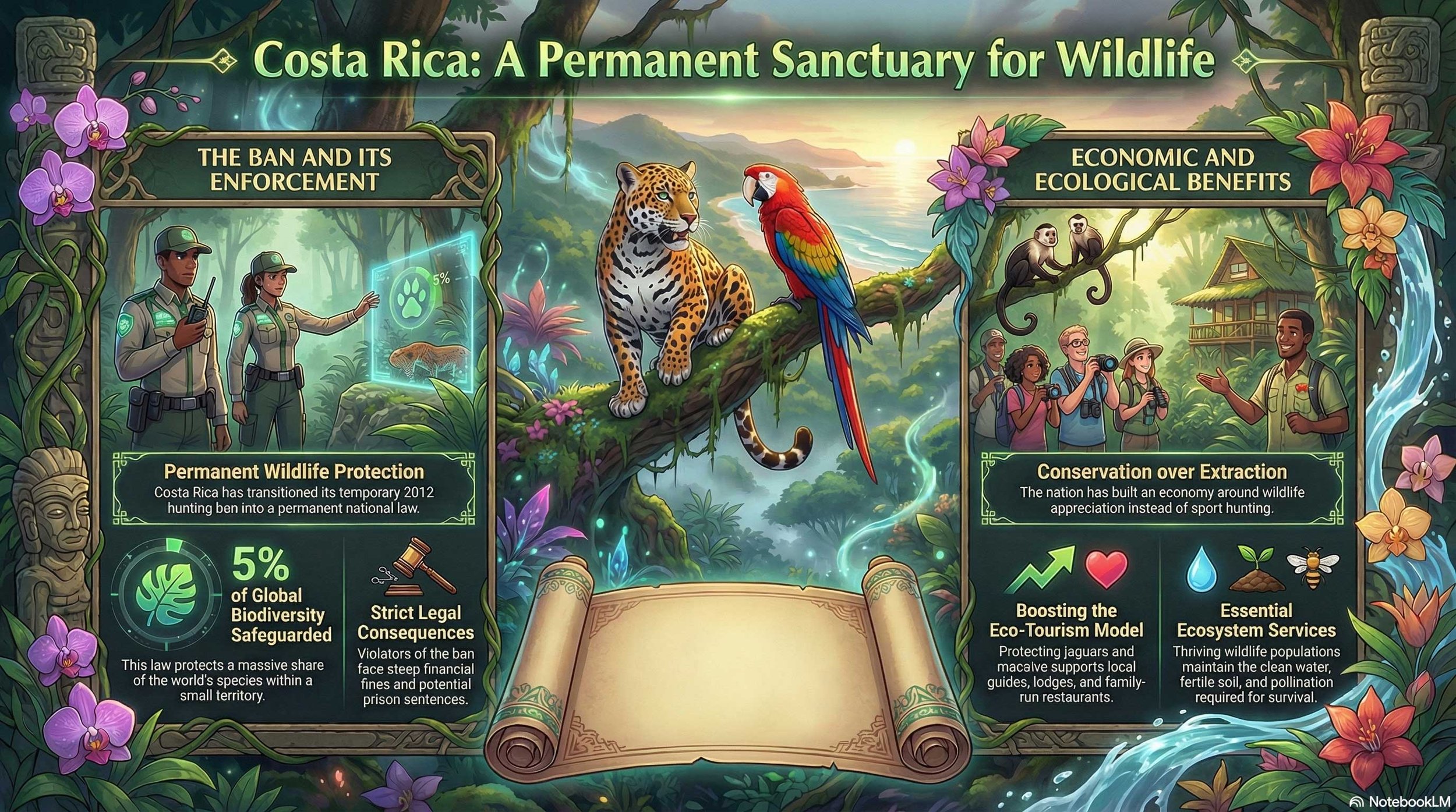
Costa Rica has reinforced its commitment to environmental leadership by establishing a permanent ban on sport hunting for all wild species. This legislative move aims to safeguard the nation’s vast biodiversity, including iconic animals like jaguars and macaws, while deterring illegal trafficking through strict legal penalties. By prioritizing wildlife conservation, the country supports a thriving eco-tourism economy that provides sustainable income for local communities and small businesses. Beyond financial benefits, the policy protects essential ecosystems that provide clean water and fertile soil, contributing to the overall health and longevity of the population. This shift from resource extraction to nature appreciation serves as a global model for how environmental protection can coexist with economic prosperity. Ultimately, officials hope this decisive action will inspire international efforts to adopt similar protections for the natural world.

Case Study How Advocacy Reshapes E-Commerce The Etsy Fur Ban
The global e-commerce giant Etsy has officially announced a prohibition on animal fur sales starting in August 2026, marking a significant victory for the Coalition to Abolish the Fur Trade after an intensive protest campaign. This policy update targets natural pelts from animals like mink and fox while still allowing for taxidermy and leather byproducts. This shift reflects a broader trend within the fashion world, as numerous international brands, publications, and countries are increasingly rejecting wildlife-derived materials. However, the industry remains polarized, as the European Union faces internal debates over farming bans while Canadian fur auctions report record-breaking prices and sustained demand. Ultimately, while animal rights advocacy is rapidly transforming the retail landscape, the debate over the ethics and economic value of fur continues globally.

Adam Bied
A Massachusetts resident named Adam Bied was recently sentenced to prison for his involvement in an extensive international wildlife trafficking operation. According to the U.S. Department of Justice, the defendant illegally imported and traded parts from numerous endangered and protected species, such as orangutans, tigers, and jaguars. To avoid detection by federal authorities, he falsified shipping labels and ignored strict federal regulations like the Lacey Act and the Endangered Species Act. In addition to serving time in prison, Bied must pay a significant fine and forfeit over 100 animal parts seized during the investigation. Officials emphasized that this prosecution serves as a stern warning to those who profit from the exploitation of vulnerable wildlife across the globe.