The Geometry of the Gaze: Why Evolution Sculpted Your Cat’s “Alien” Eyes
The Mystery in Your Living Room
To look into the eyes of a domestic cat is to confront an ancient, vertical geometry that feels distinctly alien. While we share our sofas and our lives with these creatures, their gaze—defined by those sharp, obsidian slits—shares little with our own, nor does it resemble the eyes of the "King of the Jungle." If you were to stare into the amber eyes of a lion or the glacial stare of a snow leopard, you would find round, circular pupils remarkably similar to a human’s.
This ocular discrepancy is no random quirk of nature. Instead, the shape of a feline’s pupil is a sophisticated biological strategy, a blueprint designed by millions of years of environmental pressure. It is the signature of an animal’s ecological niche, revealing how it hunts, where it hides, and the height from which it views the world.
The Ambush Advantage: Precision in a Vertical World
The vertical slit pupil found in domestic cats and their smaller wild cousins is a specialized piece of evolutionary equipment. According to a landmark 2015 study by researchers at UC Berkeley and Durham University, this shape is the hallmark of the "low-to-the-ground" ambush predator. For a creature stalking small, fast-moving prey like rodents through the undergrowth, the vertical slit offers a "mechanical masterpiece" of visual depth.
Technically, these slits allow for two distinct ways of measuring distance simultaneously. In the vertical plane, the cat utilizes stereopsis—using the slight difference in perspective between the two eyes to judge distance. In the horizontal plane, they utilize defocus, or blur, where objects in front of or behind the point of focus are intentionally blurred to create a sharp sense of depth. This dual mechanism allows a cat to calibrate the exact force needed for a lethal, explosive pounce. Furthermore, the slit provides extreme light control; it can close much more tightly than a round pupil to shield the eye from glare, yet dilate massively to seize every stray photon in the dark.
"Vertical slit pupils are especially common in ambush predators that stay close to the ground — the shape helps them judge distance with incredible accuracy."
Why Big Cats See the World in Circles
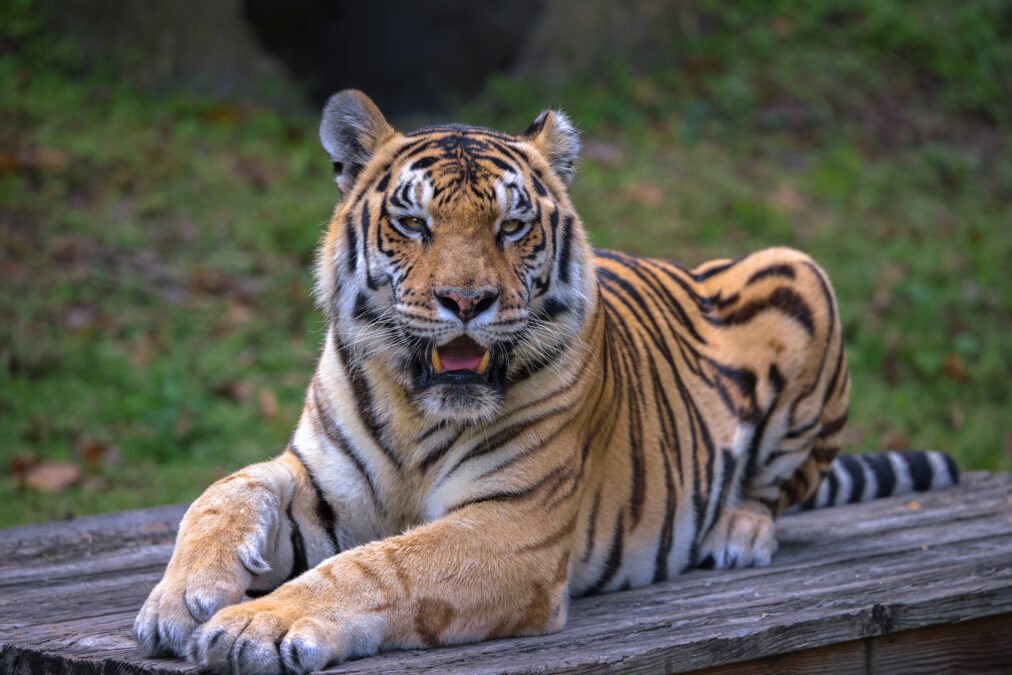
In contrast, the "Big Cats" of the Panthera genus—lions, tigers, leopards, jaguars, and the elusive snow leopard—utilize a completely different ocular strategy. These animals possess round pupils, a trait inextricably linked to their taller physical stature and a preference for pursuit-oriented hunting.
Unlike the domestic cat that hides in the grass, these apex predators often rely on strength and endurance to run down larger prey across varied terrain. Because they frequently hunt in full daylight or shifting twilight, they require "balanced vision" rather than the extreme light-shuttering capabilities of the slit. From their higher vantage point, the specialized depth-perception mechanics of the slit pupil are unnecessary; for a lion or a tiger, a panoramic, circular view of the horizon is far more advantageous for tracking a fleeing herd across the savanna.
The Pallas’s Cat: The Outlier of the Frozen Steppe
While the "small cat equals slit pupil" rule is a reliable guideline, nature offers a fascinating subversion: the Pallas’s cat (Otocolobus manul). This small felid is roughly the size of a domestic cat, yet it possesses distinctly round pupils.
The answer lies in the biting, thin air of the Central Asian steppes. In this harsh, open landscape, there is virtually no cover for traditional ambush hunting. The Pallas’s cat must navigate a world of blinding, reflective snow and vast, unobstructed horizons. The environmental pressure of spotting prey against a high-glare, snowy backdrop favored the round pupil over the slit. It is a powerful reminder that habitat and hunting pressure can override the general rules of body size, forcing evolution to pivot toward a different visual solution.
The Architect of the Eye: Hunting Style vs. Genetics
The Cheetah and the Puma (Cougar) further prove that an ecological niche is the ultimate architect of the eye. Genetically, the Cheetah is closer to small cats, yet it possesses round pupils—a direct adaptation to its life as a high-speed pursuit hunter. Its eyes are built for the blur of a seventy-mile-per-hour chase across an open plain, where a balanced, circular pupil is essential for maintaining focus during extreme speed.
Similarly, the Puma occupies an intermediate space. Though it can weigh 200 pounds, it is genetically grouped with smaller felids. However, its pursuit-style hunting and varied habitat have led evolution to gift it with the round-pupil profile of its larger Panthera cousins. These animals demonstrate that how a cat lives is often more important than where it sits on the family tree.
The Specialized “Mini-Tiger”: Why the Wild Does Not Belong at Home
It is a common romanticism to view our house cats as "miniature tigers," but their anatomy tells a more nuanced story. Your domestic companion is a highly specialized ambush hunter, perfectly calibrated for a specific scale of life. Interestingly, mid-sized cats like the Bobcat or the Lynx species represent a middle ground; their pupils are often "subcircular" or "transitional"—not quite the sharp slit of a house cat, yet not the perfect circle of a lion.
This hyper-specialization is precisely why wild cats, regardless of size, are entirely unsuitable for domestic life. A Cheetah’s biology demands the vastness required for a high-speed sprint, just as a Pallas’s cat is hard-wired for the brutal, reflective glare of the frozen steppe. To keep such animals in a home is to cruelly stifle millions of years of evolutionary intent. A house cat’s eyes are mesmerizing because they are perfectly adapted for our shared world, while the eyes of the Cheetah or the Pallas’s cat belong to the harsh, magnificent ecosystems that sculpted them.
A Different Way of Seeing
The shape of a cat’s pupil is far from a random trait; it is a calculated biological strategy. Whether it is the light-controlling slit of a stealthy pouncer or the balanced circle of a pursuit hunter, these forms are the result of an eternal dialogue between predator and environment.
Next time you look into your pet’s eyes, notice how those "alien" slits can soften and become almost round when dilated in dim light, momentarily bridging the gap between their world and ours. It is a reminder that every feature of the animals we think we know is a clue to a deeper story of survival. Behind the gaze of every feline—be it a tabby on a rug or a leopard in the canopy—lies a hidden strategy, a silent testament to the precision of the natural world.
Sources:
Study in Proceedings of the National Academy of Sciences – research linking pupil shape across mammals to ecological lifestyle and predation strategy.
Phys.org article on pupil shape and ecological niche – summarizes scientific findings about how pupil shape matches hunting style and size.
BBC Science Focus: Why cats have slit pupils – a popular-science explanation of why smaller cats have vertical pupils and big cats do not.
Turpentine Creek educational wildlife article – directly compares pupil shapes in big cats vs small cats for general audiences.
Wikipedia “Pupil (anatomy)” page – overview of pupil shape variation across species, including felids.
What determines eye color in cats, from house cats to tigers?
The Secret History of the Cat’s Gaze: 5 Genomic Truths About Feline Eyes
Step back 30 million years, and you would find yourself in a world where feline eyes were significantly less dazzling. Long before the first sapphire-eyed Siamese or the golden-eyed house cat graced a windowsill, the ancestors of all modern cats—an ocelot-like lineage of predators—were beginning a genomic revolution. To look into your cat’s eyes today is to peer through a window into deep time.
I find the aesthetics of the iris secondary to the fascinating mechanics behind them. What we perceive as "magic" is actually a rigorous interplay of pigment density, structural physics, and the legacy of ancient viral invasions into the feline genome. Recent research, including a landmark study from Harvard University, has finally allowed us to reconstruct this history quantitatively. We are essentially the first animals to see the true colors of these ancestral eyes since they existed millions of years ago.
Here are five surprising genomic truths behind the feline gaze.
1. The Gray-Eyed "Bridge" to Modern Diversity
For much of evolutionary history, brown was the default. Most mammals have brown eyes because eumelanin (brown pigment) is highly effective at protecting against UV radiation and providing visual acuity. However, the Harvard study reveals that after the linsang lineage branched off, a mutation occurred that drastically decreased pigment levels, introducing gray eyes into the ancestral population.
Gray was not just a new color; it was a "mediator." Because blue eyes are likely a recessive trait, a lone blue-eyed cat in a sea of brown-eyed ancestors would have seen its trait vanish within a generation. Gray eyes provided a necessary genetic "anchor"—a lighter middle ground that allowed the population to maintain the low-pigment levels required for blues, greens, and yellows to eventually emerge.
Reconstructing these states gives us a glimpse into a prehistoric world. As lead researcher Julius Tabin put it:
"I'm still riding high on the excitement of knowing that the felid ancestor had both brown and gray eyes, because that's something I didn't go in expecting or even thinking about."
2. Blue Eyes are a Masterful Optical Illusion
If gray was the bridge to color, the mechanics of how we see that color are even more bizarre—relying not on paint, but on physics. In the feline world, there is no such thing as blue pigment.
The iris, or the "colored curtain," consists of layered tissues. When these layers lack melanin, they don't simply appear transparent. Instead, they interact with light via a phenomenon known as structural color. Much like the sky appears blue due to Rayleigh scattering, the microscopic structures in a low-pigment iris scatter shorter wavelengths of light back to the observer, creating a brilliant blue.
This is also why almost all domestic kittens are born with blue eyes. Their melanocytes (pigment-producing cells) are essentially on a developmental timer; they haven’t yet reached the iris to "paint" it with the cat's permanent adult shade. It is only as the kitten matures that these cells deposit the melanin dictated by their DNA.
3. The Siamese Connection: Albinism is a Spectrum
While most cats use pigment to define their gaze, some are masters of temperature-sensitive trickery. The Tyrosinase (TYR) gene is the primary "factory" for melanin. In Siamese and Burmese cats, mutations in this gene create an allelic series where the ability to produce color is restricted by temperature—pigment only forms on the cooler "points" of the body, like the ears and tail.
Genetically, this is a form of partial albinism. The hierarchy of dominance at this locus is strict:
"The TYR gene corresponds to the colour locus in cats and its alleles, from dominant to recessive, are as follows: C (full colour) > cb (burmese) ≥ cs (siamese) > c (albino)."
At the far end of this spectrum is complete albinism, caused by a cytosine deletion that creates a "premature stop codon." This effectively tells the cell to stop building the tyrosinase protein halfway through, leaving it non-functional. Interestingly, while "pink-eyed" albinos are often discussed, research suggests these are likely an optical illusion caused by tapetal reflection (red-eye shine) rather than a distinct mutation. Most true feline albinos, despite having zero functional pigment, still appear to have very pale blue eyes due to the light scattering mentioned above.
4. The Viral Origins of "Dominant Blue Eyes"
Perhaps the most high-stakes discovery in feline genetics involves Dominant Blue Eyes (DBE). While standard blue eyes are tied to coat patterns (like the Siamese), DBE cats can have solid-colored coats and piercing blue eyes. We now know this is largely driven by mutations in the PAX3 gene.
However, the "how" is more fascinating than the "what." In many DBE lines, like the Altai cats, the mutation is actually an RD-114 retrovirus LTR insertion. Millions of years ago, a virus inserted its genetic material into the feline genome, and that ancient viral sequence now regulates how PAX3 is expressed.
This comes with a heavy biological price. PAX3 is critical for the development of the neural crest—a group of stem cells that eventually become both pigment cells and the structures of the inner ear. This is why we see "Auditory-Pigmentary Syndrome." If the pigment cells don't migrate properly to the eye, they often don't reach the ear either, leading to deafness. The stakes for breeders are literal: mating two DBE cats can result in homozygous kittens with lethal developmental defects, including cleft palates and cranial deformities. As noted in Abitbol et al. (2024):
"This auditory–pigmentary syndrome is phenotypically and genetically heterogenous, and certain DBE-to-DBE matings may produce abnormal kittens. In this context, breeders are encouraged to avoid DBE-to-DBE matings and the mix of DBE lines."
5. Correlation: Round Pupils and Golden Hues
Finally, the Harvard study uncovered a peculiar statistical link between form and function: eye color is correlated with pupil shape. Their algorithm found a positive correlation between yellow eyes and round pupils, and a negative correlation between brown eyes and round pupils.
While the data is clear, the "why" remains one of the great remaining mysteries of feline evolution. We haven't yet identified a definitive adaptive benefit—does a golden eye reflect light more efficiently for a predator with round pupils? Or is this merely a side effect of shared genetic pathways? It serves as a humbling reminder that even in the age of whole-genome sequencing, nature still keeps some secrets behind those glowing irises.
Conclusion: A Forward-Looking Gaze
Every blink of a cat’s eye is a record of 30 million years of survival, mutation, and the complex physics of light. From the "gray bridge" of the ancestral ocelot to the viral insertions that give a Maine Coon its sapphire stare, the feline eye is a masterpiece of genomic history.
As we continue to select for rare aesthetic traits, we must prioritize the health of these animals over our own visual preferences. The link between PAX3, KIT, and deafness proves that beauty is often tied to the very foundations of a cat's well-being. By utilizing modern genetic testing—identifying specific TYR or PAX3 variants—we can ensure that the dazzling gaze of the future remains a healthy one. The next time you look at your cat, remember: you aren't just looking at a pet; you are witnessing the living resolution of a 30-million-year-old puzzle.
Top 5 sources
Abitbol et al. (2024). Different Founding Effects Underlie Dominant Blue Eyes (DBE) in the Domestic Cat (PMC). (PMC)
Imes et al. (2006). Albinism in the domestic cat (Felis catus) is associated with a TYR mutation (PMC). (PMC)
Tabin et al. (2024). Evolutionary insights into Felidae iris color… (ScienceDirect / Cell Reports-style journal page). (ScienceDirect)
UC Davis Veterinary Genetics Laboratory. Dominant White & White Spotting (KIT) in cats (breed/genetic testing explainer). (vgl.ucdavis.edu)
Harvard Gazette (Oct 2, 2024). Blue, green, gold: Why eyes of wild cats vary in color (coverage of the felid iris-color research). (Harvard Gazette)
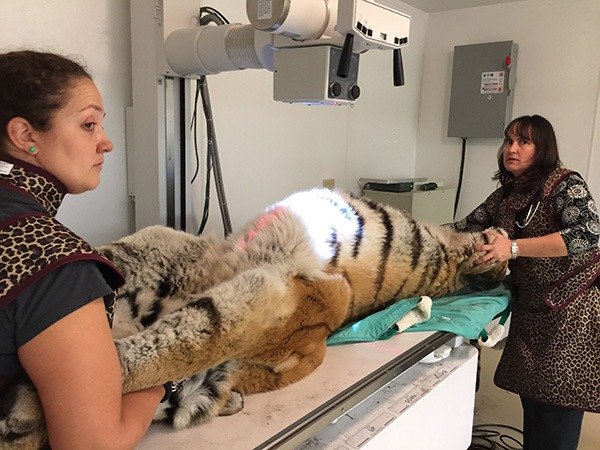

The provided sources detail the comprehensive rehabilitation and release program for wild bobcats managed by Big Cat Rescue. These records explain that the organization takes in animals suffering from car strikes, diseases, or maternal separation with the ultimate goal of returning them to their natural habitats. To ensure successful reintegration, rescuers use specialized medical equipment, naturalistic enclosures, and strict protocols to prevent human imprinting. The texts also highlight the use of GPS tracking collars to monitor the post-release survival and movements of the cats. Additionally, the materials serve to educate the public on how to coexist with these predators and emphasize the importance of protecting Florida’s native wildlife.