More Than Just a House Cat: The Surprising Truth Hidden in Your Kitty’s Paws
There is a singular, quiet electricity that hums through the woods when you believe you are in the presence of a ghost. Whether it is the silent shadow of a Bobcat on Prince Edward Island or the whispered, legendary reports of a Cougar on the mainland, wild felines carry a mystique that few other animals can match. As Kate MacQuarrie of PEI Untamed often observes, this allure creates a powerful psychological bias: we desperately want a found track to be feline. We look at the "tiny tiger" purring on our sofa and yearn for a tangible link to the untamed world. Yet, the forest is full of "red herrings"—from the four-toed prints of a Snowshoe Hare’s hind foot to the deceptive tracks of a Red Fox—that challenge even the most seasoned tracker to look past what they desire and see what is actually there.
The 'X' Marks the Spot—But Only for Canines
To truly read a track, one must look not just at the marks left behind, but at the empty space where the earth remained untouched. This "negative space" is the definitive signature of a species. In the world of canines—dogs, foxes, and coyotes—the pads are arranged such that you can draw a clean, literal "X" through the negative space without ever clipping a toe or the palm pad.
Felines, however, are masters of the curve. Their tracks create a "C" shaped negative space, where the toe pads seem to huddle together, almost cradling the top of the large palm pad. If you attempt to draw an "X" through a feline track, your line will invariably collide with the pads. It is a structural reality of the feline foot: a tight, circular geometry that our brains often overlook in our excitement to identify a predator. Where a canine track feels open and splayed, a feline track feels contained and purposeful.
The Asymmetry of the Prowl
Nature rarely demands perfect symmetry, and the feline paw is a masterpiece of functional imbalance. Much like a human hand, a feline track is "handed." Each print features a "leading toe"—the feline equivalent of a middle finger—that sits slightly further forward than the rest. This asymmetry is the key to identifying which foot made the mark. If the leading toe is offset to the left of the track’s centerline, you are looking at a left foot; if it sits to the right, it is a right foot.
This sense of proportion extends to the palm pad itself. In felines, the palm pad is massive relative to the toes, often appearing as a three-lobed "trapezoid" at the base of the print. A reliable "rule of thumb" for the field is to visualize the four toe pads: if you can mentally tuck all four of them into the surface area of the palm pad, you are likely looking at a cat.
Debunking the Claw Myth
Perhaps the most persistent campfire myth in tracking is that "cats don't show claws." While it is true that felines possess the elegant machinery of retractable claws to keep them sharp for the hunt, they are not always hidden. Whether it is a domestic tabby sprinting across a muddy garden or a Lynx navigating the rugged terrain of the Rockies, the "rules" of claw registration are written by the environment.
"Claw registration is very much dependant on the substrate and how the animal was moving."
In soft sand or deep mud, or during a high-speed gait where traction is paramount, those needle-sharp points will emerge. A track showing claws is not an automatic "dog" identification; if it retains the large palm pad, the leading toe, and that unmistakable C-shaped negative space, the ghost you are following is most certainly a cat.
Built Under the Hood: The 95.6% Tiger
The connection between the cat in your lap and the tiger in the jungle is not merely poetic—it is mathematical. Domestic cats share an astonishing 95.6% of their DNA with tigers. Thousands of years of domestication have barely touched the internal machinery of the species. When your house cat stalks a dust mote with dilated pupils, they are engaging the same neural pathways a leopard uses to hunt in the Serengeti.
This shared heritage is visible in universal rituals. The act of "bunting"—where a cat rubs its cheeks against a corner to mark territory—is a scent-mapping behavior shared across the Felidae family. Even the fastidious burying of feces is an ancestral survival tactic designed to hide one's presence from larger predators or unsuspecting prey. Your living room is, in a very literal sense, a laboratory for big cat behavior.
The Universal Paw Configuration
Across the vast diversity of the feline family, from the tiny Rusty-spotted Cat to the Siberian Tiger, the anatomical blueprint remains remarkably constant. This "Universal Paw" follows a strict configuration:
Front Paws: Five toes (four primary pads and one "thumb" or dewclaw)
Hind Paws: Four toes
That fifth toe on the front limb is a crucial piece of hunting technology. Functioning like a thumb, it provides the necessary grip for climbing and the "hook" required to secure struggling prey during a pounce.
However, trackers must beware of two common complications. First, "indirect registering"—where a cat places its hind foot directly into the print of its front foot—can create a blurred track that appears to have an impossible number of toes. Second, the domestic cat population is prone to polydactylism. These "mitten cats" can have six or even seven toes on a single foot, a genetic quirk that can transform a standard house cat track into something that looks like a prehistoric monster to the uninitiated.
Purrs, Roars, and the Wild Divide
Despite their shared DNA, a Great Divide exists within the feline family, dictated by a small bone in the throat called the hyoid. In "true" big cats, like lions and tigers, the hyoid is partially cartilaginous, allowing the structure to vibrate and produce a bone-chilling roar—but it robs them of the ability to purr. Conversely, the "small" cats—a group that surprisingly includes the Cougar, the Cheetah, and the Snow Leopard—possess a rigid hyoid that allows for the continuous, comforting vibration of a purr.
While these similarities are enchanting, they also serve as a reminder of the "Wild Divide." The very traits that make a Cougar a magnificent specimen of evolution—its high-intensity hunting drive and complex environmental needs—make it, and all exotic cats, entirely unsuitable for domestic life. The "magic" of these animals lies in their wildness. To keep them as pets is to strip them of the very essence we admire. Their beauty is best celebrated through the respectful study of their tracks, not through the bars of a cage.
Respecting the Wild Neighbor
Tracking is an act of quiet observation, a way to "get to know your neighbors of other species" without encroaching on their sanctity. When we learn to distinguish the "C" of a feline from the "X" of a canine, or recognize the "thumb" that facilitates the pounce, we begin to see the world with a finer resolution.
We share our lives with "tiny tigers" that have remained steadfastly themselves despite millennia of human influence. As you look at the tracks in your own backyard or along a forest trail, ask yourself: what does it mean to be the steward of such a wild lineage? By respecting the tracks of the wild cats outside, we honor the ancient, untamed spirit sitting right there on our sofas.

The provided documents outline the organizational structure and operational standards for Big Cat Rescue, a non-profit wildlife sanctuary dedicated to the welfare of exotic cats. Detailed governance policies establish rules for board conduct, executive evaluations, and strict legal compliance regarding financial transparency and document retention. The sanctuary also maintains rigorous workplace ethics, including explicit mandates against discrimination, harassment, and retaliation toward whistleblowers. Digital privacy is managed through comprehensive cookie and data protection guidelines, ensuring that supporter information is never sold or traded. Additionally, the text clarifies the organization's mission-driven approach to public education, advocacy for animal rights legislation, and the strategic importance of being an accredited, transparent facility. Together, these sources form a framework for maintaining institutional integrity while pursuing conservation goals.
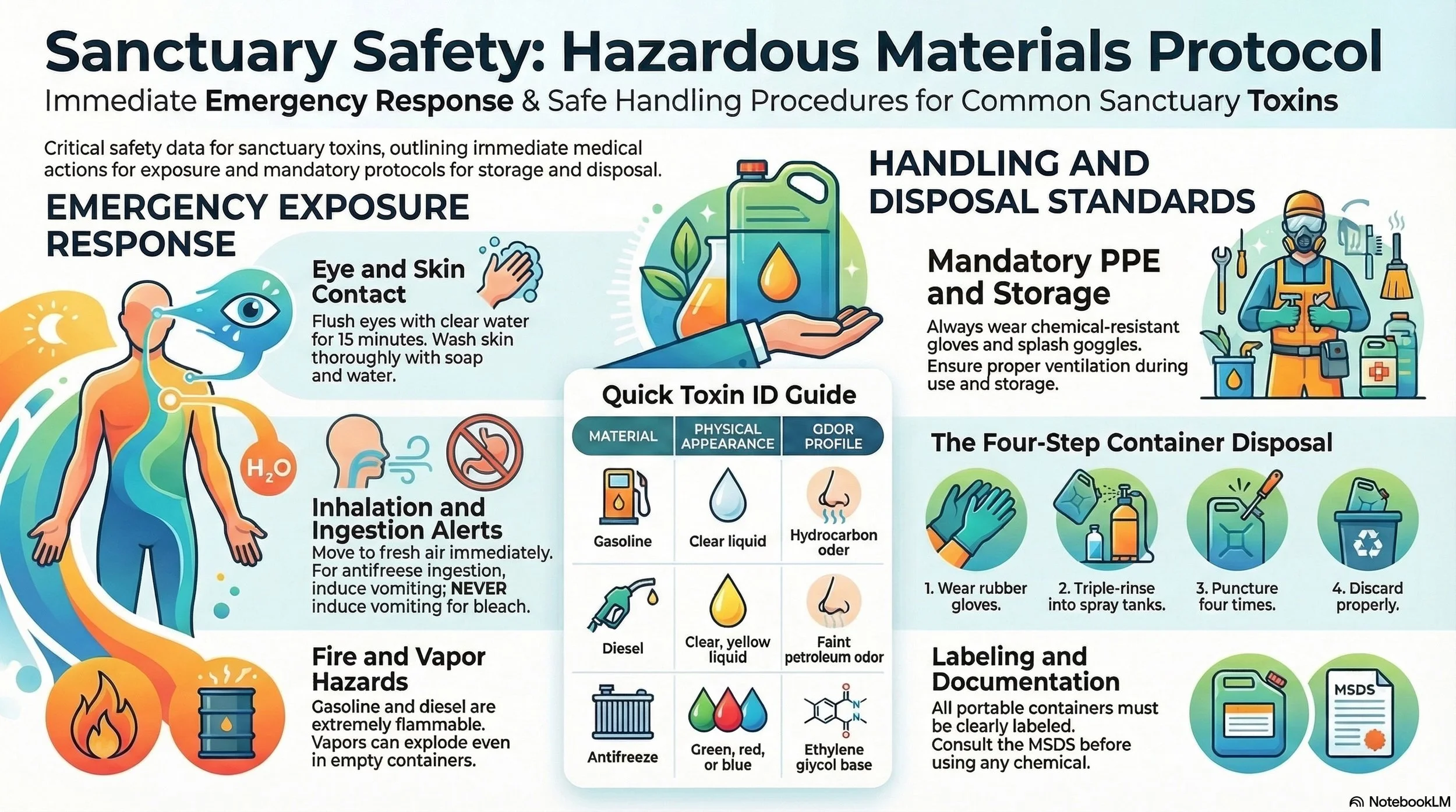
This document outlines the safety protocols and hazard communication strategies established by Big Cat Rescue for managing dangerous substances. It provides specific emergency procedures for accidental contact with various toxins, including automotive fluids, fuels, and industrial cleaners. Beyond immediate first aid, the text details a comprehensive workplace safety program that involves maintaining Material Safety Data Sheets and ensuring all chemical containers are correctly labeled. Detailed instructions are also provided regarding the legal disposal of hazardous waste and the mandatory safety training required for all staff and contractors. Ultimately, these guidelines serve as a structured framework to protect personnel and the environment from the risks associated with toxic materials.


These sources detail the quarantine and specialized care protocols used by Big Cat Rescue to protect both animals and staff from disease. The guidelines outline various reasons for isolation, such as medical recovery, new arrivals, or fragile immune systems, and describe the specific types of enclosures used for these cats. Significant emphasis is placed on rigorous sanitation procedures, including the use of dedicated tools, protective gear, and chemical foot baths to prevent cross-contamination. Workers must follow strict cleaning schedules and waste disposal methods, particularly for indoor hospital cages where animals may be highly agitated. The documents also provide a technical overview of disinfectants, explaining the safe application of bleach and other agents while warning against substances like phenol that are toxic to cats. Ultimately, the materials highlight the balance between maintaining high hygiene standards and ensuring the psychological well-being of the sanctuary's inhabitants.
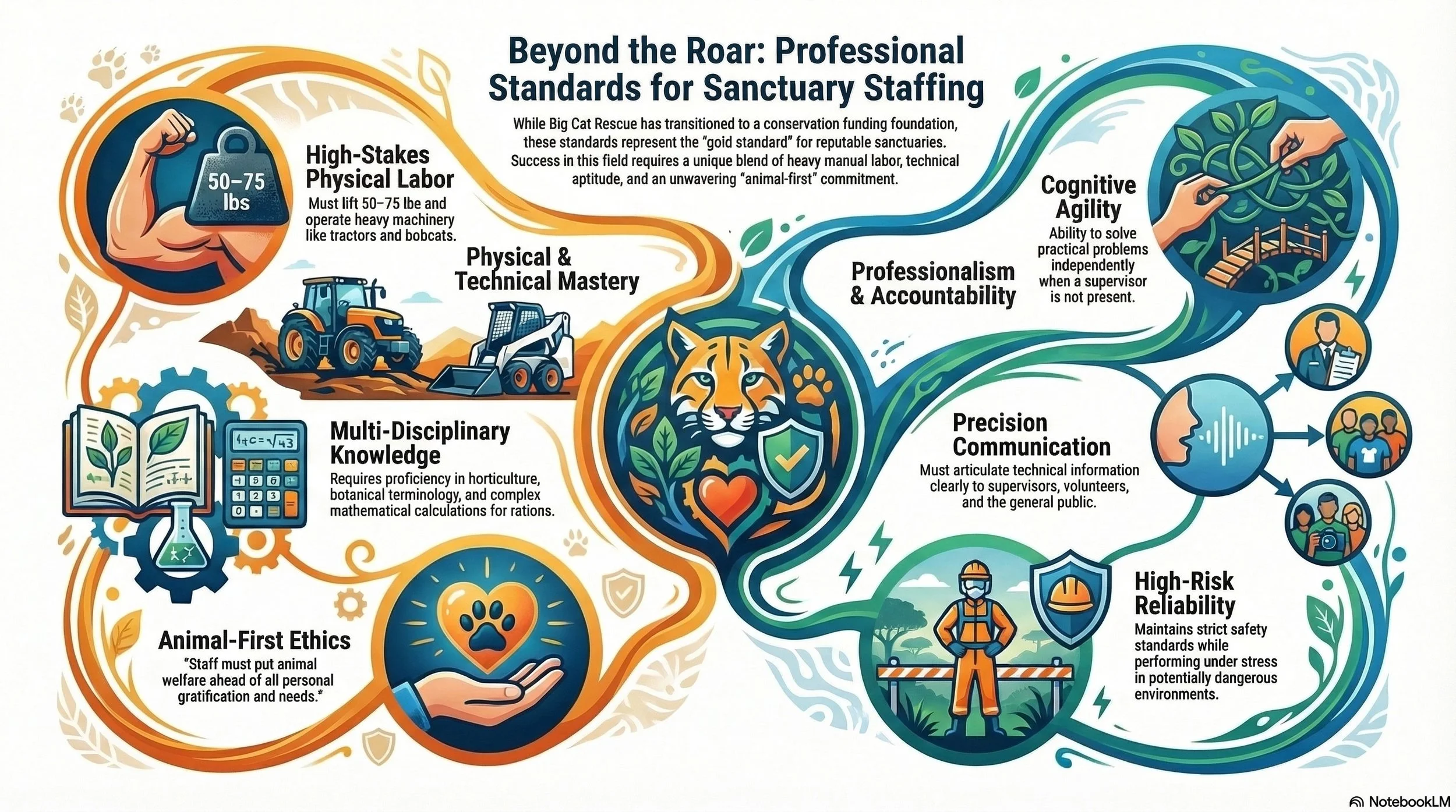
These documents outline the comprehensive requirements and professional standards necessary for individuals seeking employment at a wildlife sanctuary. While the specific organization, Big Cat Rescue, has transitioned into a conservation funding foundation, these guidelines serve as a universal benchmark for the industry. Success in these roles requires intense physical labor, such as operating heavy machinery and lifting significant weight, alongside specialized technical knowledge in horticulture and animal care. Candidates must demonstrate strong interpersonal skills, a disciplined work ethic, and the ability to maintain high safety standards under pressure. Above all, the materials emphasize that the welfare of the animals must always take precedence over personal needs. These sources provide a detailed blueprint of the diverse aptitudes—from mathematical literacy to emotional resilience—needed to manage a reputable animal refuge.
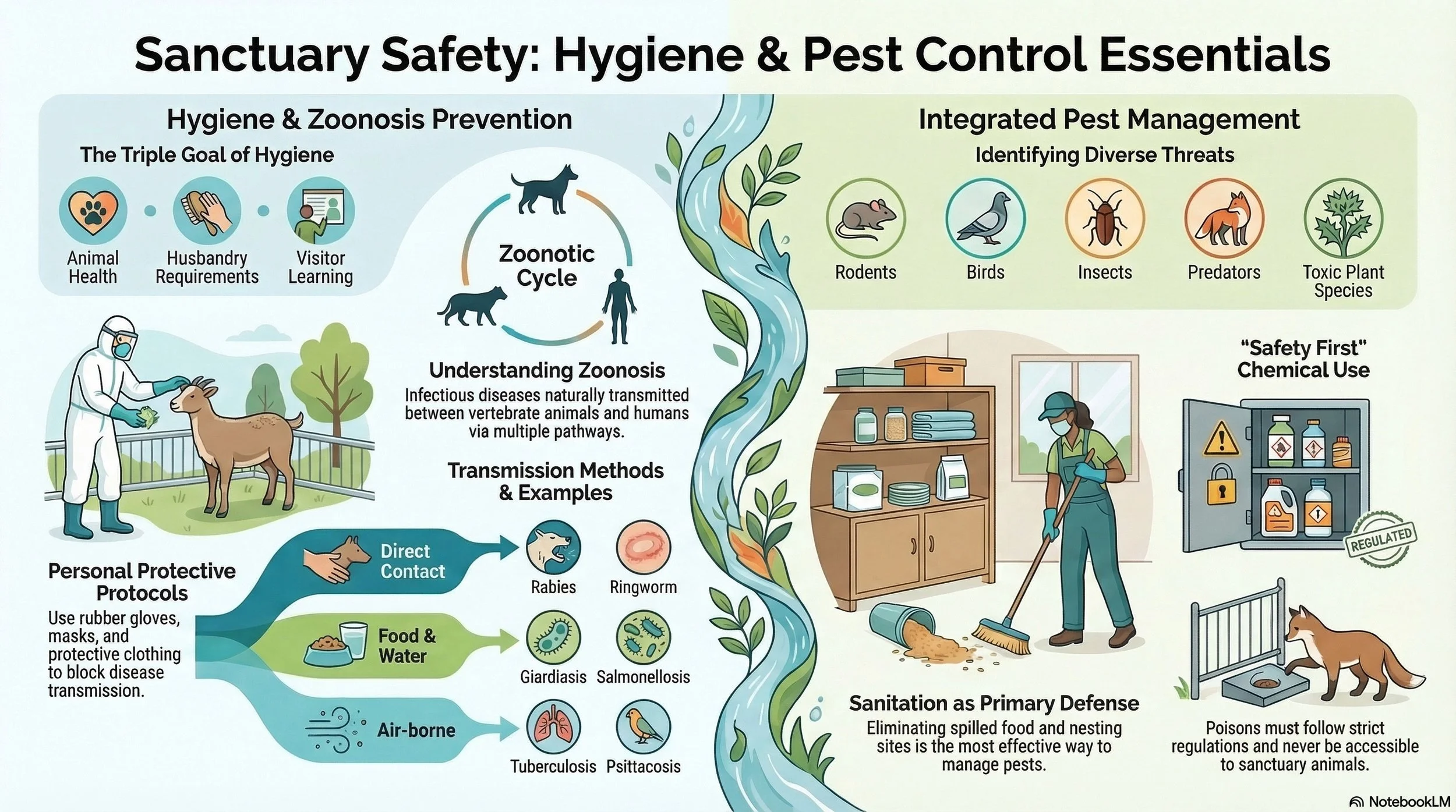
This resource outlines the strict hygiene and pest management protocols used at Big Cat Rescue to ensure the safety of animals, staff, and visitors. The text emphasizes that maintaining a sterile environment is vital for preventing the spread of zoonotic diseases, which are infections that can jump between species. Detailed instructions are provided for personal cleanliness, such as wearing protective gear and reporting minor injuries immediately. Additionally, the source identifies various biological threats like rodents, insects, and wild birds that can contaminate food supplies or act as disease vectors. To mitigate these risks, the organization employs a mix of physical barriers, sanitation routines, and chemical controls. Ultimately, these guidelines serve as a comprehensive manual for responsible sanctuary management and animal husbandry.
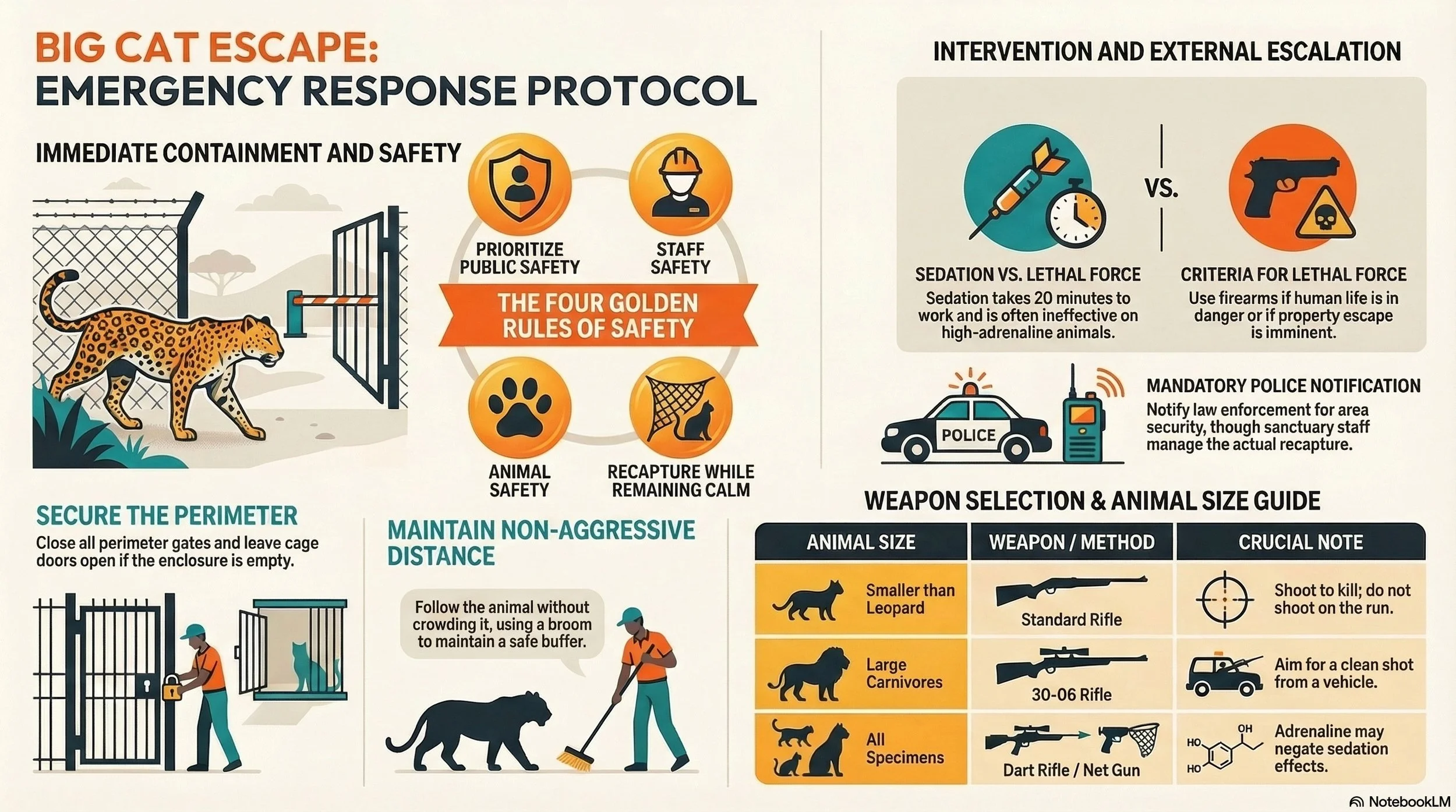
The video outlines the emergency safety procedures established by Big Cat Rescue to manage potential animal escapes. The primary objectives focus on protecting the public, staff, and the animals themselves while maintaining a calm environment to prevent escalation. Protocol instructions detail how to contain cats within perimeter fences using tools like brooms and when to utilize sedation or dart guns. However, the guidelines clarify that if a dangerous predator exits the property and cannot be safely tranquilized, lethal force is legally required to prevent human injury. Finally, the document specifies the necessity of notifying law enforcement to secure the surrounding area while trained sanctuary personnel lead the recovery efforts.
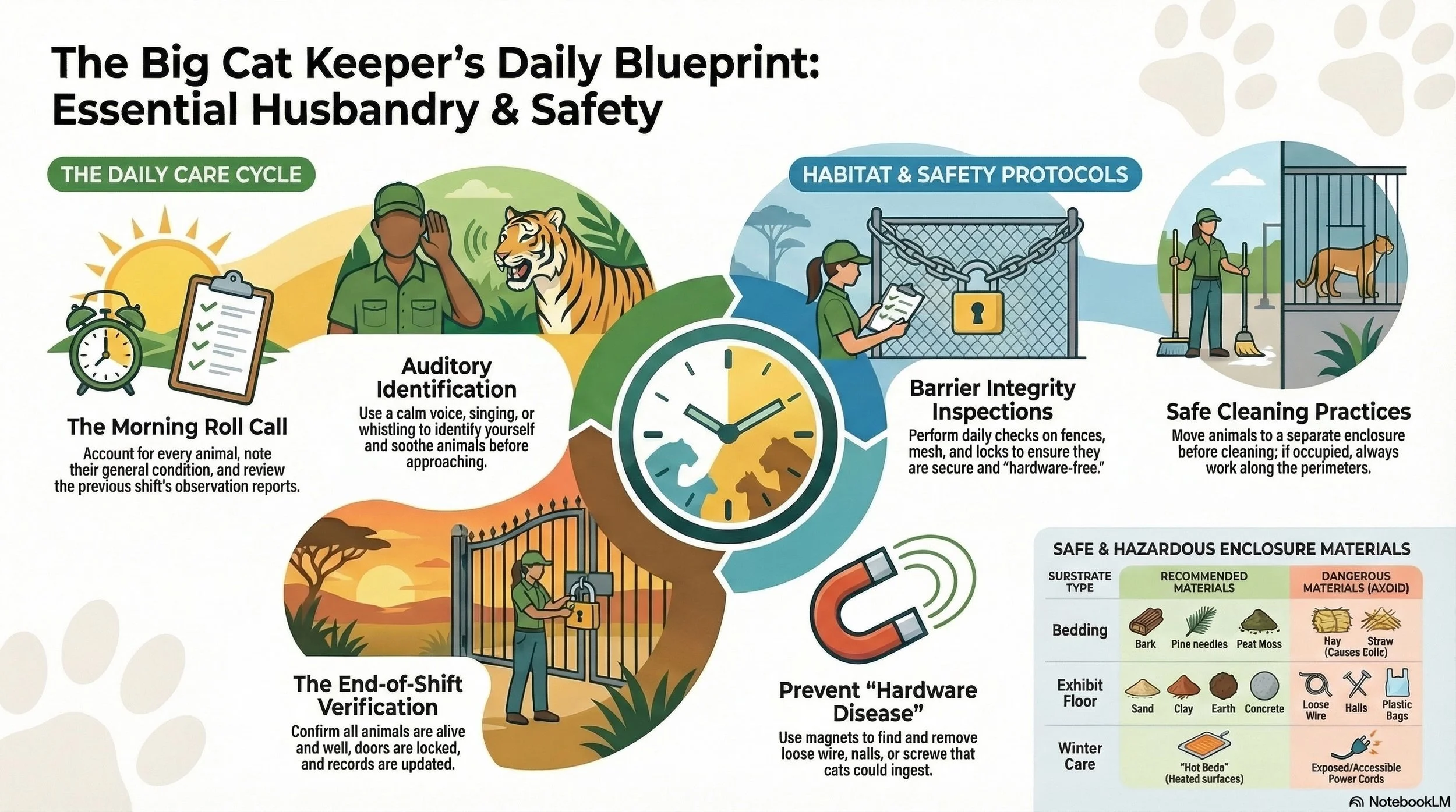
This guide outlines the essential husbandry protocols practiced at Big Cat Rescue to ensure the safety and health of both animals and staff. The text emphasizes that efficient daily routines, including thorough cleaning and scheduled feeding, are vital for minimizing animal stress and preventing accidents. Keepers are instructed to maintain high safety standards by inspecting barriers, removing hazardous foreign objects, and using specialized equipment correctly. Additionally, the manual highlights the importance of resource conservation and adapting care strategies to accommodate seasonal changes or individual animal temperaments. Ultimately, the documentation serves as a comprehensive operational framework for running a sanctuary with a focus on professional discipline and wildlife welfare.
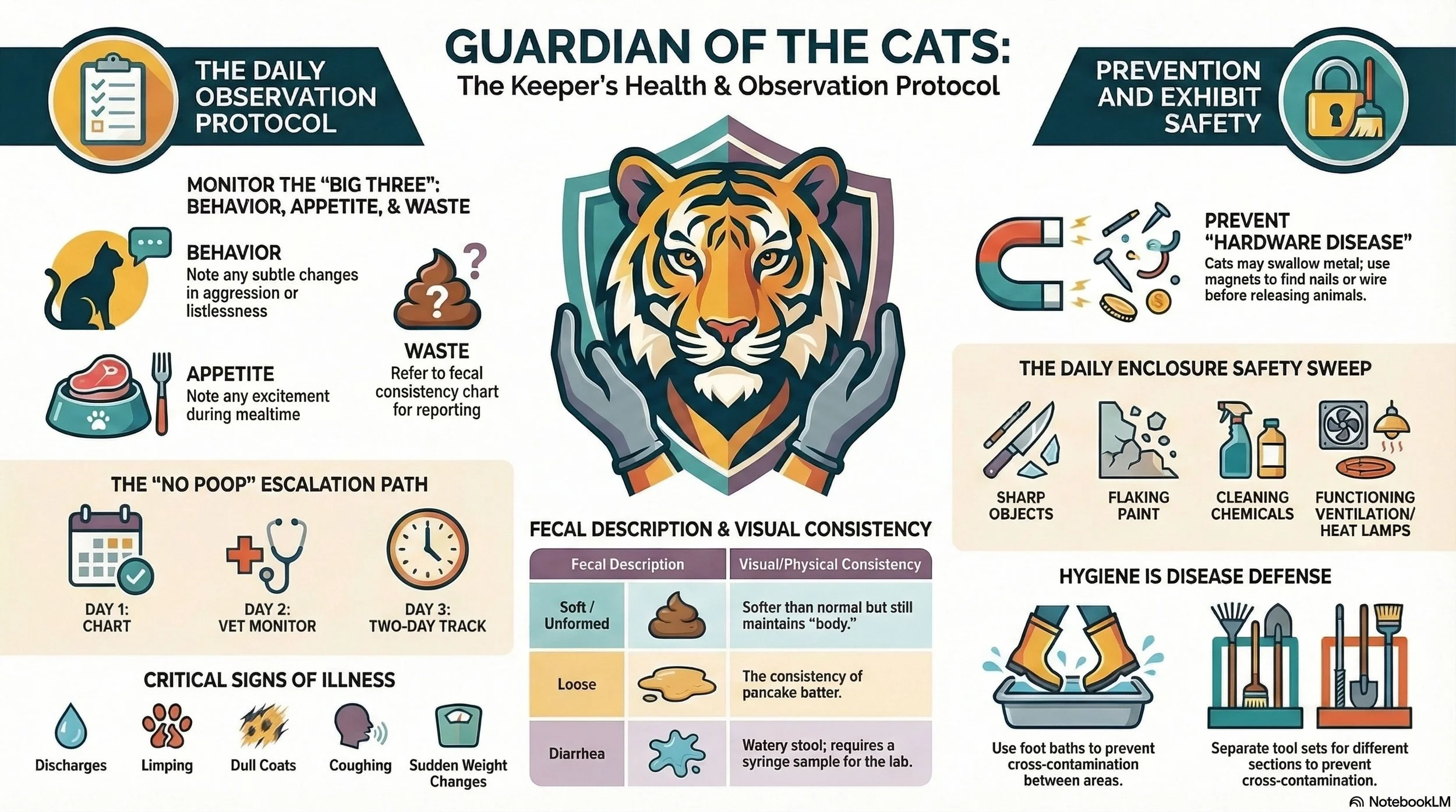
This text outlines the comprehensive animal health protocols and management strategies utilized by Big Cat Rescue to ensure the well-being of their captive exotic felines. It emphasizes that careful observation by keepers is the primary defense against illness, as wild cats instinctively mask symptoms of pain or disease. The documentation provides a detailed diagnostic checklist for monitoring changes in appetite, behavior, and waste production to facilitate early medical intervention. Furthermore, it covers essential sanctuary operations such as disease prevention, proper sanitation, and the logistical handling of medications or necropsies. By maintaining rigorous observation charts and specialized training, the facility aims to mitigate risks associated with the unique physiological and psychological needs of large predators.

This video outlines the comprehensive emergency preparedness protocols established by Big Cat Rescue to ensure the safety of both animals and the public. While the sanctuary relocated its final residents in 2023, the text serves as a best-practices guide for other facilities facing disasters like hurricanes, fires, and medical emergencies. It detail specific infrastructure strategies, such as reinforced "Cat-A-Tat" enclosures and solar-powered fencing, alongside stringent staff training for animal recapture and first aid. The organization maintains extensive on-site resources, including backup generators, specialized transport vehicles, and medical supplies to remain self-sufficient during a crisis. Ultimately, the plan emphasizes a clear chain of command and rigorous drills to mitigate risks associated with housing apex predators.
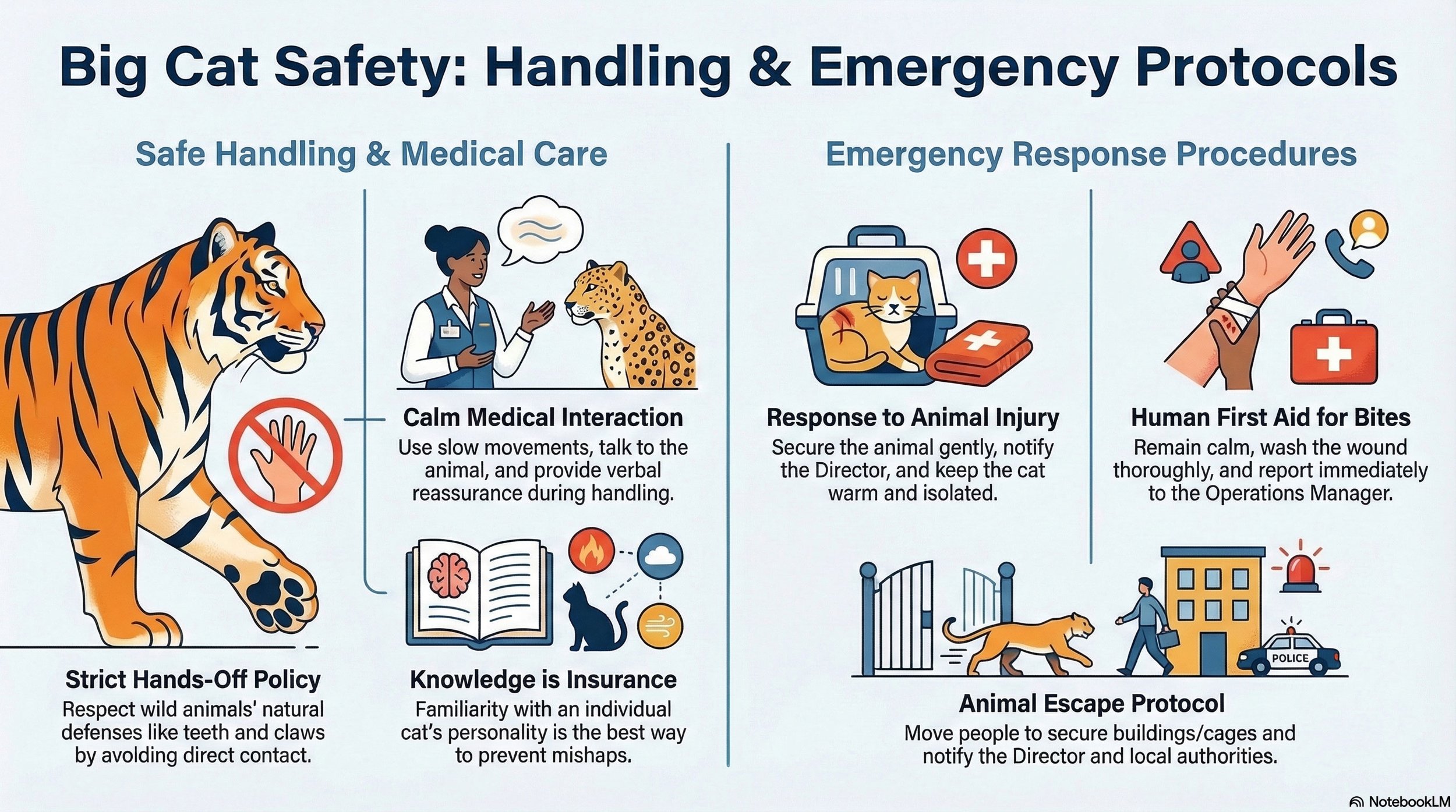
This document provides safety protocols and management guidelines for operating a wildlife sanctuary, specifically focusing on the welfare of large felines. The text emphasizes a hands-off approach to animal care, asserting that intimacy with an animal's unique personality is the best way to prevent physical injury. In the event of an emergency or escape, the guide outlines specific steps for securing the area and reporting the incident to authorities. Medical interactions are strictly limited to necessary health procedures conducted with patience and calm, deliberate movements. Furthermore, the source details first aid requirements for staff members who may experience a bite or scratch while on duty. Ultimately, the material serves as an educational framework for maintaining a secure environment for both captive predators and their human caretakers.
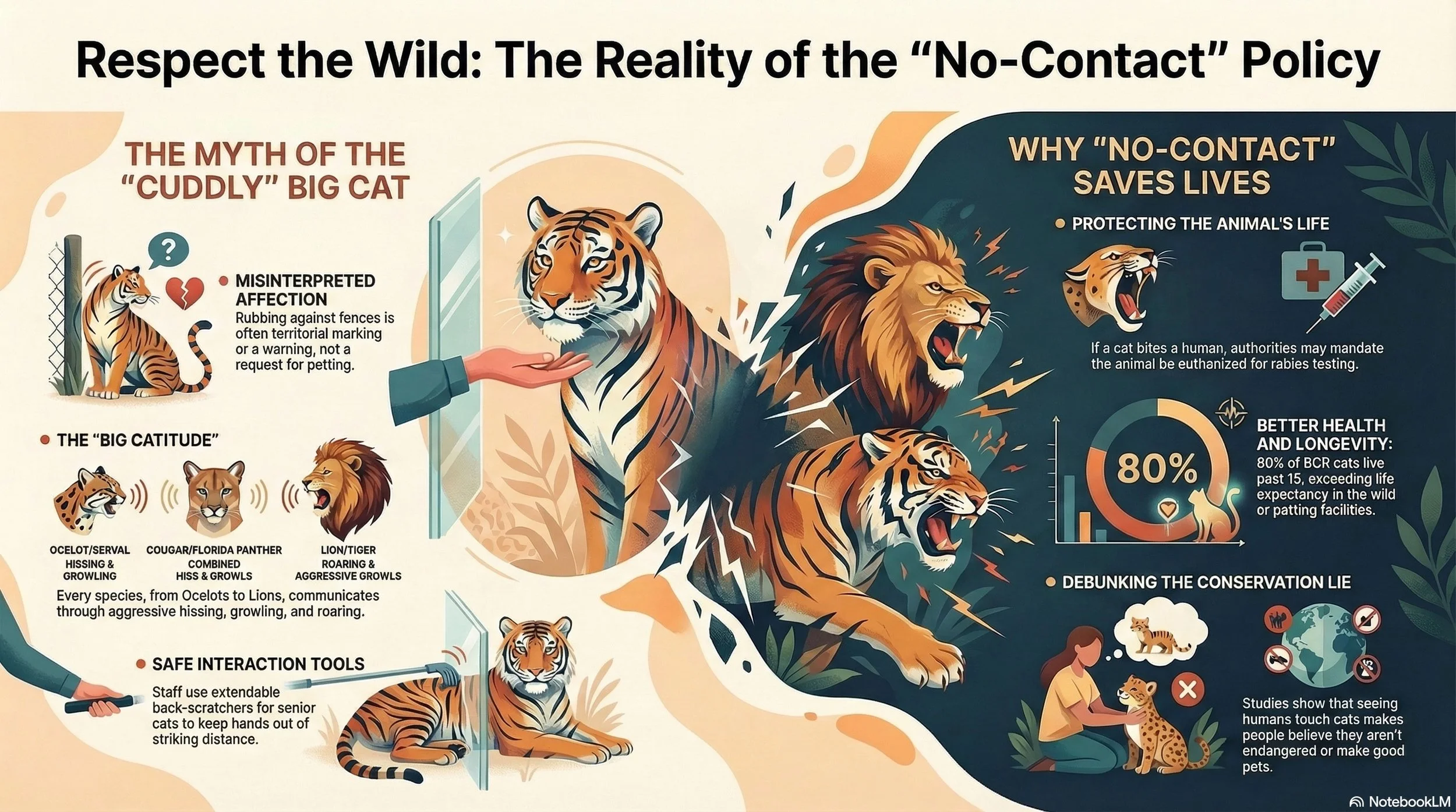
This source explores why Big Cat Rescue maintains a strict no-contact policy between humans and exotic felines. Written by Carole Baskin, the article argues that petting wild animals is a dangerous practice that promotes the exploitative exotic pet trade and spreads misinformation about conservation. While the facility uses long-reach tools to help elderly cats groom, they clarify that behaviors like rubbing against fences are signs of territorial marking rather than a desire for affection. The text systematically dismantles common justifications for physical interaction, labeling them as egotistical myths that prioritize human entertainment over animal welfare. Ultimately, the sanctuary emphasizes that respecting these solitary predators requires acknowledging their wild nature rather than treating them like domestic pets.
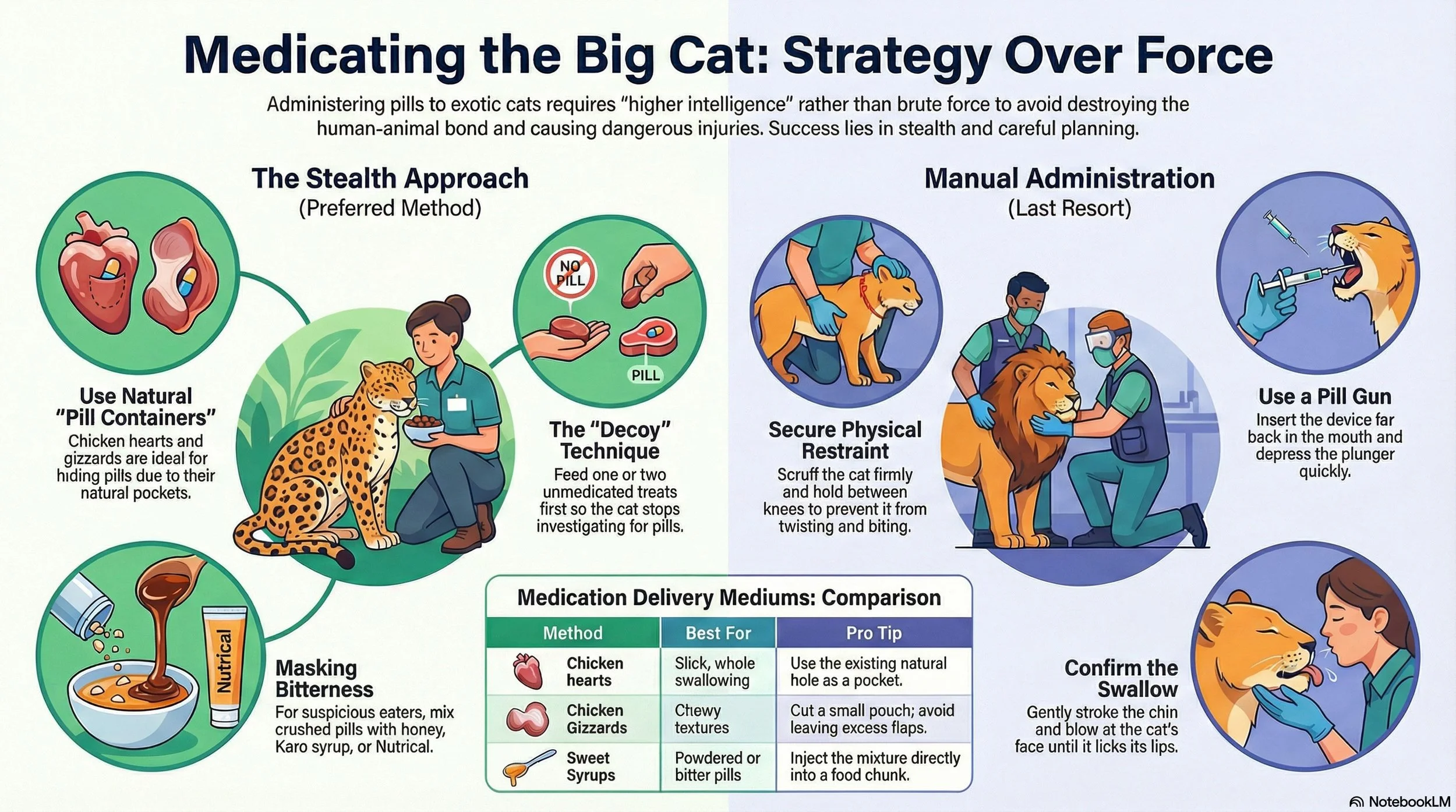
This source provides a guide on the challenges and techniques involved in administering medication to exotic cats within a sanctuary setting. Author Carole Baskin emphasizes using intelligence over force, noting that physically restraining these powerful animals can permanently damage the bond of trust between a keeper and a cat. To avoid trauma, the text recommends hiding pills in food like chicken hearts or gizzards, which allows the animal to ingest medicine without realizing it. If a cat is too suspicious to eat treats, the article suggests masking the taste with sweet syrups or using a pill gun as a last resort. Ultimately, the guide underscores that consistent dosing is vital for a cat's recovery, while warning that a negative experience during treatment can lead to long-term behavioral issues.
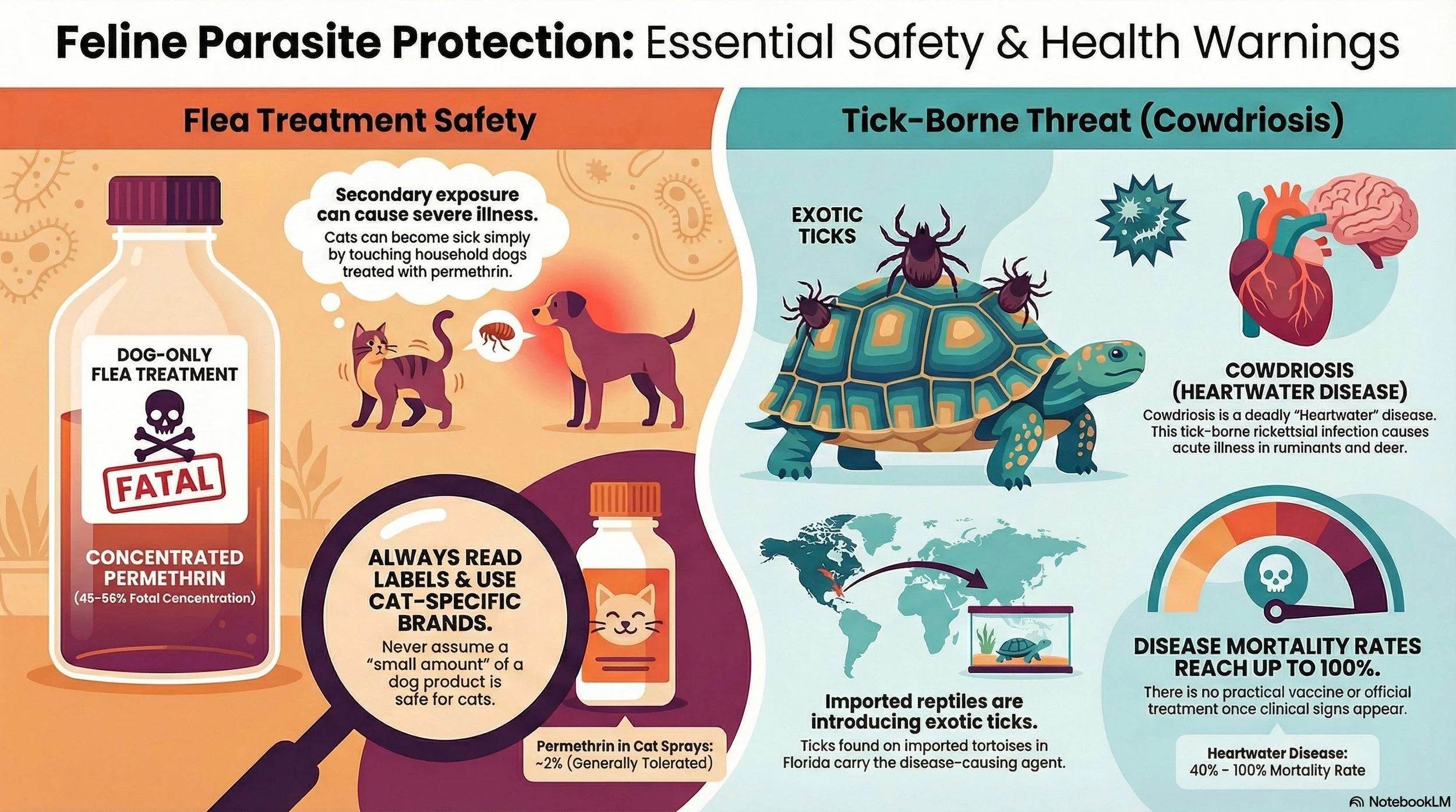
The provided text serves as a safety guide and ecological warning regarding the dangers parasites pose to domestic and wild animals. It highlights the critical risk of feline mortality when owners mistakenly apply flea treatments formulated specifically for dogs, emphasizing that even trace amounts of permethrin can be fatal to cats. Beyond household pets, the sources address the biosecurity threat of exotic ticks entering Florida via the reptile trade. These invasive pests carry heartwater disease, a condition that could devastate the American cattle and deer industries if it becomes established. Ultimately, the text advocates for vigilant label reading, stricter importation regulations, and continued veterinary research to prevent domestic poisoning and large-scale environmental outbreaks.
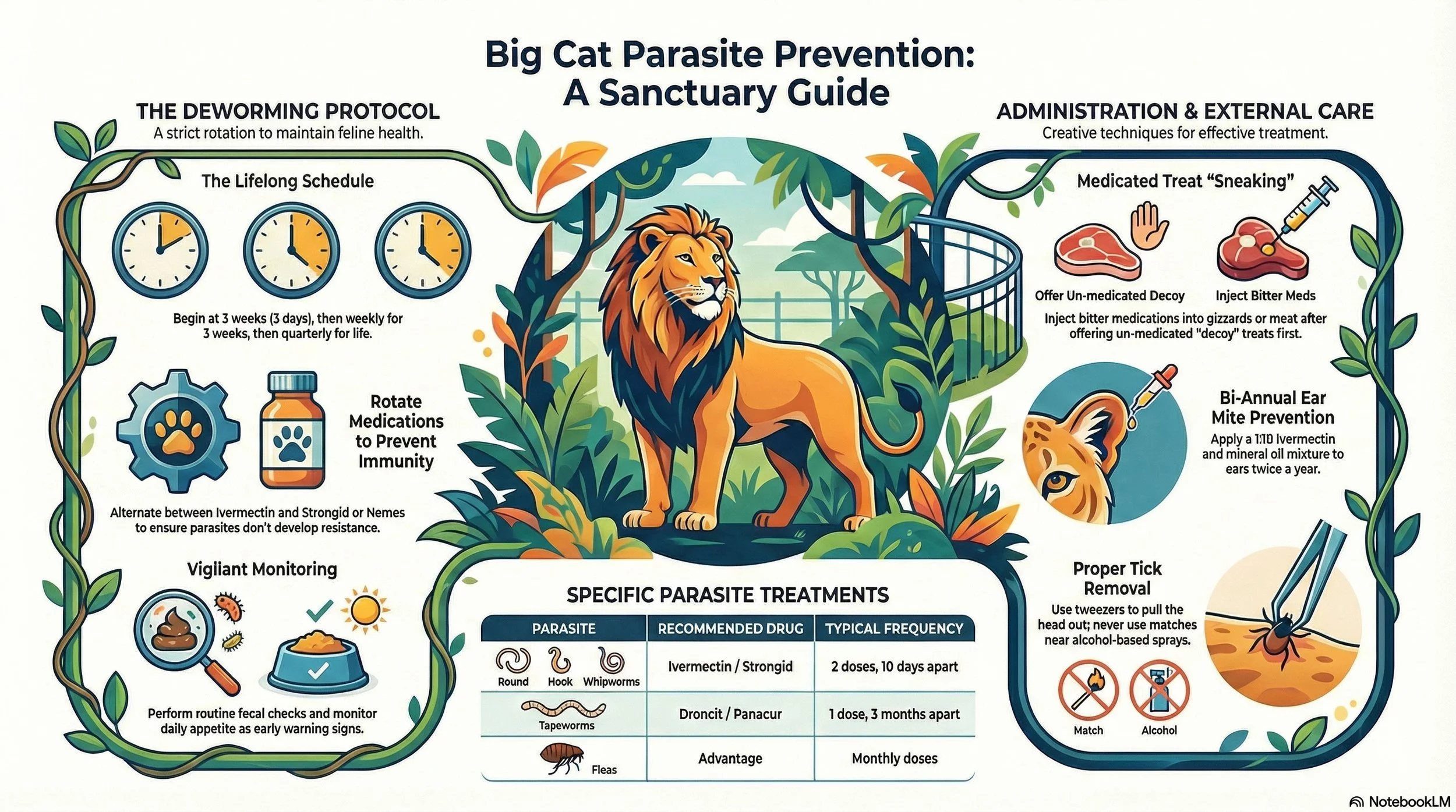
This resource details the comprehensive protocols used by a sanctuary to manage parasite prevention and treatment in exotic cats. The text emphasizes a rigorous schedule for administering dewormers to both kittens and adults, utilizing specific medications like Ivermectin and Strongid to combat internal pests. It also provides practical techniques for delivering medicine, such as hiding oral doses within meat treats or using physical restraint for ear treatments. Beyond internal worms, the guide addresses external threats like ear mites, fleas, and ticks, describing how to identify symptoms and apply preventative solutions. Ultimately, the author stresses the importance of vigilant monitoring to prevent severe health complications or death caused by heavy infestations.
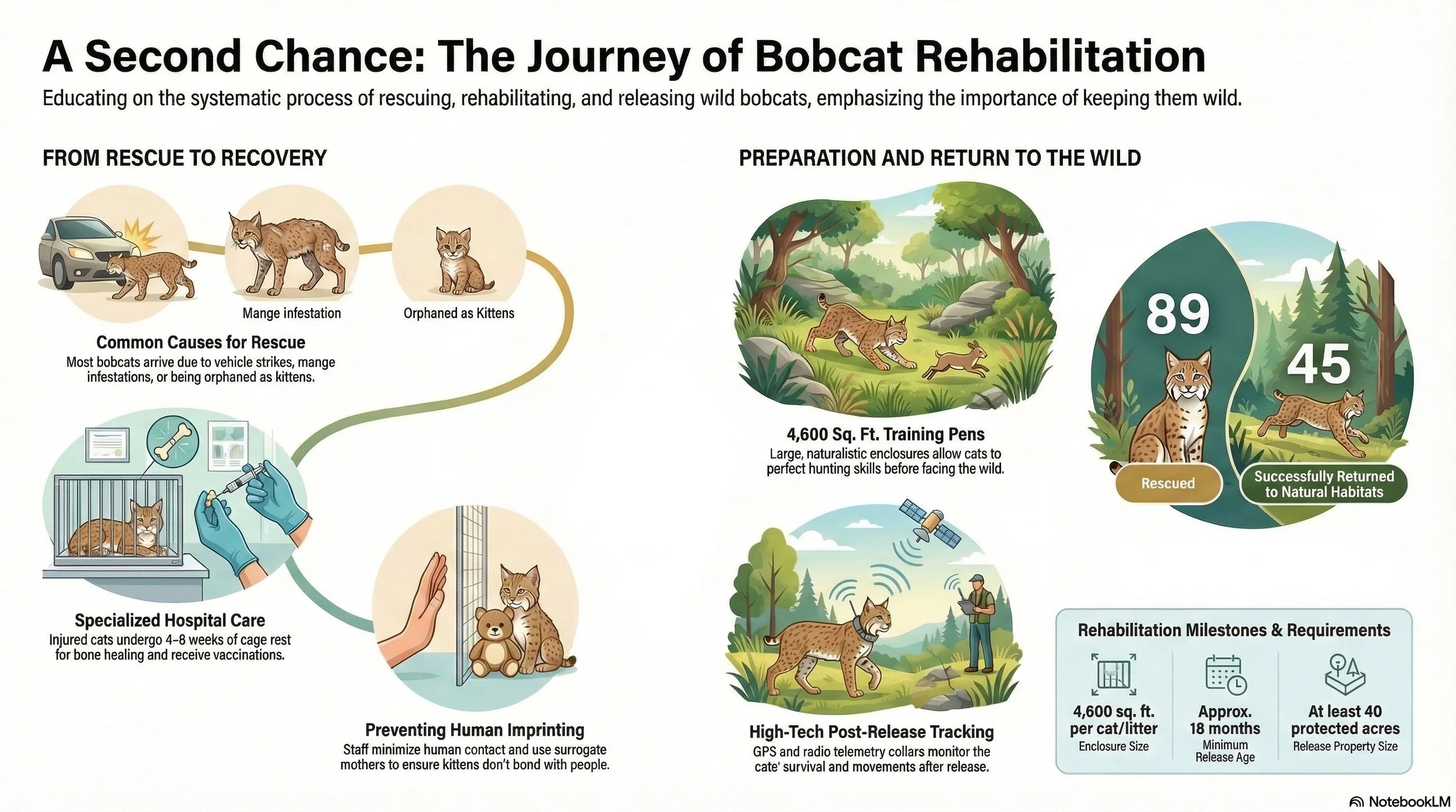
The provided sources detail the comprehensive rehabilitation and release program for wild bobcats managed by Big Cat Rescue. These records explain that the organization takes in animals suffering from car strikes, diseases, or maternal separation with the ultimate goal of returning them to their natural habitats. To ensure successful reintegration, rescuers use specialized medical equipment, naturalistic enclosures, and strict protocols to prevent human imprinting. The texts also highlight the use of GPS tracking collars to monitor the post-release survival and movements of the cats. Additionally, the materials serve to educate the public on how to coexist with these predators and emphasize the importance of protecting Florida’s native wildlife.
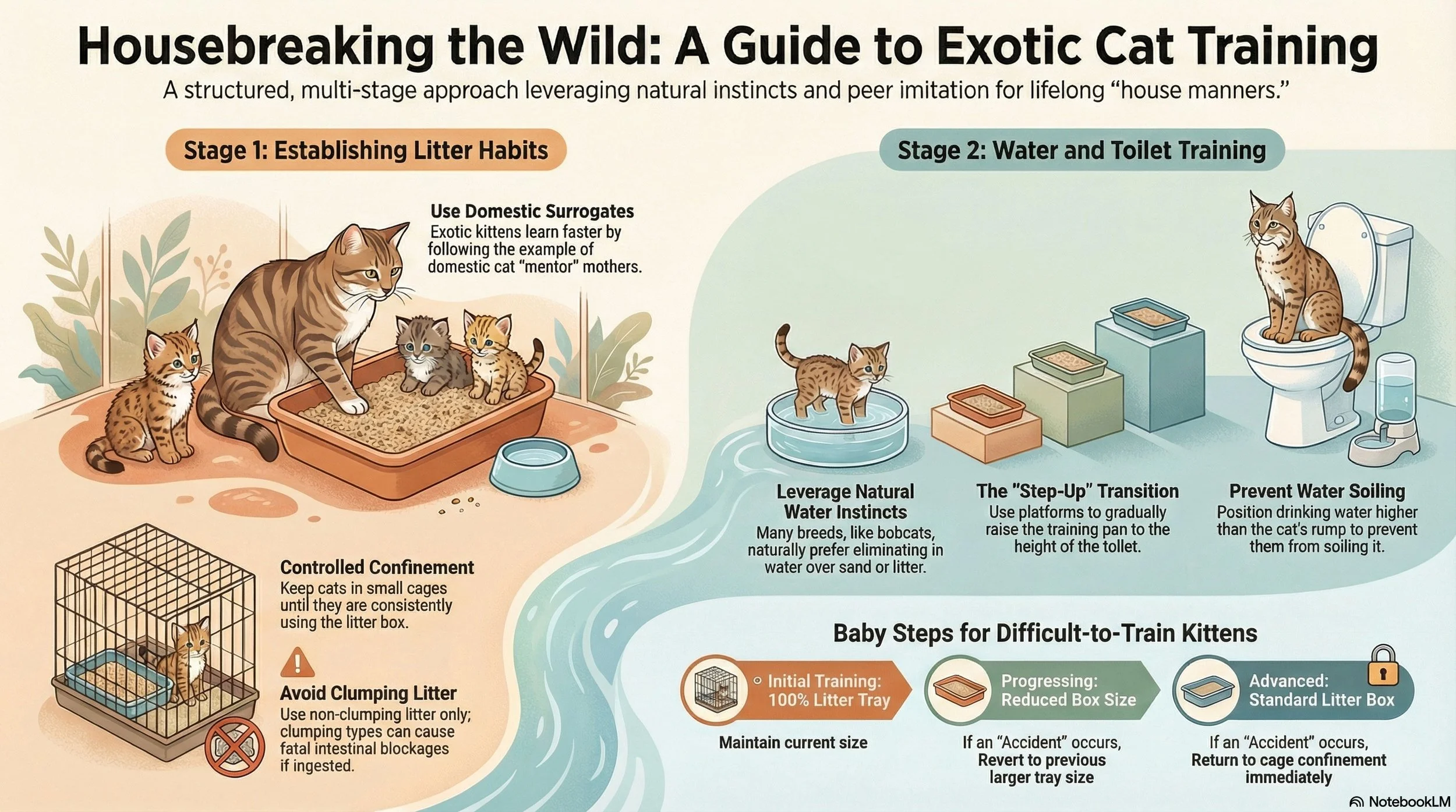
This guide from Big Cat Rescue provides detailed strategies for litter box training exotic cats by utilizing domestic surrogate mothers to model appropriate behavior. It suggests various methods for housebreaking different species, such as using water pans for bobcats or employing caged confinement to reinforce clean habits. Beyond practical training tips, the text highlights the significant behavioral challenges of keeping wild felines, including the unavoidable issue of territorial spraying. The author strongly advises against participating in the exotic pet trade, noting that many discarded animals end up in cruel hunting ranches. Ultimately, the resource emphasizes that while training is possible, these animals are better suited for specialized sanctuaries than private homes.
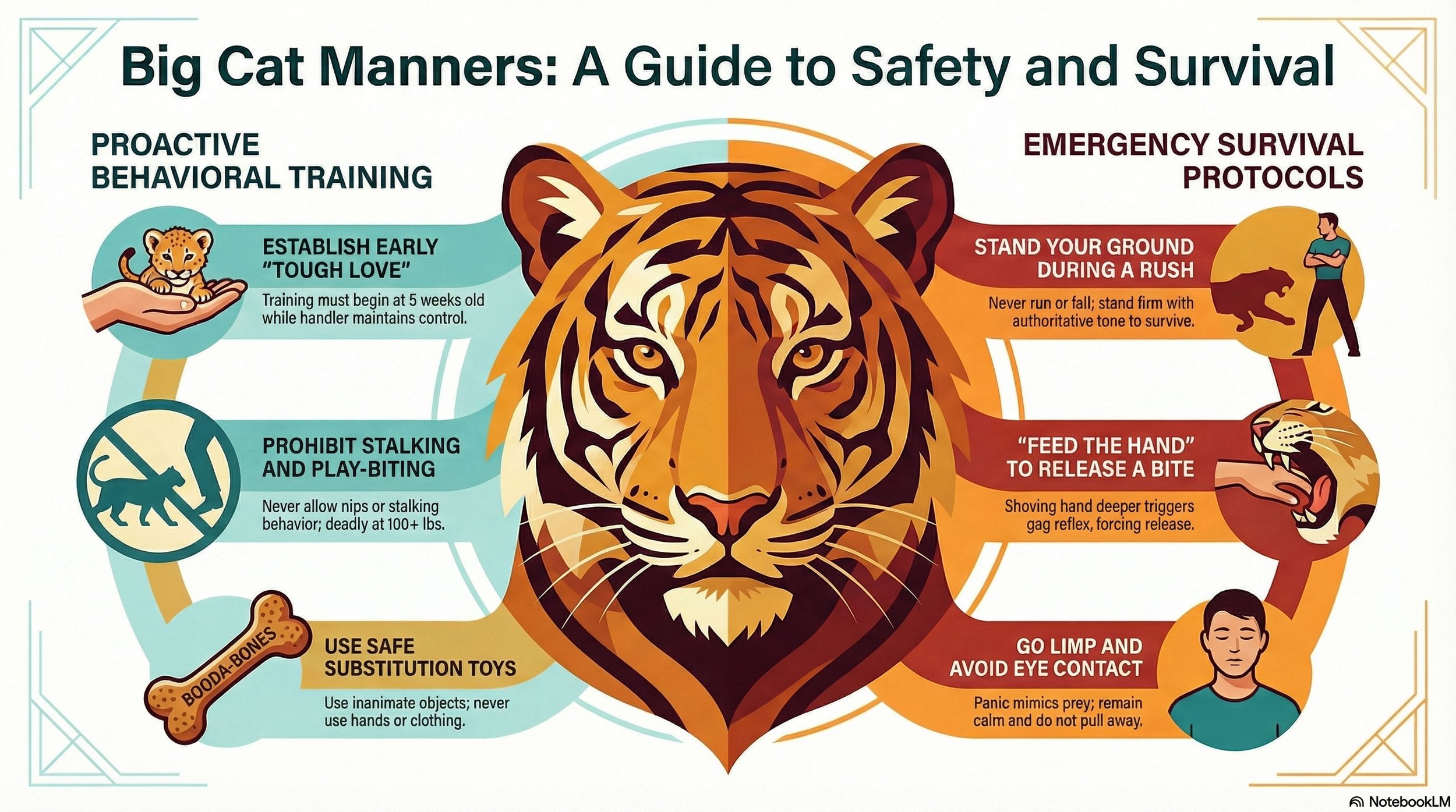
This text provides comprehensive guidance on the disciplined upbringing and behavioral management of captive big cats. It emphasizes that these animals can never be truly domesticated, requiring owners to establish firm boundaries and consistent rules from a very young age. The author outlines specific safety protocols for handling aggressive encounters, such as remaining calm during a "rush" and avoiding the instinct to pull away during a bite. Furthermore, the source offers practical advice on enrichment, recommending durable toys like hard plastic balls while warning against items that resemble human clothing. Ultimately, the guide advocates for a relationship built on respect and authority rather than physical force or dangerous attempts at taming.

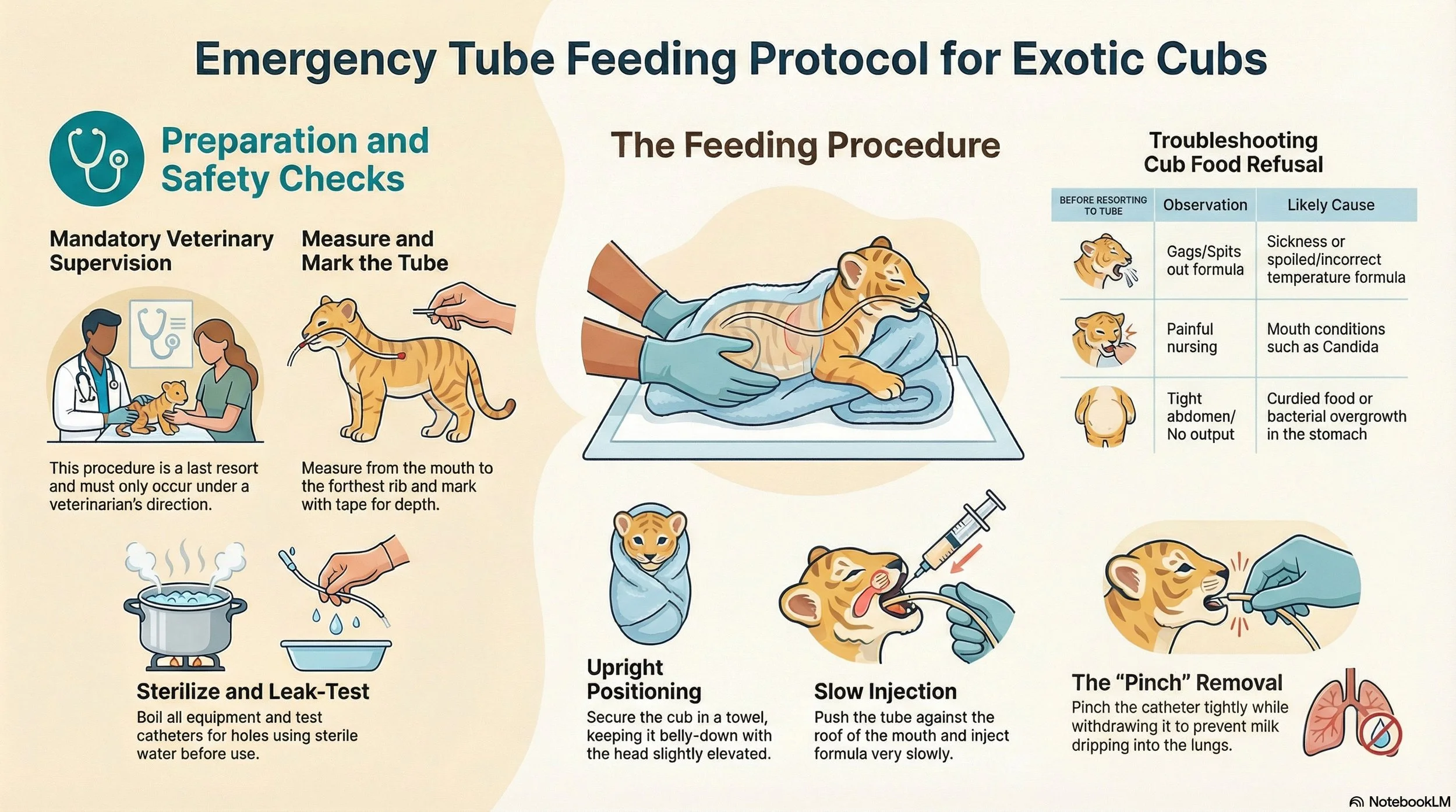
This guide from Big Cat Rescue provides detailed instructions on how to tube feed exotic kittens and cubs when they refuse to eat. The author emphasizes that this procedure is a dangerous last resort that should ideally be performed under professional veterinary supervision. Detailed safety protocols are outlined, including how to measure the catheter, avoid the lungs, and prevent the animal from biting the tube. The text also covers emergency measures for choking and explains how to remove spoiled food from a cub's stomach. Ultimately, the source serves as a technical resource for those caring for exotic cats in crisis while advocating for an end to the private pet trade.
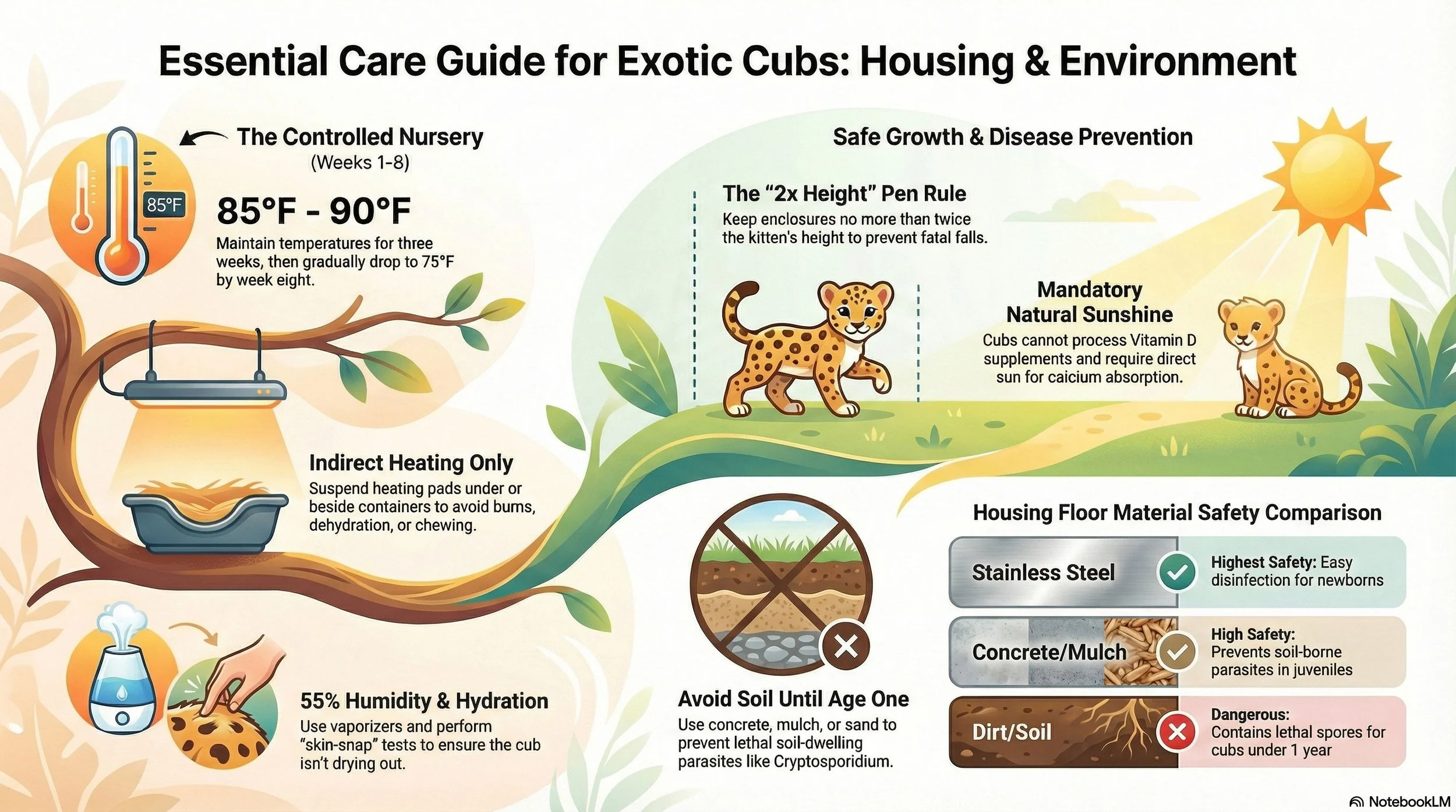
This resource from Big Cat Rescue provides essential instructions for the intensive care and housing of exotic feline kittens and cubs. The guide emphasizes the importance of precise temperature control, recommending that young cats be kept in specialized nurseries or containers between 85 and 90 degrees to survive. Practical advice is offered on sanitation and safety, highlighting the use of stainless steel materials and the prevention of physical injuries from climbing or falling. Additionally, the text addresses health risks such as dehydration, bacterial infections from nursing on littermates, and soil-borne parasites. Beyond physical care, the organization advocates for legislative change and education to end the private trade of these wild animals. Ultimately, the source serves as a specialized manual for those already tasked with raising exotic cats while discouraging the breeding of these species for captivity.
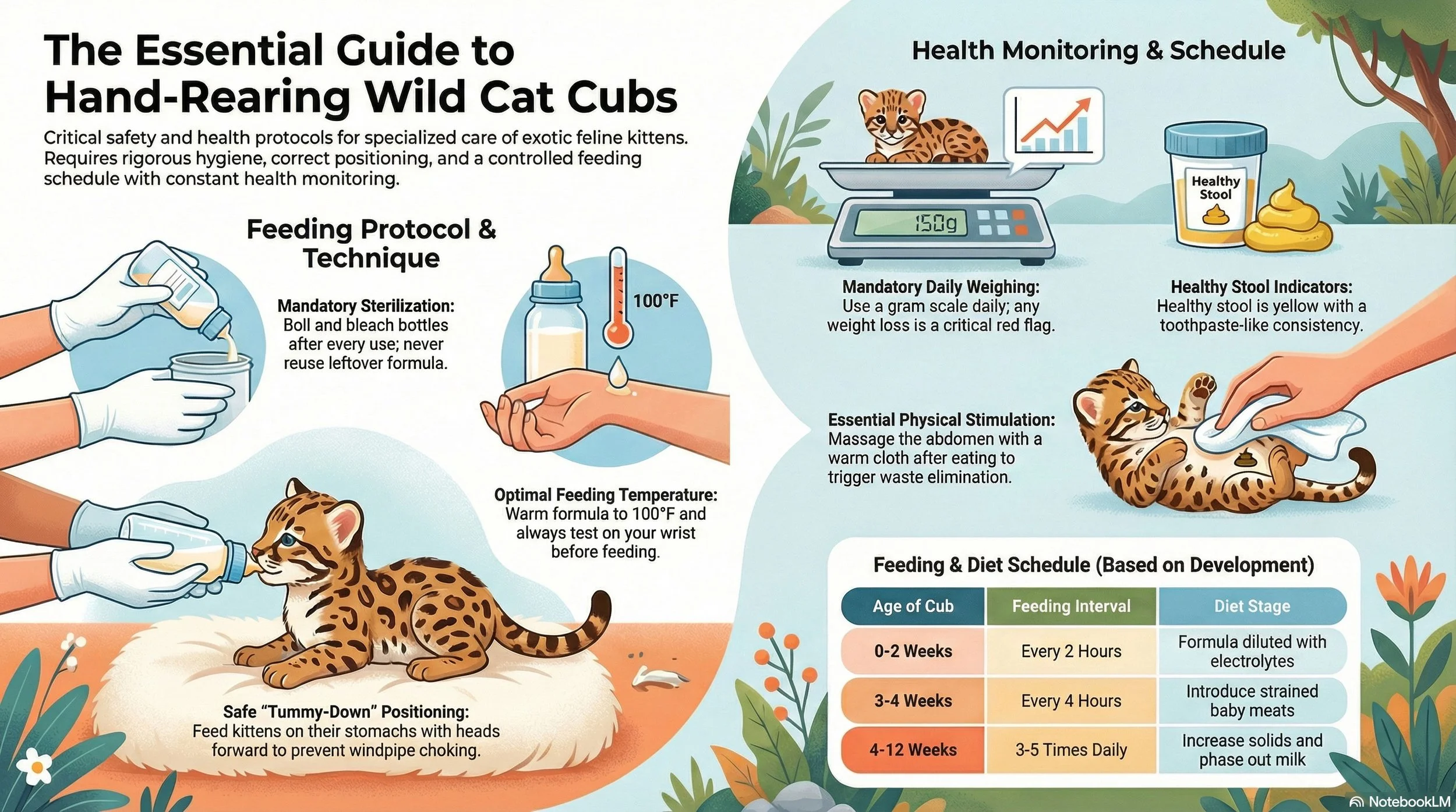
This guide from Big Cat Rescue provides comprehensive instructions on the specialized care and hand-rearing of wild cat kittens and cubs. While emphasizing that maternal care is always superior, the author details critical technical skills such as sterilizing equipment, modifying bottle nipples, and maintaining proper feeding postures. The text places a high priority on medical monitoring, urging caretakers to track weight precisely and observe waste for signs of bacterial infections or parasites. Beyond nutrition, the source covers essential hygiene practices, including stimulating waste elimination and safe methods for pest control. Throughout the manual, a strong conservationist stance is maintained, discouraging the exotic pet trade while offering life-saving advice for animals already in human custody.
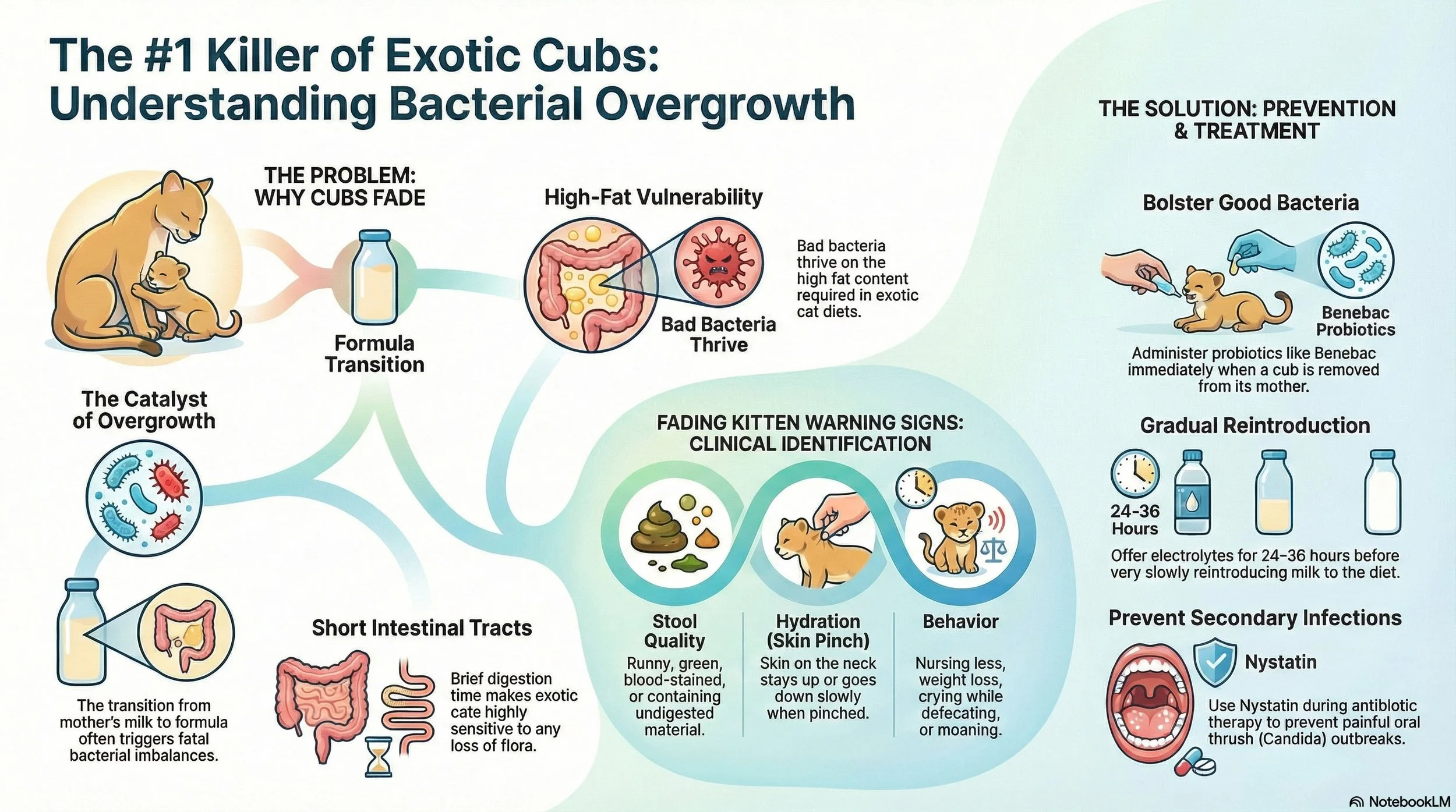
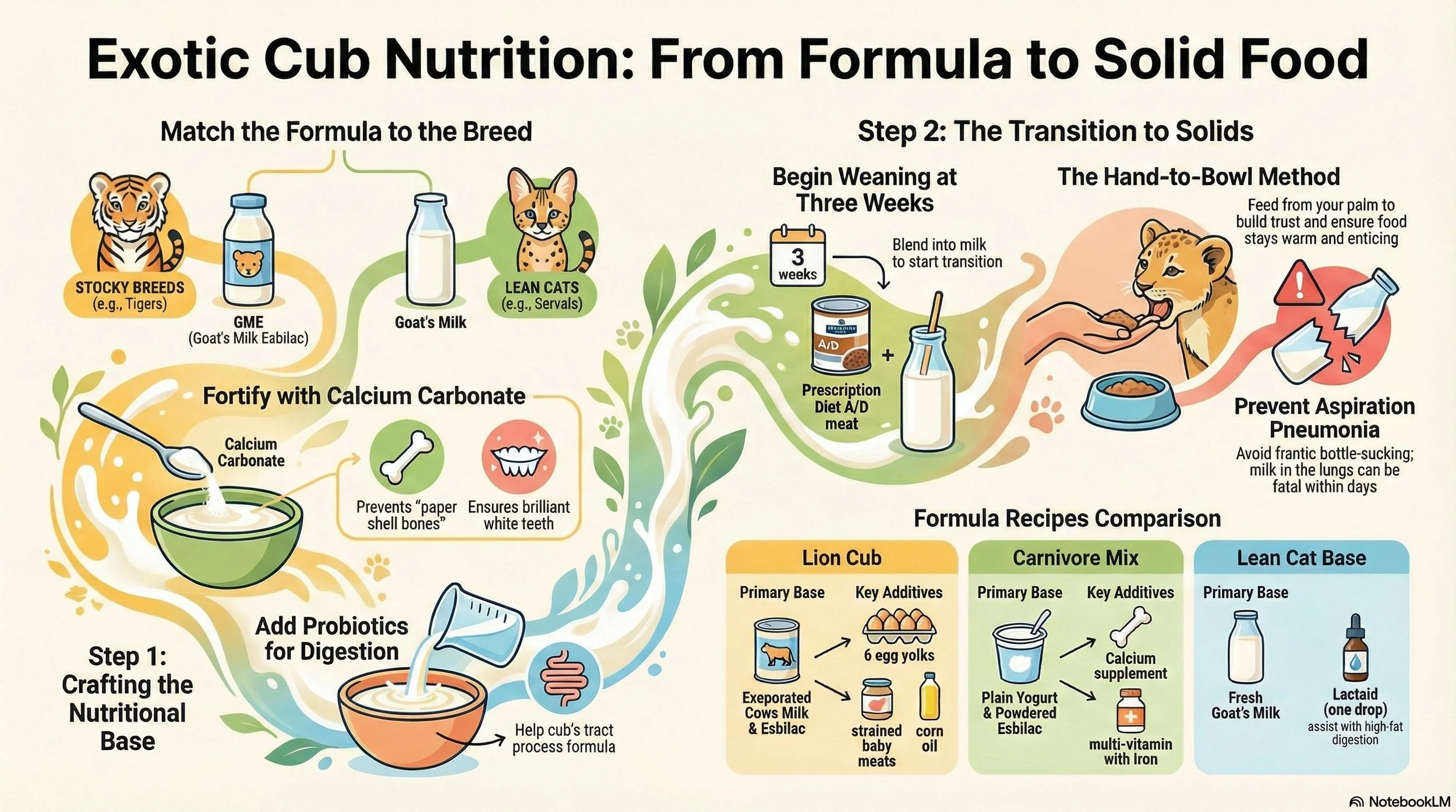
This source outlines the mission and medical observations of Big Cat Rescue, specifically focusing on the dangers of bacterial overgrowth in exotic kittens. After shifting from breeding to sanctuary operations, the organization now emphasizes that human interference in a cub's diet often disrupts the delicate intestinal flora essential for survival. The text explains that exotic cats possess short digestive tracts, making them highly susceptible to fatal infections and starvation when mother’s milk is replaced by formula. To combat these risks, the author suggests a strict regimen involving probiotics, specialized electrolytes, and antifungal medications to manage the side effects of antibiotics. Detailed clinical signs of fading kitten syndrome and inflammatory bowel disease are provided to help caregivers identify life-threatening symptoms early. Ultimately, the guide serves as a warning against the exotic pet trade while offering practical advice for the emergency care of vulnerable felines.
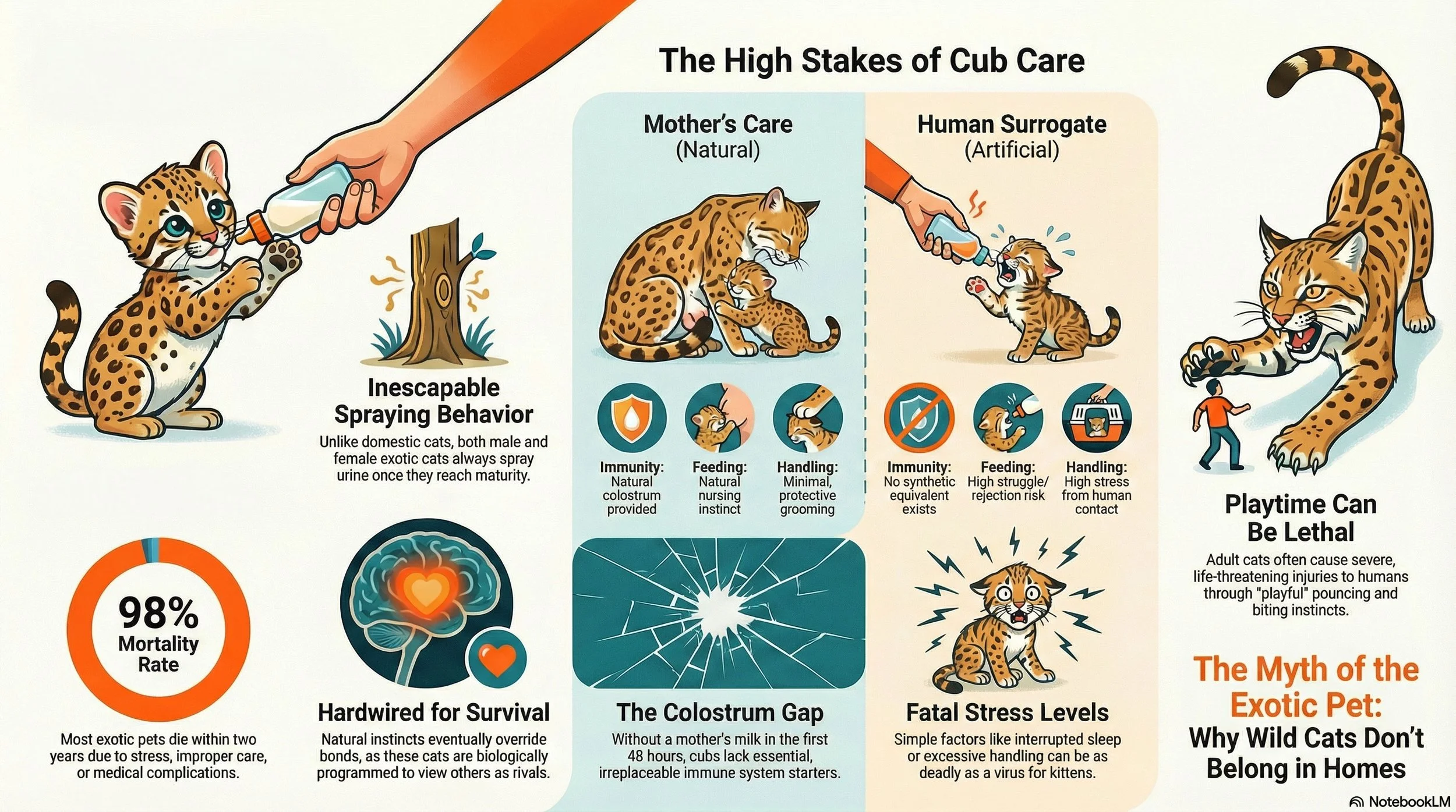
These sources outline the evolution and philosophy of Big Cat Rescue, moving from an involvement in the exotic pet trade to a mission focused on ending the breeding and ownership of wild cats. The text emphasizes that exotic cats cannot be domesticated and provides critical care instructions solely to prevent the death of kittens already displaced by the pet industry. It highlights the immense physical and emotional demands of hand-rearing these animals, including the necessity of natural colostrum for immunity and the dangers of human bonding. Furthermore, the documents warn of the inherent risks to owners, noting that mature cats retain wild instincts that make them dangerous even in play. Ultimately, the materials advocate for legislation and education to ensure these animals are no longer subjected to a life of captivity.
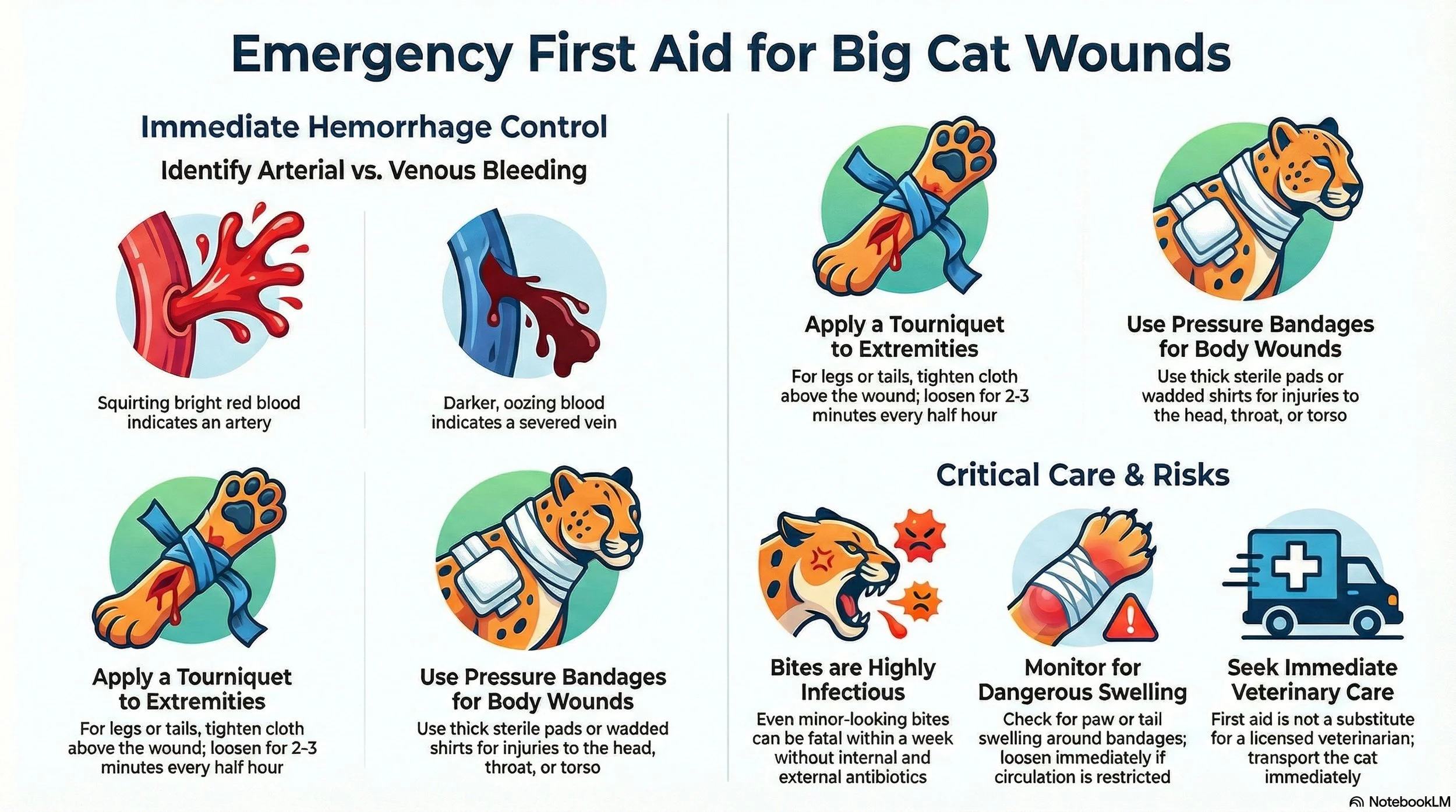
This text provides essential emergency first aid instructions for managing bleeding and injuries in large cats. It distinguishes between arterial and venous bleeding, offering specific techniques such as applying tourniquets or pressure bandages depending on the wound's location. The author emphasizes the hidden dangers of bite wounds, noting that they carry a high risk of lethal infection even when they appear minor. Throughout the guide, there is a strong focus on minimizing bacterial exposure and monitoring for physical complications like swelling. Ultimately, the source serves as a temporary guide for stabilizing an animal while stressing that professional veterinary intervention is always required for survival.
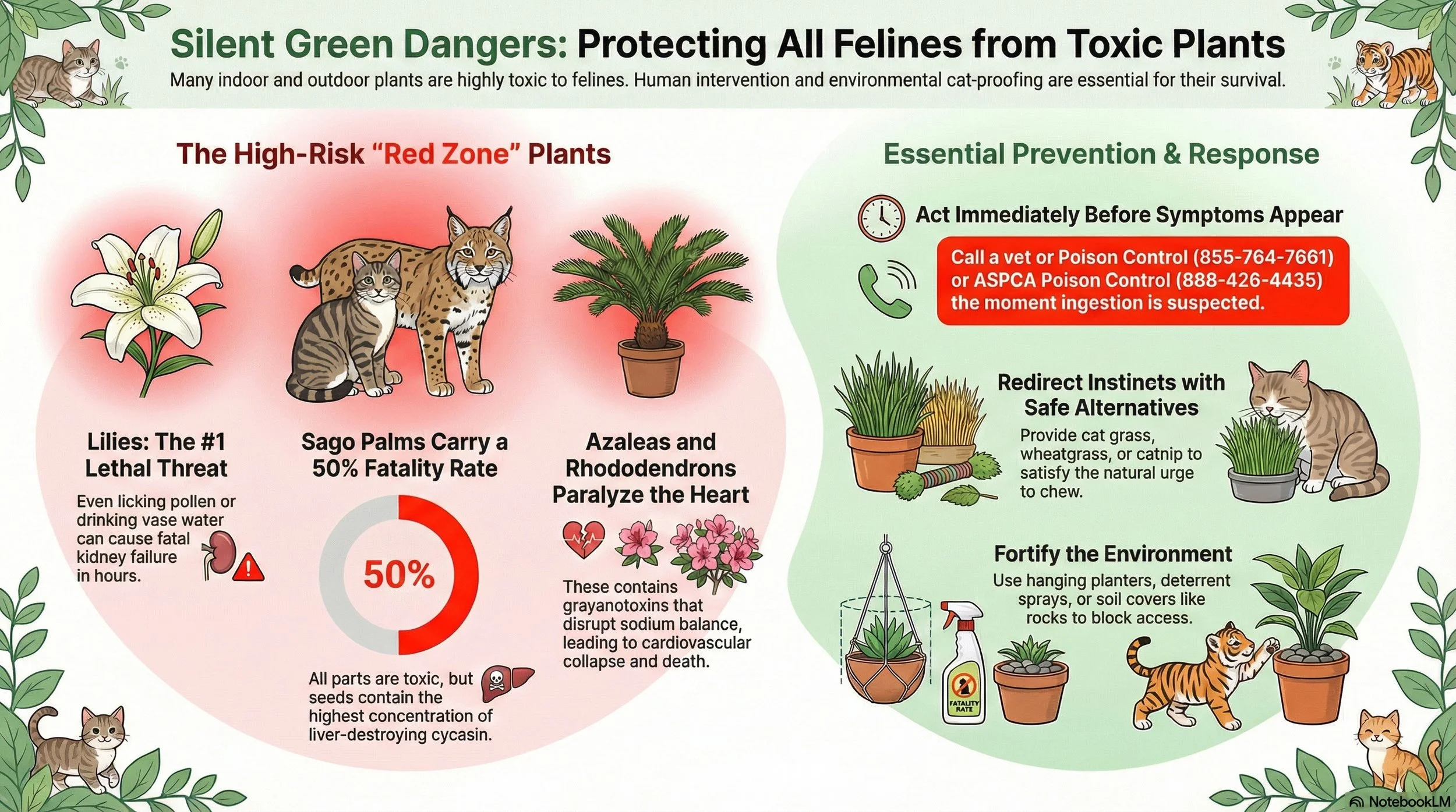
These professional resources highlight the serious dangers that numerous common indoor and outdoor plants pose to feline health. Organizations like the ASPCA and Chewy categorize various species—most notably lilies, sago palms, and azaleas—as highly toxic, often leading to organ failure or death. The guides detail critical poisoning symptoms such as vomiting and lethargy, while urging owners to seek immediate veterinary care after any suspected exposure. To foster a safe environment, experts suggest replacing hazardous greenery with non-toxic alternatives like cat grass or utilizing protective measures like deterrent sprays and elevated shelving. Ultimately, these documents serve as a comprehensive safety manual for pet owners to identify risks and prevent accidental domestic poisoning.

These materials provide a comprehensive framework for establishing and maintaining a successful animal sanctuary, drawing on the long-term experience of Big Cat Rescue. The sources highlight the importance of meticulous planning, suggesting that operators should draft multi-year goals and establish a disciplined organizational culture with strictly enforced rules. Financial sustainability is emphasized through the practice of setting aside monetary reserves and focusing on broad conservation impact rather than just immediate rescue needs. Additionally, the text underscores the vital role of volunteer management, noting that a large, dedicated workforce can provide labor equivalent to dozens of full-time employees. Finally, the guides advocate for a strong social media presence that utilizes storytelling and transparency to build donor trust and engage the public.