SWCCF News 2026 08
Small Wild Cat Composition
Why time is an inadequate measure of speciation
Jim Sanderson
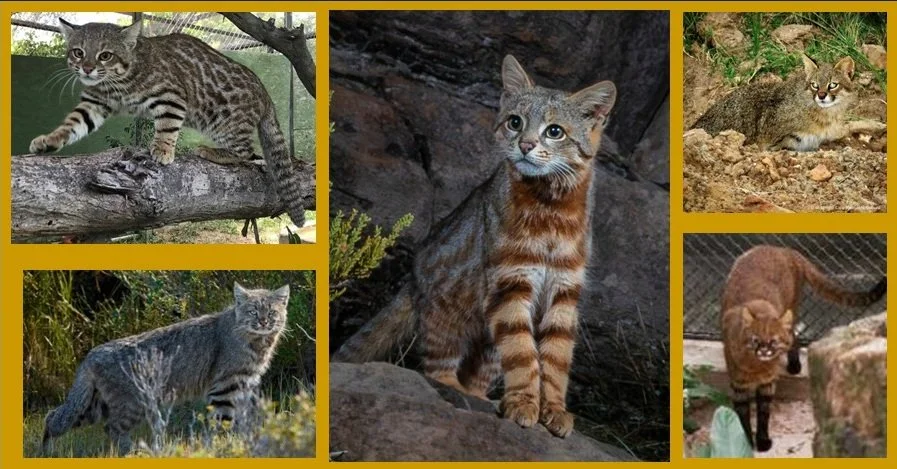
I trust everyone can see the difference in appearances of these five wild cats, all members of the Pampas cat group. Their differences extend far beyond their appearance, however. Each occupies a different habitat. One is by far the rarest wild cat in the Americas. From top to bottom, left to right are the Desert Pampas [a poor common name since desert and Pampas are two different habitats] (Leopardus garleppi), Pajeros (L. pajeros). In the center is Colocolo (L. colocola), an endemic to Chile, the Pampa cat (L. munoai), the rarest of the five, and the Black-footed savanna cat (L. braccatus). Although closely related and sharing the distinctive foreleg strips, all are unique species.
In the past, the number of years (derived from differences in the genome) that sister species separated from a common ancestor was used to determine unique species and subspecies. For instance, if 800,000 years was inferred to have passed, then sister species could each be considered unique species. The number of years was the so-called metric but other differences were also considered. But this metric was hotly debated. Should the number be less, say 50,000 years, as splitters argued, or longer, say one million years, as lumpers insisted? Obviously, in the name of conservation fewer years is better so that unique species receive targeted protection. But to avoid extinctions during your watch, more years is better so that, for instance, if the above Black-footed savanna cat went extinct, there would have been no extinction of the single Pampas cat species. Conservation versus politics.
My colleague Fabio Nascimento and other authorities have persuasively argued that the application of a rigid time-based metric based on separation time alone to validate full species is biologically inconsistent for three reasons. Paraphrasing these authorities, they agree that the time metric:
(1) Underestimates recent speciation. This criterion disregards real and active evolutionary lineages that diverged recently under Late Pleistocene glacial dynamics, such as Lemmings Lemmus trimucronatus (~308,000 to 247,000 years ago) and the extreme case of L. lemmus and L. sibiricus (just ~36,000 years ago).
(2) Conceptual inadequacy of time as a cause. Speciation is a biological and ecological process, not a purely chronological event. Organisms with short life cycles or under strong selective pressures (such as Arctic rodents) achieve morphological distinction and reproductive isolation within a much shorter timeframe, generating species that are much younger (more recent) than, say, a 500,000-year-ago threshold.
(3) Methodological instability. Molecular clock estimates fluctuate depending on the calibration used (fossils, mutation rates of sister groups, etc.). Adopting a fixed threshold renders taxonomy hostage to methodological variations rather than focusing on the integrative reality of the taxon.
Divergence time is crucial evidence, but full species status should be recognized when there is agreement among multiple biological properties, respecting the evolutionary particularities of each group. Establishing a temporal threshold based on divergence time offers a supposedly more objective, standardized, and universal metric. However, by defining that a taxon is only a species if it exceeds, for example, 800,000 years, time is transformed into an essential property of speciation. Philosophically, this inverts causality: Speciation is a biological process caused, for instance, by ecological pressures, drift, selection, and reproductive isolation that occurs over time, but time itself does not cause speciation. Attributing to time the power to decree what a species exchanges cause and effect.
The Cat Specialist Group has now moved beyond time as the most significant metric for determining species. The weight of all accumulated evidence will be considered. Get ready for new small cats species. It's unlikely any big cats will be split but new subspecies will be recognized, some just as they were in the past. It's an exciting time for cat specialists.
Found: Fishing Cat in Cambodia’s Tonle Sap
Vanessa Herranz Munoz, Cambodia, Kla Trey
Found: Fishing Cat in Cambodia’s Tonle Sap
Vanessa Herranz Munoz, Cambodia, Kla Trey
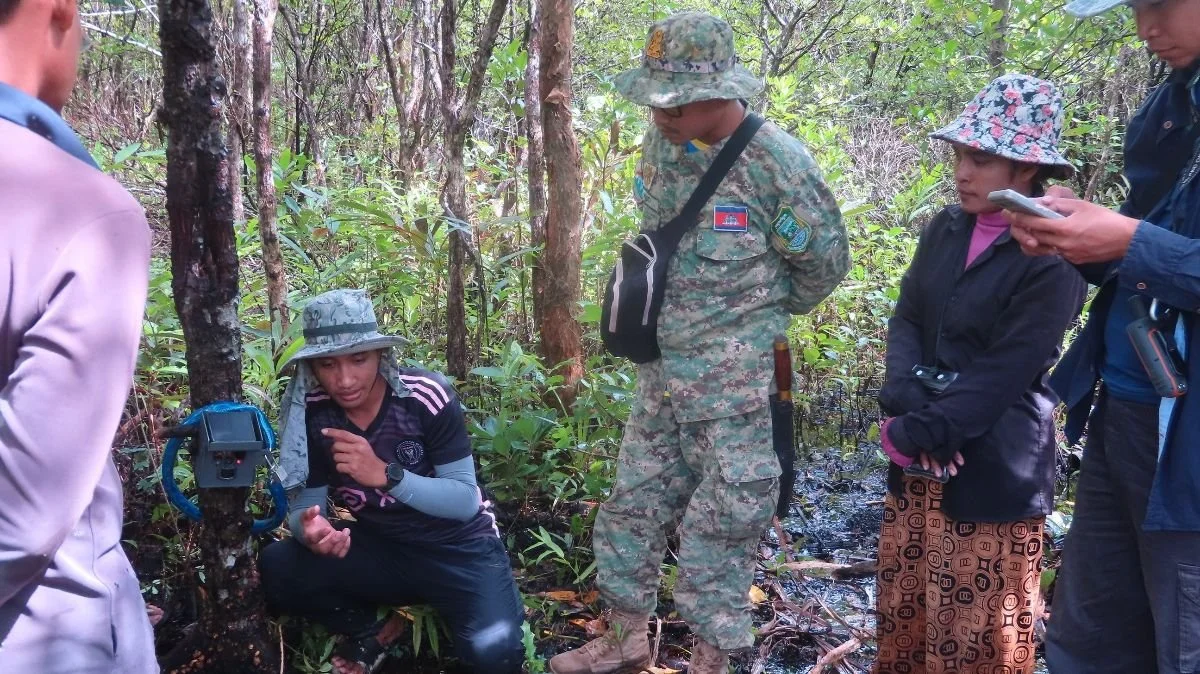
It’s a season of firsts for the Fishing Cat Ecological Enterprise, which reminds us of our beginning in 2015. Then, it was the first record of Fishing cat in coastal Cambodia. Now, it’s the first record from a new flooded forest site around the Tonle Sap (sap means lake). This time, credit goes to our partners, Conservation International (CI) who beat us to the punch, but had long collaborated with our team on trail camera surveys in these wetlands and asked us to confirm that they had indeed photographed Fishing cat.
However, while monitoring another site, we turned up a first of our own: the first daytime record of Fishing cat kittens in Cambodia! These phenomenal captures drive hope for the breeding population within the coastal Prek Kampong Smach Marine Fisheries Management Area. Our work there began in 2023 and to date, we obtained records from a variety of locations, we are working to estimate population size and we work with local community members to support Fishing cat conservation.
And the firsts don’t end there! During Fishing cat surveys at a new wetland site, we turned up first-time site records of three exceedingly rare Endangered species: Large-spotted civet (Viverra megaspila), Hairy-nosed otter (Lutra sumatrana) and Hog deer (Axis porcinus) that are in dire need of improved knowledge and conservation action.
These records come from Prek Sre Ambel river and Dong Peng Multiple Use Area, some 150km southwest of our focal site, Koh Kapik Ramsar Site. What these new sites have in common are their high quality wetland habitats: areas of mangrove, mixed riverine mangrove and Melaleuca forests which had previously received little research attention and conservation action.
Over a decade on from our initial survey, these first-time records demonstrate that Cambodia’s wetland habitats remain a critical refuge for threatened species, and that the search for Fishing cats brings vital knowledge and conservation attention to them under the Fishing cat umbrella. Today, we are redoubling our efforts to: call attention to the conservation value of these wetlands; continue to monitor threatened species and engage local authorities and communities to drive improved management practices, including reduction of threats facing Fishing cat, other threatened species and their important wetland habitats.
Kla Trey
From Hunting to Stewardship in the Bonda Tribe
From Hunting to Stewardship in the Bonda Tribe
Mitra Pandey, Nepal, Rusty-Spotted Cat Working Group
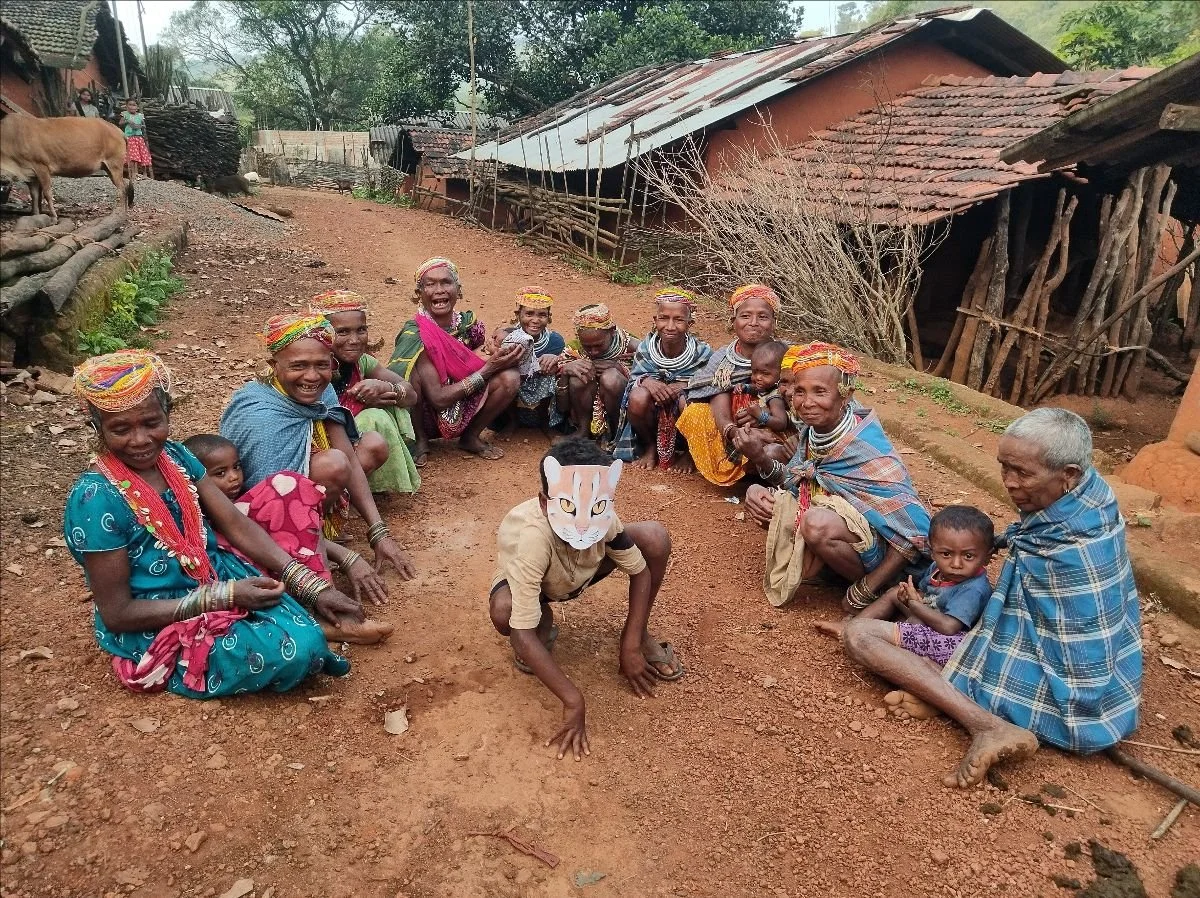
The Bonda tribal people of India have long been known by their ancestral history as skilled hunters, a legacy still visible today in the traditional bows and arrows they carry in the forests of Odisha and Telangana state borders. These tools were once used for subsistence, and their continued use posed a long-term risk to the world’s smallest wild cat. However, a strong transformation is now taking root as the community shifts from hunting to stewardship. The Rusty-Spotted Cat Working Group (RSCWG) is the first organization to engage with the Bonda people, combining conservation awareness with tangible livelihood support.
From elders to curious children, RSCWG took advantage of tribal awareness events engaged the entire community. Our project helped define wildlife protection as a source of tribal pride and leadership rather than a burden. This cultural shift was strengthened by practical support by fifty households trained in sustainable agriculture and provided with vegetable seeds.
Today the increased vegetable harvest has helped replaced the uncertainty of the hunt, thus bringing a new kind of joy to the village. Community members now identify themselves as the primary protectors of the elusive Rusty-spotted cat. Working with Bonda tribal people in Odisha and Telangana state borders has shown how deeply a community can connect with conservation when their culture and livelihoods are respected and improved.
With the Bonda we also celebrated the first international Rusty-spotted cat day. Henceforth, December 21 will be observed as International Rusty-Spotted Cat Day. The date honors the world’s smallest wild cat and falls on the shortest day of the year, symbolizing the species’ small size and the need for its conservation. The initiative was launched by us to promote global awareness through education, outreach, and fundraising activities.
To mark the occasion, RSCWG partners from the range countries—Nepal, India and Sri Lanka—coordinated to celebrated and recognize the first-ever International Rusty-spotted Cat Day. We organized various events focused on conservation awareness within schools and local communities. Activities included drawing and speech competitions, as well as conservation rallies designed to engage students, community members and government officials. A total of four events were conducted across different locations with more than 2,500 participants taking part in the celebrations.
Several international conservation organizations, including Big Cat Rescue, The Big Cat Sanctuary, and Zoo Frankfurt, shared conservation messages and events photos in support of the day. Their participation helped increase global attention and demonstrated growing international support for the species’ protection. Extending awareness through creative platforms, Pepperminz Narwhal (Conservation through Creativity) featured International Rusty-Spotted Cat Day on 21st December in their Animal Holiday Calendar.
The shortest day of the year was of course chosen to celebrate the smallest cat in the world.
Rusty-Spotted Cat Working Group
Community-led conservation of the African golden cat at Kibale National Park
Badru Mugerwa, Uganda, African Golden Cat Conservation Alliance Embaka
Community-led conservation of the African golden cat at Kibale National Park
Badru Mugerwa, Uganda, African Golden Cat Conservation Alliance Embaka
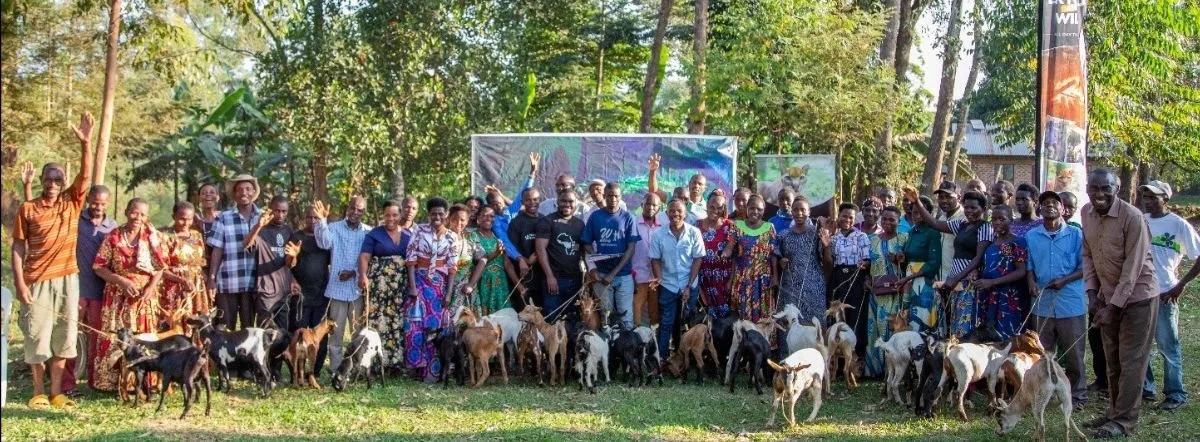
Brian Kabagambe is spearheading Embaka’s community-led conservation efforts for African golden cat conservation at Kibale National Park—one of 13 of project areas in Uganda, and 34 across 19 countries where the African golden cat occurs. Brian’s work has not only transformed local livelihoods but has also built grassroot active stewards for the African golden cat at Kibale.
The African Golden Cat Conservation Alliance (AGCCA) is demonstrating how targeted livelihood support, and sustained community engagement can inspire local stewardship for the African golden cat and its habitat.
Through its community-led conservation initiative, AGCCA has mobilized community groups and delivered a structured series of capacity-building sessions in savings and credit management, goat farming, and group leadership. As part of AGCCA’s Livestock for Bushmeat (L4B) program, the local families have been supported with indigenous goats to strengthen household livelihoods and reduce dependence on bushmeat hunting through goat farming, providing a direct alternative source of family animal protein and income.
We have recorded success in a short time, reflected in strong participation, community ownership and growing interest from neighboring communities to join the programme. Members recognize that protecting the forest and its wildlife is directly linked to their own long-term wellbeing. AGCCA aims to reach additional communities adjacent Kibale and other African golden cat habitats in Uganda and across the species range, building a wider network of local grassroots conservation champions.
Embaka