SWCCF News 2026 07
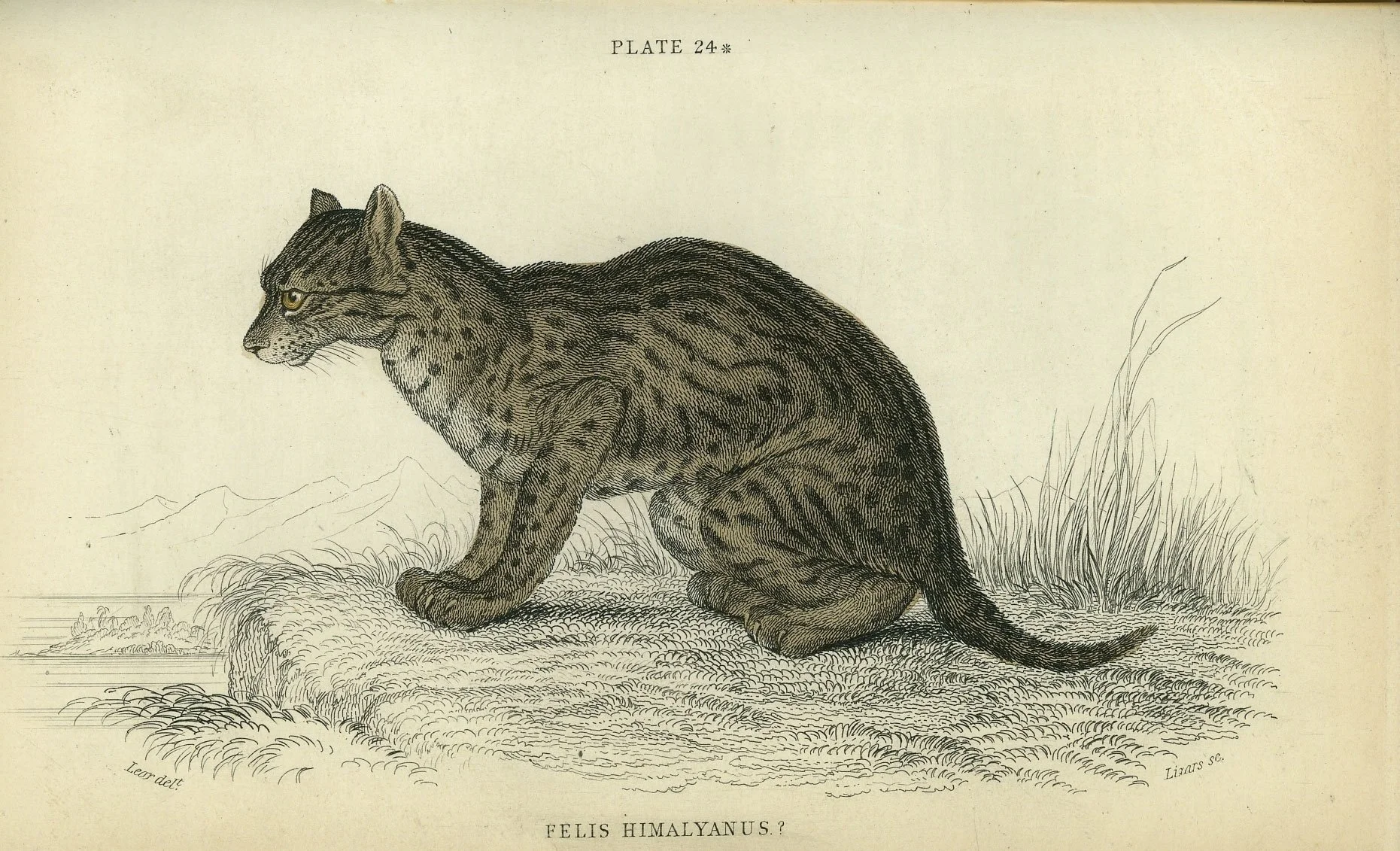
Felis Himalyanus-Plate 24
Conservation biology isn't what you think it is
Jim Sanderson
The word conservation is a noun whose definition means to prevent damage, loss, or waste, and the careful management of the environment, natural resources, or cultural heritage. You are undoubtedly familiar with the following:
(1) Wildlife conservation. To conserve wildlife or the conservation of wildlife.
(2) Art conservation. To conserve artwork such as paintings or the conservation of art.
(3) Water conservation. To conserve water. The conservation of water.
(4) Forest conservation. To conserve forests. The conservation of forests.
But just because I can write a phrase does not mean the phrase has meaning. Instead of using the word "conservation" following a noun as above, consider substituting "conservation" as if the word was an adjective preceding a noun as follows: Conservation astronomy, conservation medicine, conservation mathematics, conservation geology, conservation photography, and conservation wildlife. You get the idea.
Like you, I know what wildlife photography means, but I have no idea what conservation photography refers to. The phrase have no precise meaning so is left to our imagination. What is conservation wildlife? We imagine a meaning.
To the above list I can add conservation biology. Conservation is not an adjective so the meaning is left to the imagination.
This explains why so many students seeking a career in conservation feel cheated by their classes in academic biology departments. Many university biology departments are holding conservation hostage. Conservation is a multi-disciplinary subject that benefits from many different academic departments, especially social sciences. Conservation is not an adjective and must be freed from biology departments but does not need a department of its own. In fact, anyone willing to take action to reduce threats to wildlife can be a conservationist, no university degree required. Nevertheless, a university degree often acts as a key to open vital doors.
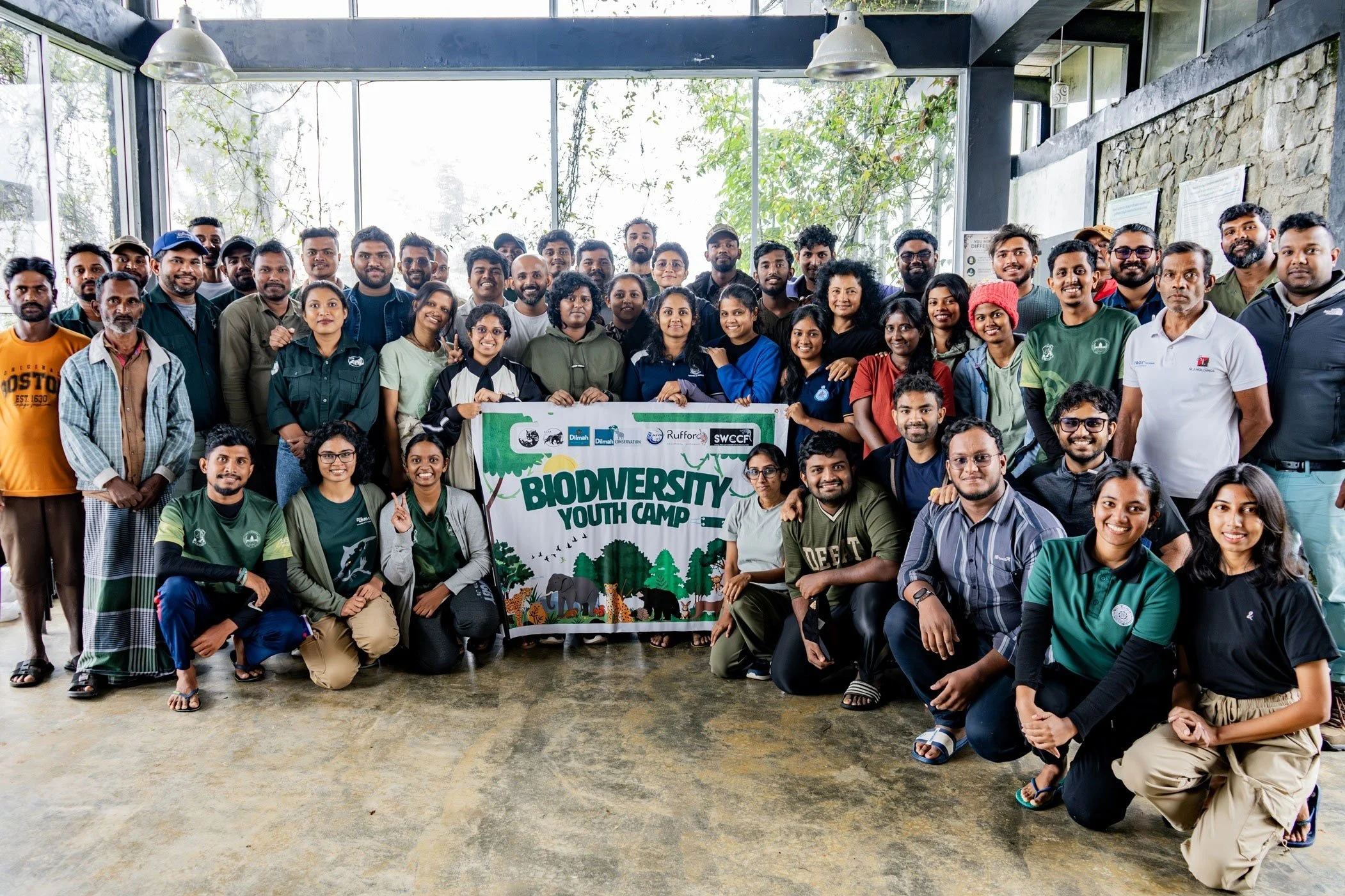
Biodiversity Youth Camp 2026: Growing the network of conservationists
Ashan Thudugala, Sri Lanka, Fishing Cat Conservation Alliance
Biodiversity Youth Camp 2026: Growing the network of conservationists
Ashan Thudugala, Sri Lanka, Fishing Cat Conservation Alliance
This year Save Fishing Cat Conservation Project and Small Cat Advocacy and Research collaborated with Dilmah Corporation to organize the thirteenth annual Biodiversity Youth Camp. This year 55 participants from 14 different institutes across Sri Lanka spent three days and two nights learning about and actively participating in more subjects than has ever been offered in any of our previous youth camps..
All the participants were either students who were taking ecology related subjects or interested individuals. This year our program offered a large group of sessions including workshops as well as field studies. Students could learn about climate change, marine conservation, leadership training, Introduction to beekeeping, how to monitor and track elusive wildlife, scientific writing and publishing, scorpions of Sri Lanka, introduction to lichens, reptiles, indigenous myths, flowering plants of the hill country, field tours for bird watching, and tips and tricks in grant writing and project planning.
Word has spread across Sri Lanka that Biodiversity Youth Camps are the go-to program to get hands-on experience conserving biodiversity. These new leaders joined 1,100 other alumni of a program that began in 2014 and continues to enable young minds eager to change the world. The network is the solution and our network in Sri Lanka blankets our island.
Fishing Cat Conservation Alliance
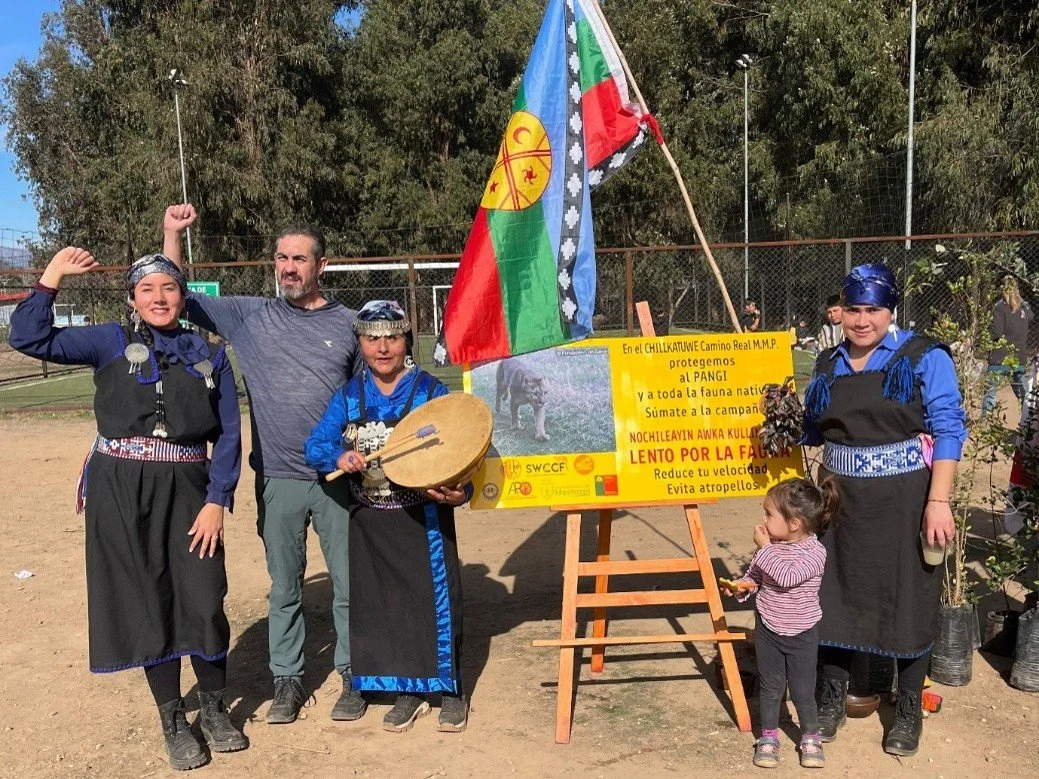
Ñochileayain Awka Kullin Mew
Ñochileayain Awka Kullin Mew
Patricio Muñoz Peña, Chile, Fundación Con Garra
Much like the Western New Year during the winter solstice in the Southern Cone, the Mapuche People celebrate Wüñol Txipantü, the beginning of a new cycle. This sacred day marks the retreat of winter and the renewal of life, when trees begin to sprout, flowers bloom, and life returns to the mountains of the pangi (puma).
This year, Fundación Con Garra had the honor of participating in this ancestral ceremony, thanks to an invitation from the Mapuche Association Ragintv Wigkül (“Between Mountains”) in the commune of Mostazal, central Chile. The ceremony was led by traditional educator Susana Painemil Colihuil, who is recognized for her work preserving and teaching the Mapuche language, culture, and worldview in schools and community spaces throughout the region. During the gathering, she shared the holistic understanding of life that lies at the heart of the Mapuche worldview, a vision in which people, animals, ancestors, and spiritual forces exist in a relationship of balance, respect, and reciprocity.
During the ceremony, we reaffirmed our commitment to expanding and strengthening the collaborative work we have developed for the conservation of the country’s native wild cats, promoting actions to build a territory where these species can move safely and coexist harmoniously with people and domestic animals. As a symbol of our continued collaboration, we presented a sign dedicated to the pangi, featuring the Mapudungun message Ñochileayain awka kullin mew – Slow for Wildlife. This message, which is the cornerstone of our campaign of the same name, was also shared by Susana with her community: slowing down as an act of respect for the pangi, a powerful being and guardian of the mountains, a symbol of balance between strength and wisdom.
We hope that this new year brings much newen (strength) to continue the conservation work we all carry out with a shared purpose, despite the different roots that may connect us to our land. The members of the communities educated by Susana will have in her an example to follow. And if we ever feel overwhelmed by the magnitude of the challenges ahead, we need only think of the pangi: it faces enormous threats and, for the first time in history, its strength and wisdom may no longer be enough to ensure its survival. Today, pangi need us.
May this reality remind us that only by guiding one another and supporting each other can we overcome these challenges and continue building a future where the pangi can roam freely through the mountains and continue inspiring admiration, wonder, and joy.
We wholeheartedly thank all those who make our work possible.
Fundacion Con Garra

Nurturing community cohesion to protect the African golden cat in Budongo Forest Reserve
Nurturing community cohesion to protect the African golden cat in Budongo Forest Reserve
Vera Nshemeire, Uganda, Embaka
It is a season of renewed hope and visible transformation in the communities surrounding Budongo Forest Reserve. In our efforts to conserve the African Golden Cat in Budongo Forest, our community-based project has recruited 15 households to embrace alternative livelihoods supported by our community-based conservation initiative. As a result, participating households have reduced their reliance on bushmeat hunting. With the generous backing of our partners at Rewild, we selected community members who each received goats, alongside shared financial support for their Village saving scheme, which they can use to save and borrow from to strengthen their income-generating capacity.
What began as a targeted conservation-livelihood intervention is already laying the foundation for long-term economic resilience. Goats, known for their adaptability and high reproductive rates, provide a sustainable source of income and an alternative to bushmeat. When they reproduce, the offspring are given to a neighbor, encouraging a bond between the ex-poachers and non-poachers as they work together for a common cause.
For many of the beneficiary households, this marks an opportunity to build and manage a productive asset base. The additional financial support has enabled recipients to invest in proper animal care, including housing, feed supplementation, and basic veterinary care, ensuring the initiative's success and longevity.
Beyond the immediate economic benefits, the project is addressing a deeper conservation challenge. As one community member shared, “We now have something to rely on, and our attention is drawn away from the forest.” Our goal as Embaka is not only to create viable livelihood alternatives to poaching but also to nurture community cohesion to sustain wildlife conservation for generations to come by building strong relationships between community members and fostering a shared commitment to protecting the forest and its wildlife.
Embaka

Wild Cats Series: Inspiring communities and the next generation to conserve wild cats in Nepal
Wild Cats Series: Inspiring communities and the next generation to conserve wild cats in Nepal
Rama Mishra, Nepal, Wild Care
One life saved inspired to save many other lives–this is how the wild cats series began.
It started with a fishing cat that was trapped on an irrigation pipe in the agriculture field. The mass gathered around the trapped cat were going to kill it. One of the fishermen who attended education program on fishing cats conducted by our team, identified it as fishing cat and he insisted the crowd to call the wildlife reserve authorities and rescue the cat. They informed the reserve. The cat was rescued and safely released into the wild. Later the same cat was found raising kittens.
Inspired by this one life saved, I wanted to scale up the education and awareness programs across the fishing cat range. But it was not possible for a single person to reach everywhere. I came up with an idea of a unique program to engage local youths and mobilize them as ambassadors of wild cats’ conservation across the county. As a pilot, I initiated fishing cat conservation series in 2023 bringing together 18 youths pursuing their undergraduate degree in natural science and representing different locations across fishing cat range. My team and I developed a two-stage training and mentorship program. The first part is in-house training package to equip university students with practical knowledge and inspire them to become conservation ambassadors in their own communities. In the second part the participants would return to their home district and conduct social surveys on status of wild cats as well as conservation awareness at schools and communities.
This program became successful. I also realized that focusing on a single species, (fishing cat) is not a good strategy as conservation is not possible in isolation but needs to cover all small cats which are lesser-known and are facing high threats of human-caused mortality. As a result, the program expanded in following years covering all 13 wild cat species occur in Nepal, with special attention to the ten small cats. We continued this as an annual event. The 4th edition of the ‘Wild Cats Series’ was conducted in May this year at Surkhet in Western Nepal bringing together 22 participants (15 undergraduates from different colleges, representing different parts of Nepal and 7 citizen scientists) for an immersive learning experience in conservation. From a small initiative in 2023 focused on fishing cats to a nationwide movement nurturing young conservation leaders, the Wild Cats Series is transforming how the young generation engages with Nepal's remarkable wild cat diversity.
Although Nepal is globally celebrated for conserving iconic species such as tigers and rhinos, many smaller wild cats remain overlooked. At the same time, young people passionate about wildlife conservation often lack access to practical training, mentorship, and field experience. The Wild Cats Series was created to bridge this gap and has since evolved into a vibrant platform for developing future conservation leaders.
The true strength of the Wild Cats Series lies in its ripple effect. The participants organized education sessions at schools and communities on wild cats’ conservation, assessed the status of wild cats and community understanding through social surveys, and inspired their peers to act. The participants receive certificates only after completing all these activities and submitting the report. Many remain actively connected to the program even years after the event, creating a growing network of young conservation leaders across Nepal.
Over the past four years, ~90 youths have been trained as local leaders for wild cat conservation. Through their efforts, conservation outreach activities have reached over 20,000 people across 25 districts in Nepal. Every participant becomes a multiplier of knowledge, extending the impact to far corners of the country. We hope that the initiative will be instrumental to strengthen human wildlife coexistence in Nepal and build capacity of Nepali youths on wildlife and nature conservation.
Today, the Wild Cats Series continues to connect science, storytelling, and communities, transforming curiosity into conservation action and empowering the next generation of leaders committed to safeguarding Nepal’s remarkable wild cat diversity.
Wild Care Nepal