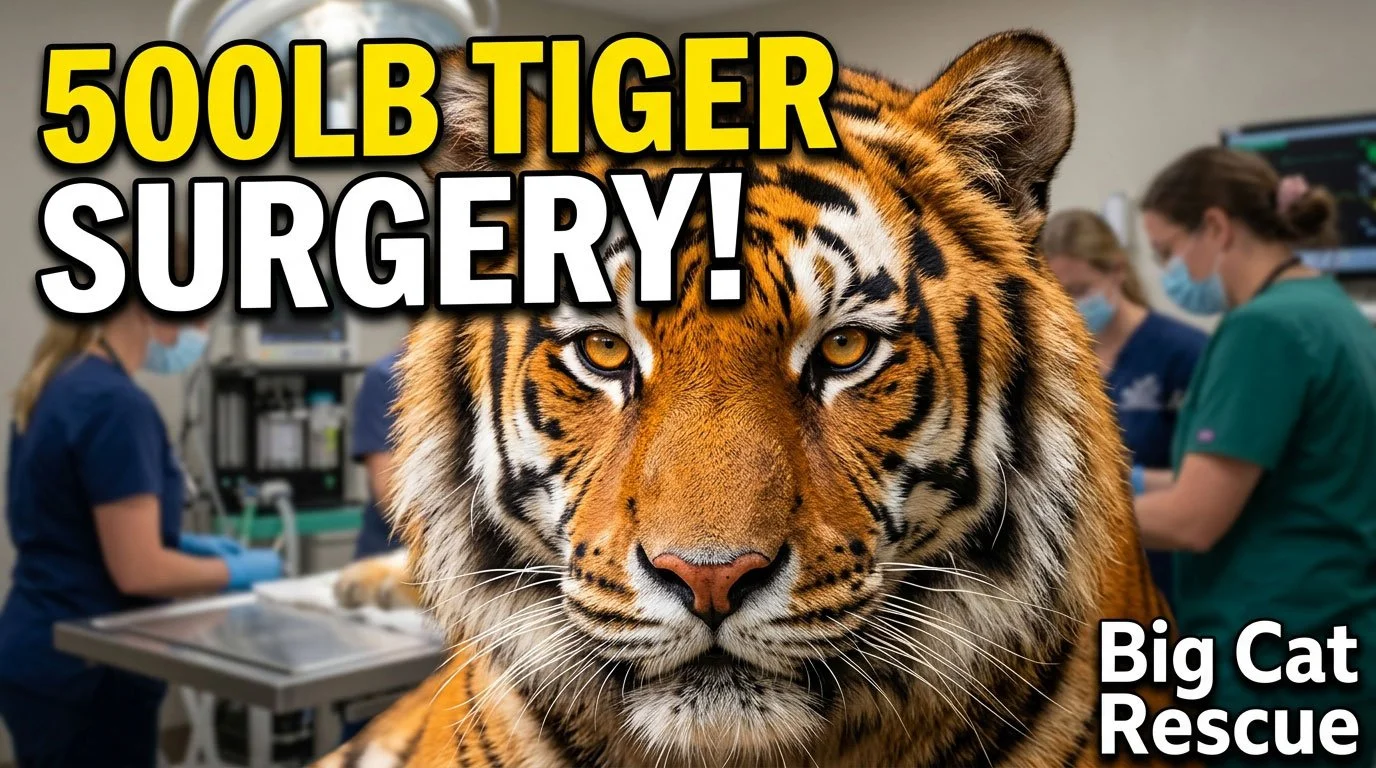
Microchip
People often ask if we microchip our cats. We do microchip our permanent residents, but not the bobcats who are being released. Find out why we chip or not.
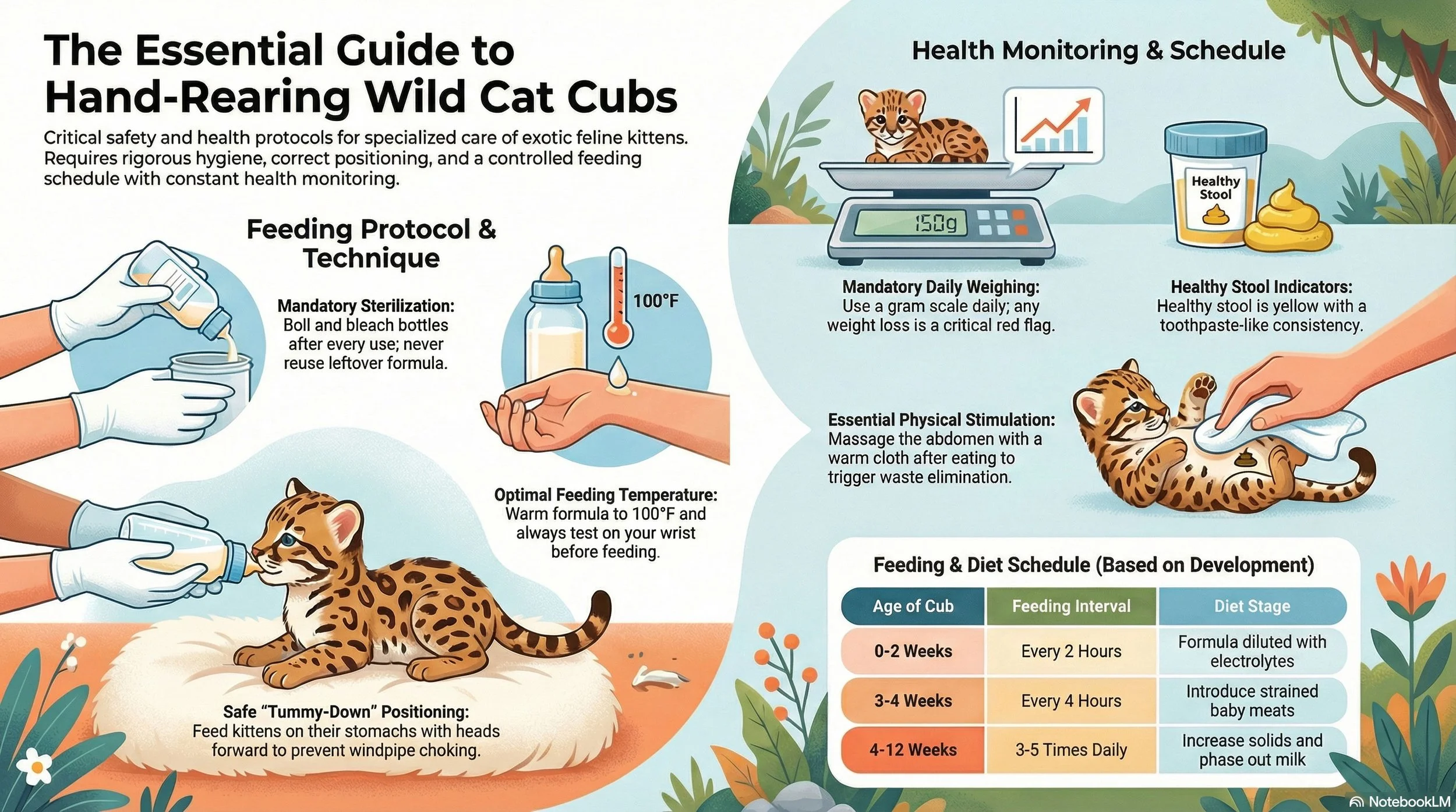
Feeding Kittens and Cubs
This guide from Big Cat Rescue provides comprehensive instructions on the specialized care and hand-rearing of wild cat kittens and cubs. While emphasizing that maternal care is always superior, the author details critical technical skills such as sterilizing equipment, modifying bottle nipples, and maintaining proper feeding postures. The text places a high priority on medical monitoring, urging caretakers to track weight precisely and observe waste for signs of bacterial infections or parasites. Beyond nutrition, the source covers essential hygiene practices, including stimulating waste elimination and safe methods for pest control. Throughout the manual, a strong conservationist stance is maintained, discouraging the exotic pet trade while offering life-saving advice for animals already in human custody.
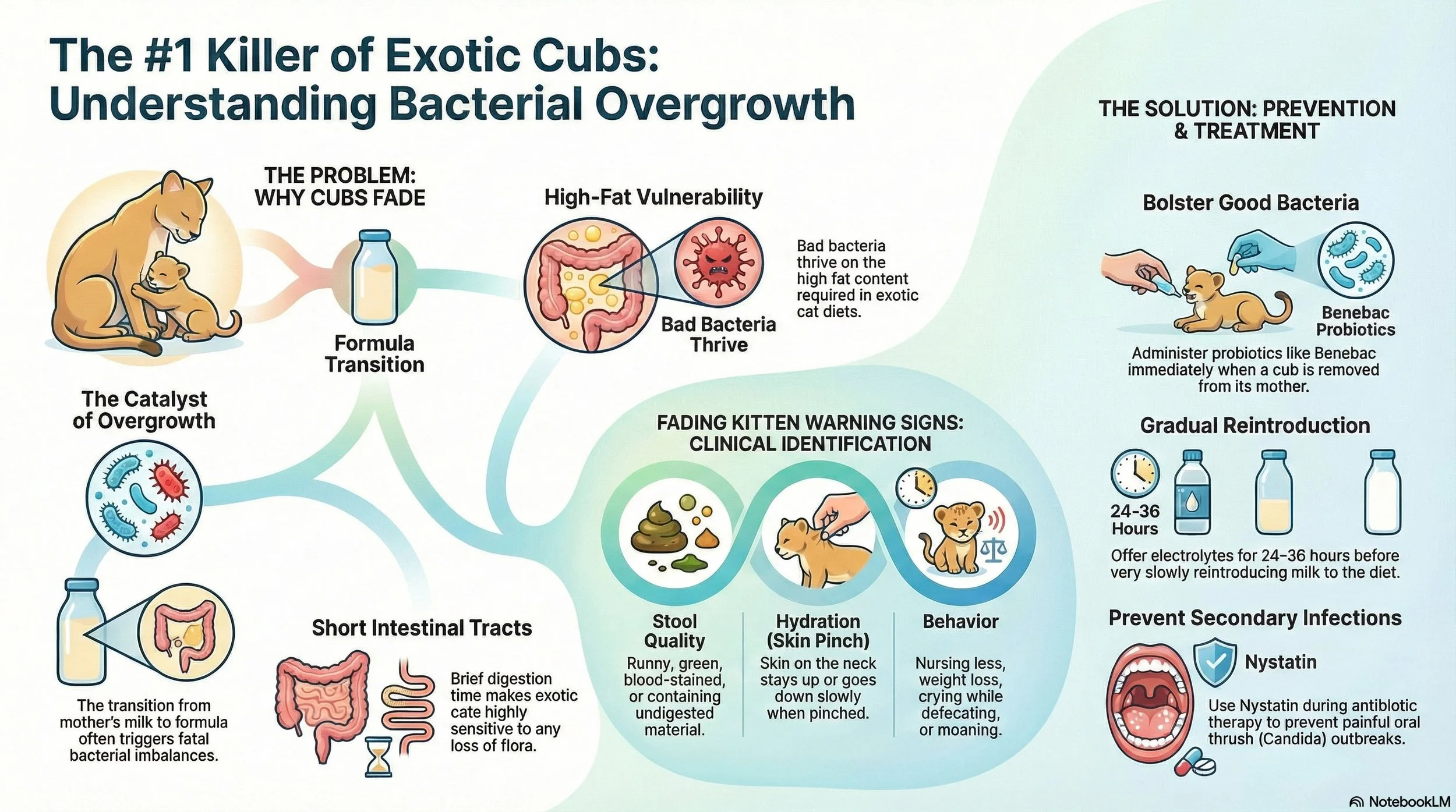
Bacteria
This source outlines the mission and medical observations of Big Cat Rescue, specifically focusing on the dangers of bacterial overgrowth in exotic kittens. After shifting from breeding to sanctuary operations, the organization now emphasizes that human interference in a cub's diet often disrupts the delicate intestinal flora essential for survival. The text explains that exotic cats possess short digestive tracts, making them highly susceptible to fatal infections and starvation when mother’s milk is replaced by formula. To combat these risks, the author suggests a strict regimen involving probiotics, specialized electrolytes, and antifungal medications to manage the side effects of antibiotics. Detailed clinical signs of fading kitten syndrome and inflammatory bowel disease are provided to help caregivers identify life-threatening symptoms early. Ultimately, the guide serves as a warning against the exotic pet trade while offering practical advice for the emergency care of vulnerable felines.
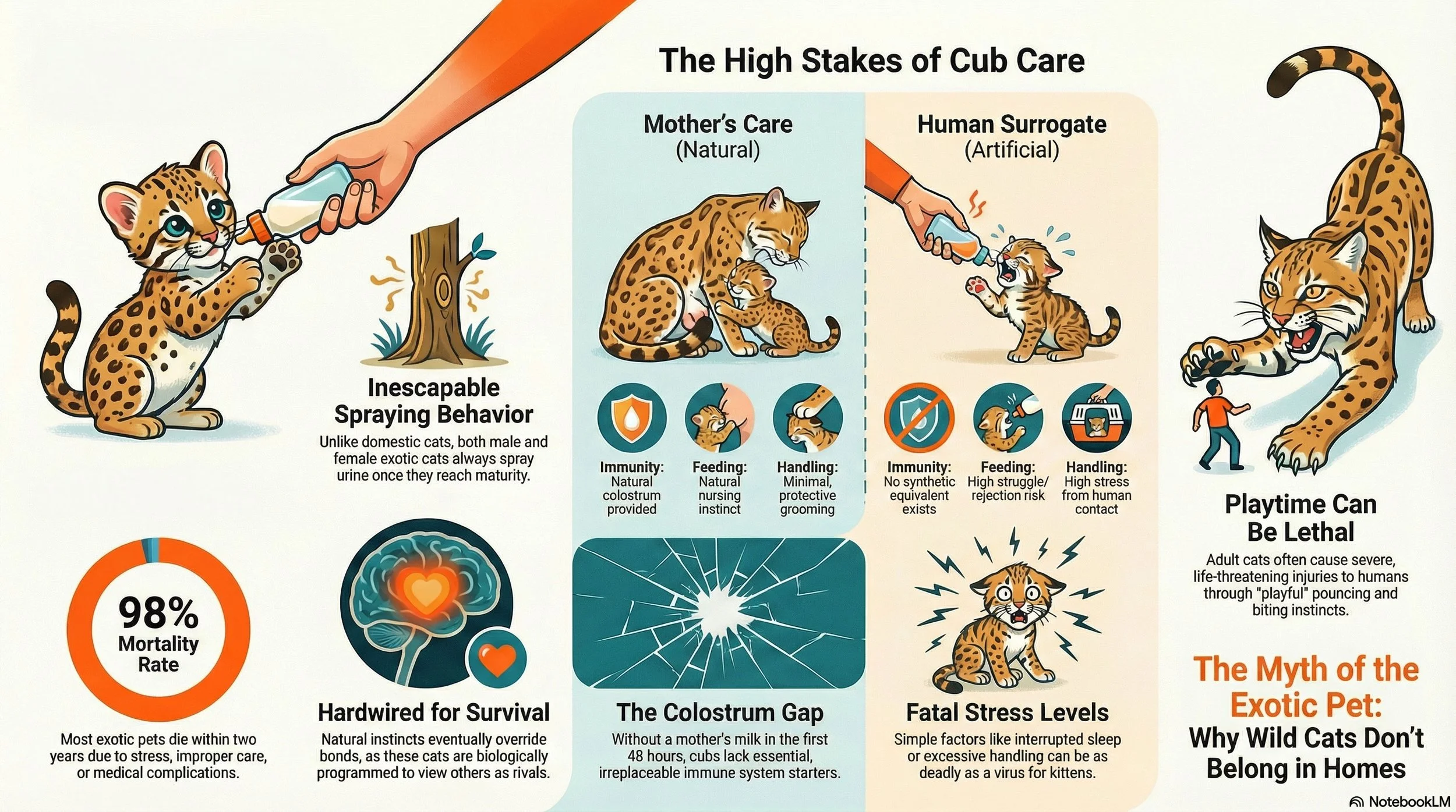
Kittens and Cubs
These sources outline the evolution and philosophy of Big Cat Rescue, moving from an involvement in the exotic pet trade to a mission focused on ending the breeding and ownership of wild cats. The text emphasizes that exotic cats cannot be domesticated and provides critical care instructions solely to prevent the death of kittens already displaced by the pet industry. It highlights the immense physical and emotional demands of hand-rearing these animals, including the necessity of natural colostrum for immunity and the dangers of human bonding. Furthermore, the documents warn of the inherent risks to owners, noting that mature cats retain wild instincts that make them dangerous even in play. Ultimately, the materials advocate for legislation and education to ensure these animals are no longer subjected to a life of captivity.
Wounds
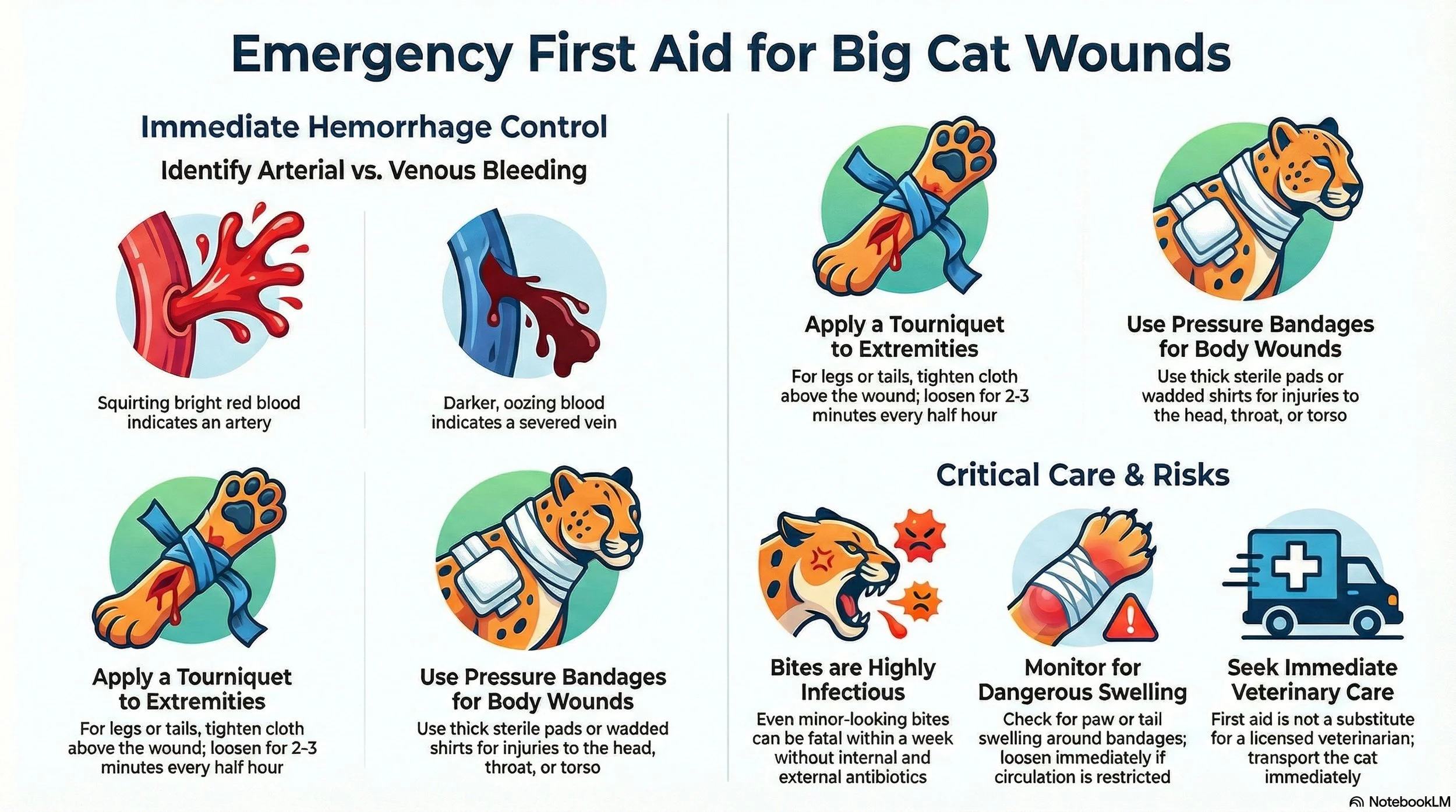
This text provides essential emergency first aid instructions for managing bleeding and injuries in large cats. It distinguishes between arterial and venous bleeding, offering specific techniques such as applying tourniquets or pressure bandages depending on the wound's location. The author emphasizes the hidden dangers of bite wounds, noting that they carry a high risk of lethal infection even when they appear minor. Throughout the guide, there is a strong focus on minimizing bacterial exposure and monitoring for physical complications like swelling. Ultimately, the source serves as a temporary guide for stabilizing an animal while stressing that professional veterinary intervention is always required for survival.
Poisonous Plants
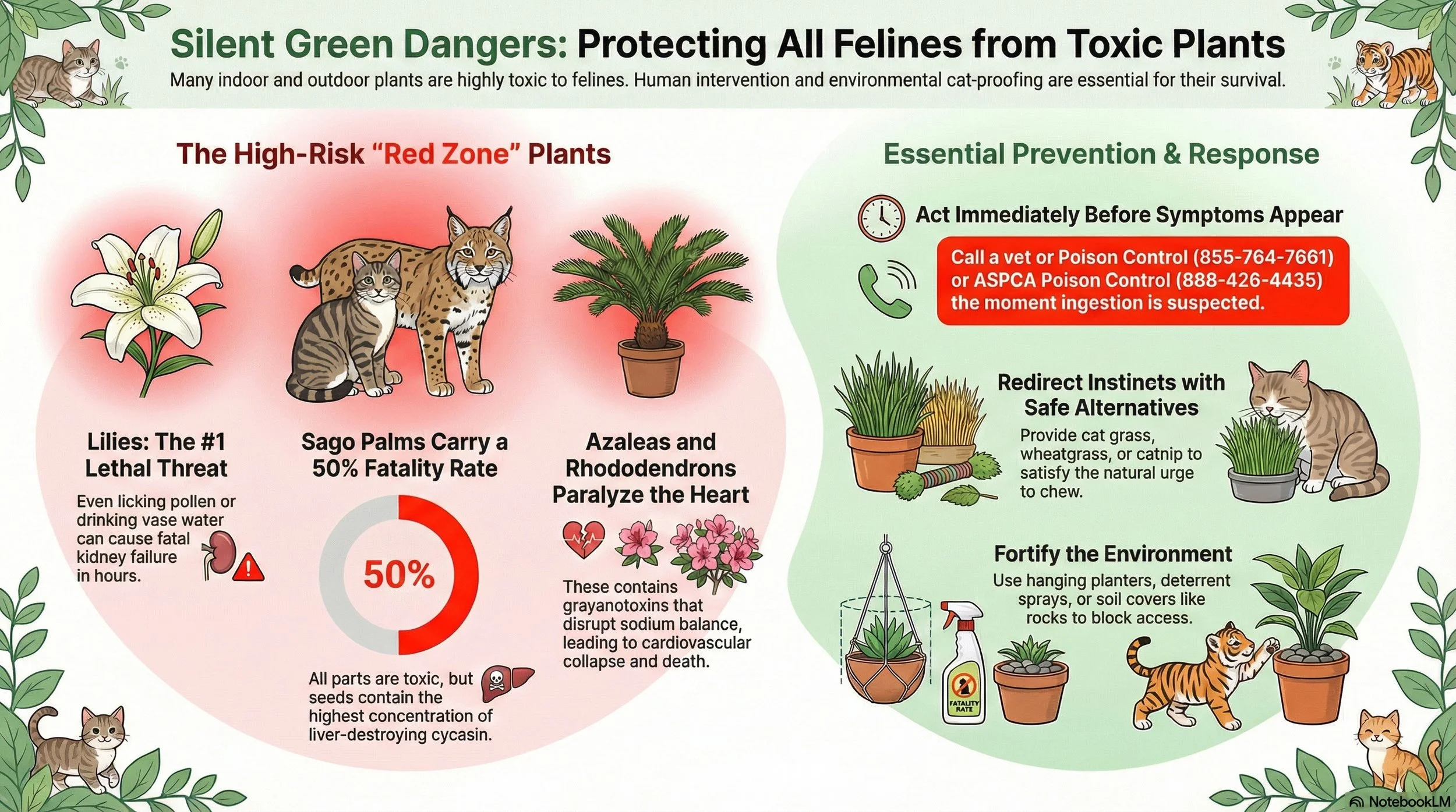
These professional resources highlight the serious dangers that numerous common indoor and outdoor plants pose to feline health. Organizations like the ASPCA and Chewy categorize various species—most notably lilies, sago palms, and azaleas—as highly toxic, often leading to organ failure or death. The guides detail critical poisoning symptoms such as vomiting and lethargy, while urging owners to seek immediate veterinary care after any suspected exposure. To foster a safe environment, experts suggest replacing hazardous greenery with non-toxic alternatives like cat grass or utilizing protective measures like deterrent sprays and elevated shelving. Ultimately, these documents serve as a comprehensive safety manual for pet owners to identify risks and prevent accidental domestic poisoning.