Don't They Miss Being Petted?
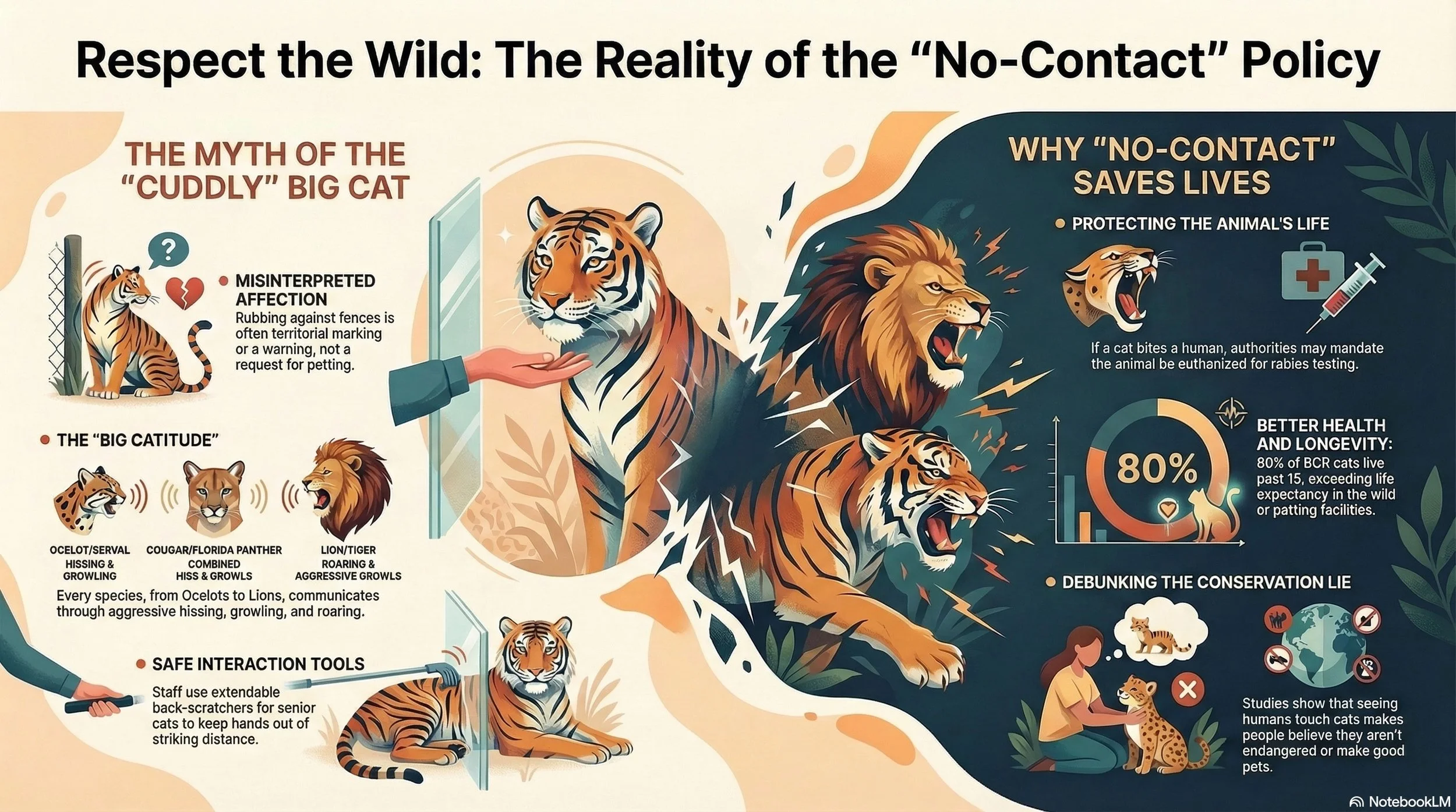
This source explores why Big Cat Rescue maintains a strict no-contact policy between humans and exotic felines. Written by Carole Baskin, the article argues that petting wild animals is a dangerous practice that promotes the exploitative exotic pet trade and spreads misinformation about conservation. While the facility uses long-reach tools to help elderly cats groom, they clarify that behaviors like rubbing against fences are signs of territorial marking rather than a desire for affection. The text systematically dismantles common justifications for physical interaction, labeling them as egotistical myths that prioritize human entertainment over animal welfare. Ultimately, the sanctuary emphasizes that respecting these solitary predators requires acknowledging their wild nature rather than treating them like domestic pets.
Pills
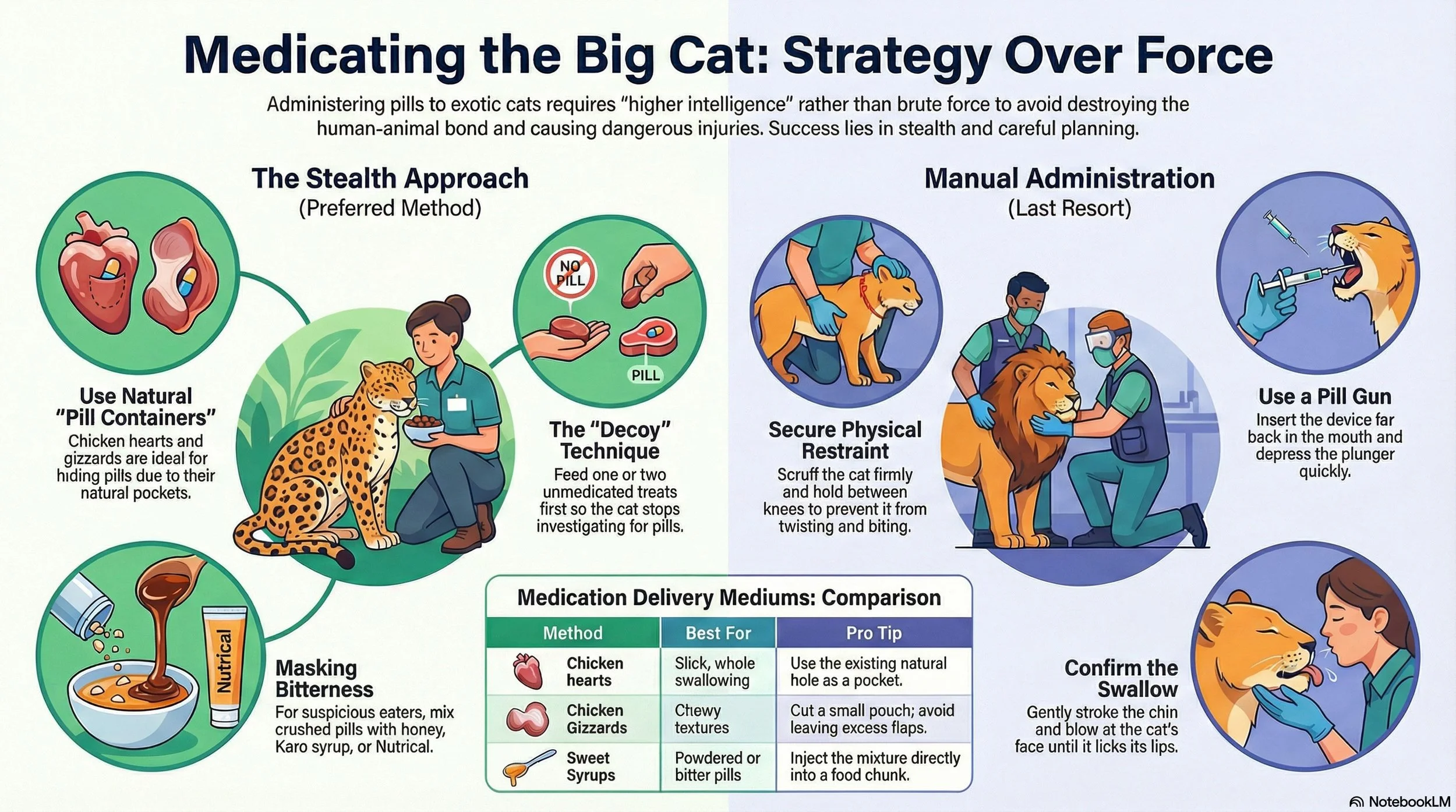
This source provides a guide on the challenges and techniques involved in administering medication to exotic cats within a sanctuary setting. Author Carole Baskin emphasizes using intelligence over force, noting that physically restraining these powerful animals can permanently damage the bond of trust between a keeper and a cat. To avoid trauma, the text recommends hiding pills in food like chicken hearts or gizzards, which allows the animal to ingest medicine without realizing it. If a cat is too suspicious to eat treats, the article suggests masking the taste with sweet syrups or using a pill gun as a last resort. Ultimately, the guide underscores that consistent dosing is vital for a cat's recovery, while warning that a negative experience during treatment can lead to long-term behavioral issues.
Fleas
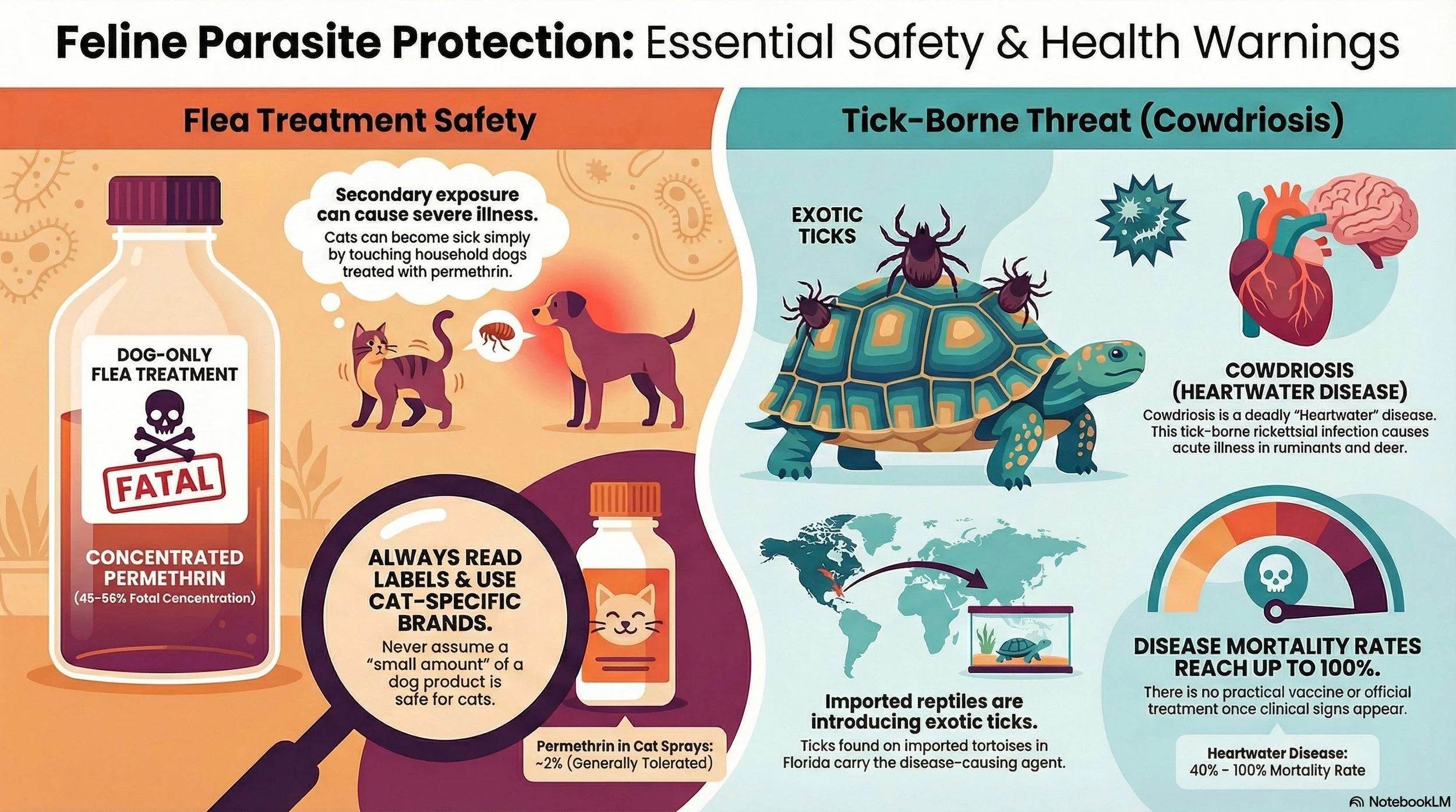
The provided text serves as a safety guide and ecological warning regarding the dangers parasites pose to domestic and wild animals. It highlights the critical risk of feline mortality when owners mistakenly apply flea treatments formulated specifically for dogs, emphasizing that even trace amounts of permethrin can be fatal to cats. Beyond household pets, the sources address the biosecurity threat of exotic ticks entering Florida via the reptile trade. These invasive pests carry heartwater disease, a condition that could devastate the American cattle and deer industries if it becomes established. Ultimately, the text advocates for vigilant label reading, stricter importation regulations, and continued veterinary research to prevent domestic poisoning and large-scale environmental outbreaks.
Parasites
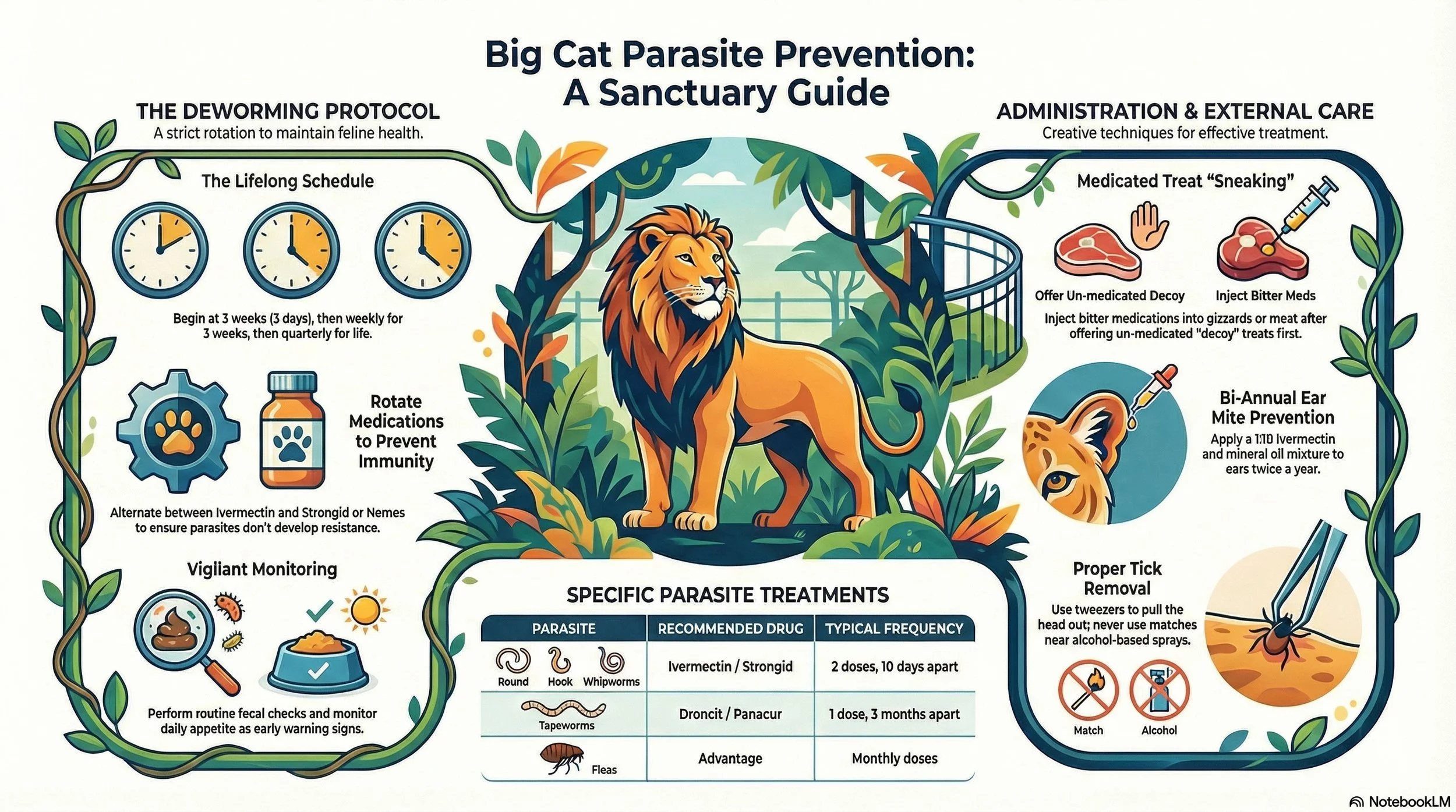
This resource details the comprehensive protocols used by a sanctuary to manage parasite prevention and treatment in exotic cats. The text emphasizes a rigorous schedule for administering dewormers to both kittens and adults, utilizing specific medications like Ivermectin and Strongid to combat internal pests. It also provides practical techniques for delivering medicine, such as hiding oral doses within meat treats or using physical restraint for ear treatments. Beyond internal worms, the guide addresses external threats like ear mites, fleas, and ticks, describing how to identify symptoms and apply preventative solutions. Ultimately, the author stresses the importance of vigilant monitoring to prevent severe health complications or death caused by heavy infestations.

Hazard Communication Program
Bobcat Rehab
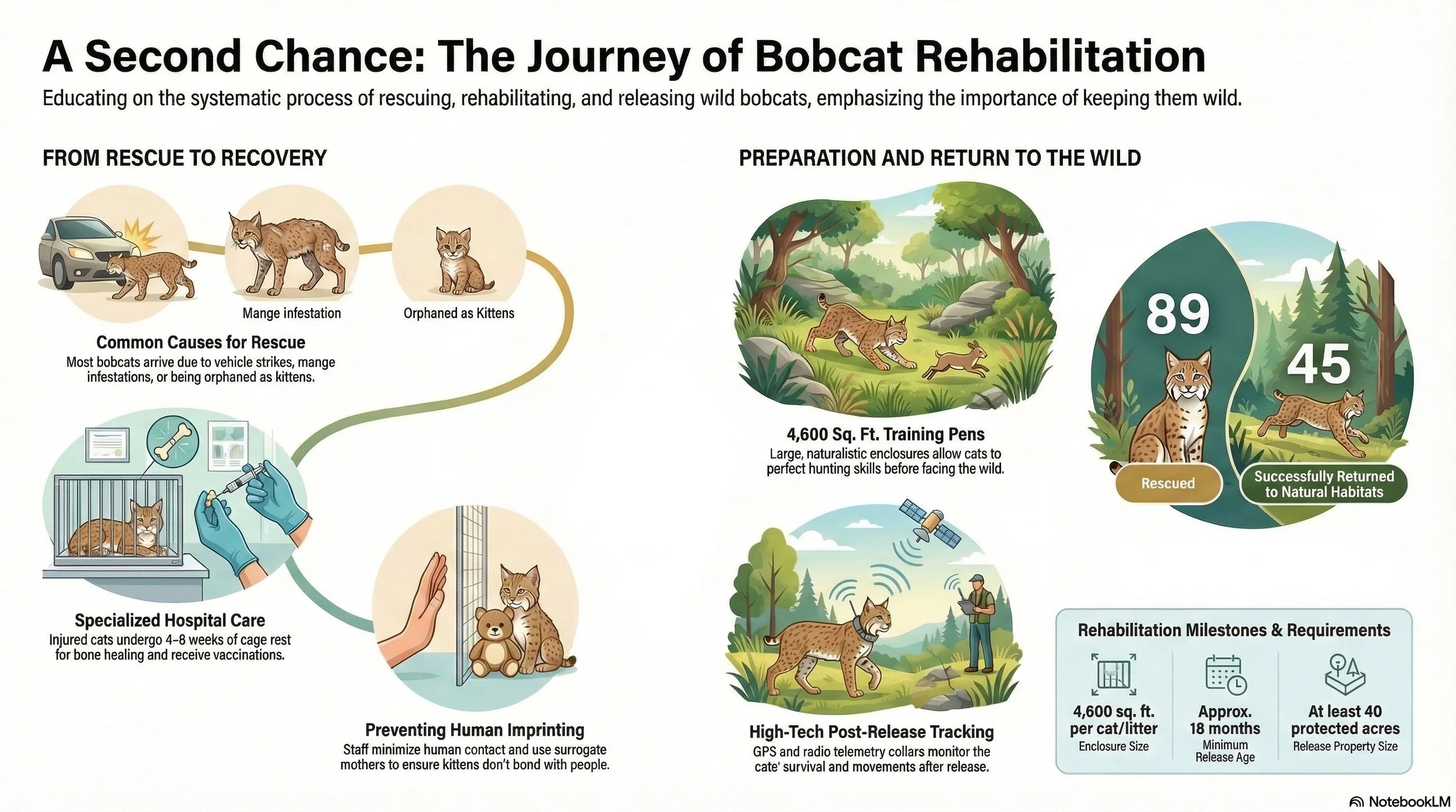
The provided sources detail the comprehensive rehabilitation and release program for wild bobcats managed by Big Cat Rescue. These records explain that the organization takes in animals suffering from car strikes, diseases, or maternal separation with the ultimate goal of returning them to their natural habitats. To ensure successful reintegration, rescuers use specialized medical equipment, naturalistic enclosures, and strict protocols to prevent human imprinting. The texts also highlight the use of GPS tracking collars to monitor the post-release survival and movements of the cats. Additionally, the materials serve to educate the public on how to coexist with these predators and emphasize the importance of protecting Florida’s native wildlife.