Animal Husbandry
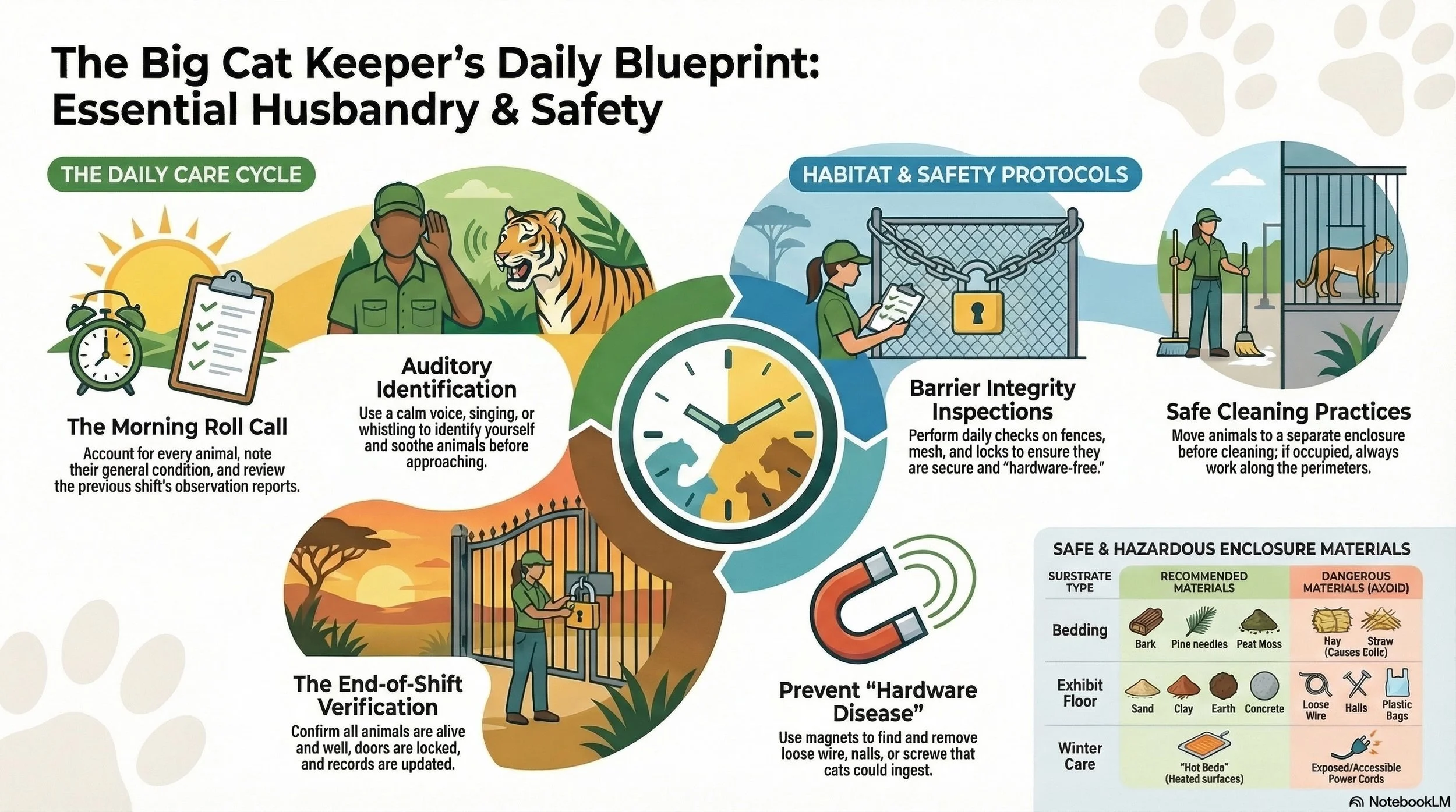
This guide outlines the essential husbandry protocols practiced at Big Cat Rescue to ensure the safety and health of both animals and staff. The text emphasizes that efficient daily routines, including thorough cleaning and scheduled feeding, are vital for minimizing animal stress and preventing accidents. Keepers are instructed to maintain high safety standards by inspecting barriers, removing hazardous foreign objects, and using specialized equipment correctly. Additionally, the manual highlights the importance of resource conservation and adapting care strategies to accommodate seasonal changes or individual animal temperaments. Ultimately, the documentation serves as a comprehensive operational framework for running a sanctuary with a focus on professional discipline and wildlife welfare.
Animal Health
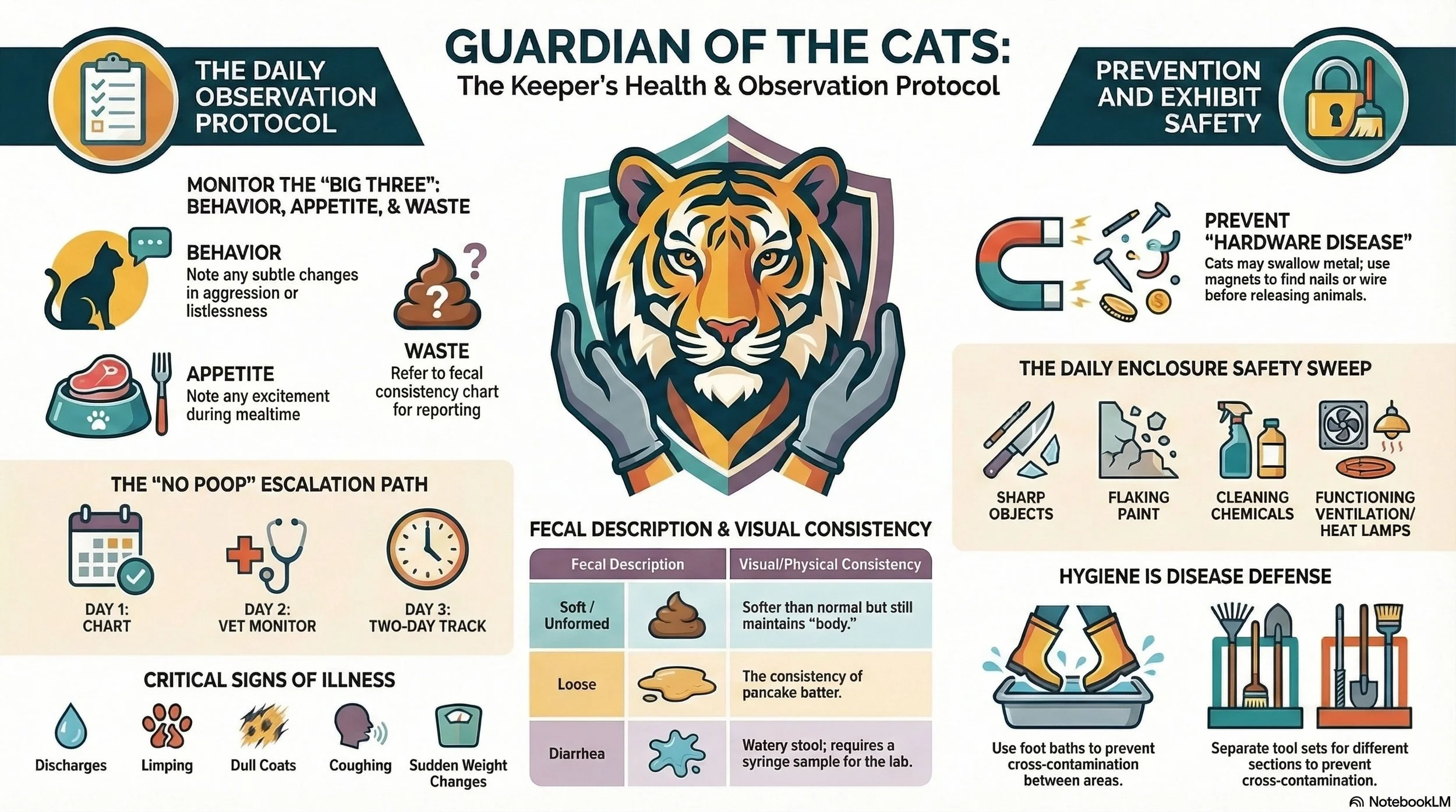
This text outlines the comprehensive animal health protocols and management strategies utilized by Big Cat Rescue to ensure the well-being of their captive exotic felines. It emphasizes that careful observation by keepers is the primary defense against illness, as wild cats instinctively mask symptoms of pain or disease. The documentation provides a detailed diagnostic checklist for monitoring changes in appetite, behavior, and waste production to facilitate early medical intervention. Furthermore, it covers essential sanctuary operations such as disease prevention, proper sanitation, and the logistical handling of medications or necropsies. By maintaining rigorous observation charts and specialized training, the facility aims to mitigate risks associated with the unique physiological and psychological needs of large predators.

Critical Incident Hurricane and Disaster Plan
This video outlines the comprehensive emergency preparedness protocols established by Big Cat Rescue to ensure the safety of both animals and the public. While the sanctuary relocated its final residents in 2023, the text serves as a best-practices guide for other facilities facing disasters like hurricanes, fires, and medical emergencies. It detail specific infrastructure strategies, such as reinforced "Cat-A-Tat" enclosures and solar-powered fencing, alongside stringent staff training for animal recapture and first aid. The organization maintains extensive on-site resources, including backup generators, specialized transport vehicles, and medical supplies to remain self-sufficient during a crisis. Ultimately, the plan emphasizes a clear chain of command and rigorous drills to mitigate risks associated with housing apex predators.
Feed Cats
Accidents
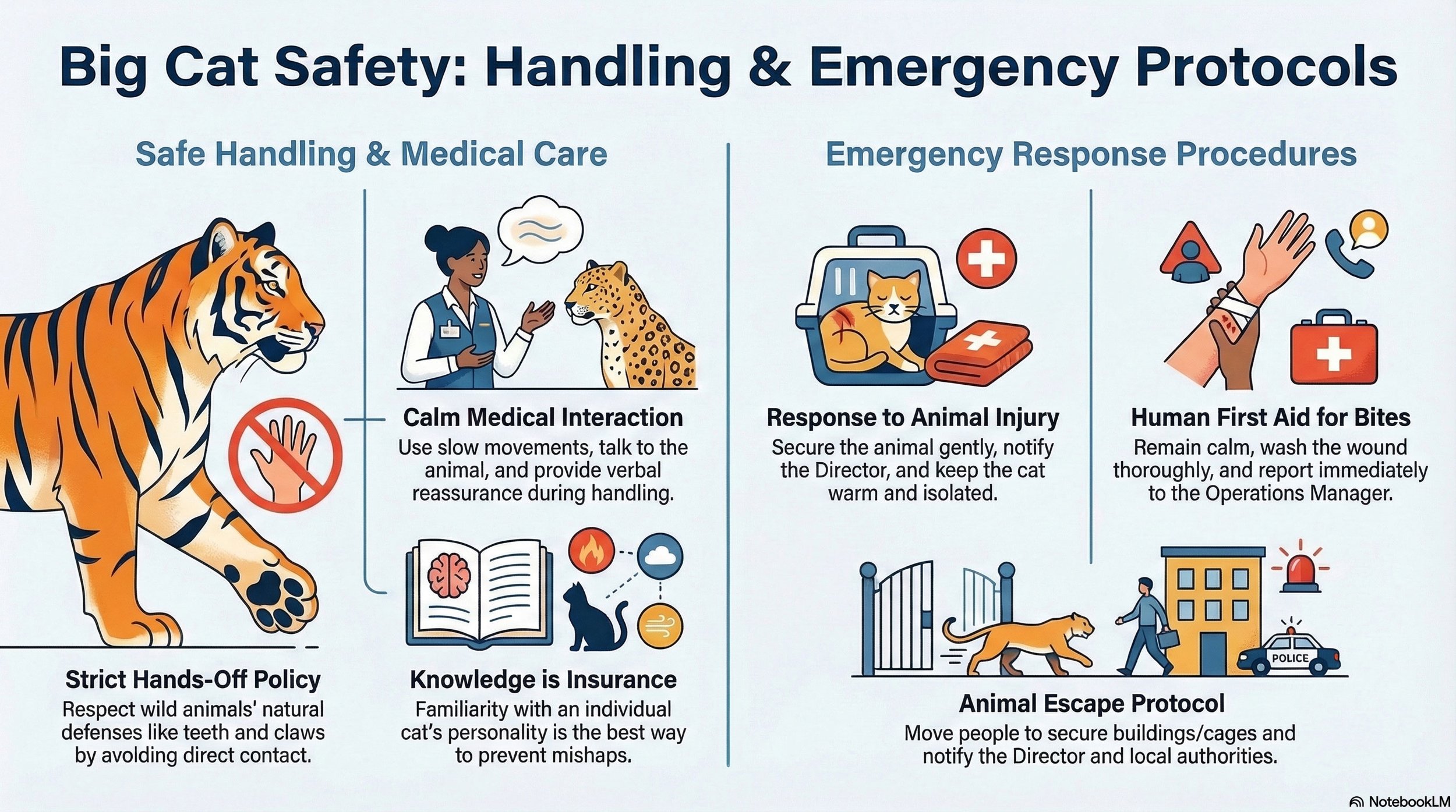
This document provides safety protocols and management guidelines for operating a wildlife sanctuary, specifically focusing on the welfare of large felines. The text emphasizes a hands-off approach to animal care, asserting that intimacy with an animal's unique personality is the best way to prevent physical injury. In the event of an emergency or escape, the guide outlines specific steps for securing the area and reporting the incident to authorities. Medical interactions are strictly limited to necessary health procedures conducted with patience and calm, deliberate movements. Furthermore, the source details first aid requirements for staff members who may experience a bite or scratch while on duty. Ultimately, the material serves as an educational framework for maintaining a secure environment for both captive predators and their human caretakers.
Don't They Miss Being Petted?
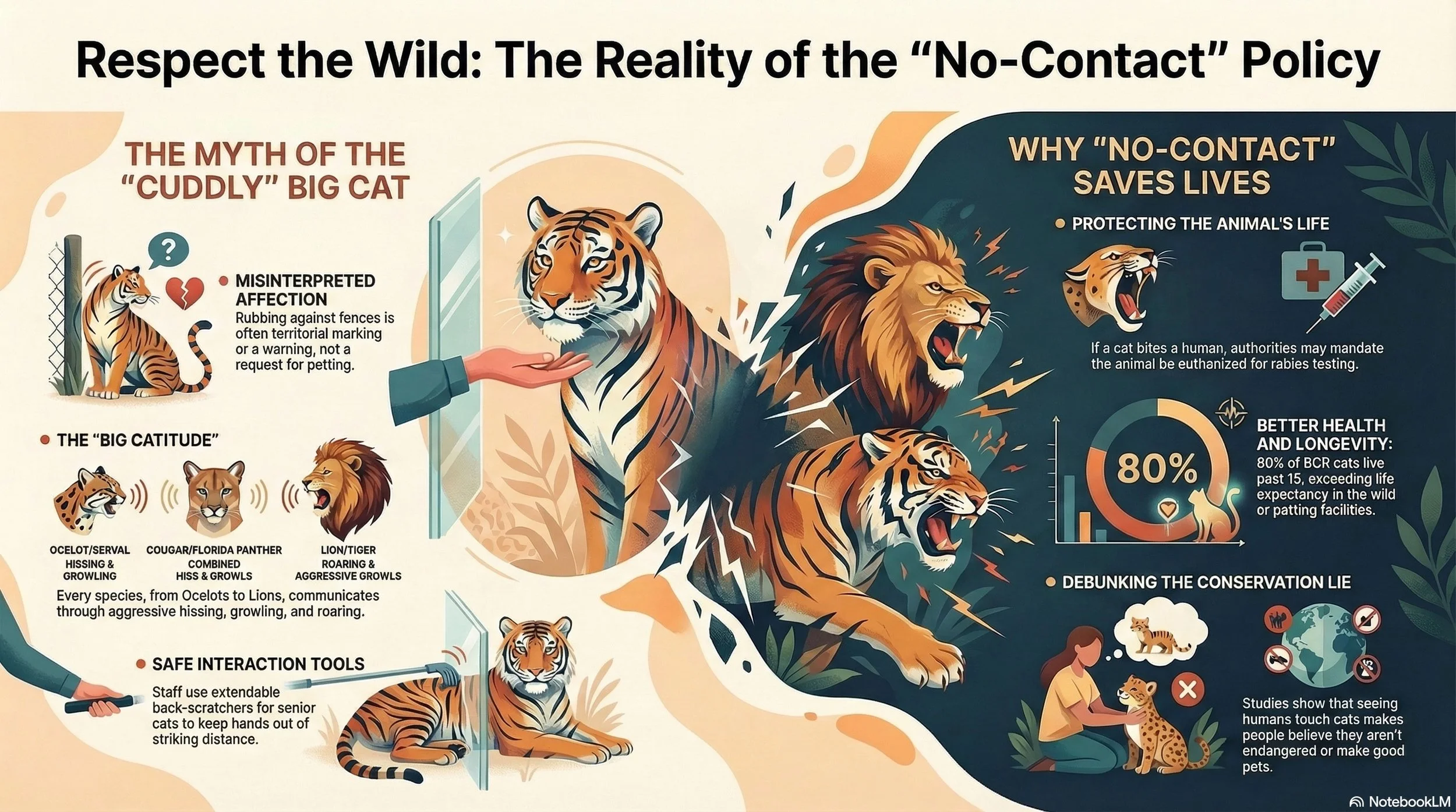
This source explores why Big Cat Rescue maintains a strict no-contact policy between humans and exotic felines. Written by Carole Baskin, the article argues that petting wild animals is a dangerous practice that promotes the exploitative exotic pet trade and spreads misinformation about conservation. While the facility uses long-reach tools to help elderly cats groom, they clarify that behaviors like rubbing against fences are signs of territorial marking rather than a desire for affection. The text systematically dismantles common justifications for physical interaction, labeling them as egotistical myths that prioritize human entertainment over animal welfare. Ultimately, the sanctuary emphasizes that respecting these solitary predators requires acknowledging their wild nature rather than treating them like domestic pets.