Escapes
The Lethal Calculation: Inside the Tactical Reality of Big Cat Escape Protocols

For the casual observer at a wildlife sanctuary, the heavy-gauge mesh of a perimeter fence provides a comforting illusion of absolute control. It is a physical manifestation of "safe distance," allowing a clear view of apex predators without the visceral fear of the hunt. However, for those operating behind the scenes, that fence is not a guarantee—it is a variable. True safety is not found in the steel itself, but in the rigorous, unsentimental "Animal Escape Protocol" that dictates exactly what happens when those physical barriers are breached.
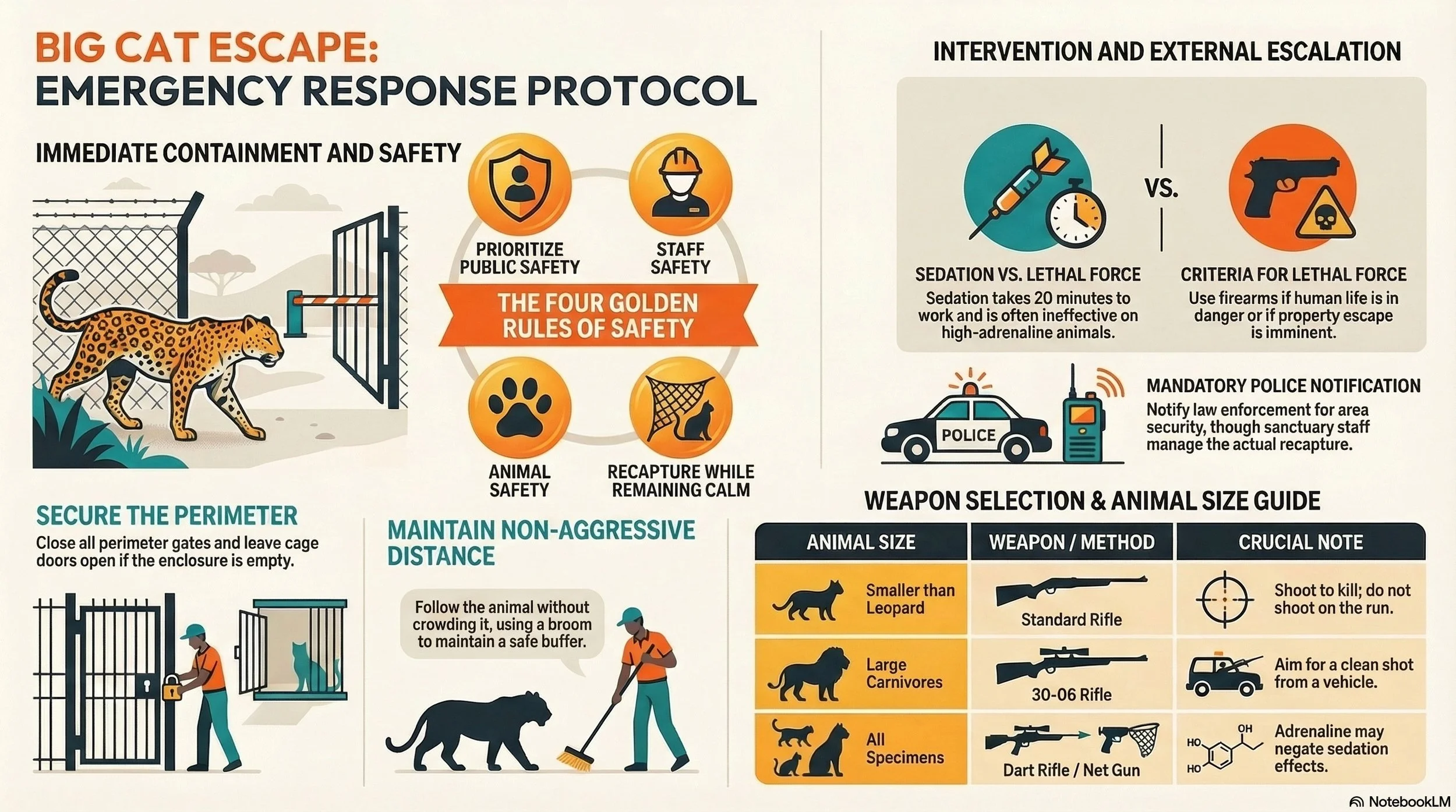
These protocols strip away the sanctuary’s facade to reveal the lethal calculations required when apex predators breach their boundaries. At Big Cat Rescue (BCR), an escape triggers an immediate, non-linear tactical response aimed at four simultaneous objectives: ensuring public safety, protecting staff, preserving the life of the animal, and achieving a successful recapture. In a crisis, there is no hierarchy of steps; these goals are pursued with a clinical, high-stakes urgency that shifts the environment from a place of conservation to a theater of tactical management.
This is a world where popular media tropes are discarded in favor of hard-earned, often grim expertise. From the biological limitations of chemical immobilization to the specific legal mandates requiring lethal force, the following insights provide a transparent look at the intense preparation required to live alongside the world’s most dangerous carnivores.
The 20-Minute Failure: Why Sedation is a Secondary Hope
The "instant" sleep dart is a fiction of Hollywood. In a real-world escape scenario, chemical immobilization is a slow, dangerously unreliable tool. The BCR protocol highlights a sobering "20-minute rule": even under ideal conditions with a calm, napping cat, it typically takes twenty minutes for sedation drugs to take effect.
In an active escape, that timeline often collapses into irrelevance. An animal that has breached its enclosure is rarely calm; it is flooded with adrenaline, a biological defense that can render standard sedation dosages completely ineffective. While a dart rifle or net gun is technically the first option if a cat escapes the property, the protocol acknowledges that biological reality often makes chemical recapture a luxury the staff cannot afford.
"In a cat who has escaped, and who has adrenalin pumping through their veins, sedation is very unlikely to work, but should be tried first if at all possible."
Tactical Autonomy: Why the Police Don't Lead the Recapture
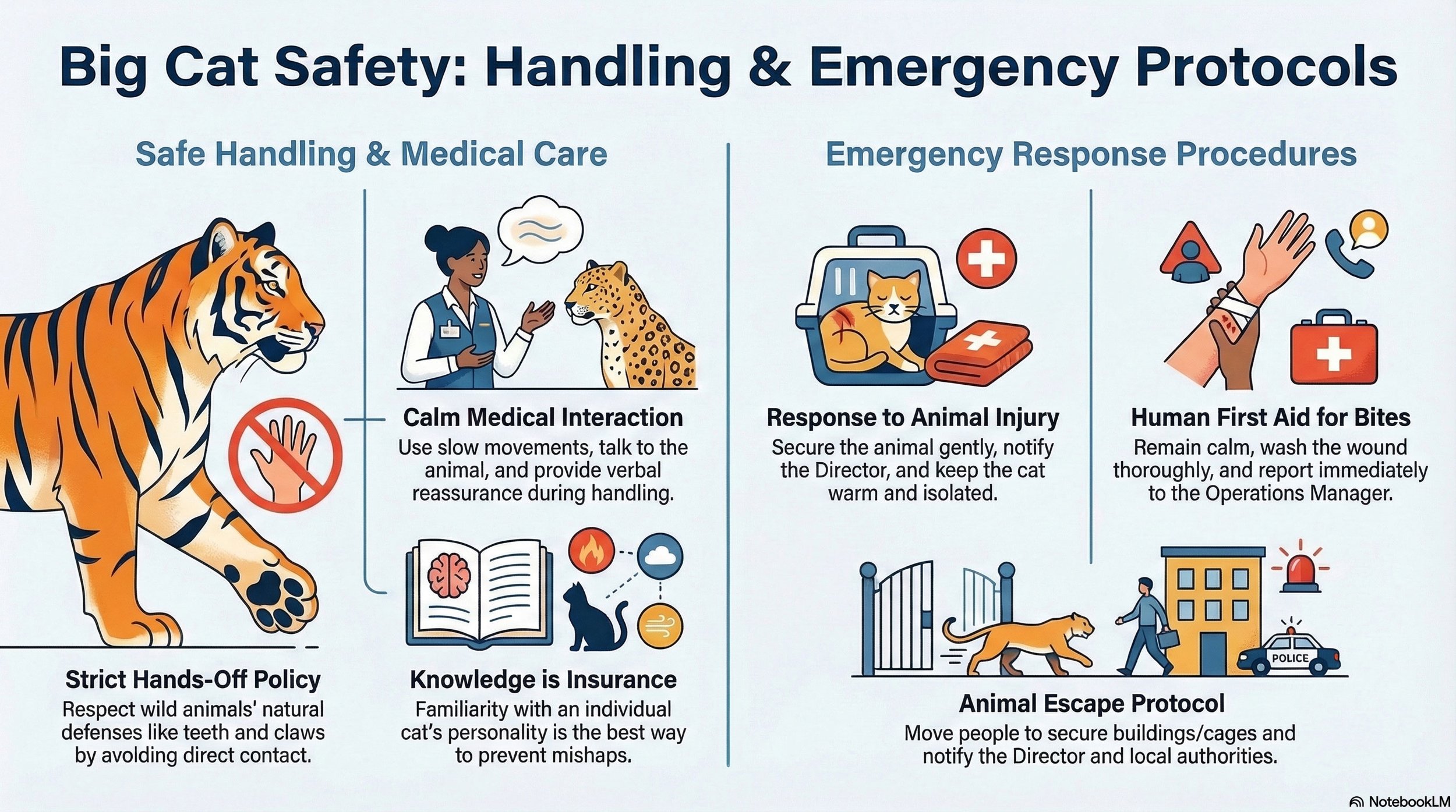
In a standard emergency, the public is conditioned to hand control to law enforcement. However, sanctuary safety strategy dictates a counter-intuitive relationship with the police. According to the protocol, while local police and wildlife officials are notified immediately during an off-property escape, they are informed of the situation—not requested to lead the recapture.
The division of labor is a matter of specialized expertise. Law enforcement personnel are tasked with securing the area and protecting the general public, effectively acting as a secondary perimeter. Meanwhile, the high-risk task of the actual recapture remains with BCR staff, who possess the specific feline behavioral knowledge required to read a cat's intent. If staff lose sight of the animal, armed law enforcement may be utilized as "spotters," but the technical handling remains with the experts. Keeping professionals in charge prevents the chaos that often ensues when generalists attempt to manage a panicked apex predator.
The Psychological Buffer: The "Broom" Defense
While the sanctuary armory is stocked with high-caliber rifles, the protocol emphasizes the use of surprisingly low-tech tools for close-quarters management. If an animal is loose within a walkway or the inner perimeter, staff are instructed to use a "broom or similar instrument" to keep the animal back.
This is not an act of bravado, but a psychological buffer. The broom serves as a physical extension of the handler, allowing them to maintain a boundary without escalating the animal's stress levels through aggressive posturing. The protocol repeatedly stresses the directive to "not crowd the animal," as crowding triggers the predatory or defensive instincts that lead to disaster. Within this framework, "heroism" is viewed as a liability. A staff member attempting a "heroic" intervention creates a chaotic animal, and a chaotic animal is impossible to recapture safely. The directive is absolute: "It is of utmost importance that everyone involved in the recapture remain calm and not try to be a hero."
The 30-06 Mandate: The Somber Reality of Lethal Force
The most harrowing aspect of big cat management is the standing order regarding lethal force. Under the "To kill or not to kill" section, the protocol outlines the precise conditions where recapture efforts must be abandoned in favor of lethal intervention.
Lethal force becomes a legal and safety mandate under two scenarios:
Immediate Human Threat: If a person is at risk, staff are instructed not to wait for an attack to occur. The decision to shoot must be made the moment a life is in jeopardy.
Imminent Escape into the Community: If a large carnivore is about to leave the property and sedation is not a viable option, the law mandates that the animal be killed to prevent it from entering the surrounding community.
The hardware used for these moments is chosen for its stopping power, not its mercy. The protocol dictates that while standard rifles may be used for animals smaller than a leopard, the .30-06 rifle is the requirement for leopards and all larger cats. Furthermore, the protocol includes a crucial tactical detail: the shooter should, if possible, remain in a vehicle when approaching. This "mobile blind" provides a layer of protection for the shooter, acknowledging the extreme vulnerability of a human on foot. These are "shoot to kill" scenarios, framed not as a choice, but as a heavy, mandated responsibility to protect human life.
Conclusion: The Price of Protection
Running a sanctuary for apex predators is a commitment that requires a staggering level of psychological and tactical preparation. These protocols serve as a reminder that the safety of the public is built on a foundation of transparency and the willingness to make impossible decisions in a matter of seconds.
For the staff, the "Price of Protection" is the heavy ethical weight of knowing they must be prepared to kill the very animals they have dedicated their lives to saving. It is the ultimate paradox of conservation. As we look at these magnificent creatures, we must ask ourselves: are we truly prepared for the reality of their nature? Perhaps the highest form of respect we can show a big cat is acknowledging that behind the beauty lies a predator that requires not just our care, but our most rigorous—and sometimes lethal—boundaries.









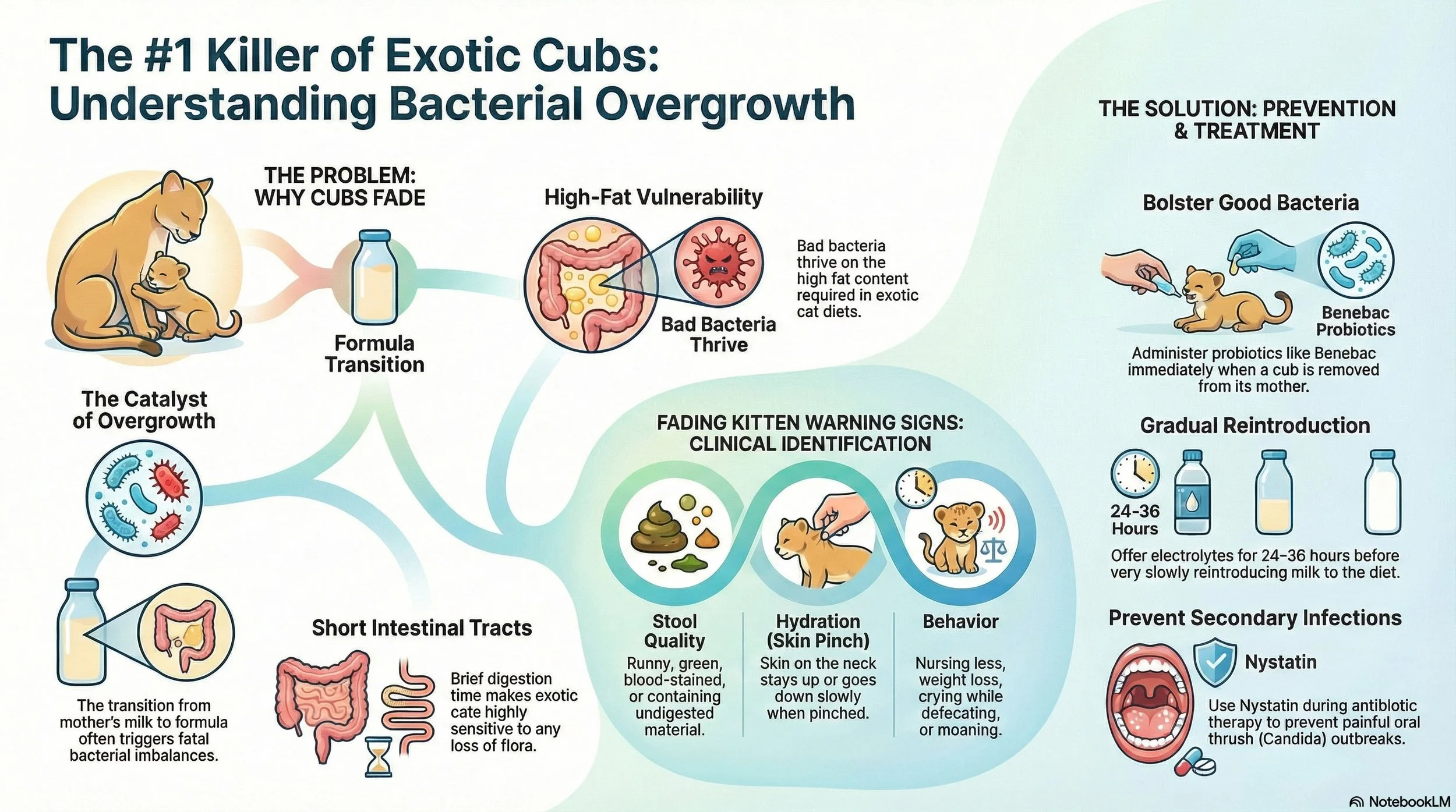
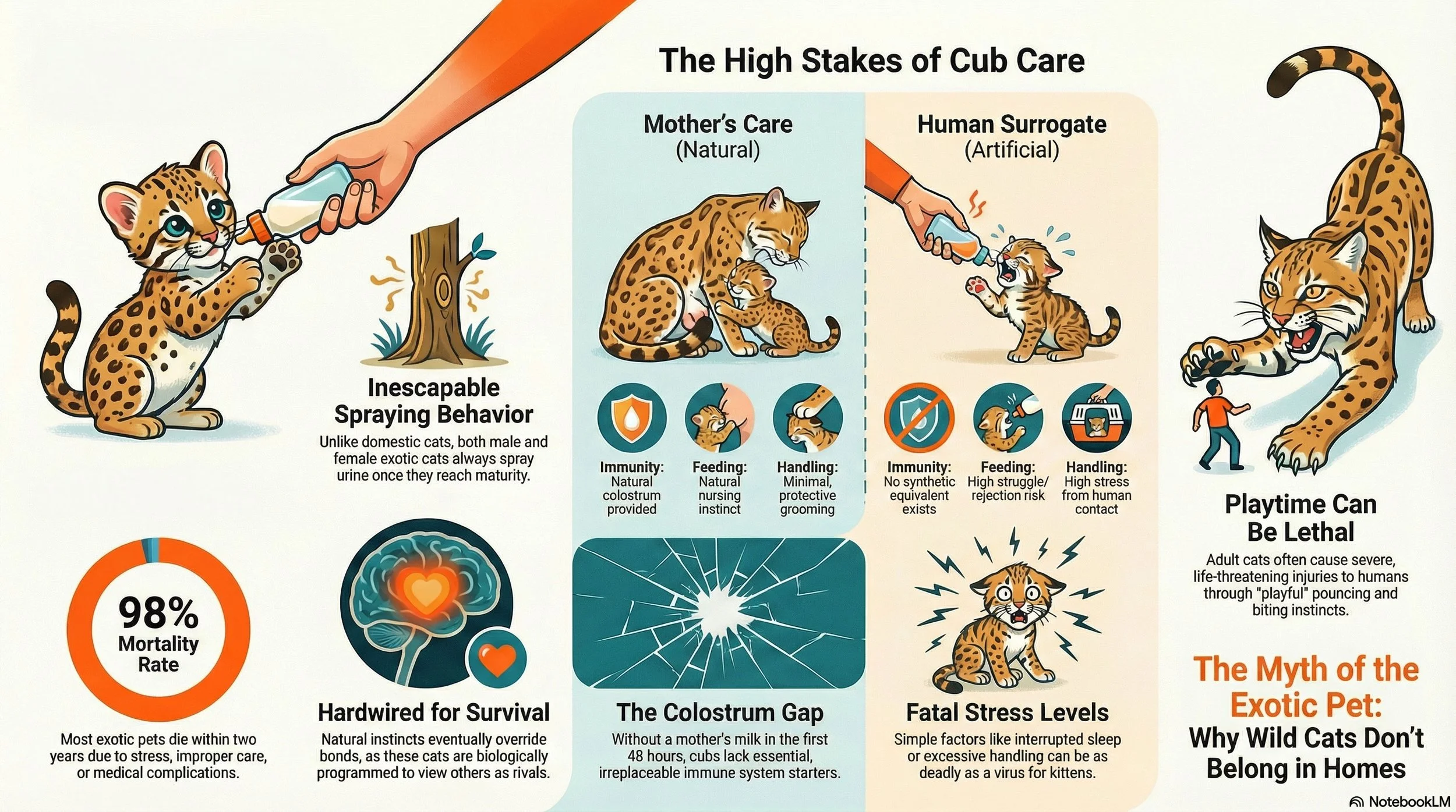
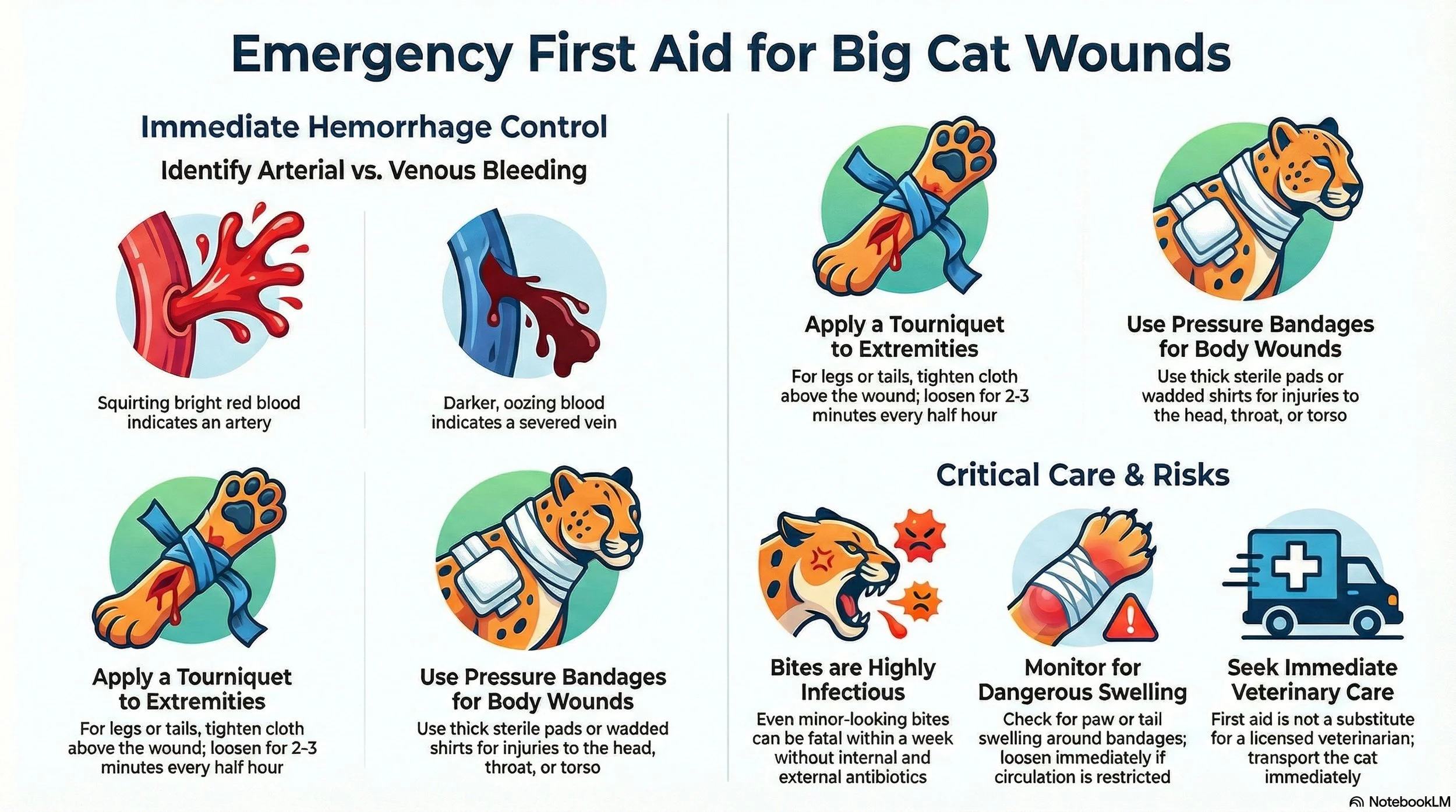
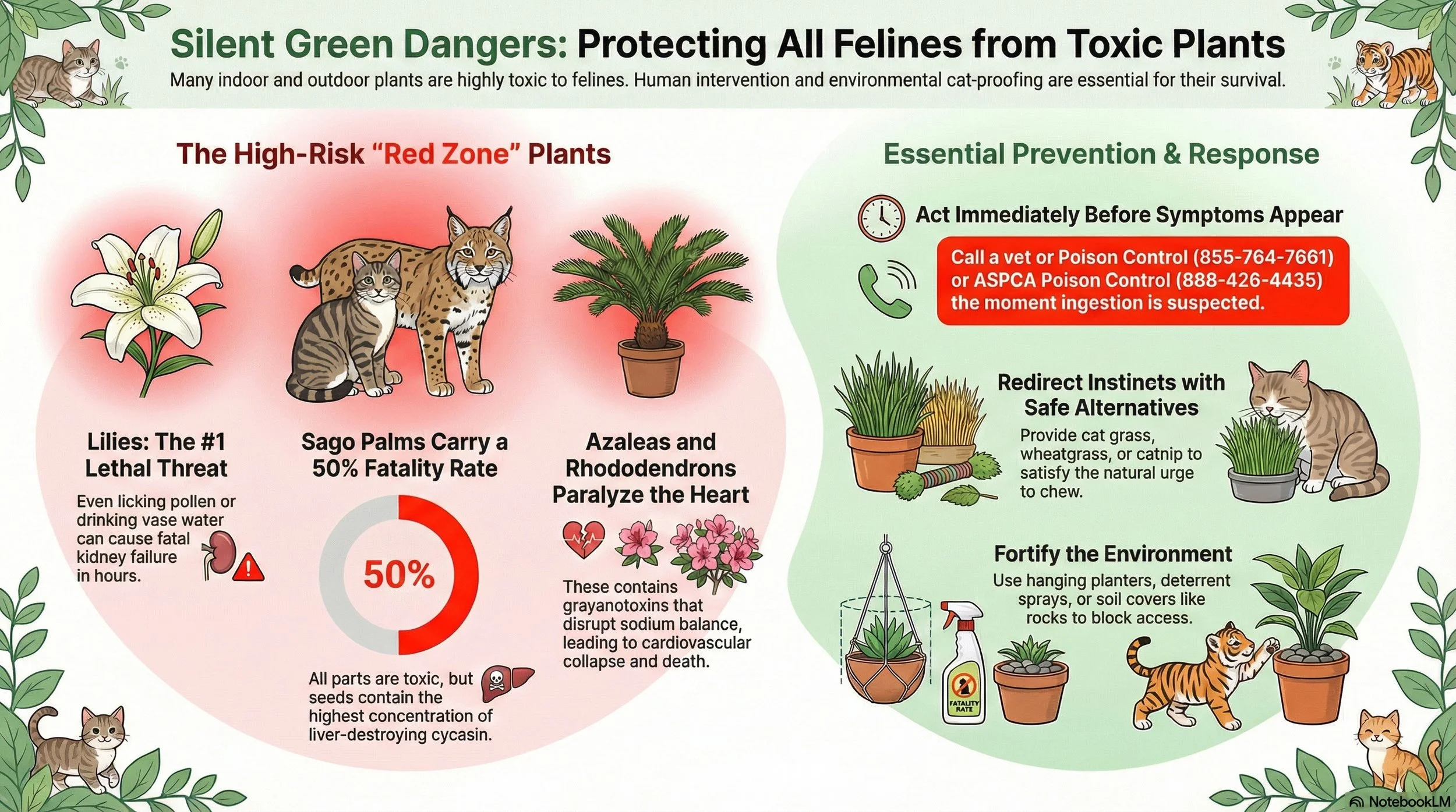

These materials provide a comprehensive framework for establishing and maintaining a successful animal sanctuary, drawing on the long-term experience of Big Cat Rescue. The sources highlight the importance of meticulous planning, suggesting that operators should draft multi-year goals and establish a disciplined organizational culture with strictly enforced rules. Financial sustainability is emphasized through the practice of setting aside monetary reserves and focusing on broad conservation impact rather than just immediate rescue needs. Additionally, the text underscores the vital role of volunteer management, noting that a large, dedicated workforce can provide labor equivalent to dozens of full-time employees. Finally, the guides advocate for a strong social media presence that utilizes storytelling and transparency to build donor trust and engage the public.