Siberian Lynx Facts
Eurasian / Siberian Lynx: The Ghosts of the Forest
Commonly known as the Eurasian Lynx or Siberian Lynx, this elusive predator is a masterpiece of evolution, perfectly adapted to the rugged landscapes of Europe and Northern Asia. As the largest member of the Lynx genus, it plays a vital role in maintaining the health of its ecosystem by managing ungulate populations.

Siberian Lynx
Quick Facts
Scientific Name:Lynx lynx
Genus:Lynx
Conservation Status: Least Concern (Global); Near Threatened (European Union)
Weight: 17 – 25 kg (males are typically 25-30% heavier than females)
Body Length: 90 – 120 cm
Lifespan: 17 – 24 years
Subspecies: Six recognized subspecies including the Northern Lynx (L. l. lynx), Carpathian Lynx (L. l. carpathicus), and the Critically Endangered Balkan Lynx (L. l. balcanicus)
Appearance
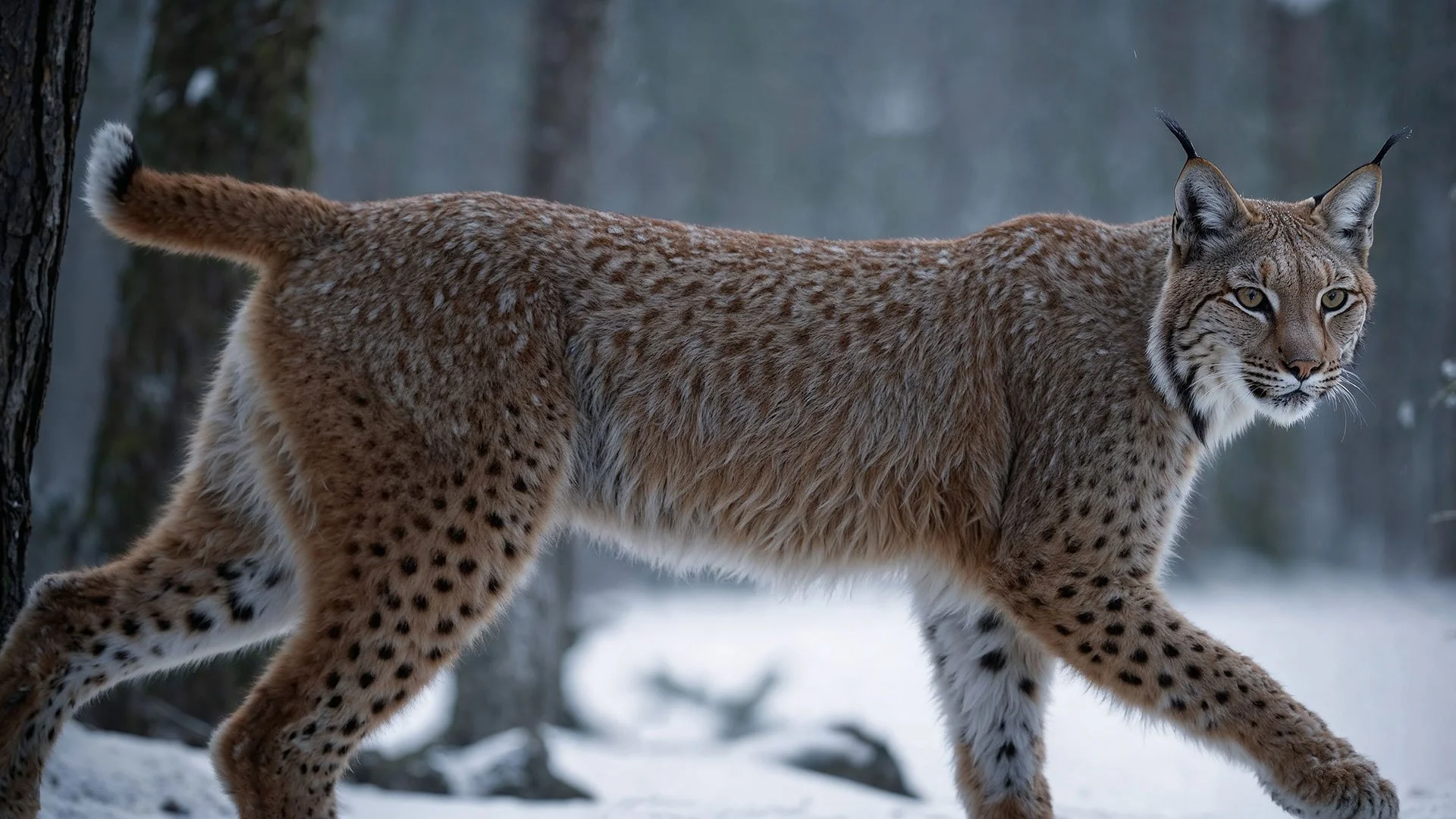
The Eurasian Lynx is easily distinguished by its powerful build and striking facial features. It possesses a flared facial ruff and long, prominent black ear tufts that aid in its exceptional hearing. Its thick fur ranges from silver-grey to a rusty yellow, featuring three distinct patterns: spotted, striped, or unpatterned.
To survive in deep snow, the lynx has evolved large, wide paws covered in dense fur that act like natural snowshoes. Its short tail is tipped entirely in black, a key feature that distinguishes it from its cousin, the Bobcat, whose tail is white on the underside. During the winter, their coats become thicker and paler, with markings that often seem to fade into the background.
See a playlist of this species at https://bigcatrescue.org/videos
Eurasian-Lynx-Range-Map
Habitat and Range
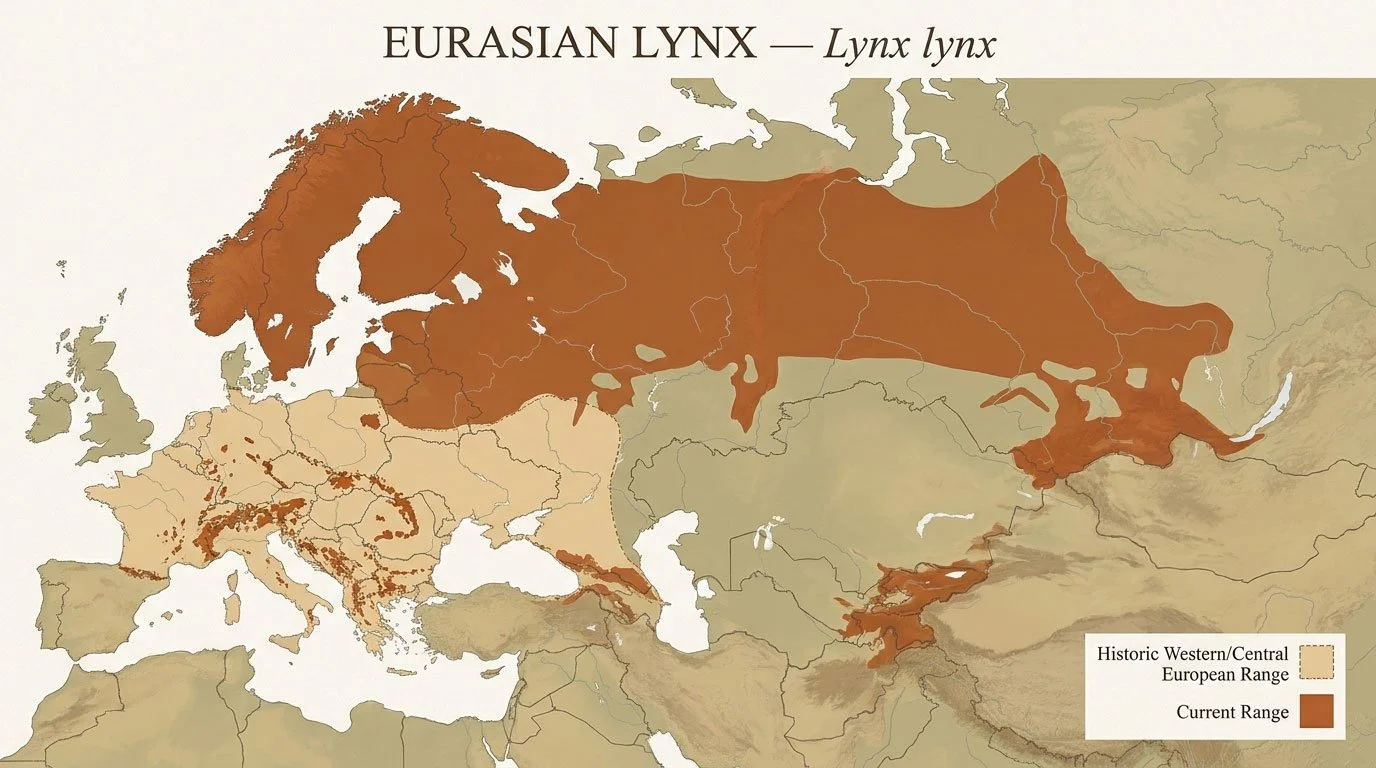
The Eurasian Lynx has one of the most extensive distributions of any cat species, stretching from Western Europe through the vast boreal forests of Russia to the Tibetan Plateau and the Pacific coast. While they are primarily associated with large, temperate, and boreal forests that offer plenty of cover, they are highly adaptable. They can be found in Mediterranean forests, alpine tundra, and even rocky, barren areas above the tree line, reaching elevations of up to 5,500 meters.
In Europe, the species is divided into 11 distinct populations. While the populations in Scandinavia and the Baltic states remain relatively large, many in Western and Central Europe are the result of careful reintroduction efforts and remain small and isolated.
Diet and Behavior
Unlike smaller lynx species that rely on hares, the Eurasian Lynx is a specialized hunter of small to medium-sized ungulates. Their preferred prey includes roe deer, chamois, and musk deer. In some regions, they can successfully take down prey three to four times their size, such as adult red deer or reindeer. When ungulates are scarce, they supplement their diet with foxes, hares, marmots, and birds.
These cats are solitary and territorial, primarily active during the twilight hours of dawn and dusk. They are ambush predators, using their incredible patience and camouflage to stalk close to their prey before striking. Their home ranges are vast, often covering 100 to 1,000 square kilometers depending on the availability of food.
Reproduction
The mating season occurs from February to early April. After a gestation period of roughly 68 to 73 days, females typically give birth to a litter of one to four kittens in late May or June. Kittens begin to follow their mother to kill sites at two months old and stay with her until the following mating season. While they reach independence at about 10 months, females usually do not reach sexual maturity until age two, and males at age three.
Threats
Despite their wide range, many lynx populations face significant challenges:
Human Conflict: Low tolerance among hunters and livestock farmers often leads to illegal retaliatory killing.
Habitat Fragmentation: Infrastructure development, such as roads and railways, creates barriers that isolate small populations and lead to fatal traffic accidents.
Genetic Diversity: Many reintroduced populations suffer from low genetic diversity, which can lead to inbreeding depression and reduced survival rates.
Prey Depletion: Over-hunting of ungulates and habitat loss can leave lynx without a stable food source.
Question: Can I keep a Siberian lynx as a pet?
Conservation Efforts
The Eurasian Lynx is protected under CITES Appendix II and the Bern Convention. In many countries, hunting is strictly prohibited, though a few nations allow limited, regulated harvests. Significant conservation work is focused on:
Reintroductions and Reinforcements: Moving individuals from stable populations (like those in the Carpathians) to struggling populations in Western Europe to improve genetic health.
Conflict Mitigation: Implementing better livestock management and compensation programs to increase local tolerance.
Monitoring: Using camera traps and genetic testing to track population trends and connectivity.
Big Cat Rescue has been a staunch advocate for this species, providing essential funding for international conservation projects aimed at protecting wild lynx populations. Through advocacy and support for field research, Big Cat Rescue works to ensure that the "ghost of the forest" continues to roam its ancestral lands for generations to come.