Leopard Cat Facts

Leopard Cat
The Mainland Leopard Cat: A Master of Adaptability
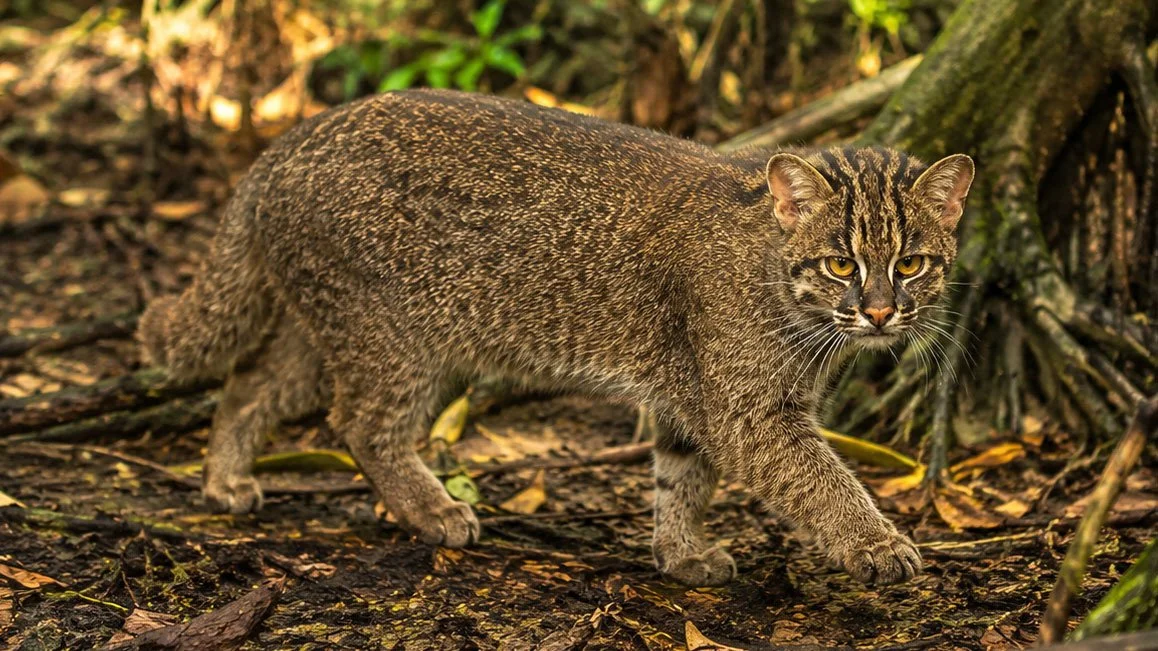
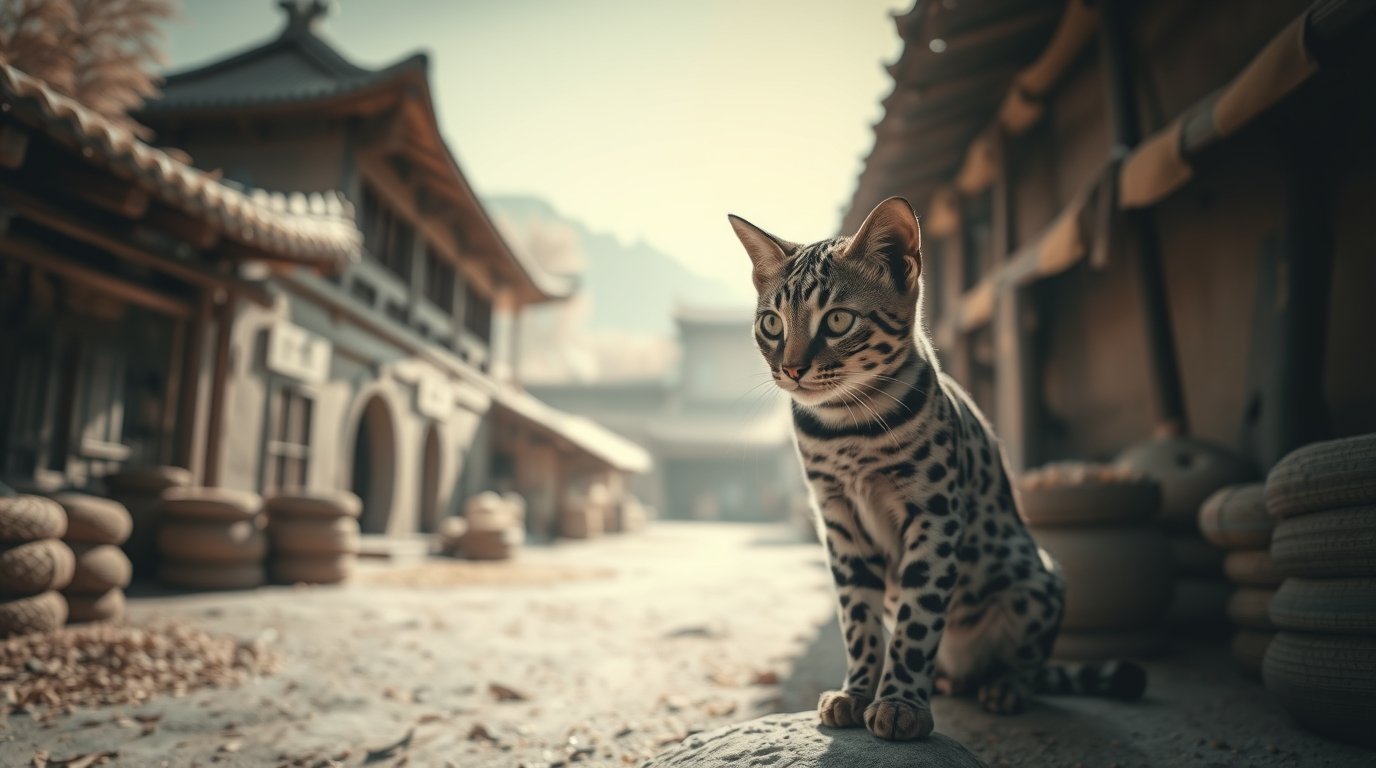
The Mainland Leopard Cat (Prionailurus bengalensis) is one of the most resilient and widely distributed small wild cats on the planet. Often mistaken for a miniature leopard due to its striking spotted coat, this feline is a vital part of Asian ecosystems, ranging from the frigid forests of the Russian Far East to the tropical landscapes of Singapore.
Quick Facts
• Scientific Name:Prionailurus bengalensis
Subspecies: P.b. bengalensis - India, southeast Asia, China Thailand
P.b. sumatranus - Sumatra
P.b. javanensis - Java and Bali
P.b. borneoensis - Borneo
P.b. trevelyani - Pakistan Asian Leopard Cat by Anthony Blueman
P.b. euptilura - Manchuria AKA the Amur or Tshushima (thought by some to be a separate species)
P.b. nminuta - The Phillipines
P.b. chinensis - North China
P.b. iromotensis - Iriomote Island - disputed and still recognized as a separate species by some.
The Fur and Meat Trade: Historically, hundreds of thousands of cats were hunted for their pelts. While commercial exploitation has decreased, illegal trade persists in some regions.
Hybridization: These cats are frequently captured for the exotic pet trade to be crossbred with domestic cats, creating the Bengal Cat. This practice removes pure individuals from the wild and depletes the natural gene pool.
Retaliatory Killing: They are often targeted by farmers for raiding poultry or are killed after being misidentified as larger predators like leopards.
Infrastructure and Disease: Road kills are an increasing threat in developing areas, and the transmission of diseases like FIV from feral domestic cats can devastate isolated populations.
Question: Can I keep a leopard cat as a pet?
See a playlist of this species at https://bigcatrescue.org/videos
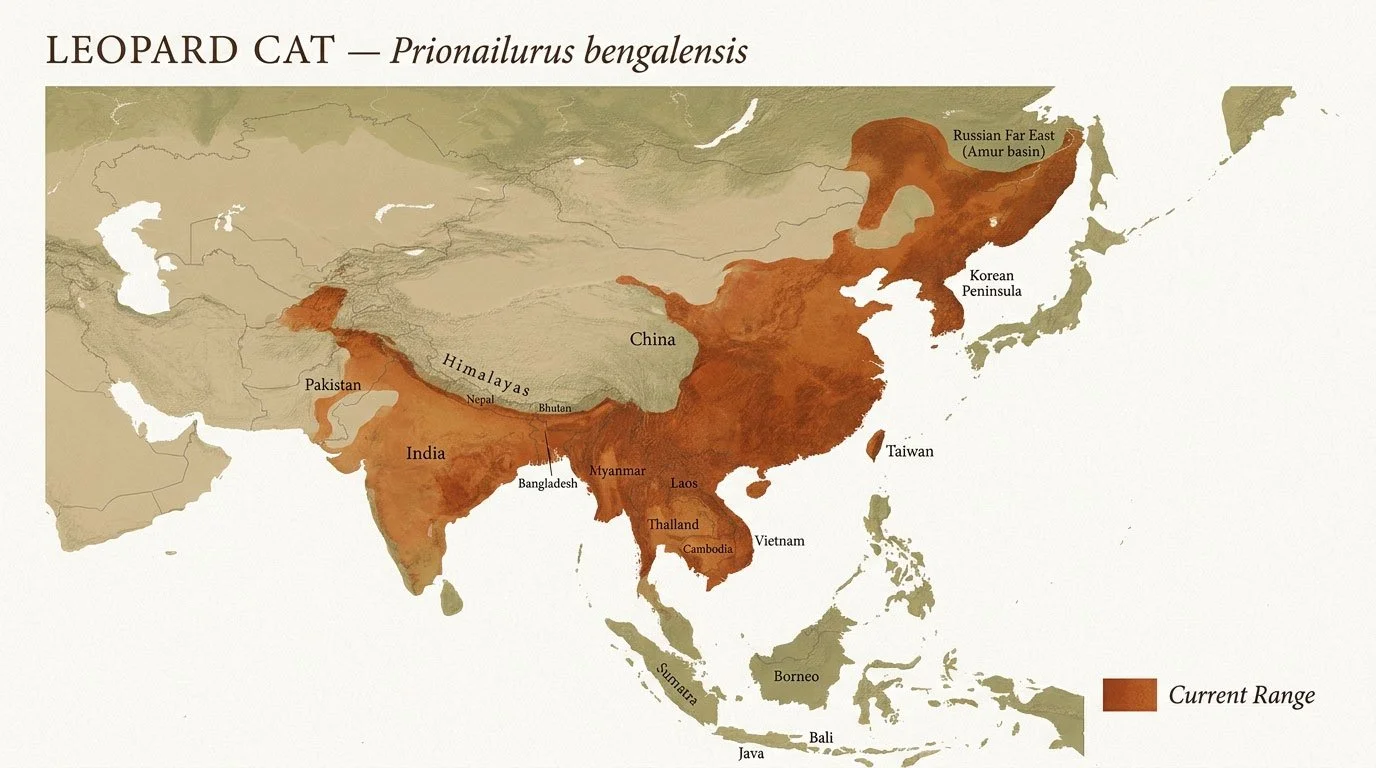
Leopard-Cat-Range-Map
Conservation Efforts
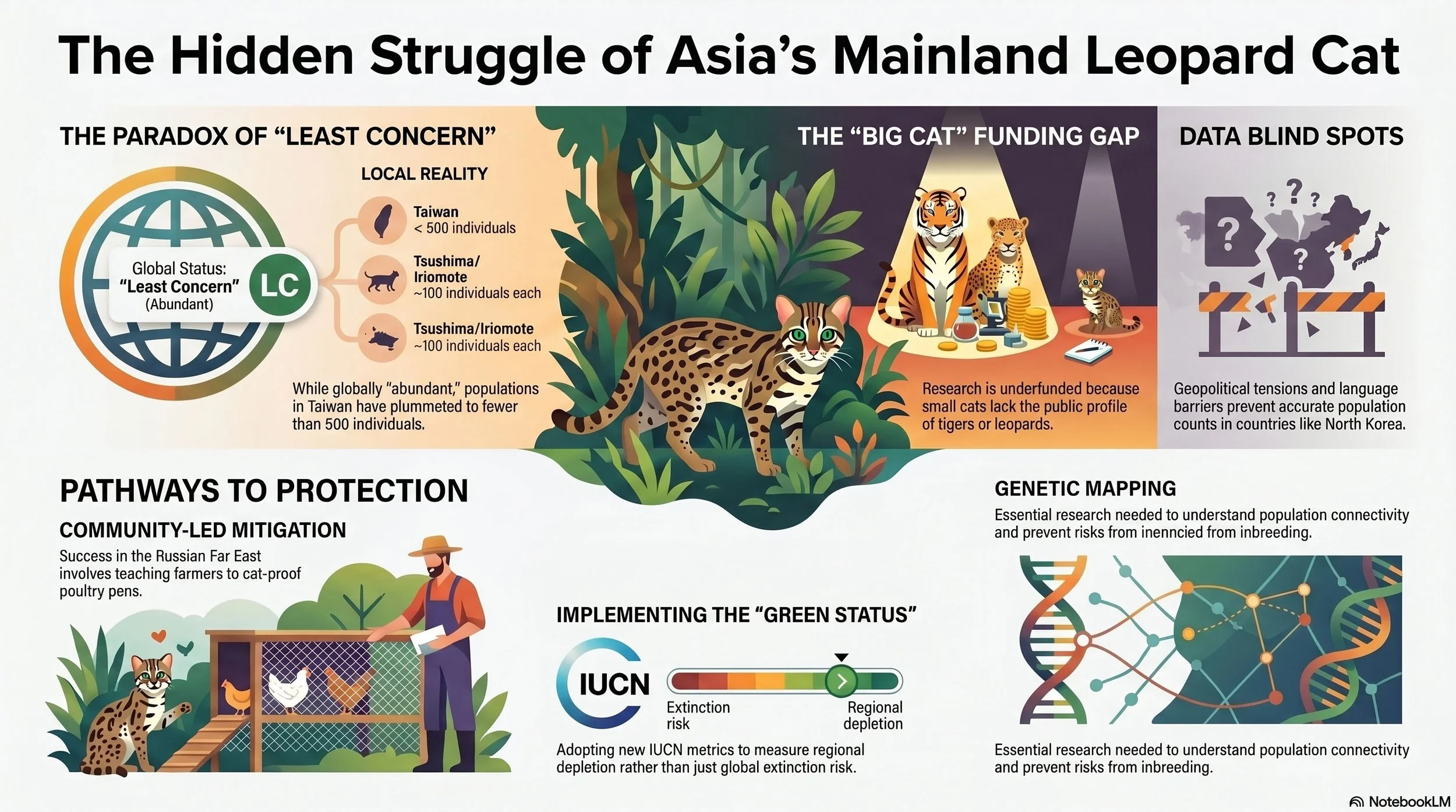
Conservation strategies for the Mainland Leopard Cat vary by country. They are fully protected in nations such as Nepal, Bangladesh, Myanmar, and Japan. In China, they are listed as a Category II National Key Protected species. Because they are so widespread, they often benefit from the "umbrella effect" of protected areas designed for larger species like tigers and leopards.
Big Cat Rescue has contributed to the protection of these felines through funding for WILD CARE Nepal, supporting vital in-situ conservation work that helps safeguard the species in its natural habitat. Continued research into their population density and habitat use is essential to ensure that this resilient cat remains a common sight in the wild for generations to come.


Social System and Communication: Unknown. Leopard Cat Sounds
See Conservation Work Funded By Big Cat Rescue here:
All conservation insitu work: https://bigcatrescue.org/insitu/



Leopard Cat Facts: Habitat, Population, Threats and Conservation. Learn where leopard cats live, what threatens them, how many remain, and which conservation efforts are protecting wild leopard cats.