Tube Feeding
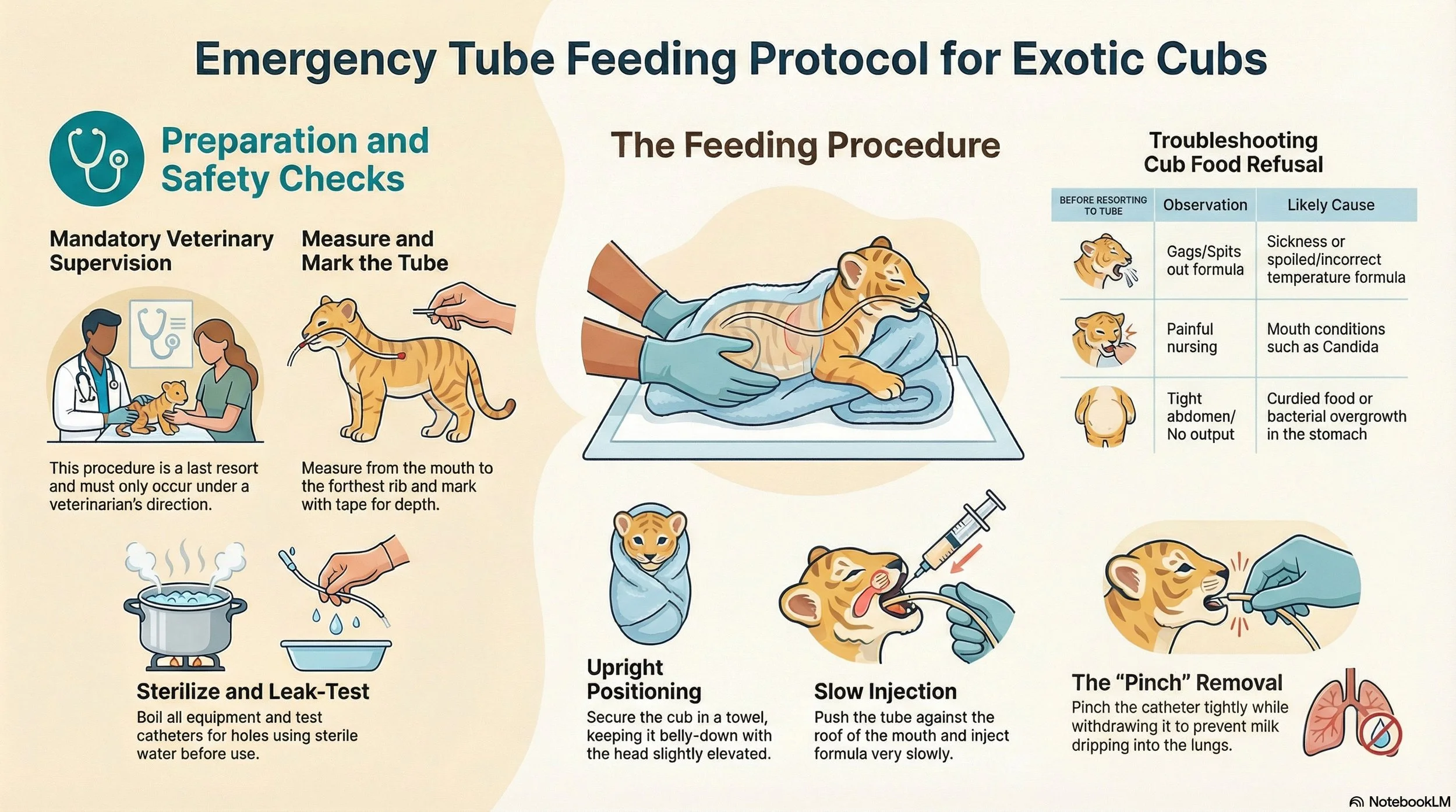
This guide from Big Cat Rescue provides detailed instructions on how to tube feed exotic kittens and cubs when they refuse to eat. The author emphasizes that this procedure is a dangerous last resort that should ideally be performed under professional veterinary supervision. Detailed safety protocols are outlined, including how to measure the catheter, avoid the lungs, and prevent the animal from biting the tube. The text also covers emergency measures for choking and explains how to remove spoiled food from a cub's stomach. Ultimately, the source serves as a technical resource for those caring for exotic cats in crisis while advocating for an end to the private pet trade.
Formulas
Housing
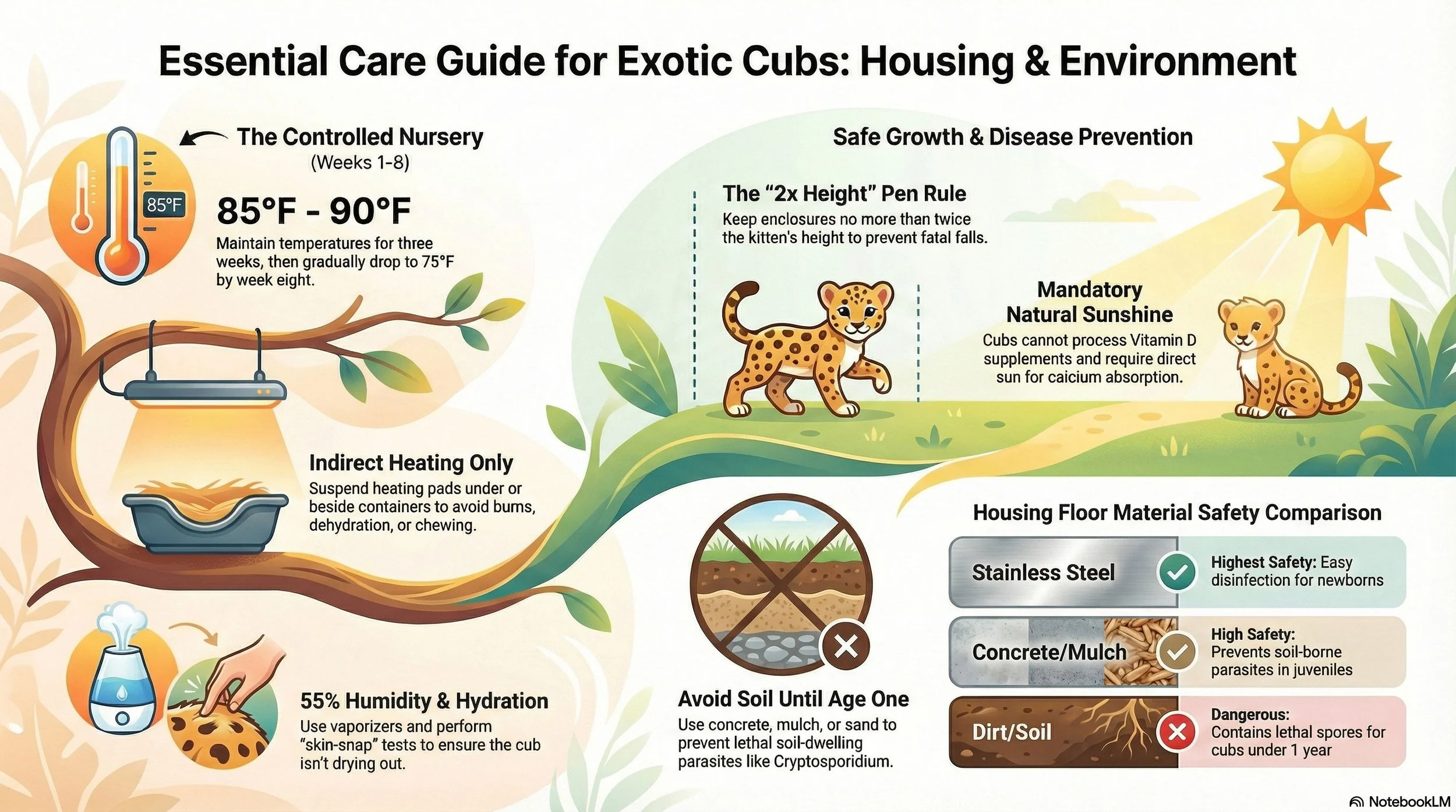
This resource from Big Cat Rescue provides essential instructions for the intensive care and housing of exotic feline kittens and cubs. The guide emphasizes the importance of precise temperature control, recommending that young cats be kept in specialized nurseries or containers between 85 and 90 degrees to survive. Practical advice is offered on sanitation and safety, highlighting the use of stainless steel materials and the prevention of physical injuries from climbing or falling. Additionally, the text addresses health risks such as dehydration, bacterial infections from nursing on littermates, and soil-borne parasites. Beyond physical care, the organization advocates for legislative change and education to end the private trade of these wild animals. Ultimately, the source serves as a specialized manual for those already tasked with raising exotic cats while discouraging the breeding of these species for captivity.
The End of the Cub Selfie
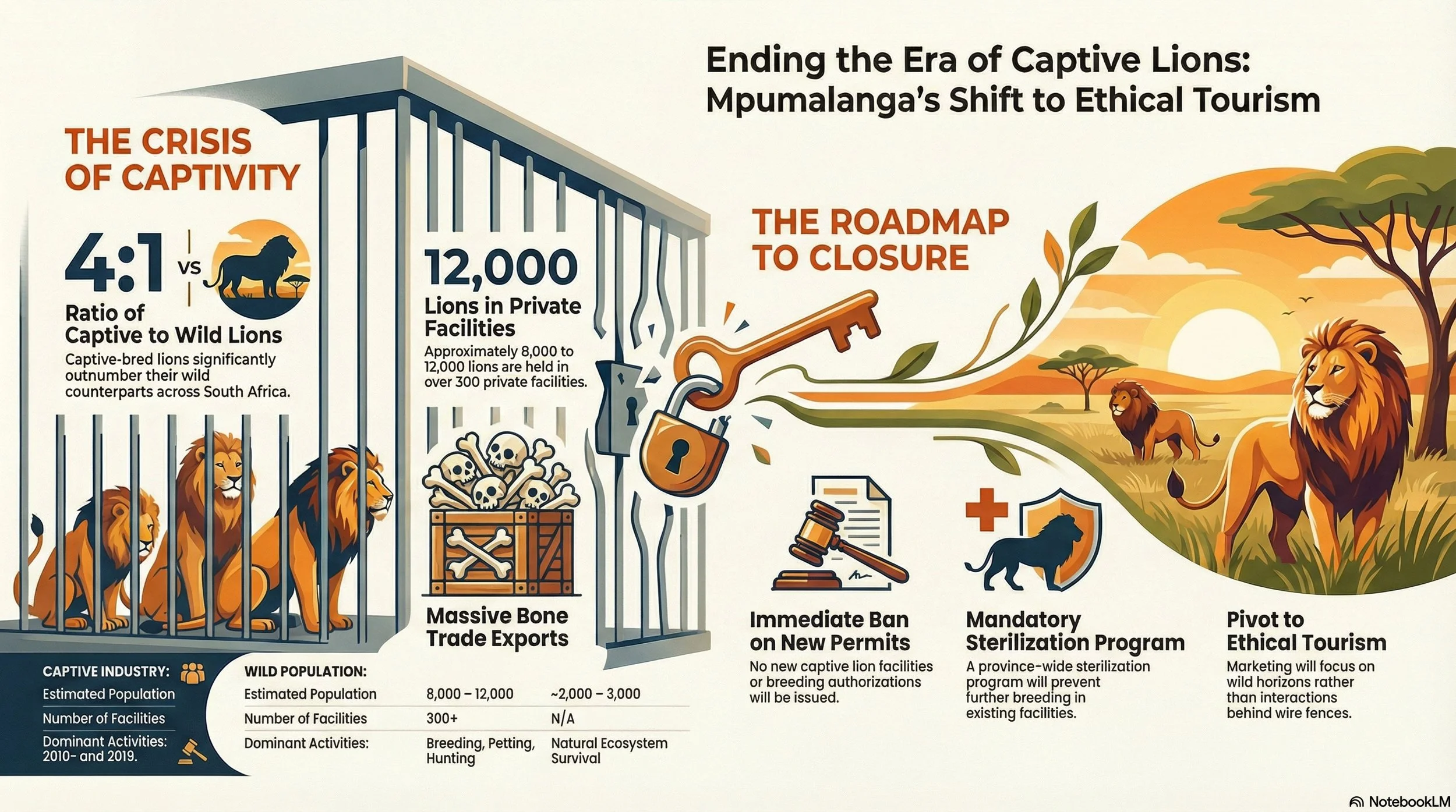
The provided sources detail a landmark decision by the Mpumalanga Tourism and Parks Agency to officially ban new permits for captive lion facilities in South Africa’s Mpumalanga province. This regulatory shift aims to phase out the controversial industry by prohibiting future breeding, stopping the importation of captive lions, and implementing a sterilization program. By aligning with national conservation mandates, provincial authorities are moving away from commercialized animal interactions, such as cub petting and canned hunting, to protect the country's international reputation. The transition focuses on fostering ethical, wild-based tourism and prioritizing the welfare of lions in their natural habitats. While existing facilities will not close immediately, they must adhere to strict welfare standards as the province redirects investment toward nature reserves and sustainable wildlife management. This policy represents a significant victory for animal rights advocates and marks a decisive pivot toward authentic African safari experiences.
Microchip
People often ask if we microchip our cats. We do microchip our permanent residents, but not the bobcats who are being released. Find out why we chip or not.
Feeding Kittens and Cubs
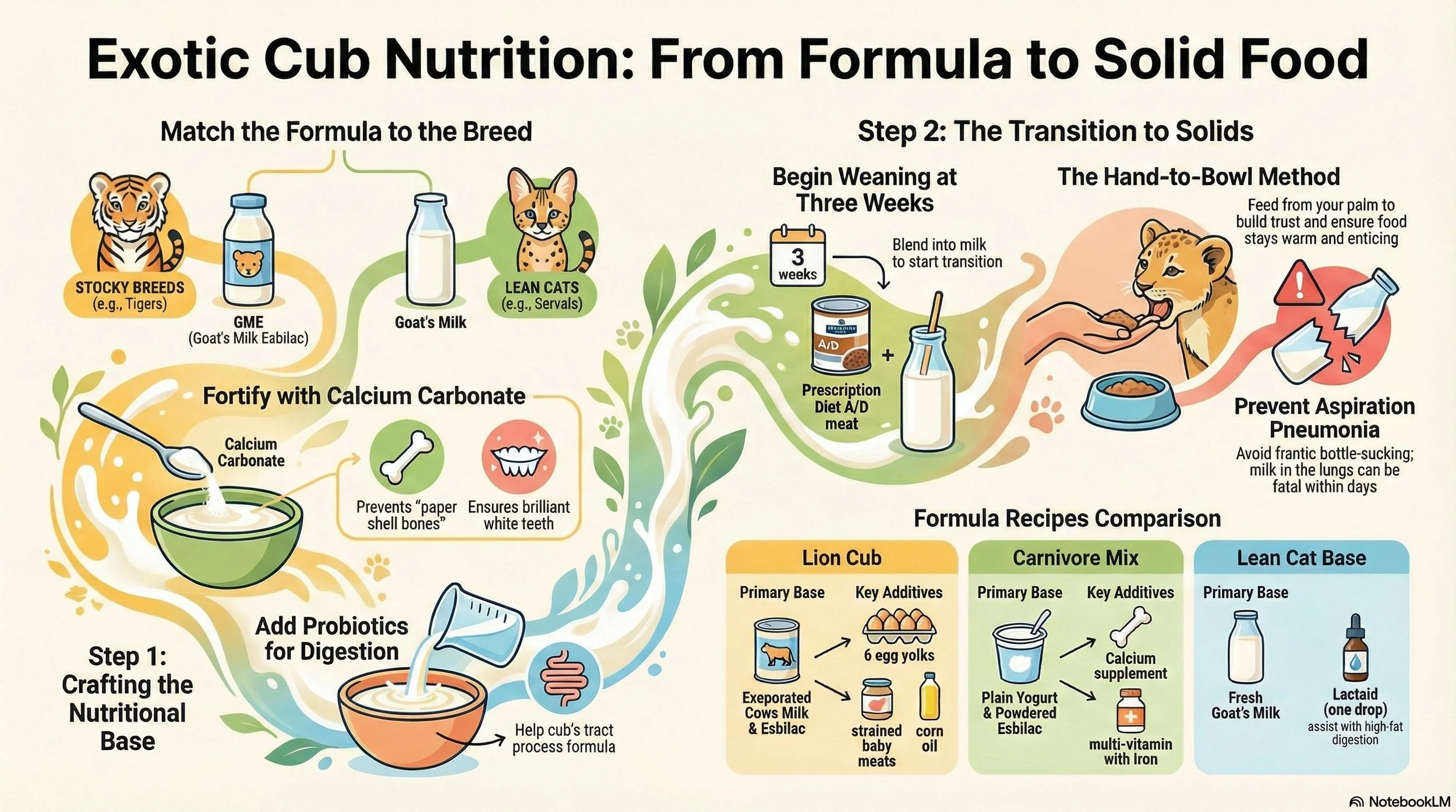
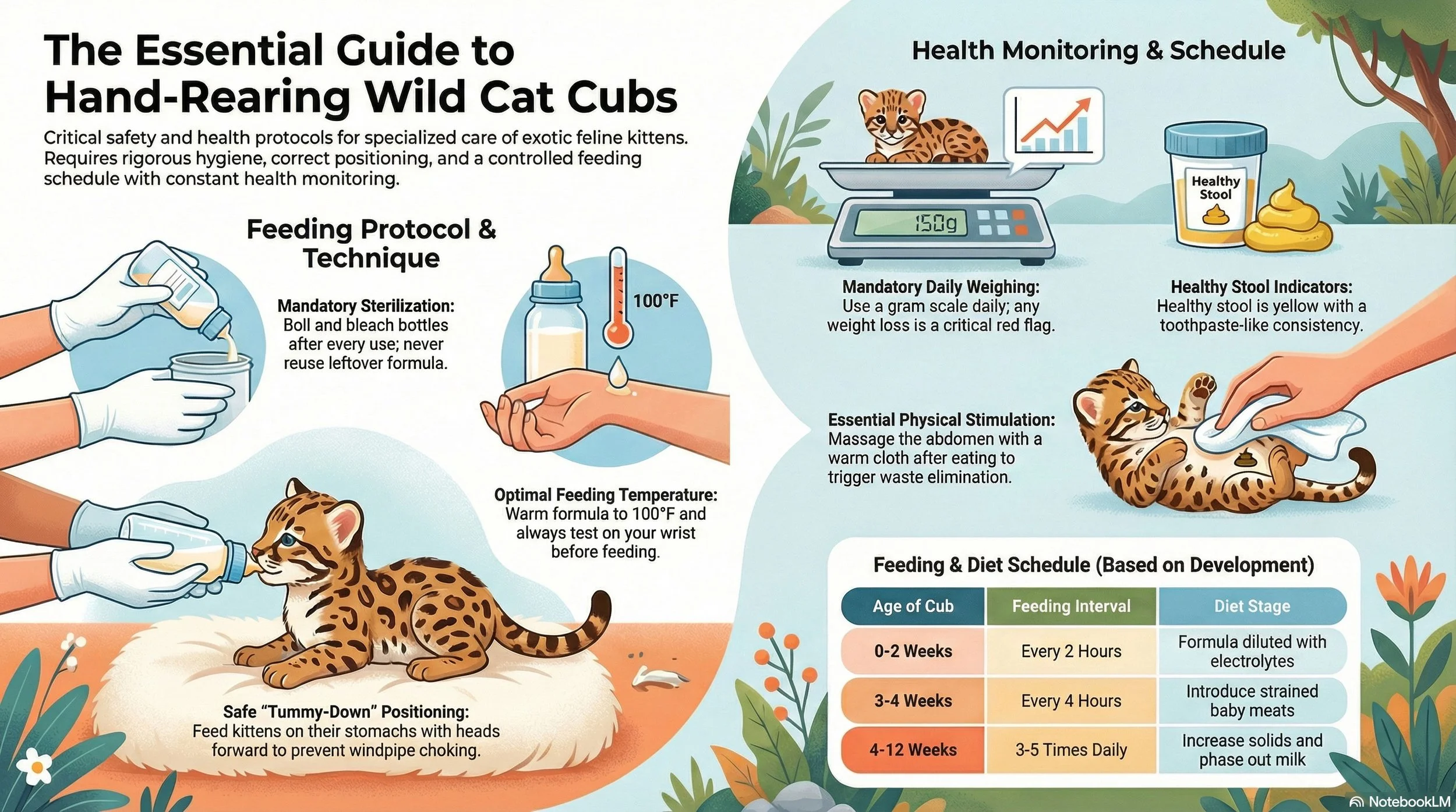
This guide from Big Cat Rescue provides comprehensive instructions on the specialized care and hand-rearing of wild cat kittens and cubs. While emphasizing that maternal care is always superior, the author details critical technical skills such as sterilizing equipment, modifying bottle nipples, and maintaining proper feeding postures. The text places a high priority on medical monitoring, urging caretakers to track weight precisely and observe waste for signs of bacterial infections or parasites. Beyond nutrition, the source covers essential hygiene practices, including stimulating waste elimination and safe methods for pest control. Throughout the manual, a strong conservationist stance is maintained, discouraging the exotic pet trade while offering life-saving advice for animals already in human custody.