The End of the Cub Selfie
Why South Africa’s ‘Wildest’ Province is Closing the Door on Captive Lions
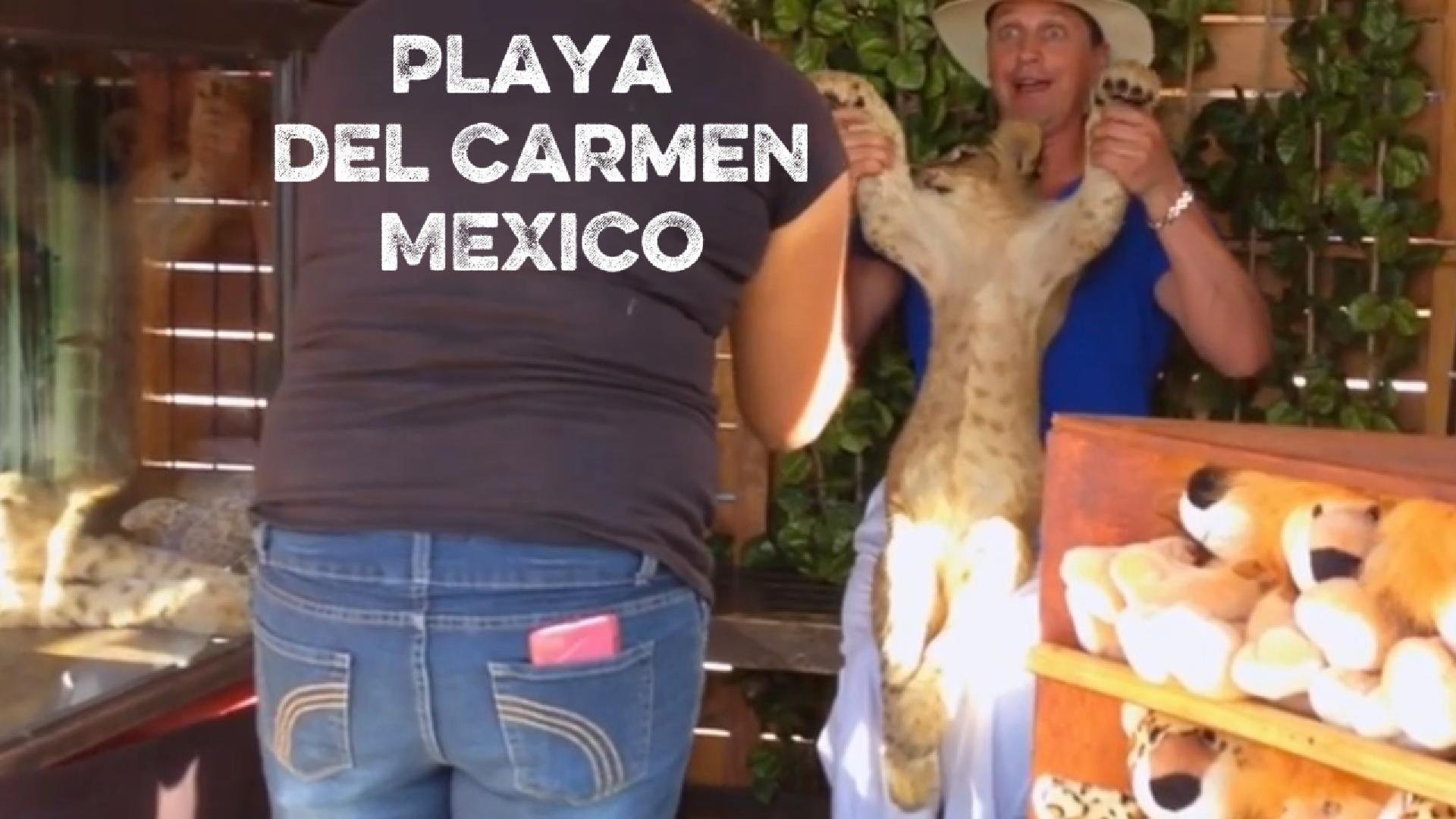
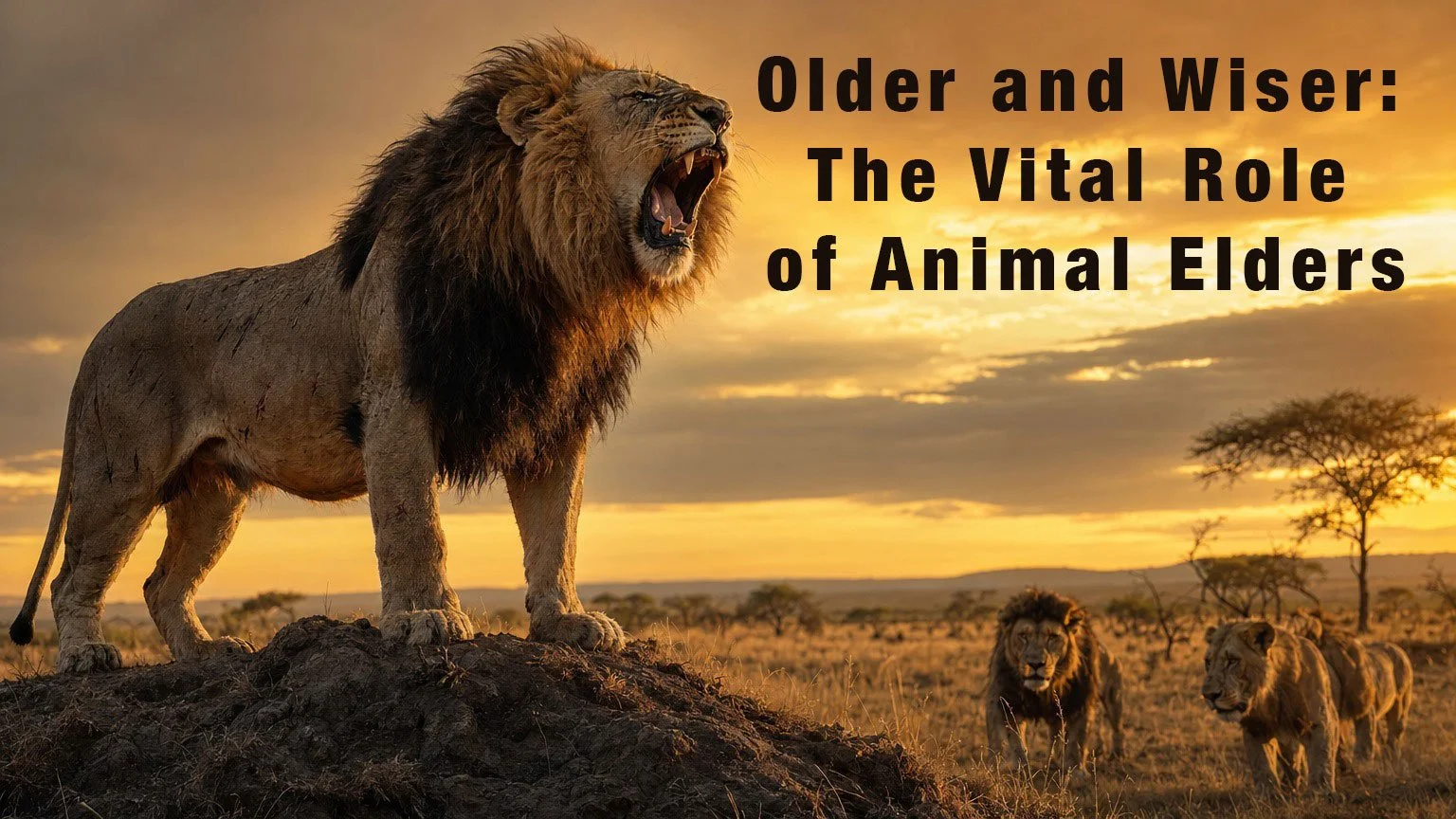
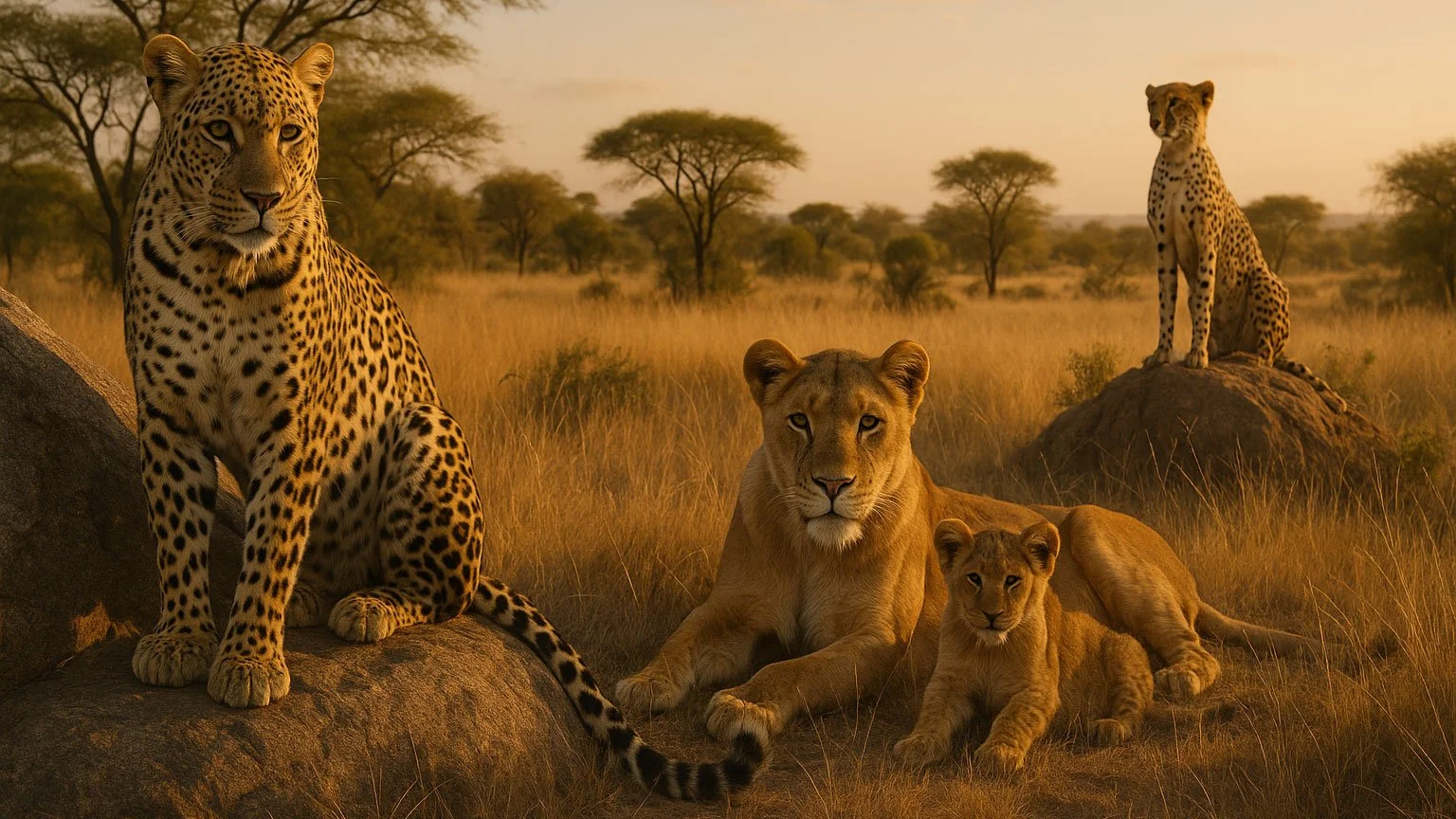
For the global traveler, the "African Wilderness" is a carefully constructed aesthetic: the amber wash of the savanna, the guttural resonance of a distant roar, and the silhouette of a predator navigating an unfenced horizon. Yet, for decades, a parallel and far more sterilized reality has thrived behind electrified wire. In these facilities, the wild is not encountered; it is manufactured. Cubs are pulled from mothers for the benefit of a tourist’s lens, and "lion walks" offer a curated proximity that masks a much grimmer industrial lifecycle.
That curtain is finally falling. In a move that has jolted the wildlife sector, Mpumalanga—the gateway to the Kruger National Park and a cornerstone of the safari economy—has announced a ban on new permits for captive lion facilities. This is more than a regulatory tweak; it is a decisive pivot away from a commercialized version of nature that has long compromised South Africa’s conservation integrity.
The 4-to-1 Disparity: Captivity Outnumbers the Wild
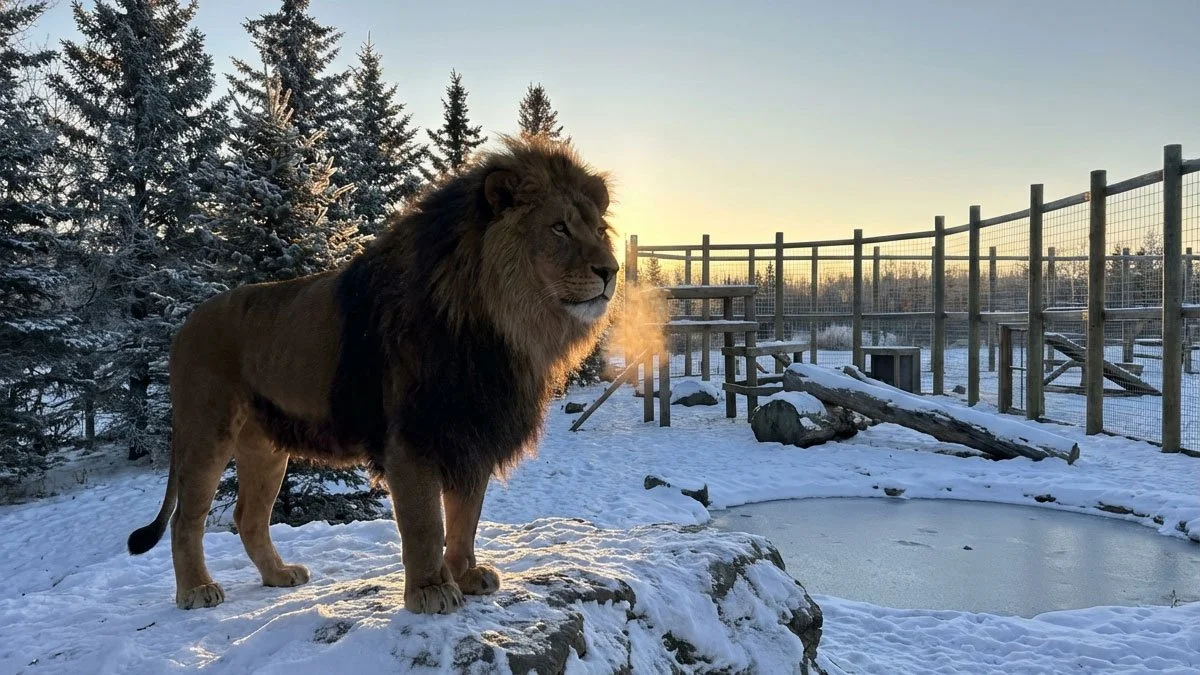
The scale of South Africa's captive lion industry is a jarring subversion of the sanctuary myth. While travelers come to see "wild" lions, the vast majority of the country's feline population exists in a state of industrial confinement.
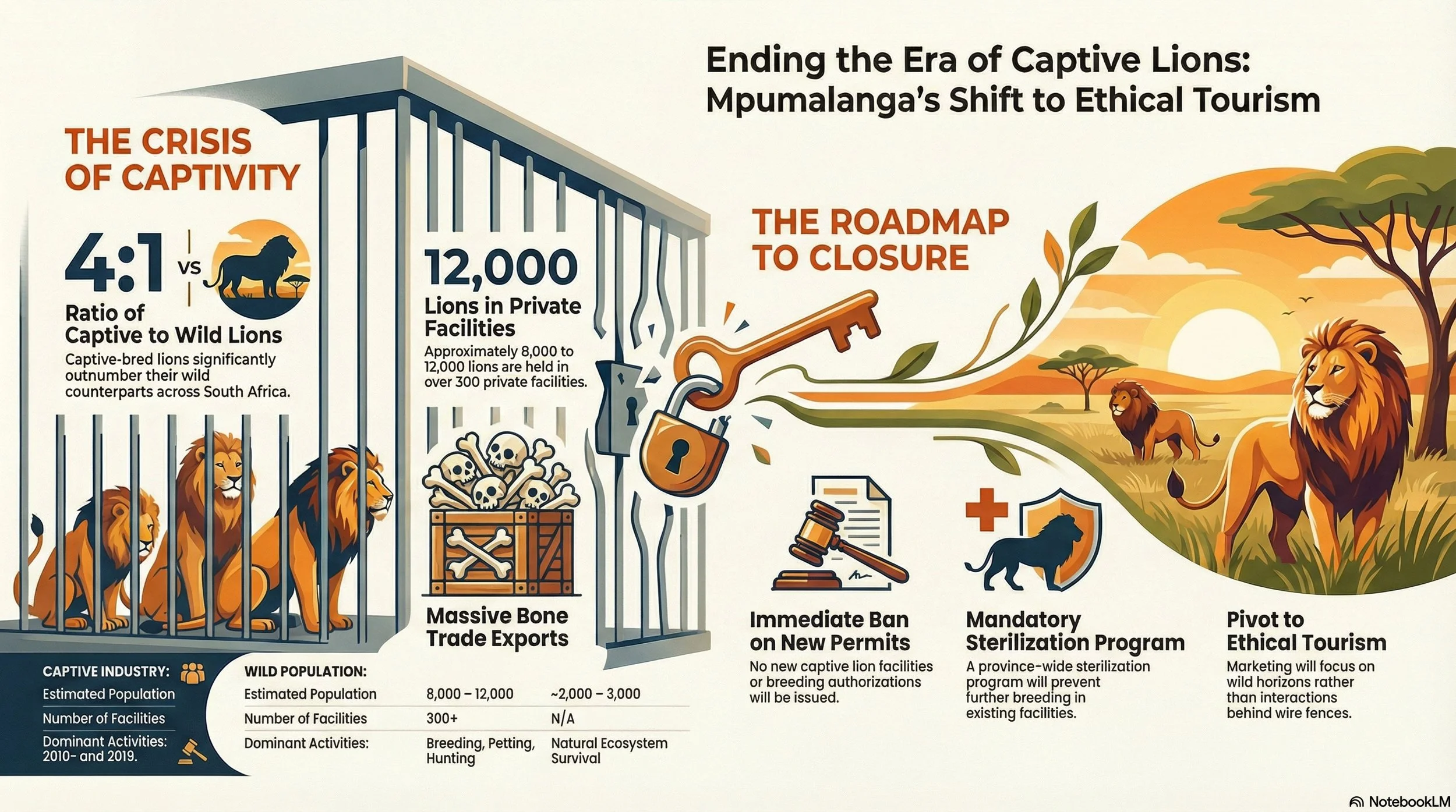
The Population Gap: Between 8,000 and 12,000 lions live in captivity across more than 300 private facilities.
The Ratio: In South Africa, captive lions outnumber their wild counterparts by a staggering 4 to 1.
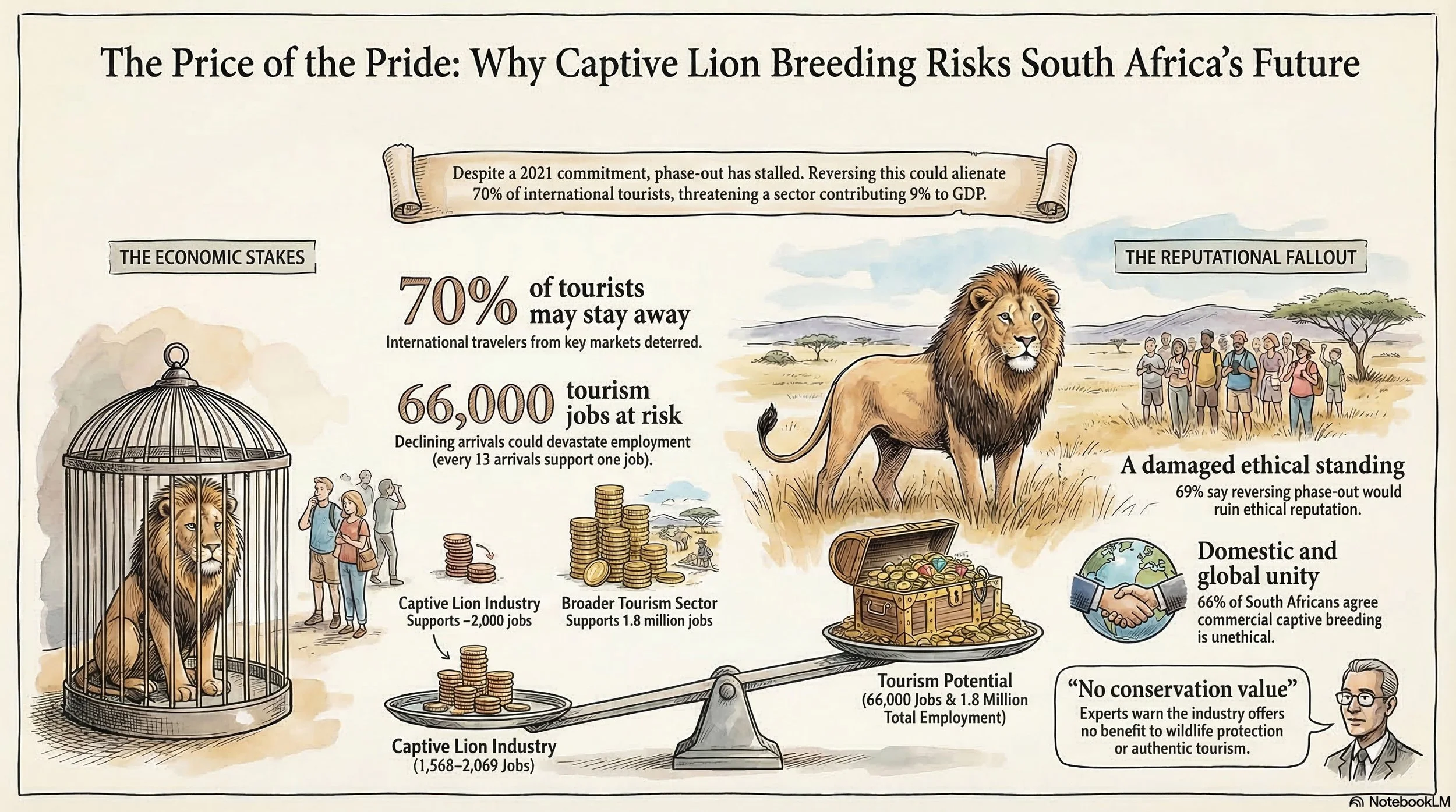
For a province marketing "authentic" wilderness, this ratio is not just a conservation failure—it is a brand-killing contradiction. The existence of intensive breeding operations alongside natural ecosystems creates a reputational friction that threatens the province's international credibility.
Beyond the Photo Op: The Industry of "Bones and Bullets"
The "cub selfie" is merely the entry point of a lifecycle designed for maximum commodification. Once these animals outgrow their utility as photographic props, they enter a pipeline that ends in what critics call "bones and bullets."
Tourism Exploitation: Cub petting and lion walks provide high-margin, short-term revenue.
Canned Hunting: Adolescent and adult lions are transitioned into trophy hunting, often shot in confined spaces where "the hunt" is a foregone conclusion.
The Skeletal Trade: The final extraction of value occurs after death, with bones sold into the illicit international market.
“Between 2010 and 2019, more than 7,400 lion skeletons were exported, 98% of them to Southeast Asia.”
The legal context of this trade is increasingly fraught. In 2019, the Gauteng High Court ruled that export quotas set in 2017 and 2018 were unlawful specifically because animal welfare considerations had been ignored. Today, the industry remains locked in litigation against the Department of Forestry, Fisheries and the Environment (DFFE), demanding bone quotas while the government moves toward a zero-export principle.
The Sterilization Strategy: A Humanely Structured Sunset
Mpumalanga’s exit from this industry is designed as a "structured transition" rather than an overnight collapse. The Mpumalanga Tourism and Parks Agency (MTPA) is prioritizing a humane winding-down of operations to avoid the logistical and ethical nightmare of mass culling.
A central mechanism of this sunset is a province-wide sterilization program. By halting the birth of new captive lions and banning the importation of cats from other provinces, the population will naturally contract over time. This aligns with the national "Voluntary Exit Programme," which offers facility owners a structured path to transition toward ethical business models, ensuring that the animals currently in the system are managed under approved welfare protocols until the industry is extinguished.
Defying the Political Wind: Why Mpumalanga is Moving Now
The timing of this announcement is a calculated maneuver in a politically charged environment. Nationally, the winds appeared to be shifting in favor of the breeding and hunting lobbies. The recently appointed Minister of Forestry, Fisheries and the Environment, Willie Aucamp, has been perceived as sympathetic to "consumptive" wildlife sectors, evidenced by his early reissuing of hunting quotas for elephants and black rhinos.
While Minister Aucamp continues to call for "socioeconomic evaluations" of the phase-out—a move seen by some as strategic foot-dragging—Mpumalanga has declared the matter straightforward. By moving into an "advanced stage" of implementation, the MTPA is honoring the April 2024 Cabinet policy regardless of the friction at the national level. It is a rare moment of provincial defiance rooted in the principle that exploitation is no longer a viable economic pillar.
From "Canned" to "In Situ": Rebranding the Safari Experience
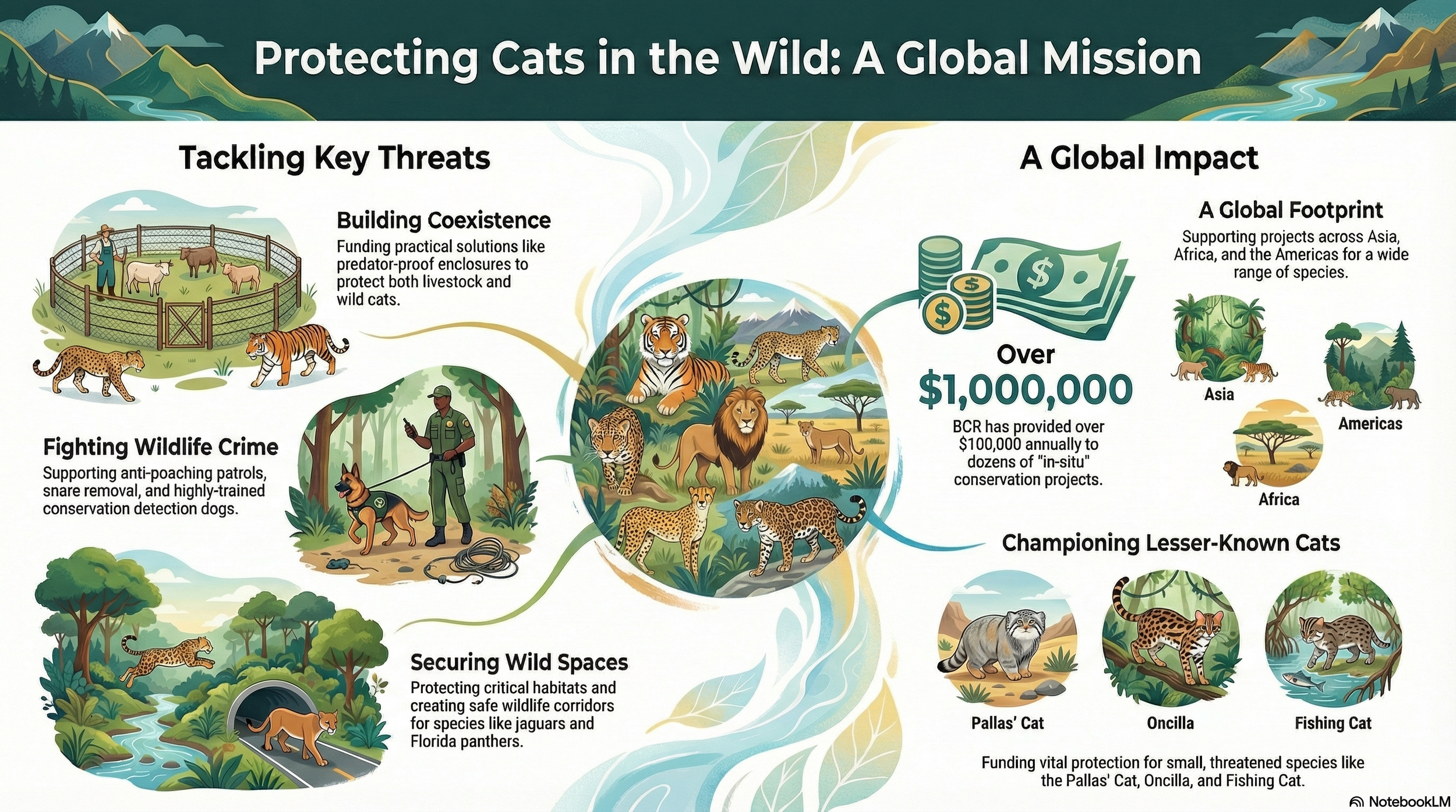
The province is now aggressively rebranding its wildlife economy around the philosophy of in situ conservation—the protection of species within their natural, functional ecosystems. This is a deliberate shift to attract the "conscious traveler," a demographic that prioritizes biodiversity and animal dignity over staged proximity.
The MTPA has explicitly invited investors and conservation partners to redirect their capital away from cages and toward the expansion of nature reserves. Simphiwe Shungube, spokesperson for the MTPA, characterizes this as a move toward international credibility:
“By responsibly phasing out the captive lion industry, the province is safeguarding animal welfare and biodiversity while creating new opportunities for sustainable economic growth, job creation, and international recognition.”
Conclusion: The Future of the Wild Horizon
As Mpumalanga moves to outlaw captive breeding, it is attempting to reconcile the "African dream" with a more honest reality. The transition signals to the global travel community that authenticity cannot be found behind a wire fence.
The industry that thrived on the proximity of the cub selfie is being replaced by a model that values the autonomy of the wild. As travelers, we are now presented with a choice that transcends the simple booking of a safari. In the end, we must decide if we wish to be witnesses to the wild, or the final architects of its confinement.