The Invisible Harvest
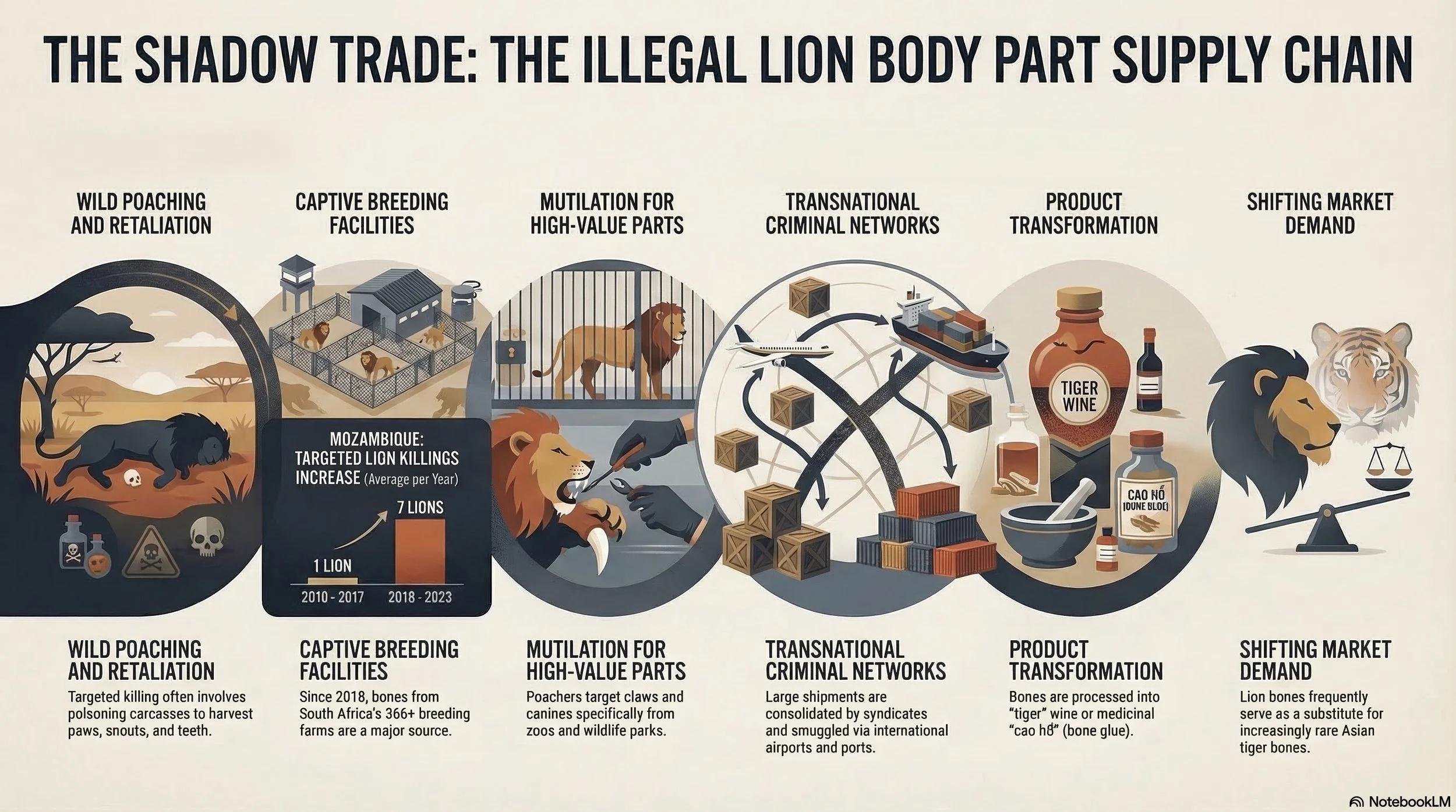
This report examines the increasing threat of targeted lion poaching for the illegal trade of body parts across Africa and Asia. While traditional factors like habitat loss still exist, lions are now specifically hunted for their claws, teeth, and bones to satisfy demands for traditional medicine and luxury ornaments. The author identifies three primary supply chains, including wild poaching, thefts from wildlife parks, and illegal exports from captive breeding farms. Detailed case studies from Mozambique and South Africa illustrate how organized criminal networks coordinate these activities, often using poisoning as a primary killing method. Despite international enforcement efforts and major arrests, the text concludes that this underreported black market continues to evolve through sophisticated smuggling routes. Overall, the source emphasizes that current data may underestimate the true scale of this transnational wildlife crime.

Volunteer Management
These materials provide a comprehensive framework for establishing and maintaining a successful animal sanctuary, drawing on the long-term experience of Big Cat Rescue. The sources highlight the importance of meticulous planning, suggesting that operators should draft multi-year goals and establish a disciplined organizational culture with strictly enforced rules. Financial sustainability is emphasized through the practice of setting aside monetary reserves and focusing on broad conservation impact rather than just immediate rescue needs. Additionally, the text underscores the vital role of volunteer management, noting that a large, dedicated workforce can provide labor equivalent to dozens of full-time employees. Finally, the guides advocate for a strong social media presence that utilizes storytelling and transparency to build donor trust and engage the public.
Sanctuary
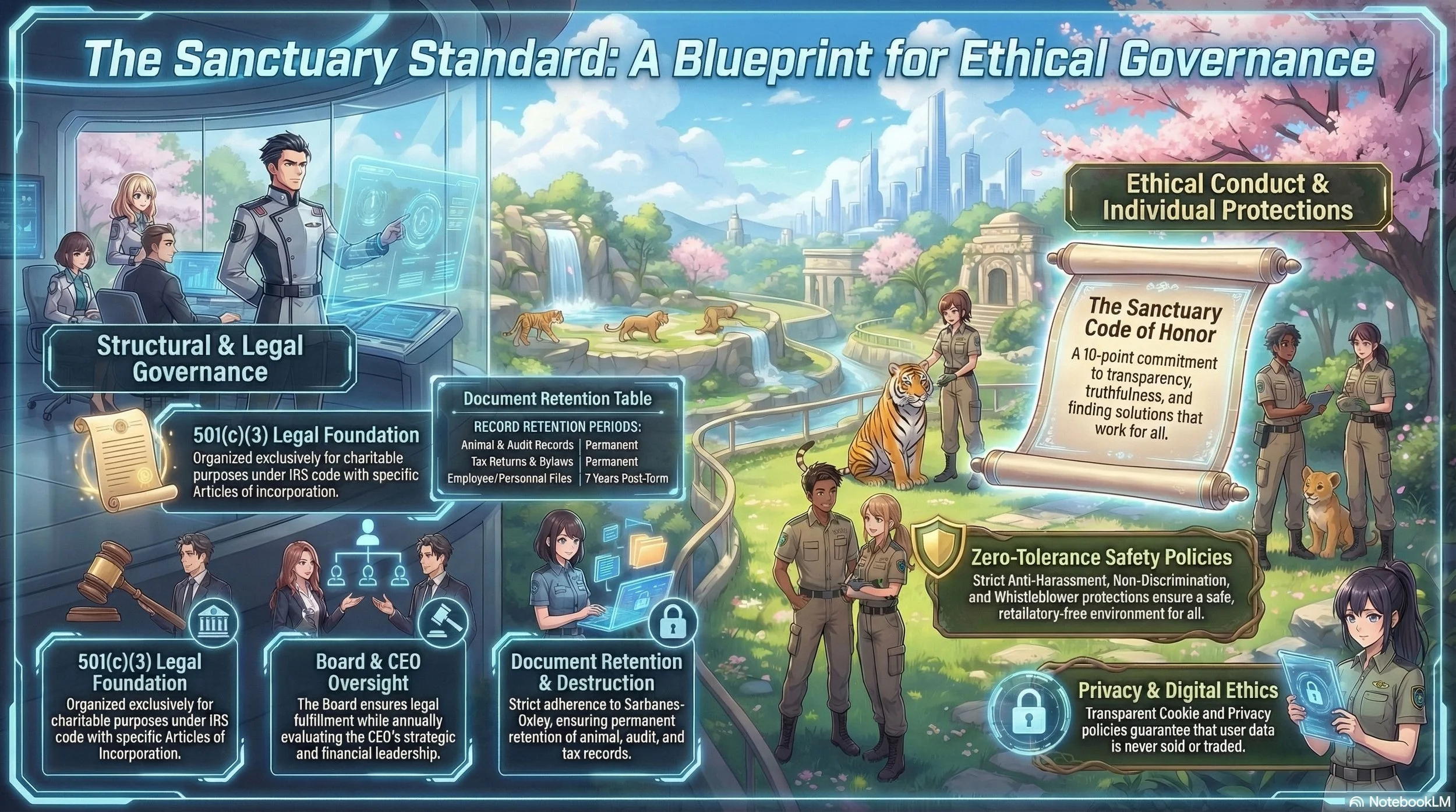
The provided documents outline the organizational structure and operational standards for Big Cat Rescue, a non-profit wildlife sanctuary dedicated to the welfare of exotic cats. Detailed governance policies establish rules for board conduct, executive evaluations, and strict legal compliance regarding financial transparency and document retention. The sanctuary also maintains rigorous workplace ethics, including explicit mandates against discrimination, harassment, and retaliation toward whistleblowers. Digital privacy is managed through comprehensive cookie and data protection guidelines, ensuring that supporter information is never sold or traded. Additionally, the text clarifies the organization's mission-driven approach to public education, advocacy for animal rights legislation, and the strategic importance of being an accredited, transparent facility. Together, these sources form a framework for maintaining institutional integrity while pursuing conservation goals.
Toxins
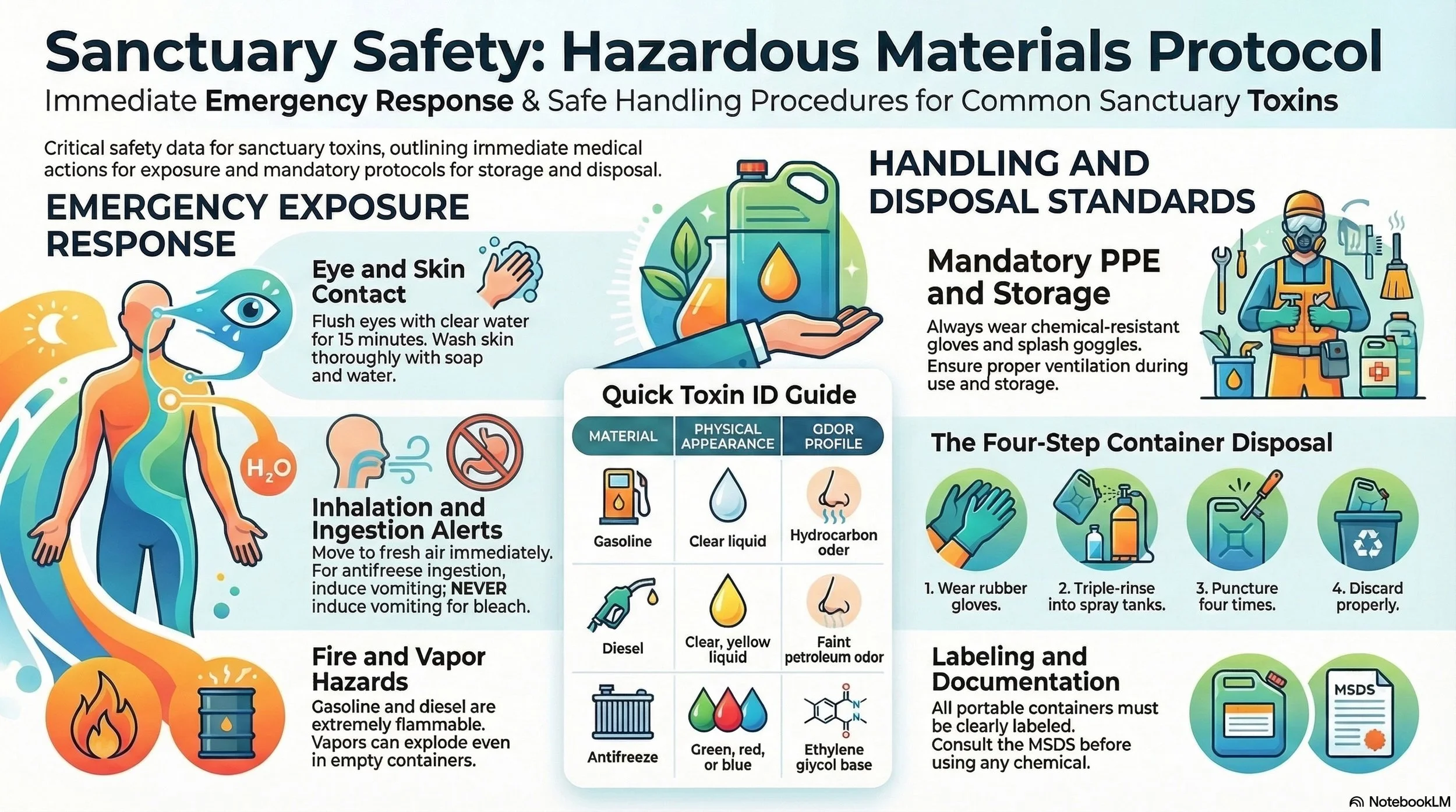
This document outlines the safety protocols and hazard communication strategies established by Big Cat Rescue for managing dangerous substances. It provides specific emergency procedures for accidental contact with various toxins, including automotive fluids, fuels, and industrial cleaners. Beyond immediate first aid, the text details a comprehensive workplace safety program that involves maintaining Material Safety Data Sheets and ensuring all chemical containers are correctly labeled. Detailed instructions are also provided regarding the legal disposal of hazardous waste and the mandatory safety training required for all staff and contractors. Ultimately, these guidelines serve as a structured framework to protect personnel and the environment from the risks associated with toxic materials.

Records

Quarantine
These sources detail the quarantine and specialized care protocols used by Big Cat Rescue to protect both animals and staff from disease. The guidelines outline various reasons for isolation, such as medical recovery, new arrivals, or fragile immune systems, and describe the specific types of enclosures used for these cats. Significant emphasis is placed on rigorous sanitation procedures, including the use of dedicated tools, protective gear, and chemical foot baths to prevent cross-contamination. Workers must follow strict cleaning schedules and waste disposal methods, particularly for indoor hospital cages where animals may be highly agitated. The documents also provide a technical overview of disinfectants, explaining the safe application of bleach and other agents while warning against substances like phenol that are toxic to cats. Ultimately, the materials highlight the balance between maintaining high hygiene standards and ensuring the psychological well-being of the sanctuary's inhabitants.