The Invisible Harvest
5 Surprising Truths About the Underground Lion Bone Trade
1. Introduction: The New Frontier of Poaching
For decades, the decline of the African lion (Panthera leo) was attributed to a well-known trio of ecological threats: habitat loss, the depletion of prey, and retaliatory killings by livestock farmers. However, a newer, more calculated threat has emerged from the shadows. Lions are increasingly being viewed not as apex predators to be feared or protected, but as a harvestable commodity.
This "targeted killing" for body parts is a distinct driver of decline that remains poorly understood, underreported, and deeply intertwined with organized transnational crime. Unlike traditional poaching, which is often a localized response to conflict, this trend is fueled by a sophisticated global demand that treats the king of beasts as an industrial raw material. This post reveals the surprising mechanics of an underground trade that bridges the African wilderness with high-end markets in Asia, exposing the criminal logistics that have transformed lion conservation into a battlefield against global syndicates.
2. Takeaway 1: The Great Imposter — How Lions Became "Tigers"
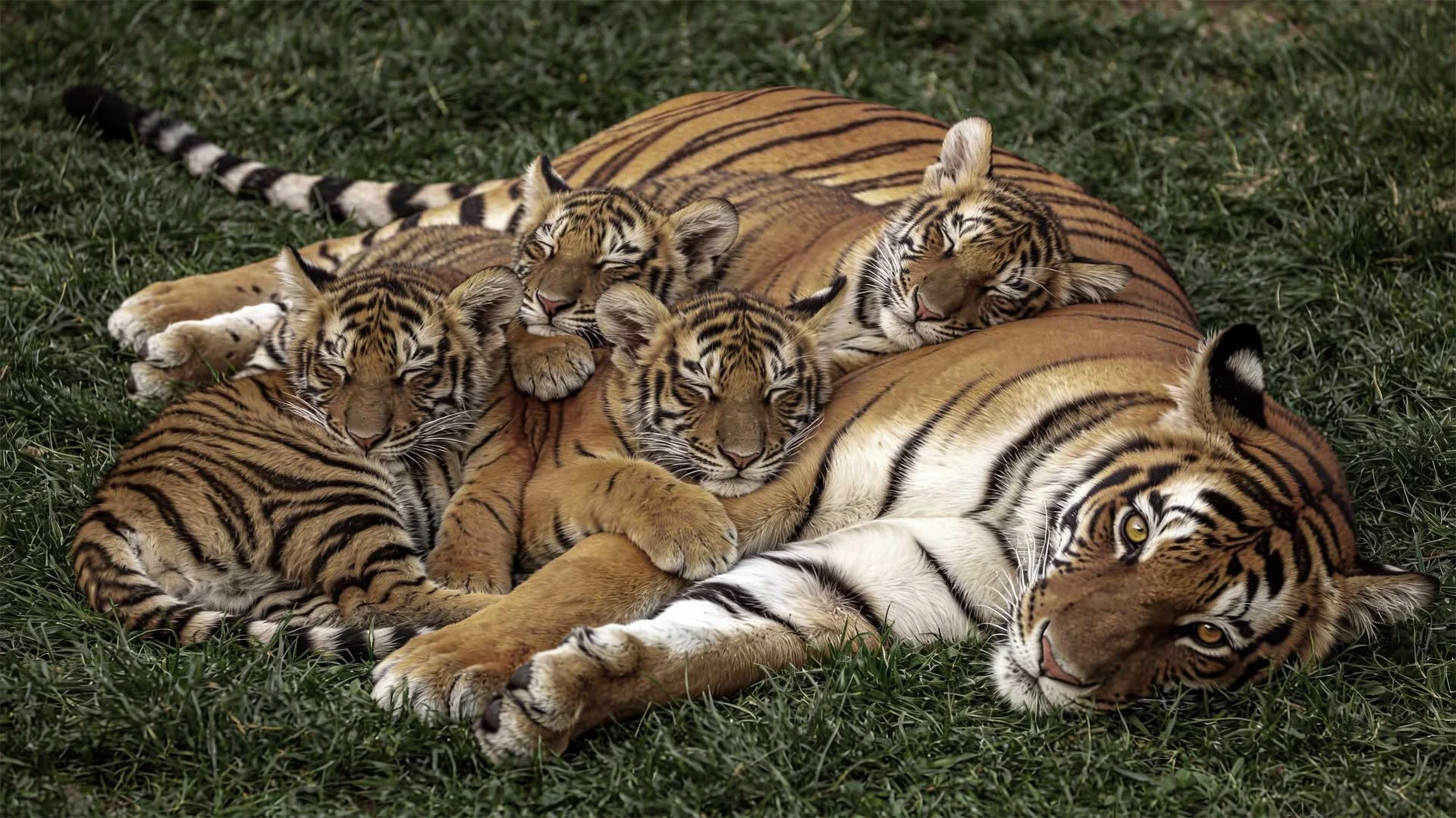
The modern trade in lion bones is a masterclass in criminal substitution. As tiger populations in Asia plummeted due to over-hunting and legal crackdowns on tiger farming, traffickers faced a massive supply crisis. In 2002, the notorious Lao trader Vixay Keosavang—head of Xaysavang Trading—signed agreements to traffic more than $11 million worth of wildlife products, including a staggering 20 tonnes of tiger bones.
The industry quickly hit a wall: there simply were not enough tigers left in the wild or in Asian farms to meet that quota. To fill the gap, traffickers pivoted to the African lion. Because lion bones are nearly indistinguishable from tiger bones to the naked eye, they serve as the perfect "imposter" product for the Asian market.
"It soon became apparent that there weren't enough tigers available for trade in Asia to supply 20 tonnes of bones."
These bones are processed into high-value tonics such as "tiger wine" and "tiger cake" (cao hổ). This substitution is devastating for conservation; it tethers the fate of the African lion to an insatiable Asian demand for a product the lion was never intended to provide.
3. Takeaway 2: The "Pseudo-Hunting" Scam and the Thai Sex Worker Connection
One of the most audacious logistical frauds in wildlife crime was the "pseudo-hunting" scam orchestrated by Chumlong Lemongthai, a key operative for the Xaysavang network. To bypass international trade bans, Lemongthai exploited South Africa’s legal trophy-hunting permit system.
The scam was a logistical feat of deception. Because permits required a legitimate hunter, Lemongthai hired Thai associates and even Thai sex workers from Johannesburg to act as fronts. These individuals signed CITES permits and posed for "trophy photos" with carcasses they had never shot. This allowed the network to legally export hundreds of lion skeletons and rhino horns under a veneer of legitimacy.
The financial disparity between these commodities was stark: while a lion skeleton was valued at approximately ZAR 10,000 (roughly 1,385), a rhino horn set commanded ZAR 65,000 (9,000). By repurposing a conservation tool into a trafficking conduit, Lemongthai successfully funneled massive quantities of contraband to Thailand until his 2011 arrest.
4. Takeaway 3: The Industrialization of Big Cats (Farms vs. The Wild)
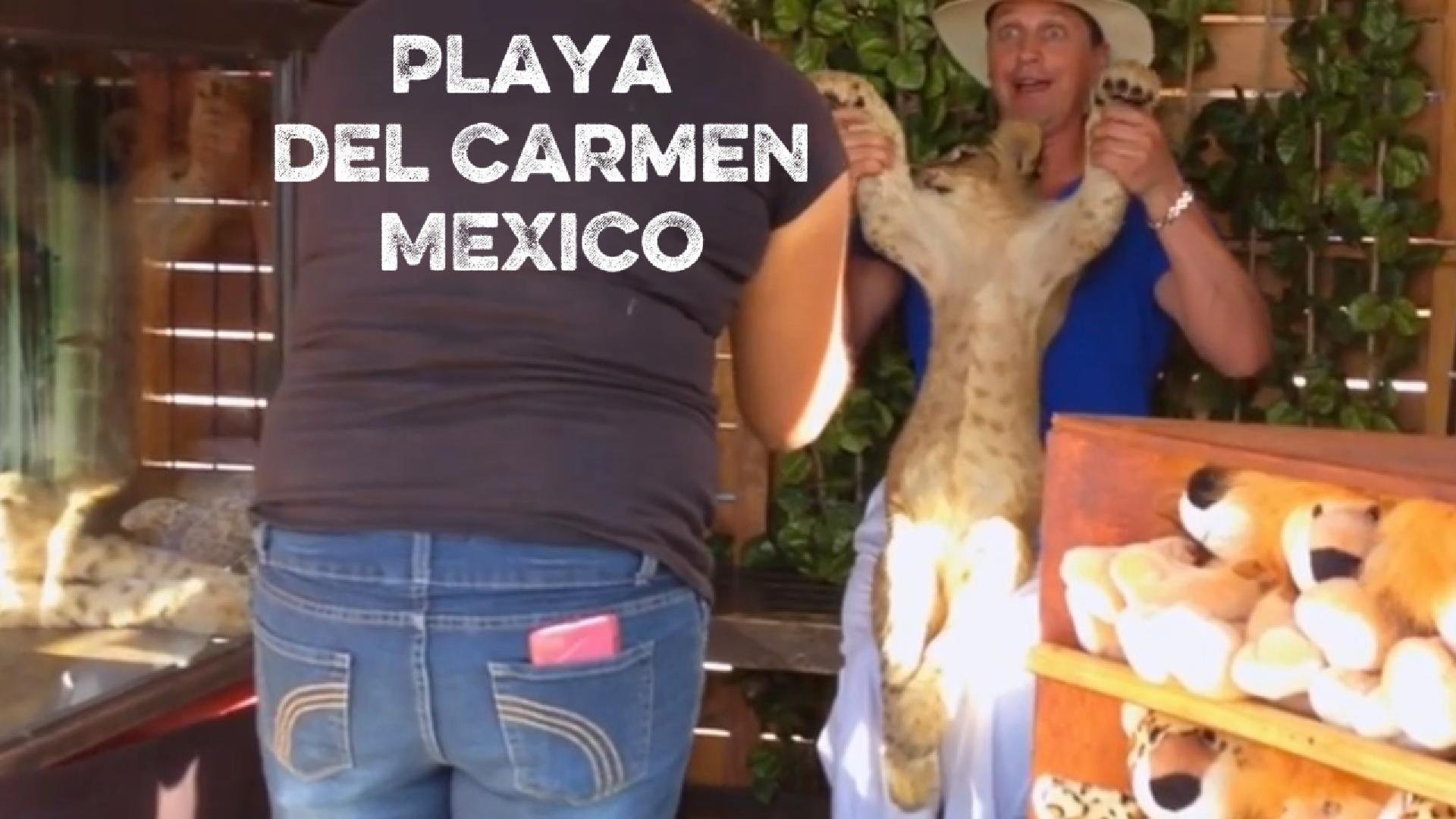
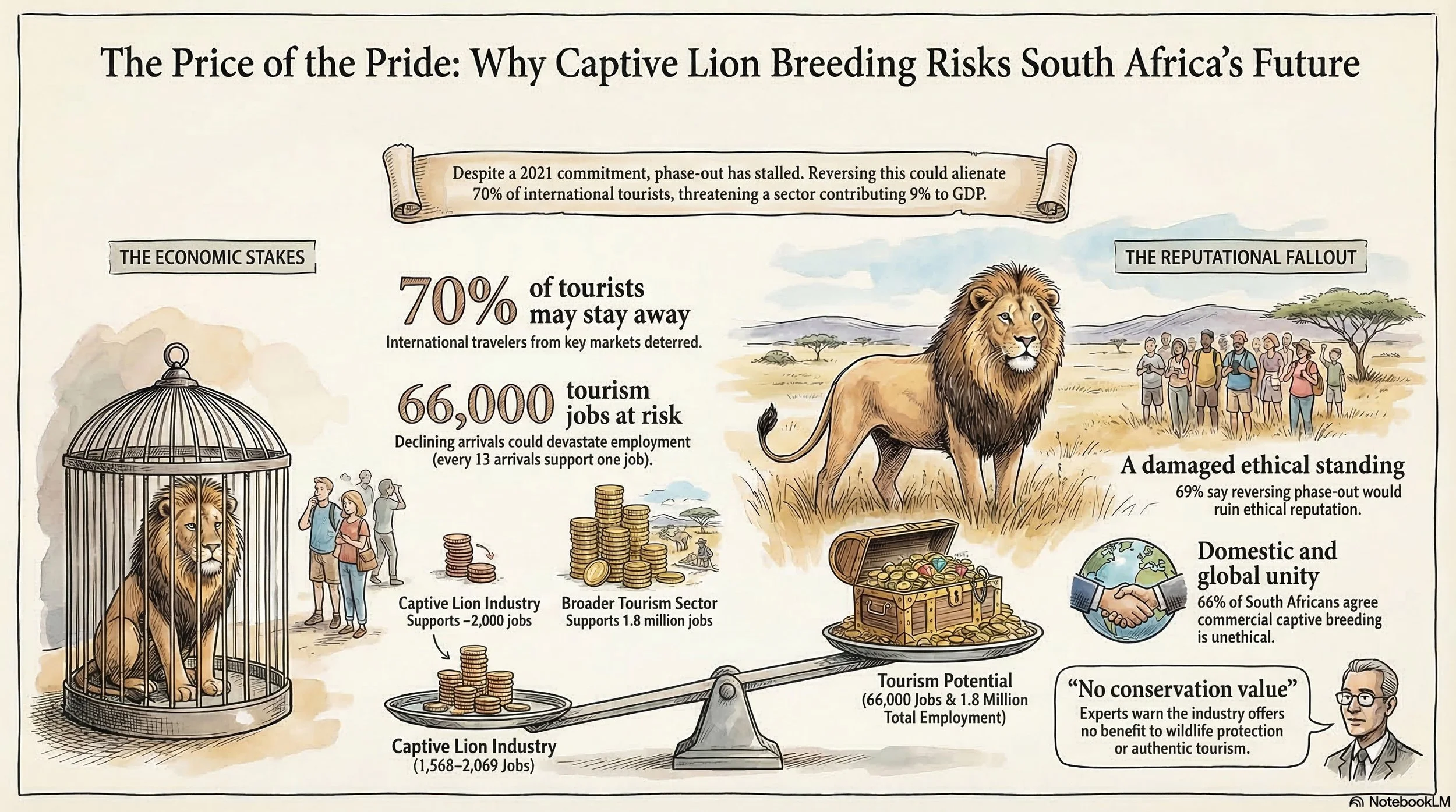
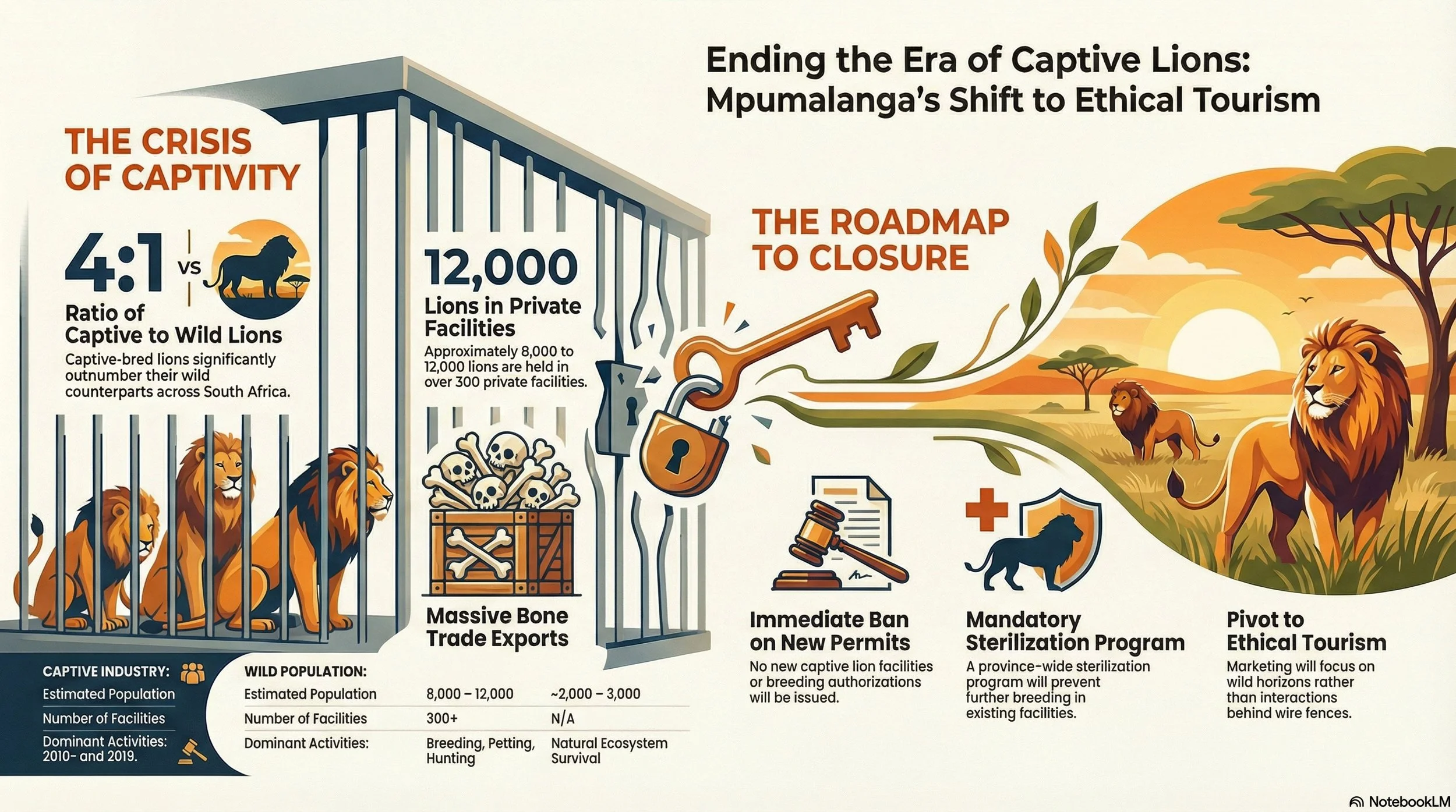
While wild populations struggle, South Africa has seen the rise of an industrialized supply chain centered on captive breeding. The scale of this "factory farming" for big cats is staggering and creates a massive reservoir for the underground trade:
The Population Gap: While the wild population remains vulnerable, there are up to 12,000 big cats held in captivity in South Africa. As of 2018, more than 7,000 of these were lions.
Explosive Growth: The infrastructure for this trade has grown exponentially. In 2005, fewer than 50 facilities held roughly 2,500 lions. By 2018, that number had surged to 366 facilities.
The Underground Shift: Between 2008 and 2016, over 6,000 lion skeletons were legally exported. However, when South Africa ceased its export quota in 2018, the trade did not vanish—it simply went dark. All lion bone exported since 2018 has been smuggled out, utilizing the same industrial infrastructure that was once legal.
5. Takeaway 4: The Silent Killer — Aldicarb and the Mutilation of Prides
When poachers target wild lions, they favor silence and efficiency over firearms. The preferred weapon is Aldicarb, a highly toxic pesticide commonly known as "Temik." Poisoning allows poachers to wipe out entire prides quietly, avoiding the attention of rangers.
The aftermath of these poisonings reveals a specific, gruesome pattern of mutilation. Unlike opportunistic killings, targeted "body part" poaching focuses on high-value "trinket" parts: the snout, paws, canines, and claws.
In Mozambique, this targeted activity is on the rise. Data shows that while the country averaged one lion killed for parts annually between 2010 and 2017, that average spiked to seven per year between 2018 and 2023. While wild poaching currently remains "relatively small" compared to the industrial output of lion farms, the precision of these kills—targeting only the most transportable and valuable parts—indicates a growing, specialized demand.
6. Takeaway 5: The "Kromah Network" and the Global Supply Chain
The journey of a lion bone from the African bush to an Asian apothecary is a "complex logistical process" requiring coordination between local poachers and global kingpins. In the Great Limpopo Transfrontier Conservation Area (GLTFCA), poachers move parts through local hubs like Massingir and Chokwe, where middlemen aggregate the product before transporting it to export hubs in Maputo.
From Maputo, powerful transnational syndicates like the Kromah Network—a West African group based in Kampala, Uganda—take control. Investigative evidence has exposed the financial backbone of these operations; in 2014, a bank wire for $190,000 was discovered moving from Vannaseng Trading (the Lao successor to the Xaysavang Network) to Moazu Kromah’s bank account.
"One conservation official explained that the illegal lion bone trade involves a complex logistical process, including, but not limited to, transporting heavy lion bones."
This network moved massive shipments of ivory, rhino horn, and big cat bones through Uganda and Mozambique to Laos, Vietnam, and China, demonstrating the truly global nature of the trade.
Conclusion: A Forward-Looking Summary
The underground lion bone trade is an evolving crisis that thrives on adaptability. Even when major players like Moazu Kromah or the notorious poacher Simon Ernesto Valoi are arrested, the vacuum is quickly filled.
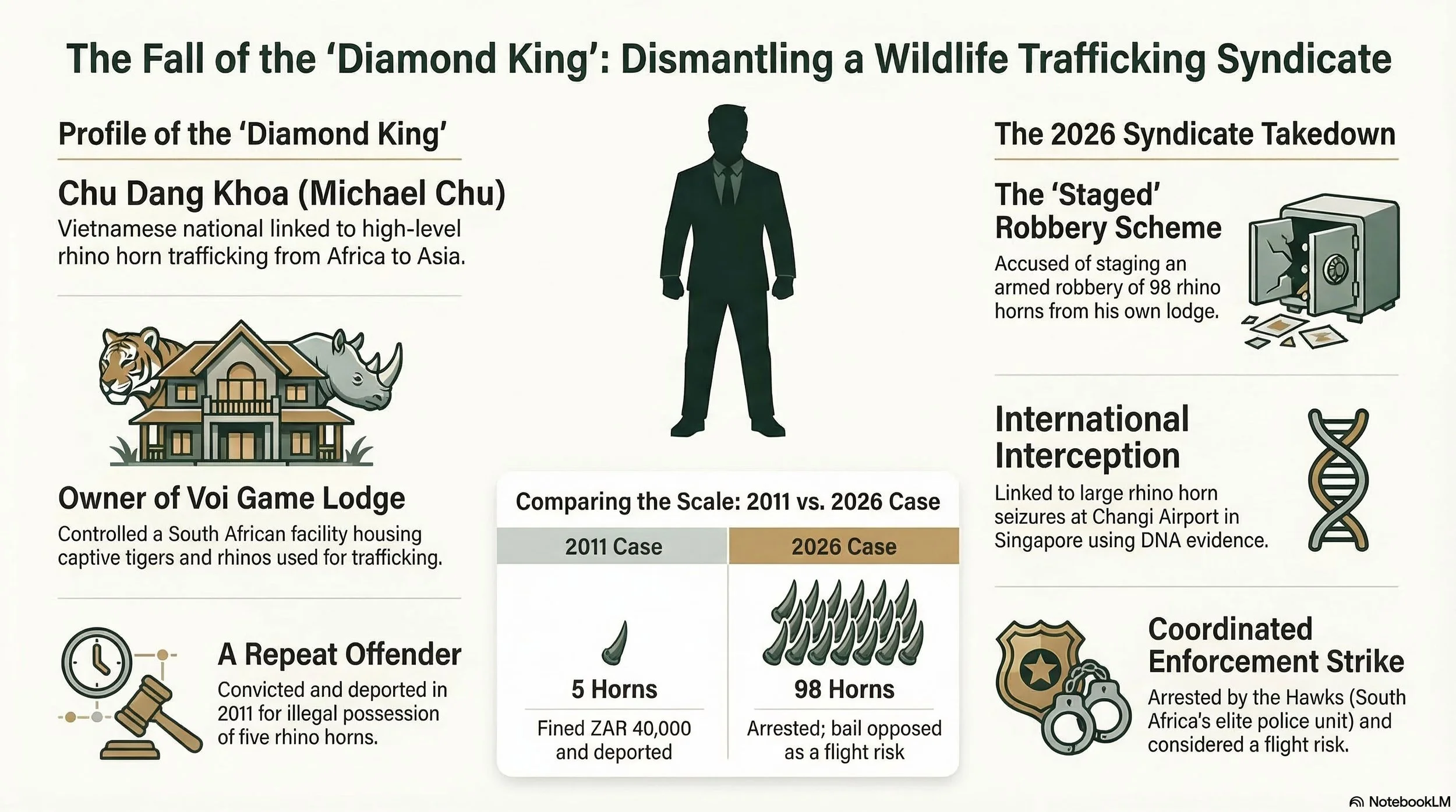
Recent events prove the trade is still very much active. In late 2025, a 150 kg seizure of big cat parts in Singapore was traced back to a storage facility in Johannesburg containing 17 more rhino horns. This shipment was linked to a "staged" armed robbery at the Voi Game Lodge, owned by the shadowy figure Chu Dang Khoa (aka Michael Chu). As the mastermind behind DKC Trading, Chu’s connection to the historical Xaysavang network proves that the infrastructure for this harvest is resilient and deeply entrenched.
As the Asian tiger becomes a ghost of the past, the African lion is being forced to pay the price for a demand it did not create. Identifying the "invisible harvest" is only the first step; the real challenge lies in dismantling the criminal networks that view the world’s most iconic predator as nothing more than a collection of parts.