Florida Panther Facts
The Florida Panther: Guardian of the Everglades
The Florida panther is one of the most iconic and endangered mammals in the United States. As a unique subspecies of cougar that has adapted to the subtropical wetlands of the Southeast, this "umbrella species" serves as a biological barometer for the health of Florida’s entire ecosystem. Protecting the panther ensures the survival of the countless other plants and animals that share its wild home.
Quick Facts
• Scientific Name: Puma concolor coryi
• Status: Endangered (Federally listed since 1967)
• Population Estimate: Approximately 120 to 230 individuals
• State Animal: Florida (designated in 1981)
• Lifespan: 12 to 15 years in the wild
• Top Speed: 35 mph (in short bursts)
Appearance
The Florida panther is a large, powerful cat designed for the dense undergrowth of the subtropics. While they are often called "panthers," they do not have the black coats associated with leopards or jaguars in other parts of the world; instead, they sport a tawny or tan coat with a creamy white underbelly.
Adult males are significantly larger than females, measuring between 7 and 8 feet from nose to tail tip and weighing between 100 and 160 pounds. Females typically reach about 6 feet in length and weigh between 60 and 100 pounds. Evolutionarily, they are the largest members of the Puma genus and possess specialized depth perception and night vision that make them master nocturnal hunters.
Habitat and Range
Once found throughout the southeastern United States—including eastern Texas and the lower Mississippi River Valley—the Florida panther is now primarily confined to the tip of the Florida peninsula. They thrive in a mosaic of pinelands, hardwood hammocks, and mixed swamp forests, such as those found in the Big Cypress National Preserve and Everglades National Park.
These cats are highly solitary and territorial. A single male requires a massive home range of approximately 200 to 275 square miles to find enough food and mates, often overlapping with the smaller 70-to-80-square-mile ranges of several females. They communicate and maintain these boundaries using scent markings, and while they generally avoid conflict, they are capable of traveling up to 20 miles a day in search of territory.
Diet and Behavior
As apex predators, panthers are strictly carnivorous. Their preferred prey includes white-tailed deer and wild hogs, which provide the high-calorie nutrition they need to remain healthy. When these primary sources are scarce, they are opportunistic enough to hunt raccoons, armadillos, snakes, and even alligators.
Panthers are crepuscular, meaning they are most active during the cooler hours of dawn and dusk. They are stealth hunters, using the dense Florida vegetation to stalk their prey to within a few yards before launching a high-speed ambush. Despite their preference for dry ground, they are excellent swimmers and will readily cross wide bodies of water to reach new hunting grounds.
Reproduction

Florida panthers do not have a specific mating season, though births often peak in late winter and spring. After a gestation period of about 90 to 96 days, a female will give birth to a litter of one to six kittens in a secluded den.
At birth, kittens are covered in dark spots that act as camouflage while they are small and vulnerable; these spots completely fade by the time they are six months old. Mothers are incredibly protective, nursing the kittens for several months and teaching them to hunt. Young panthers typically stay with their mother for up to two years before venturing out to establish their own independent home ranges.
Threats
The path to recovery for the Florida panther is fraught with challenges. The most pressing threats to their survival include:
• Vehicle Collisions: As Florida’s human population expands, more roads cut through panther habitat. Being struck by cars—particularly on major arteries like Alligator Alley (I-75)—is the leading cause of panther mortality.
• Habitat Fragmentation: Rapid urban sprawl and industrial development continue to squeeze panthers into smaller, disconnected pockets of land.
• Genetic Depletion: Due to their small, isolated population, panthers have historically suffered from inbreeding. This led to a 1995 conservation project that introduced female Texas cougars to restore genetic health—a move that successfully boosted population numbers.
• Environmental Toxins: Mercury poisoning, often bioaccumulated through the food chain from prey like raccoons, remains a silent threat to their neurological health.
Conservation Efforts
Conservationists are working tirelessly to secure a future for this great cat. Key strategies include the protection of wildlife corridors to allow panthers to migrate north and the construction of specialized underpasses and fencing to reduce road kills.
Big Cat Rescue is a dedicated supporter of Florida panther conservation, providing funding and advocacy for several critical initiatives:
• Wildlife Corridors: Funding the "Bridge to Survival" project to reconnect fragmented habitats across high-traffic areas like I-4.
• Tribal Partnerships: Supporting the Miccosukee Tribe in their efforts to safeguard the wild future of the Everglades.
• Habitat Protection: Funding land acquisition and the creation of refuges that provide safe havens for panthers and their prey.
• Education and Advocacy: Working to eliminate the use of harmful anticoagulant rodenticides that poison the food chain and pushing for slower speed limits in panther-traversed counties.
By protecting the Florida panther, we protect the wild heart of Florida itself. Supporting these conservation efforts ensures that the "Ghost of the Glades" will continue to roam the Florida wilderness for generations to come.
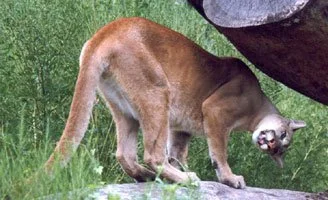
Florida Panther on Log

Florida Panther under log
