The 20,000-Year-Old Secret Hidden in the DNA of South Africa’s "Mini" Leopards
1. The Hook: A Big Cat in a Small Package
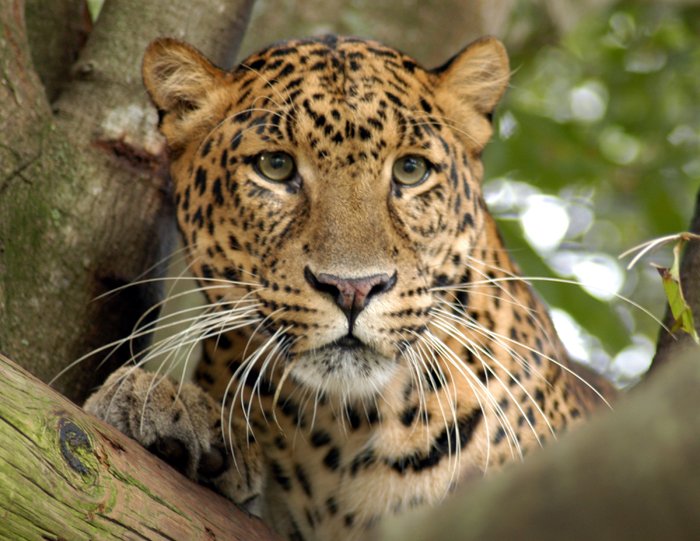
When we conjure the image of an African leopard, we usually see a heavy-set, 150-pound shadow ghosting through the savanna or dragging a zebra carcass into the canopy. But in the rugged fynbos of South Africa’s Cape Floristic Region, there is a population that defies this blueprint. These cats are remarkably compact, often reaching barely half the body mass of their northern cousins. For decades, we wondered: were these "mini" leopards just stunted by a harsh environment, or was there something deeper in their blood? The stakes for an answer are high; today, fewer than 1,000 of these elusive predators remain in the region, clinging to a landscape that is as beautiful as it is unforgiving.
2. They Aren’t Just Small; They Are Genetically One-of-a-Kind
New genomic research has finally cracked the code of the Cape leopard’s identity. In the past, scientists relied on a handful of genetic markers—essentially looking at a few random pages of a book to guess the plot. This study, however, analyzed the entire "library of life": the full sequence of 2.57 billion base pairs and roughly 19,000 genes.
The data confirms that Cape leopards are a distinct genetic group, entirely separate from the populations in the rest of southern and eastern Africa. Interestingly, they aren't a global anomaly; a similar pattern of genetic isolation has been observed in leopards from Ghana, suggesting that when the environment demands it, the leopard's genome is capable of remarkable, localized pivots. This isn't just a physical variation; it is a deep-seated biological identity.
3. Their Origin Story Dates Back to the Last Ice Age
The secret of their uniqueness lies in a world gripped by ice. Roughly 20,000 to 24,000 years ago, during the Last Glacial Maximum, southern Africa was a different world. As the climate grew cooler and drier, the grasslands retreated and the sands shifted, creating natural barriers that cut the Cape leopards off from their kin. In this isolation, the mountain peaks of the Cape became a biological island.
"We effectively read their shared evolutionary history, written in the genome."
By tracing these ancient splits, researchers have mapped a story of resilience that has survived twenty millennia of environmental upheaval.
4. Evolution by Menu: Why They Shrank
The Cape leopard’s small stature was a masterstroke of natural efficiency, not a random accident. Nature performs a beautiful irony here: these leopards became "less" to achieve "more" resilience. Researchers identified approximately 90 specific genes—linked to muscle development, bone structure, and energy use—that have been honed by the Cape’s specific "menu."
Unlike the savanna, where large antelope are plenty, the Cape offers a diet of "snack-sized" prey: the rock hyrax, the mountain-dwelling klipspringer, and the tiny Cape grysbok. By scaling down their body size, these leopards have become high-efficiency hunters, perfectly calibrated to the energy available in their unique, low-productivity environment.
5. The "Good News" Hidden in Their DNA
Given their small population and the brutal history of the 19th and 20th centuries—where they were hunted as vermin—we expected to find "genetically depleted" cats suffering from inbreeding. However, the whole-genome sequencing revealed a startling surprise: the Cape leopards maintain healthy levels of genetic diversity, nearly on par with much larger populations.
Their DNA isn't a dead end; it’s a toolkit for the future. This diversity means they still possess the biological flexibility needed to adapt to emerging threats like new diseases or the rapidly shifting pressures of climate change.
6. Refuge in the Mountains: The Natural and Human Barriers
The jagged ridges of the Cape Fold Belt mountain chain act as a vital highway for these cats, but they are increasingly boxed in. To the north, the scorched semi-desert prevents movement; to the east, a wall of human development and high-intensity agriculture blocks the path.
This isolation was historically sharpened by human hands. Between the 1800s and mid-1900s, leopard numbers plummeted under a government-sanctioned bounty system that paid farmers to eradicate them. It wasn't until 1968 that this bounty ended, finally allowing these resilient survivors a chance to begin their slow recovery under the protection of modern law.
7. Conclusion: Preserving an Evolutionary Legacy
The Cape leopard is now recognized as an "evolutionarily significant unit"—a unique branch of the feline family tree that cannot be replaced if lost. Living on the edge of expanding urban centers and moving through agricultural "checkpoints," their survival now depends on us.
We must prioritize habitat connectivity and work alongside local communities to mitigate poaching and road accidents. Protecting the Cape leopard is more than just a conservation project; it is an act of stewardship for an evolutionary masterpiece that took 20,000 years to perfect. To lose such a meticulously crafted lineage now would be a failure of our responsibility to the natural world.
4/3/2026