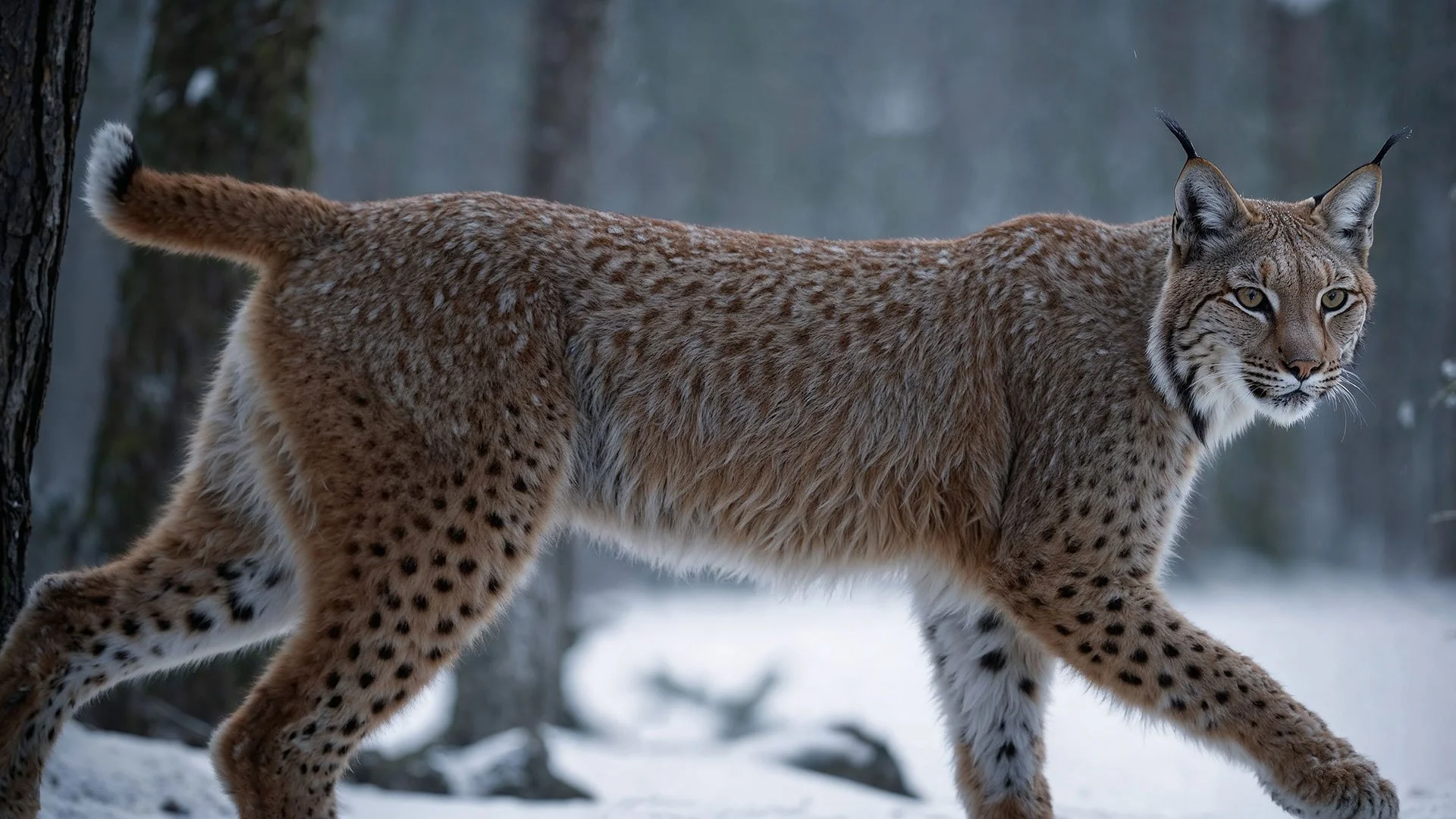
Bobcat Teeth
Why My Teeth Tell You Everything: A Bobcat Explains Obligate Carnivores
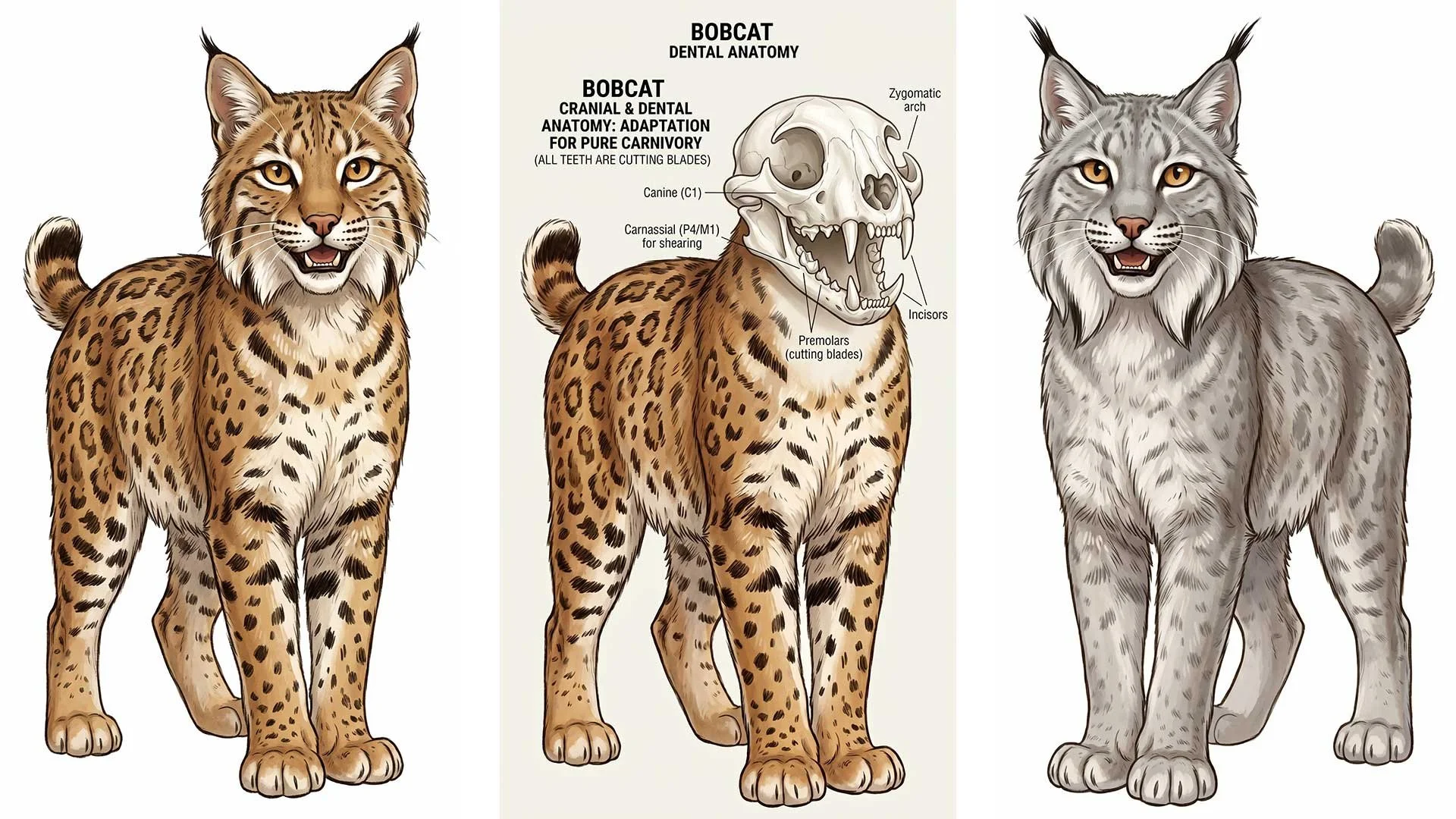
Bobcat and Lynx Teeth
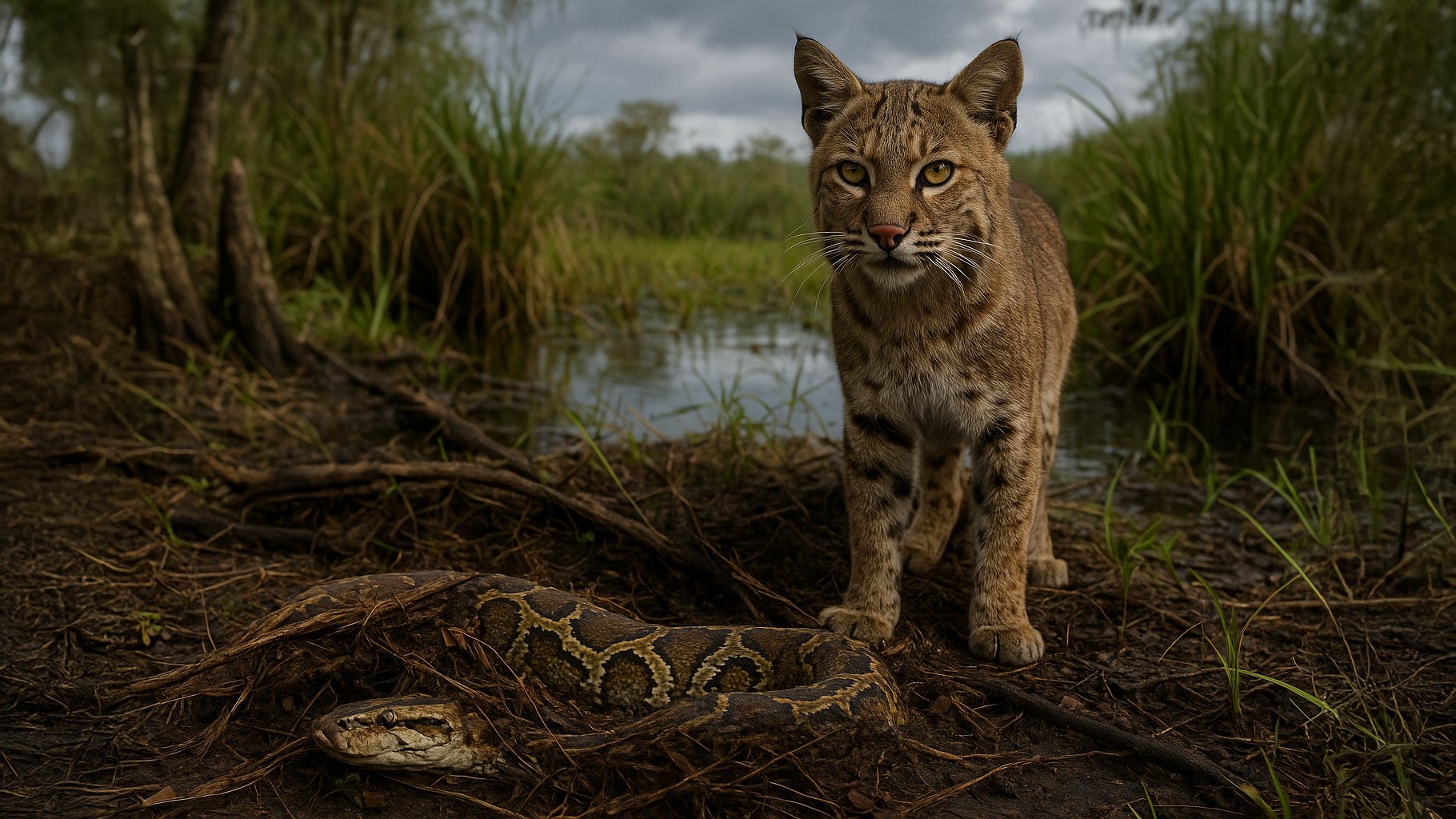
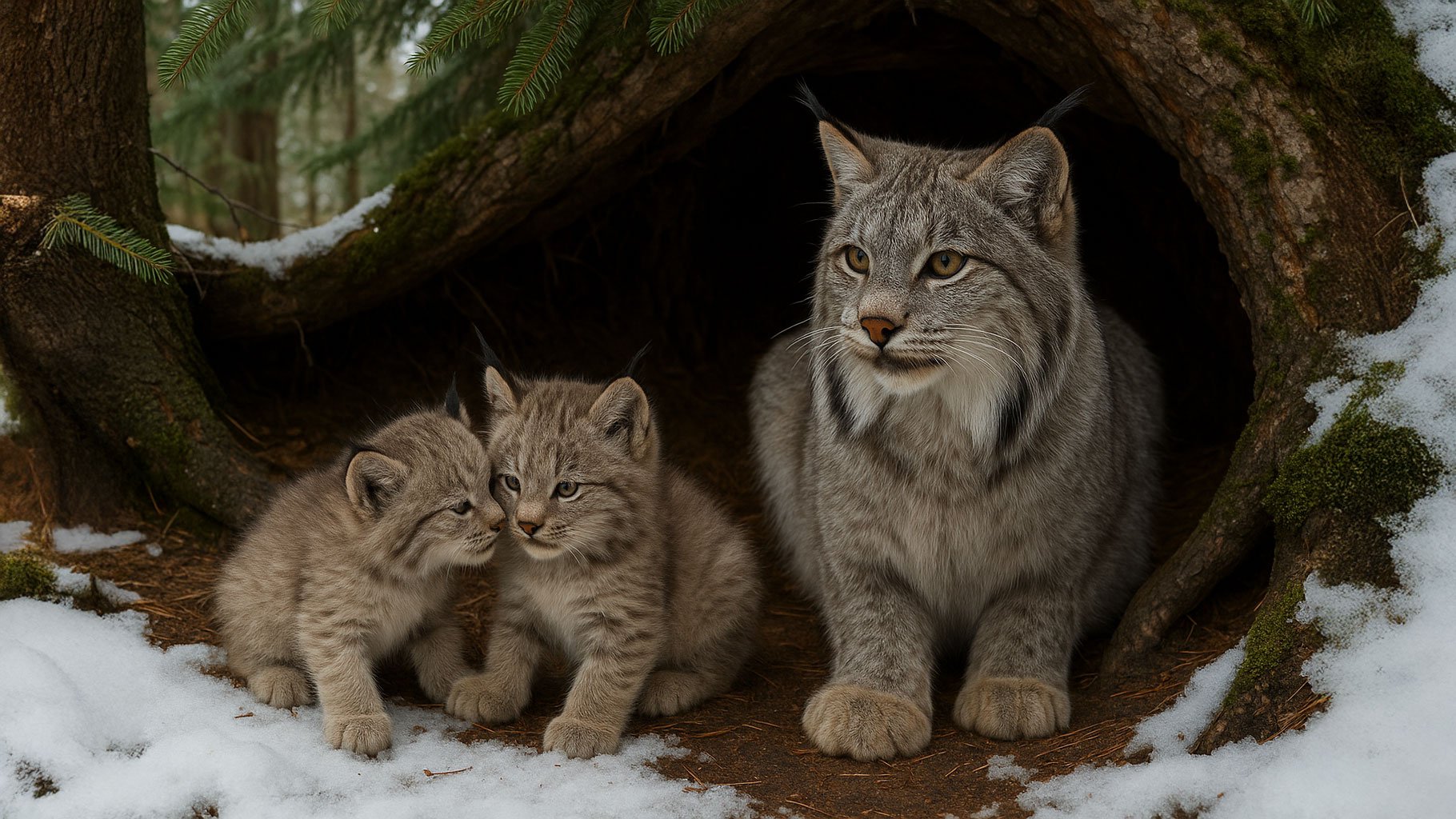
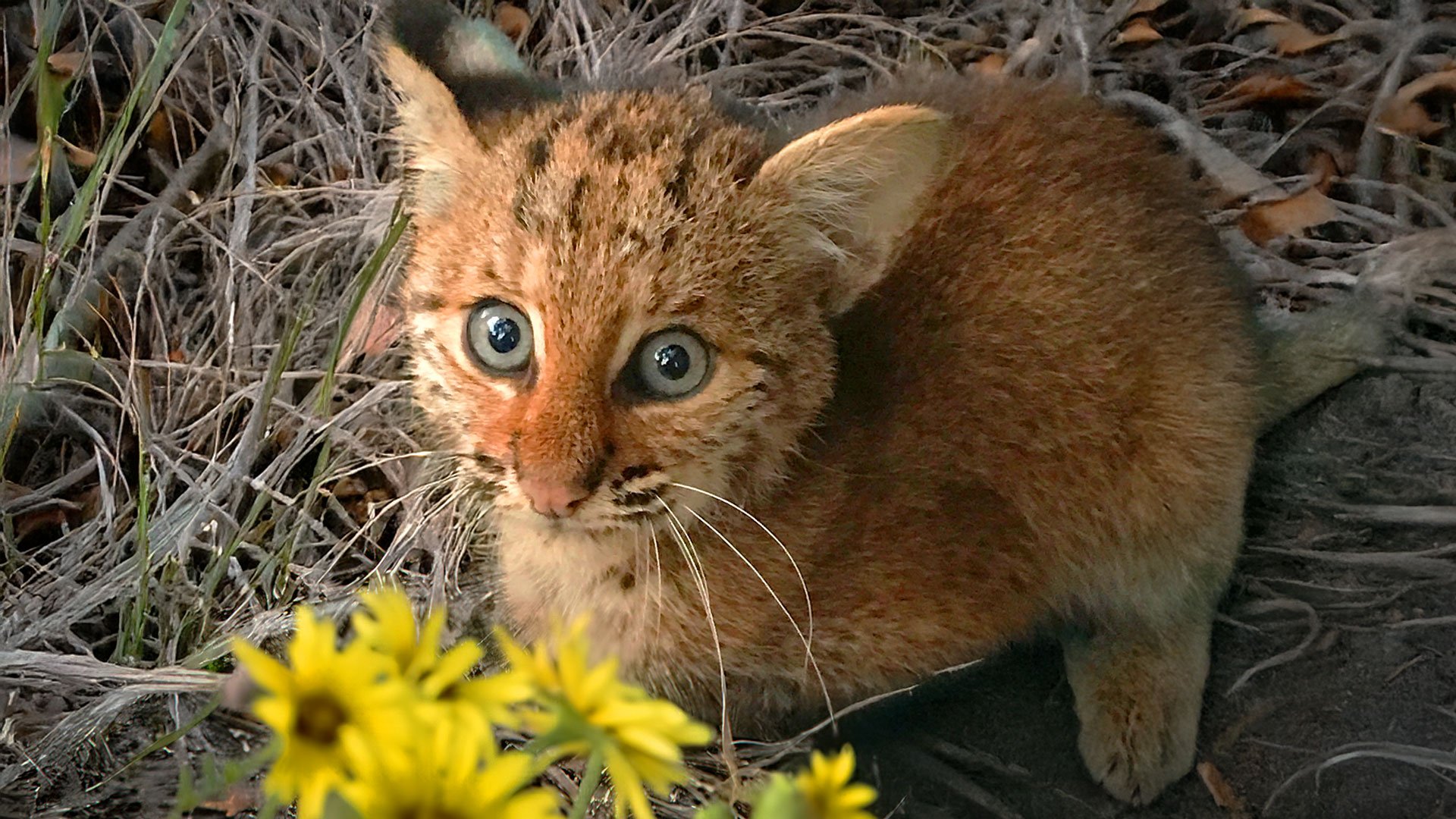
Hi. I am Bob. I am a bobcat. And I have a confession to make.
I only have 28 teeth. Every other wild cat has 30. My cousins the lynx and I lost two premolars somewhere along the way in evolution. You might think that makes me less of a cat. You would be wrong. I am arguably the most streamlined meat-eating machine in North America.
Let me tell you what my mouth is built to do, and why it proves that cats are not just carnivores. We are obligate carnivores. That is a very different thing.
What Makes a Tooth a Carnassial?
Run your tongue across your back teeth right now. Feel those flat grinding surfaces? Those are molars. They crush vegetables, nuts, and cooked grains. They make you an omnivore.
Now look at a cat's teeth. We do not have those flat surfaces. Not one. Every single tooth I own is jagged, pointed, or blade-shaped. They are built to do one thing: slice meat and shear bone.
The most important tooth in my mouth is called the carnassial tooth. It is not a secret weapon hiding in the back. It is my 4th upper premolar working in perfect scissor action with my 1st lower molar. Together they act like the blades of a pair of shears. Meat does not get chewed in a cat's mouth. It gets sliced and swallowed.
Here is the key point: in a cat's mouth, there is nothing AFTER the carnassial. No flat molars, no grinding surface. Just jagged cutting edges from front to back. Our entire dental toolkit says: protein in, protein out.
Compare that to a gray wolf. Wolves are often called carnivores, but they are actually what biologists call facultative carnivores. They love meat, but they can digest plants too. Wolves have 42 teeth total. After their carnassial pair, they have 12 flat molars for grinding. Those extra teeth betray an ability to process a more varied diet.
Cats have no such backup plan.
What Obligate Carnivore Really Means
Obligate means required. Not preferred. Required.
Cats cannot synthesize certain nutrients on their own. We need taurine, arachidonic acid, and preformed vitamin A. We need them from animal tissue. A cat fed a plant-based diet does not just get thin. A cat fed a plant-based diet goes blind, loses heart function, and dies. The body cannot manufacture what it cannot find in plants.
This is written into our biology at every level: our short digestive tract (designed for rapid protein processing, not long fermentation of fiber), our liver chemistry (which cannot down-regulate protein metabolism even when protein is low), and yes, our teeth (which cannot grind plant cell walls even if we wanted to).
The mouth and the metabolism tell the same story.
Not All Members of Order Carnivora Are Meat-Eaters
Here is where it gets interesting, and this is the part that confused naturalists for years.
Carnivora is the taxonomic ORDER that includes cats, dogs, bears, raccoons, and even seals. But being in the order Carnivora does not mean you eat only meat. It means your evolutionary ancestors had carnassial teeth at some point in their lineage.
Bears, for example, still have a modified carnassial tooth. But in a black bear, that tooth is blunter and flatter than mine. That is because a black bear's diet is 80 percent plants and 20 percent meat. The tooth evolved to do both jobs at once. A bear chews. A cat does not.
Raccoons are also in order Carnivora but their carnassials are so flat and poorly developed that they mostly use wide bunodont molars, those are the rounded bump-topped teeth, to crush berries, nuts, and insects. Raccoons, pigs, and humans all have generalized teeth built for a varied diet.
Cats never went that direction. We doubled down on the blades.
Why Bob Only Has 28
Back to me, and my slightly reduced tooth count.
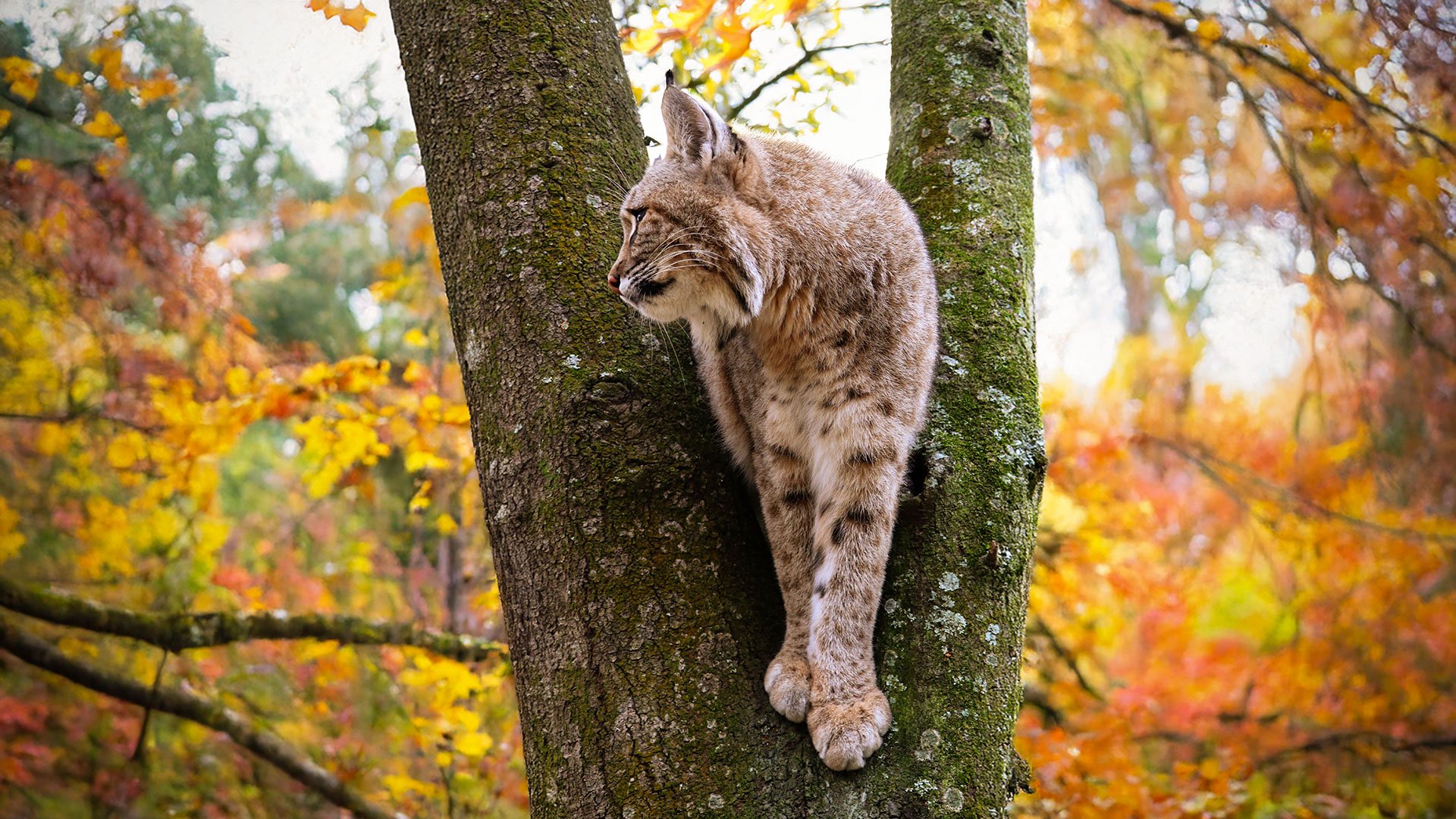
Most wild cats, including mountain lions, tigers, and leopards, have 30 teeth. Bobcats and lynx have 28. In our evolutionary past, we lost the first and second upper premolars. P1 and P2 are simply gone.
The carnassial pair (P4 above, M1 below) is fixed. It never moves. It is the anchor of the feline dental plan. What changed in bobcats and lynx is that everything forward of the carnassial got streamlined even further. We kept what matters and shed the rest.
Our dental formula is written: I 3/3, C 1/1, P 2/2, M 1/1 (times two for both sides). Every tooth counts. None of them grind.
What This Means for Wild Cat Care and Conservation
Understanding that cats are obligate carnivores is not just interesting trivia. It has real consequences.
At Big Cat Rescue, every animal in our care received a diet built entirely around meat-based nutrition. There was no vegetarian option. There is no supplement that replaces the bioavailable nutrients in whole prey or high-quality meat. When rescuers pull cats from roadside zoos or neglectful situations, one of the first things we assess is whether they have been fed correctly. Nutritional damage from an improper diet can be as devastating as physical abuse.
Wild cats also cannot thrive in a world that does not protect prey populations and wild habitat. An obligate carnivore is at the top of a food web. Disrupt the prey, and you disrupt the cat.
Every jagged tooth in my 28-tooth mouth is a reminder of that.