The Secret Life of South America's Smallest Survivors: 5 Surprising Lessons from the 2025 Geoffroy’s Cat Report
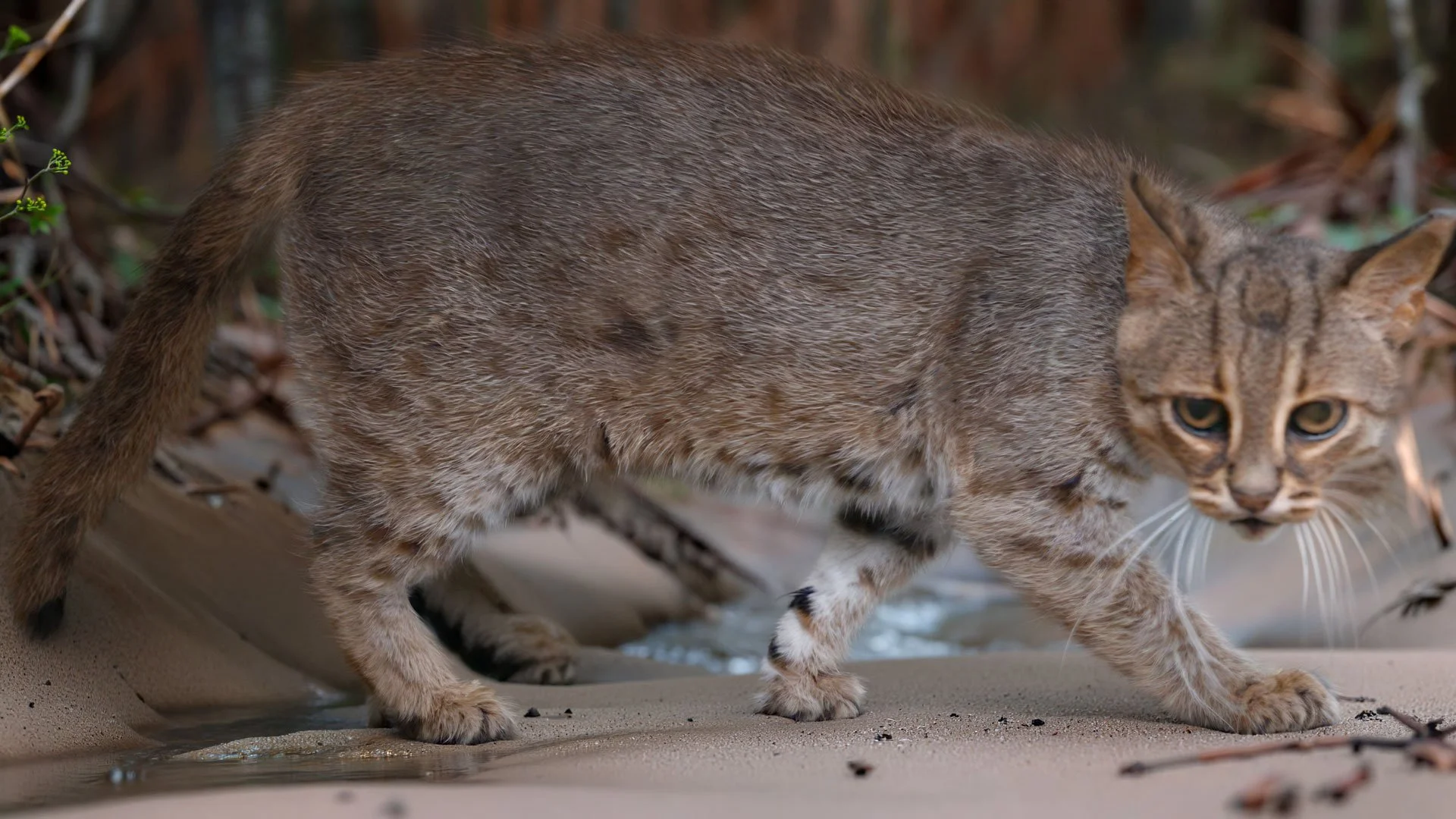
In the water-logged grasslands of the South American Pampa, a silent predator breaks the surface. This is no ordinary feline; it is the Geoffroy’s cat (Leopardus geoffroyi), a "swimming survivor" that isn't afraid to get wet to navigate its wild home. While small in stature, this resilient cat is a master of adaptation, serving as a vital link in the continent's biodiversity. Yet, its survival depends on a delicate dance between field science and human cooperation.
The Geoffroy’s Cat Working Group (GCWG) is the collective heart behind the species. A grassroots network of over 40 members across six countries, they bridge the gap between technical research and local action. Their 2025 Annual Report reveals a narrative of "consistent expansion," proving that saving a species requires much more than just counting cats—it requires a movement.
Here are the five most impactful lessons from the frontlines of the 2025 report.
1. The Domestic Overlap: When Pets Become a Lethal Trinity
The most counter-intuitive threat to South America’s wild cats doesn't come from heavy industry, but from our own front porches. In the fragmented habitats where wild and domestic worlds collide, "free-ranging" dogs and cats represent a lethal trinity of risks: direct predation, resource competition, and pathogen spillover.
The GCWG’s field research has identified a grave reality regarding disease transmission. Small wild cats are highly susceptible to pathogens carried by domestic pets, including FIV, FeLV, and rabies. More strikingly, the 2025 data points to the spread of parvovirus and recorded cases of domestic cats suffering from lesions in the spinal cord and the brain, highlighting the biological urgency of the situation.
"Free-ranging dogs pose a serious threat to small wild cats, such as Geoffroy’s cat, through predation, resource competition, and disease transmission... rabies constitutes a critical risk to wildlife, domestic animals, and human health." — GCWG Mission Statement
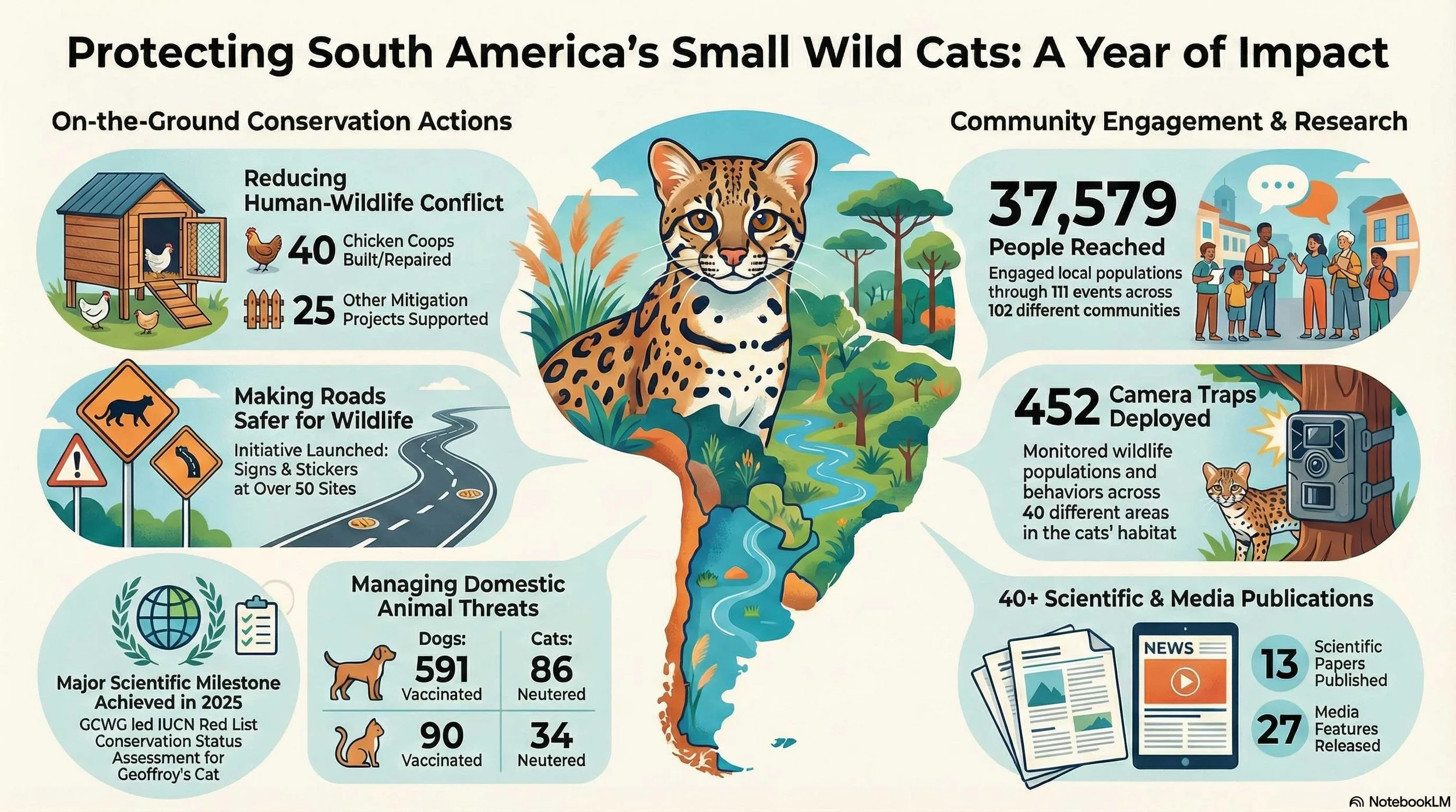
To build a biological firewall, the group shifted focus to domestic animal health. In 2025, they successfully vaccinated 591 dogs and 90 domestic cats, while neutering 120 animals to prevent the uncontrolled population growth that fuels these environmental threats.
2. The "Expert Takeover" of the IUCN Red List
In a landmark moment for conservation sovereignty, the 2025 species assessment for Leopardus geoffroyi on the IUCN Red List was conducted entirely by the people who live and work alongside the cat. This "expert takeover" ensures that the species' "Least Concern" status is not a guess from a distant office, but a data-driven reality defined by local specialists.
The assessment was a massive collaborative effort led by nine key GCWG members: Tirelli, Lagos, Nogales-Ascarrunz, Trindade, Eizirik, Bou, Peters, Pereira, and Lucherini.
This team is not merely looking at extinction risks; they are pivoting toward a more optimistic future. The group has recently undergone training for the "IUCN Green Status," a new framework that focuses on species recovery and functional conservation. The goal is no longer just to prevent a cat from disappearing, but to ensure it thrives in its natural role.
3. "Chicken Coop Diplomacy": Economy Meets Ecology
True conservation happens when a community sees a wild cat not as a pest, but as a neighbor. The GCWG mitigates human-wildlife conflict through "chicken coop diplomacy"—securing livelihoods to prevent retaliatory killings. When a wild cat can’t get to the chickens, the farmer doesn’t reach for a gun.
The 2025 metrics showcase the high impact of these grassroots tools:
40 Chicken Coops: Repaired or built to be predator-proof.
Deterrents: Use of Foxlights to scare off nocturnal hunters.
Guardians: Deployment of livestock protection dogs.
However, the diplomacy goes deeper than repairs. The group established 6 Partnership Sustainable Associations and launched 6 sustainable product lines, including eco-bags and local handicrafts. By building a local economy around the cat’s image, they ensure that conservation pays dividends for the community.
4. The Massive Scale of a Grassroots Giant
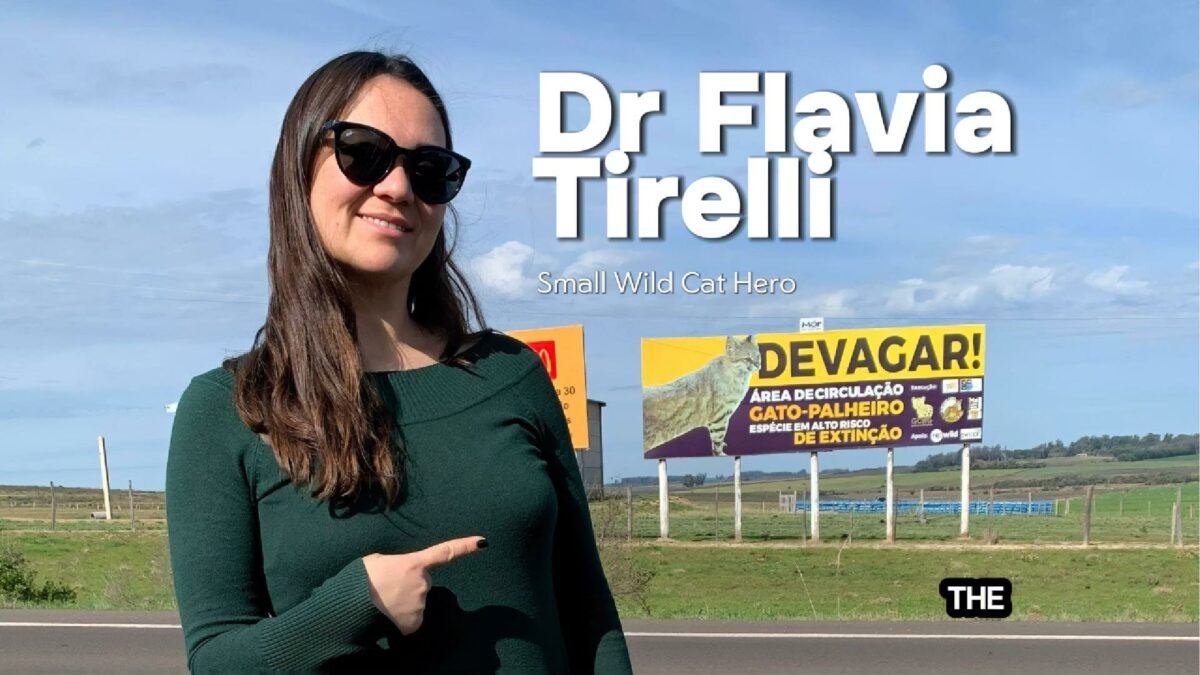
The Geoffroy’s cat may be small, but the network protecting it operates on a scale larger than some small nations. Under the leadership of Coordinator Dr. Flávia Tirelli, the GCWG has secured an action area of 2,486,700 hectares.
The group’s methodology balances high-tech precision with human connection. In 2025, the team managed 96 monitoring sites equipped with 40 camera traps, capturing the secret movements of these cats across six countries. Yet, the most vital data came from the "human" element: 452 interviews with local people.
This combination of social and scientific indicators allowed the group to reach 37,579 people across 102 communities. It is a testament to the idea that landscape-level conservation is only possible through a massive, interconnected grassroots web.
5. The Battle for Road Safety: Signs, Stickers, and "Outdoors"
As infrastructure carves through South American wildlands, roads have become silent, paved killers. Fragmentation forces cats to cross highways, often with fatal results. The GCWG is fighting this fragmentation with a blend of low-tech visibility and high-tech infrastructure.
The mission focuses heavily on "Actions to reduce pedestrian accidents," which involves a multi-pronged approach:
Infrastructure: Speed reducers and fences designed to guide cats toward safe crossings.
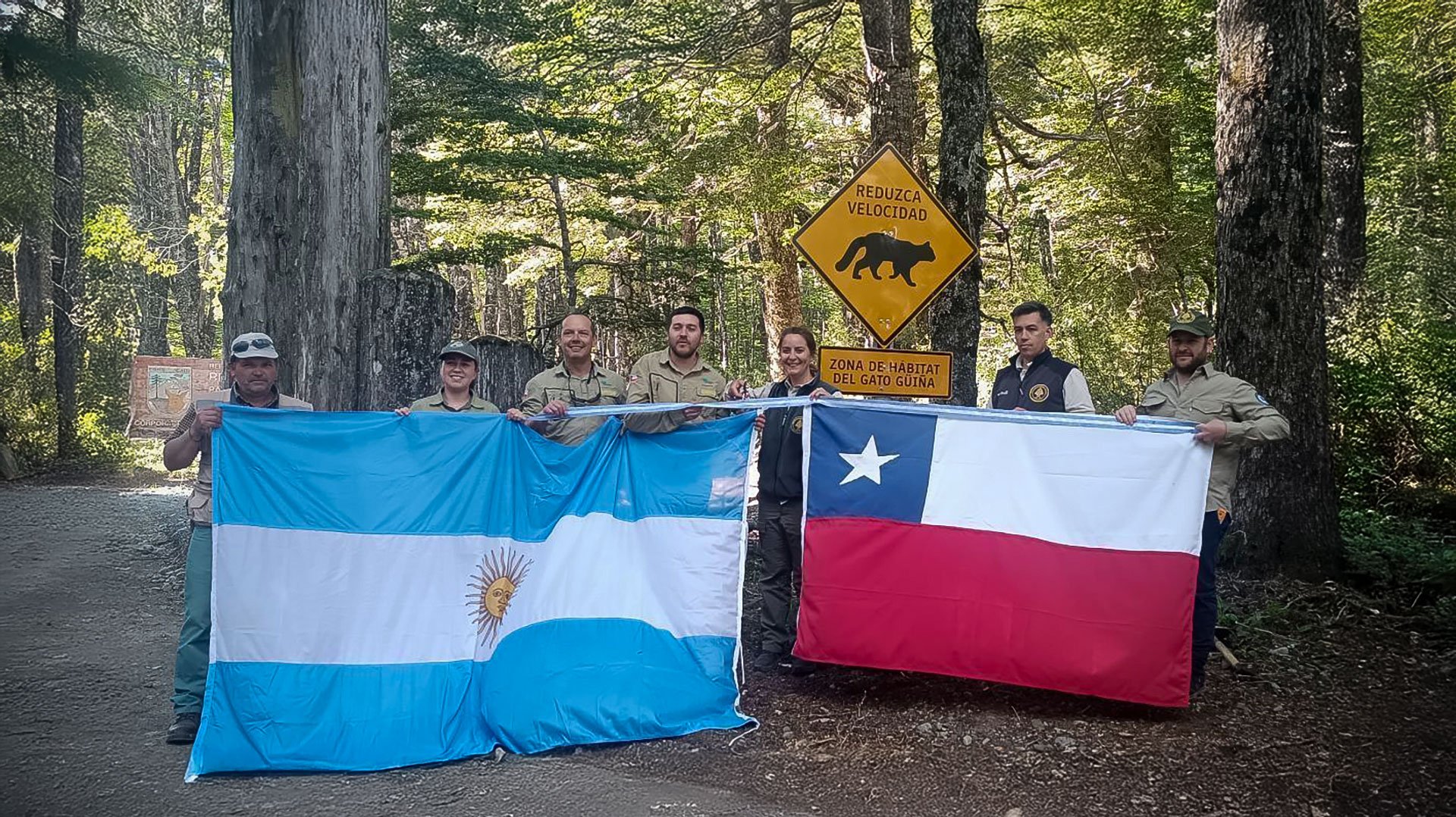
Signage: 29 road signs placed at known crossing hotspots.
Awareness: Delivery of road stickers to 27 strategic sites and the installation of "Outdoors" (large-scale billboards/signage) to keep drivers alert.
As the report notes: "People need to know the species, its biology and threats to conservation to support our efforts." Whether it’s a sticker on a bumper or a billboard on a highway, the goal is to make the Geoffroy’s cat a visible part of the landscape.
A Blueprint for the Future
The 2025 achievements of the Geoffroy’s Cat Working Group represent a "consistent expansion" of what is possible when science meets community. By addressing the lethal trinity of domestic threats, securing livestock through diplomacy, and empowering local experts to lead global assessments, the GCWG has created a modern blueprint for biodiversity.
As we look toward the future of South American wilderness, the question remains: how will we continue to support the networks that protect these small survivors?
To join the mission or follow the journey of the "swimming survivor," check out: https://geoffroyscatwg.org/ingles/ and follow the GCWG on Facebook at https://www.facebook.com/geoffroycat.gcwg and Instagram at @geoffroycat.gcwg
The survival of the Geoffroy’s cat is a shared responsibility—one that begins with a single community and spans a continent.






Jose Ramirez Fernandez is a passionate conservationist working tirelessly to protect small wild cat species in the dense forests and rugged mountains of Costa Rica. As a native Costa Rican who is an expert in rodent biology, Jose brings a unique perspective and skill set to his mission of saving animals like the elusive oncilla, powerful ocelot, and the newly discovered clouded tiger cat.