The Uninvited Guest
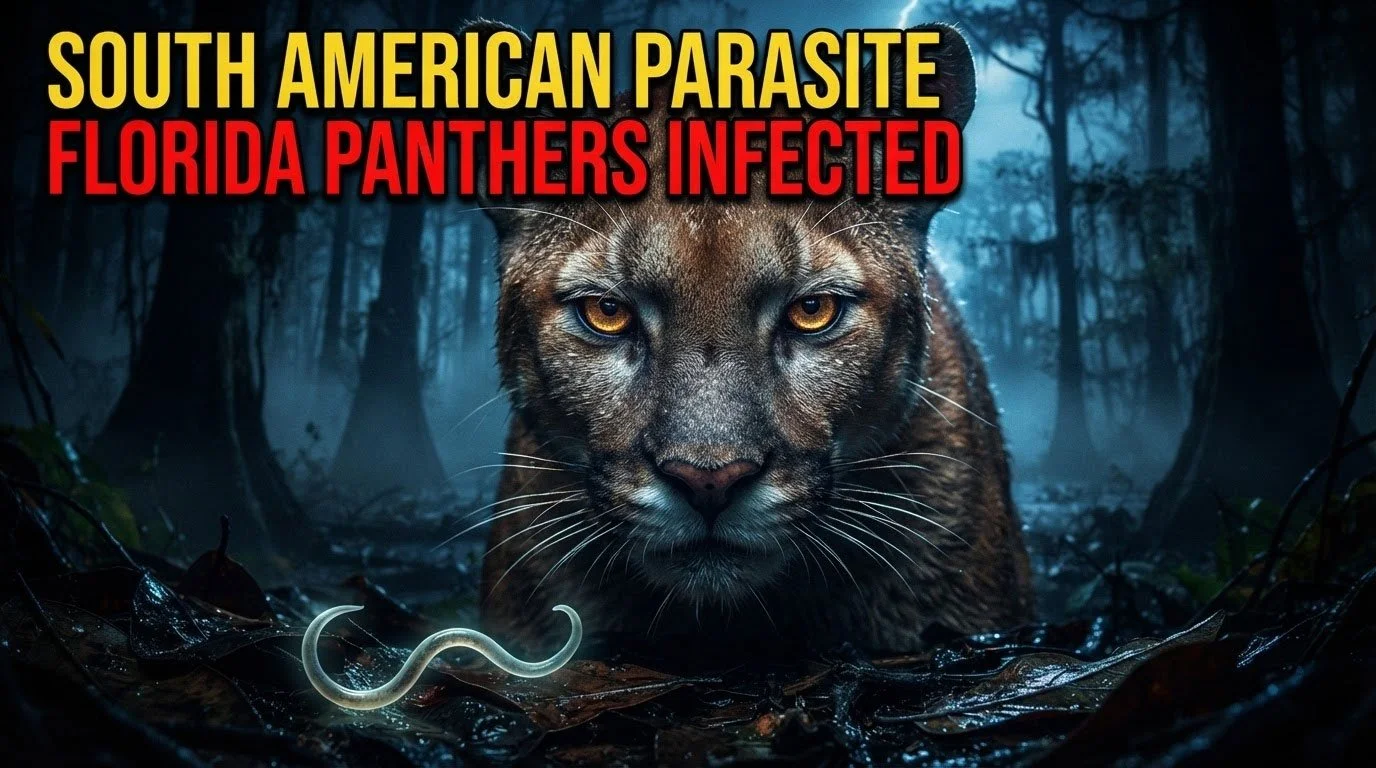
Florida Panther Parasite Invader - AI Image
A Surprising Discovery in Florida’s Wilds
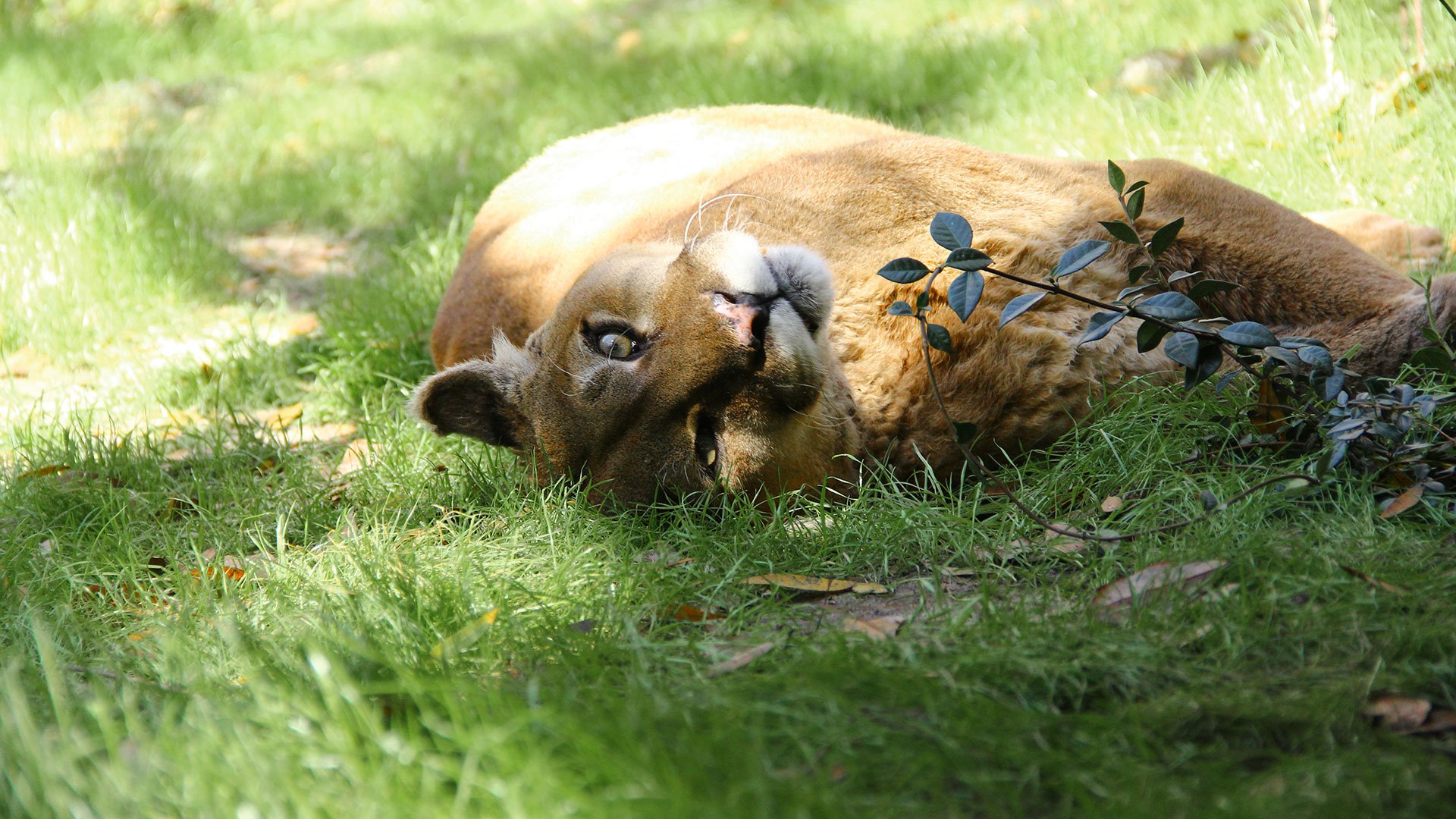
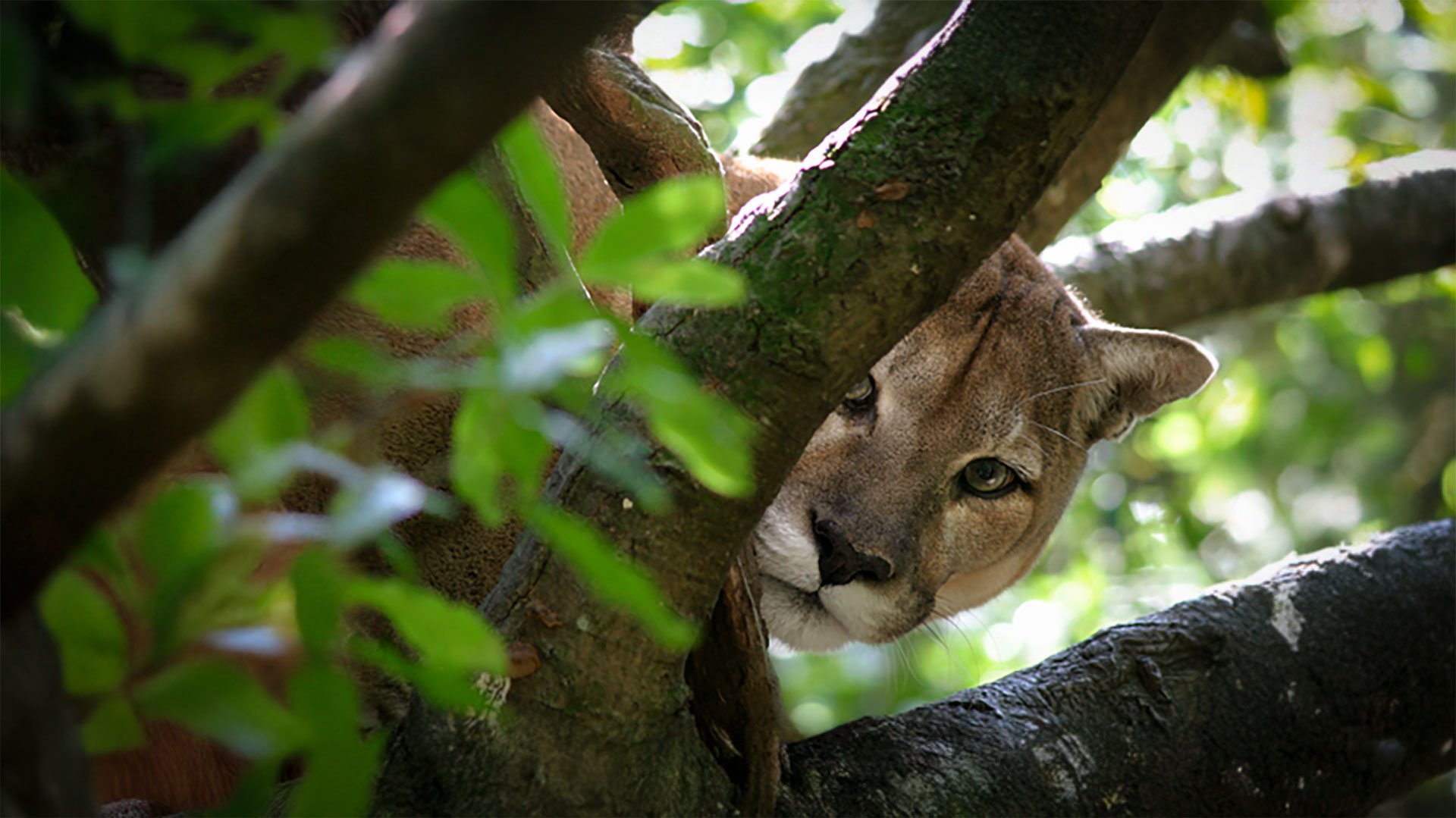
The Florida panther is a ghost of the southern swamps, a symbol of conservation resilience that nearly vanished in the late 20th century. Dwindling to a mere 20 to 30 individuals, the population has since rebounded to an estimated 120 to 230 adults through decades of intensive management. Yet, a recent joint investigation by the CDC and local researchers has unmasked a stealthy, microscopic threat lurking within these big cats. It raises a baffling ecological riddle: how did a parasite genetically native to the Pantanal wetlands of Brazil find its way into the Florida Everglades?
The Brazilian Genetic Match
Researchers have identified the presence of Dracunculus sp. PantanalBR, a nematode previously known only to infect dogs and jaguars in South America. Through meticulous genetic sequencing of specimens collected from Florida’s wilds, the study revealed a staggering 98–99% match to the Brazilian parasites. For an ecologist, this isn't just a curiosity; it is definitive proof of a transcontinental jump.
As the study in the July 2026 edition of the CDC’s Emerging Diseases journal notes:
“Our data confirm Dracunculus sp. PantanalBR nematodes in North America.”
A Decades-Old Mystery Origin
The ironies of wildlife management are often profound, and this discovery reveals a "biological legacy" that we are only now beginning to understand. Evidence suggests the parasite may have arrived via seven captive pumas from Central America released into Everglades National Park during the 1950s and 1960s. It is a haunting, counter-intuitive reality: a mid-century attempt at species augmentation may have carried a long-term biological stowaway that remained hidden for seventy years.
Beyond the Panther: A Poly-Parasitized Reality
The investigation, which analyzed samples collected between 2002 and 2025, looked at 12 Florida panthers and one bobcat. While five panthers and the bobcat were positive for the Dracunculus genus, the researchers were careful to distinguish the specific Brazilian match in two of the panthers and the lone bobcat. These cats are effectively fighting a multi-front war; many are "poly-parasitized," also dealing with heartworms (Dirofilaria immitis) and Dirofilaria striata.
The Hidden Lifecycle and Physical Toll
To understand the risk, one must look at the nematode’s complex aquatic journey, which likely involves tiny crustaceans called copepods. Panthers likely ingest these infected copepods or other aquatic "transport" hosts while drinking or moving through the wetlands. Once inside, the worms can cause edema, ulceration, and debilitating movement issues, though these symptoms are notoriously difficult for scientists to observe in the wild before a cat is severely compromised.
The Only Pumas in the East
The stakes for the Florida panther are uniquely high because they represent the only wild puma population remaining east of the Mississippi River. Already restricted to a fragment of their former range—largely south of the Caloosahatchee River—the population is constantly flirting with "genetic collapse." Even the successful 1995 "genetic rescue" involving the introduction of eight Texas pumas cannot fully shield the species from the mounting pressure of these new biological hurdles.
Conclusion: Looking Toward the Horizon
The discovery of Dracunculus sp. PantanalBR serves as a stark reminder that our interventions in the natural world rarely go exactly as planned. We now face an urgent need for expanded surveillance of canids and felids across the Americas to map the true distribution of this parasite. As we look to the future, we must ask: are we doing enough to monitor the "micro-threats" that could quietly undo a century of conservation success?
Source: 2026 https://www.wfla.com/news/florida/south-american-parasite-found-infecting-florida-panthers-study-finds/