
Poisonous Snakes
This article from Big Cat Rescue provides essential safety guidelines for managing venomous snake encounters involving exotic felines like servals and bobcats. Because these cats instinctively hunt reptiles, the text outlines critical emergency first aid steps, such as applying a specialized tourniquet and keeping the animal calm to slow venom circulation. Caregivers are instructed to identify dangerous bites by looking for fang punctures and swelling rather than simple horseshoe-shaped teeth marks. The resource emphasizes the necessity of immediate veterinary intervention and the acquisition of expensive anti-venom from human medical facilities. Ultimately, the author highlights that while snake-proofing an enclosure is difficult, vigilant supervision and prompt medical action are vital for a cat's survival.
Shock
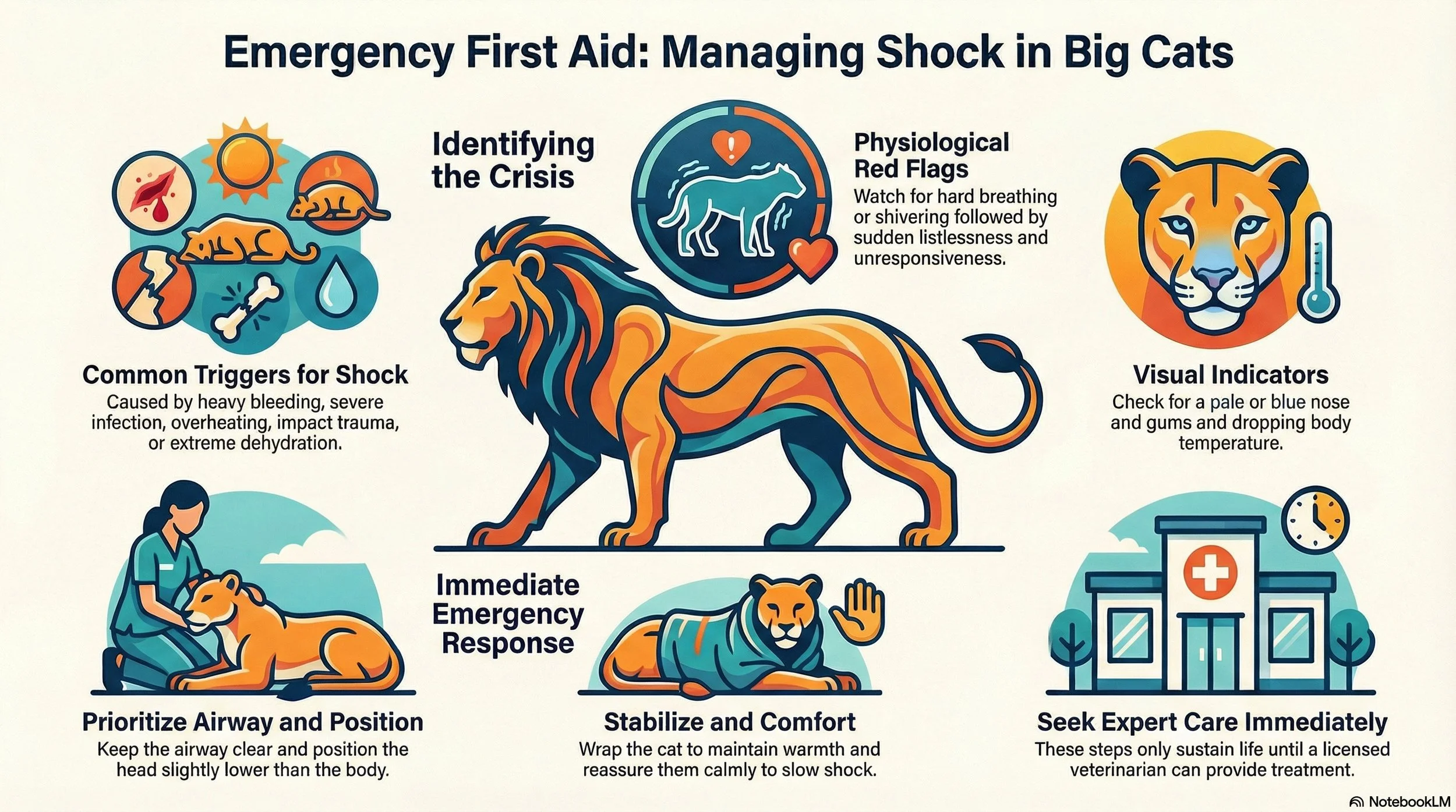
This text serves as a medical guide for identifying and managing shock in exotic cats. It explains that shock is a life-threatening condition caused by insufficient blood circulation, often resulting from trauma, dehydration, or poisoning. Owners are taught to recognize symptoms such as labored breathing, pale gums, and sudden lethargy. The author outlines emergency first aid steps, including keeping the animal warm and ensuring an open airway, while emphasizing the need for immediate professional veterinary care. Ultimately, the resource aims to provide temporary stabilizing techniques to keep a wild cat alive until it can receive medical treatment.
Restraint
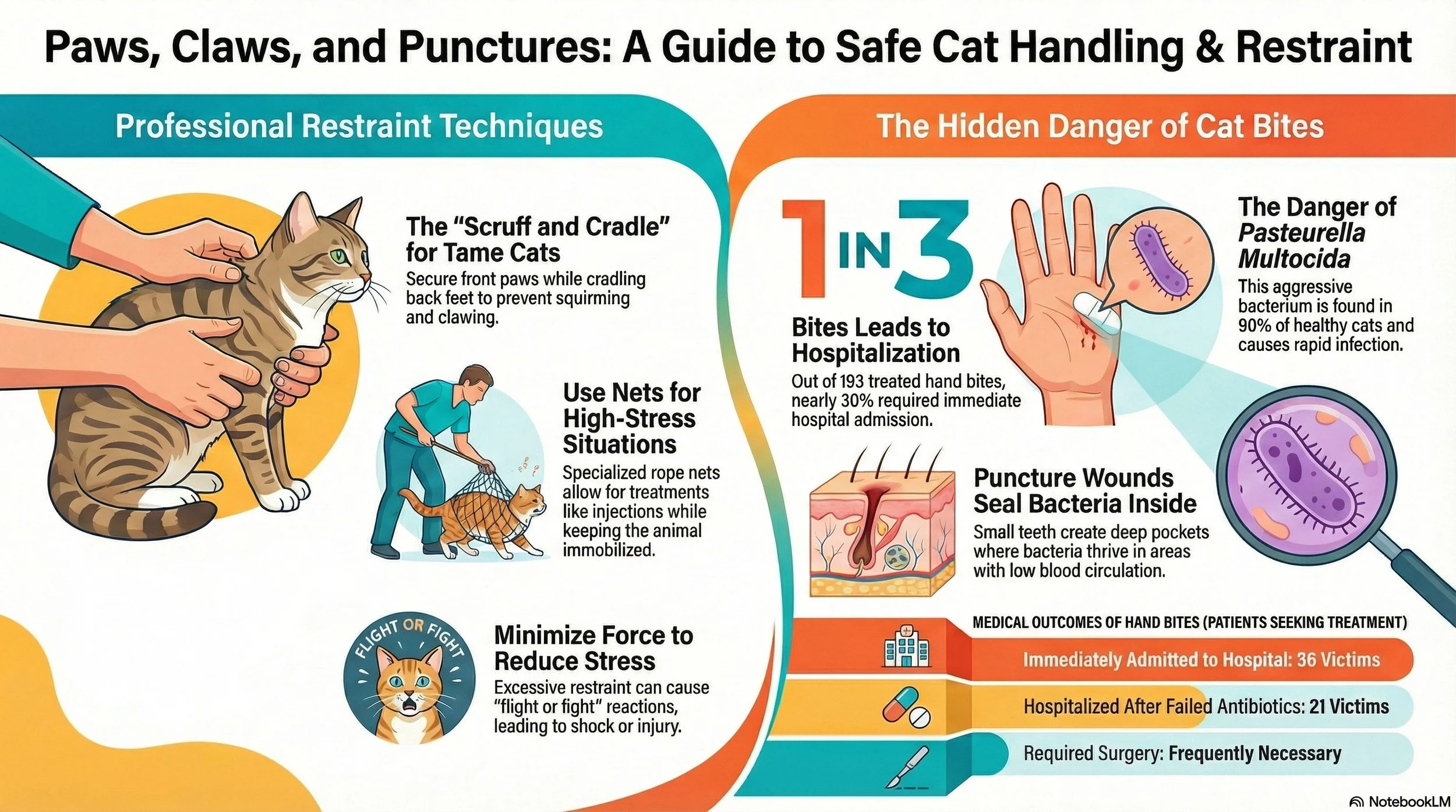
These sources emphasize the serious medical risks and complex handling requirements involved in caring for felines, ranging from domestic pets to exotic predators. One report highlights how cat bites frequently cause severe infections due to deep-seated bacteria, often requiring emergency surgery or hospitalization when antibiotics fail. To mitigate these dangers, the other texts provide detailed protocols for physical and chemical restraint, suggesting the use of nets, blankets, and sedation to protect both keepers and animals. Experts stress that proper preparation and an understanding of feline behavior are vital for performing tasks like medical treatments or vaccinations safely. Ultimately, the collection warns that even minor interactions with cats can be hazardous without professional precautions and immediate attention to injuries.
Wild Cat Lifespans
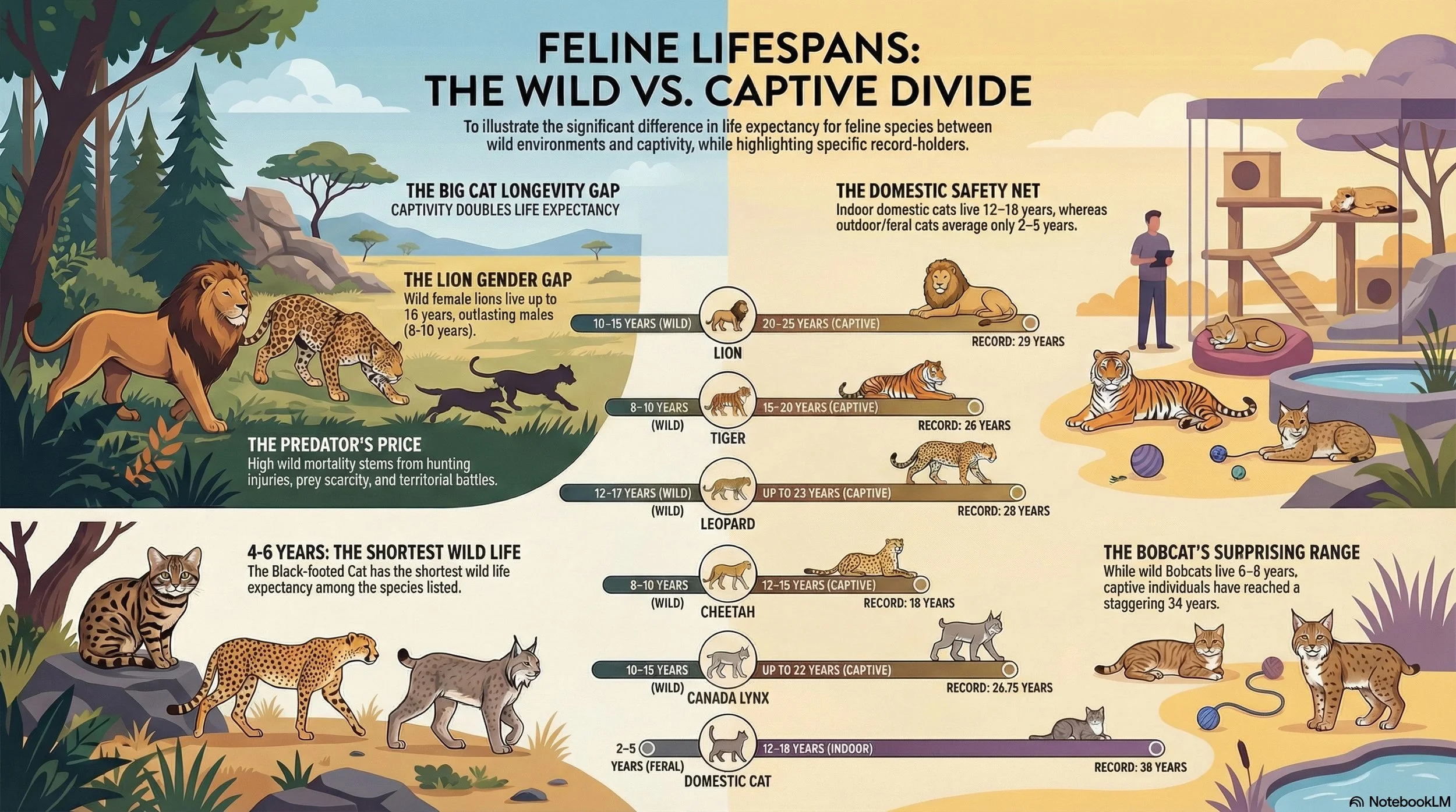
These sources provide a comprehensive look at the diversity, biology, and conservation of various wild felines, ranging from large apex predators to small, elusive hunters. Detailed profiles for species like the Canada lynx, cheetah, and caracal describe their unique physical adaptations, specialized diets, and typical behaviors in both the wild and captivity. Data tables highlight lifespan variations, illustrating how environmental factors and human care influence the longevity of different cat families. The texts also emphasize the ecological importance of smaller felines, such as the fishing cat and leopard cat, which serve as vital indicators of habitat health. Finally, the documentation addresses significant survival threats, including habitat fragmentation, climate change, and human-wildlife conflict. Together, these materials serve as an educational resource to raise awareness and support for the protection of global felid populations.

Cat Coat Colors
The provided sources examine the genetic mechanisms that dictate coat color and patterning in various mammals, with a specific focus on felines and South American camelids. Key to these processes are the MC1R and ASIP genes, which interact to regulate the production of black-brown and red-yellow pigments. In domestic cats, specific mutations in these loci determine whether a coat appears solid or patterned, while in camelids, genetic diversity distinguishes wild species like vicuñas from domesticated alpacas and llamas. Beyond aesthetics, the research explores how artificial selection has increased color variety in domestic animals compared to their wild ancestors. Additionally, the texts highlight the broader evolutionary and medical roles of these genes, including their influence on pain sensitivity and kidney function across different species.
Cat Toes