Restraint
Beyond the Scratch: The Surprising Science and High Stakes of Feline Handling
For many, a cat’s nip or a quick swipe of a paw is dismissed as a "whoopsy daisy"—a minor occupational hazard of sharing a home with a predator. We laugh it off, put on a bandage, and move on. But as a feline behaviorist, I view these interactions through a much sharper lens. Whether you are dealing with a ten-pound tabby or a forty-pound serval in a sanctuary, the mechanics of feline defense and the psychological triggers of their behavior represent a high-stakes arena where biology and physics collide. Understanding this science isn't just a professional requirement; it is a prerequisite for the survival of both the handler and the cat.
The Hypodermic Mechanism: Why Cat Bites Lead to Surgery
While a dog’s bite is often a traumatic event of tearing flesh and crushing bone, a cat’s bite is a masterclass in surgical precision—and that is exactly why it is more dangerous. A feline’s canine teeth function like biological hypodermic needles. Instead of the wide-set "tearing" action seen in canines, a cat delivers a deep, narrow puncture.
The clinical nightmare begins the moment the tooth is withdrawn. Because the puncture is so narrow, the skin surface seals almost immediately, effectively "trapping" the bacteria within. This creates an ideal anaerobic petri dish—a warm, oxygen-free environment where Pasteurella multocida can thrive. This aggressive bacterium is found in up to 90% of healthy cats, and once injected into fluid-filled spaces that lack robust blood circulation, such as tendons, joints, or the periosteum of the bone, it becomes nearly untouchable by the body’s natural defenses.
The data supports this grim reality. A study published in the Journal of Hand Surgery tracked 193 patients treated for cat bites to the hand. The results were sobering: 36 victims required immediate hospitalization, and another 21 were admitted later after standard oral antibiotics failed to penetrate the infection site.
"The wounds seal quickly, leaving behind Pasteurella multocida. Once it's in there, it can grow quite rapidly in fluid-filled spaces—like tendons and joints—and surgery is often required to physically flush the infection out."
We habitually underestimate the domestic cat’s weaponry because of their size, yet their evolutionary "delivery system" for pathogens is often more efficient at necessitating surgical intervention than the raw, blunt force of much larger animals.
The Restraint Paradox: The Lethal Power of Stress
In the world of wildlife management, we operate under what I call the "Restraint Paradox." This is the tragic irony where the handler’s intent—to save the animal through medical intervention—becomes the very trigger for the animal's physiological collapse. Felines, particularly exotic species, are exquisitely sensitive to the restriction of their movement.
To manage this, we must distinguish between two primary stressors:
Psychological Stress: The terror of capture, the violation of flight distance, and the anxiety of unfamiliar environments.
Somatic Stress: The physical reality of injury, surgical trauma, or extreme temperature fluctuations.
When a cat is forcibly restrained, it enters a profound "Flight or Fight" state. Adrenaline floods the system to mobilize every resource for defense. However, if this state is prolonged by clumsy handling, the animal can spiral into shock—a catastrophic circulatory deficiency where the vascular system can no longer support life. An overstressed cat doesn’t just get "tired"; it can reach a point of exhaustion that leads to total systemic failure and death. In sanctuary management, the most dangerous part of a procedure isn't usually the injury being treated—it's the act of holding the animal still enough to treat it.
The "Liquid Geometry" of Feline Physics
Effective handling relies more on understanding feline anatomy than on physical strength. We often refer to felines as having "liquid geometry." The primary rule of thumb is simple: if a cat can fit its head through an opening, the rest of the body will follow. I have personally witnessed cats flatten their entire skeletal structure to "slither" under the gap of a closed interior door with the ease of a shadow.
This anatomical reality dictates the methodology of netting. A net should never be used as a blunt instrument.
The Corridor Technique: You must never bring a net down directly onto a feline. Doing so risks crushing delicate limbs or fracturing a scapula. Instead, a handler uses their body and the net to create a "wall," forming a perceived escape corridor. The animal, seeking the only "open" route, runs into the net of its own volition.
Mesh Specificity: In a sanctuary setting, we use custom rope netting with specialized mesh sizes. This allows us to pull a specific anatomical part—an ear for mite treatment or a patch of skin for a subcutaneous injection—through the holes while keeping the rest of the predator safely contained.
Why the "Scruff" Isn't a Universal Remote
A common myth in feline handling is that "scruffing"—grasping the loose skin at the back of the neck—is a universal "off switch." This is a dangerous oversimplification. In cubs, the scruff mimics maternal transport, triggering a reflexive curl and stillness. However, as a feline matures, this reflex vanishes.
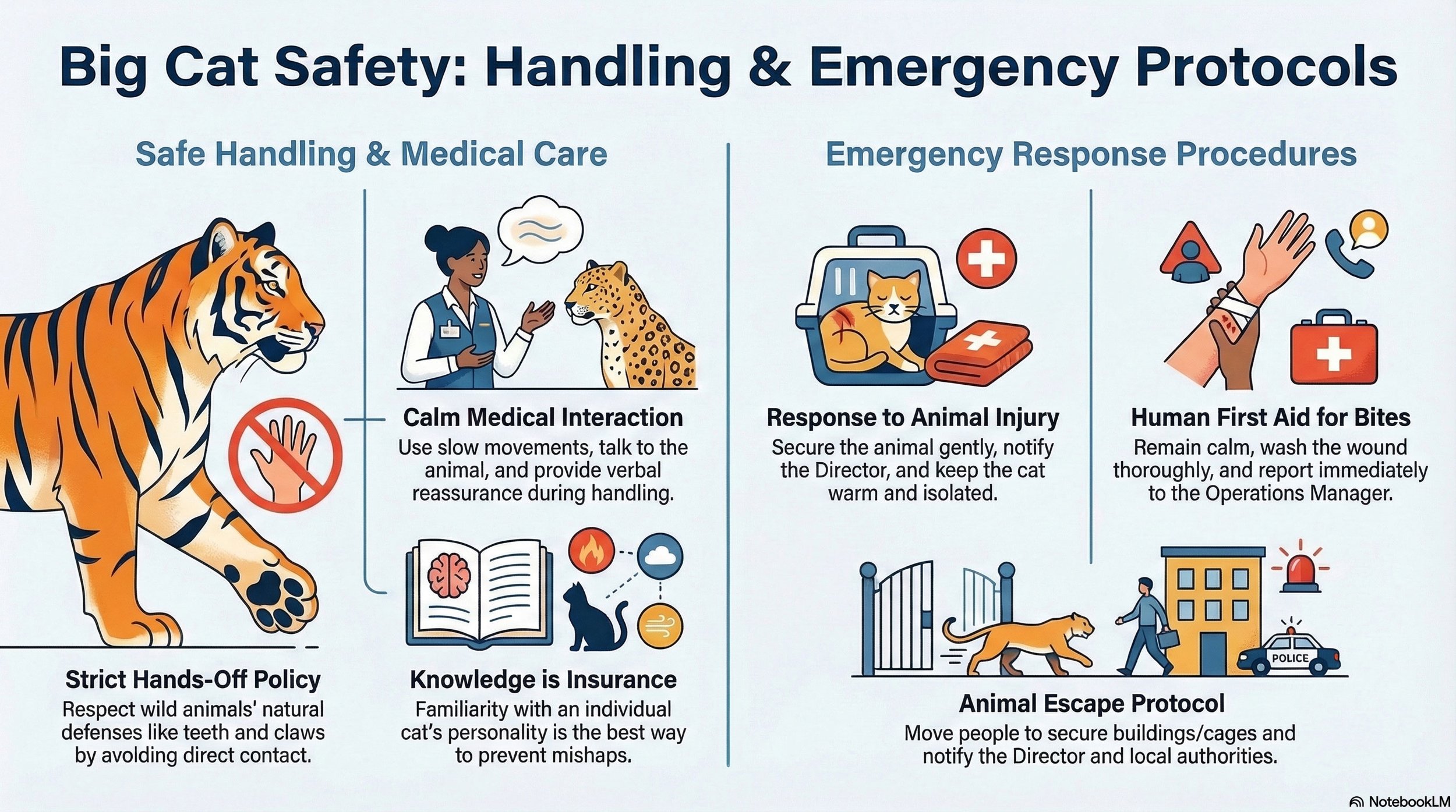
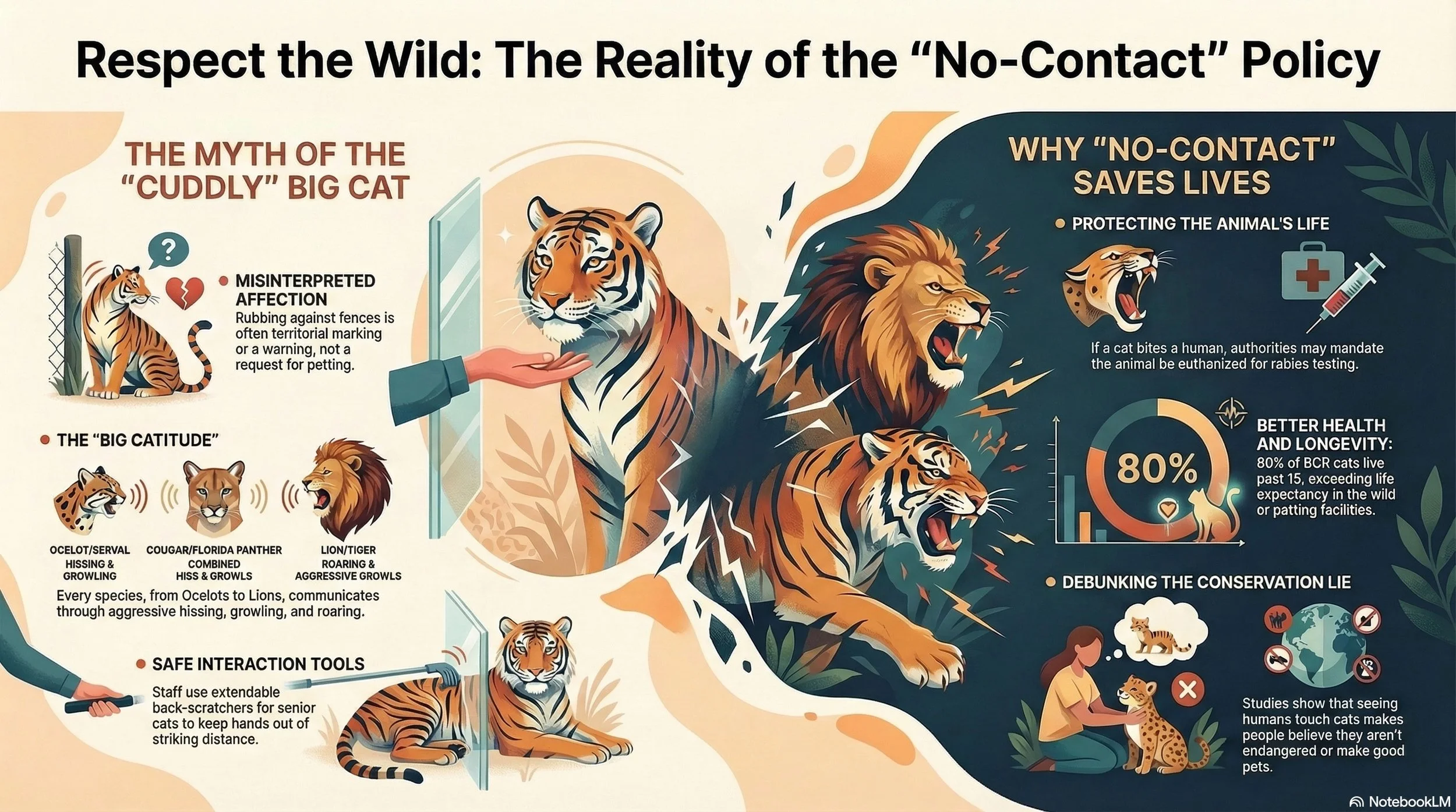
In an adult exotic cat, scruffing is often perceived as a predatory strike or a lethal immobilization attempt. It can escalate a situation from manageable to life-threatening in seconds. This is why our internal safety protocols for exotic cats often include a grim bit of professional humor: Except in an extreme emergency, never allow an adult cat to dangle by its scruff; if you do, make sure a copy of your Will is on file.
Instead, we prioritize Psychological Restraint:
Confidence and Light Manipulation: Felines are masters of reading body language; they sense hesitation like a scent. We also use "visual disadvantage" to our advantage: manipulating light levels (bright lights to inhibit nocturnal species, darkness for diurnal ones) can induce stillness without a single hand being laid on the animal.
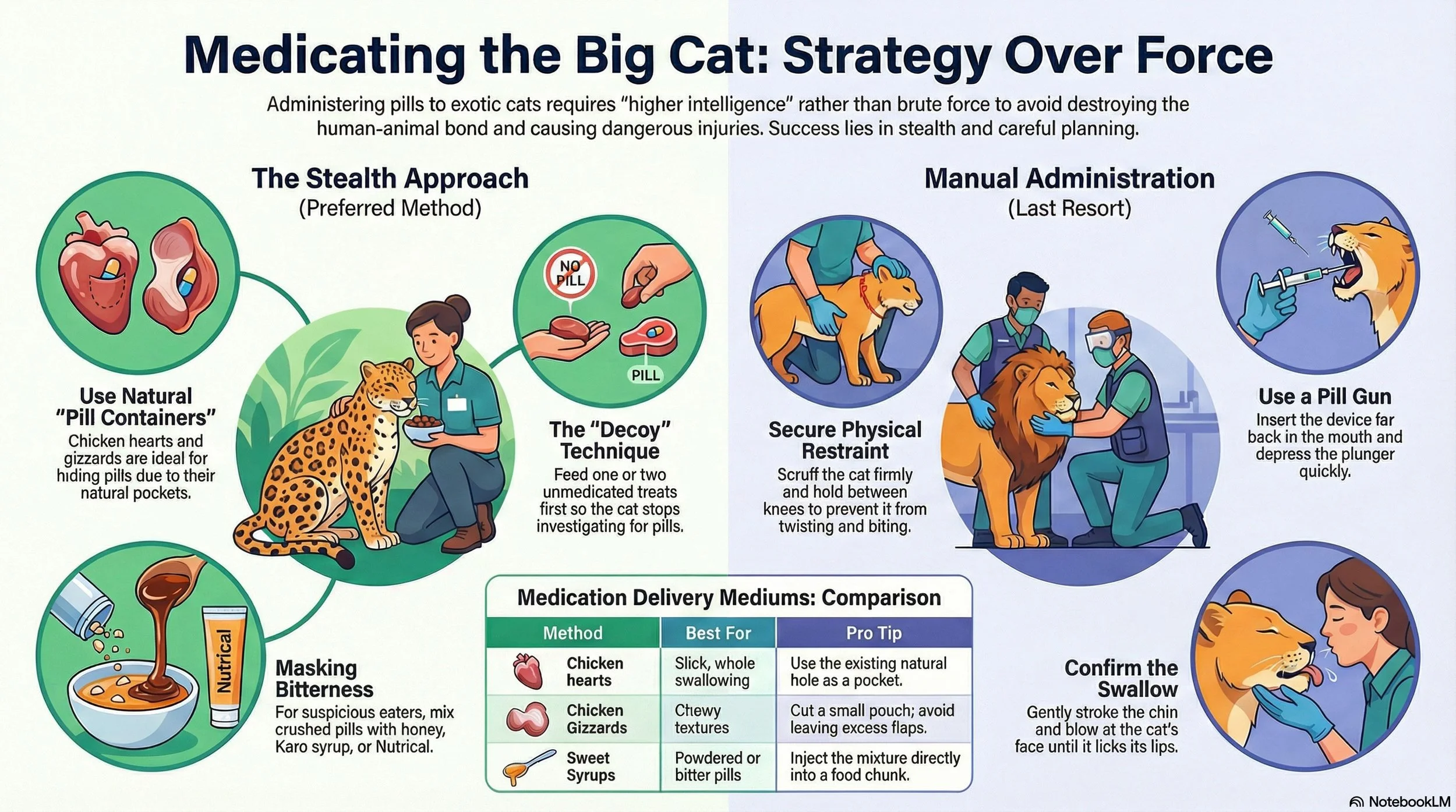
The Professional Grip: When physical contact is required, we use highly specific holds. For instance, when holding the front paws, you must always keep your index finger between the paws. This provides a vastly superior grip, preventing the animal from "pumping" its legs to gain leverage or squirming out of the hold.
The Logistical Chaos of the Exotic
In the field, even a "routine" task like applying an Elizabethan collar (the "cone of shame") to a serval like Santino can devolve into logistical chaos. It requires a coordinated team of handlers using sticks for positioning and "squeeze cages"—specialized chutes with movable walls—to safely restrict movement.
The technical nuance here is immense. For example, if an animal like Santino has just received subcutaneous fluids, his neck circumference will temporarily increase due to the fluid weight. A collar applied "perfectly" in that moment can become a choking hazard as the fluids redistribute, or a useless ornament if applied too loosely.
Our toolkit reflects this complexity:
Fabric Muzzles: These often cover the eyes. By eliminating visual input, we can often induce a "frozen" state, allowing for treatment without the need for heavy physical force.
Emergency Interventions: CO2 extinguishers are kept as a "break glass in case of emergency" tool to disrupt a lethal attack, though we use them sparingly as cats can become desensitized to the noise and cold.
Conclusion: The Weight of Responsibility
The management of felines—be they a housecat or a mountain lion—demands a deep respect for their biological complexity. As the noted specialist Fowler once suggested, a person who chooses to restrict an animal's activity assumes a heavy responsibility that should never be considered lightly.
The safety of the "Keeper" and the safety of the animal are two sides of the same coin. We must protect ourselves from the cat’s hypodermic-like weaponry, but we must also protect the cat from the lethal potential of its own stress response. When we truly understand the sophisticated biological and psychological triggers of the feline world, the line between "tame" and "wild" begins to blur. We are left only with the technical reality of an animal that is always, by its very nature, prepared for a high-stakes encounter.

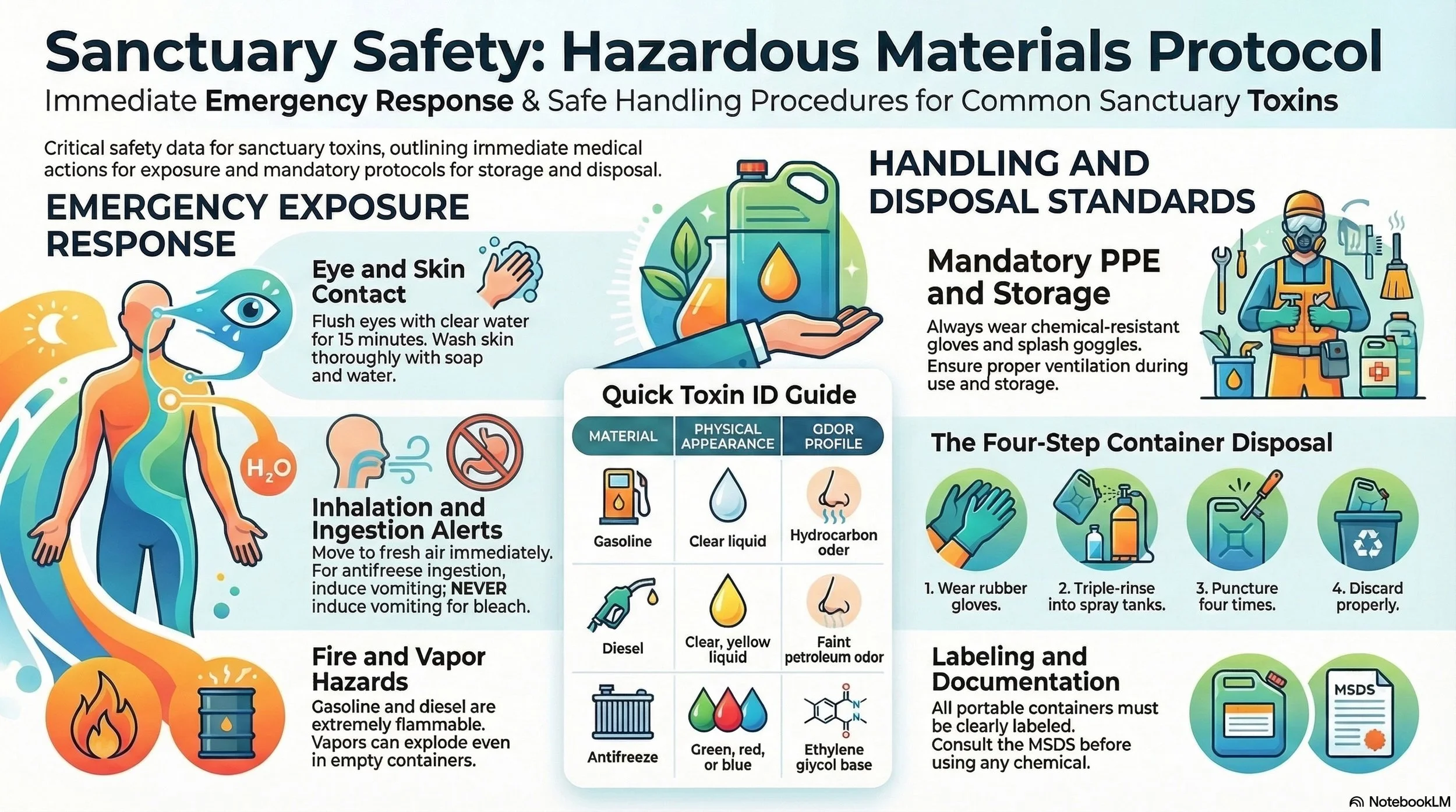


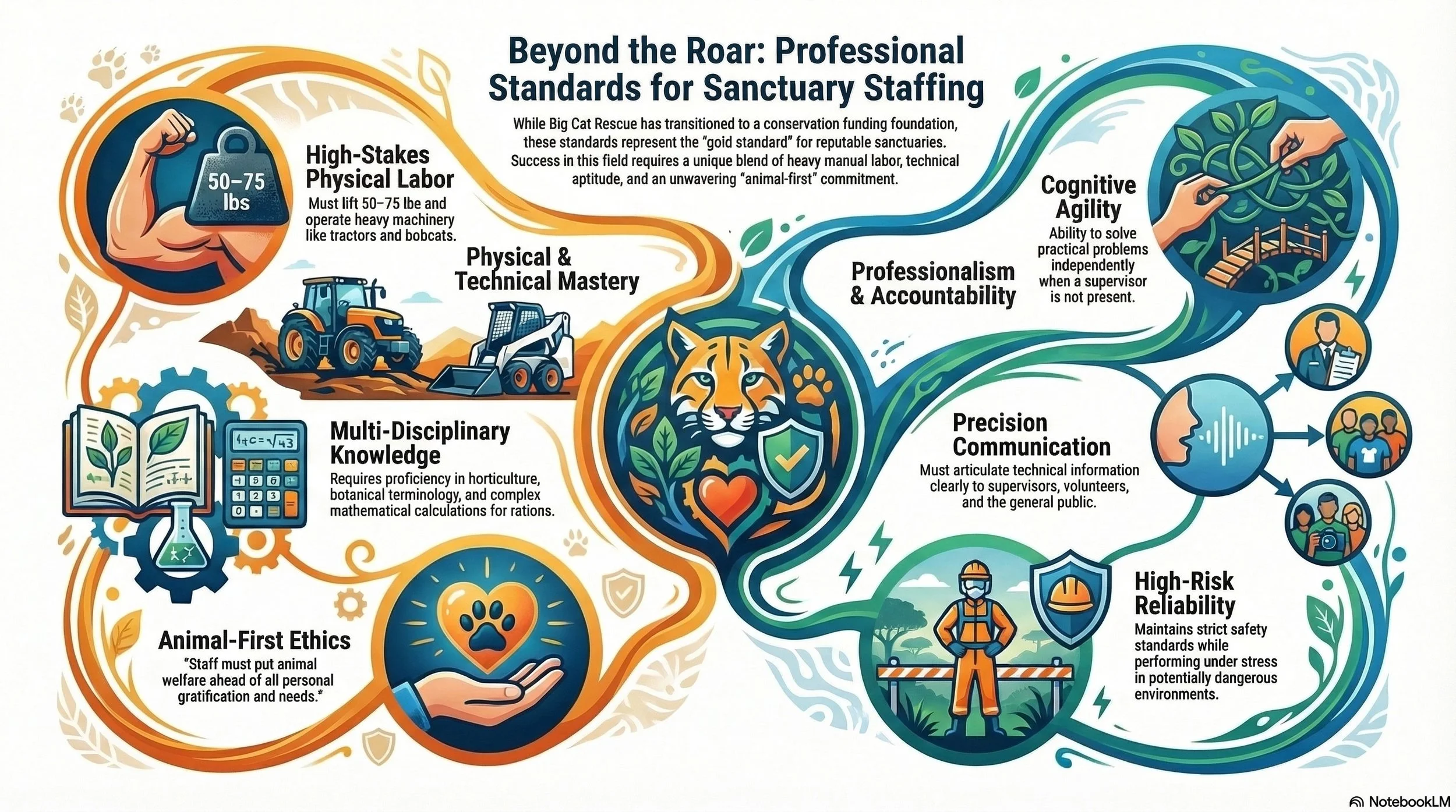
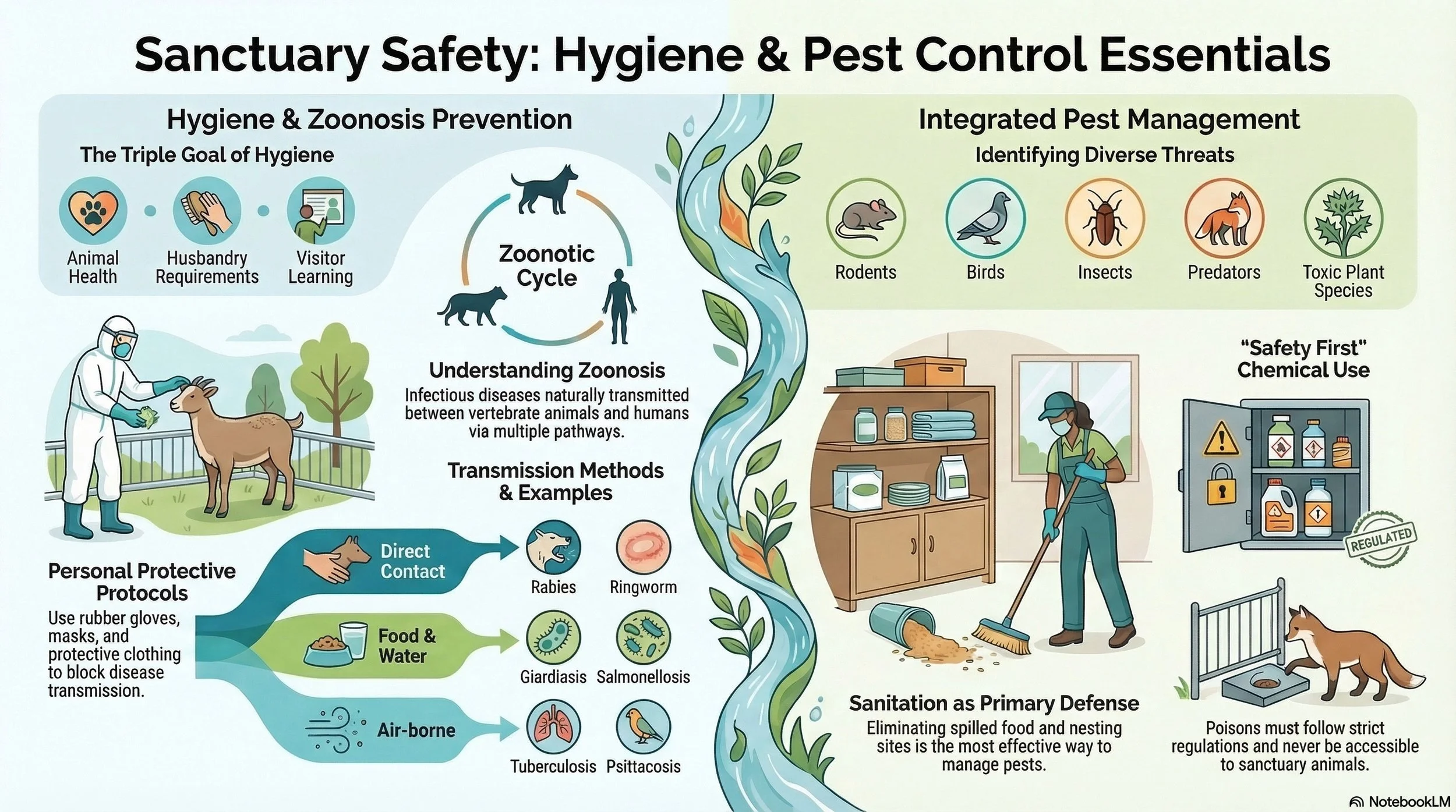
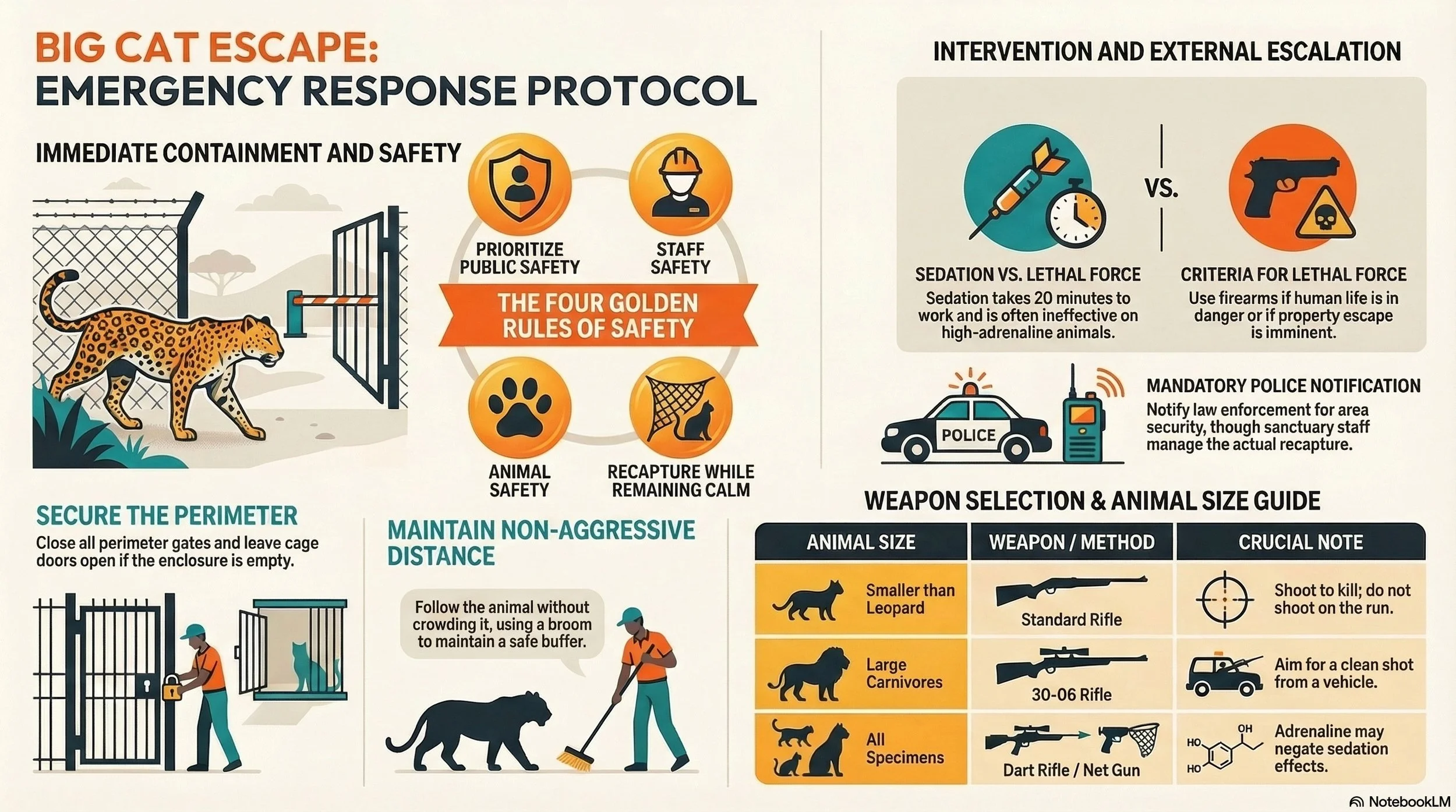
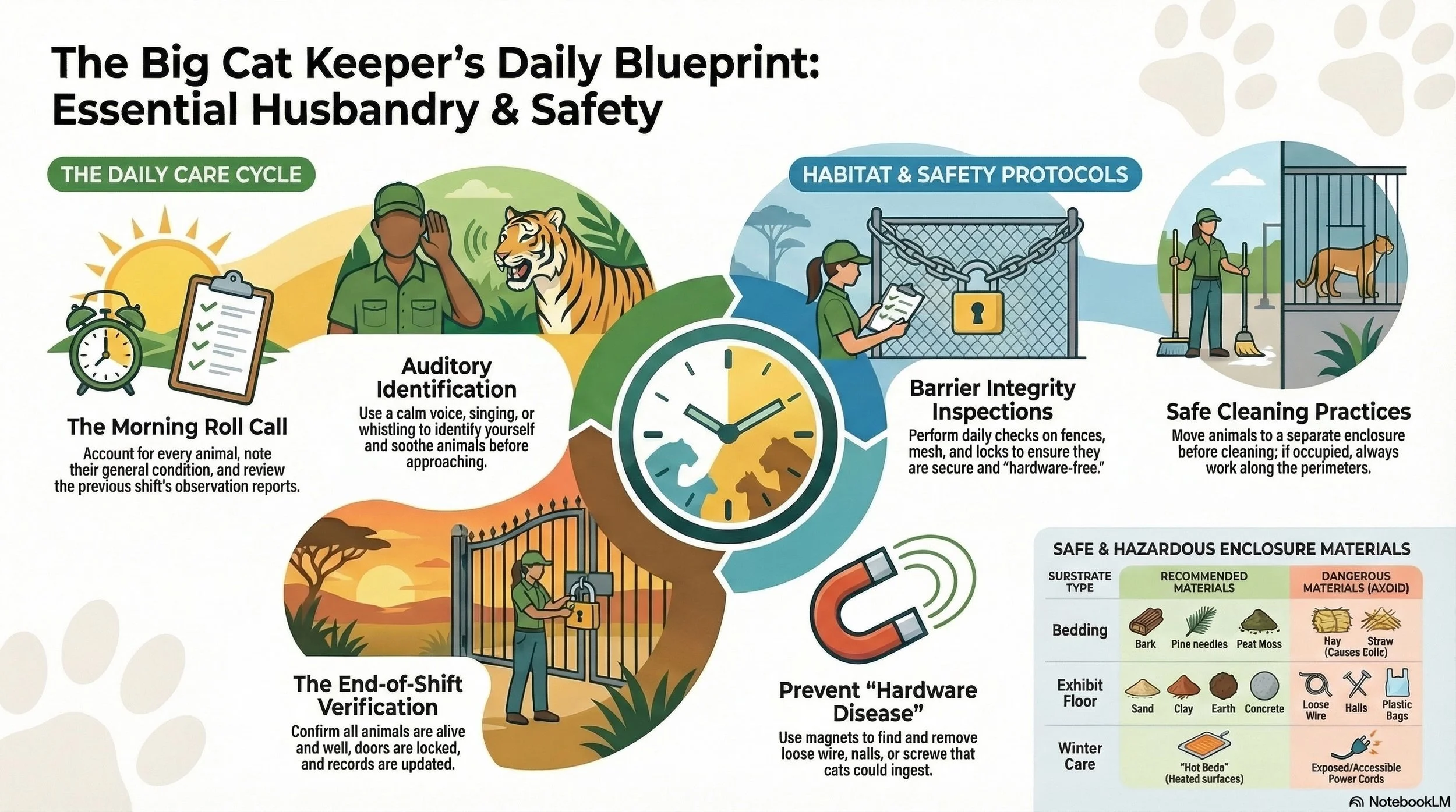
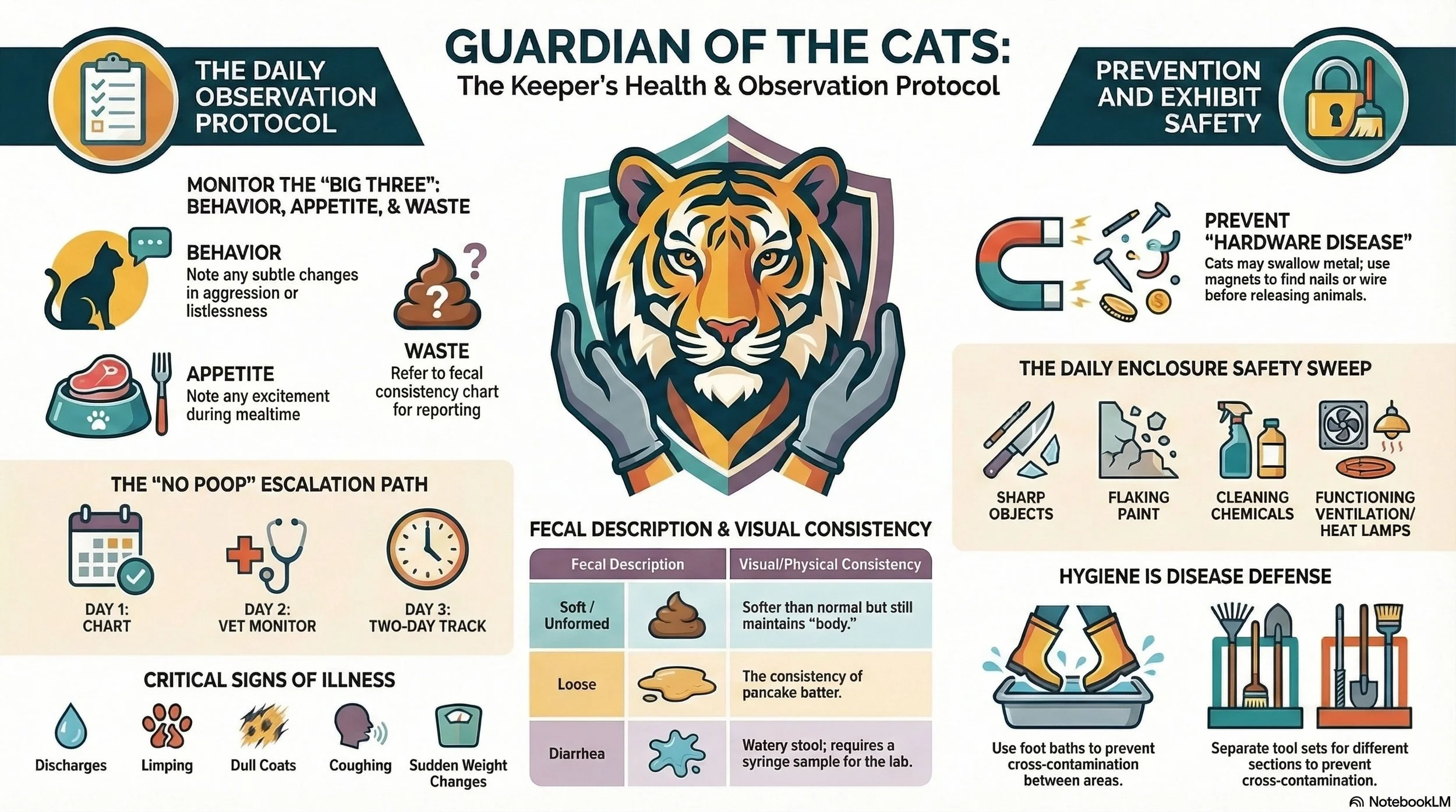

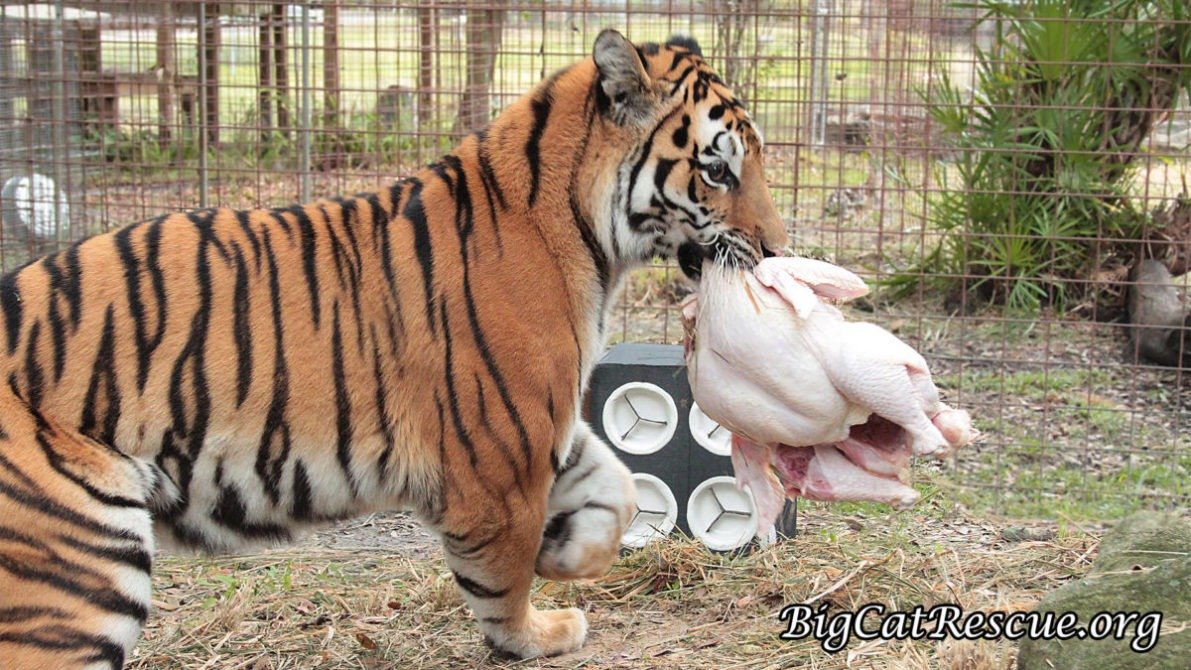
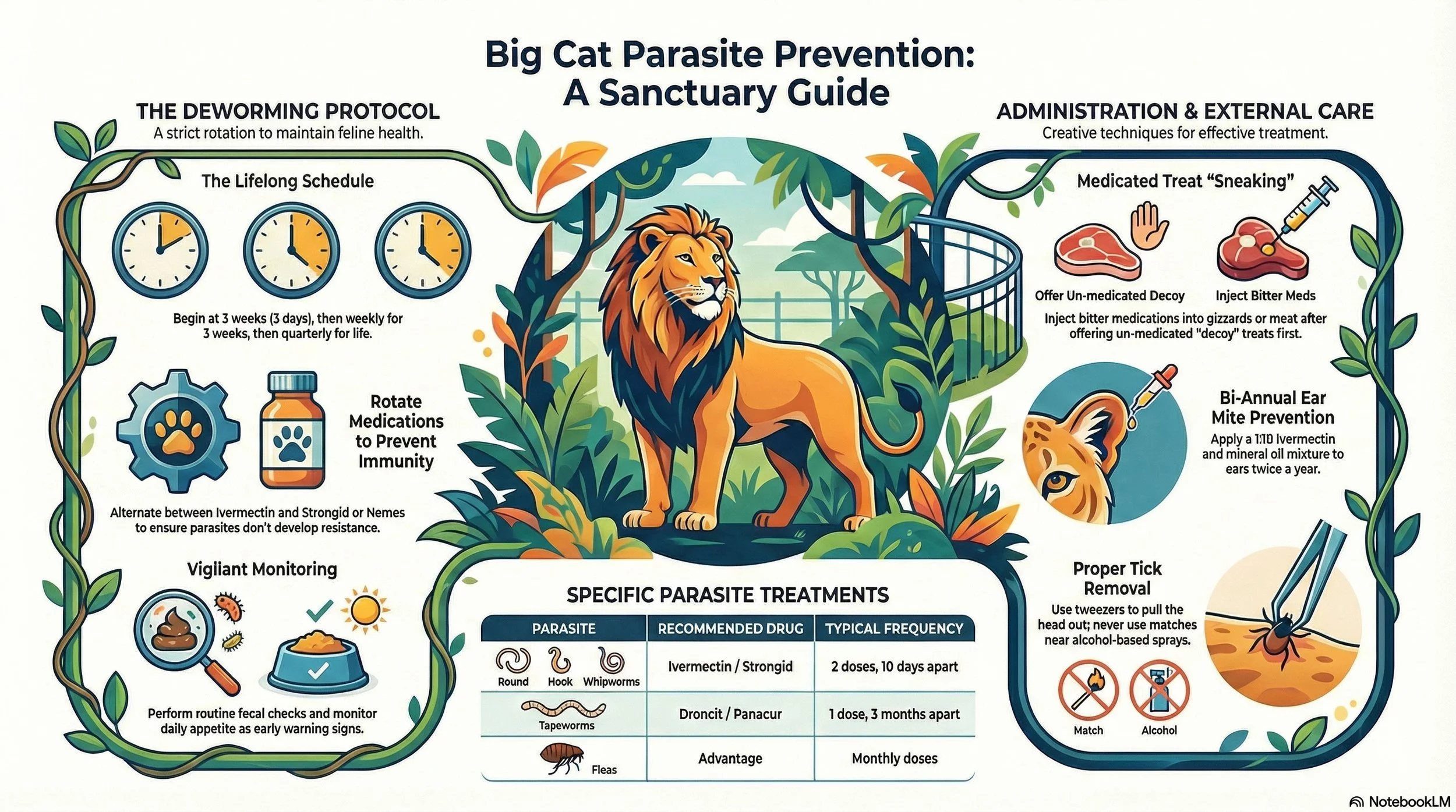
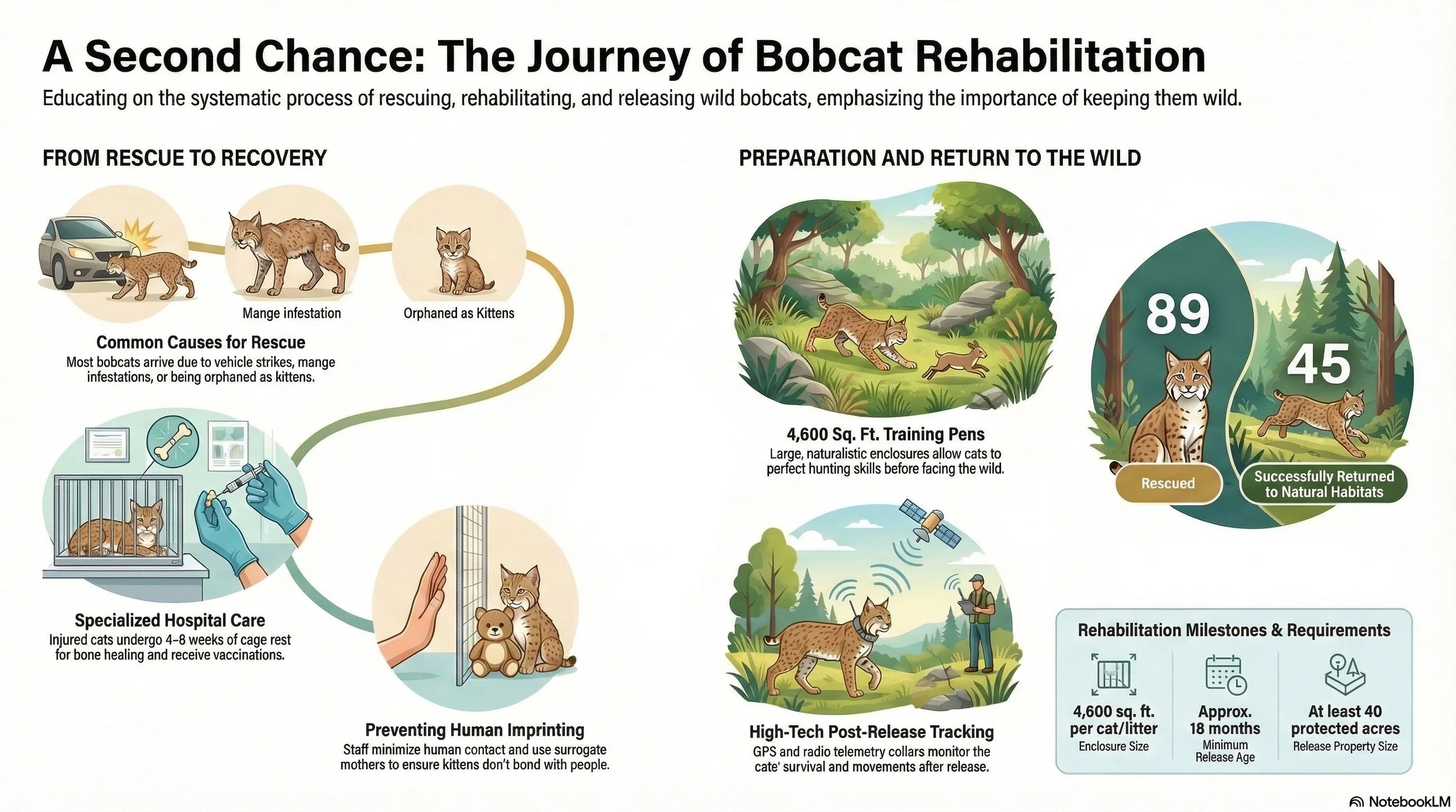
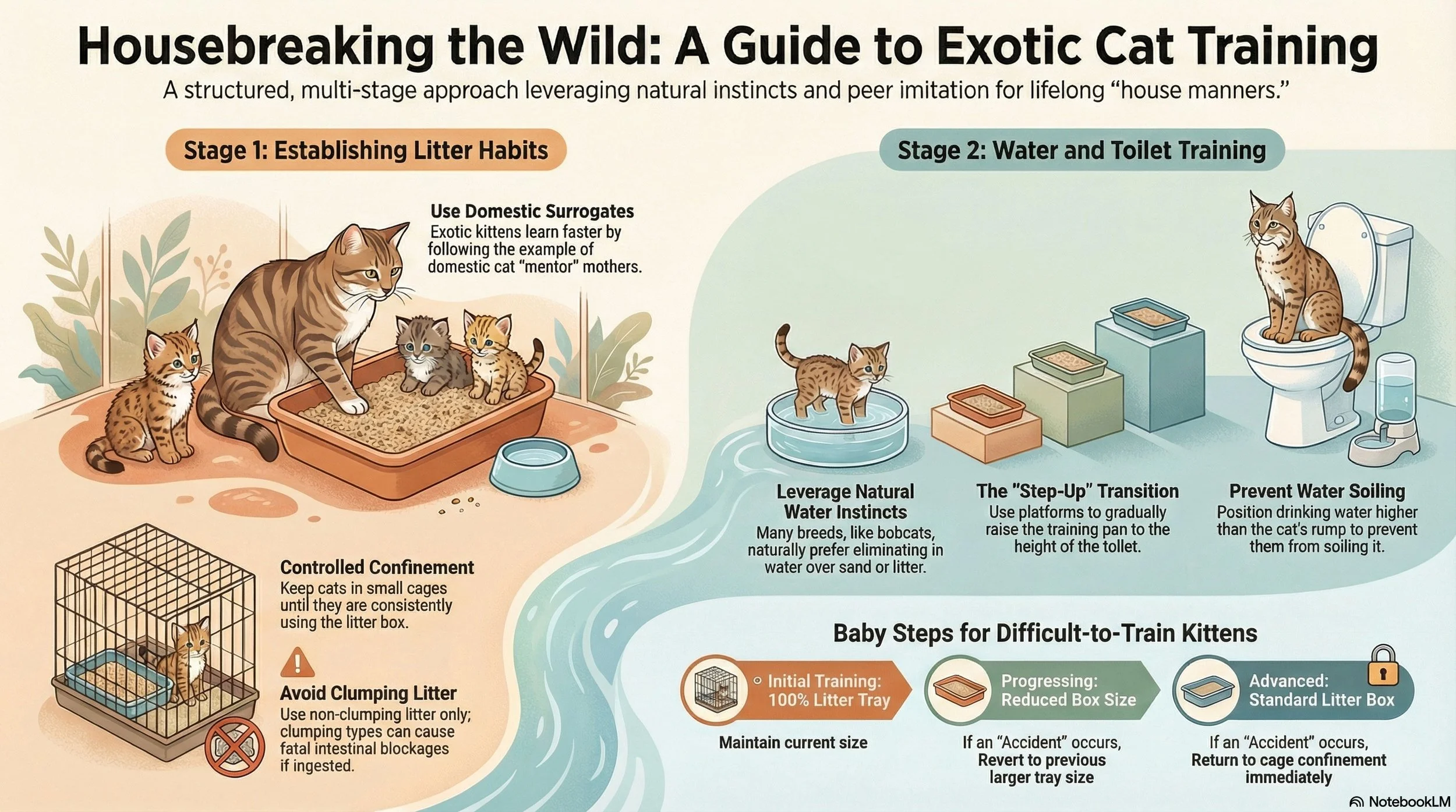
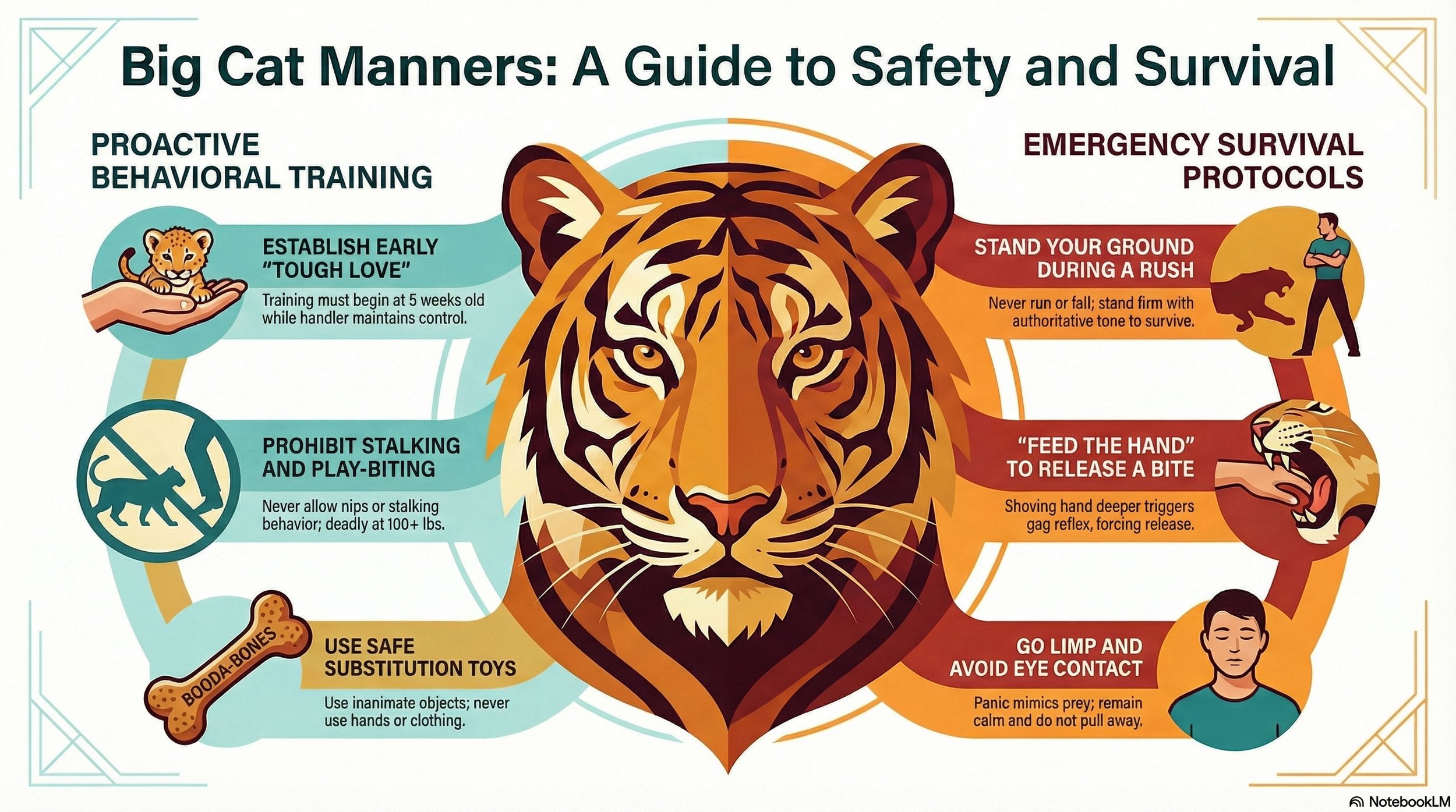



These materials provide a comprehensive framework for establishing and maintaining a successful animal sanctuary, drawing on the long-term experience of Big Cat Rescue. The sources highlight the importance of meticulous planning, suggesting that operators should draft multi-year goals and establish a disciplined organizational culture with strictly enforced rules. Financial sustainability is emphasized through the practice of setting aside monetary reserves and focusing on broad conservation impact rather than just immediate rescue needs. Additionally, the text underscores the vital role of volunteer management, noting that a large, dedicated workforce can provide labor equivalent to dozens of full-time employees. Finally, the guides advocate for a strong social media presence that utilizes storytelling and transparency to build donor trust and engage the public.