Geoffroy's Cat Facts
Quick Facts
Scientific Name:Leopardus geoffroyi
Common Name: Geoffroy’s Cat
Status: Globally categorized as Least Concern by the IUCN, though many local populations are considered highly threatened. It is listed under CITES Appendix I.
Weight: Typically 2 to 6 kg (approx. 4.4 to 13.2 lbs), with males generally being larger than females.
Lifespan: Can live up to 14 or 15 years in the wild, with individuals in specialized care reaching over 20 years.
Appearance
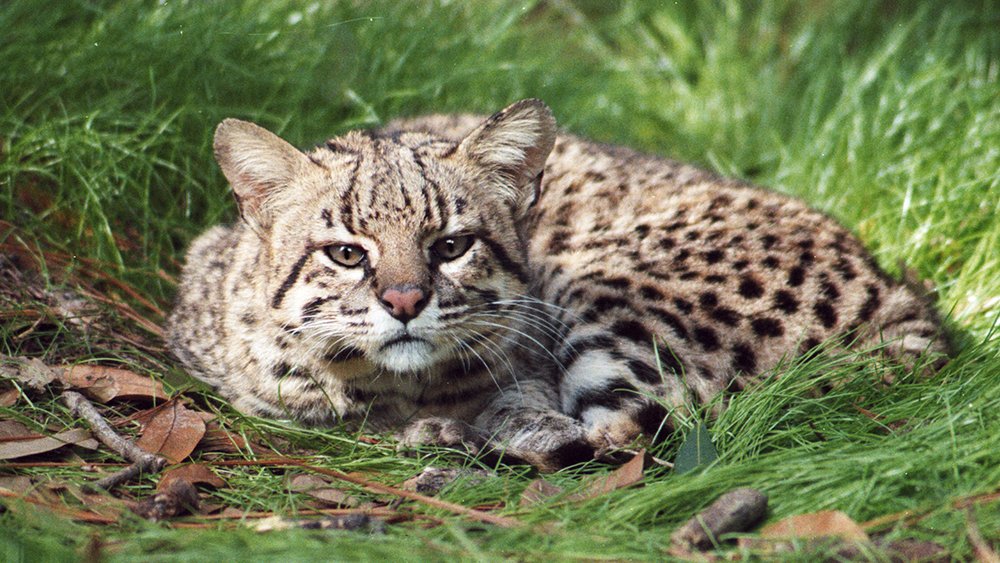
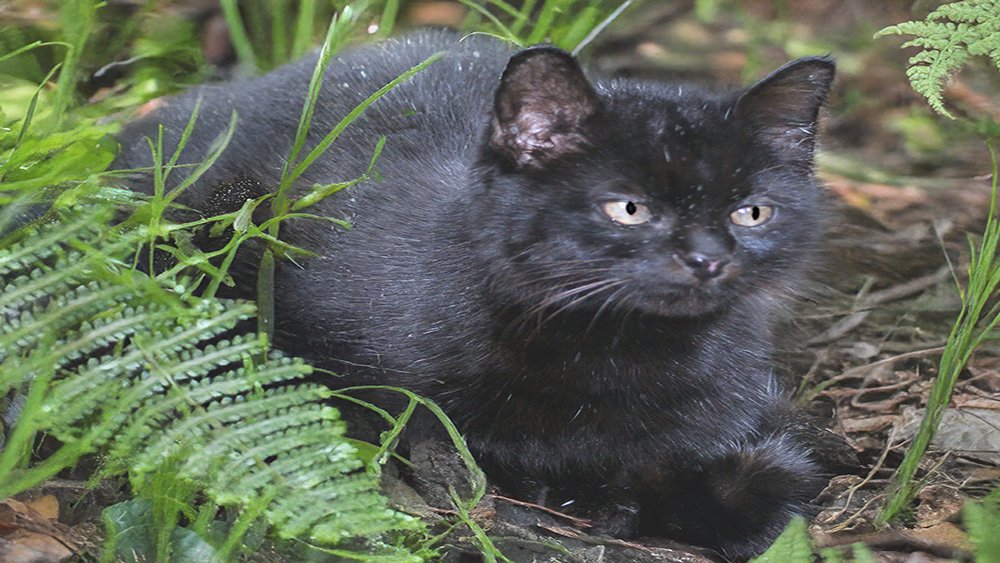
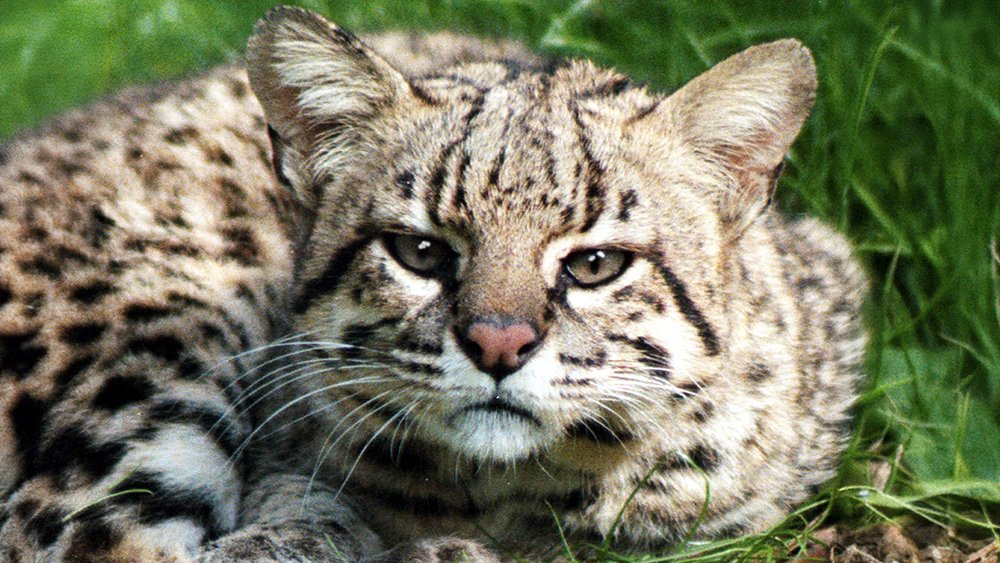
The Geoffroy’s cat is a small, striking felid characterized by a coat covered in small, dark, solid spots that are uniformly spaced. The base color of their fur varies by region, shifting from a warm ochre in northern territories to a cooler silvery-gray in the south. Melanistic (all-black) individuals are also quite common across their range. Their physical build is compact, and their distinctive markings provide excellent camouflage within their natural environments.
See a playlist of this species at https://bigcatrescue.org/videos
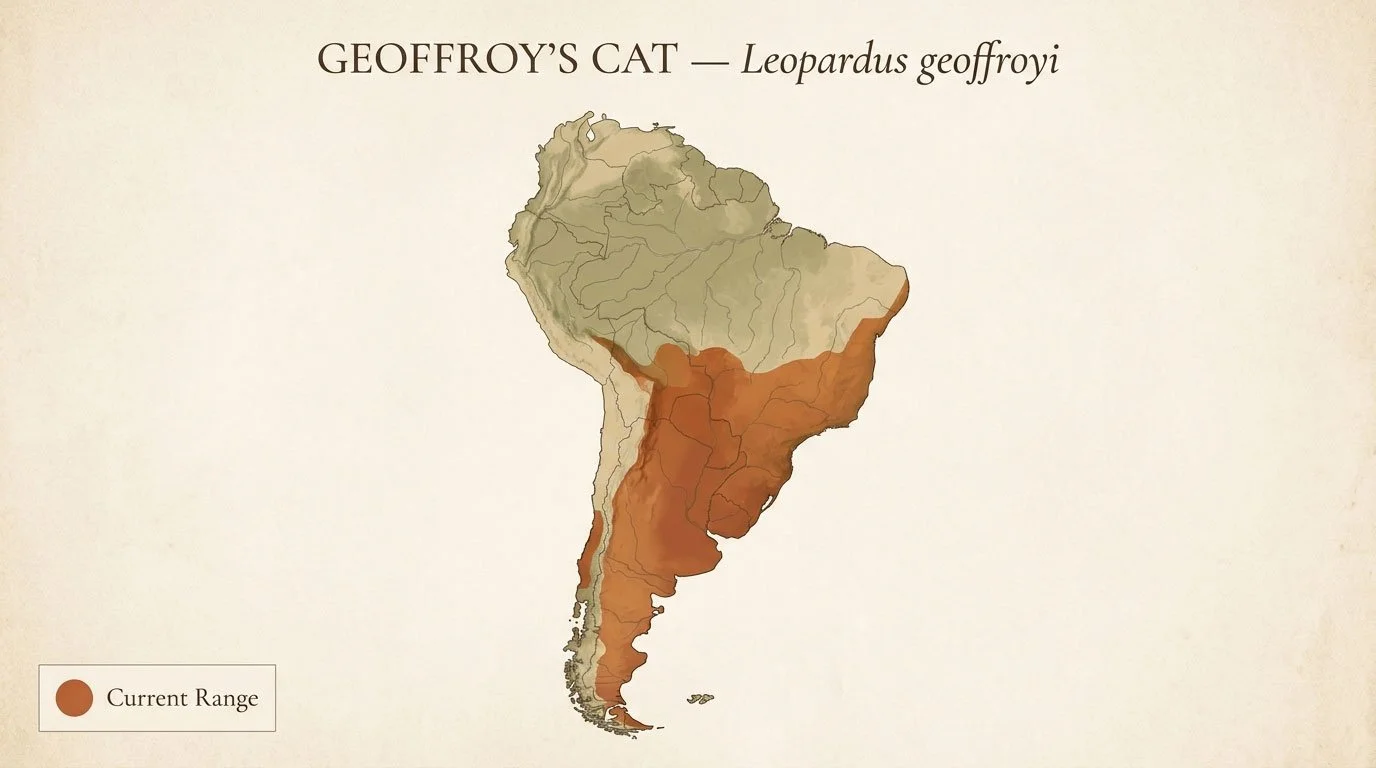
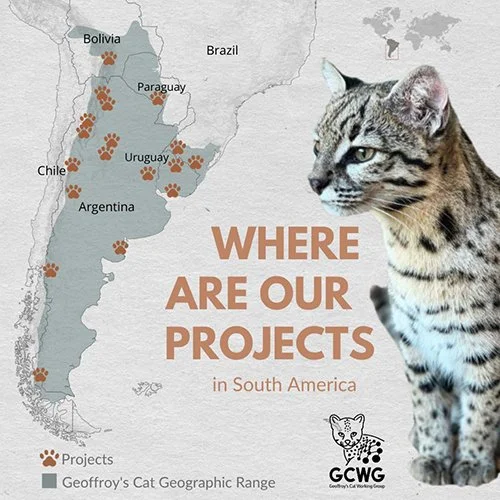
Geoffroys-Cat-Range-Map
Habitat and Range
Native to south-central South America, the Geoffroy’s cat is found from southern Bolivia and Brazil down through Paraguay, Uruguay, and into the southern tip of Argentina and Chile. Unlike some other small wild cats, they thrive in more open environments. Their preferred habitats include savannas, pampas grasslands, and arid Chaco shrublands.
They are highly adaptable and are frequently documented in landscapes modified by human activity, such as agricultural fields and pastures, provided there is enough shrub cover or gallery forest nearby for protection. They are also known as exceptional swimmers, capable of crossing fast-moving rivers that exceed 100 feet in width.
Diet and Behavior
Geoffroy’s cats are primarily nocturnal and solitary hunters. While they spend much of their time on the ground, they are partially arboreal and are agile climbers. Despite their solitary nature, recent research suggests they may possess a level of social tolerance, occasionally coexisting in proximity to other individuals.
Their diet is diverse and consists mainly of small vertebrates. They are skilled opportunistic predators that hunt:
Small rodents and hares
Birds
Reptiles and amphibians
Fish
Reproduction

Female Geoffroy’s cats have a gestation period of approximately 72 to 78 days, typically resulting in a litter of two or three kittens. At birth, the kittens are quite small, weighing between 2.25 and 3.5 ounces. They begin to find their footing and walk within three weeks and are generally weaned by three months of age. Females reach sexual maturity around 18 months, while males mature at approximately 24 months.
Threats
While the species remains stable on a global scale, local populations face severe pressure from human-related factors. Historically, the fur trade was the primary threat, and while commercial hunting has significantly decreased, pelts are still sometimes found in illegal trade.
Current primary threats include:
Habitat Loss: Deforestation and the conversion of wild land for large-scale agriculture.
Human-Wildlife Conflict: Retaliatory killings by farmers who view them as predators of small livestock.
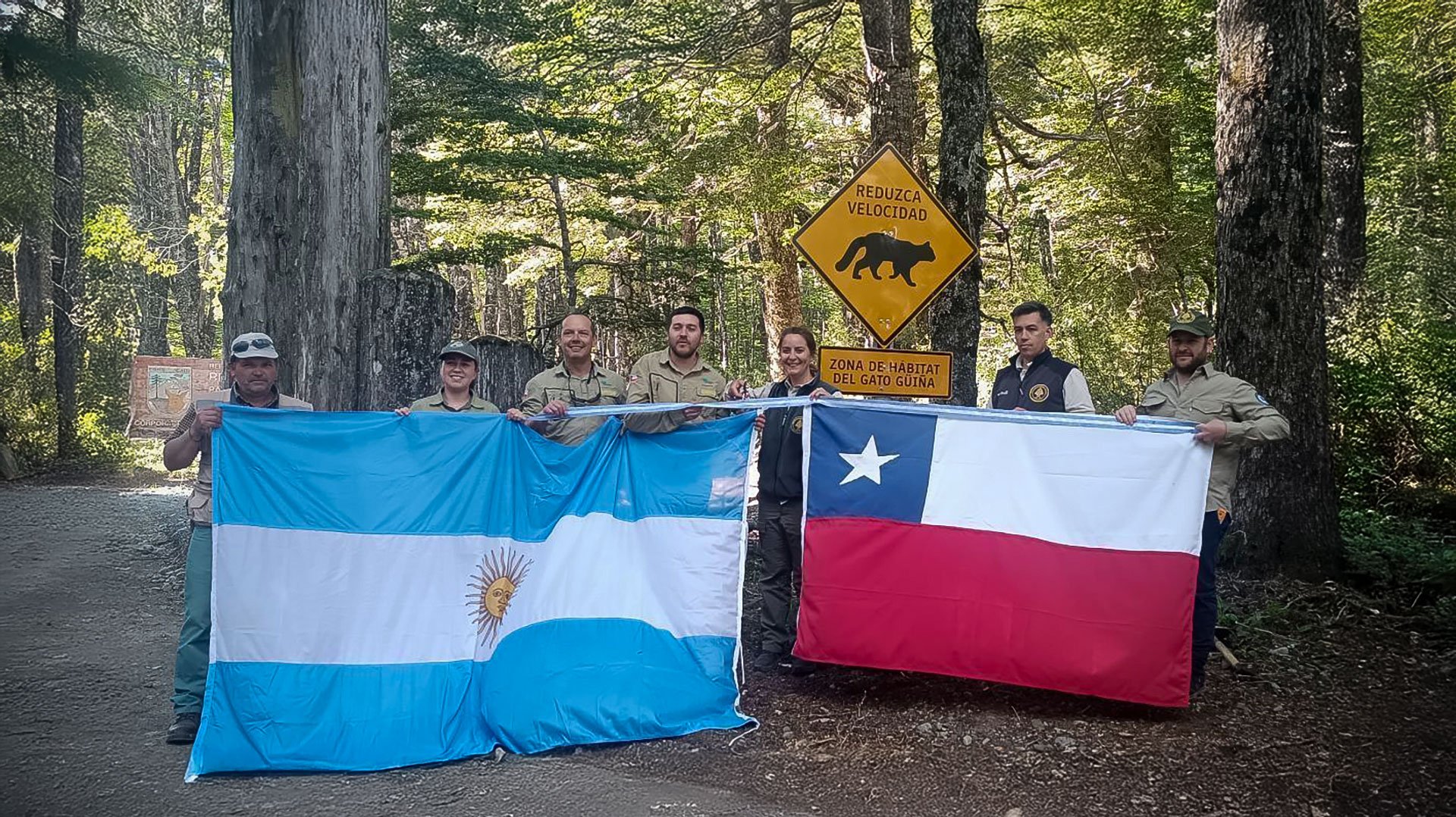
Roadkills: Increasing fragmentation of habitat by highways leads to high mortality rates from vehicle strikes.
Domestic Threats: Attacks by domestic dogs and the spread of diseases from house pets.
Environmental Hazards: Large-scale fires and accidental poisoning.
Question: Can I keep a Geoffroy’s cat as a pet?
Conservation Efforts
Geoffroy's Cat
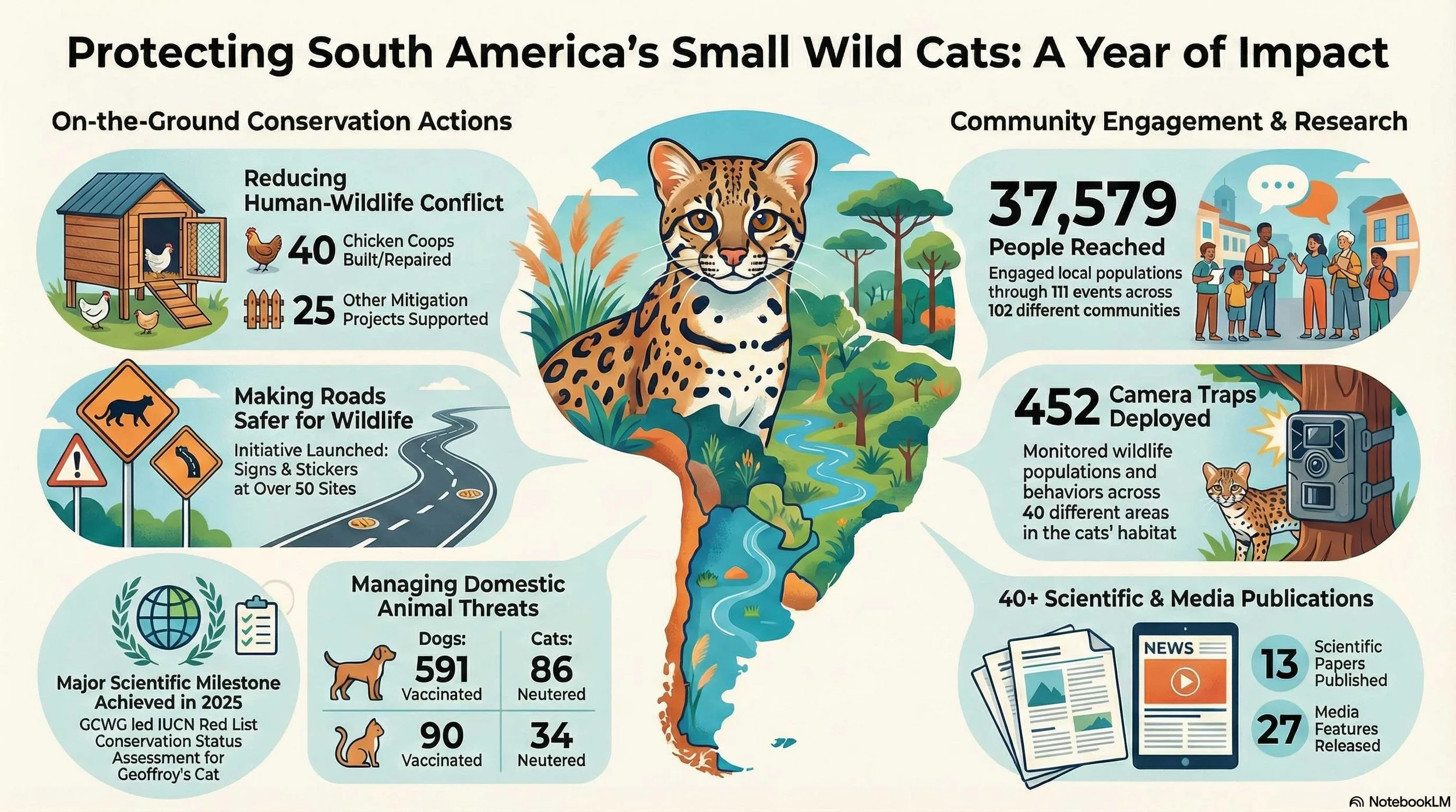
Conservation for the Geoffroy’s cat focuses on local mitigation and public awareness. The Geoffroy’s Cat Working Group (GCWG), established in 2020, is a leading international network of researchers and conservationists dedicated to protecting the species across its six-country range. Their work includes monitoring wild populations, implementing speed reducers to prevent roadkills, and developing environmental education programs for local communities.
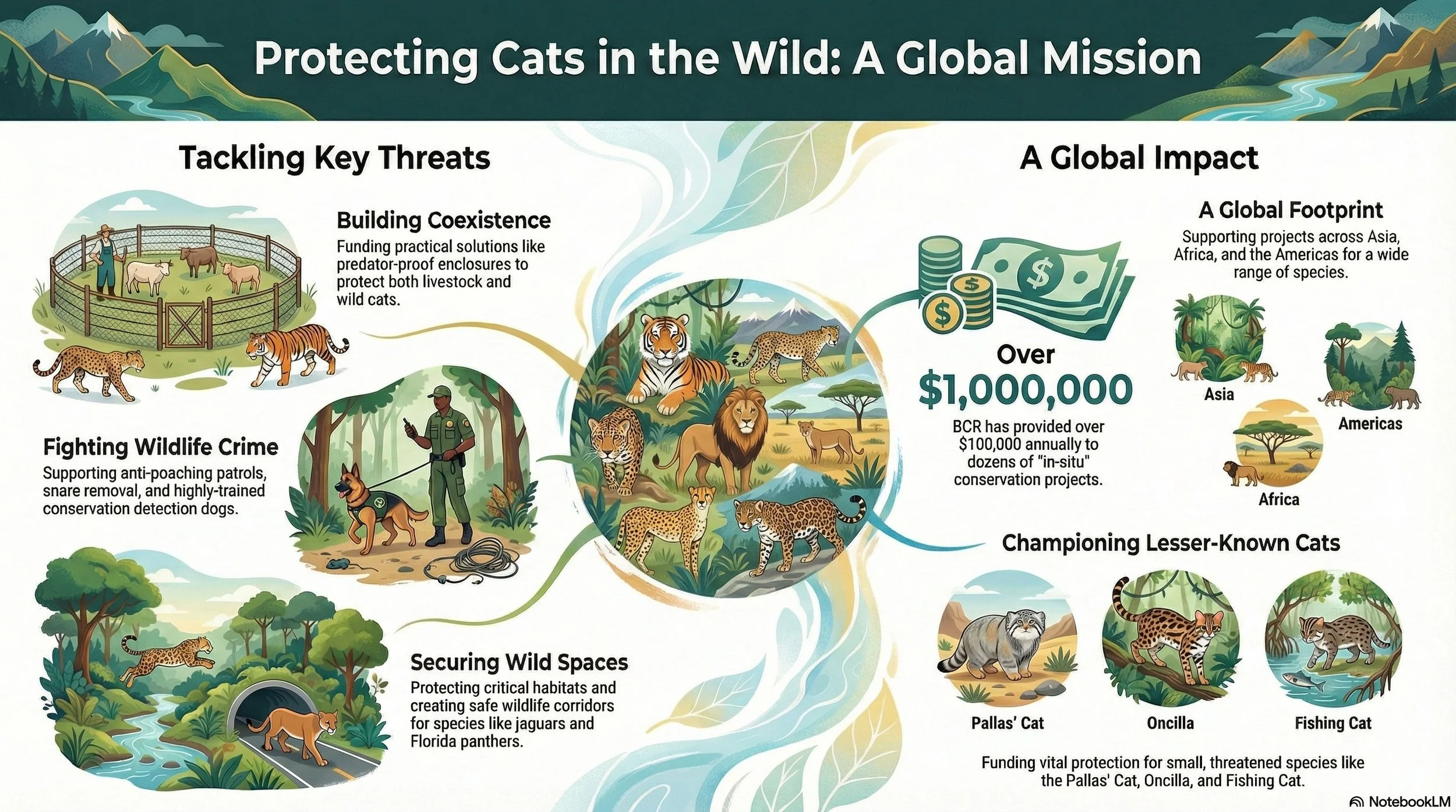
Big Cat Rescue has been a proud supporter of these essential efforts. Through various grants and partnerships, Big Cat Rescue has provided vital funding for in-situ conservation projects, including support for the Small Wild Cat Conservation Foundation (SWCCF) and the Geoffroy’s Cat Working Group in Brazil. These funds help finance field research, the rehabilitation of injured cats, and the development of strategies that allow humans and wild cats to coexist peacefully in the South American grasslands. An annual World Geoffroy’s Cat Day is now celebrated on January 28th to bring global attention to the needs of this resilient small cat.
Most people are not intimidated by the Geoffroy's Cat's size, but they should be. They have not ever been fully domesticated, and are a truly untrustworthy wild cat.
See Conservation Work Funded By Big Cat Rescue here:
All conservation insitu work: https://bigcatrescue.org/insitu/
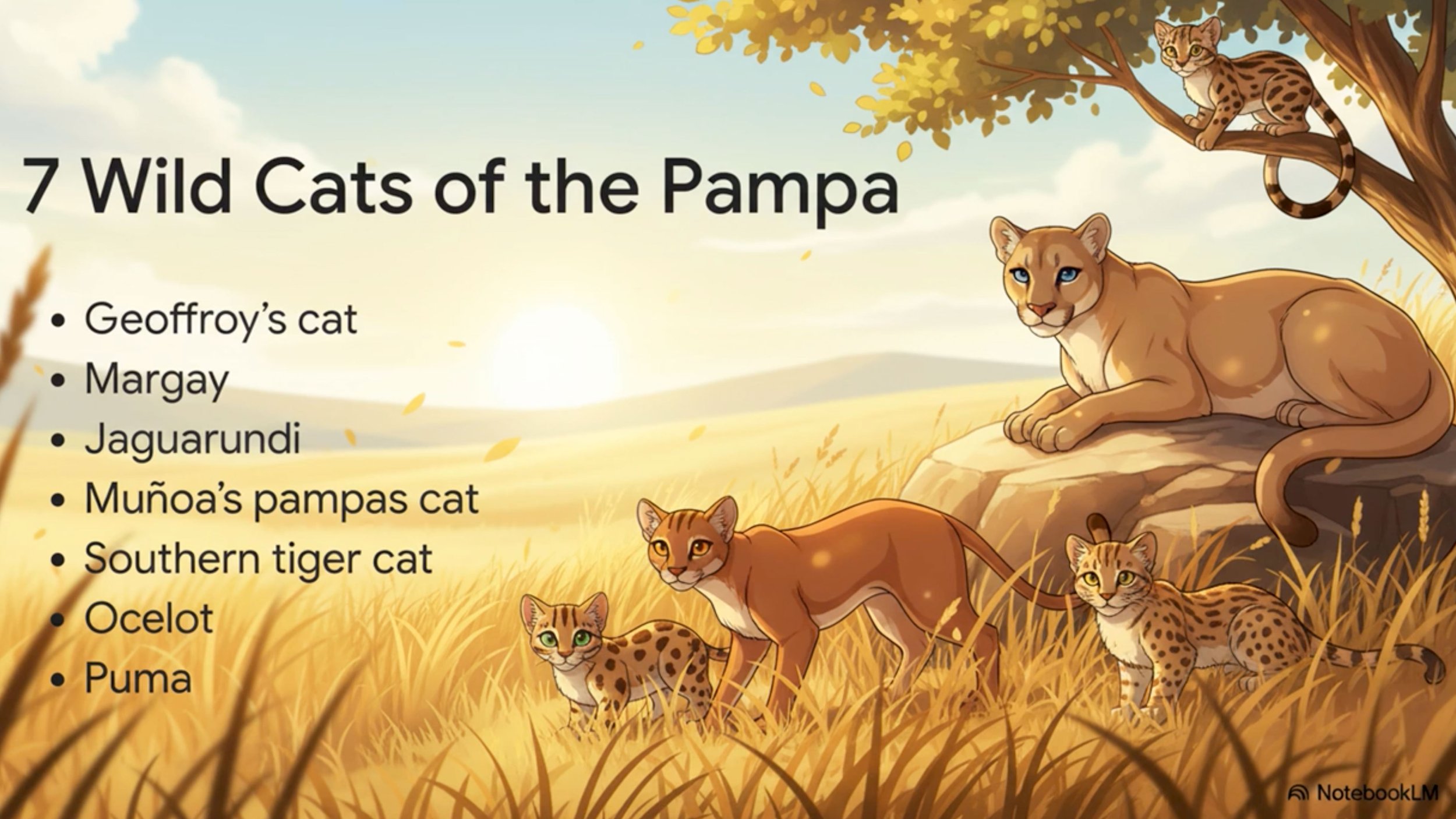



With unwavering determination, Dr. Tirelli pursued her PhD in Zoology, focusing on the ecology of the Geoffroy's Cat (Leopardus geoffroyi) and the Pampas Cat (L. munoai) in the Brazilian and Uruguayan Pampas.