SWCCF 2026 03
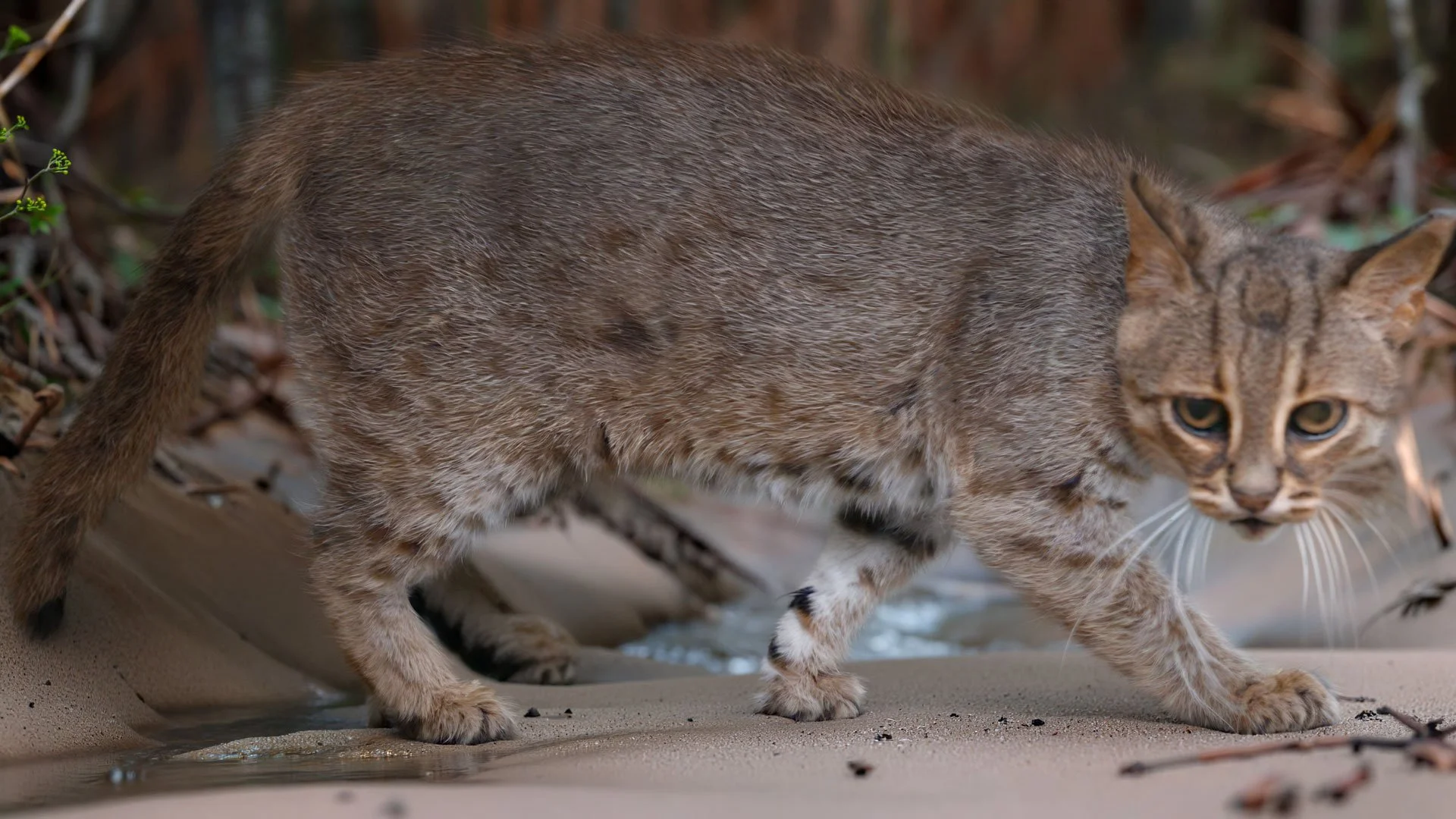
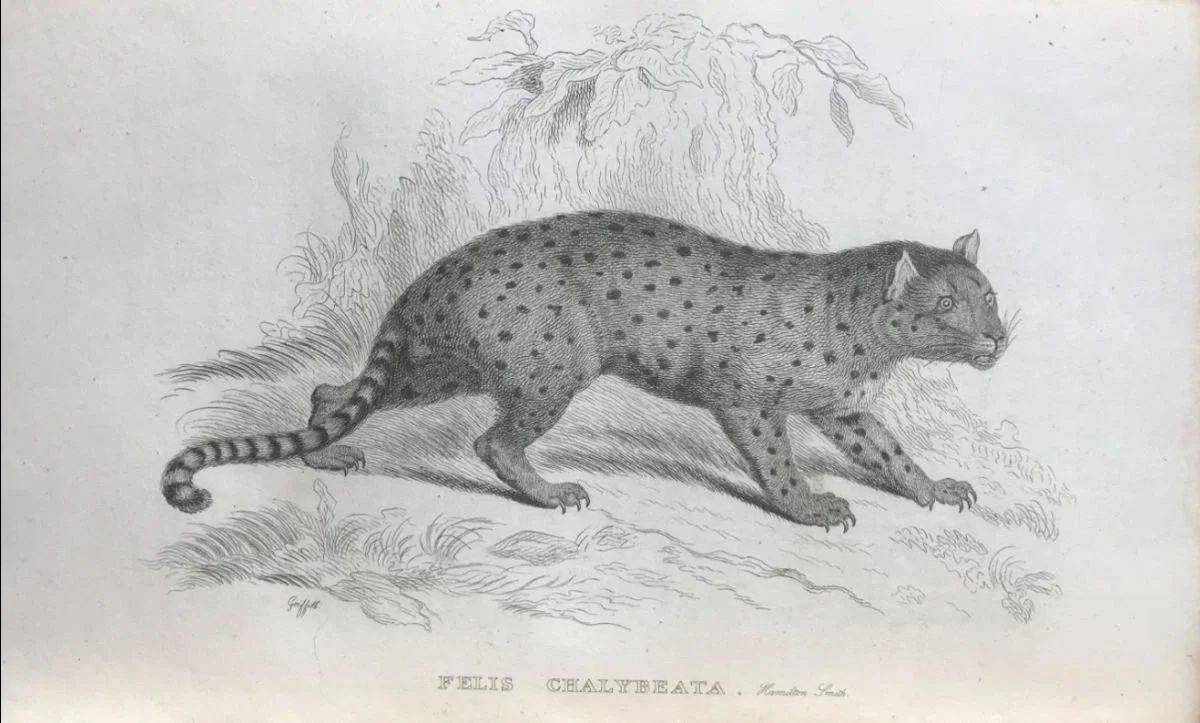
AI enhanced image of original Rusty-Spotted Cat provided by Dr. Jim Sanderson
Beekeeping, Vegetable Gardening, Goats, and a Loan Program: "We No Longer Steal from the Forest"
Jim Sanderson
Sitting under a shade tree in a rural village in Uganda, that's what I was told by the headman of the village last month. With help from Embaka, the Ugandan branch of the African Golden Cat Conservation Alliance, stealing from the forest is no longer necessary to make ends meet. Village members showed off their beehives and explained the fine details of African beekeeping and honey harvesting.
Because the small loan program initially seeded with Embaka's grant of $1000 is run by members of the community, the loan program has more then doubled in size in one year. Community members can take a loan to buy needed seeds or tools that increase the vegetable harvest to earn more money. The goat program has been very well received. Recipients of goats must give their neighbors who don't have goats a goat. Sharing promotes community and ensures that eventually every family has goats.
In each of more than a dozen communities where we work, we encourage communities to first grow food they can feed their families with and can be sold locally so they sell on their terms. Cash crops such as tea and coffee don't feed their families and are sold to a buyer giving the growers little pricing power. Honey is quite profitable and can also be consumed. Moreover, bees require healthy forests and also pollenate vegetable gardens. Everything that is grown is organic. It's easy to see where goats fit into the picture.
Wholistic, sustainable, scalable, pragmatic and above all practical are the ingredients that make for successful conservation programs. It almost goes without saying that when people prosper, when people are happy, conservation efforts arise naturally, organically. When left alone, African golden cats can fend for themselves and are voracious rodent consumers.
One village is harvesting shea nuts and, with two table-top machines purchased in Entebbe, producing shea butter. I must say I was impressed by the light, flavorful honey, and the thick organic shea butter did wonders for my dry skin on my return flight. But does all that we are doing work to conserve African golden cats? When multiple communities make a deal with Embaka to split the cost of the next shipment of goats, and ask for more beehives, we have every reason to believe our programs are working. Moreover, our unconditional trust in our partners in conservation places a heavy burden on their shoulders, a burden they carry proudly.
Beekeeping, Vegetable Gardening, Goats, and a Loan Program: "We No Longer Steal from the Forest"
Bonda Tribe: Shifting from Hunting to Stewardship
Mitra Pandey, Nepal, Rusty-Spotted Cat Working Group
The Bonda tribal people of India have long been known by their ancestral history as skilled hunters, a legacy still visible today in the traditional bows and arrows they carry in the forests of Odisha and Telangana state borders. These tools were once used for subsistence and their continued use posed a long-term risk to the region’s smallest wild cat. However, a strong transformation is now taking root as the community shifts from hunting to stewardship. The Rusty-Spotted Cat Working Group (RSCWG) is the first organization to engage this tribal community, combining conservation awareness with tangible livelihood support.
Through tribal awareness events that engaged eighty individuals from elders to curious children, the project helped to define wildlife protection as a source of tribal pride and leadership rather than a restriction. This cultural shift was strengthened by practical support as fifty households were trained in sustainable agriculture and provided with vegetable seeds.
Today the increased vegetable harvest has helped replaced the uncertainty of the hunt, thus bringing a new kind of joy to the village. Community members now identify themselves as the primary protectors of the elusive Rusty-spotted cat. Working with Bonda tribal people in Odisha and Telangana state borders has shown how deeply a community can connect with conservation when their culture and livelihoods are respected and improved.
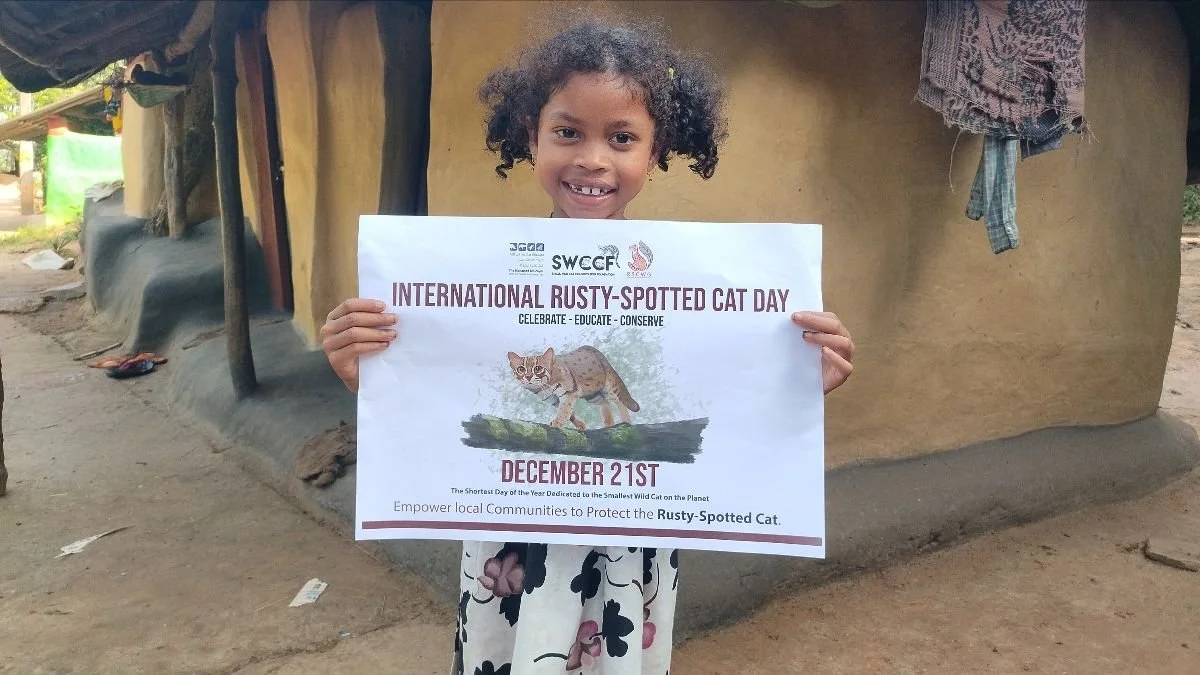
With the Bonda we also celebrated the first international Rusty-spotted cat day. Henceforth, December 21 will be observed as International Rusty-Spotted Cat Day. The date honors the world’s smallest wild cat and falls on the shortest day of the year, symbolizing the species’ small size and the need for its conservation. The initiative was launched by us to promote global awareness through education, outreach, and fundraising activities.
To mark the occasion, RSCWG partners from the range countries—Nepal, India and Sri Lanka—coordinated to celebrated and recognize the first-ever International Rusty-spotted Cat Day. We organized various events focused on conservation awareness within schools and local communities. Activities included drawing and speech competitions, as well as conservation rallies designed to engage students, community members and government officials. A total of four events were conducted across different locations with more than 2,500 participants taking part in the celebrations.
Several international conservation organizations, including Big Cat Rescue, The Big Cat Sanctuary, and Zoo Frankfurt, shared conservation messages and events photos in support of the day. Their participation helped increase global attention and demonstrated growing international support for the species’ protection. Extending awareness through creative platforms, Pepperminz Narwhal (Conservation through Creativity) featured International Rusty-Spotted Cat Day on 21st December in their Animal Holiday Calendar.
The shortest day of the year to celebrate the smallest cat in the world.
Rusty-Spotted Cat Working Group
Bonda Tribe: Shifting from Hunting to Stewardship
Mitra Pandey, Nepal, Rusty-Spotted Cat Working Group
More Than Just Bees: Hope, Resilience, and Conservation in Action in Ongo Community Forest, Uganda
Byron Ssemambo, Uganda, African Golden Cat Conservation Alliance
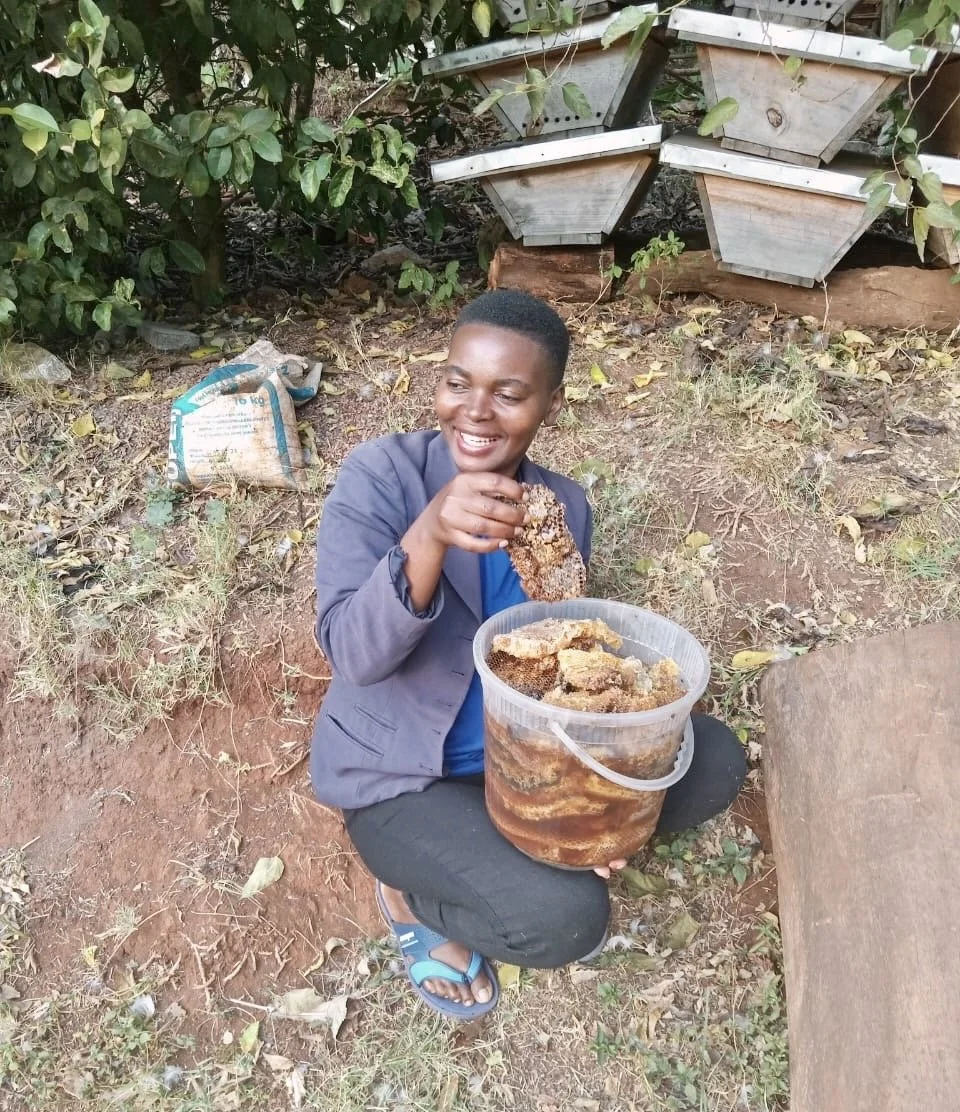
It is harvesting season in Ongo Community Forest and there are big smiles across our 15 apiary household beneficiaries. Thanks to the community-led beekeeping initiative supported by the the Mohamed bin Zayed Species Conservation Fund, Embaka, and the Small Wild Cat Conservation Foundation, farmers are now harvesting honey from their Kenya Top Bar (KTB) hives for the very first time this year.
What started as a conservation-livelihood intervention is now translating into tangible household income. On average, each KTB hive is producing approximately 3.5 litres of honey per season. With local market prices ranging between $10–$12 per liter of pure honey, farmers are beginning to see meaningful financial returns. For households managing multiple hives, this represents a significant boost to income thus supporting school fees, food security, and medical expenses for their family. As the headman of the village said, we are no longer stealing from the forest. As alternative livelihoods become viable, reliance on bushmeat hunting continues to decline. Ongo Community Farmers report increased pride not only in their honey production but also in their role as agents of Ongo’s forest ecosystem.
From hive installation to first harvest, this milestone marks a powerful step forward. The buzz in Ongo is more than just bees, it is hope, resilience, and conservation in action for the African golden cat.
Embaka
More Than Just Bees: Hope, Resilience, and Conservation in Action in Ongo Community Forest, Uganda
Byron Ssemambo, Uganda, African Golden Cat Conservation Alliance
Greenhouses, Vegetables, and Small Wild Cat Conservation
Ganga Ram Regmi, Nepal, Clouded Leopard Working Group
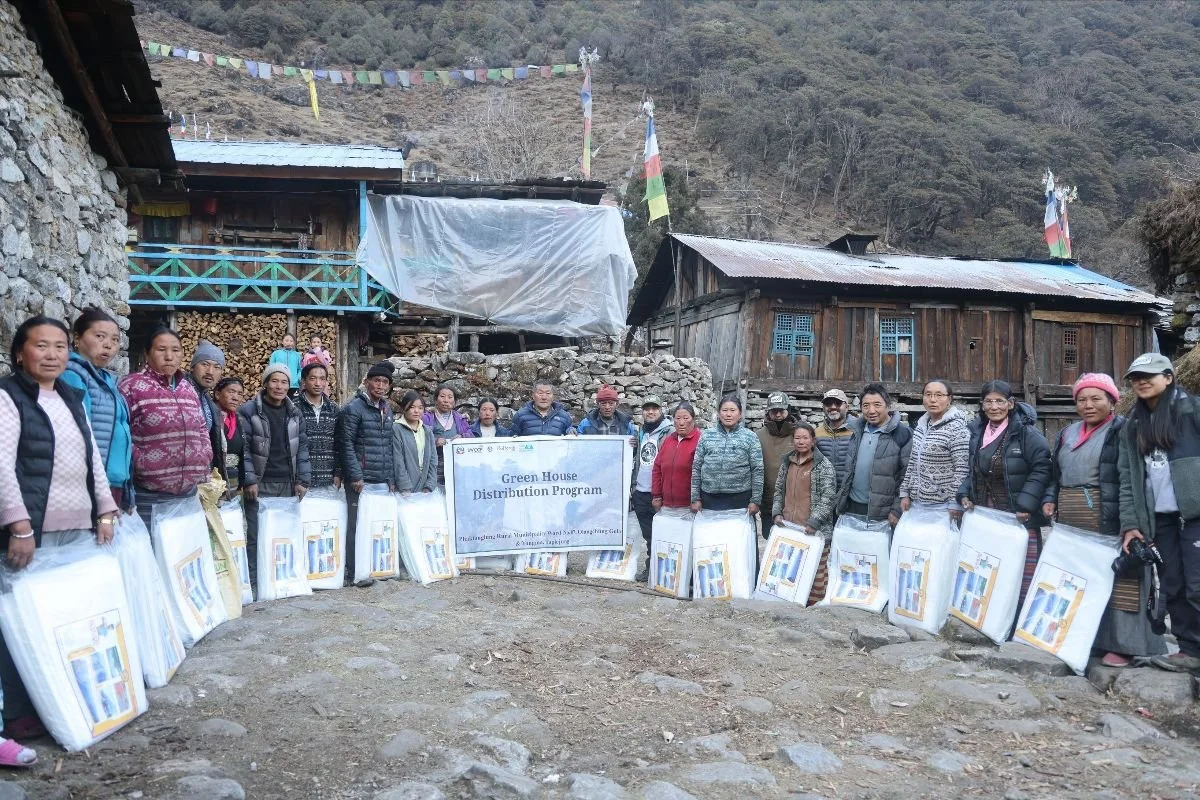
Clouded Leopard Working Group (CLWG) has recently developed a partnership with the local government in Taplejung district of eastern Nepal. Phaktalung Rural Municipality has supported 60% monetary support of the total project budget to purchase green houses for 60 households of Olangchung Gola & Yangma village. CLWG provided 40% of the funding for this project.
These villages are situated above 3,000m above sea level in the cold and harsh climate. In spite of the cold climate, the new greenhouses allow farmers to grow organic vegetables throughout the year.
Changes have already started as cabbage, cauliflower, and spinach are growing inside these greenhouses, providing a regular supply of nutrition although the weather outside is extremely cold. Villagers are no longer dependent on outside sources for their daily vegetables. After fulfilling their daily needs, farmers sell their vegetables in the local market. In return for CLWG’s greenhouse funding, the community agreed to monitor the forests and remove snares and traps that are placed for Clouded leopard and other wildlife including prey species.
Last December & January, the community collected and dismantled 29 snares and traps from the nearby forests, demonstrating that collaborative conservation actions are beneficial to both small wild cats and local livelihood. With increased funding, we are expanding our successful program to villages that have expressed interest.
Clouded Leopard Working Group
Fundación Con Garra Receives National Leadership in Native Wild Cat Conservation Award from Chile’s Ministry of the Environment
Fundación Con Garra Receives National Leadership in Native Wild Cat Conservation Award from Chile’s Ministry of the Environment
Patricio Muñoz Peña, Chile, Fundación Con Garra
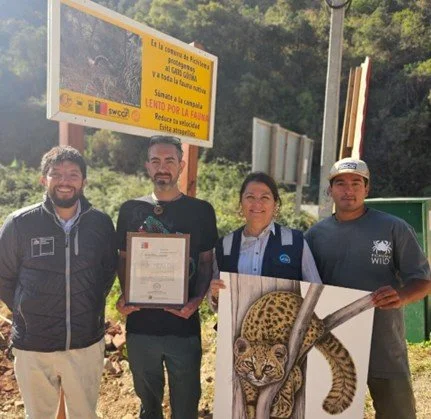
The Ministry of the Environment of Chile, represented by the Regional Ministerial Secretary Diego Peñaloza Madrid, granted official recognition to Fundación Con Garra for its outstanding work in mitigating the main threats affecting the country’s native wild cats. The distinction highlights the organization’s nationwide impact, particularly through its “Slow Down for Wildlife” (“Lento por la Fauna”) campaign, an initiative that encourages drivers to slow down in ecologically sensitive areas to help prevent wildlife-vehicle collisions.
During the award ceremony, the authority underscored the campaign’s reach and significance, noting that “the initiative not only brings national attention to a critical issue, but also demonstrates strong leadership by fostering collaboration between government institutions and civil society.” He also stressed that “the leadership demonstrated by Fundación Con Garra not only protects biodiversity but also inspires other institutions, organizations, and individuals to become actively involved in the care and conservation of Chile’s wild cats.”
The recognition was received by Patricio Muñoz Peña, co-founder of Fundación Con Garra, who created the “Slow Down for Wildlife” campaign with his colleague Melanie Kaiser. Together, they have led the development of innovative education, outreach, and cross-sector collaboration strategies, establishing their NGO as a national leader in the conservation of iconic and threatened species.
This official recognition strengthens Fundación Con Garra’s position as one of the key organizations working to protect Chile’s biodiversity, highlighting its ability to drive meaningful change across the country through collaboration between the public sector and civil society.
Fundación Con Garra

Donate to SWCCF