The Invisible Stripes
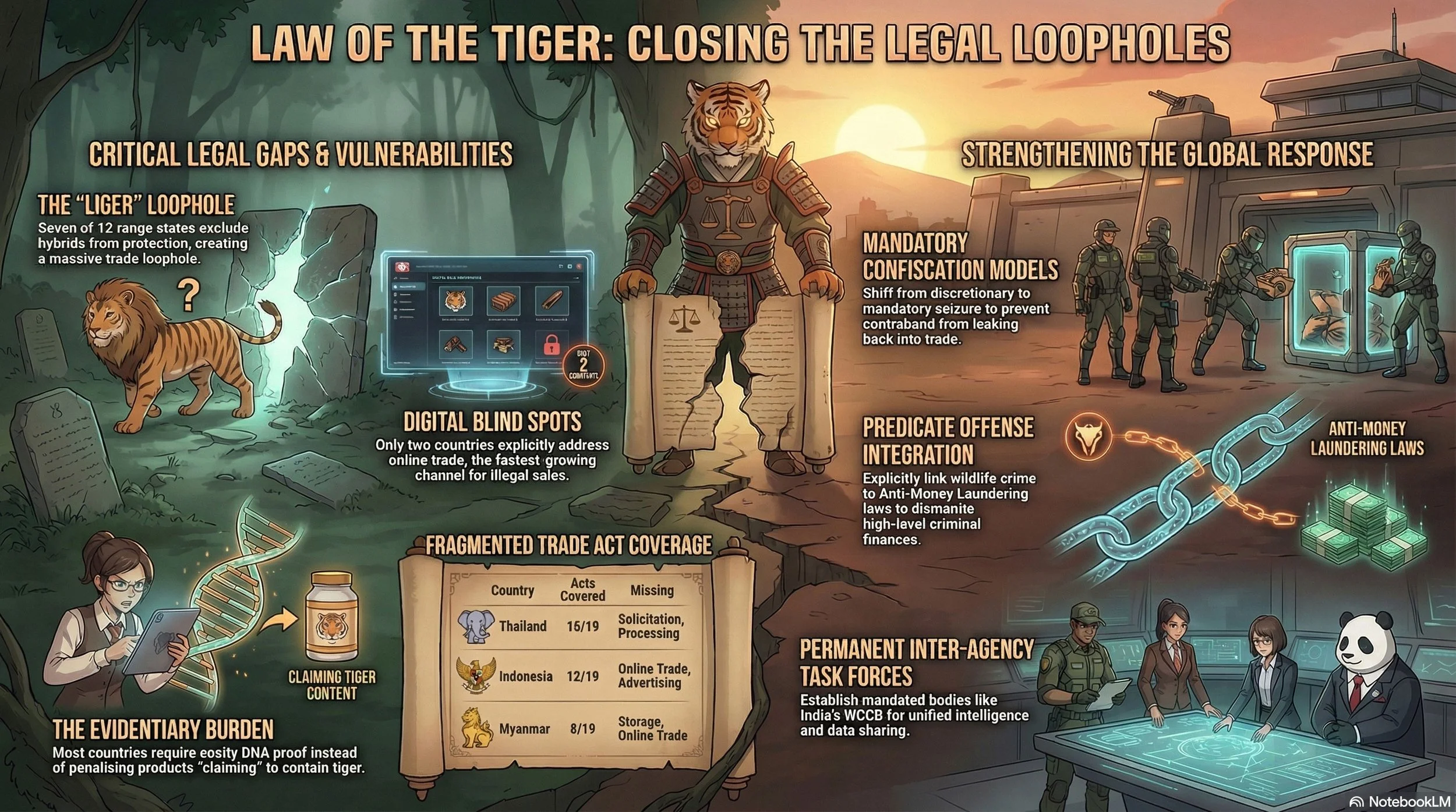
This report, titled Law of the Tiger, provides a comprehensive 2025 analysis of the legal frameworks governing tiger trafficking across twelve range states. It evaluates how national laws address critical issues such as interagency enforcement, mandatory confiscation, and the regulation of captive breeding facilities. The authors identify significant legal gaps regarding digital marketplaces, the status of hybrid tigers, and the management of confiscated stockpiles. To combat the transnational organized crime of wildlife trade, the document advocates for standardized definitions, enhanced investigative powers for frontline officers, and the integration of anti-money laundering tools. Ultimately, the publication serves as a guide for governments to harmonize their criminal justice responses and strengthen protections for wild tiger populations.

The 70-Year Wait is Over
This article describes a monumental conservation initiative in Kazakhstan aimed at restoring the tiger population after more than seven decades of absence. To prepare for the predators’ arrival, the government and international partners have launched a massive reforestation project, planting tens of thousands of trees to create a sustainable habitat in the South Balkhash region. While two captive Amur tigers are already being used for breeding, the program anticipates the arrival of wild tigers from Russia by 2026. The strategy also includes efforts to rebuild prey populations and implement safety measures to ensure peaceful coexistence with local communities. This multifaceted approach seeks to revive a functioning ecosystem by reintroducing its most iconic apex predator.
The Corbett Foundation
The 2024-25 Annual Report commemorates the 30th anniversary of The Corbett Foundation (TCF), an Indian non-profit established in 1994 to foster human-wildlife coexistence. The document highlights TCF’s expansion from its origins in Uttarakhand to nine distinct landscapes across seven states, focusing on the protection of threatened species like tigers, elephants, and vultures. Key initiatives detailed include the Livestock Compensation Programme, which prevents retaliatory killings, and extensive habitat restoration efforts that have revived thousands of hectares of forests and grasslands. Beyond ecology, the foundation integrates community well-being through rural medical outreach, sustainable livelihood training, and the distribution of green energy solutions. By combining scientific research with grassroots engagement, TCF aims to secure India’s natural heritage while improving the lives of people residing near protected wilderness areas. Collaborative partnerships with government agencies and international conservation bodies remain central to their mission of balancing environmental integrity with social development.
The Invisible Harvest
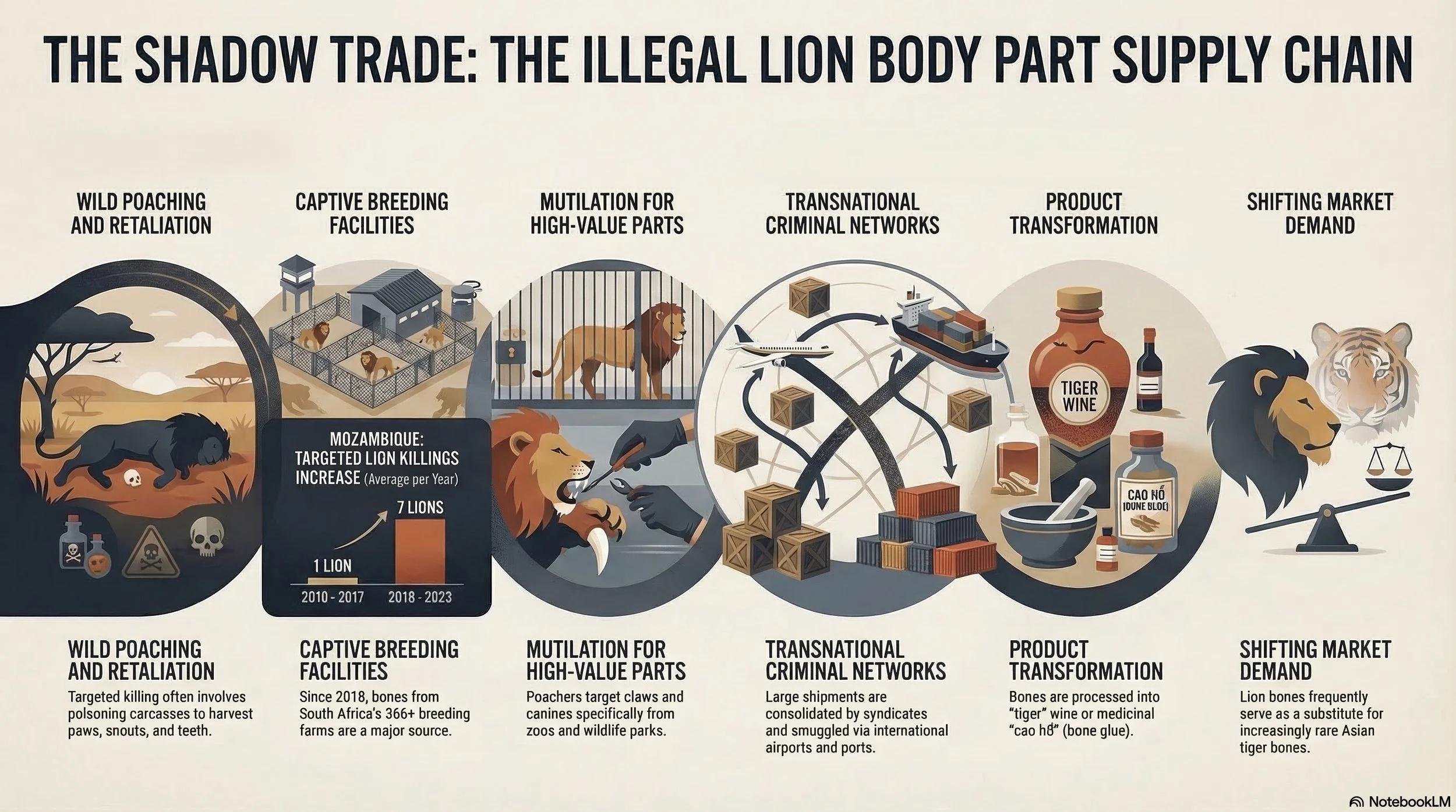
This report examines the increasing threat of targeted lion poaching for the illegal trade of body parts across Africa and Asia. While traditional factors like habitat loss still exist, lions are now specifically hunted for their claws, teeth, and bones to satisfy demands for traditional medicine and luxury ornaments. The author identifies three primary supply chains, including wild poaching, thefts from wildlife parks, and illegal exports from captive breeding farms. Detailed case studies from Mozambique and South Africa illustrate how organized criminal networks coordinate these activities, often using poisoning as a primary killing method. Despite international enforcement efforts and major arrests, the text concludes that this underreported black market continues to evolve through sophisticated smuggling routes. Overall, the source emphasizes that current data may underestimate the true scale of this transnational wildlife crime.

Feed Cats

InSitu 2025