The Fall of the Diamond King
Dismantling the Shadow Empire Behind South Africa’s Big Cat Trade
1. The Hook: A Tycoon’s Double Life
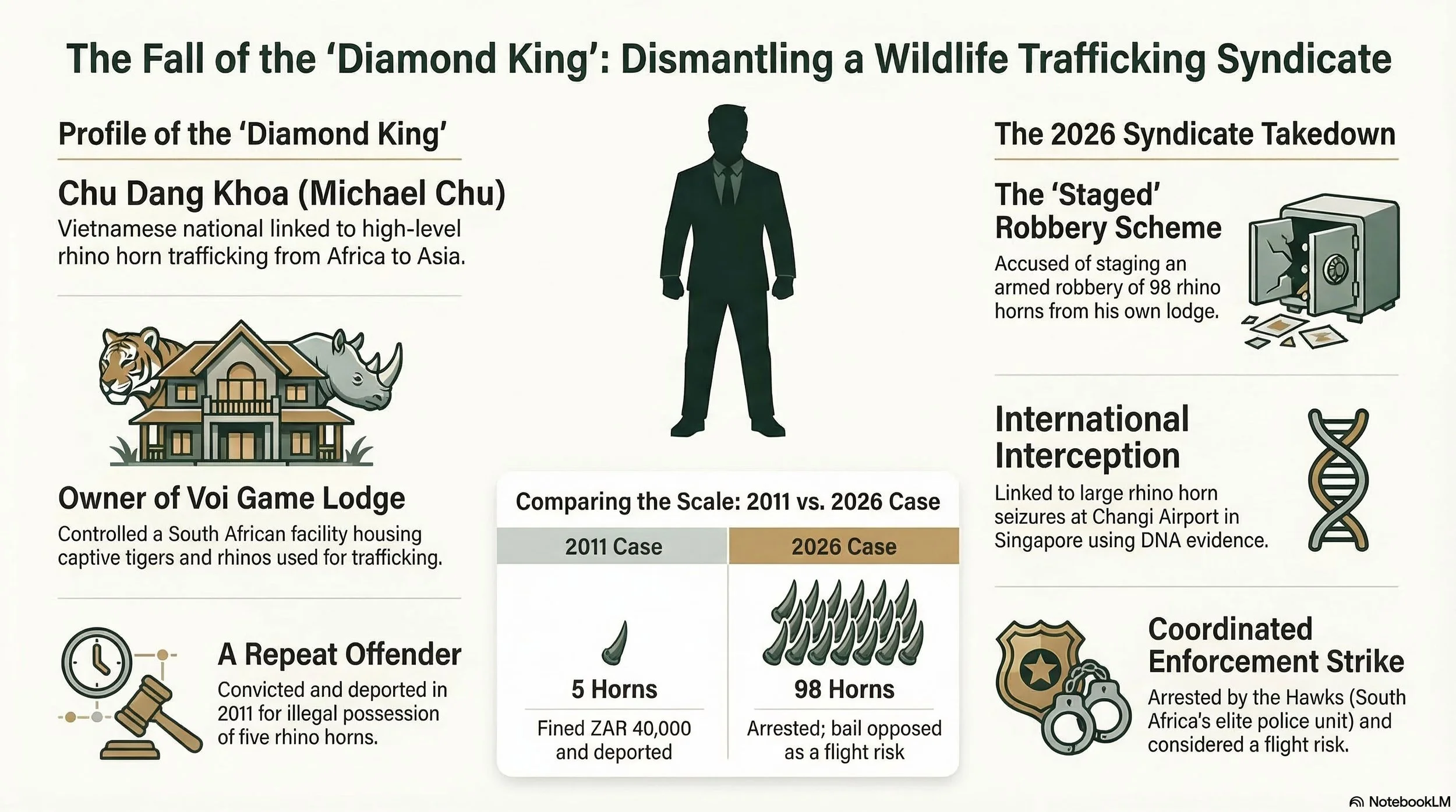
To the glossy magazines and the high-society circles of Hanoi, Chu Dang Khoa—the 44-year-old billionaire known as “Michael Chu” or the “Diamond King”—was the ultimate playboy. His empire was a glittering mosaic of diamonds, hospitality, and luxury furniture. But beneath this gilded facade lay a far more predatory reality. In March 2026, the gilded cage of the Diamond King finally snapped shut.
Following a meticulous investigation by the Hawks, South Africa’s elite police unit, Khoa was arrested in connection with a massive transnational wildlife trafficking syndicate. The setting for this downfall was the Voi Game Lodge in the North West Province, a facility Khoa owned through his DKC Trading Company. What was marketed as a high-end lodge was, in fact, the epicenter of a pipeline moving rhino horn and big cat remains from the African veld to the black markets of Asia. This is how the investigation unfolded and what it means for the future of conservation.
2. The “Sanctuary” Facade: When Game Lodges Become Trafficking Hubs
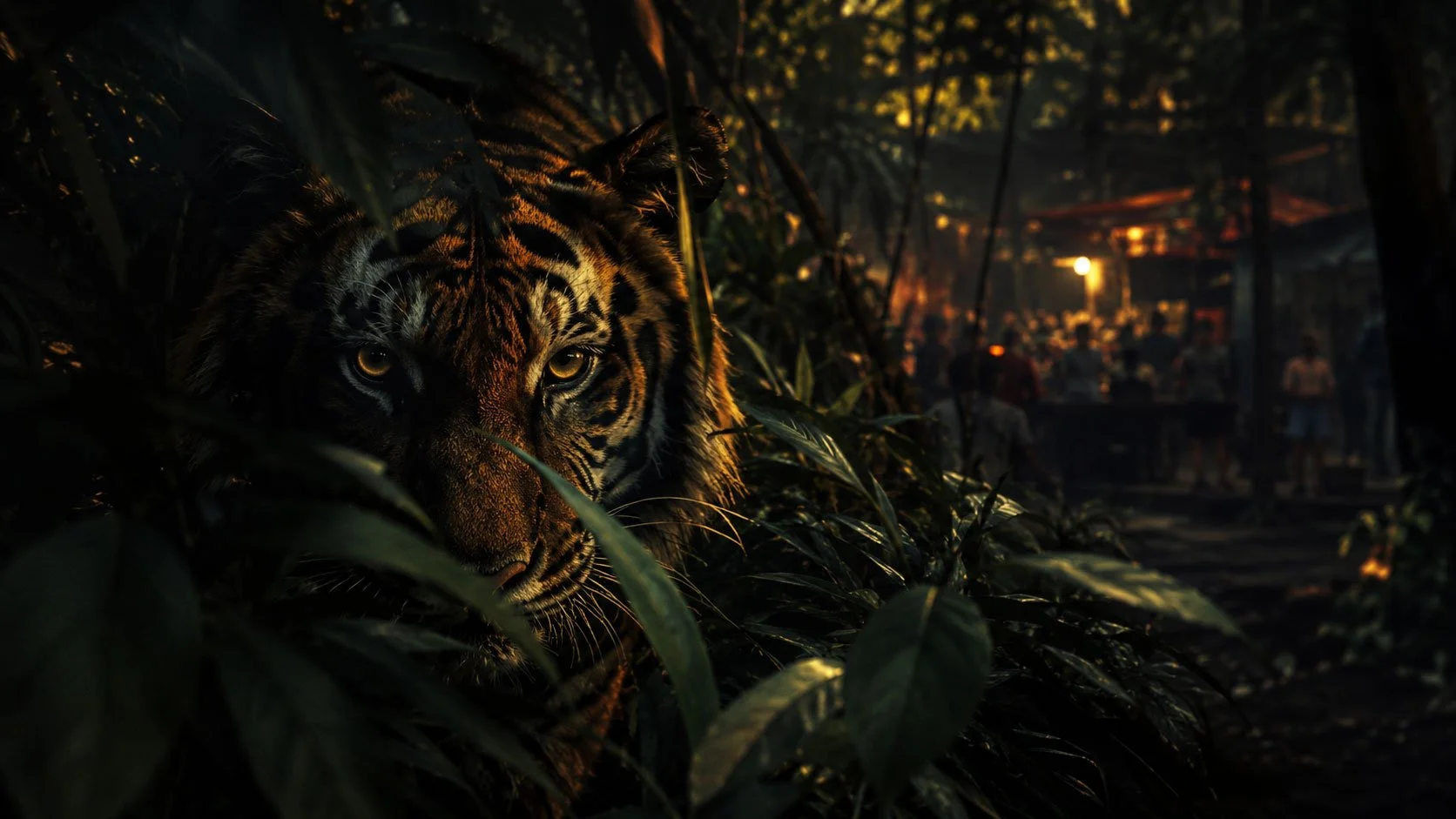
The arrest of Khoa and his 52-year-old manager, Tran Huy Bao, has pulled back the curtain on the "Voi Game Lodge," a facility housing approximately 50 captive tigers and a population of rhinos. In the world of wildlife crime, "conservation" spaces are often repurposed as staging grounds for the illegal trade.
The brutality of this operation was laid bare on Christmas night 2025, when five rhinos were shot dead at the lodge, their horns hacked off in a bloody display of greed. This incident was framed as a "robbery," a common tactic in the industry known as a "staged burglary." Investigators are now dismantling the lodge’s claim that 98 rhino horns were "stolen," viewing the event as a cynical cover for illegal exports.
Lieutenant Colonel Steve Roets, former head of the Stock Theft and Endangered Species Unit, provides the technical forensic perspective that breaks this defense. He notes that legal rhino horns must be stored in immovable, high-security safes—not in cupboards, ceilings, or coffee containers where they are conveniently "found" by burglars.
“ENV applauds the South African police for this significant victory. Justice has been served after a long wait. This is truly a monumental step in the global fight against transnational organized crime.” — Ms. Bui Thi Ha, ENV Director of Policy and Legislation
3. More Than Rhinos: The Hidden Tiger Bone Architecture
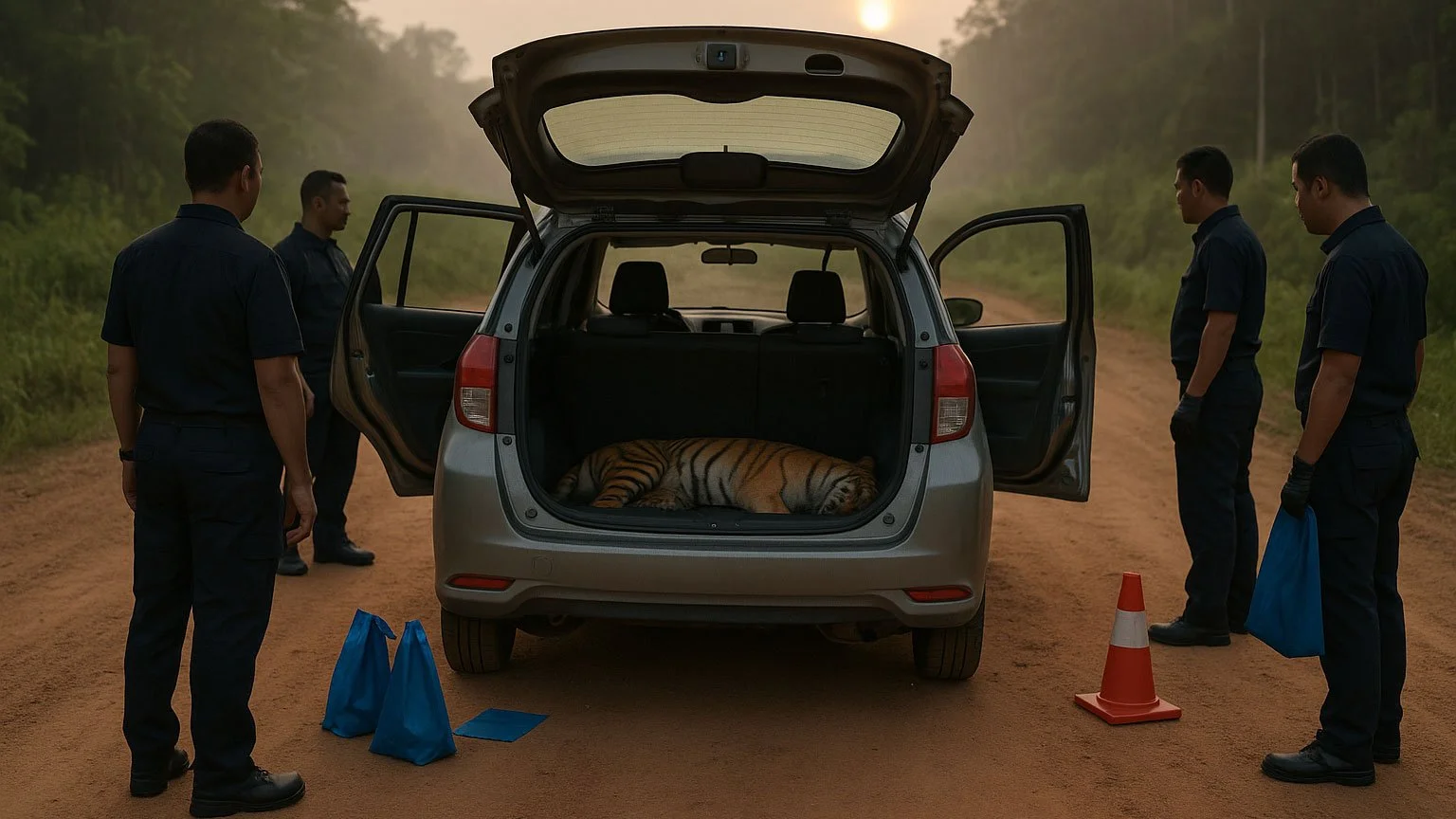
While the media often fixates on rhino horn, the Khoa investigation has exposed a massive "bone architecture" involving big cats. Authorities linked the syndicate to a storage facility in Kempton Park where they discovered 26.2 kg of lion and tiger bones.
This seizure highlights a critical investigative reality: Inter-syndicate cooperation. The arrest of two Nigerian nationals, Tunji Olanrewaju Koyi (35) and Koyode Adukunle Ongundele (43), in connection with these bones proves that Vietnamese kingpins are utilizing sophisticated West African logistical networks within South Africa to move their product. For wild cats, this arrest is a strategic victory:
Logistical Severance: The same supply chains move both horn and bone; by taking down Khoa, the Hawks have severed a primary artery for tiger bone exports to Asia.
The Captive Threat: The presence of 50 tigers at Voi Game Lodge underscores how captive breeding facilities provide a "legal" veil for the illegal bone trade.
4. From Foot Soldiers to Kingpins: A Shift in Strategy
For decades, the war on poaching was fought in the trenches, arresting low-level "foot soldiers" while the financiers remained untouched. This case signals a paradigm shift. Khoa is not a poacher; he is an organizer and financier. In 2011, he was handed a mere ZAR40,000 fine and deported for possessing five rhino horns—a "slap on the wrist" that failed to deter him. This time, the Hawks are targeting the head of the snake.
Andrew de Blocq MP, DA Spokesperson on Forestry, Fisheries and the Environment, emphasized the gravity of this transition:
"While rangers and field teams continue to risk their lives protecting rhinos on the ground, the fight against poaching will only be won when the criminal networks that finance and coordinate these crimes are dismantled... These latest arrests send an important signal that authorities are increasingly targeting the organisers, financiers and traffickers who profit from wildlife crime."
5. The DNA Trail: How Science is Catching the Syndicate
The forensic "smoking gun" in this case is genomic tracking. A record 35.7 kg rhino horn haul seized at Changi Airport in Singapore provided the biometric data needed to link the contraband directly back to the rhinos at Voi Game Lodge.
This DNA evidence forensically nullifies the "staged robbery" defense. If the horns "stolen" from Khoa's safes end up in a shipping container linked to his associates, the narrative of "victimhood" collapses. This international cooperation between South Africa and Singapore represents a new era of forensic accountability that makes the world much smaller for traffickers.
6. The Global Web: Convergent Crime and the Furniture Cover
The Diamond King’s operations illustrate the concept of Convergent Crime. Wildlife trafficking rarely exists in isolation; it is a node in a wider web of drugs, arms, and financial fraud.
Hiding in Plain Sight: Khoa utilized DKC Furniture, a company specializing in outdoor wooden furniture, as a logistical cover. Large, heavy shipments of timber provide the perfect concealment for moving organic contraband like tiger bones and rhino horns across borders.
The Financial Shadow: Khoa’s move to South Africa in late 2023 was a flight from justice. In January 2025, his mother, Chu Thi Thanh (chairwoman of Thien Minh Duc Group), was prosecuted in Vietnam for misappropriating massive sums from a gasoline price stabilization fund.
National Security: The Hawks’ focus on Khoa proves that protecting big cats is not just about biology—it is about dismantling the financial structures that undermine the rule of law and national security.
7. Conclusion: The Final Ponder
The fall of Chu Dang Khoa is a watershed moment for conservation. It proves that the "Diamond King" moniker was more than just a playboy's alias; it was a brand built on the systematic exploitation of Africa’s most endangered species. However, as the trial proceeds in the Kempton Park Magistrate’s Court, a deeper question remains.
As long as South Africa allows private, captive-breeding facilities to house dozens of tigers for "traditional medicine" under the guise of legitimate business, the incentive for staged robberies and shadow exports will persist.
The Question for the Future: Can we truly claim to be winning the war on poaching while the legal infrastructure still permits kingpins to own the very species they are accused of trafficking?