SWCCF News 2026 09
It's Wildlife Conservation Network October Expo time
Jim Sanderson
For more than two decades, Small Wild Cat Conservation Foundation has attended the most exciting event of the year - Wildlife Conservation Network's October Expo (http://WCNEXPO.org). This year's Expo is Saturday 10 October in San Francisco. Register early and stay at the same hotel WCN's conservation partners are staying at. Expo offers me an opportunity to thank many of SWCCF's generous financial partners personally.
Each year, I bring a different partner from our global small cat conservation network. This year my guest speaker is Carlos Castro, working group leader of the Colocolo Conservation Project in central Chile. I know you will all be in the audience because events in small cat-land are moving fast. For small cat conservation, nothing less than a revoluition is happening now. As in right now! Carlos will show an example.
Judging by the volume of email I received regarding the discovery of "the first new cat species in one hundred years," our small but dedicated group of financial partners is right on top of what's happening. My interview in the article published by National Geographic hinted at more species to come. You all also know I never raise expectations without delivering. Suffice it to say, a few insiders know something others don't know. If you are interested, let's talk at Expo. One function of Expo is engagement. I hope you join me in making the most of WCN Expo. Let's engage.
During a recent presentation I made in Santa Fe, I was asked what makes Wildlife Conservation Network different from other conservation organizations. WCN's Anne Trela was present. Anne explained, and I confirmed, that WCN is a family that belives in and makes engagement a reality. SWCCF has two groups of partners: in situ and financial. Without both, nothing can be achieved. At WCN Expo, we can engage personally. WCN Expo serves as an example because it is unique among conservation organizations where in situ people doing the real work rarely get to meet financial partners. WCN is different. At Expo, financial partners meet all WCN in situ partners. I get to meet family members, all family members, not just those that support SWCCF. So will my colleague from Chile, Carlos.
The IUCN Cat Specialist Group has been rejuvenated. SWCCF and all our working groups are now formally recognized partner organizations of IUCN. From our global network of in situ and financial partners, 89 new members of the Cat Specialist Group have been welcomed. We are preparing another equally long list. Never before has this happened and never before have our financial partners become members of the Cat Specialist Group. I have been appointed the Global Small Cat Conservation Coordinator for the Cat Specialist Group.
For Expo I'm bringing copies of the first edition of our publication Stories from the Field, 50 chapters, each 2-3 pages, describing our global small cat conservation efforts. I'm proud to write that each chapter is authored by one of our in situ partners. Due to popular demand, I might hide the books under my table so you must ask.
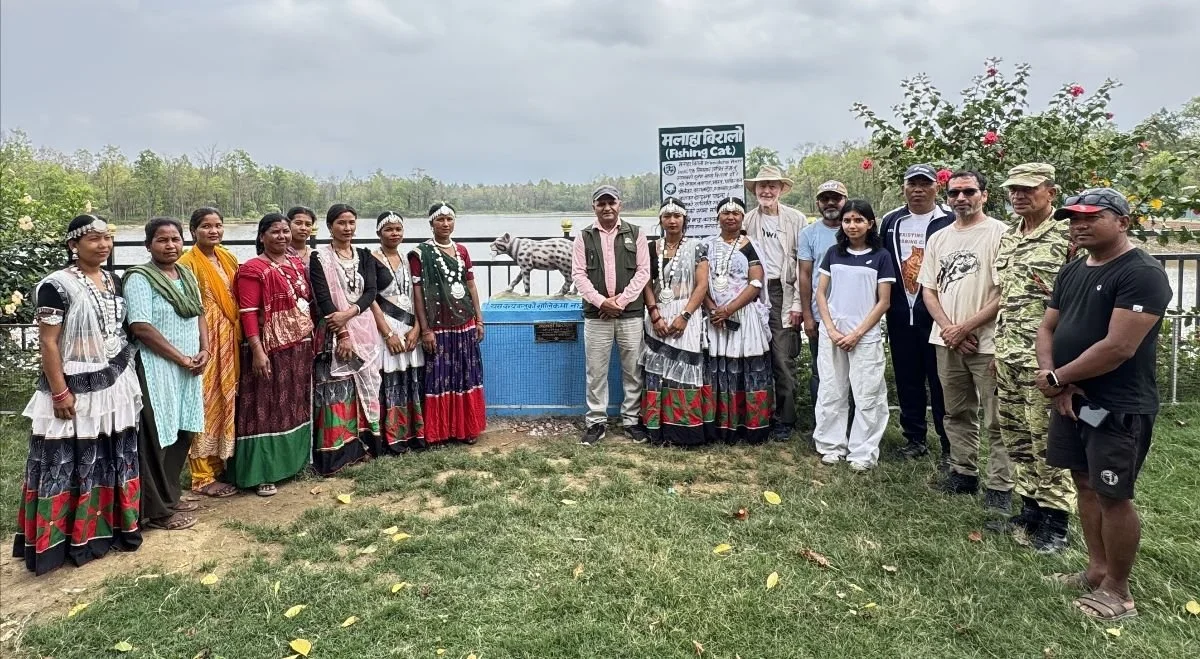
Birja Lake Declared Nepal’s First Fishing Cat Friendly Village
Ganesh Puri, Nepal, Western Terai Fishing Cat Project
Division Forest Officer Mahendra Wagle and leading small cat conservationist Jim Sanderson inaugurated a Fishing Cat sculpture at Birja Lake, one of the prime Fishing Cat habitats in Kapilvastu, Nepal. The village, also home to our women-led handicraft group, has now been declared Nepal’s first Fishing Cat Friendly Village. With the support and leadership of the local women’s group, the sculpture was installed as a symbol of community pride and long-term commitment to Fishing Cat conservation.
For Sushila Tharu, leader of the local women’s handicraft group, the declaration is deeply personal. She remembers a time when many families in the village depended heavily on fishing and other natural resources, and wildlife was often viewed negatively. Through the Fishing Cat conservation program, Sushila and other women transformed their traditional handicraft skills into livelihood opportunities while becoming active conservation leaders. Today, she proudly sees her own village recognized as Nepal’s first Fishing Cat Friendly Village a remarkable journey from conflict and dependence on natural resources toward coexistence, community leadership, and pride in protecting Fishing Cats. At the same event, community members, Division Forest Officer Mahendra Wagle, Jim Sanderson, and small cat conservationists from Nepal joined together in a signature campaign, making a collective commitment to protect Fishing Cats and their wetland habitats.
Every month, thousands of visitors visit Birja Lake, and we hope this sculpture will help raise awareness about Fishing Cats, wetlands, and the importance of coexistence between people and wildlife. For this community, the Fishing Cat is no longer just a wild animal it has become a symbol of identity, pride, and conservation inspiration.
Western Terai Fishing Cat Project
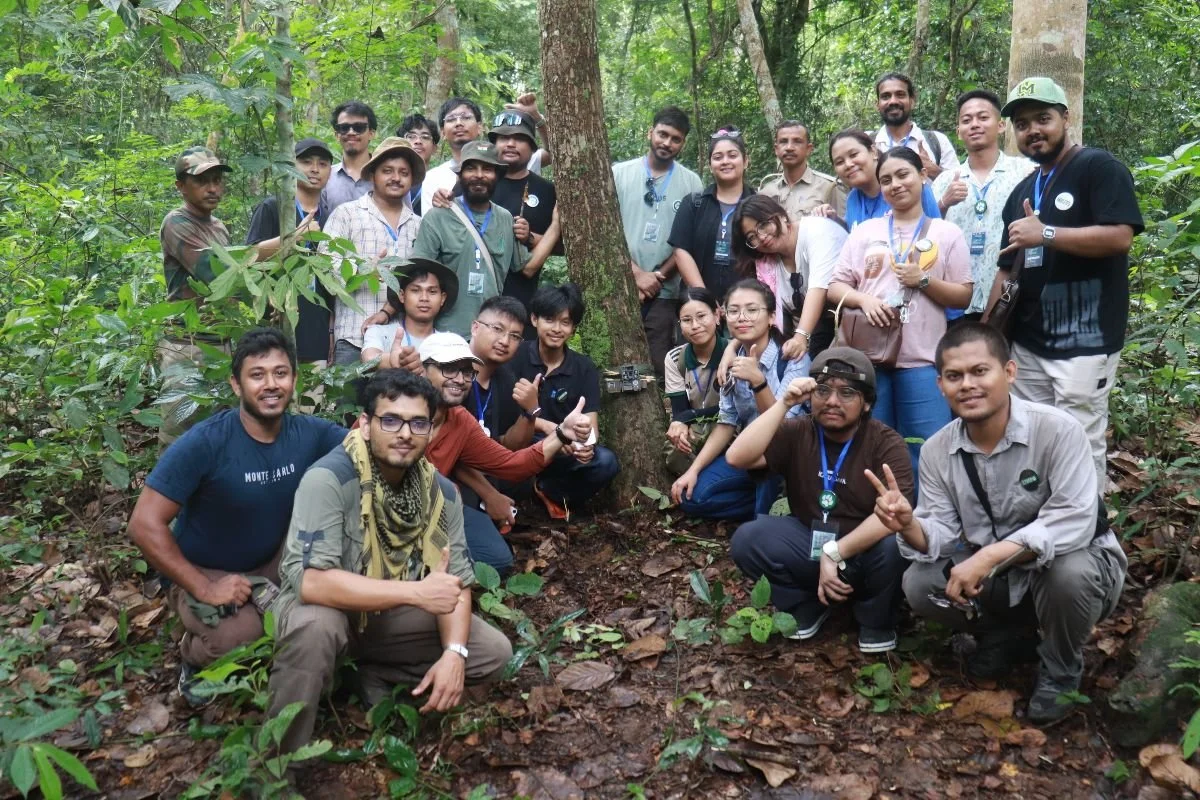
Initiating projects in Tripura, one of India’s least known states
Giri Malla, NE India, Eastern Himalayas Marbled Cat Project
Eastern Himalayan Marbled Cat Project (EHMCP) was invited by the Tripura Forest Department and the Tripura Biodiversity Board to explore opportunities for reducing threats to small wild cats in northeast India’s state of Tripura.
The department expressed great interest in understanding the distribution, ecology, and conservation status of the state's lesser-known wild cats. The workshop was hosted at Clouded Leopard National Park, one of Tripura's important protected areas dedicated to Clouded leopard conservation.
The Forest Department generously supported the initiative by providing the venue and logistical assistance. In collaboration with the Forest Department and the Biodiversity Board, EHMCP also conducted a two-day capacity-building workshop for local Indigenous youth. The training focused on trail camera techniques, wildlife monitoring, and the conservation of small wild cats.
After the workshop, the department gave us one year permission to survey the small wild cats in the entire state of Tripura.
Eastern Himalayas Marbled Cat Project
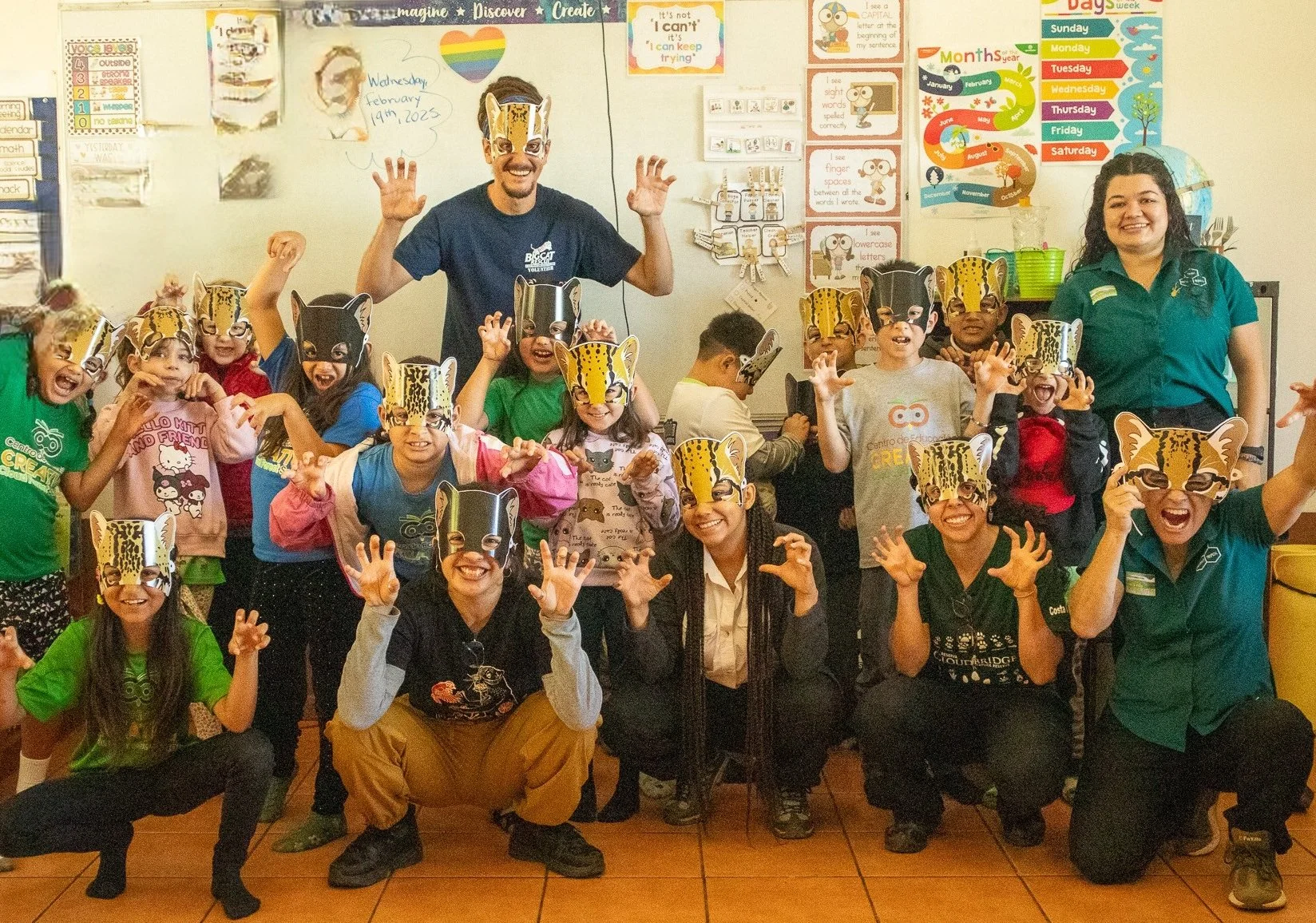
Musical Chairs, Pets, and Wild Cats
Jose Ramirez, Costa Rica, Quarto Gatos Conservación
Through the Cuatro Gatos Conservación program in rural communities of the Monteverde cloud forest in Costa Rica, we established an educational program for children. Through adapted versions of popular games, we raised awareness about Costa Rica’s small wild cat species and the threat that introduced species, such as unattended pet dogs and cats, pose to wild cats. One of the games that the children have enjoyed the most—and which explains the issue clearly and simply—is musical chairs, with a few small variations.
Four children are selected randomly to start the game. Wearing masks, each represent one of Costa Rica's small wild cats: the Clouded oncilla, Margay, Jaguarundi, and Ocelot. Unlike the original game, to start we use the same number of chairs as there are participants—four. The game begins with music playing and the participants dancing around the chairs; when the music stops, the participants sit down. In this way, the four native species each find a chair to sit on, since only the native species—which belong in the forest—are present, each one manages to find shelter, water, and suitable prey to survive (the message is clear). Next, the rest of the group is allowed to join, with a small detail: These children wear masks of domestic dogs and cats—introduced species that can pose threats to the native species by attacking them directly, eliminating their prey, or transmitting diseases. At this point in the game, the number of chairs is one short of the number of participants.
Now, when the music stops, one participant will not find a seat and must leave the game. In this way, participants are gradually eliminated, and along with them, one chair is removed in each round of the game. Variations can also be added to the game, such as placing a “Disease!?” sign on one of the chairs. In this case, the participant who sits in that chair will not necessarily be eliminated from the game, as they must choose at random between two cards handed out by the game leader: “SICK” or “HEALTHY.” The idea behind this variation is that if the participant selects the “SICK” card, they must leave the game, while a healthy card allows them to keep playing. This illustrates to the children the risk that our pets can pose when they enter forests, and specially if they carry any disease, as they can transmit diseases and affect the survival of other species. The game ends when only one participant remains, who is most likely a pet dog or cat.
The children have fun, and the educational message is clear. We ask the children to explain what they learned. They all get it. Introduced species do not belong in the forest, and it is our responsibility to ensure their well-being and proper behavior so as not to harm the native species that inhabit the forests and provide ecosystem services essential to the health of their communities.
Cuatro Gatos Conservación
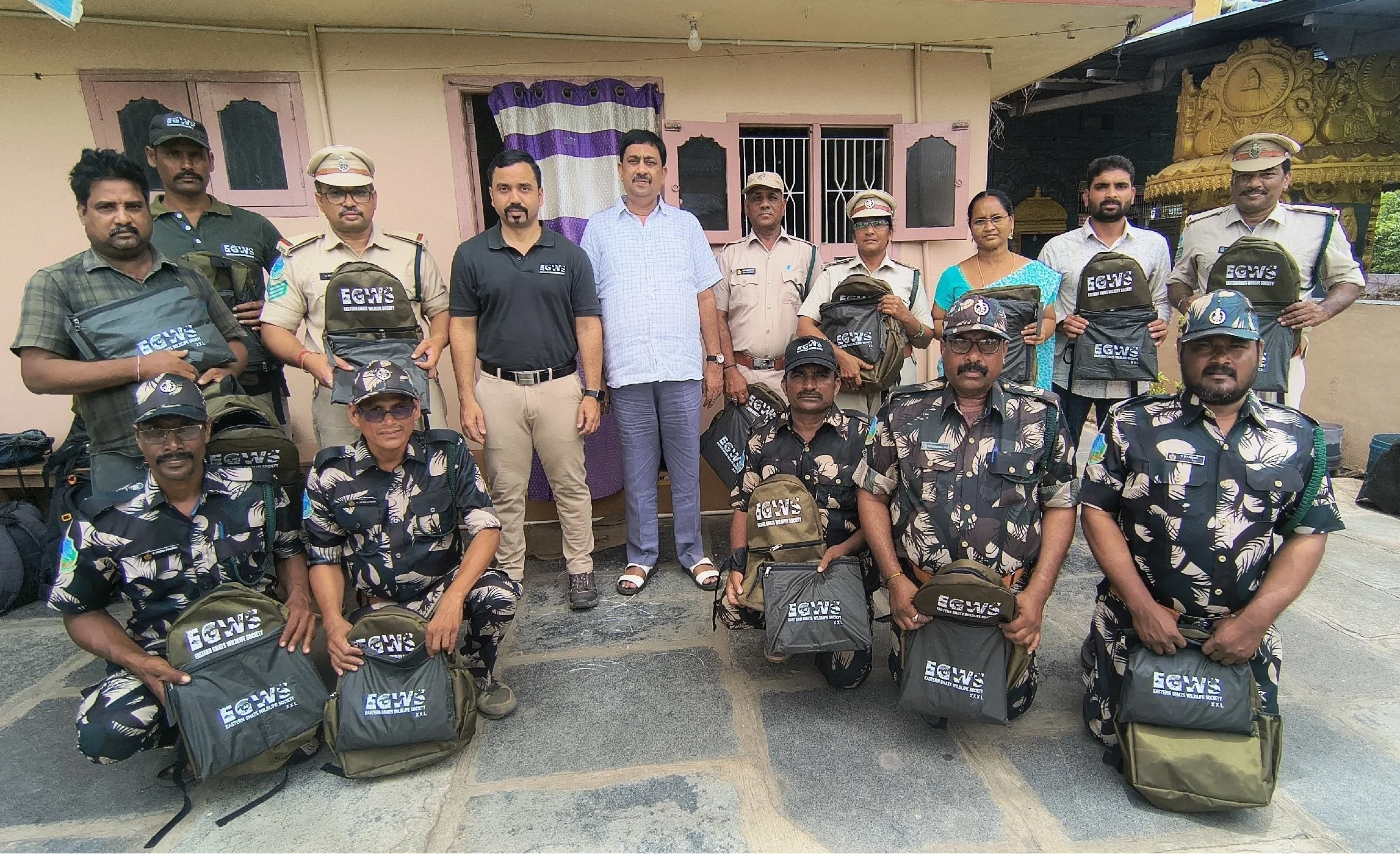
Equipping the Guardians of the Wetlands
Murthy Kantimahanti, India, Eastern Ghats Wildlife Conservation Society
In the wetlands and mangrove landscapes of Krishna Wildlife Sanctuary, conservation begins with the people who spend their days and nights on the ground. These frontline forest staff patrol waterways, monitor wildlife, respond to threats and human–wildlife interactions, and protect one of Andhra Pradesh’s important habitats for the elusive Fishing Cat.
Recognising the critical role they play, the Eastern Ghats Wildlife Society (EGWS), in collaboration with the Andhra Pradesh Forest Department, recently distributed raincoats and waterproof field bags to frontline staff working in the sanctuary.
At first glance, these may appear to be simple pieces of field equipment. In reality, they are tools that help make conservation work possible in challenging conditions.
During the monsoon, prolonged exposure to rain can make routine patrols, wildlife monitoring and field operations considerably more difficult. Waterproof bags help protect essential equipment, records and personal field gear, while raincoats allow staff to remain mobile and effective even during wet-weather operations.
For Fishing Cat conservation, this support has a larger significance. Effective protection of the species depends not only on surveys and research, but also on regular patrolling, habitat protection, monitoring of wetlands and mangroves, prevention of illegal activities, and rapid response to emerging threats. Well-equipped frontline personnel are better placed to carry out these responsibilities consistently.
This initiative therefore represents more than an in-kind donation. It is an investment in the people who protect the habitat—and, ultimately, in the wildlife that depends upon it.
As EGWS continues to work alongside the Andhra Pradesh Forest Department towards Fishing Cat conservation in Krishna Wildlife Sanctuary, strengthening frontline capacity remains an important part of the journey. EGWS is grateful to our project partners at Fishing Cat Conservation Alliance and Small Wild Cat Conservation Foundation for their generous support to facilitate such thoughtful initiatives.
Because protecting a species begins with supporting the people who protect its home.
Eastern Ghats Wildlife Conservation Society