CAT Garden Route
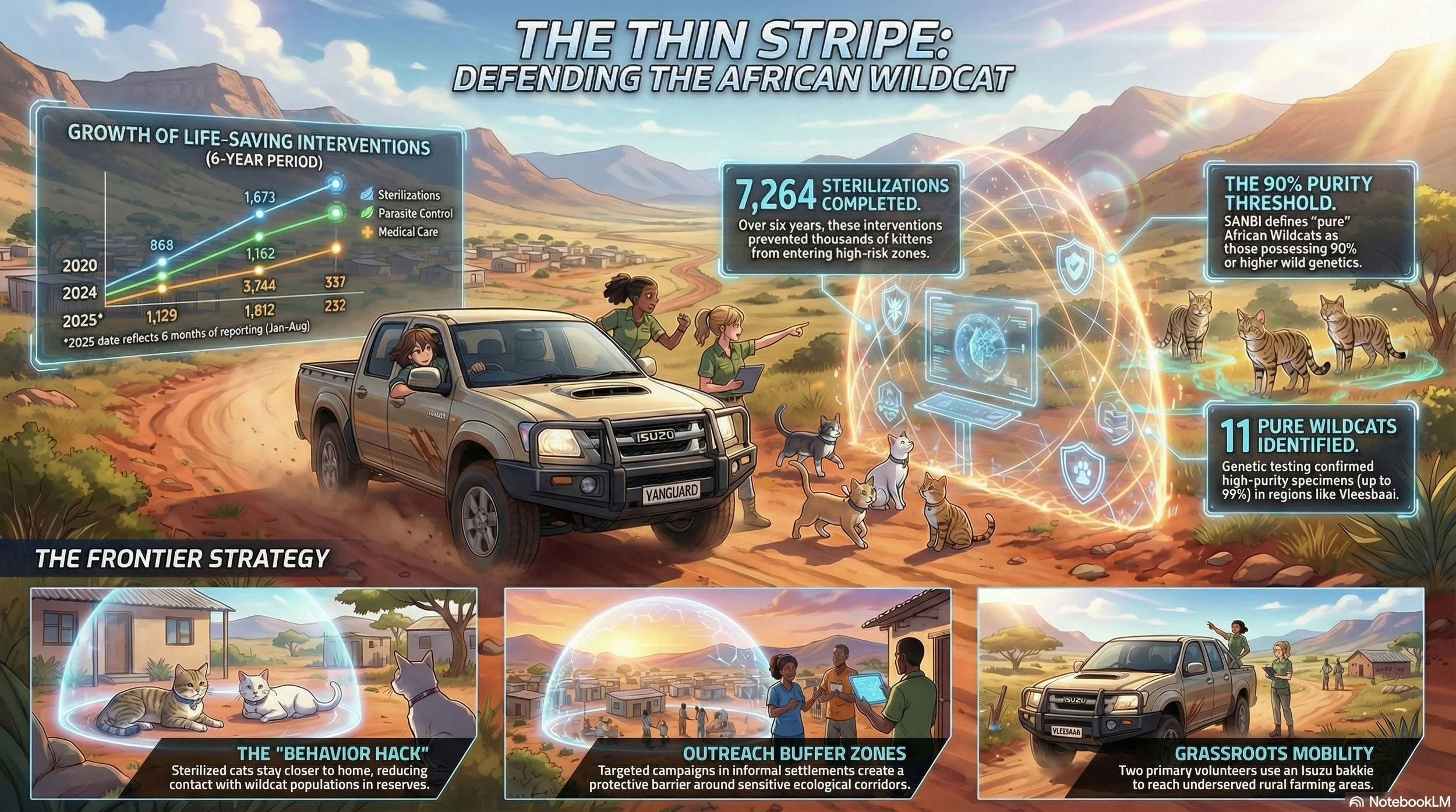
The provided reports detail the extensive operations of the Cat Assistance Team (C.A.T) across South Africa’s Garden Route from 2020 through mid-2025. This organization focuses on humane population control through mass sterilisations, medical care, and parasite treatments for feral and loosely owned cats. A primary conservation objective is protecting the endangered African Wildcat by preventing interbreeding with domestic felines in rural and urban fringes. To ensure the genetic purity of wild species, the team conducts DNA testing and focuses on trapping efforts in high-risk buffer zones. Despite facing operational capacity limits and logistical hurdles in remote areas, C.A.T. collaborates with various veterinary partners to improve community animal health. Their strategy combines direct veterinary intervention with educational outreach to stabilize cat populations and foster better animal welfare in marginalized settlements.
The Fall of the Diamond King
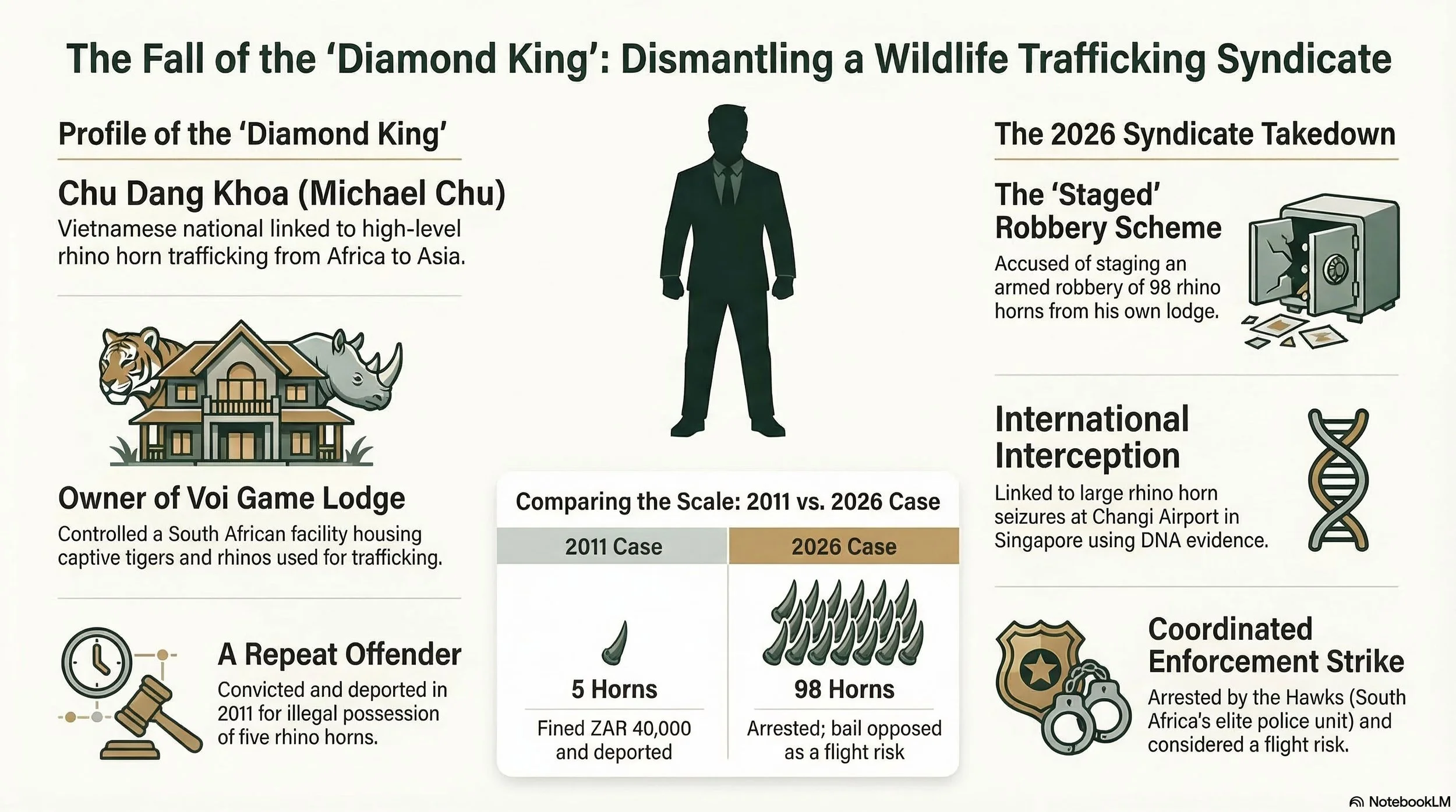
The provided text chronicles the apprehension of Chu Dang Khoa, a notorious figure in the illegal wildlife trade known as the "Diamond King." Authorities in South Africa arrested Khoa for his leadership role in a syndicate responsible for smuggling rhino horns and tiger parts to Asian markets. Investigators linked his legitimate business fronts to a staged robbery involving nearly one hundred rhino horns, exposing the criminal operations behind his wildlife facilities. According to Education for Nature - Vietnam, this arrest represents a critical achievement in the global effort to dismantle transnational organized crime. By targeting high-level traffickers, law enforcement aims to disrupt established networks and provide a deterrent against future poaching. Ultimately, the source highlights the necessity of international cooperation in bringing high-profile environmental criminals to justice.
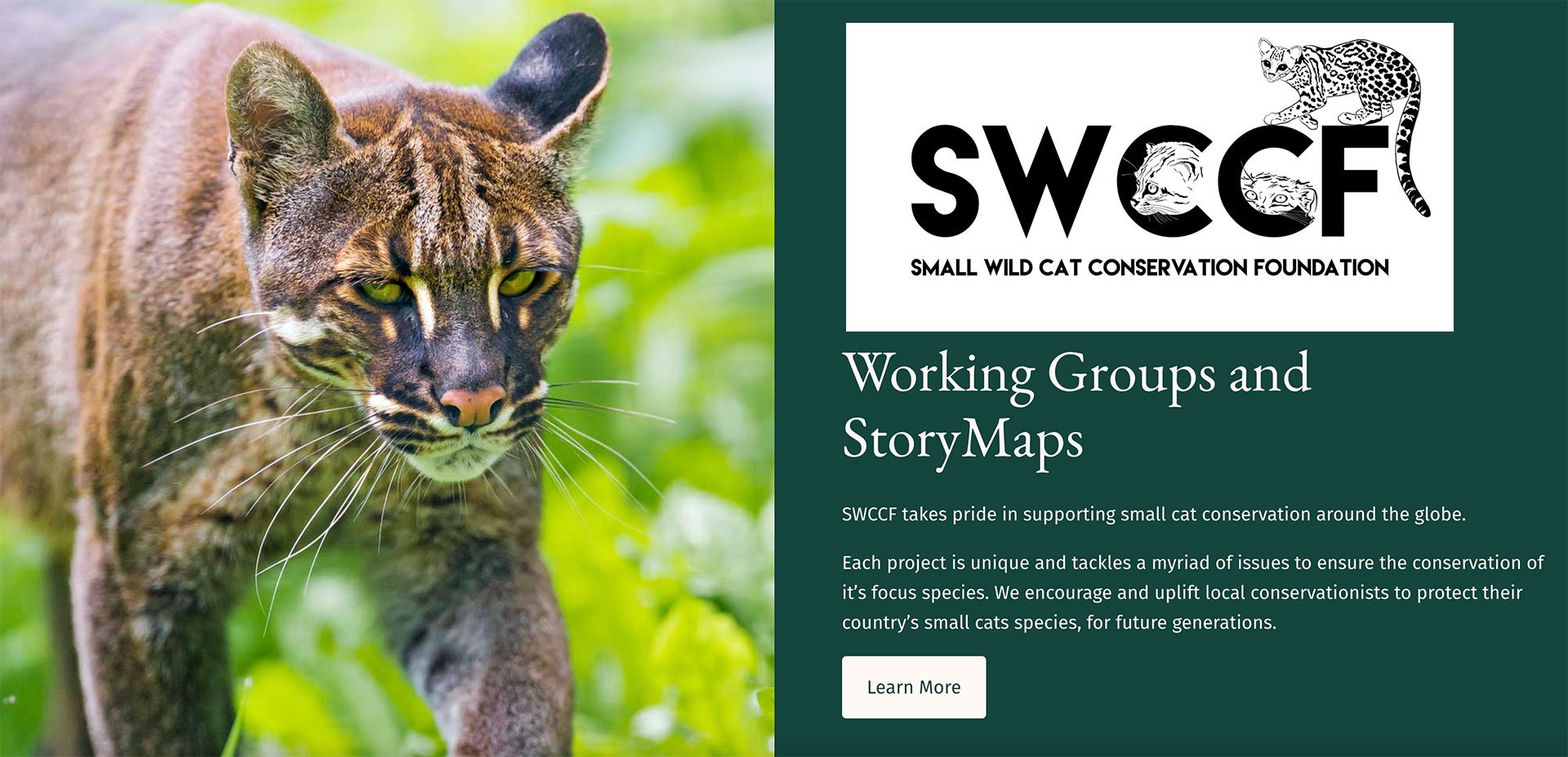
SWCCF News 2026 03
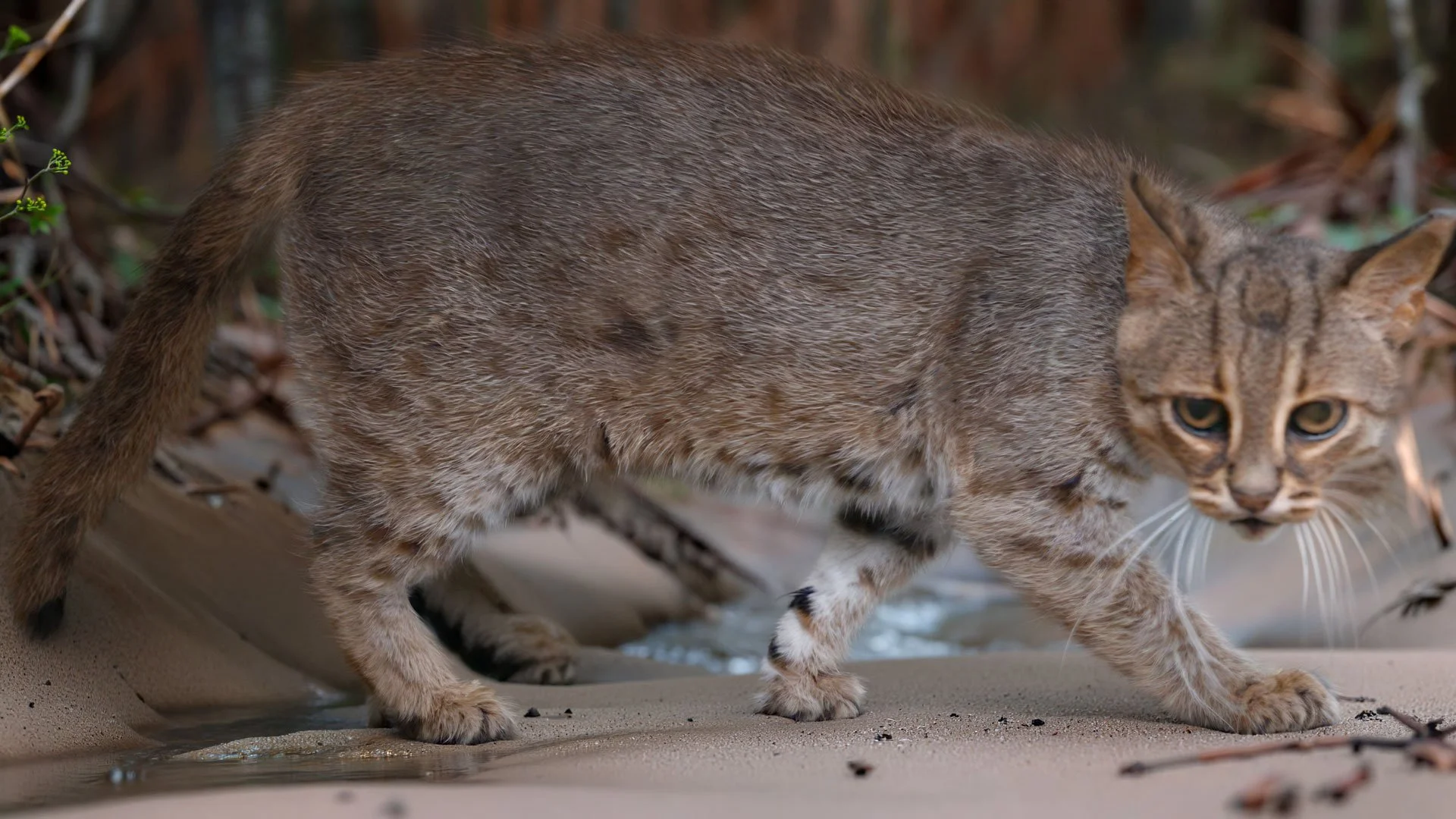
This report highlights several community-focused initiatives designed to protect endangered small wild cats by improving local livelihoods. In Uganda and India, conservation groups are helping residents transition from forest exploitation to sustainable beekeeping, organic gardening, and animal husbandry. Similar efforts in Nepal provide greenhouses to high-altitude villages, where residents protect clouded leopards in exchange for food security. The text also celebrates the creation of International Rusty-Spotted Cat Day to foster global awareness for the world's smallest feline. Finally, it recognizes the Fundación Con Garra in Chile for their successful campaign to reduce wildlife-vehicle collisions. Together, these accounts demonstrate that protecting biodiversity is most effective when it is paired with economic empowerment and cultural respect.
The Invisible Harvest
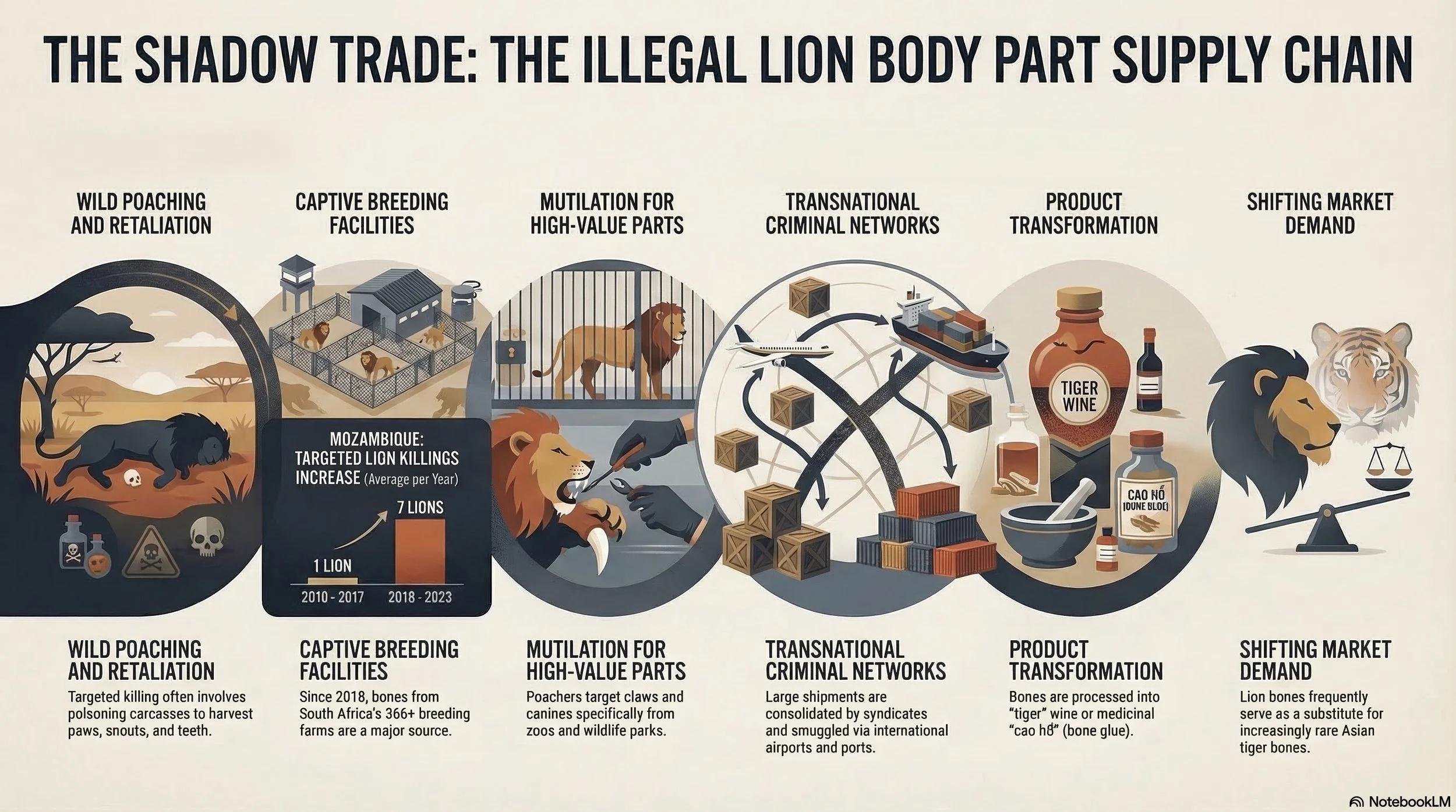
This report examines the increasing threat of targeted lion poaching for the illegal trade of body parts across Africa and Asia. While traditional factors like habitat loss still exist, lions are now specifically hunted for their claws, teeth, and bones to satisfy demands for traditional medicine and luxury ornaments. The author identifies three primary supply chains, including wild poaching, thefts from wildlife parks, and illegal exports from captive breeding farms. Detailed case studies from Mozambique and South Africa illustrate how organized criminal networks coordinate these activities, often using poisoning as a primary killing method. Despite international enforcement efforts and major arrests, the text concludes that this underreported black market continues to evolve through sophisticated smuggling routes. Overall, the source emphasizes that current data may underestimate the true scale of this transnational wildlife crime.

Volunteer Management
These materials provide a comprehensive framework for establishing and maintaining a successful animal sanctuary, drawing on the long-term experience of Big Cat Rescue. The sources highlight the importance of meticulous planning, suggesting that operators should draft multi-year goals and establish a disciplined organizational culture with strictly enforced rules. Financial sustainability is emphasized through the practice of setting aside monetary reserves and focusing on broad conservation impact rather than just immediate rescue needs. Additionally, the text underscores the vital role of volunteer management, noting that a large, dedicated workforce can provide labor equivalent to dozens of full-time employees. Finally, the guides advocate for a strong social media presence that utilizes storytelling and transparency to build donor trust and engage the public.
Sanctuary
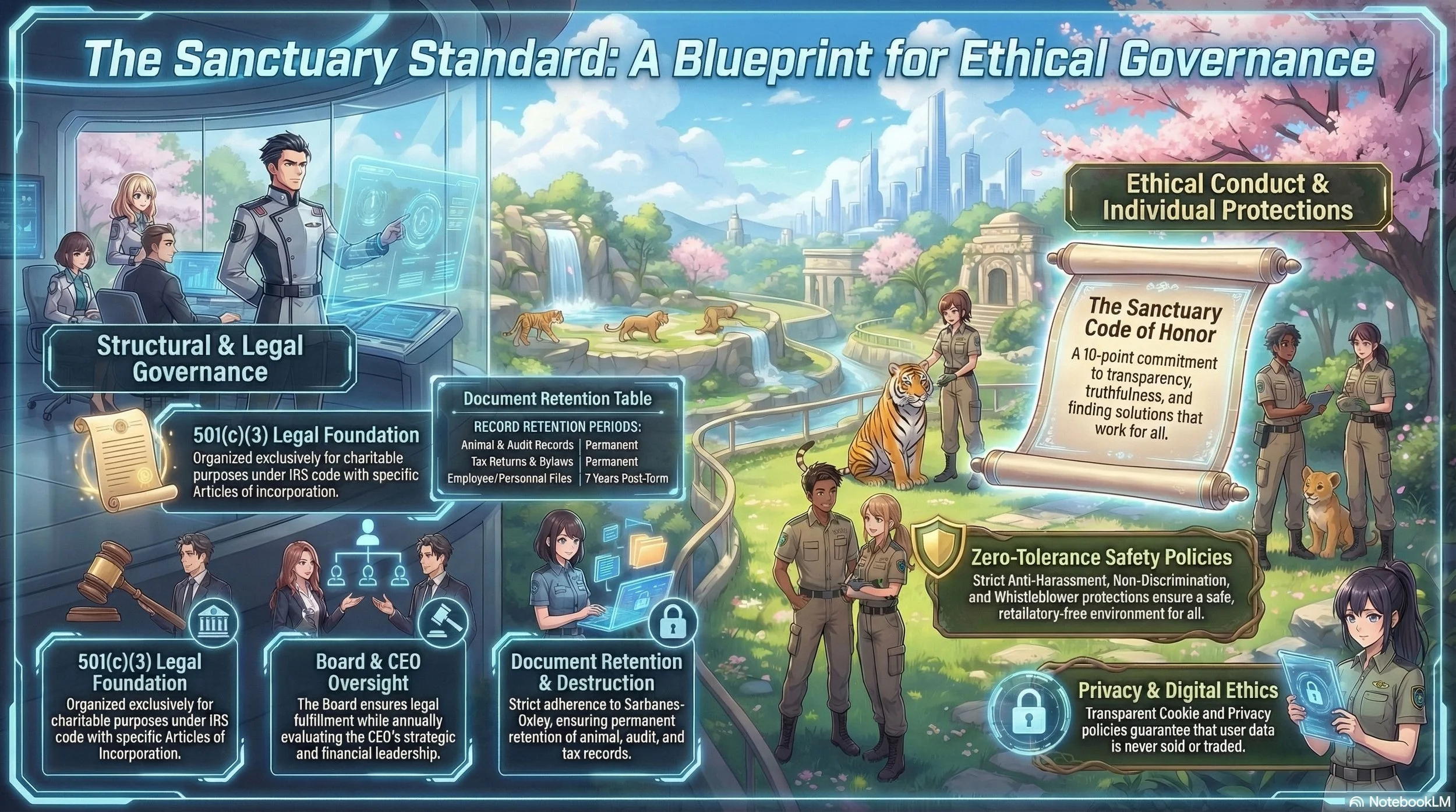
The provided documents outline the organizational structure and operational standards for Big Cat Rescue, a non-profit wildlife sanctuary dedicated to the welfare of exotic cats. Detailed governance policies establish rules for board conduct, executive evaluations, and strict legal compliance regarding financial transparency and document retention. The sanctuary also maintains rigorous workplace ethics, including explicit mandates against discrimination, harassment, and retaliation toward whistleblowers. Digital privacy is managed through comprehensive cookie and data protection guidelines, ensuring that supporter information is never sold or traded. Additionally, the text clarifies the organization's mission-driven approach to public education, advocacy for animal rights legislation, and the strategic importance of being an accredited, transparent facility. Together, these sources form a framework for maintaining institutional integrity while pursuing conservation goals.