CAT Garden Route
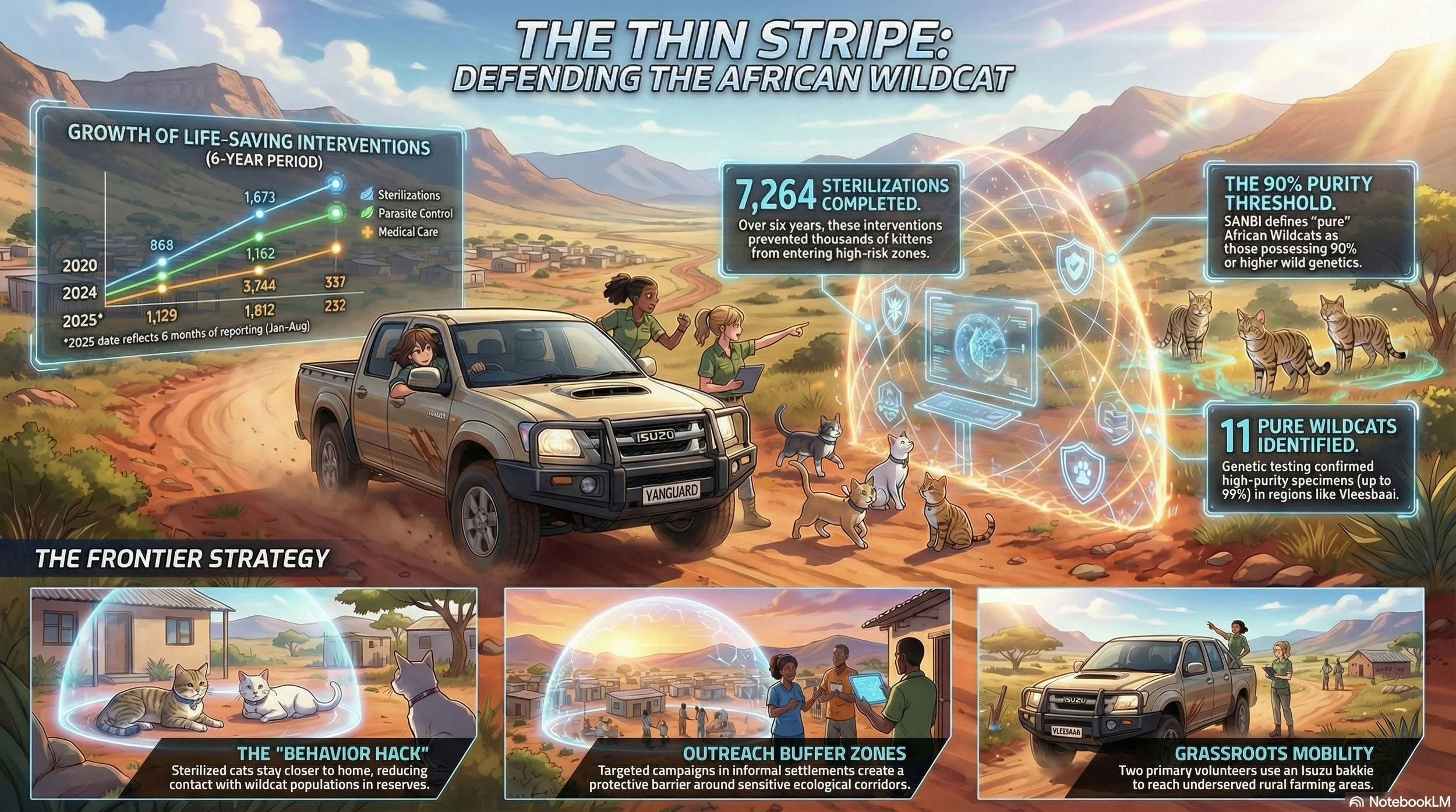
The provided reports detail the extensive operations of the Cat Assistance Team (C.A.T) across South Africa’s Garden Route from 2020 through mid-2025. This organization focuses on humane population control through mass sterilisations, medical care, and parasite treatments for feral and loosely owned cats. A primary conservation objective is protecting the endangered African Wildcat by preventing interbreeding with domestic felines in rural and urban fringes. To ensure the genetic purity of wild species, the team conducts DNA testing and focuses on trapping efforts in high-risk buffer zones. Despite facing operational capacity limits and logistical hurdles in remote areas, C.A.T. collaborates with various veterinary partners to improve community animal health. Their strategy combines direct veterinary intervention with educational outreach to stabilize cat populations and foster better animal welfare in marginalized settlements.
The Fall of the Diamond King
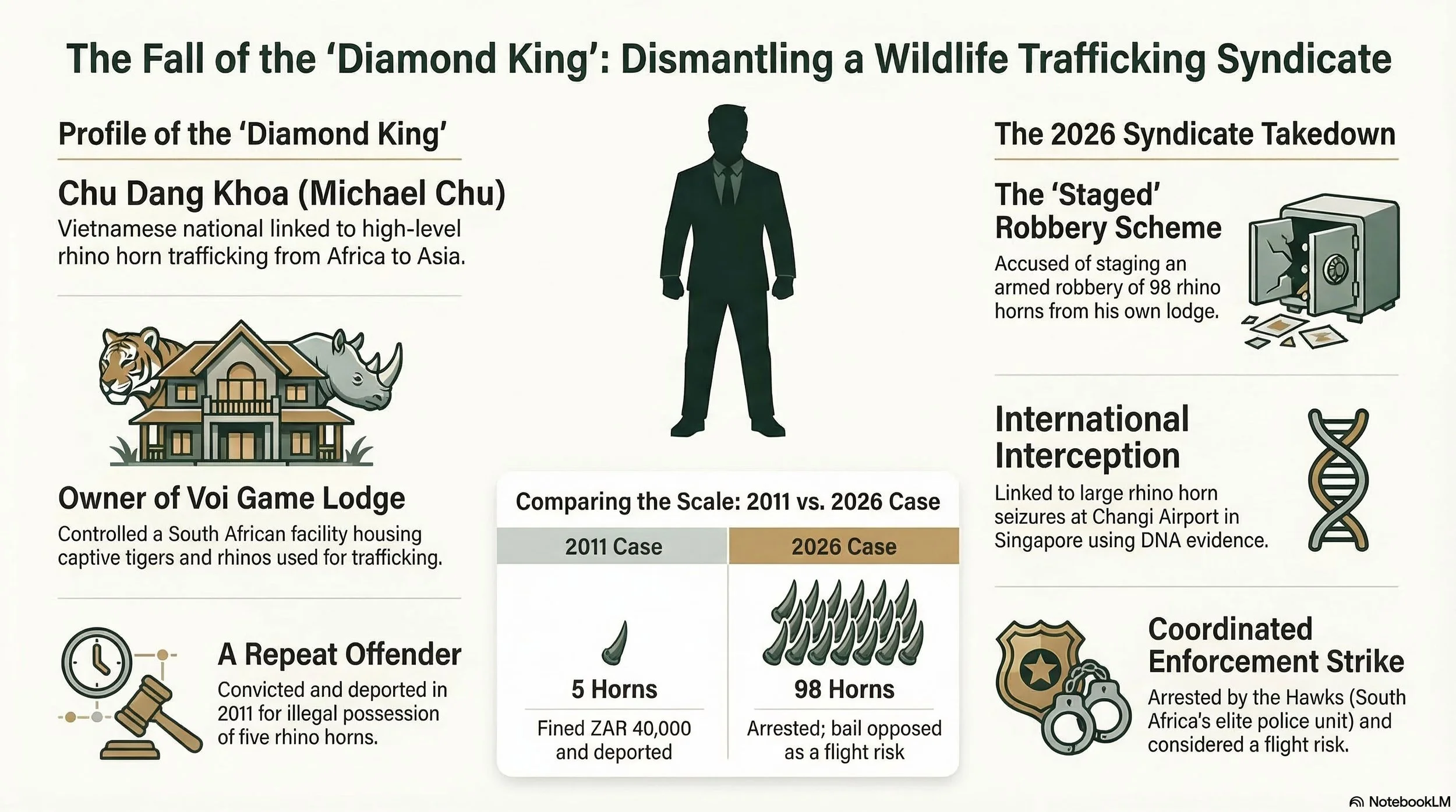
The provided text chronicles the apprehension of Chu Dang Khoa, a notorious figure in the illegal wildlife trade known as the "Diamond King." Authorities in South Africa arrested Khoa for his leadership role in a syndicate responsible for smuggling rhino horns and tiger parts to Asian markets. Investigators linked his legitimate business fronts to a staged robbery involving nearly one hundred rhino horns, exposing the criminal operations behind his wildlife facilities. According to Education for Nature - Vietnam, this arrest represents a critical achievement in the global effort to dismantle transnational organized crime. By targeting high-level traffickers, law enforcement aims to disrupt established networks and provide a deterrent against future poaching. Ultimately, the source highlights the necessity of international cooperation in bringing high-profile environmental criminals to justice.
SWCCF 2026 03
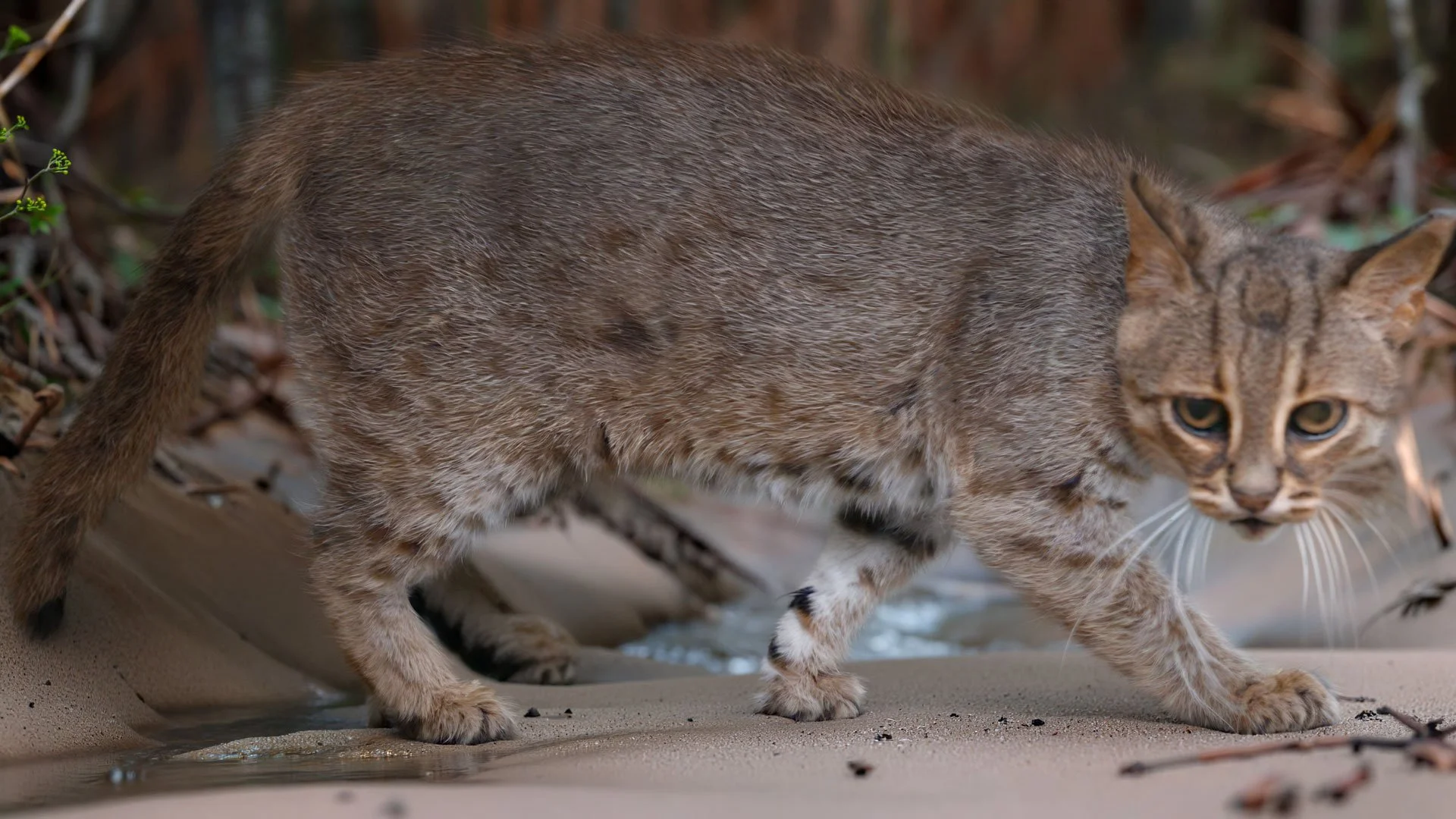
This report highlights several community-focused initiatives designed to protect endangered small wild cats by improving local livelihoods. In Uganda and India, conservation groups are helping residents transition from forest exploitation to sustainable beekeeping, organic gardening, and animal husbandry. Similar efforts in Nepal provide greenhouses to high-altitude villages, where residents protect clouded leopards in exchange for food security. The text also celebrates the creation of International Rusty-Spotted Cat Day to foster global awareness for the world's smallest feline. Finally, it recognizes the Fundación Con Garra in Chile for their successful campaign to reduce wildlife-vehicle collisions. Together, these accounts demonstrate that protecting biodiversity is most effective when it is paired with economic empowerment and cultural respect.
The End of the Cub Selfie
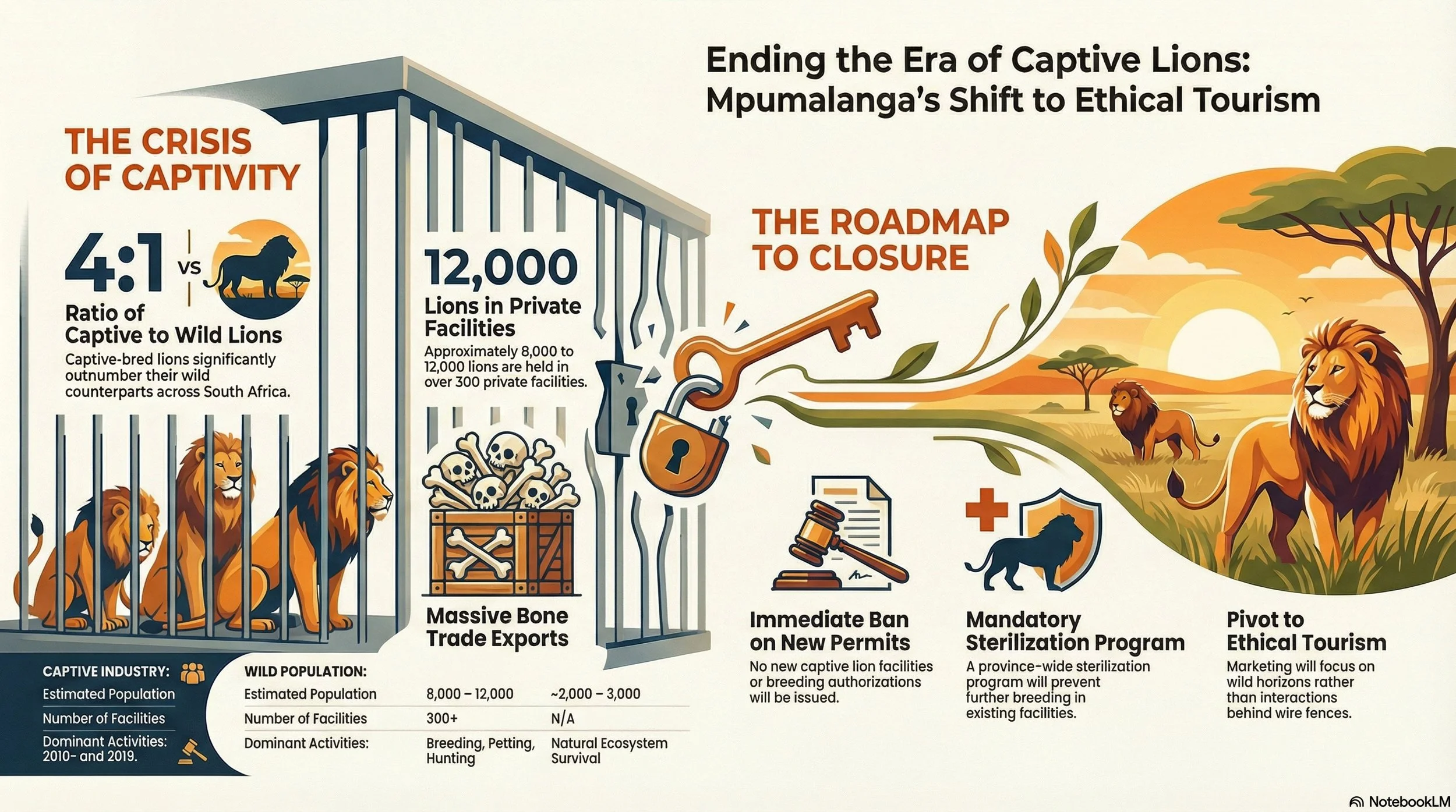
The provided sources detail a landmark decision by the Mpumalanga Tourism and Parks Agency to officially ban new permits for captive lion facilities in South Africa’s Mpumalanga province. This regulatory shift aims to phase out the controversial industry by prohibiting future breeding, stopping the importation of captive lions, and implementing a sterilization program. By aligning with national conservation mandates, provincial authorities are moving away from commercialized animal interactions, such as cub petting and canned hunting, to protect the country's international reputation. The transition focuses on fostering ethical, wild-based tourism and prioritizing the welfare of lions in their natural habitats. While existing facilities will not close immediately, they must adhere to strict welfare standards as the province redirects investment toward nature reserves and sustainable wildlife management. This policy represents a significant victory for animal rights advocates and marks a decisive pivot toward authentic African safari experiences.
Wild Cat Lifespans
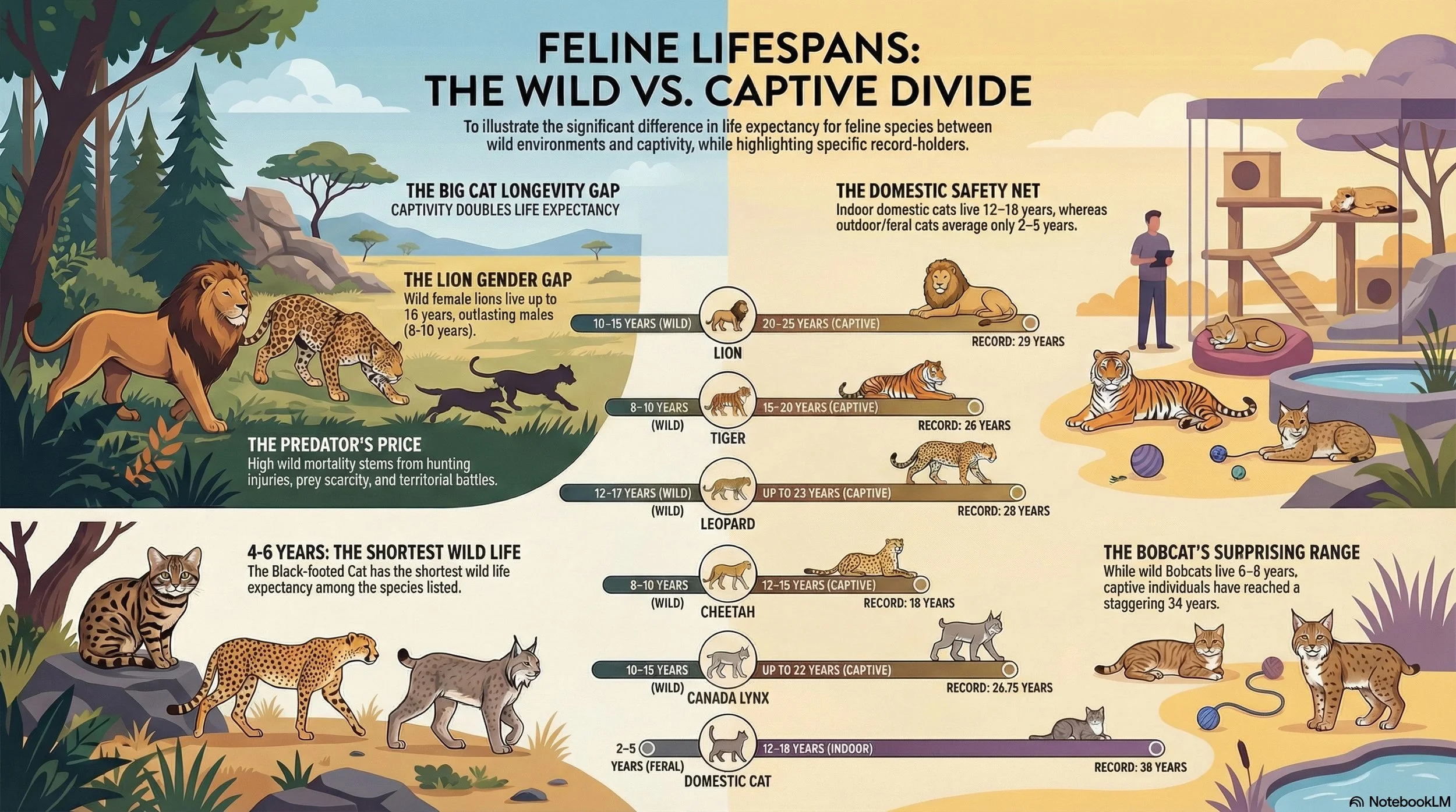
These sources provide a comprehensive look at the diversity, biology, and conservation of various wild felines, ranging from large apex predators to small, elusive hunters. Detailed profiles for species like the Canada lynx, cheetah, and caracal describe their unique physical adaptations, specialized diets, and typical behaviors in both the wild and captivity. Data tables highlight lifespan variations, illustrating how environmental factors and human care influence the longevity of different cat families. The texts also emphasize the ecological importance of smaller felines, such as the fishing cat and leopard cat, which serve as vital indicators of habitat health. Finally, the documentation addresses significant survival threats, including habitat fragmentation, climate change, and human-wildlife conflict. Together, these materials serve as an educational resource to raise awareness and support for the protection of global felid populations.
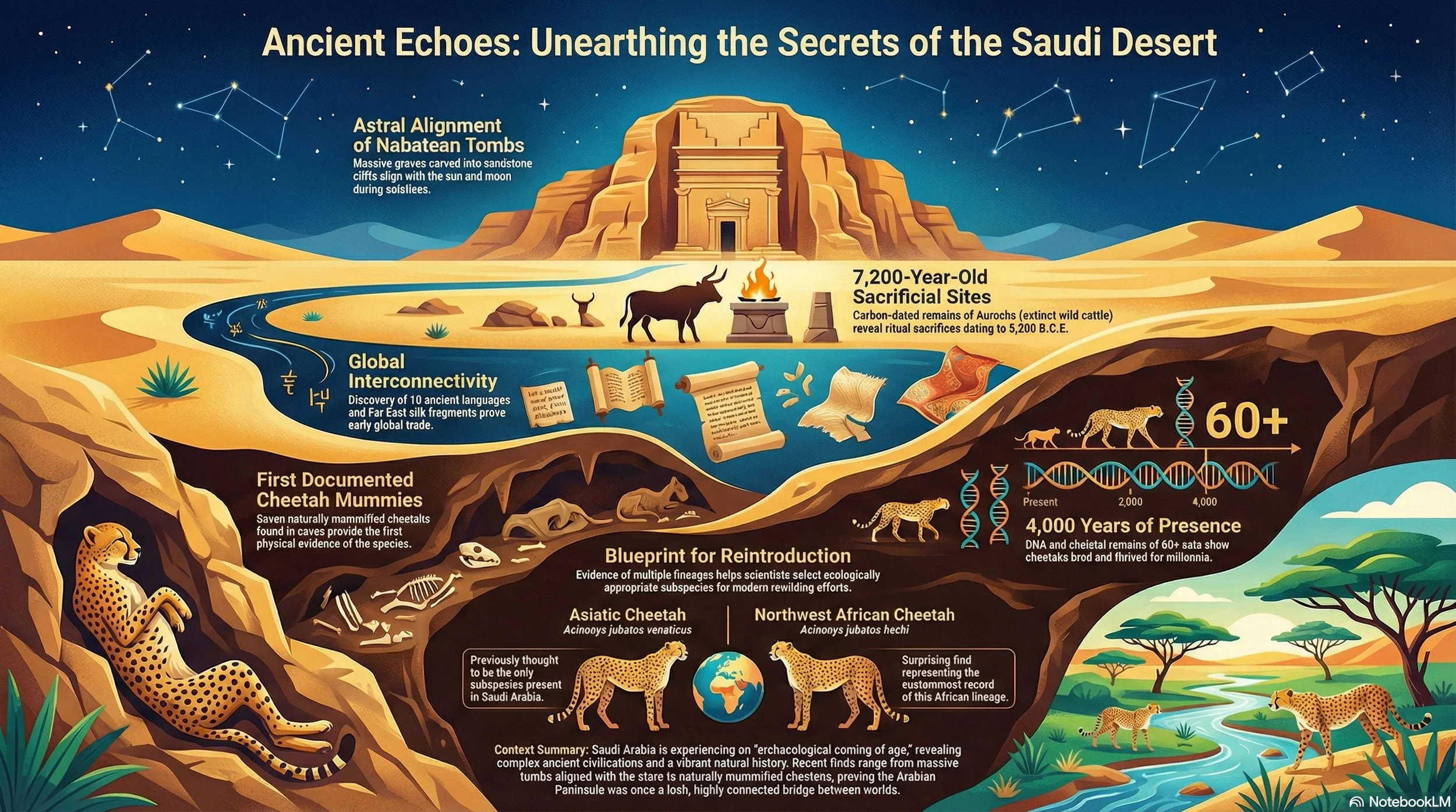
Secrets Beneath the Sand: 5 Surprising Discoveries Rewriting History in the Saudi Desert