
Cloud Jaguars
A recent camera trap sighting of a male jaguar at an elevation of 2,200 meters in Honduras has sparked optimism among conservationists. This rare encounter in the Sierra del Merendón mountains is significant because these big cats typically reside in lower habitats, suggesting they are using high-altitude corridors to travel between fragmented landscapes. While the species faces ongoing threats from deforestation, poaching, and climate change, this discovery indicates that protected areas and anti-poaching efforts may be facilitating their return to historical territories. Global and local initiatives like the Jaguar 2030 Roadmap aim to further secure these vital migratory paths to ensure the predator's long-term survival. Ultimately, the presence of this "cloud jaguar" reaffirms the resilience of the species and the importance of maintaining ecological connectivity across Central America.
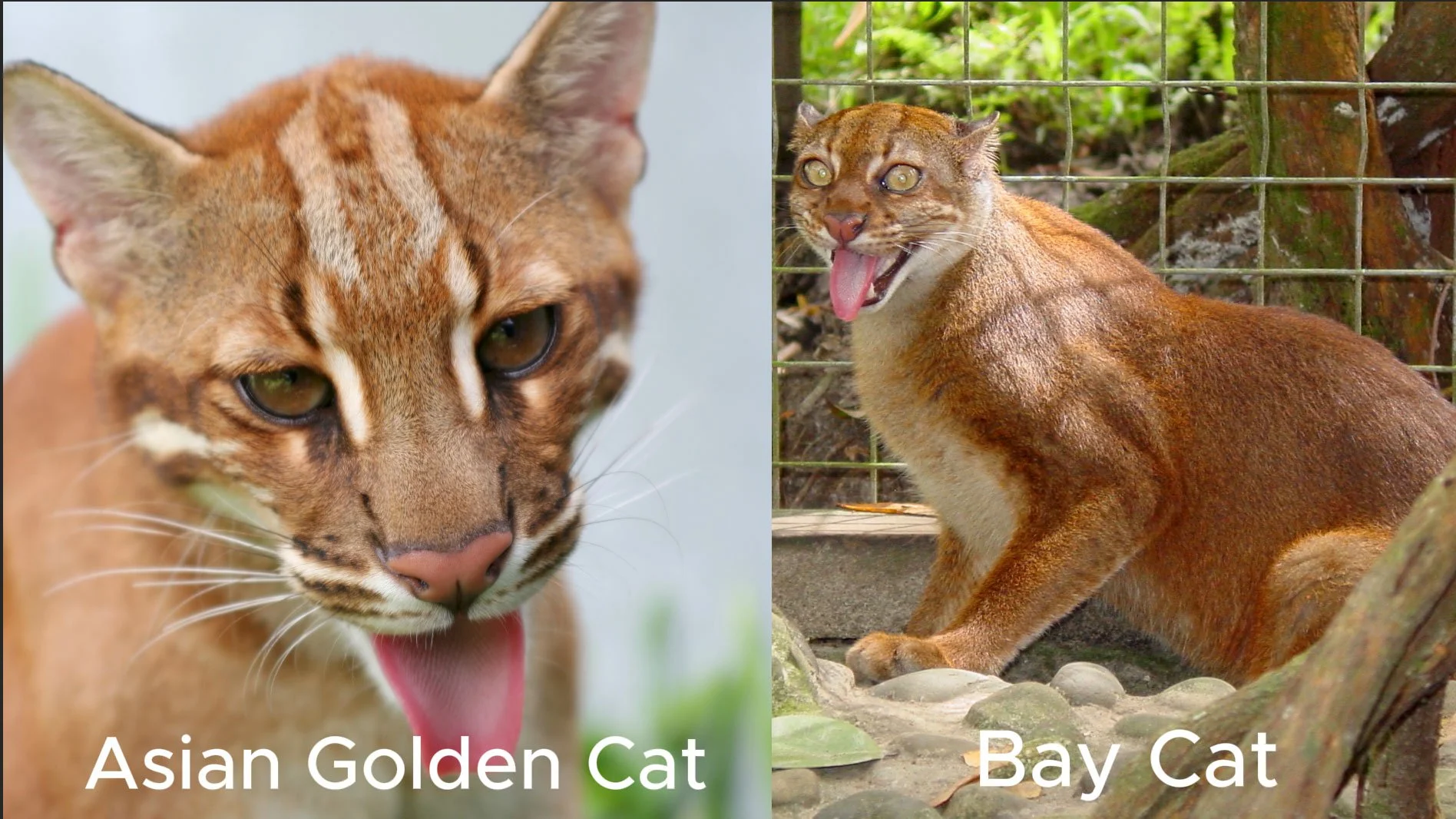
The Toba Apocalypse and the Ghost of Borneo
These sources examine the evolutionary history, ecology, and conservation status of Southeast Asian felids, focusing specifically on the Asian golden cat and the critically elusive bay cat. Genetic research reveals that these sister species responded differently to Pleistocene climate shifts, with volcanic activity restricting the golden cat to Indochina while the bay cat sought refuge in Borneo’s rainforests. Modern accounts emphasize the extreme rarity of the bay cat, a mysterious predator that is rarely seen in the wild and remains threatened by habitat loss and hunting. The text also provides a broader perspective on Oriental carnivores, detailing how diverse vertebrates like monitors, pythons, and birds of prey partition resources within complex tropical ecosystems. Collectively, the documents highlight the urgent need for targeted research and habitat protection to ensure the survival of these specialized predators.

Old Wise Cats
Older and Wiser: The Vital Role of Animal Elders
Recent research emphasizes that older animals are vital for the survival of wildlife populations because they possess accumulated knowledge and specialized skills. These elders serve as essential leaders who guide their groups toward resources and help maintain social stability among younger individuals. Beyond their wisdom, aging members often provide enhanced reproductive success and possess stronger immune systems developed over time. Traditional conservation efforts frequently focus on total population counts, yet this source argues that protecting the age structure is just as critical. The loss of these senior animals through human activities can result in a profound disappearance of survival strategies that simple numbers cannot replace.

Sunda Clouded Leopard Longevity Study
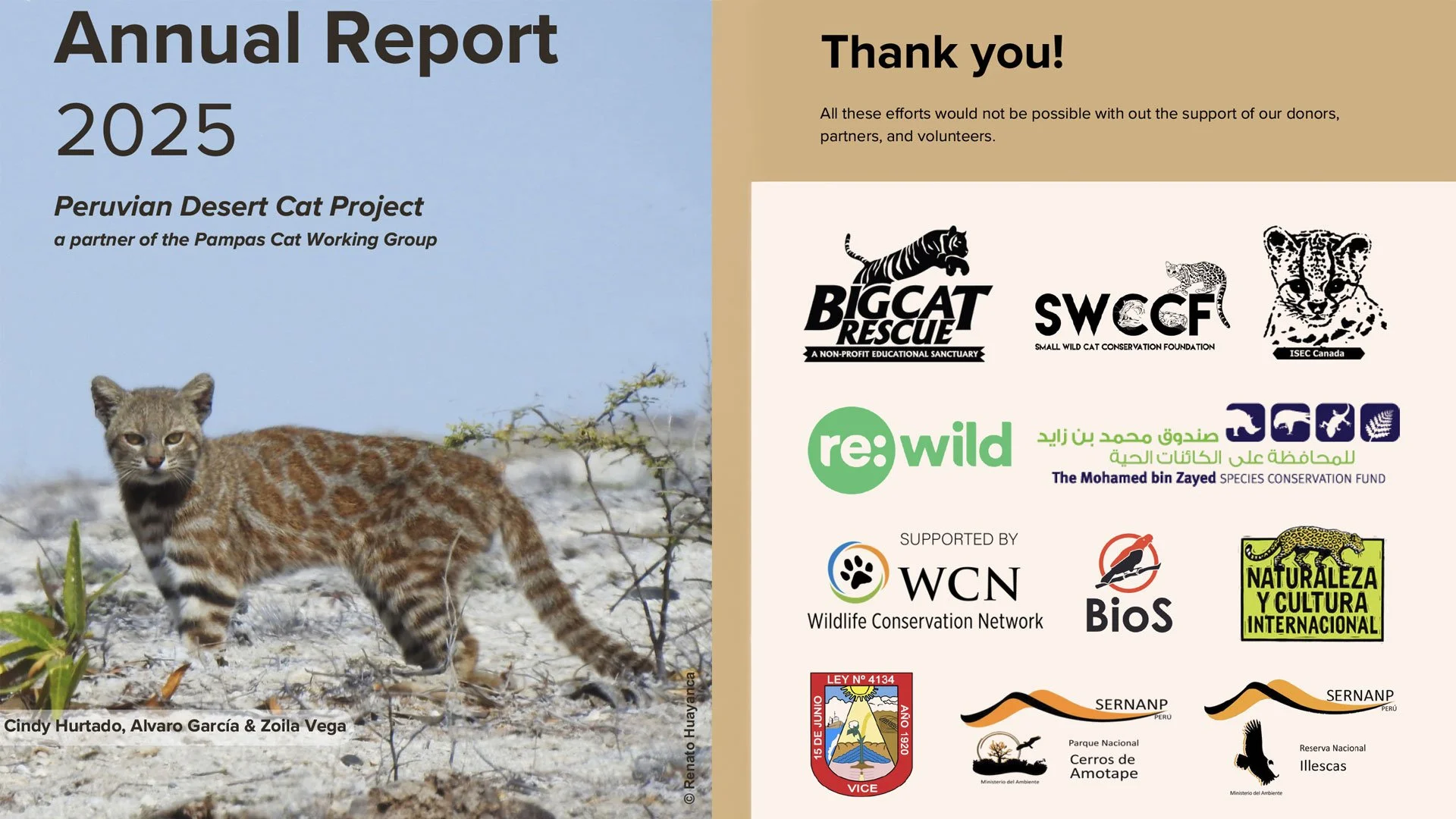
Peruvian Desert Cat Annual Report 2025
The Peruvian Desert Cat Project’s 2025 Annual Report details a comprehensive strategy to protect the endangered Desert Pampas Cat through community-based and scientific initiatives. To mitigate human-wildlife conflict, the organization helps rural families build predator-proof coops and offers veterinary training, reducing the need for retaliatory killings. The project also addresses road mortality through driver education and seeks legal land protection for thousands of hectares of vital dry forest habitat. Beyond physical safeguards, the report emphasizes youth education and local outreach to foster long-term environmental stewardship. Finally, the sources highlight a critical genetic study revealing that even seemingly stable populations in mangroves are suffering from low diversity, necessitating new efforts to restore habitat connectivity.
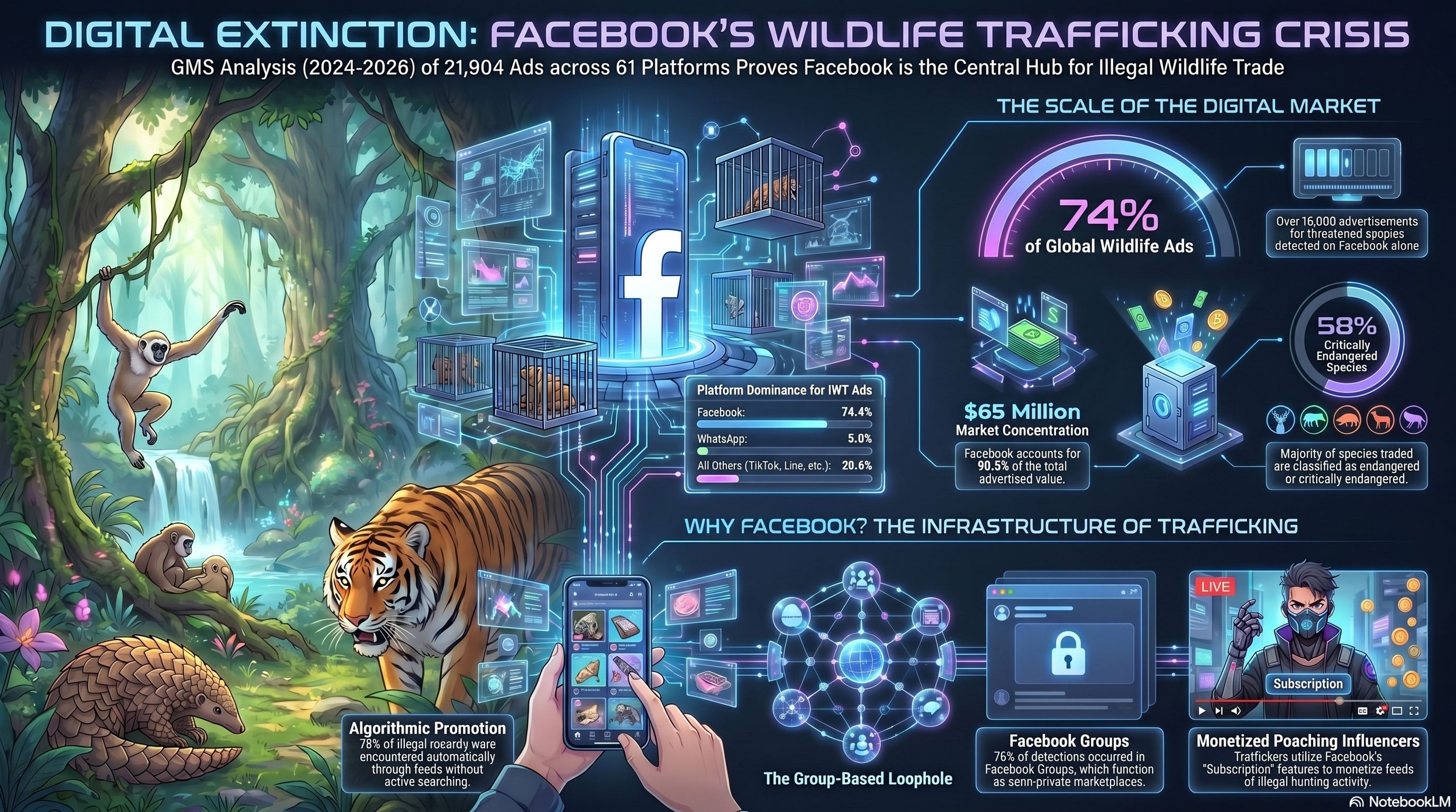
Facebook and Illegal Wildlife Trade
The provided report from the Global Initiative Against Transnational Organized Crime exposes how Facebook has become the primary global infrastructure for the illegal wildlife trade. Data collected by the Global Monitoring System reveals that nearly 75% of illicit wildlife advertisements appear on the platform, frequently involving critically endangered species protected by international law. The authors argue that algorithmic recommendations and thematic groups actively facilitate these criminal networks, often surfacing illegal content to users without a search. Despite public pledges to combat trafficking, Meta's internal enforcement and voluntary self-regulation are described as largely ineffective and plagued by multilingual moderation failures. To address this biodiversity crisis, the report calls for international regulatory coordination and the imposition of legal duties on social media companies to end platform-scale exploitation.