Sunda Clouded Leopard Longevity Study
The Ghost in the Canopy: 4 Surprising Revelations from a Record-Breaking Leopard Study
1. Introduction: A 15-Year Glimpse into the Unknown
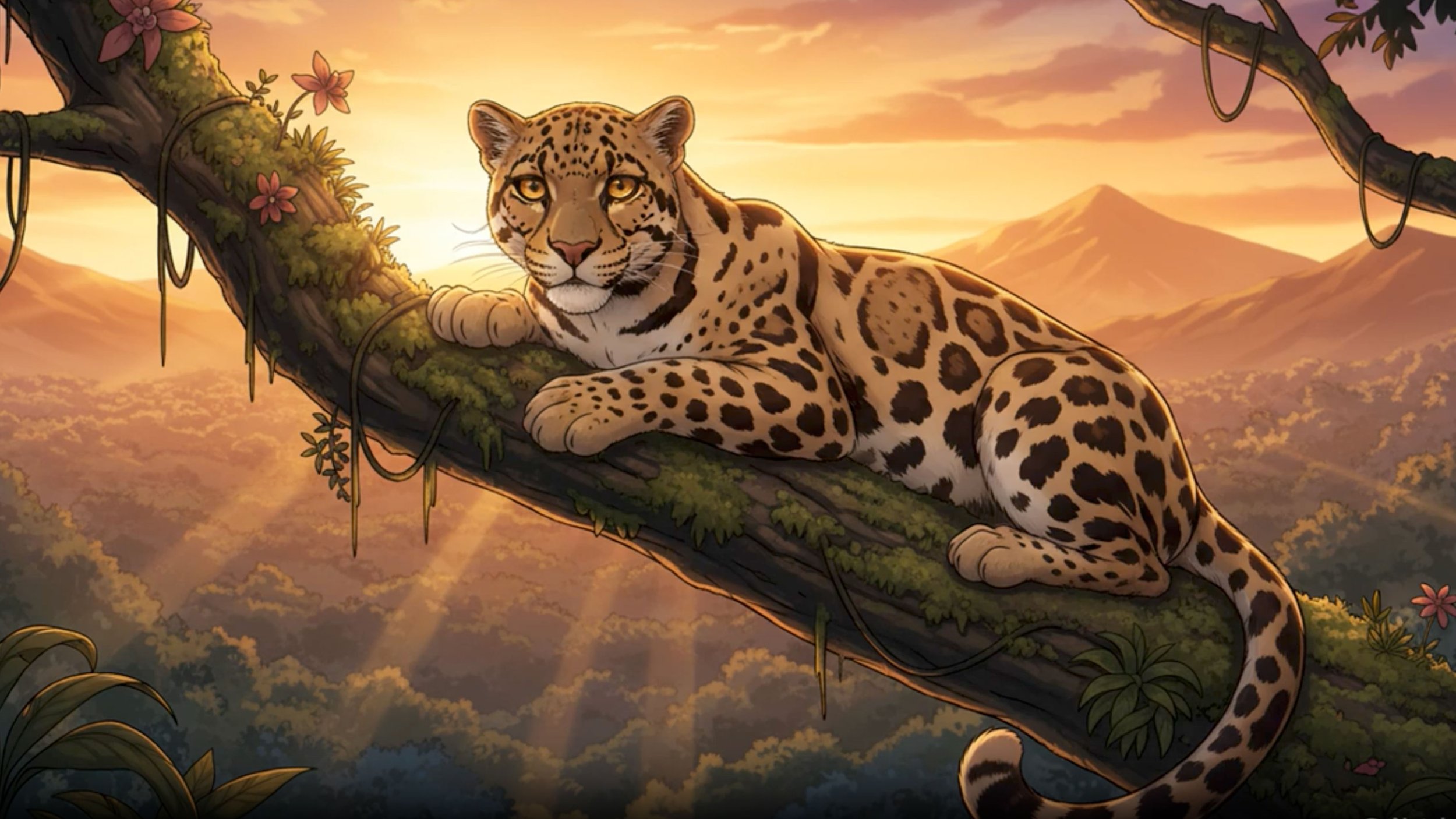
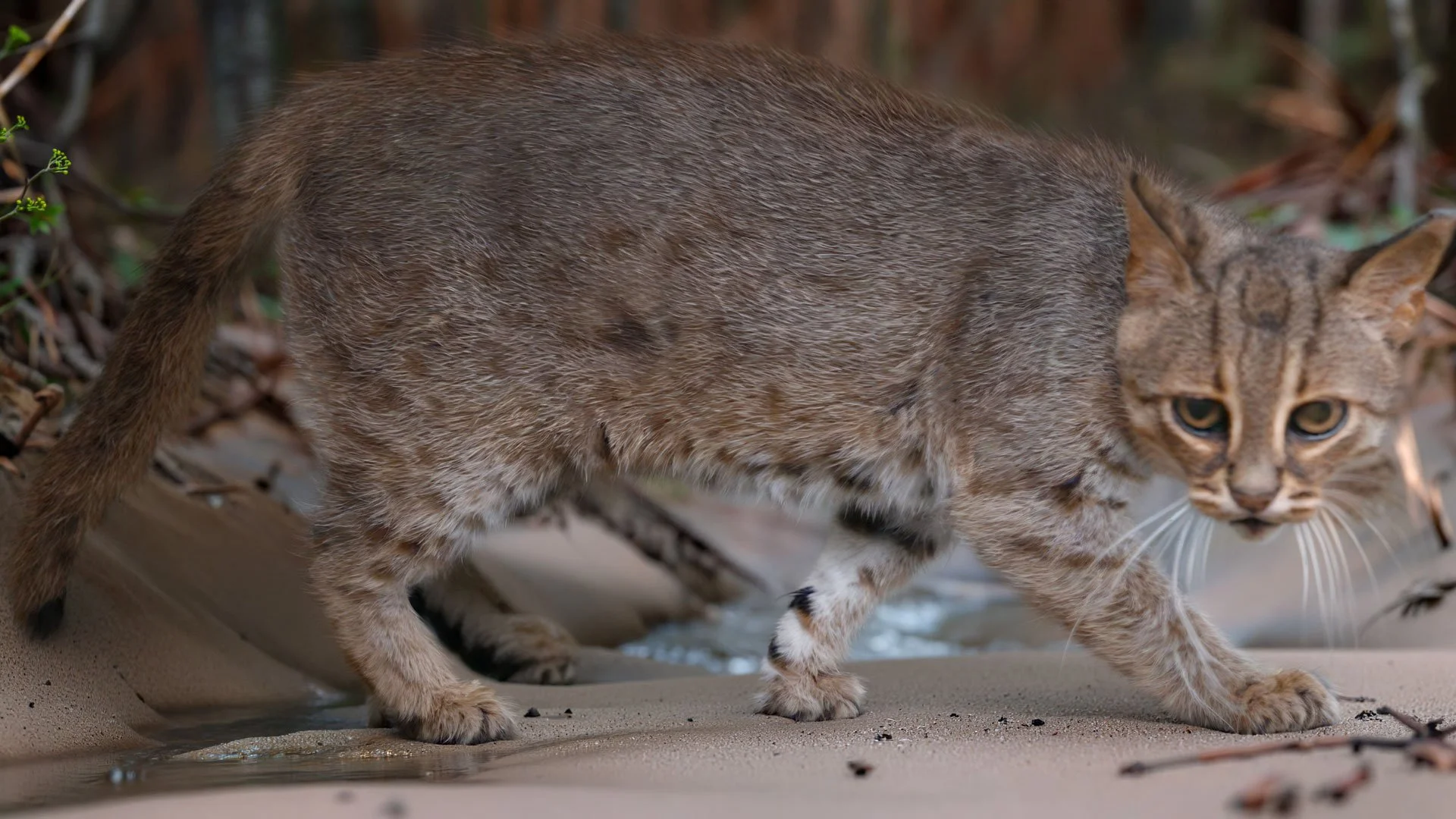
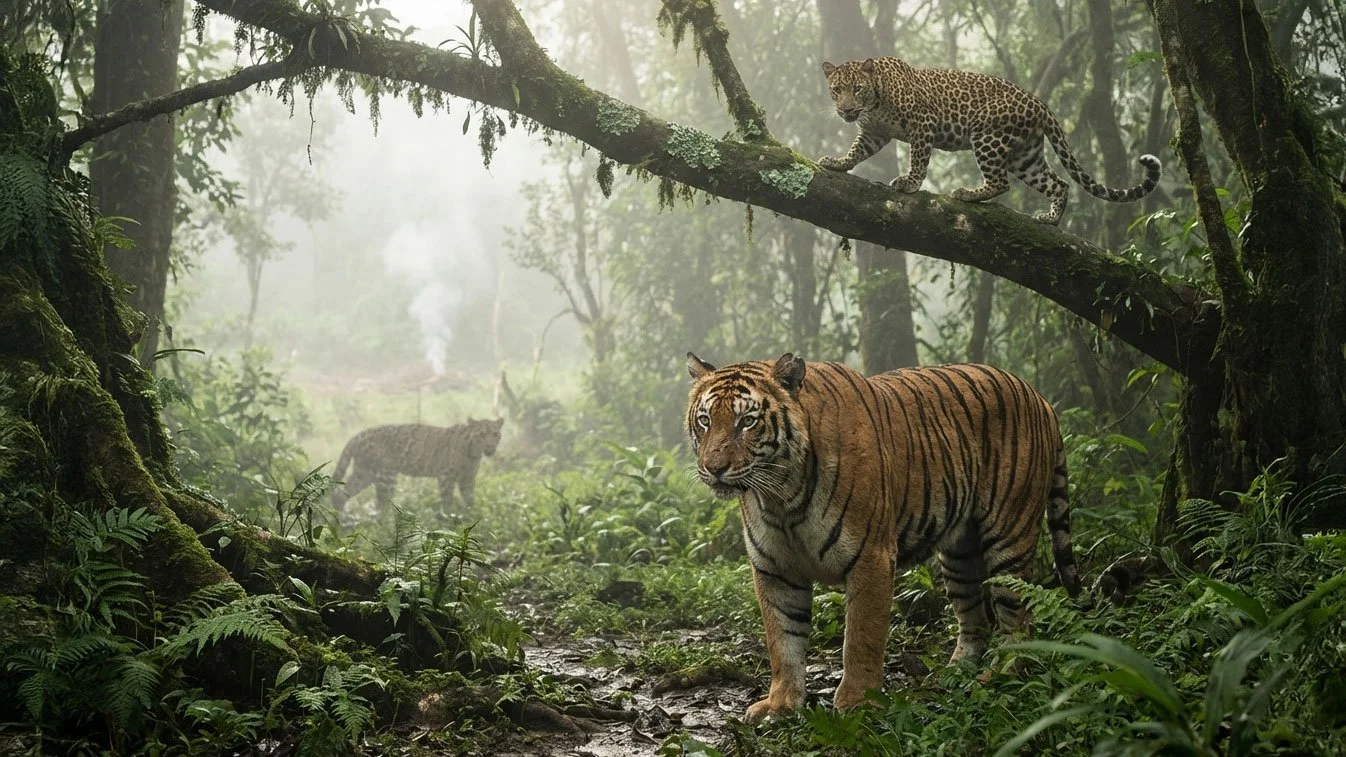
The Bornean rainforest is a wall of sound and green, where the air is thick enough to swallow your breath and the humidity fogs a camera lens in seconds. In the shadows of the Dermakot-Tangkulap landscape, a predator moves with such silence that it has earned the moniker "the ghost of the canopy." The Sunda clouded leopard is a biological enigma—an evolutionary link that sits perfectly between the great big cats and their smaller wild cousins.
For a decade and a half, scientists have attempted to pierce this veil. Moving beyond the "snapshots" of traditional short-term field work, a landmark 15.5-year study (2007–2023) led by the Leibniz Institute for Zoo and Wildlife Research, the Sabah Forestry Department, and Panthera has redefined our understanding of this species. Through 13 grueling camera-trap surveys, researchers have transitioned from mere observation to a deep, temporal understanding of how these cats endure.
2. The Record-Breaking "Grandmother" of the Forest
In the world of wildlife photojournalism, we often chase a single, perfect frame. But for biologists, the value lies in the repetition—the same face appearing in grainy midnight frames year after year. This study revealed a remarkable individual: a female Sunda clouded leopard who became the oldest of her kind ever recorded in the wild.
Estimated to be roughly 8.5 years old at the time of her final recording, she shattered previous longevity records. Crucially, the study distinguished her "residence time"—the confirmed duration she was physically present in the study area—at 6.51 years. This surpasses the previous record of 5.92 years held by a male. Tracking a single female through this lens provides a vital baseline for lifespan metrics, which are essential for calculating the long-term viability of the population.
“The female clouded leopard at the heart of this study spent years navigating a landscape shaped by logging and human activity — and outlasted every wild clouded leopard on record.” — Panthera Blog
3. The 68% Gender Blind Spot
There is a profound "blind spot" in how we see the forest. Most infrared triggers are bolted to the trunks of ancient trees at knee-height—perfect for catching a passing predator on the prowl, provided they stay on the ground. However, the data revealed that female clouded leopards are detected 68% less often than males.
This isn't necessarily a population imbalance, but a vertical one. Females spend significantly more time in the high canopy, safely out of reach of the scientific "net" cast by ground-level sensors. This reminds us that in the dense interior of Sabah, absence of evidence is not evidence of absence; it is simply a call to look higher.
“The under-detection of females in the Dermakot-Tangkulap landscape could prevent us from accurately tracking the population's breeding success. To better protect the Sunda clouded leopard, our future assessments should view the lack of female detections as a sign to explore the forest interior more thoroughly, rather than assuming they simply aren't present.” — Thye Lim Tee, Project Coordinator at Panthera Malaysia
4. The Surprising Range of the "Smallest" Big Cat
Though they are the smallest of the big cats, the Sunda clouded leopard requires a theater of operation that is surprisingly vast. By meticulously identifying individuals across more than a dozen remote camera stations, the study recorded cats traversing nearly 40 kilometers (25 miles) between disparate forest preserves.
This revelation shifts our perception of the species from sedentary forest dwellers to long-distance travelers. It underscores that for these "ghosts" to survive, we cannot rely on isolated pockets of green. Habitat connectivity is the true lifeline; without protected wildlife corridors that allow for this 40-kilometer scale of movement, the genetic health of the species remains at risk.
5. Why "Snapshots" Aren't Enough for Survival
In conservation, time is the most valuable variable. Short-term studies provide a glimpse, but they often miss the slow-motion dynamics of a population's rise or fall. The 15.5-year span of this research allows scientists to see past the immediate and understand the persistence of a species across generations.
By committing to the "long game," researchers can see how these cats adapt to landscapes altered by human activity and logging. It is the difference between a single photograph and a feature-length documentary; one captures a moment, the other reveals a destiny.
“Long-term, large-scale monitoring allows us to move beyond snapshots and truly understand how wild cat populations persist over time. Without it, we risk missing the very dynamics that determine their survival.” — Wai-Ming Wong, Director of Small Cat Conservation Science at Panthera
6. Conclusion: A Legacy in the Lens
The survival of the Sunda clouded leopard depends on a simple formula: science and habitat. This record-breaking study has opened the shutter on a world we are only beginning to comprehend. By documenting the "Grandmother of the Forest" and the long-distance journeys of her kin, we have moved one step closer to ensuring their future.
As we look toward the next decade of monitoring, we must wonder: what other ghosts are currently moving through the Dipterocarp branches, hidden from view and waiting for a lens long enough to finally see them?
Source: https://petapixel.com/2026/04/12/scientists-followed-a-single-clouded-leopard-on-remote-cameras-for-six-years/