Adam Bied
A Massachusetts resident named Adam Bied was recently sentenced to prison for his involvement in an extensive international wildlife trafficking operation. According to the U.S. Department of Justice, the defendant illegally imported and traded parts from numerous endangered and protected species, such as orangutans, tigers, and jaguars. To avoid detection by federal authorities, he falsified shipping labels and ignored strict federal regulations like the Lacey Act and the Endangered Species Act. In addition to serving time in prison, Bied must pay a significant fine and forfeit over 100 animal parts seized during the investigation. Officials emphasized that this prosecution serves as a stern warning to those who profit from the exploitation of vulnerable wildlife across the globe.
The Corbett Foundation
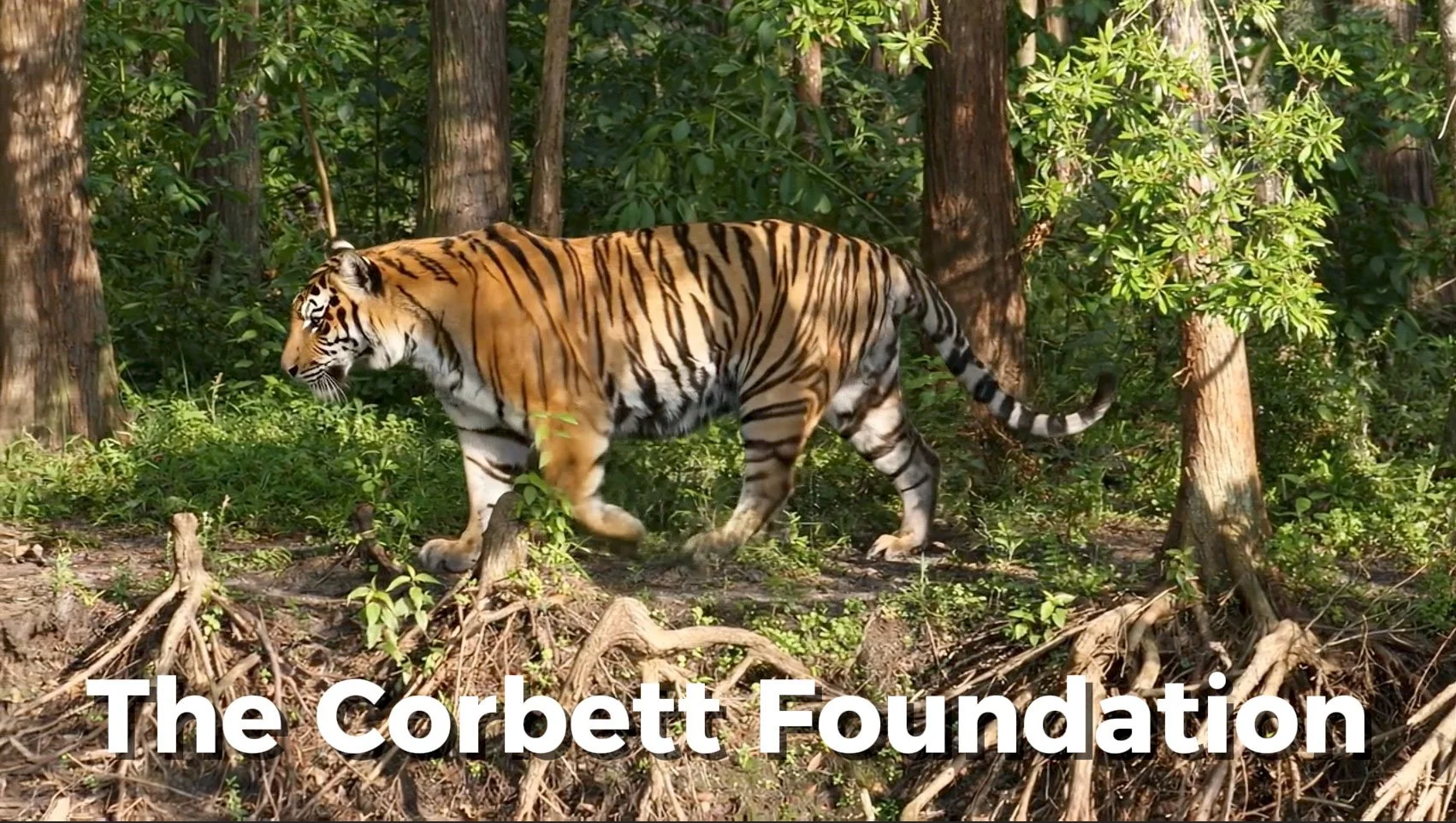
The 2024-25 Annual Report commemorates the 30th anniversary of The Corbett Foundation (TCF), an Indian non-profit established in 1994 to foster human-wildlife coexistence. The document highlights TCF’s expansion from its origins in Uttarakhand to nine distinct landscapes across seven states, focusing on the protection of threatened species like tigers, elephants, and vultures. Key initiatives detailed include the Livestock Compensation Programme, which prevents retaliatory killings, and extensive habitat restoration efforts that have revived thousands of hectares of forests and grasslands. Beyond ecology, the foundation integrates community well-being through rural medical outreach, sustainable livelihood training, and the distribution of green energy solutions. By combining scientific research with grassroots engagement, TCF aims to secure India’s natural heritage while improving the lives of people residing near protected wilderness areas. Collaborative partnerships with government agencies and international conservation bodies remain central to their mission of balancing environmental integrity with social development.
Ocelot Working Group
Forgotten Felines
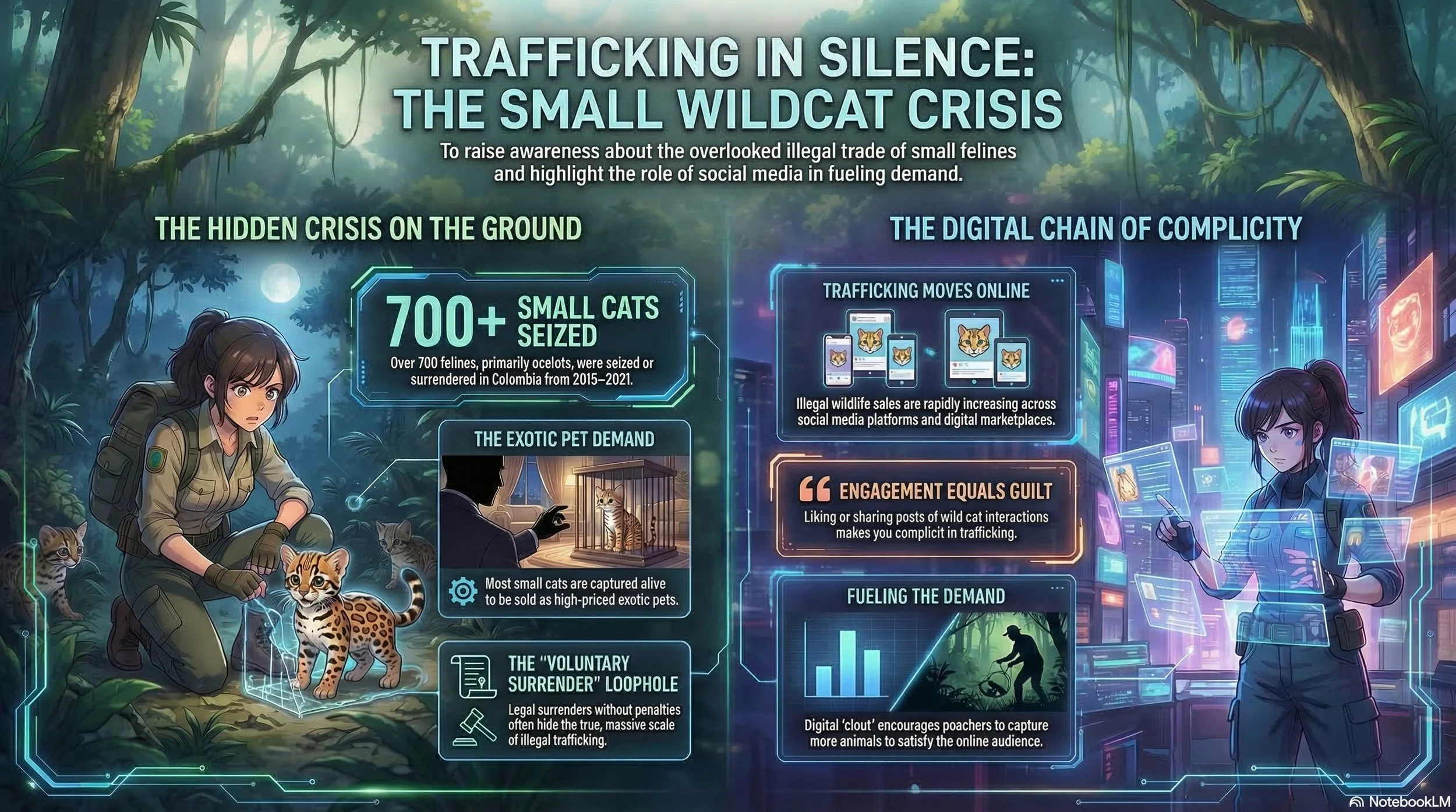
While large felines typically dominate conservation headlines, new research highlights a disturbing and overlooked spike in the illegal trafficking of small and medium-sized wildcats. In nations like Colombia, hundreds of species such as ocelots and margays are being removed from the wild to be sold as exotic pets or for their physical parts. This underground industry often operates through voluntary surrenders, a legal loophole that frequently masks the true magnitude of poaching activities. Experts warn that this crisis extends across Latin America, Asia, and Africa, where smaller cats are increasingly vulnerable due to their proximity to human settlements. Because these animals receive less monitoring and protection than their larger relatives, many species face a silent decline toward extinction. Greater international scrutiny and better data collection are essential to uncovering and halting this widespread wildlife crime.
Poll Says Uphold Lion Farming Ban
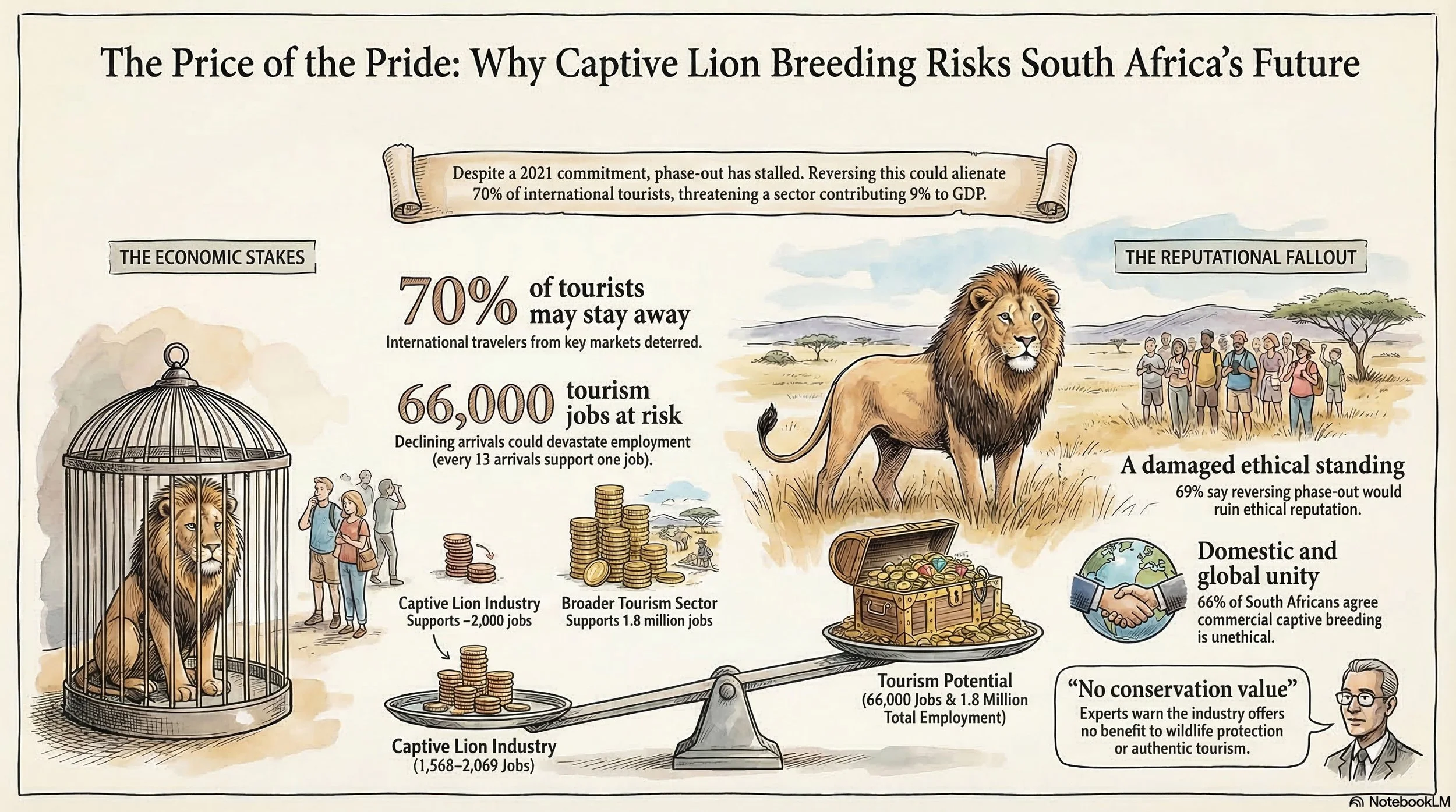
Recent polling data indicates that South Africa faces significant economic and reputational risks if it fails to dismantle its commercial captive lion breeding industry. A survey of over 2,500 respondents shows that a majority of international tourists would likely avoid the country if the government reverses its 2021 commitment to end the practice. Critics argue that activities like canned hunting and cub petting offer no conservation value and threaten approximately 66,000 tourism-related jobs. Both domestic and foreign audiences expressed a strong preference for ethical wildlife experiences over the exploitation of captive predators. Advocacy groups are now urging officials to eliminate further delays and implement a formal phase-out plan to protect the nation's vital travel sector.
Peruvian Pampas Cat Leopardus garleppi
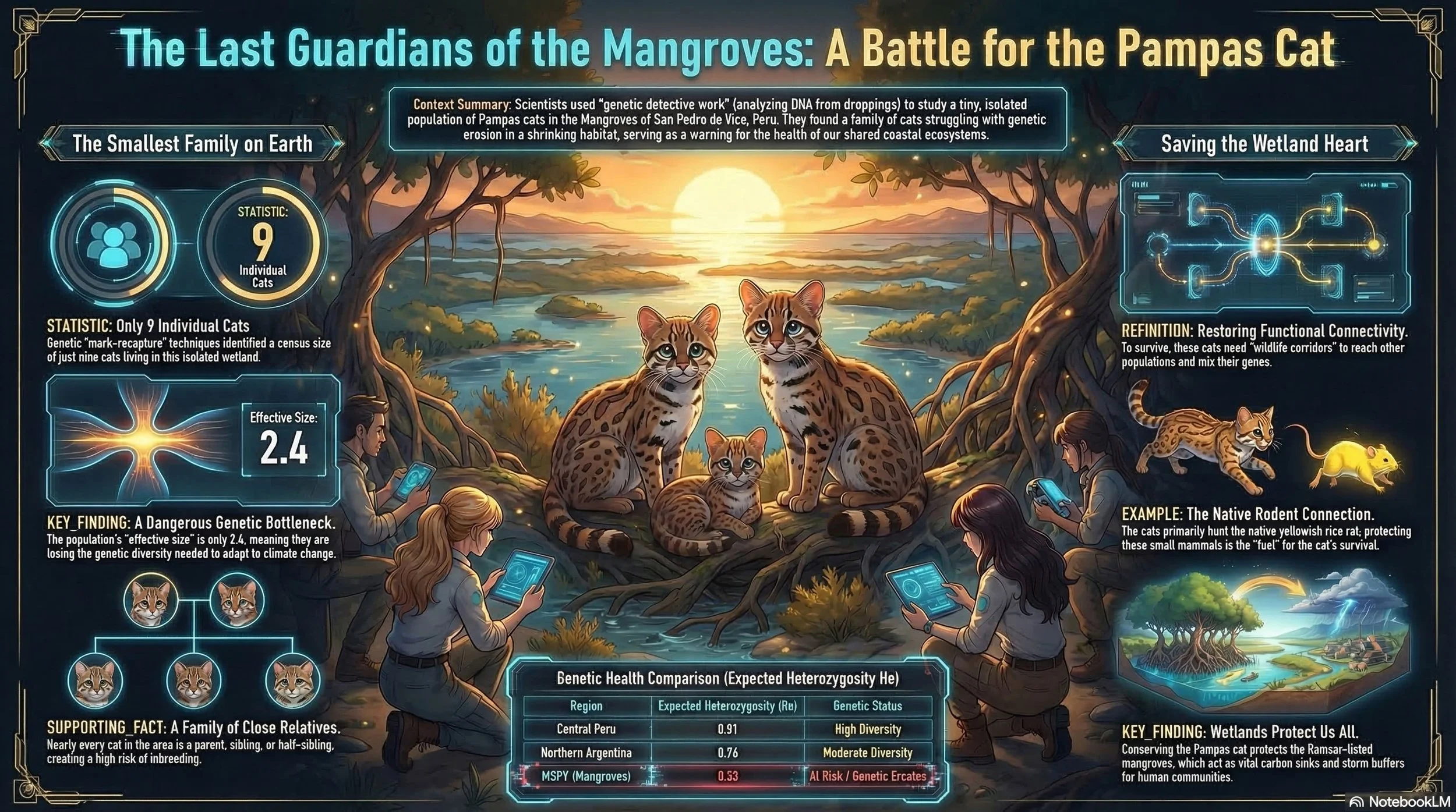
This research investigates the Pampas cat (Leopardus garleppi) population residing in the Mangroves San Pedro de Vice, a Ramsar-listed wetland in northwestern Peru. Scientists used noninvasive fecal DNA sampling between 2019 and 2021 to examine the species' genetic diversity, demographic trends, and trophic ecology. The findings reveal a critically small, kin-structured population of only nine identified individuals suffering from a recent genetic bottleneck and low effective population size. DNA metabarcoding of the samples indicates a diet primarily composed of the native yellowish rice rat, with no major dietary differences found between males and females. Ultimately, the study emphasizes that habitat restoration and functional connectivity are essential to prevent the extinction of this isolated, coastal felid population.