Ocelot Facts

Ocelot
Quick Facts
Scientific Name:Leopardus pardalis
Common Name: Ocelot
Kingdom: Animalia
Phylum: Chordata (Vertebrata)
Class: Mammalia
Order: Carnivora
Family: Felidae
Genus: Felinae (Leopardus)
Species: pardalis
IUCN Status: Least Concern (Global), though the population trend is currently decreasing.
Weight: Approximately 24 to 35 pounds.
Life Span: Typically 7 to 10 years in the wild, though they can exceed 20 years in a sanctuary environment.
Interesting Fact: Ocelot population densities are closely tied to rainfall; they thrive in high-precipitation tropical areas.
Appearance
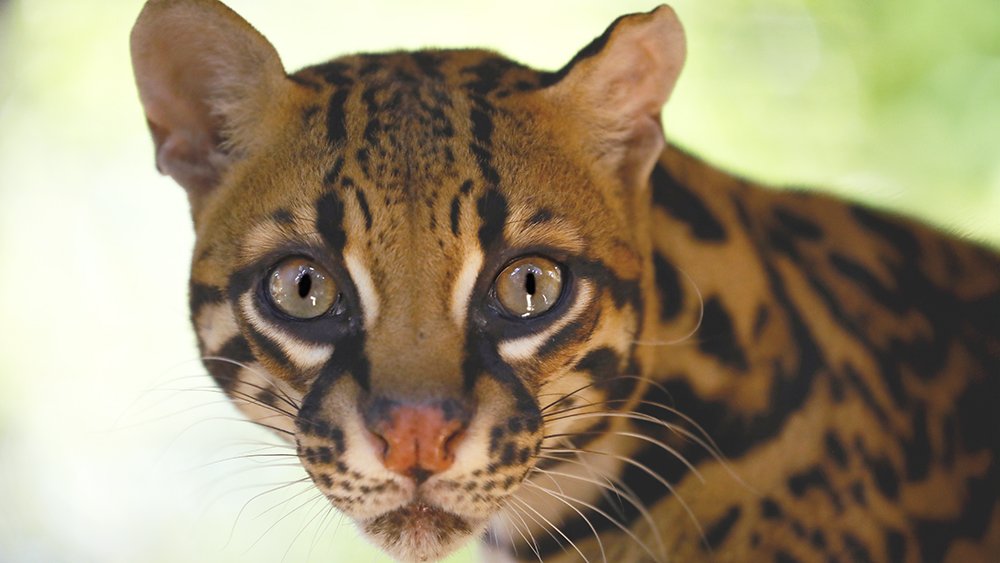
The ocelot is a medium-sized wild cat, significantly larger than its close relatives, the margay and oncilla. Its coat is a masterpiece of natural camouflage, featuring a base color that ranges from creamy white and tawny yellow to reddish-gray. The most striking feature of the ocelot is its unique markings: "chain-like" blotches and spots that are outlined in black with lighter centers. These patterns run the length of its body, complemented by a white underbelly and black ears marked with a prominent central white spot on the back.
See a playlist of this species at https://bigcatrescue.org/videos
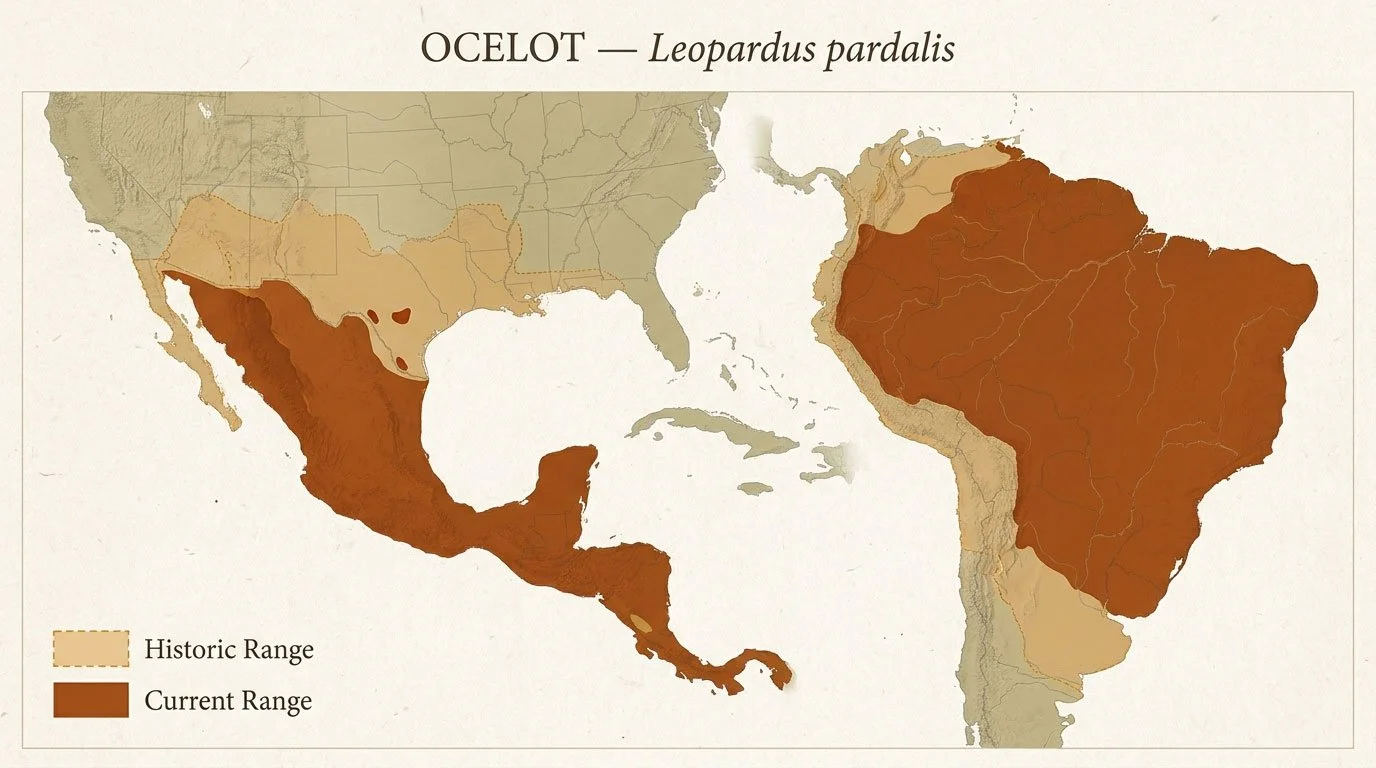
Ocelot-Range-Map
Habitat and Range
Ocelots are found across a massive geographic range, stretching from the southwestern United States (specifically Texas and Arizona) through Mexico and Central America, and as far south as northern Argentina and Uruguay. Notably, they are absent from Chile.
These cats are highly adaptable but share one non-negotiable requirement: dense, well-structured vegetative cover. You can find them in a diverse array of ecosystems, including:
Tropical and subtropical rainforests
Mangrove swamps and coastal marshes
Thorny scrublands
Savanna grasslands While they usually stay below elevations of 3,000 meters, they have occasionally been recorded at higher altitudes.
Diet and Behavior
Ocelots are primarily terrestrial hunters and are most active during the night and at twilight (nocturnal and crepuscular). They are solitary and fiercely territorial animals. A female may maintain a territory of up to 9 square miles, while a male’s larger range—sometimes reaching 35 square miles—often overlaps with those of several females.
Their diet is varied and opportunistic. While they primarily hunt small nocturnal rodents such as mice and rats, they are capable of taking down larger prey including:
Armadillos and opossums
Monkeys and lesser anteaters
Land tortoises, lizards, and birds
Fish and land crabs (especially during the wet season)
Reproduction
Ocelots have a relatively slow reproductive rate compared to other small felids. After a gestation period of approximately 79 to 85 days, a female typically gives birth to a small litter of 1 to 2 kittens (though litters of up to 4 are possible). Kittens are born weighing only about 8.5 ounces.
Independence: Young ocelots become independent at one year old but may stay within their mother's range for up to two years.
Maturity: Females generally reach sexual maturity at 1.5 years, while males reach maturity at approximately 2.5 years.
Threats
Despite being widely distributed, ocelots face a declining population trend due to several escalating threats:
Habitat Fragmentation: Deforestation and logging destroy the dense cover ocelots need to survive and hunt.
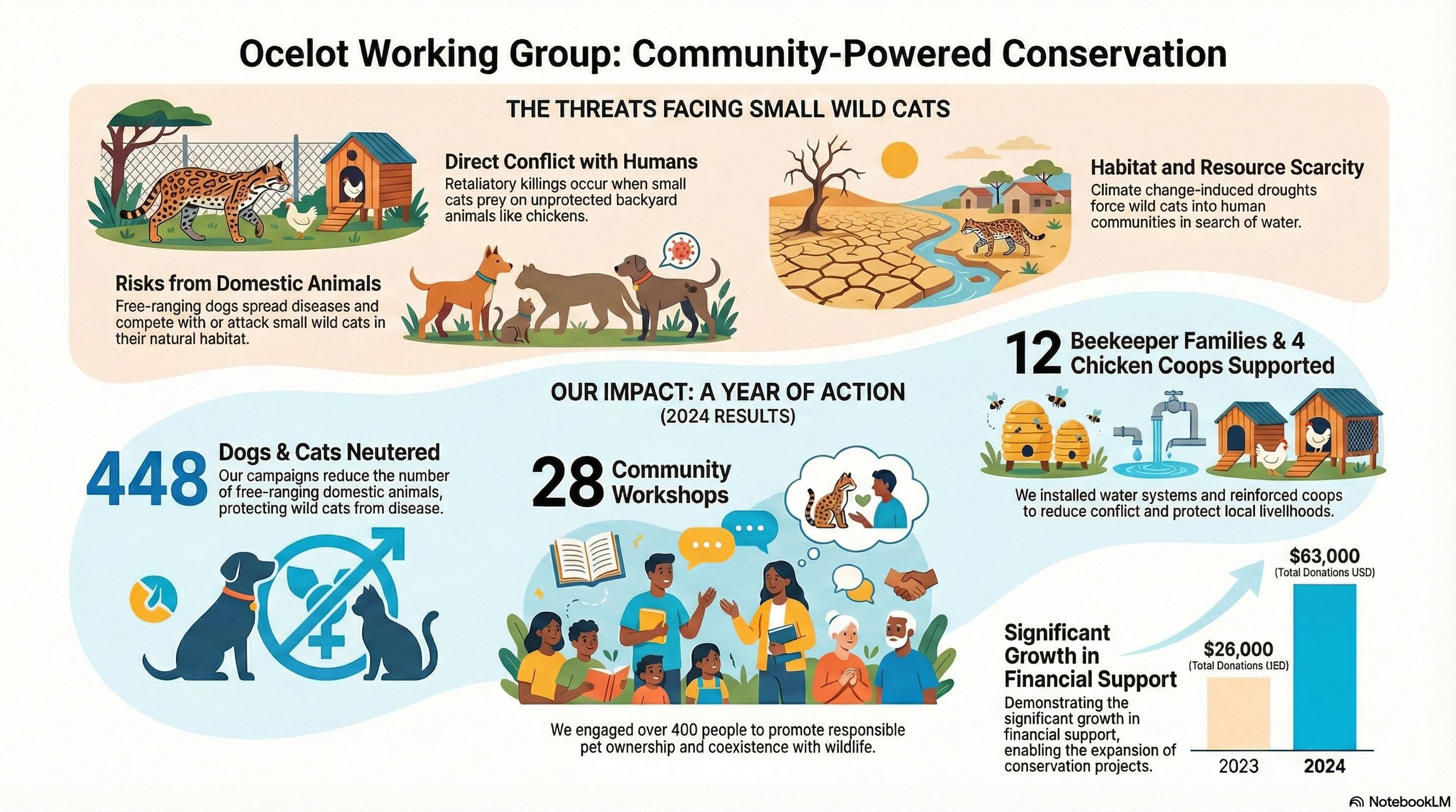
Human-Wildlife Conflict: Ocelots are sometimes killed in retaliation for preying on domestic poultry.
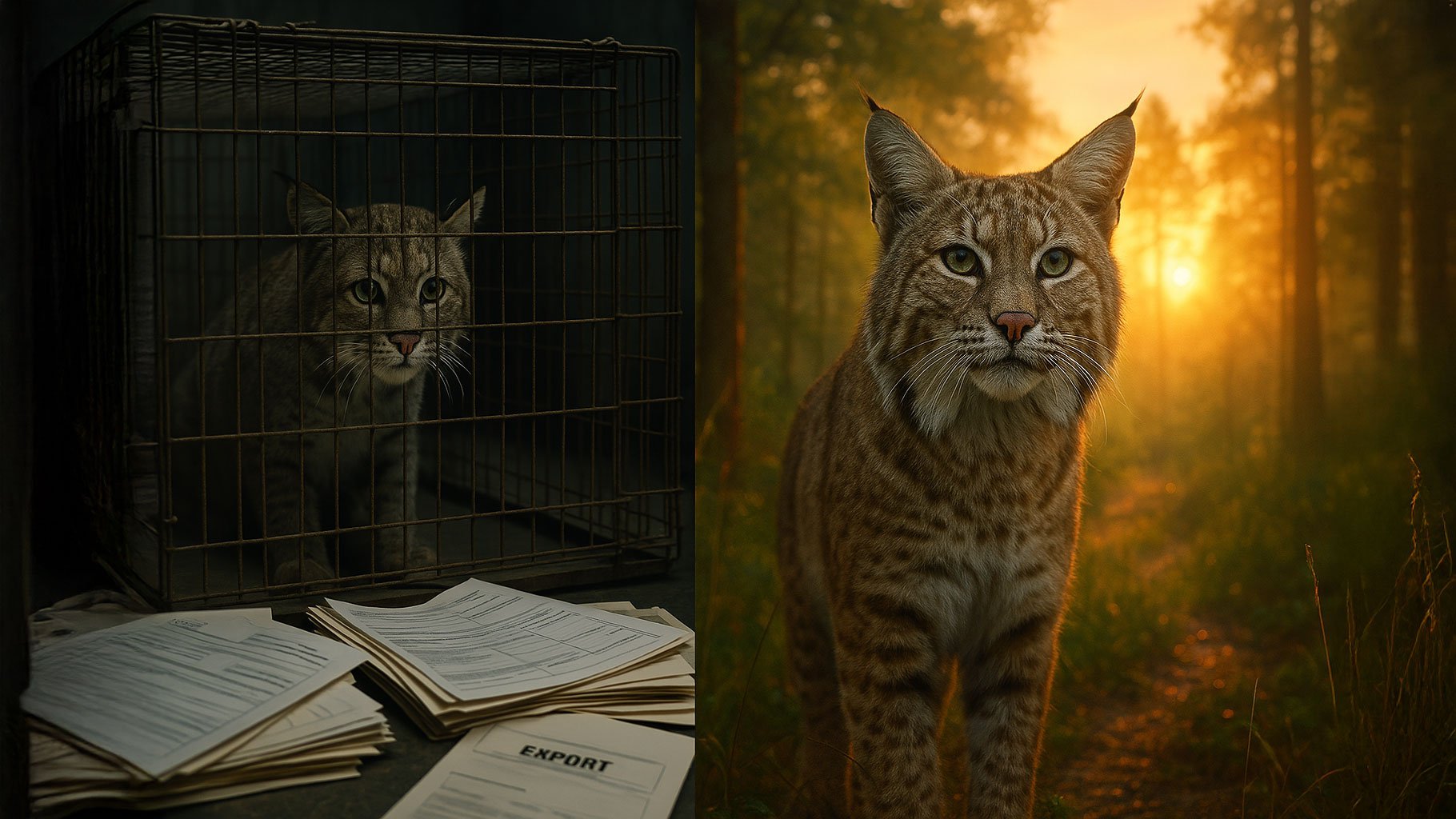
Illegal Trade: While the massive commercial fur trade of the 1960s and 70s has largely ceased, illegal trade in pelts and exotic pets persists.
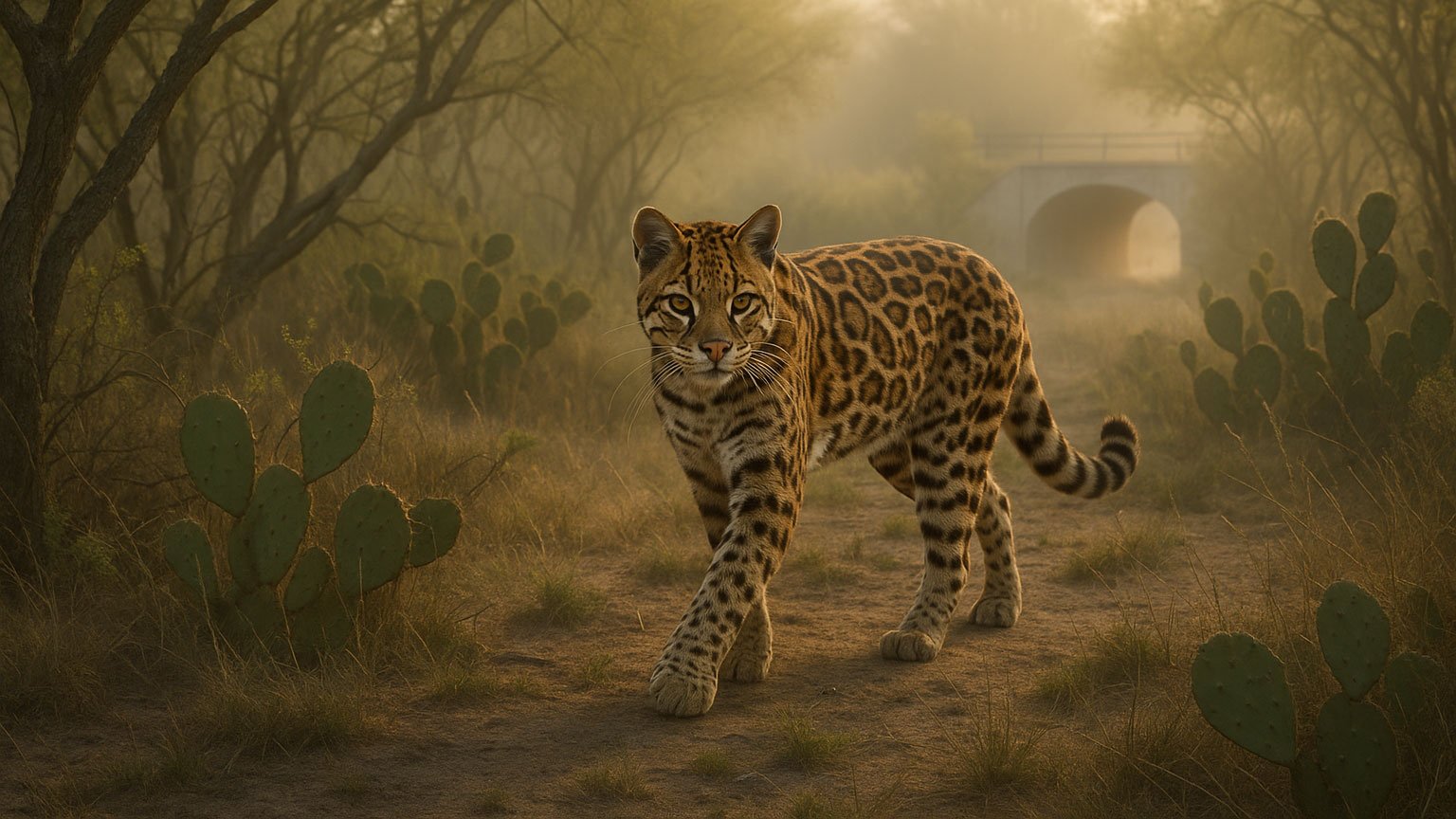
Infrastructure Hazards: In areas like Texas, vehicle collisions are a major cause of mortality for the small remaining populations.
Biological Vulnerability: Their small litter sizes and slow growth rates make it difficult for populations to bounce back quickly from these pressures.
Question: Can I keep an ocelot as a pet?
Conservation Efforts

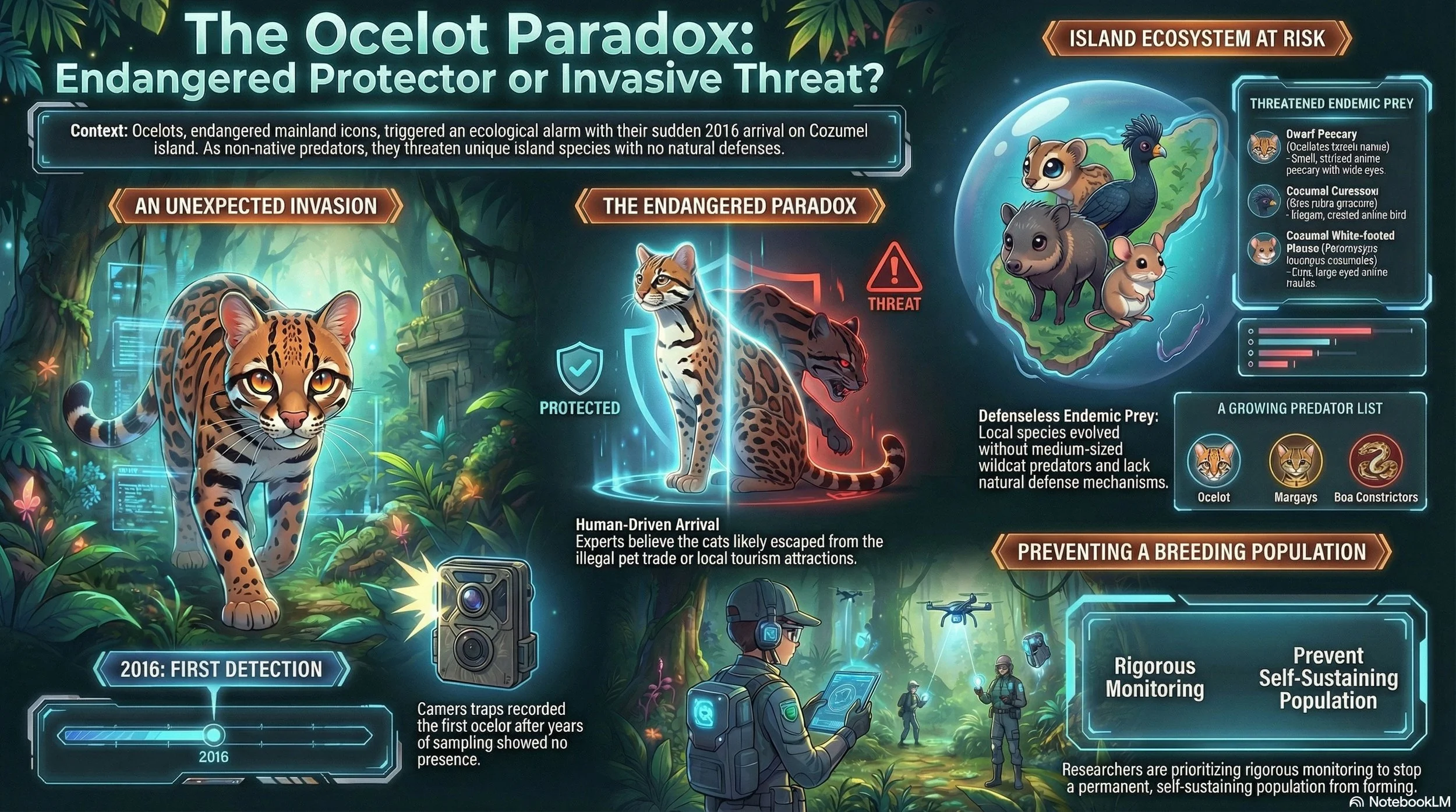
The ocelot is protected under CITES Appendix I, the highest level of international trade protection. Throughout most of its range, hunting is strictly prohibited. In the United States and Mexico, the species is officially listed as Endangered.
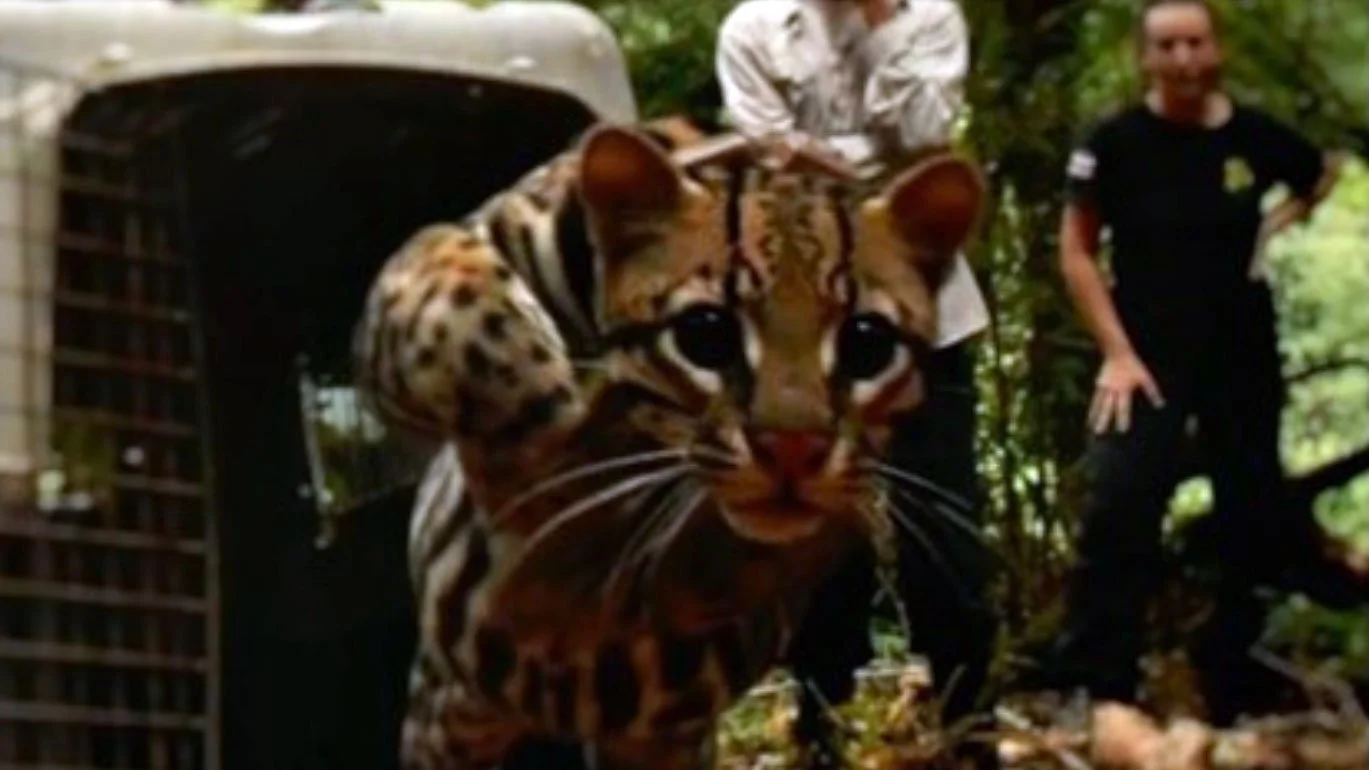
Conservationists are working tirelessly to secure the ocelot's future through habitat protection, the creation of wildlife corridors to prevent road deaths, and managed breeding programs like the Species Survival Plan (SSP).
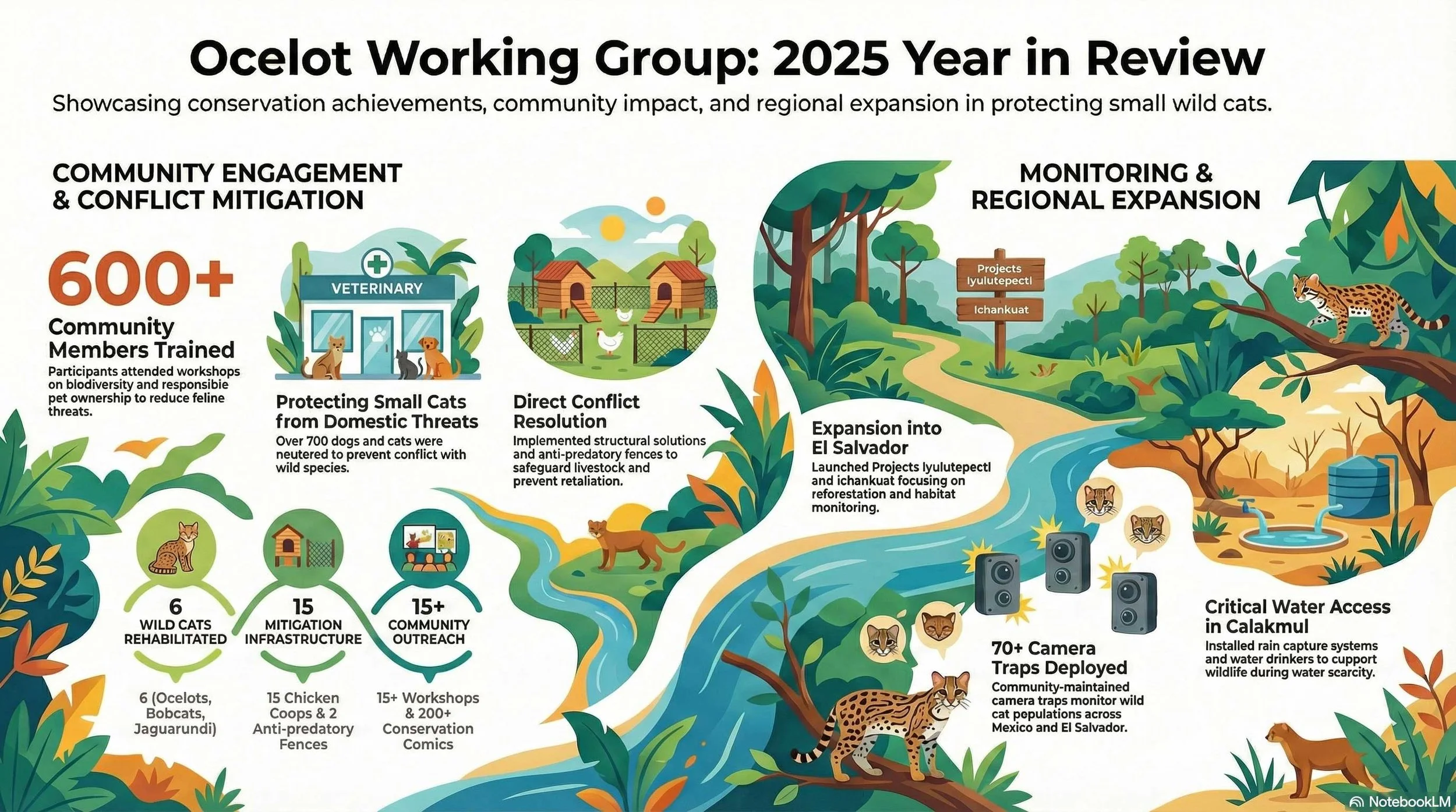
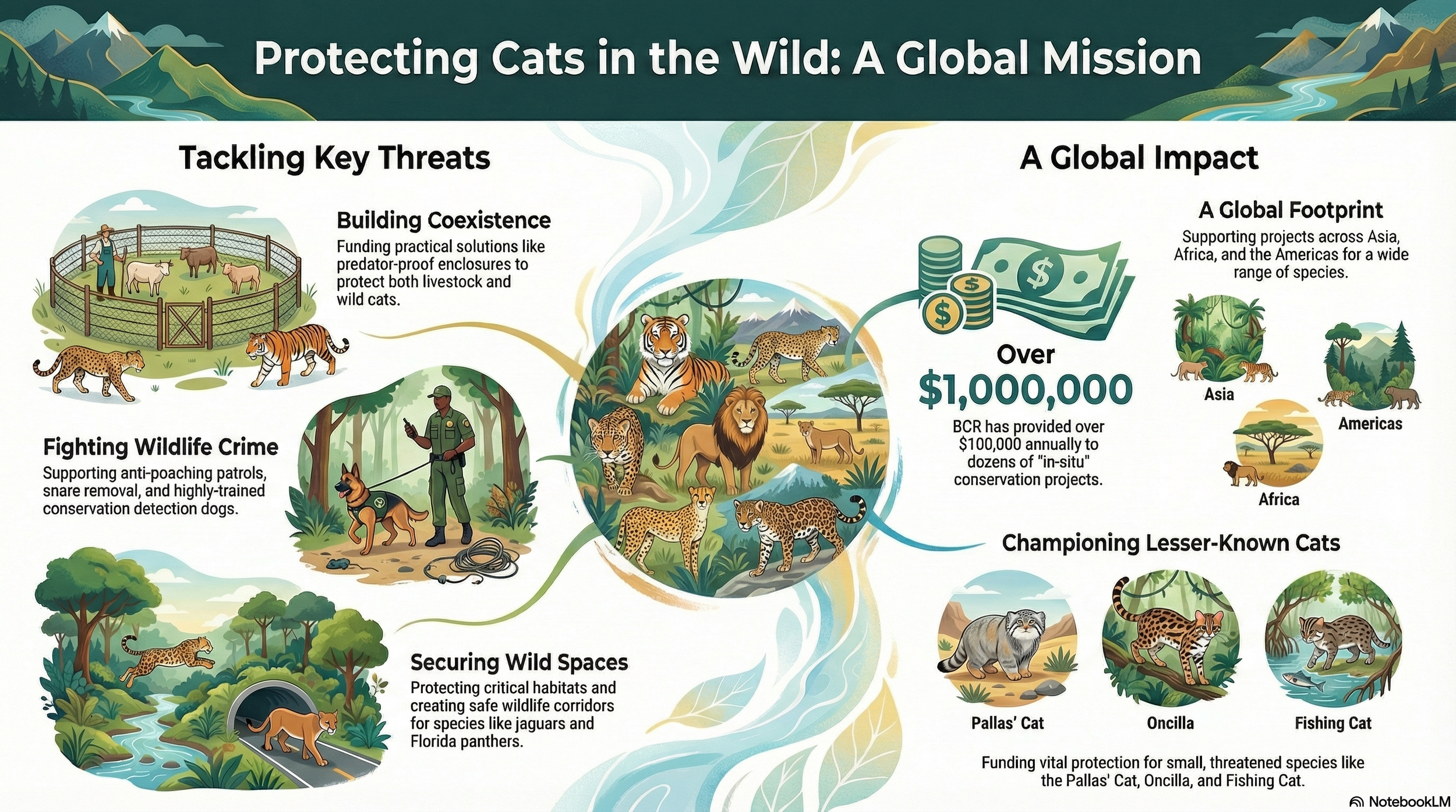
Big Cat Rescue has been a proud supporter of ocelot conservation in the wild. Through our funding initiatives, we have supported critical work performed by the Ocelot Working Group, the Small Wild Cat Conservation Foundation (SWCCF), and various InSitu conservation projects aimed at protecting these cats in their natural habitats across the Americas.
See Conservation Work Funded By Big Cat Rescue here:
All conservation insitu work: https://bigcatrescue.org/insitu/











Ocelot Facts: Habitat, Population, Threats and Conservation. Learn where ocelots live, what threatens them, how many remain, and which conservation efforts are protecting wild ocelots.