Felinos do Pampa
The Ghost of the Grasslands: 5 Surprising Lessons from Brazil’s Smallest Wild Cats
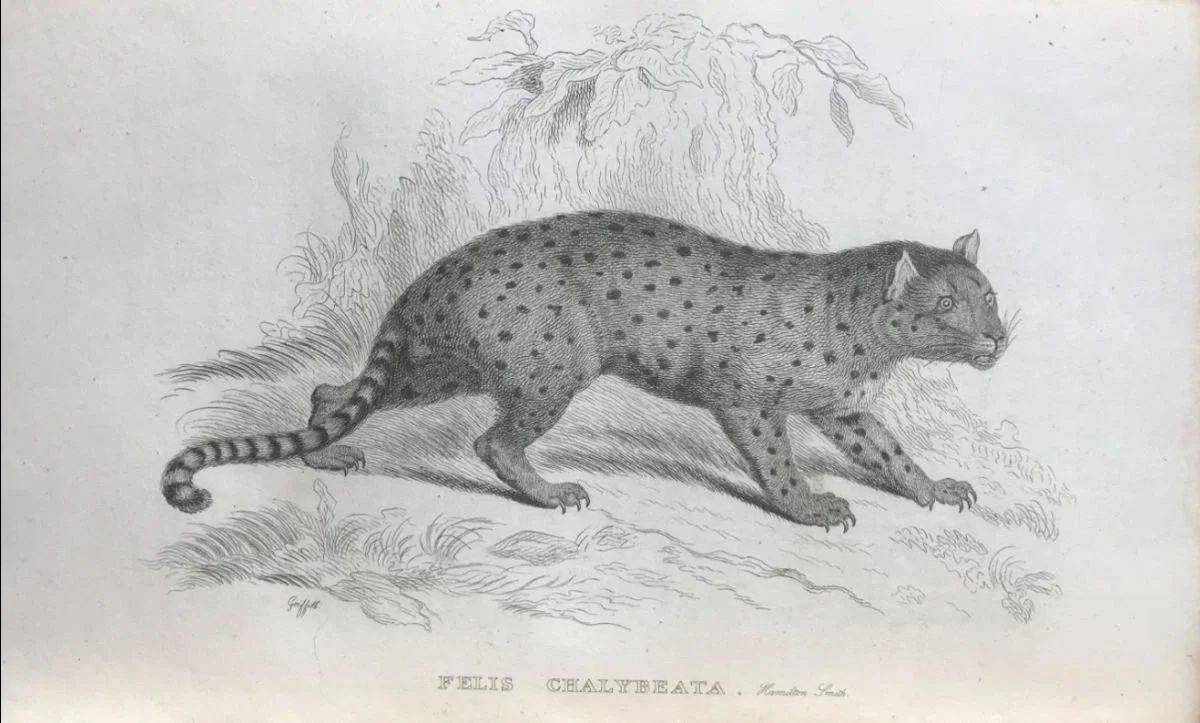
When we think of wild cats, our minds instinctively drift to the "Big Four"—the lions of the Serengeti, the tigers of Bengal, or the jaguars of the Pantanal. Yet, in the sprawling, windswept horizons of the Brazilian Pampa, a different kind of feline royalty exists in the shadows. Here, seven distinct species of wild felids roam: the Geoffroy’s cat, margay, jaguarundi, Muñoa’s pampas cat, southern tiger cat, ocelot, and the puma.
Despite their numbers, these cats are masters of invisibility. One in particular—the Muñoa’s pampas cat—is so elusive that researchers call it the "Ghost of the Pampa." But why is a creature that lived alongside humans for centuries suddenly a phantom?
The Felinos do Pampa Project, a conservation initiative under the Geoffroy’s Cat Working Group, is working to answer that question. In doing so, they’ve uncovered five vital lessons about what it takes to save a species that most people have never seen.
1. Saving a Cat Can Save a Culture
The project’s flagship species, the Muñoa’s pampas cat (Leopardus munoai), is one of the most threatened mammals on the planet. Found nowhere else on Earth, its survival is inextricably linked to the traditional gaucho lifestyle.
To save this "Ghost," you don't just protect a cat; you protect a way of life defined by open grasslands, extensive cattle ranching, and the quiet ritual of the chimarrão. Traditional grassland management has maintained the specific habitat these cats need for generations. As the landscape shifts toward industrial monocultures and younger generations move away, the cat vanishes alongside the culture.
"The survival [of the Muñoa’s Pampas cat] is directly linked to this way of life, as it was precisely the traditional management of native grasslands that maintained ideal habitat conditions for generations. The disappearance of this felid also reflects the loss of that culture... saving this 'gaucho cat' also means preserving the essence of the gaucho people and the cultural landscape that shaped the Pampa."
2. The Frontline of Conservation is the Chicken Coop
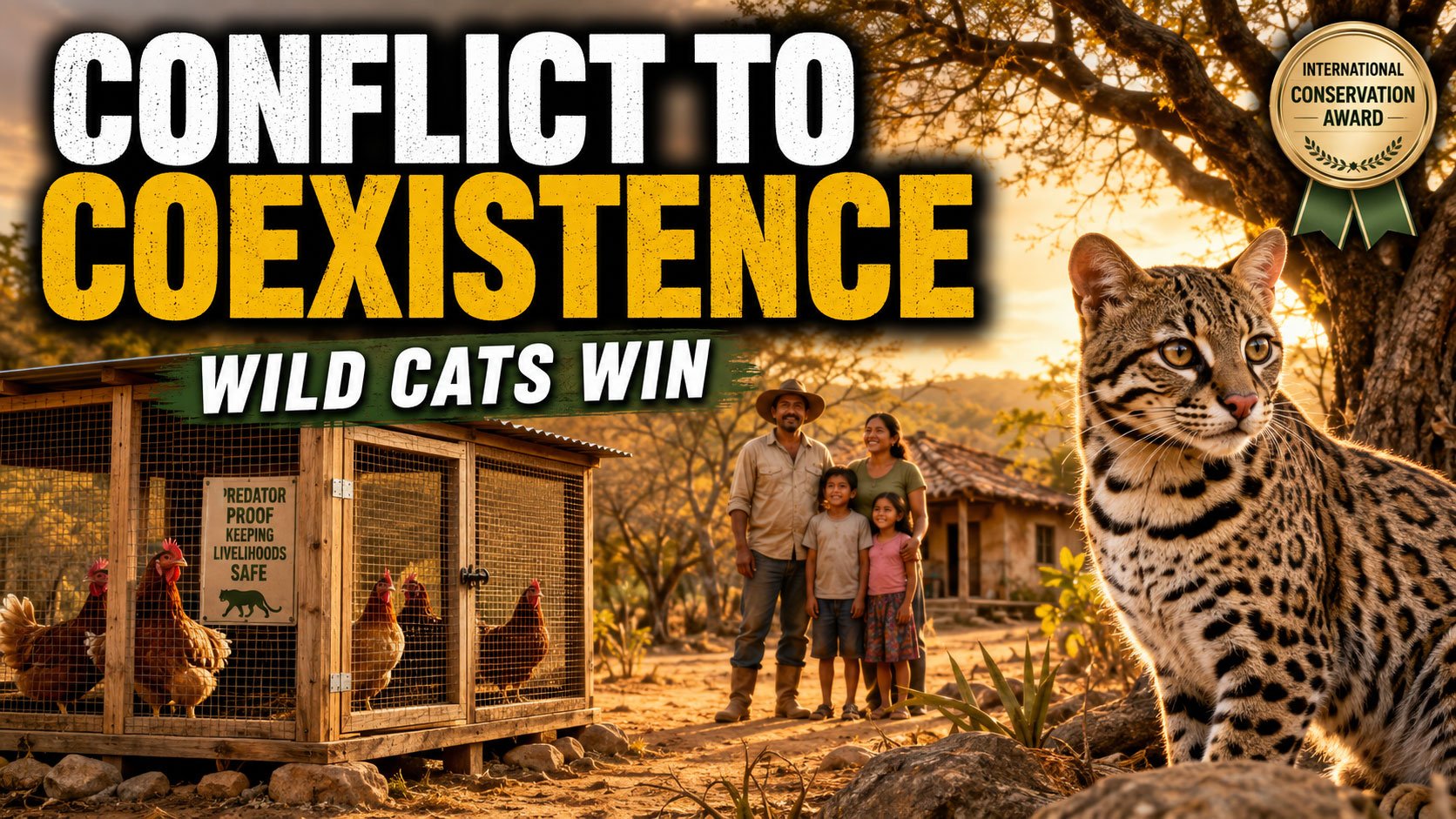
For many rural producers, a wild cat isn't a conservation priority—it's a predator that threatens their livelihood. To address this, the project established the "Felid–Human Coexistence Network."
Instead of focusing on policy or punishment, the team went to the source of the conflict: the chicken coop. By intervening in 36 coops to create predator-proof structures, they proved that construction is more effective than retaliatory killing. These farmers are now certified members of a network that promotes harmony, demonstrating that the secret to saving wild cats often lies in simple, practical infrastructure that protects both the feline and the farmer.
3. Wild Cats are Becoming Urbanites (And It’s Dangerous)
While the "Ghost" haunts the grasslands, its cousin, the southern tiger cat (L. guttulus), is making headlines in the concrete jungle. Recent viral videos of these small cats in Porto Alegre, the state’s metropolitan capital, have highlighted a growing crisis: urban fragmentation.
Research by team member Alan Silva reveals a surprising complication: flooding. In a city increasingly prone to extreme weather, floods act as temporary but lethal barriers to movement. Using hydrological simulations, the project maps "safe routes" during flood scenarios. These simulations serve as an emergency evacuation plan for wildlife, identifying the ecological corridors needed to ensure cats don't become trapped on urban "islands" as the waters rise.
4. To Protect Wild Cats, You Must Treat Domestic Ones
In a fragmented landscape, the boundaries between the wild and the domestic are thin. Through a "One Health" lens, the Felinos do Pampa Project treats domestic dogs and cats not just as pets, but as potential sources of pathogens that can decimate wild populations.
Between 2023 and 2025, the project vaccinated, neutered, or facilitated the adoption of 1,051 dogs and cats. This effort creates a vital "sanitary buffer." By managing the health of domestic animals at the edge of the grasslands, the project prevents the "hidden" threat of disease from crossing the threshold into the wild.
5. Citizen Science vs. The Highway
The greatest modern predator of the small cat isn't a wolf or an eagle—it’s the asphalt. To combat this, the project has turned everyday drivers into conservation contributors. Using a collaborative database, "citizen scientists" have helped record 178 roadkill incidents.
This data provided the foundation for a massive mapping effort covering 150 km of federal highways. These aren't just statistics; they are the blueprints for physical interventions. To date, the project has implemented:
12 specialized road signs to alert drivers.
5 speed reducers in high-conflict zones.
1 kilometer of protective fencing.
A dedicated wildlife crossing.
By knowing exactly where the cats cross, the project is effectively re-stitching a landscape torn apart by roads.
Conclusion: The Pampa’s Natural Soul
To date, the Felinos do Pampa Project has reached 7,861 people across 26 communities. This isn't just about biology; it’s about social engagement.
If the "Ghost of the Pampa" disappears, we lose more than a rare felid; we lose the "natural soul" of a biome and the cultural heritage of the people who shaped it. We are challenged to rethink our definition of "wild." In the Pampa, we learn that nature and humanity are not separate entities. In fact, traditional human management may be the only thing keeping the "Ghost" from disappearing forever.