The 30x30 Paradox
Why Global Conservation Goals are Breaking the People Who Protect Them
1. The Sound of the Morning Drill
The gunfire began just before six in the morning at Upemba National Park. For Christine Lain, the sharp, rhythmic cracks of rifles were initially familiar—a sound she associated with the park’s frequent readiness drills. But as the seconds ticked by, the simulation didn't end; it curdled into a massacre. The psychological jarring was total as the realization set in: this wasn't an exercise, but a targeted assault on the headquarters.
Survivors spent the next several hours huddled in a suffocating crawl space, listening to armed men search the rooms below, or sprinting through waist-high grass under a hail of lead. By sunset, three rangers and four civilian staff were dead. "Everybody got traumatized," Lain later recalled. "The whole station, everybody."
As a humanitarian specialist, I’ve seen this pattern in conflict zones worldwide, but in the conservation sector, we continue to ignore it. While we rhetorically champion rangers as the "first line of defense," we treat their mental and physical health as an expendable resource. We are celebrating conservation success stories while the humans behind them are quietly shattering under the pressure.
2. The Myth of the "Poacher" vs. The Reality of War
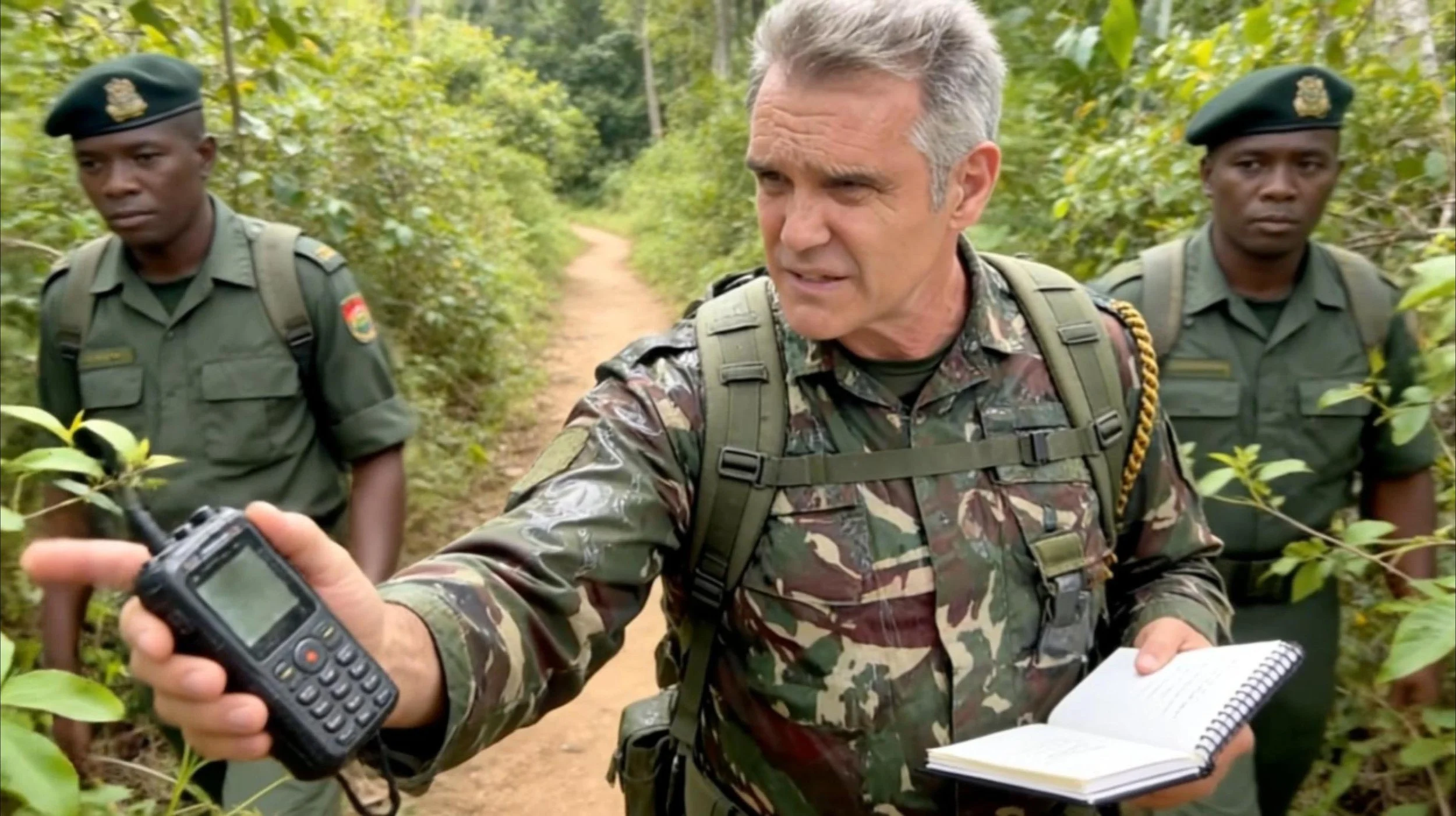
The romanticized image of a lone, desperate poacher with a snare is a relic of the past. Today’s rangers face coordinated, professionalized armed groups that operate with military precision. At Upemba, the attackers didn’t just have numbers; they had infrastructure. They wore uniforms, carried sophisticated radios, and—most tellingly—relayed tactical orders in real-time.
This shift from "patrolling" to "combat" has fundamentally altered the psychological stakes. Short paragraphs cannot fully capture the weight of this transition:
Rangers are now de facto security forces in active conflict zones.
The line between conservation and high-stakes policing has blurred.
They are expected to navigate insurgencies and land disputes with little to no tactical support.
When the enemy is a disciplined militia rather than an opportunistic intruder, the mental burden shifts from simple vigilance to the grinding, constant pressure of a soldier in the trenches.
3. The "Back to Work" Protocol: Trauma as a Requirement
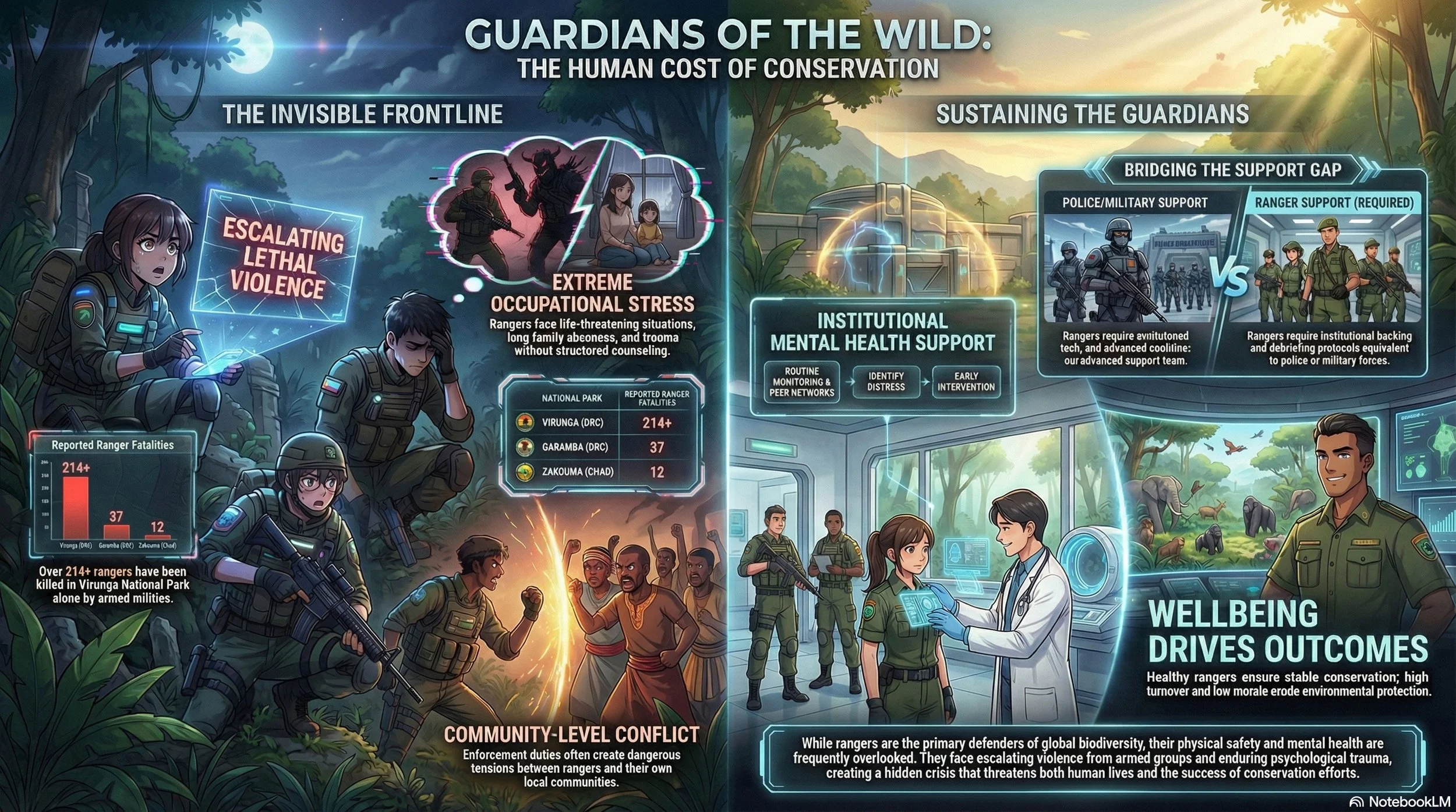
Perhaps the most damning evidence of our failure is the lack of immediate support following violent incidents. In 2018, following a lethal attack in Virunga National Park, rangers were expected to return to their posts that same afternoon. There was no recovery period, no debrief, and no safety net.
"They had to go to work that afternoon, no counseling, just back to it," says Sean Willmore, founder of the Thin Green Line Foundation.
Treating trauma as "just part of the job" is a catastrophic management failure. When we treat psychological injury as a professional requirement, we aren't building a resilient workforce; we are building a brittle one. Expecting a human being to witness the execution of a colleague and immediately return to a high-tension patrol is not just inhumane—it’s strategically reckless.
4. Why Mental Health is a Strategic Conservation Asset
Ranger wellbeing isn't a "soft" HR issue; it is a tactical necessity. A recent paper in Conservation Letters by Mahmood Soofi and colleagues highlights that extreme stress directly compromises the mission. When we ignore the mental state of the ranger, we are inviting the following failures:
Impaired Decision-Making: Extreme stress clouds judgment, leading to fatal errors in the field.
Reduced Performance: Trauma-induced fatigue lowers the efficacy of every patrol.
Absenteeism and High Turnover: We lose decades of institutional knowledge as experienced guardians burn out.
Analysis: We must recognize that a ranger suffering from untreated PTSD is a compromised strategic asset. If their ability to think clearly in a crisis fails, the conservation outcome fails. In this environment, a mental health breakdown isn't just a personal tragedy—it makes species extinction a mathematical certainty.
5. The Invisible Strain: The Enemy at the Gate and the Neighbor at Home
The trauma of a firefight is visible, but there is a more insidious, "less visible form of strain" that happens in the quiet moments. Most rangers are recruited from the very communities they are tasked with policing. This creates a state of permanent social friction.
Rangers often find themselves socially alienated, facing direct threats from neighbors or former friends who resent enforcement measures. Furthermore, the "re-entry" problem is acute: the psychological friction of moving from a high-tension, combat-ready patrol environment back to a domestic family setting is immense. After months in the bush, transitioning to the role of a father or husband without psychological "decompression" is a recipe for domestic instability. The irony is haunting: the people protecting the local ecosystem often become outcasts within its human population.
6. The 30x30 Paradox: Expansion Without Support
Global conservation is currently obsessed with the "30x30" goal—protecting 30% of the planet by 2030. Yet, this push for expansion is happening without a corresponding investment in human infrastructure. We are creating more protected areas on paper while leaving the people required to manage them in a state of professional neglect.
As Elise Serfontein, founding director of Stop Rhino Poaching, points out:
"It's one thing to implement a [psychological well-being] project. It takes commitment to maintain it."
We are setting international targets for expansion while maintaining fragmented, underfunded support systems. To expand conservation coverage without investing in the welfare of the rangers is to build a house without a foundation. We are setting our guardians up for failure by ignoring the very infrastructure that keeps them standing.
7. Conclusion: The Fragility of Hope
The current conservation model operates on the delusion that human endurance is an infinite resource. It is not. The biological health of our national parks is inextricably tied to the psychological health of the men and women who walk the perimeter.
Luis Arranz, co-director of Salonga National Park, frames the stakes perfectly:
"It takes 20 years to build a population and only a few months to destroy it. If we left tomorrow… in six months, there would be nothing left."
If the survival of the world's most iconic species rests entirely on the shoulders of these individuals, we must decide: are we willing to invest in the "guardians" as much as we invest in the "guarded"? Until we treat mental health as a core component of conservation strategy, the frontlines will remain dangerously, and perhaps permanently, fragile.