Caracal Facts

Caracal

Quick Facts
Scientific Name:Caracal caracal
Common Name: Caracal, Desert Lynx
IUCN Red List Status: Least Concern (Global)
Weight: Males up to 40 lbs; females up to 35 lbs
Lifespan: Up to 19 years in captivity
Taxonomy: Classified within the family Felidae and the genus Caracal. It is closely related to the African golden cat and the serval.
Appearance
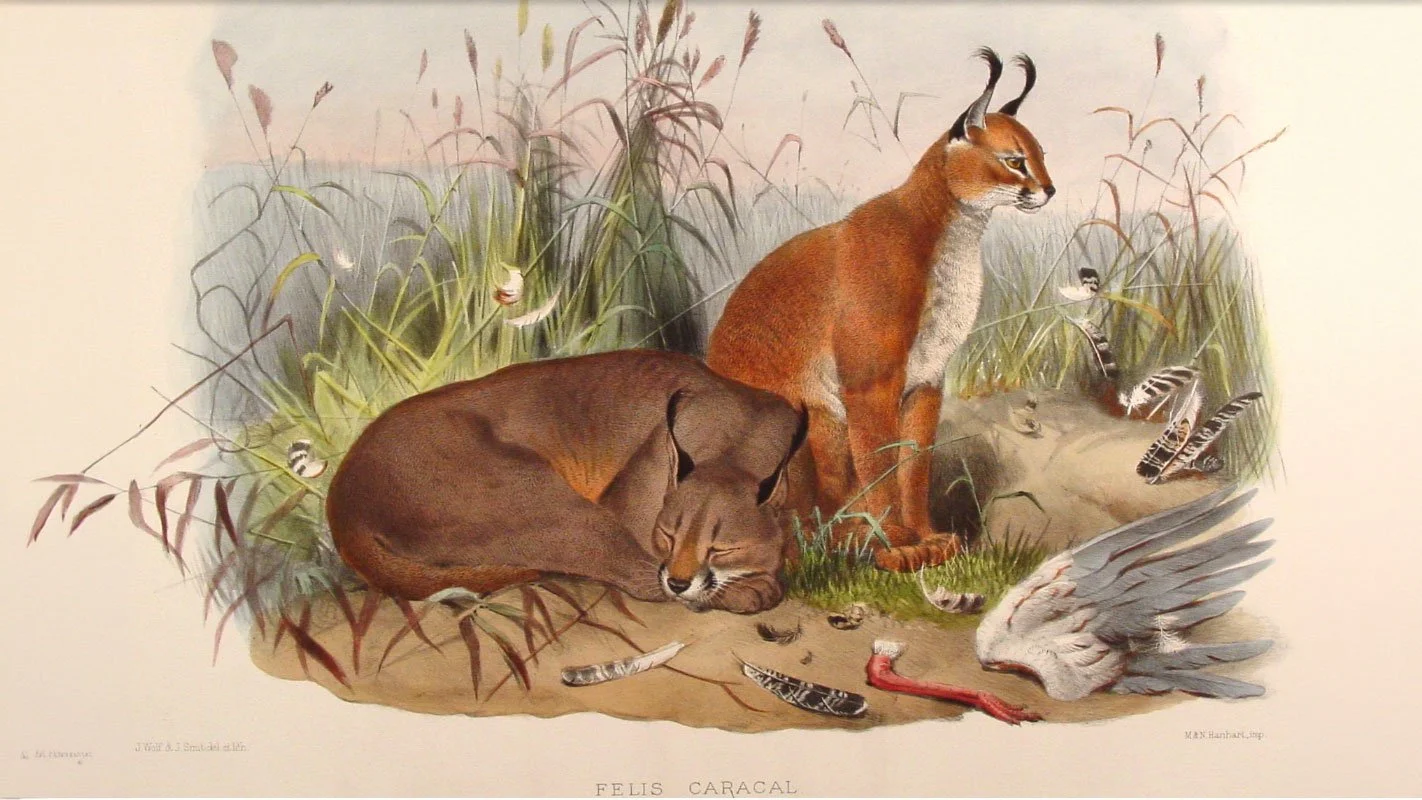
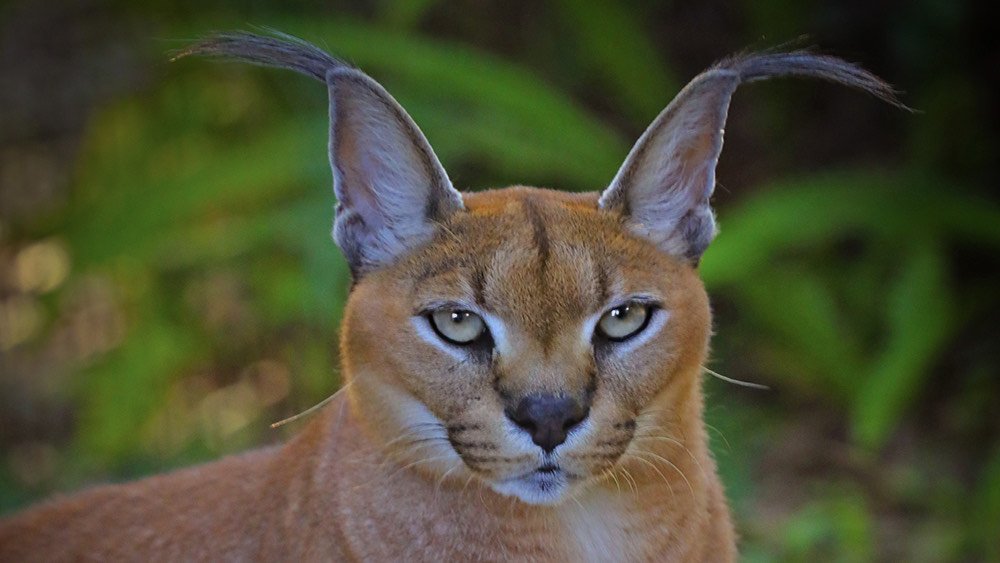
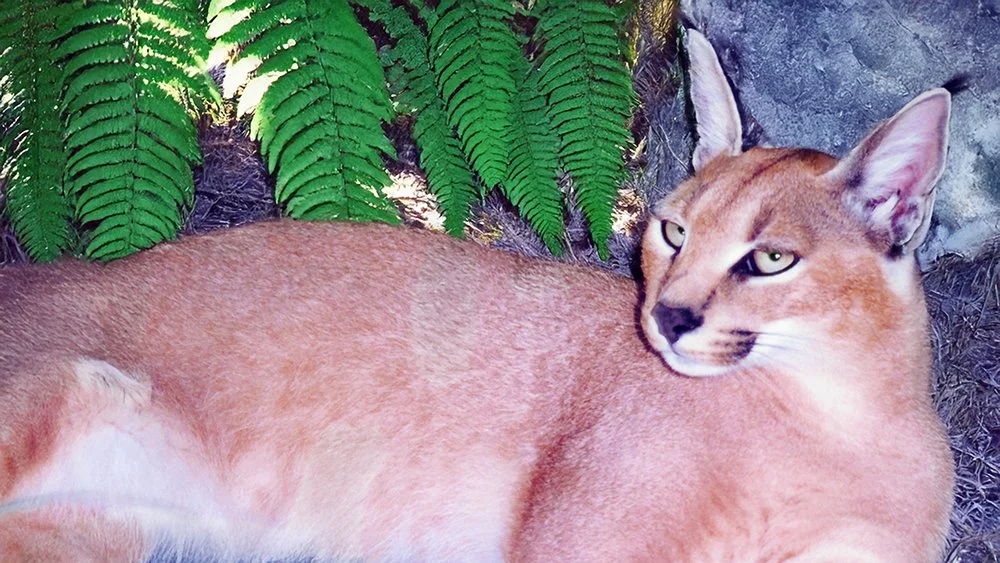
The caracal is a medium-sized, powerful cat often mistaken for a member of the lynx family due to its striking ear tufts. However, it lacks the characteristic facial ruff found in true lynxes. Its coat is short, dense, and typically a uniform tawny-brown or brick-red, though rare melanistic (all-black) individuals have been documented.
The most iconic feature of this feline is its large, expressive ears, which are topped with black tufts approximately 1.75 inches long. These tufts are supported by the black coloration on the back of the ears, which is where the name "caracal" originates—derived from the Turkish word karakulak, meaning "black ear." These lean predators stand between 16 and 20 inches at the shoulder and possess long, powerful legs that facilitate incredible leaps.
See a playlist of this species at https://bigcatrescue.org/videos
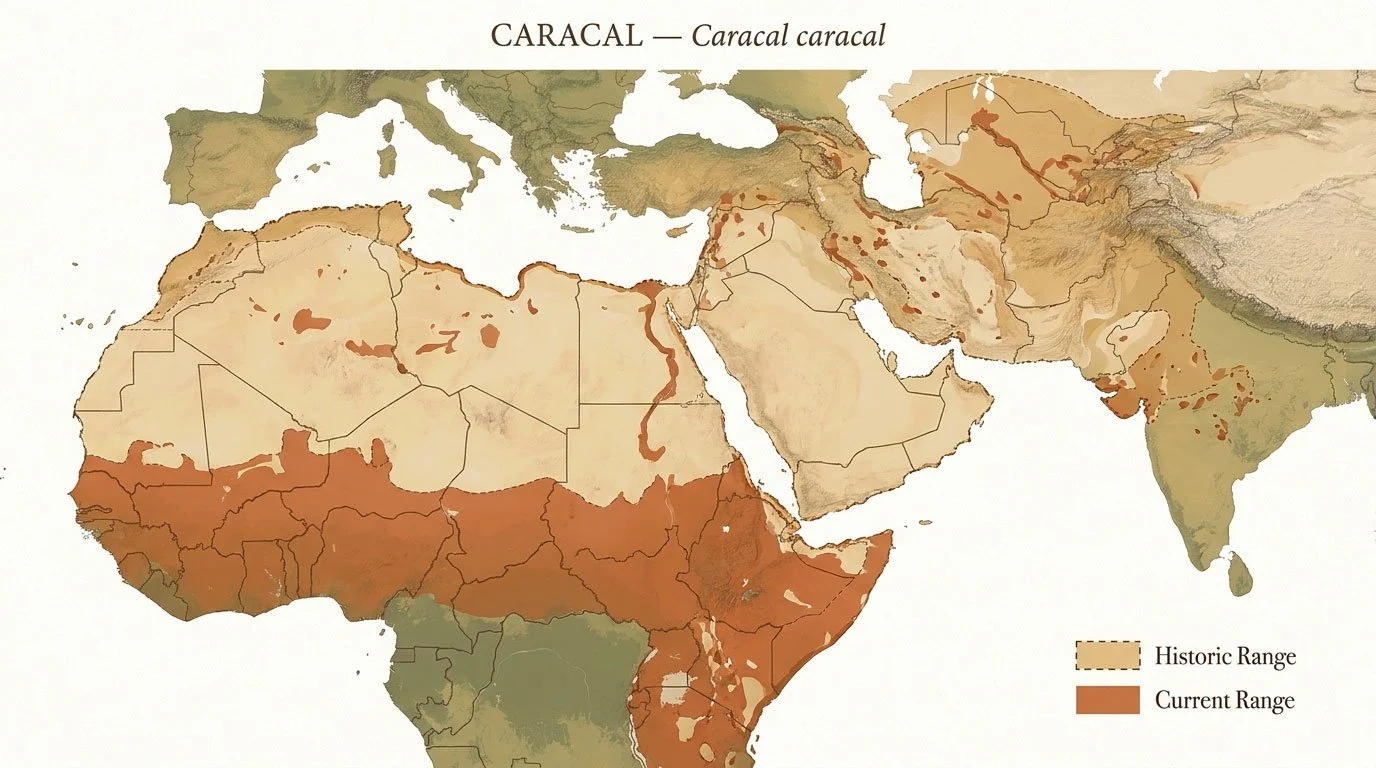
Caracal-Range-Map
Habitat and Range
The caracal has a vast geographic footprint, stretching across much of Africa, the Arabian Peninsula, Central Asia, and eastward into India. While they are relatively common and stable in Southern and Eastern Africa, they are increasingly rare and threatened in North Africa, the Middle East, and Asia.
These cats are highly adaptable and reside in a variety of environments, including dry woodlands, semi-deserts, scrublands, and montane forests. They favor arid regions with sufficient vegetative cover for hunting but are notably absent from true, sandy deserts like the central Sahara and are never found in tropical rainforests. In some regions, they have been recorded at elevations as high as 3,300 meters.
Diet and Behavior
Primarily solitary and elusive, caracals are master hunters. While they are predominantly nocturnal, they may be active during the day in protected areas or cooler climates. They are famous for their remarkable agility and are capable of leaping high into the air to knock down birds in mid-flight.
Their diet consists mainly of small-to-medium-sized mammals, including rodents, hares, hyraxes, and small antelope such as adult springbok or young kudu. They also consume birds, reptiles, fish, and occasionally plant matter. Interestingly, caracals have been observed storing their kills in trees to protect them from other scavengers, a behavior most commonly associated with leopards.
Reproduction
The social life of a caracal is largely limited to mating. After a gestation period of roughly 78 to 81 days, females give birth to a litter of one to four kittens, with two being the most common. Although kittens may start to open their eyes on their first day, it generally takes up to 10 days for them to open completely.
Kittens are weaned by 10 weeks and remain under their mother's care for about a year to learn essential survival and hunting skills. They typically reach sexual maturity between 12 and 16 months of age.
Threats
Despite their wide distribution, caracals face significant local pressures that have led to population extinctions in countries like Kuwait. The primary threats include:
Human-Wildlife Conflict: Because caracals sometimes prey on small livestock such as goats and sheep, they are frequently killed by farmers in retaliation.
Habitat Destruction: Agriculture, urban expansion, and desertification are fragmenting their habitats, particularly in Central and North Africa and throughout their Asian range.
Illegal Trade: In some regions, caracals are hunted for their skins or meat, which is considered a luxury in certain cultures. Additionally, they are increasingly targeted for the illegal exotic pet trade.
Infrastructure: Road kills and attacks by domestic herd dogs are major causes of mortality in countries like Iran and Turkey.
Question: Can I keep a caracal as a pet?
Conservation Efforts
Conservation strategies for the caracal vary by region. Globally, the species is listed on CITES Appendix II, though Asian populations are granted higher protection under Appendix I. Hunting is strictly prohibited in numerous countries, including India, Afghanistan, Israel, Turkey, and Pakistan.
In Southern Africa, the species is managed as a "problem animal" in some ranching areas due to livestock predation, yet populations there remain stable and are even expanding. Conservationists are currently focused on conducting more research in India and North Africa, where the species is on the verge of extinction. Efforts include identifying critical habitats, managing protected areas like the Serengeti and Ranthambhore Tiger Reserve, and maintaining international studbooks for captive populations to ensure genetic diversity.
Wildlife Expert Insight: To visualize the caracal’s role in its environment, think of it as the "stealthy acrobat" of the drylands—a high-performance athlete that maintains the balance of the ecosystem by keeping rodent and small herbivore populations in check.
Interested in Buying a Caracal Kitten?
Learn why Big Cats make Bad Pets
Size and Appearance: Often referred to as the desert lynx, the Caracal does not actually possess the same physical attributes of members of the lynx family, such as the characteristic ruff of hair around the face. Instead, it has a short, dense coat, usually, a uniform tawny-brown to brick-red, and black (melanistic) individuals have been recorded. As the name implies, the backs of the ears are black and topped with long black tufts about 1.75 inches long. This tuft is the characteristic that Caracals do share with the members of the lynx family. It is the largest member of Africa's small cats, and it's most formidable. Males can weigh as much as 40 pounds, and females as much as 35. They stand between 16-20 inches at the shoulder and are 35-39 inches long.
See Caracals Living Free
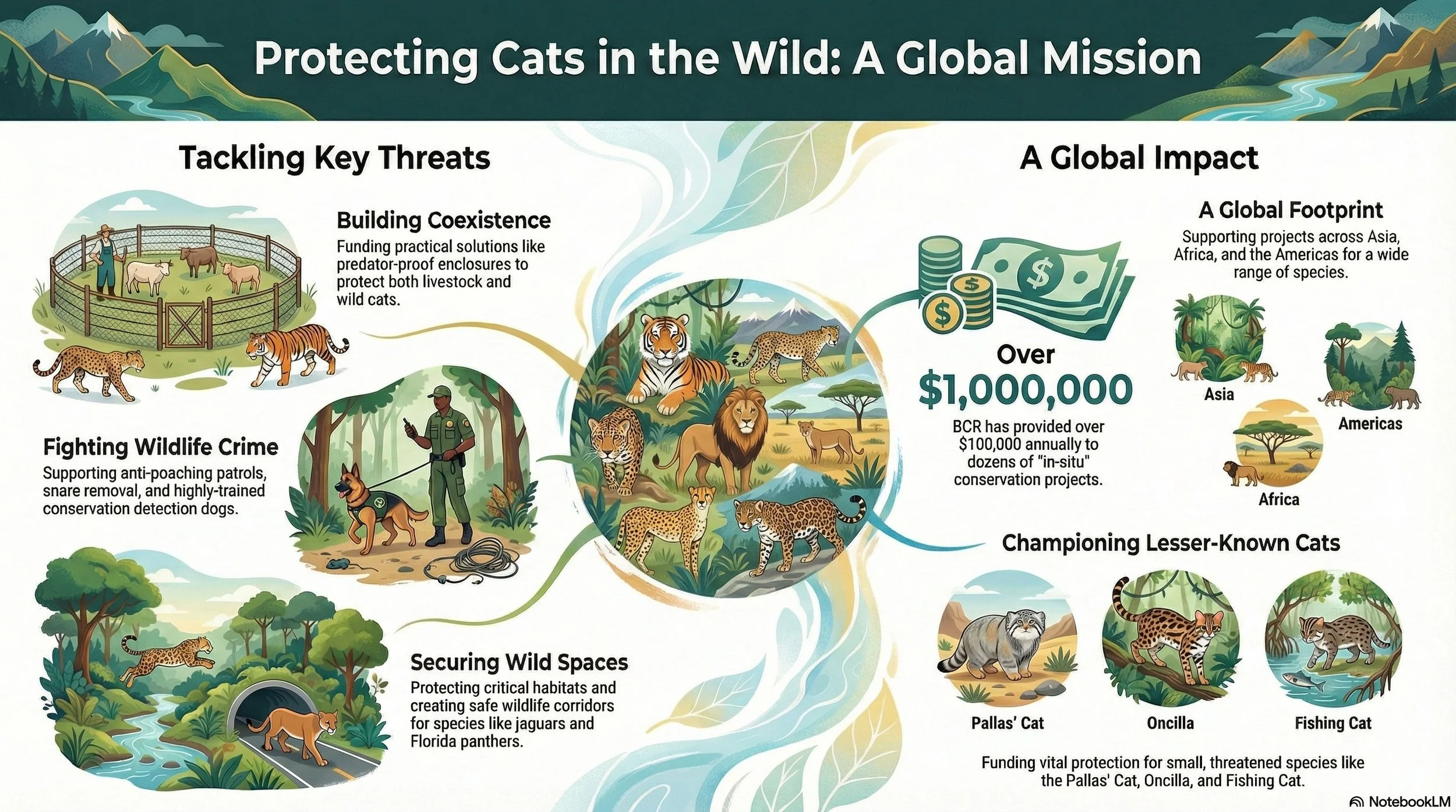
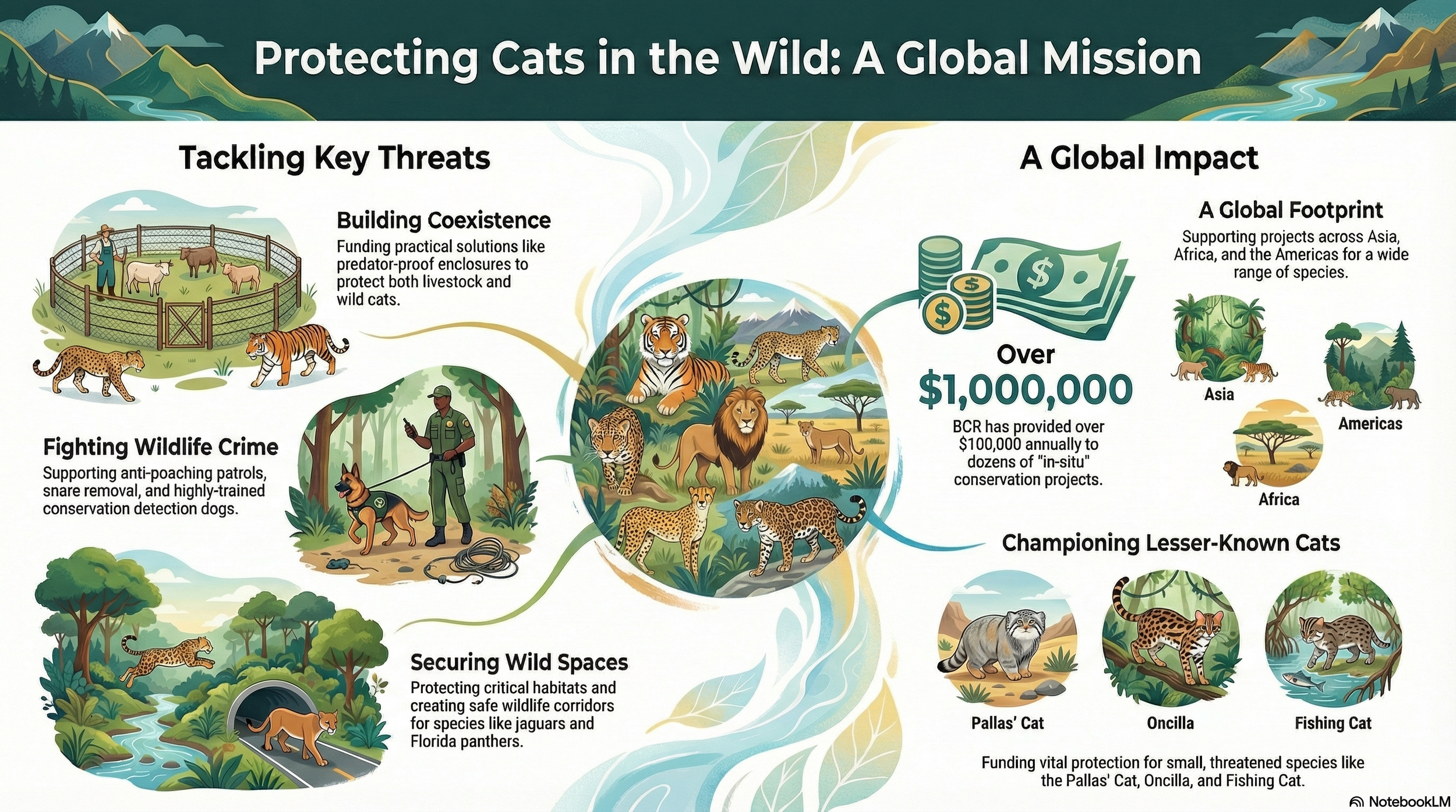
See Conservation Work Funded By Big Cat Rescue here:
All conservation insitu work: https://bigcatrescue.org/insitu/















Caracal Facts: Habitat, Population, Threats and Conservation. Learn where caracals live, what threatens them, how many remain, and which conservation efforts are protecting wild caracals.