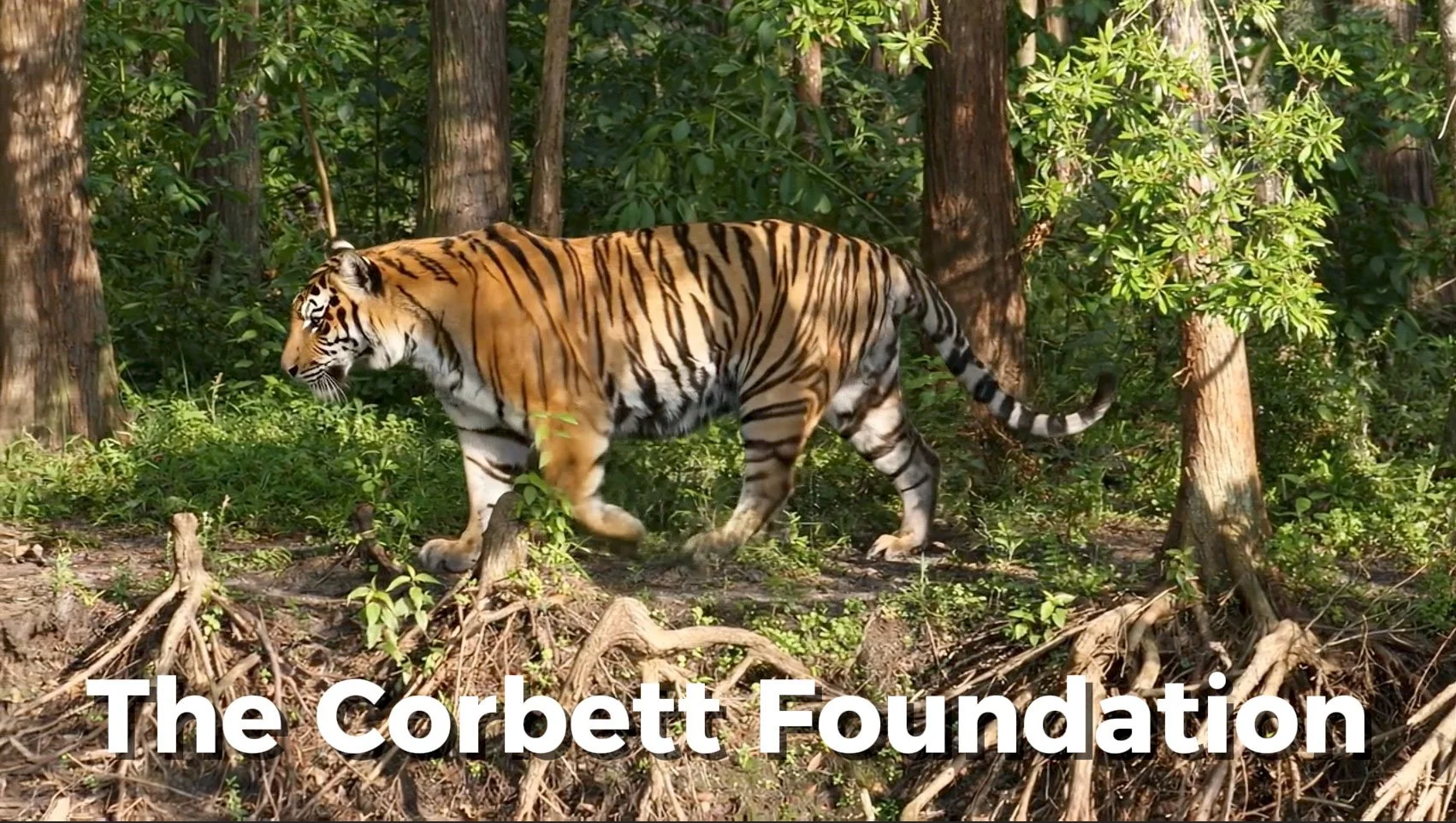
The Great Tiger Debate
Why "Splitting" Species is the Secret to Saving Them
1. Introduction: The Identity Crisis of the World's Largest Cat
The tiger is perhaps the most iconic animal on Earth, a symbol of power deeply embedded in our collective culture. Yet, as a conservation strategist, I must look past the icon to the cold data: the species has lost 93% of its historic range. Even more alarming is the speed of the recent retreat. While earlier reports cited 13 tiger range countries, the most recent assessments from the IUCN Cat Specialist Group confirm that tigers are now confined to just ten. In the last two decades alone, they have been extirpated from Vietnam, Lao PDR, and Cambodia.
While the crisis is undeniable, the scientific solution is currently mired in a high-stakes taxonomic debate. Taxonomists are divided over whether the world has only two tiger subspecies—Mainland and Island—or six distinct groups. While this might sound like academic hair-splitting, it is actually a life-or-death decision for conservation funding and regional survival. How we define a tiger dictates where we send resources, how we measure success, and whether we allow regional populations to vanish under the guise of a "global" recovery. To fulfill the IUCN’s mission of preventing regional extinctions, we must embrace a more granular, six-subspecies approach.
2. Takeaway 1: The Trap of "Mainland" Generalization
A recent genetic proposal suggests "lumping" tigers into only two subspecies: Panthera tigris tigris (Mainland Asia) and Panthera tigris sondaica (Sumatra, and formerly Java and Bali). While this simplifies the genetic map, it creates a dangerous statistical trap.
If all mainland tigers are considered the same, a booming population in India or Nepal could statistically mask the total collapse of tigers in Southeast Asia. This "global average" hides a grim reality of relentless contraction. As the IUCN CatSG records:
"Over the last century, tigers vanished from Singapore (1930s), Bali (1940s), Java and Hong Kong (1960s), Central Asia (1970s), most of temperate China (1980s), tropical China (1990s), and more recently from Vietnam, Lao PDR, and Cambodia (2000s)."
By treating the "Mainland" tiger as a single unit, we risk declaring the species "stable" based on South Asian successes while ignoring the fact that the Indochinese and Malayan lineages are teetering on the brink of extinction.
3. Takeaway 2: Molecular Markers are the Roadmap for Targeted Funding
To prevent these regional disappearances, we must rely on the six-subspecies model: the Amur, South China, Northern Indochinese, Malayan, Sumatran, and Bengal tigers. These groups are defined by "distinctive molecular markers" that serve as the roadmap for strategic investment.
This precision is vital for the Integrated Tiger Habitat Conservation Programme (ITHCP), which manages €47.5 million in German-funded grants (BMZ/KfW). The ITHCP’s multidimensional approach—Species, Habitat, and People—requires a clear species definition to set scientific baselines. These molecular markers allow for "standardised monitoring protocols" that prove our interventions work. For instance, in Bhutan, we aren't just protecting "tigers"; we are managing a specific population of Bengal tigers (P. t. tigris). The 27% increase in Bhutan’s tiger population (now 131 individuals) is a direct success of this granular management model. We don't protect a "general" tiger; we protect specific populations in specific landscapes like the Sundarbans or the Terai Arc.
4. Takeaway 3: Preventing "Conservation Complacency" via Green Status
A single-species view often leads to a binary "endangered or safe" mentality. To combat this, the first-ever IUCN "Green Status of Species" assessment for the tiger provides a much-needed strategic lens. The assessment rates the tiger as "Critically Depleted" with a recovery score of only 14%.
Crucially, the 6-subspecies model allows for "Spatial Units" assessments. This level of detail reveals that tigers are already "Extinct" in 9 out of 24 spatial units—a fact a single-species view would obscure. As Abishek Harihar from Panthera notes:
"Southeast Asia remains in crisis, with steep declines and local extinctions emphasizing ongoing threats. Recovery in Thailand’s Western Forest Complex (WEFCOM) and progress in Malaysia’s Central Forest landscape show that targeted efforts can halt declines."
Knowing that tigers are regionally "Critically Endangered" in over half of their remaining range prevents the "conservation complacency" that occurs when we only look at the global "Endangered" label.
5. Takeaway 4: Cultural Identity and Local Stewardship
Conservation is not just biology; it is about "People," the third pillar of the ITHCP. The recognition of specific subspecies fosters local ownership among the 95,000+ people who have benefited from ITHCP-supported sustainable livelihoods.
There is a profound link between a community’s pride in their specific local tiger and their willingness to engage in anti-poaching. In Bhutan, the "Hunter to Hermit" program has successfully transformed former poachers into nature protectors by appealing to this sense of stewardship. When we protect the "Royal Manas tigers," we aren't just saving a predator; we are preserving a cultural anchor. U Htay Aung of the Chaung Nauk Pyan Village Conservation Group in Myanmar captures this sentiment:
"Being a part of the community patrol group has allowed us to protect our wildlife and ensure the safety of our villagers... by conserving them, we automatically protect the environment and maintain the balance of our natural world."
6. Takeaway 5: The "Umbrella" Effect Depends on Diversity
Tigers are the ultimate "umbrella species." By protecting their vast territories, we safeguard thousands of other species and vital carbon sinks. However, this umbrella only stays open if we recognize the tiger’s ecological diversity.
Tigers are remarkably adaptable, surviving in mangrove swamps and high-altitude forests up to 4,500 meters. A "2-subspecies" model risks a strategic retreat to easier habitats. If we deem the "Mainland" population "recovered" based on high densities in the alluvial floodplains of India (where prey is abundant), donors might inadvertently abandon the challenging, low-density Hilly and Himalayan terrains. A 6-subspecies model forces us to value the distinct ecological role of the tiger across all its habitats, ensuring the high-altitude forests of the Indo-Himalayan area remain protected.
7. Conclusion: A Future Defined by Detail
Accordingly, it is reasonable to continue to recognize the following subspecies:
• P. t. tigris (Linnaeus, 1758), Bengal tiger
• P. t. virgata (Illiger, 1815), Caspian tiger
• P. t. altaica (Temminck, 1844), Amur tiger
• P. t. sondaica (Temminck, 1844), Javan tiger
• P. t. amoyensis (Hilzheimer, 1905), South China tiger
• P. t. balica (Schwarz, 1912), Bali tiger
• P. t. sumatrae (Pocock, 1929), Sumatran tiger
• P. t. corbetti (Mazák, 1968), Indochinese tiger
• P. t. jacksoni (Luo et al., 2004), Malayan tiger
The path forward is defined by the Global Tiger Recovery Programme (GTRP) 2.0. If we can move beyond generalizations and restore tigers to all suitable historic habitats, scientists estimate the wild population could reach 25,000 individuals.
But "25,000 tigers" is a hollow number if they only exist in a few protected pockets of India and Russia. True recovery means the return of the tiger to the forests of Southeast Asia and the mountains of the West. We must ask ourselves: If we stop seeing the individual faces of the tiger—the Amur, the Malayan, the Sumatran—are we really saving the species, or just a ghost of what it once was? The secret to saving the tiger lies in the details of its diversity.