Freeland
Beyond the Jungle: 5 Surprising Realities of the Global Trafficking Crisis
1. Introduction: The Invisible Chains
At a glance, the rusted shipping container idling on the docks of a major international port looks like any other. But behind its steel doors lies a harrowing juxtaposition: crates of pangolin scales destined for traditional medicine markets stacked atop hidden compartments where human beings, stripped of their agency, await an uncertain future. This is the modern face of trafficking—a sophisticated, multi-billion-dollar criminal enterprise that thrives in the shadows of our global economy.
Trafficking is rarely just a "nature problem" or a localized tragedy. It is a systemic assault on global security and human rights, fueled by the same greed that drives the exploitation of both ecosystems and people. Organizations like Freeland are operating at the frontlines of this intersection, recognizing that to break one chain, we must understand the entire architecture of the criminal syndicate. The struggle to save an endangered species is, at its core, the same struggle to liberate a human life.
2. The Intersection of Human and Wildlife Exploitation
It is a common mistake to view human and wildlife trafficking as separate silos. In reality, these crimes are deeply intertwined, often sharing the exact same pathways of least resistance. Criminal networks do not specialize in "species"; they specialize in "corridors." They exploit the same porous borders, the same corrupt officials, and the same illicit logistics chains to move their cargo—whether that cargo is a person or a poached animal.
Addressing these issues together is the only way to achieve lasting impact. When we treat them as separate problems, we merely prune the branches of a criminal organization. By targeting the shared infrastructure used for both human slavery and wildlife smuggling, enforcement can dismantle the entire tree. This holistic approach is the only way to ensure the safety of our communities and the survival of our planet's most vulnerable inhabitants.
Freeland’s Vision: A World Free of Wildlife Trafficking and Human Slavery
3. The Staggering 83% Decline in South American Wildlife
The statistics coming out of South America are not just a warning; they are a sirens’ blare for the state of global biodiversity. As home to roughly 40% of the world’s plant and animal species, the continent is a vital lung for our planet. Yet, the Living Planet Report 2014 revealed a devastating reality: animal populations in South America have plummeted by 83% since the 1970s.
This loss is an existential threat to global ecosystem resilience. When we lose the South American Tapir—the "gardener of the forest"—we lose the primary architect of seed dispersal that keeps the rainforest healthy. When the Giant Otter, the Uakari monkey, the White-cheeked spider monkey, or the vibrant Hyacinth macaw vanish, the entire biological machinery that regulates our climate and water cycles begins to fail. A hollowed-out forest in South America means a less stable climate for a farmer in the American Midwest or a coastal city in Asia.
4. North America is a Massive Market, Not Just a Spectator
The data shatters the myth of Western innocence. For too long, the narrative has framed trafficking as a crisis confined to the Global South, but the blood on the ivory often dries in the living rooms of the West. North America—specifically the United States, Canada, and Mexico—is one of the largest engines of the illegal wildlife trade. Between 2005 and 2014 alone, the United States seized an incredible 50,000 illegal shipments of traded wildlife products.
This reality places a heavy mantle of responsibility on consumer nations. Every shipment seized represents a demand that was met, driving the poaching and exploitation thousands of miles away. As long as there is a lucrative market in North American cities for exotic pets, traditional medicines, or status symbols, the "supply" will continue to be extracted from the world's most vulnerable regions. Ending trafficking requires us to look in the mirror and confront our role as the primary destination for criminal profit.
5. The "Golden Triangle" as a Dual Source and Destination
Deep in Southeast Asia, where the mountainous borders of Thailand, Lao, and Myanmar converge, lies the "Golden Triangle." This region is a unique and volatile hotspot in the trafficking world because it functions as both a primary source and a voracious consumer destination. It is a geography of contradiction: a place where the forest’s heritage is stripped away even as illegal products from across the globe flow in to satisfy local markets.
The demand here is multifaceted and deeply entrenched. In the bustling markets of the borderlands, pangolin scales, tiger bones, and rhino horns are sold for traditional medicine, while the pet trade fuels the trafficking of Palm Cockatoos, tortoises, freshwater turtles, and snakes. Beyond the biological loss, this dual role as a supplier and consumer creates a "vortex" of criminality that destabilizes the entire region. The Golden Triangle isn't just a point on a map; it is the engine room of the Asian wildlife trade, where marine turtle shells and elephant ivory are traded as trophies of status, further hollowing out the region’s natural legacy.
6. Success is Measured in Millions of Dollars Seized, Not Just Arrests
In the war against organized crime, an arrest is often just a temporary inconvenience for a syndicate. To truly disrupt these networks, we must move beyond the poacher and follow the money trail. Since 2020, Freeland’s impact has been measured not only by the 300 officers they have trained or the 152 community patrols conducted but by the $10 million in assets seized from traffickers.
Seizing assets—land, vehicles, bank accounts—is a far more impactful strategy than individual arrests. It changes the "cost of doing business." When a criminal network loses its capital, its ability to fund new poaching operations or bribe officials is paralyzed. By stripping traffickers of their profits, we protect ecosystems and human lives more effectively than any prison sentence ever could. We must treat trafficking for what it is: a financial crime that requires a financial solution.
"Traffickers target people, plants and animals across our planet, ruining lives and ecosystems for billions of dollars in criminal profits every year."
7. Conclusion: A Call to Resilience
The path toward a safer world requires a holistic model that addresses the root of the crisis. Freeland’s approach—Protecting vulnerable people and ecosystems, Educating the public to drive behavior change, and Rewarding the protectors of nature—provides a roadmap for this transformation. By training specialized task forces and supporting frontline communities, we are not just fighting a crime; we are building a global culture of resilience. Every step toward awareness is a crack in the invisible chains of exploitation.
What is our collective role in ending modern slavery and extinction?
Freeland’s 2025 Annual Report

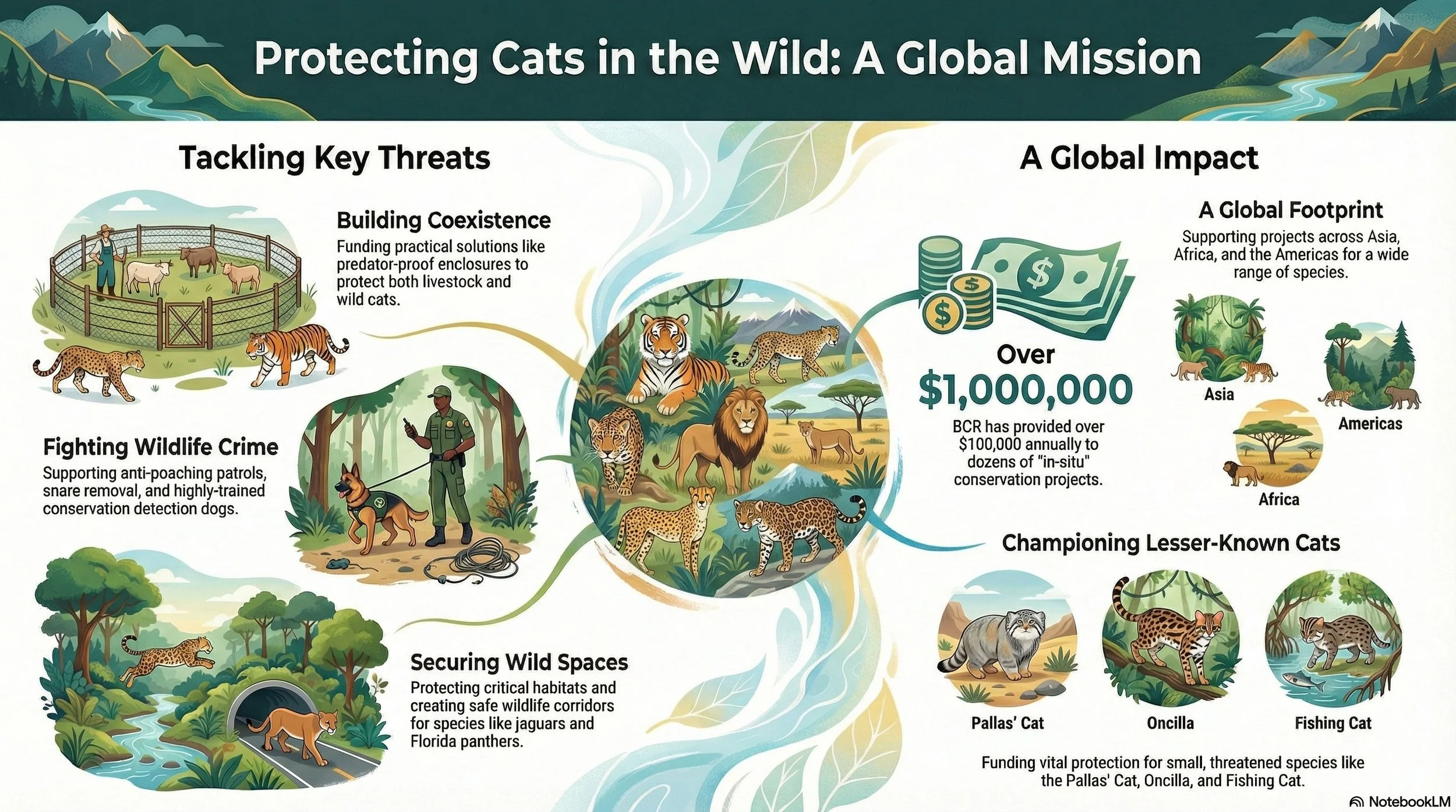

The June 2026 AdvoCat Newsletter from Big Cat Rescue covers the latest in wild cat conservation: Stanford research on mountain lions reshaping suburban ecosystems, Kyrgyzstan's new 2-million-acre snow leopard corridor, the first documented sand cats in Libya, Bengal tiger reintroduction plans for Cambodia, and the alarming pace of tiger poaching across Asia. Stay informed and take action for wild cats worldwide.
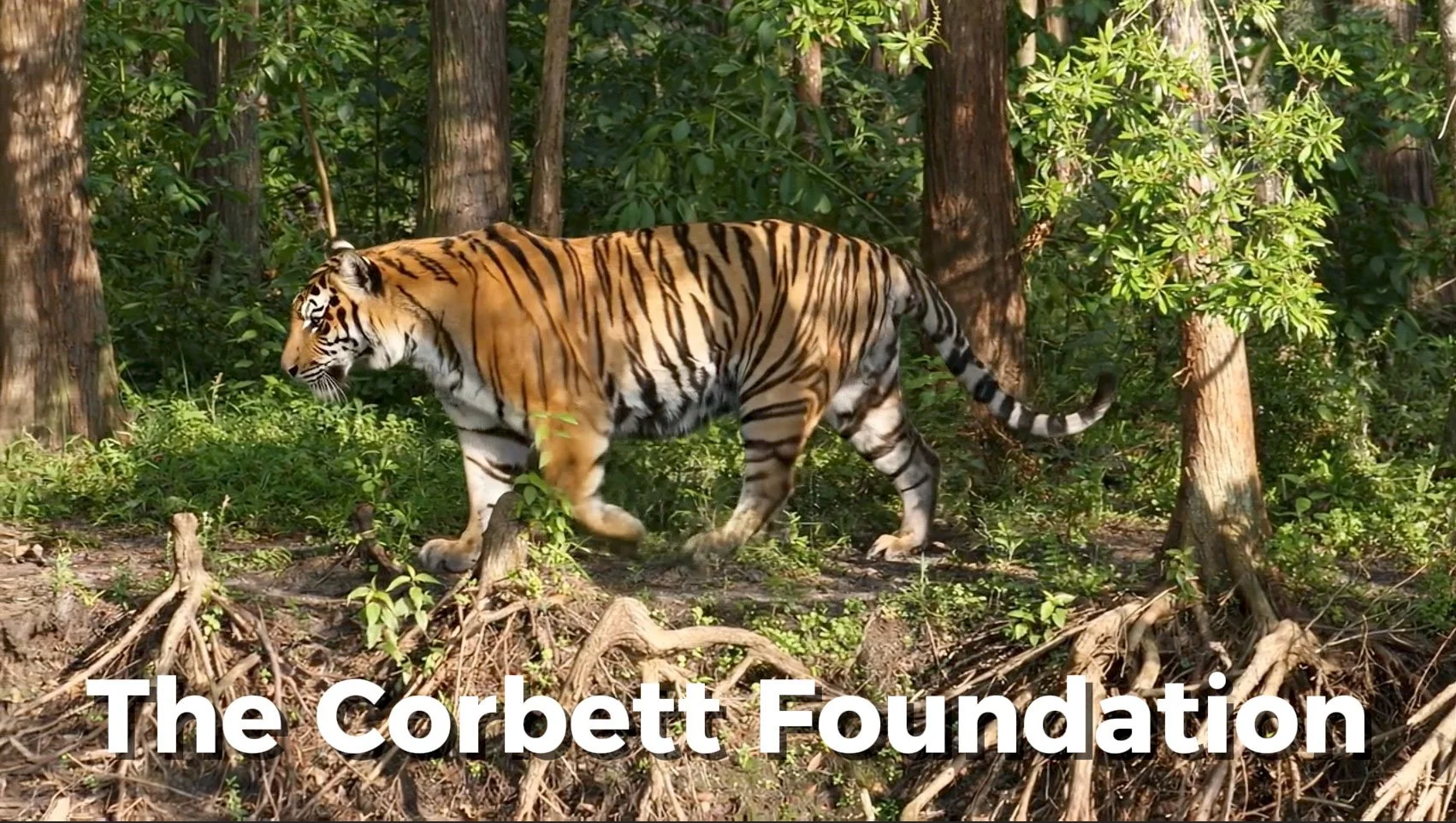
The 2024-25 Annual Report commemorates the 30th anniversary of The Corbett Foundation (TCF), an Indian non-profit established in 1994 to foster human-wildlife coexistence. The document highlights TCF’s expansion from its origins in Uttarakhand to nine distinct landscapes across seven states, focusing on the protection of threatened species like tigers, elephants, and vultures. Key initiatives detailed include the Livestock Compensation Programme, which prevents retaliatory killings, and extensive habitat restoration efforts that have revived thousands of hectares of forests and grasslands. Beyond ecology, the foundation integrates community well-being through rural medical outreach, sustainable livelihood training, and the distribution of green energy solutions. By combining scientific research with grassroots engagement, TCF aims to secure India’s natural heritage while improving the lives of people residing near protected wilderness areas. Collaborative partnerships with government agencies and international conservation bodies remain central to their mission of balancing environmental integrity with social development.

Kyrgyzstan has officially designated the Ak Ilbirs ecological corridor, a climate-ready protected area covering nearly 800,000 hectares of high-altitude habitat for snow leopards (Panthera uncia) and other mountain wildlife. Formalized in 2025, the corridor connects existing protected areas, pastureland, and forest across 14 rural municipalities so that snow leopards, argali sheep, and Asiatic ibex can move freely as climate change reshapes their range. Designed by scientists using climate modeling, the corridor captures more than 60 percent of future suitable snow leopard habitat. It also supports herders through grazing rules and alternative livelihoods like beekeeping, orchards, and ecotourism. Learn what this conservation milestone means for big cats, mountain ecosystems, and the future of wildlife in Central Asia.

Cambodia lost its wild tigers to poaching and was declared tiger free in 2016. Now a plan to reintroduce Bengal tigers from India into the Cardamom Mountains is moving forward. Conservation scientists warn that prey density may be too low, that snaring and poaching remain rampant, that logging and five new hydropower dams threaten the habitat, and that local and Indigenous communities have not been properly consulted. Learn what the tiger reintroduction plan means for wild tigers, for the Cardamom rainforest, and for the people who depend on it, and why getting it right matters for big cat conservation.

New BBC Earth footage shows two wild Bengal tigers, Goma and Jugini, co-parenting and babysitting each other's cubs, a behavior long thought impossible for these solitary big cats. Learn what wildlife researchers discovered on Tiger Island, why tiger mothers may share parenting to protect cubs from adult males, and how the rare 2006 story of male tiger T-25 raising orphaned cubs in Ranthambore National Park fits the pattern. Big Cat Rescue explains what this rare cooperative behavior reveals about tiger intelligence, social flexibility, and why these endangered cats deserve protection.

The Icarus satellite system, built by the Max Planck Institute of Animal Behavior, is creating an Internet of Animals. Tiny tags track location, movement, heart rate, and body temperature, then send the data to satellites in low Earth orbit. Scientists are training algorithms to recognize the panic patterns animals show when poachers approach, turning tagged herds into a live early warning network. For wild cats like cheetahs, leopards, tigers, lions, and Florida panthers and bobcats, this could mean protection across vast and remote landscapes that no single ranger could ever watch. Learn how Big Cat Rescue is following the Icarus project and how satellite tracking could change the future of wild cat conservation.

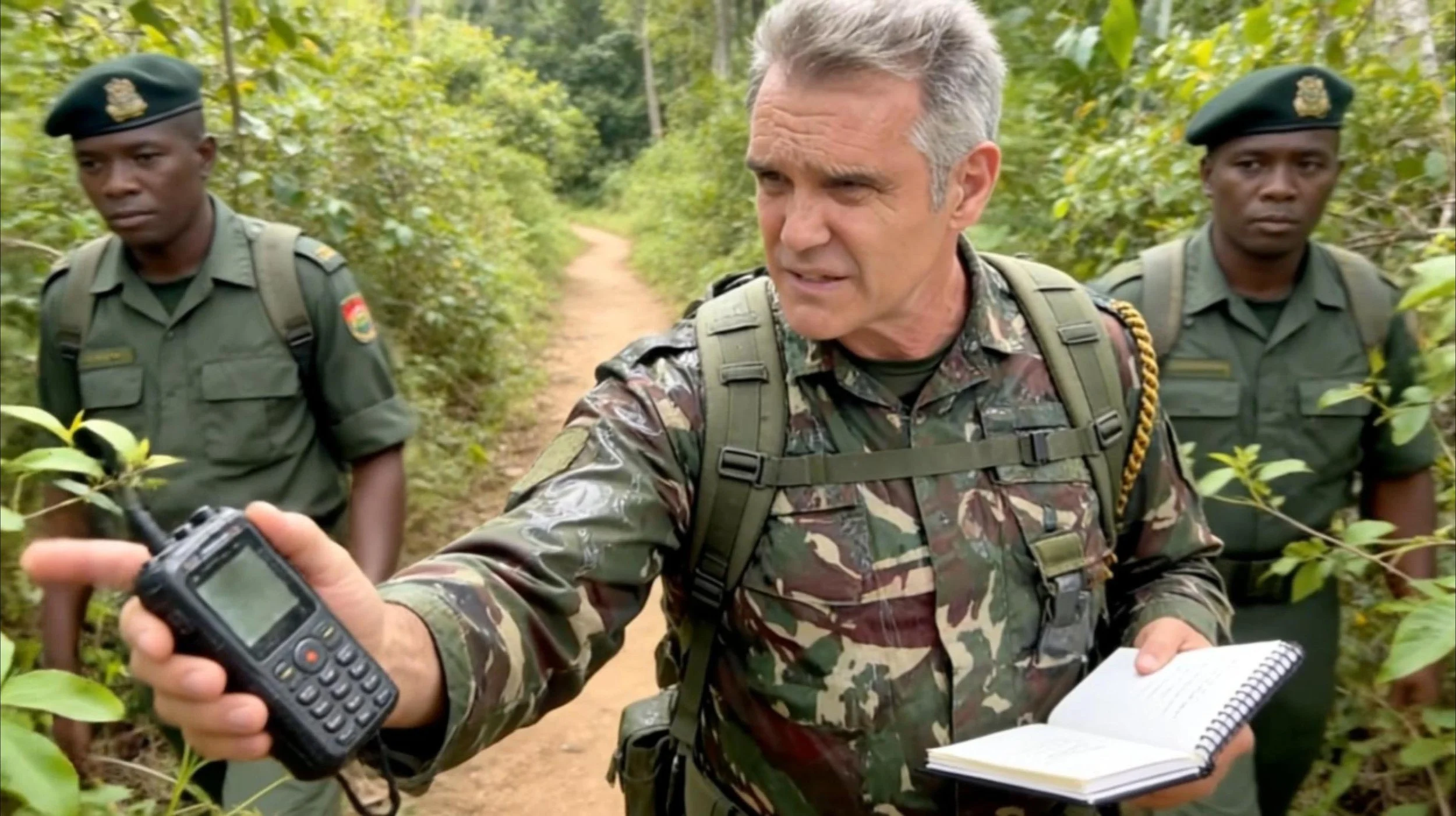
The provided text outlines the organizational goals and operations of Freeland, a non-profit entity dedicated to ending the illegal trade of humans and wildlife. By utilizing a specialized team of law enforcement and technical experts, the group actively disrupts criminal networks while assisting governments and businesses in creating prevention strategies. Their comprehensive approach includes training officers, conducting community patrols, and fostering behavioral changes through public education and awareness campaigns. Beyond enforcement, the organization focuses on environmental restoration and the rehabilitation of animals to ensure the long-term health of global ecosystems. Ultimately, the source serves as an overview of Freeland’s global impact and its ongoing mission to build a world free from exploitation and slavery.

The Fall of Animalandia Maya: Playa del Carmen Shutdown In May 2026, Mexican law enforcement conducted a major raid on Animalandia Maya, a controversial tourist site in Playa del Carmen known for offering photos with exotic wildlife. The operation resulted in the arrest of the owner and several employees, as well as the seizure of tigers, lions, and monkeys that were allegedly being exploited. This intervention followed years of public outcry and pressure from animal welfare organizations regarding the suspected sedation and mistreatment of the animals. While the business has successfully used legal loopholes to reopen after past closures, the scale of this coordinated police action suggests a permanent shutdown. The incident highlights a significant victory for activists fighting against the commercial use of endangered species in the Riviera Maya.
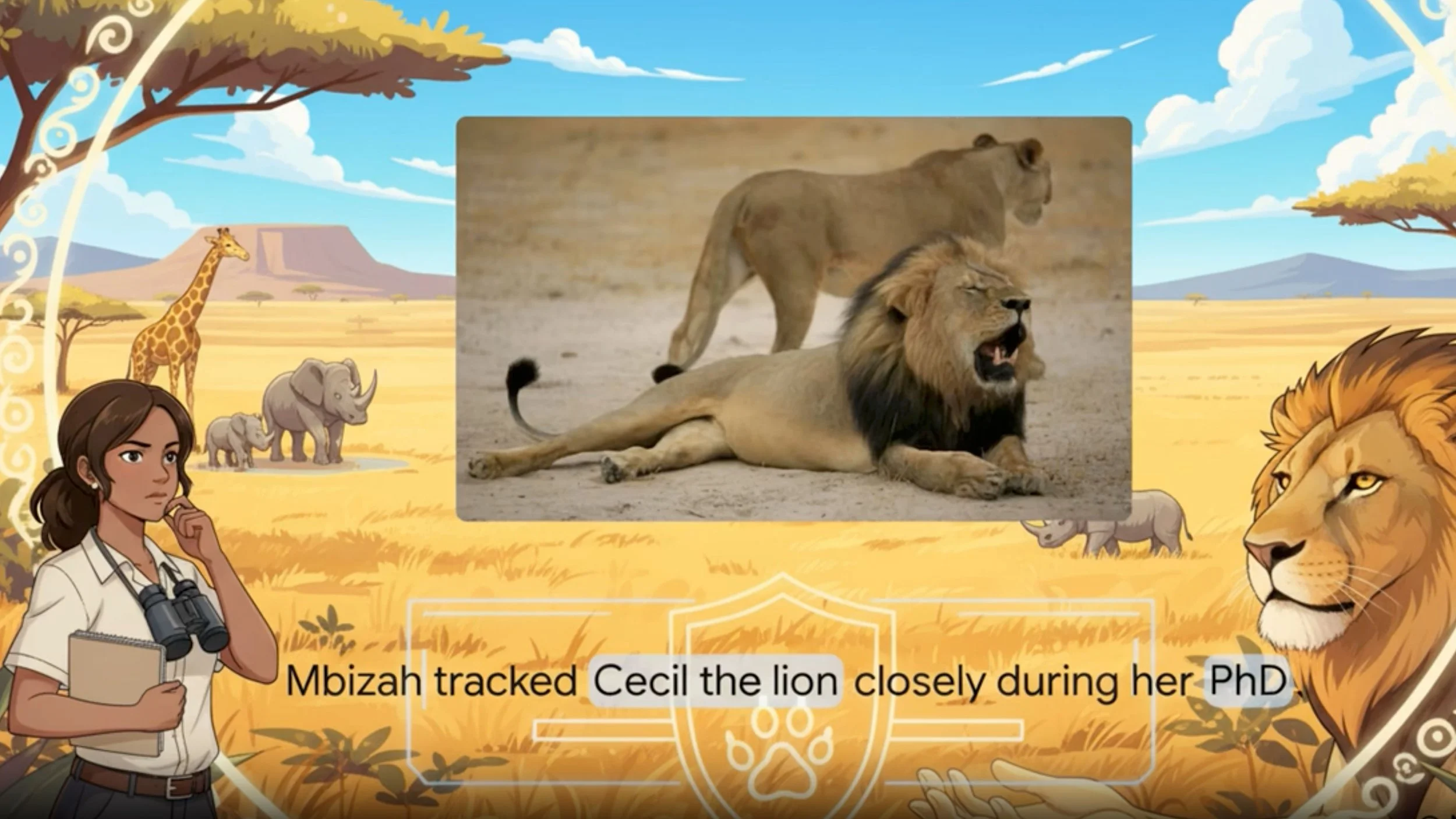
Moreangels Mbizah: Pioneering Human-Wildlife Coexistence in Zimbabwe
Biologist Moreangels Mbizah founded Wildlife Conservation Action in Zimbabwe to address the tragic consequences of human-wildlife conflict. Her mission shifted after witnessing a lion attack on a young child, leading her to realize that protecting nature requires supporting the local communities living alongside it. The organization utilizes innovative tools like GPS tracking and mobile bomas—opaque enclosures that prevent predators from seeing and attacking livestock. These community-led strategies have successfully reduced lethal encounters by up to 98% in targeted regions, safeguarding both vulnerable lion populations and the livelihoods of rural villagers. Additionally, Mbizah serves as a pioneer for African women in the field by providing mentorship and outreach to ensure a more inclusive future for conservation efforts. Through this holistic approach, she demonstrates that the survival of apex predators is inextricably linked to the security of the people who share their habitat.
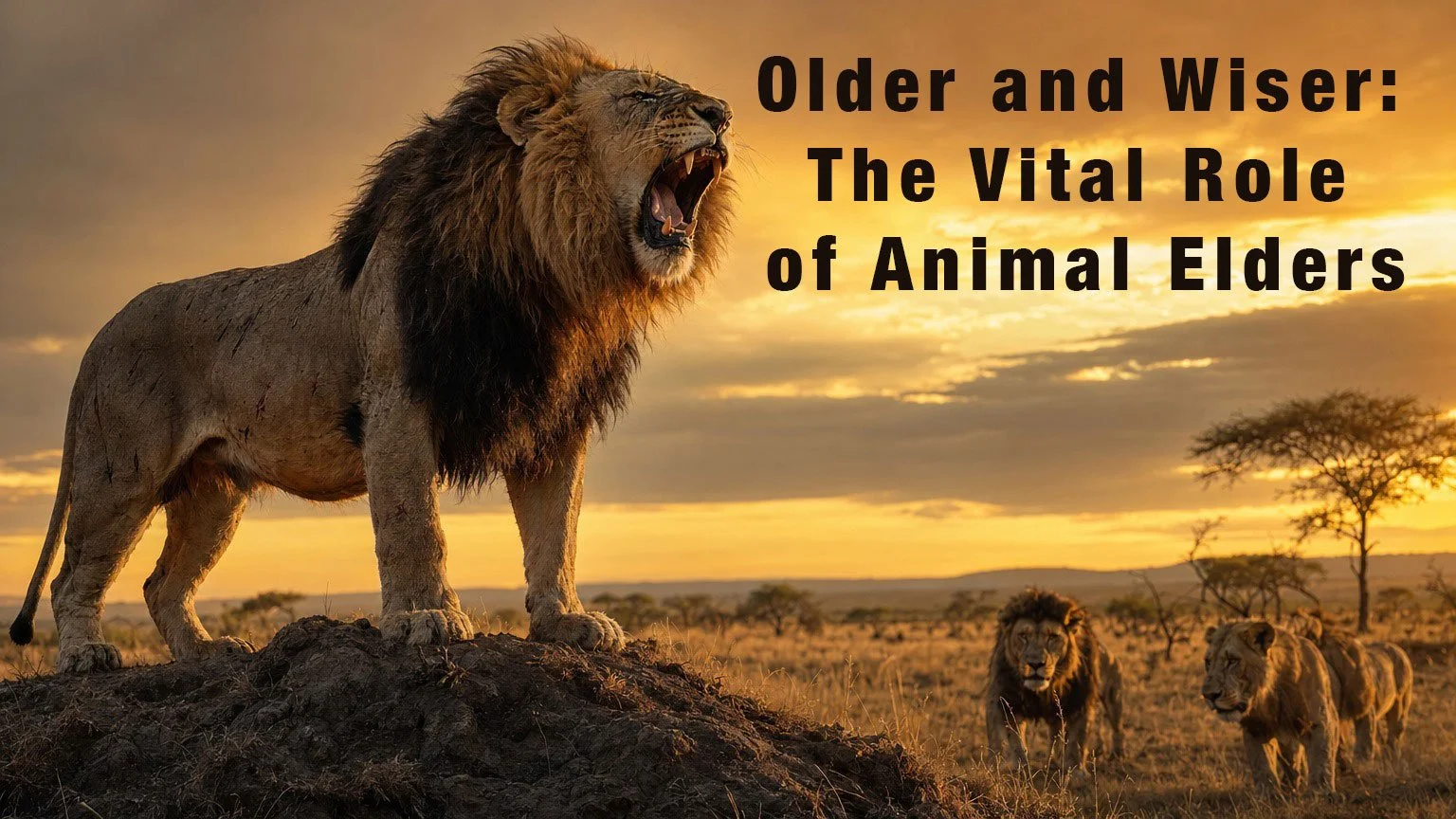
Older and Wiser: The Vital Role of Animal Elders
Recent research emphasizes that older animals are vital for the survival of wildlife populations because they possess accumulated knowledge and specialized skills. These elders serve as essential leaders who guide their groups toward resources and help maintain social stability among younger individuals. Beyond their wisdom, aging members often provide enhanced reproductive success and possess stronger immune systems developed over time. Traditional conservation efforts frequently focus on total population counts, yet this source argues that protecting the age structure is just as critical. The loss of these senior animals through human activities can result in a profound disappearance of survival strategies that simple numbers cannot replace.
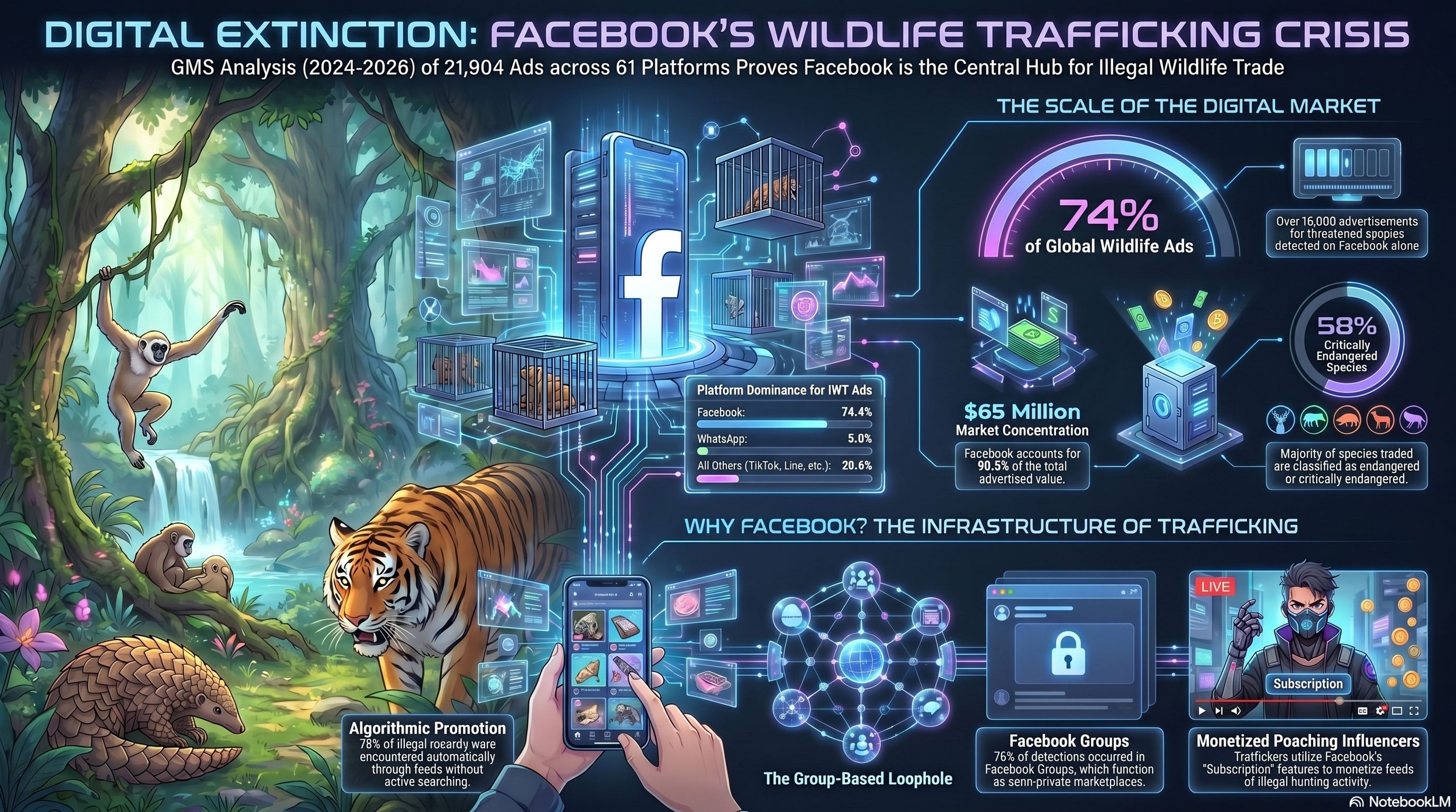
The provided report from the Global Initiative Against Transnational Organized Crime exposes how Facebook has become the primary global infrastructure for the illegal wildlife trade. Data collected by the Global Monitoring System reveals that nearly 75% of illicit wildlife advertisements appear on the platform, frequently involving critically endangered species protected by international law. The authors argue that algorithmic recommendations and thematic groups actively facilitate these criminal networks, often surfacing illegal content to users without a search. Despite public pledges to combat trafficking, Meta's internal enforcement and voluntary self-regulation are described as largely ineffective and plagued by multilingual moderation failures. To address this biodiversity crisis, the report calls for international regulatory coordination and the imposition of legal duties on social media companies to end platform-scale exploitation.
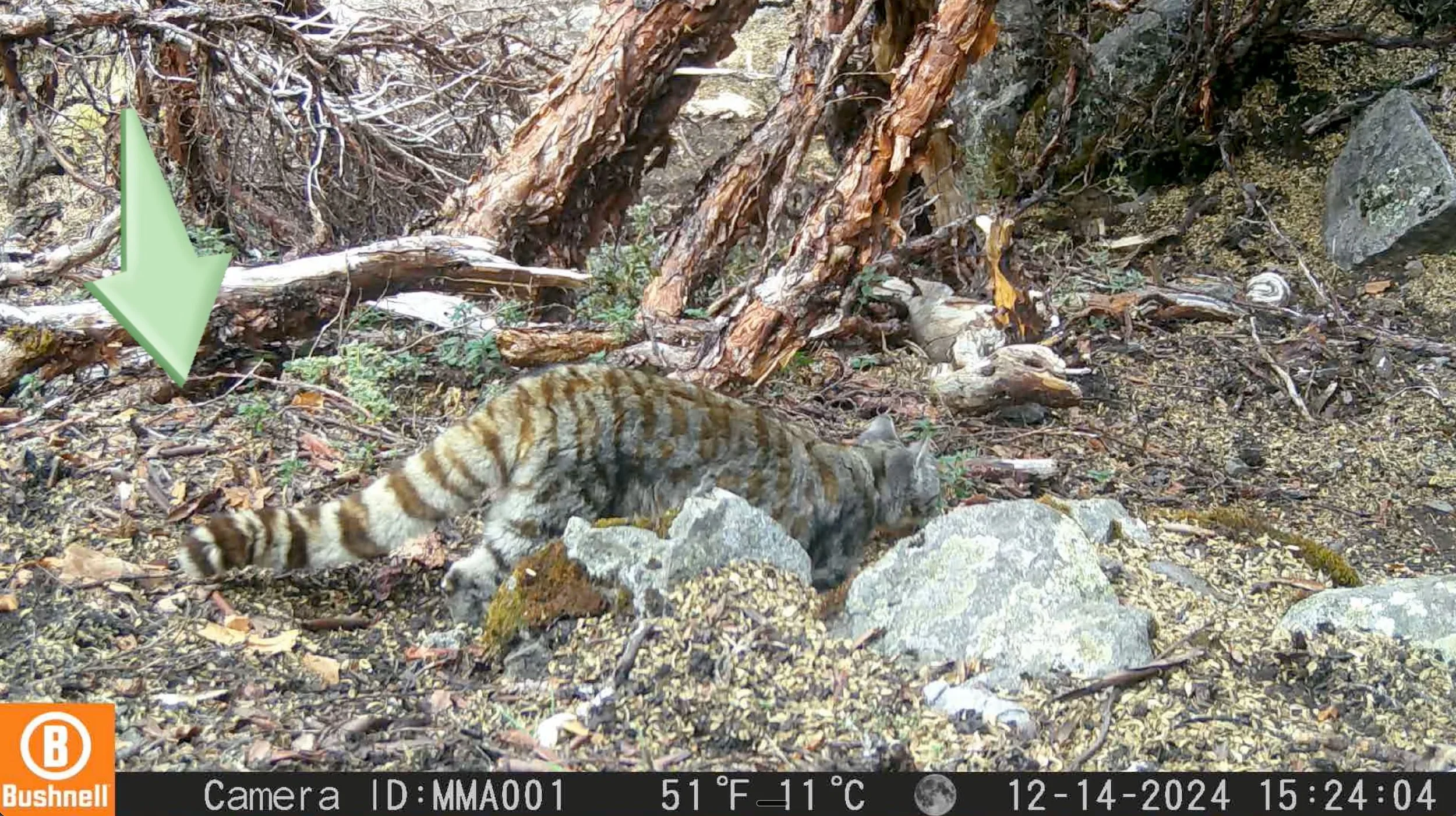
These sources examine the genetic crisis facing isolated wild cat populations, where human-driven habitat fragmentation forces inbreeding and triggers a decline in biological fitness. Researchers identify morphological abnormalities, such as kinked tails and thoracic cowlicks, as visible biomarkers of a deeper "extinction vortex" that includes heart defects and reproductive failure. While the Florida panther serves as a primary case study for these issues, the texts document similar patterns of genomic decay in California mountain lions, European wildcats, ocelots, jaguarundi, Andean cats, cheetahs and Asiatic lions. Conservationists highlight the 1995 genetic restoration project in Florida—which used Texas pumas to diversify the gene pool—as a successful model for reversing these trends. Ultimately, the literature advocates for wildlife crossings and habitat corridors to restore natural gene flow and ensure the long-term survival of apex predators.
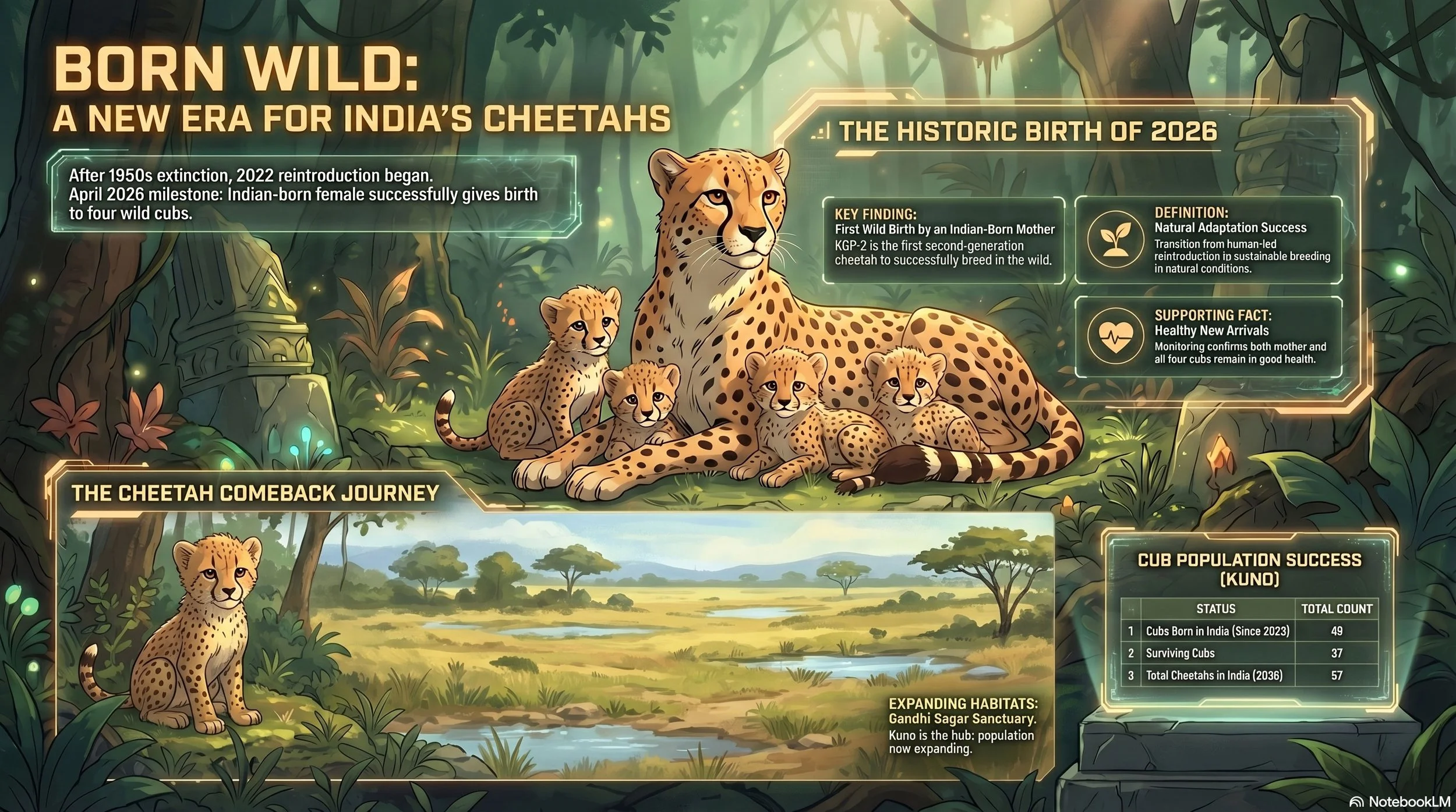
A female cheetah named KGP-2 has successfully delivered four cubs at Kuno National Park, marking a major achievement for India's wildlife restoration efforts. This event is particularly notable because the mother is a second-generation resident born in India, proving that the species can thrive and reproduce naturally in its new environment. With these new arrivals, the country’s total population of these big cats has climbed to 57 individuals across different sanctuaries. Government officials and conservationists view this milestone as evidence that the local ecosystem is capable of supporting the long-term sustainability of the species. This growth follows other recent births, signaling a transition from mere relocation to a self-sustaining biological success. Environmental leaders believe these developments solidify the region's status as a premier global hub for cheetah conservation.
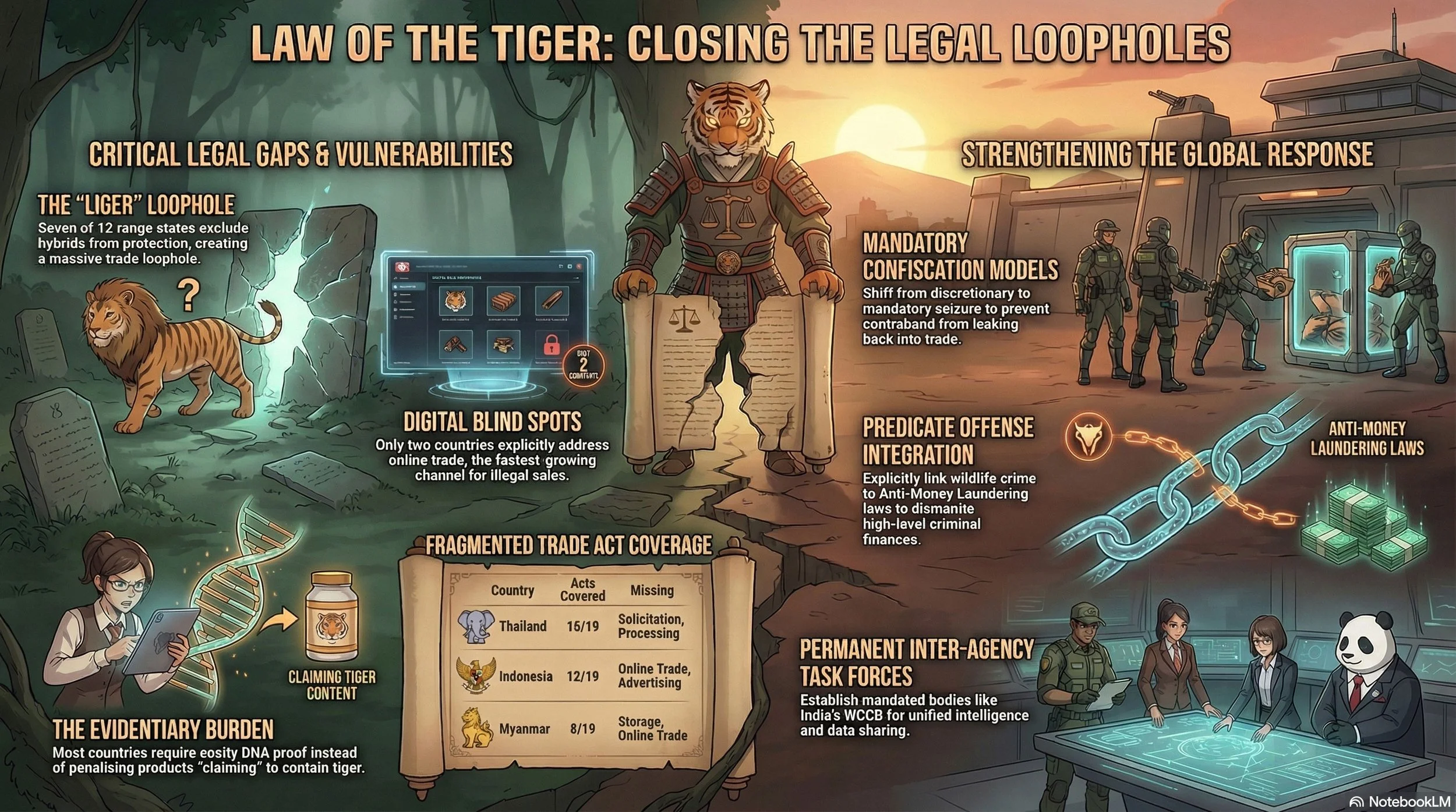
This report, titled Law of the Tiger, provides a comprehensive 2025 analysis of the legal frameworks governing tiger trafficking across twelve range states. It evaluates how national laws address critical issues such as interagency enforcement, mandatory confiscation, and the regulation of captive breeding facilities. The authors identify significant legal gaps regarding digital marketplaces, the status of hybrid tigers, and the management of confiscated stockpiles. To combat the transnational organized crime of wildlife trade, the document advocates for standardized definitions, enhanced investigative powers for frontline officers, and the integration of anti-money laundering tools. Ultimately, the publication serves as a guide for governments to harmonize their criminal justice responses and strengthen protections for wild tiger populations.
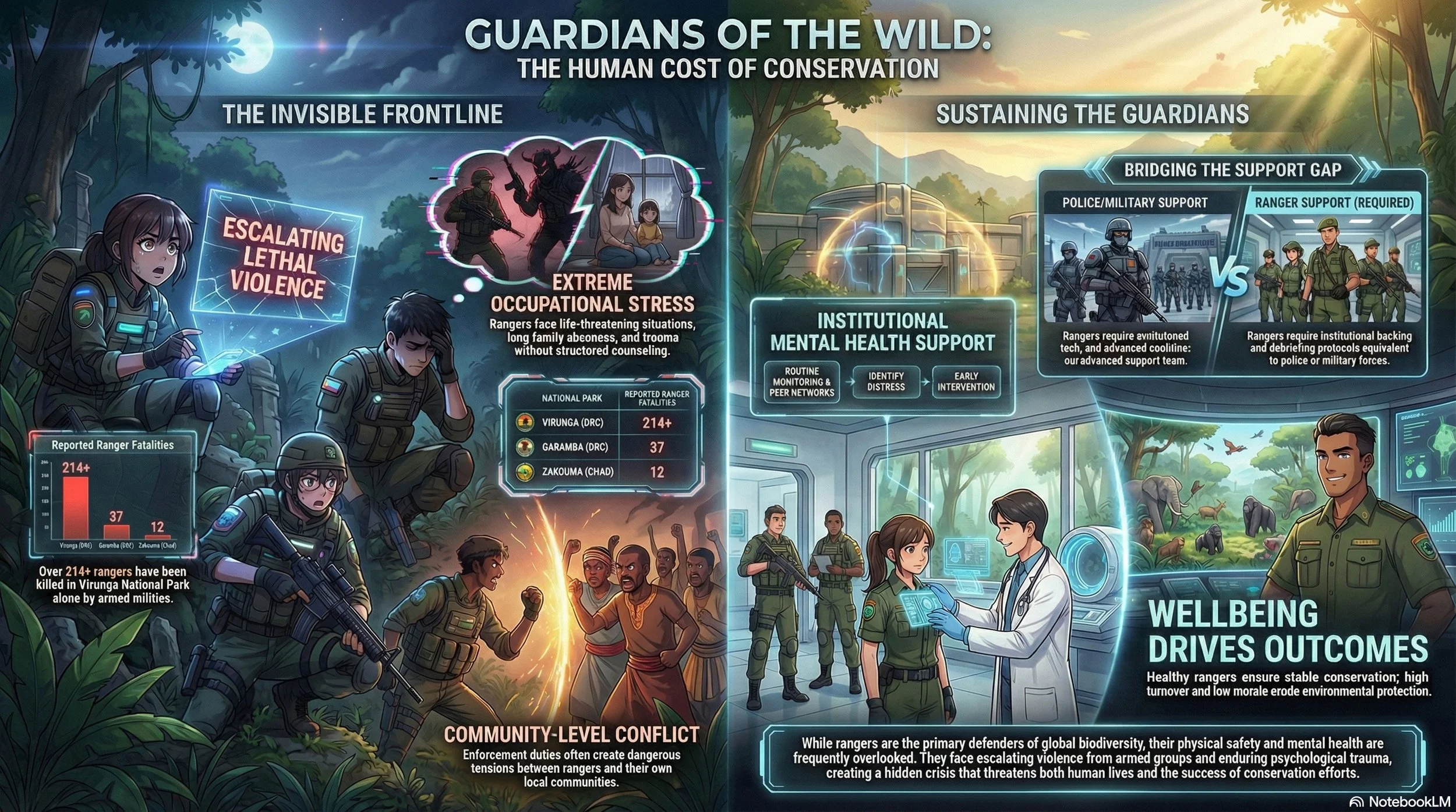
This report highlights the extreme dangers and psychological trauma experienced by wildlife rangers, who serve as the primary defense for global biodiversity. Recent violent attacks in the Democratic Republic of the Congo underscore a growing trend where these workers face armed militias and organized crime with insufficient institutional support. Beyond physical threats, the text emphasizes that mental health neglect leads to poor decision-making and high staff turnover, which ultimately compromises conservation goals. While some organizations are beginning to offer counseling and family aid, these support systems remain dangerously underdeveloped compared to other high-risk professions. Experts argue that the international community must prioritize ranger wellbeing to ensure the long-term sustainability of protected natural areas.

This article describes a monumental conservation initiative in Kazakhstan aimed at restoring the tiger population after more than seven decades of absence. To prepare for the predators’ arrival, the government and international partners have launched a massive reforestation project, planting tens of thousands of trees to create a sustainable habitat in the South Balkhash region. While two captive Amur tigers are already being used for breeding, the program anticipates the arrival of wild tigers from Russia by 2026. The strategy also includes efforts to rebuild prey populations and implement safety measures to ensure peaceful coexistence with local communities. This multifaceted approach seeks to revive a functioning ecosystem by reintroducing its most iconic apex predator.
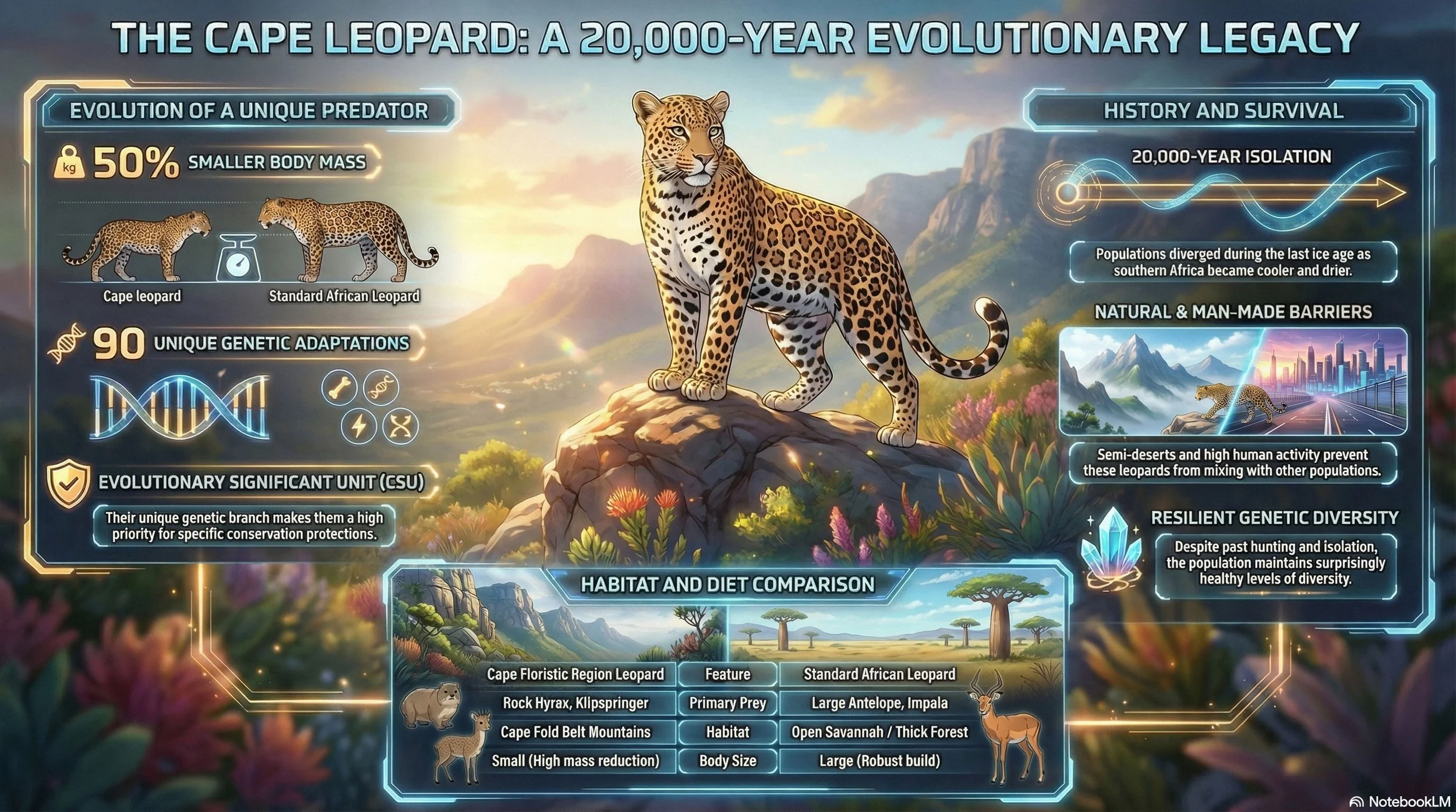
Researchers have discovered that leopards inhabiting South Africa’s Cape Floristic Region are a genetically distinct population that has evolved separately from other African leopards for over 20,000 years. These cats are significantly smaller in size, an physical trait driven by specific genetic adaptations to a unique environment with limited prey rather than mere isolation. While their numbers were previously decimated by human hunting and habitat loss, genomic analysis reveals surprisingly healthy levels of genetic diversity within the remaining population. This scientific breakthrough identifies the Cape leopard as an evolutionarily significant unit, highlighting an urgent need for specialized conservation strategies to protect their mountain corridors. Preserving these predators requires mitigating human conflict and ensuring landscape connectivity to safeguard a unique evolutionary legacy.
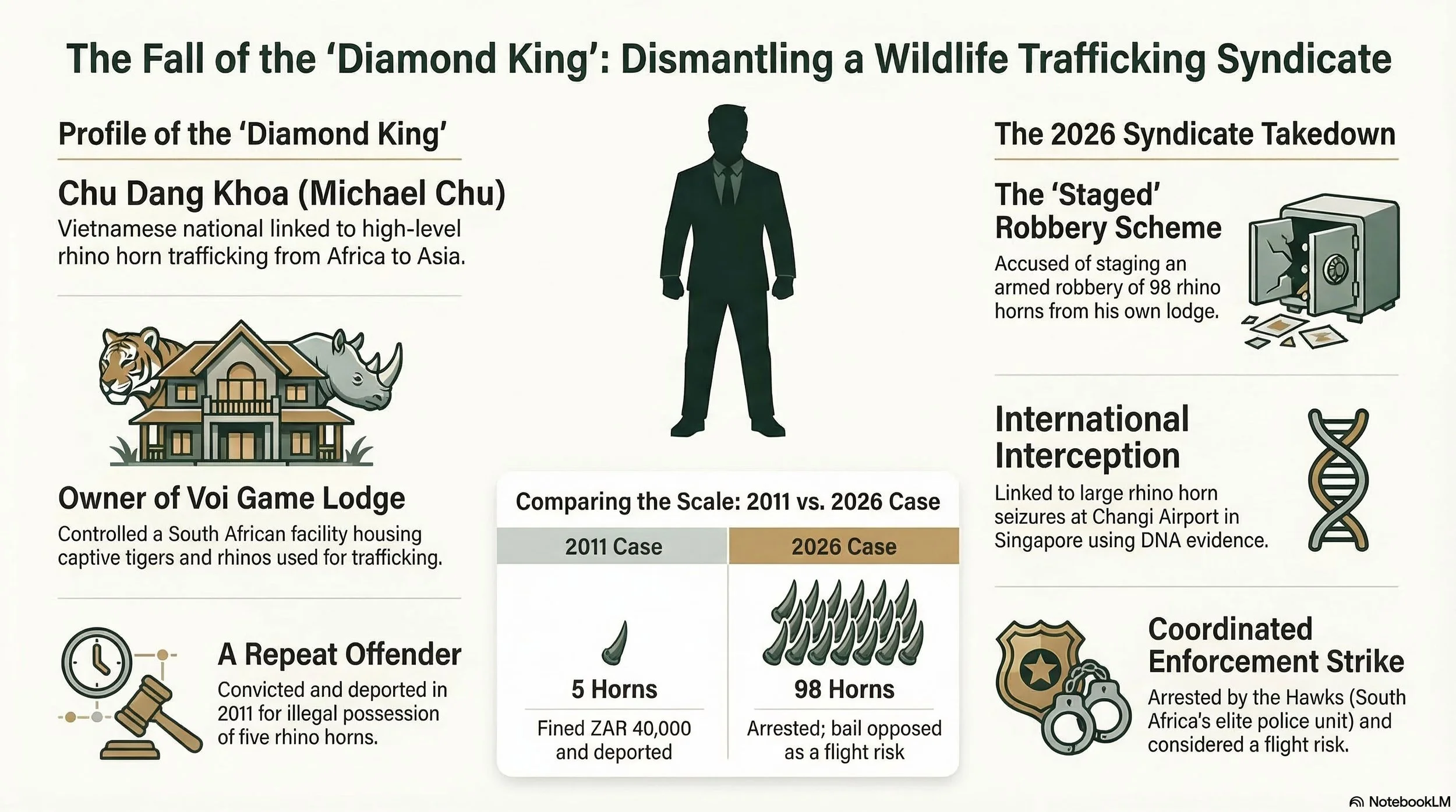
The provided text chronicles the apprehension of Chu Dang Khoa, a notorious figure in the illegal wildlife trade known as the "Diamond King." Authorities in South Africa arrested Khoa for his leadership role in a syndicate responsible for smuggling rhino horns and tiger parts to Asian markets. Investigators linked his legitimate business fronts to a staged robbery involving nearly one hundred rhino horns, exposing the criminal operations behind his wildlife facilities. According to Education for Nature - Vietnam, this arrest represents a critical achievement in the global effort to dismantle transnational organized crime. By targeting high-level traffickers, law enforcement aims to disrupt established networks and provide a deterrent against future poaching. Ultimately, the source highlights the necessity of international cooperation in bringing high-profile environmental criminals to justice.

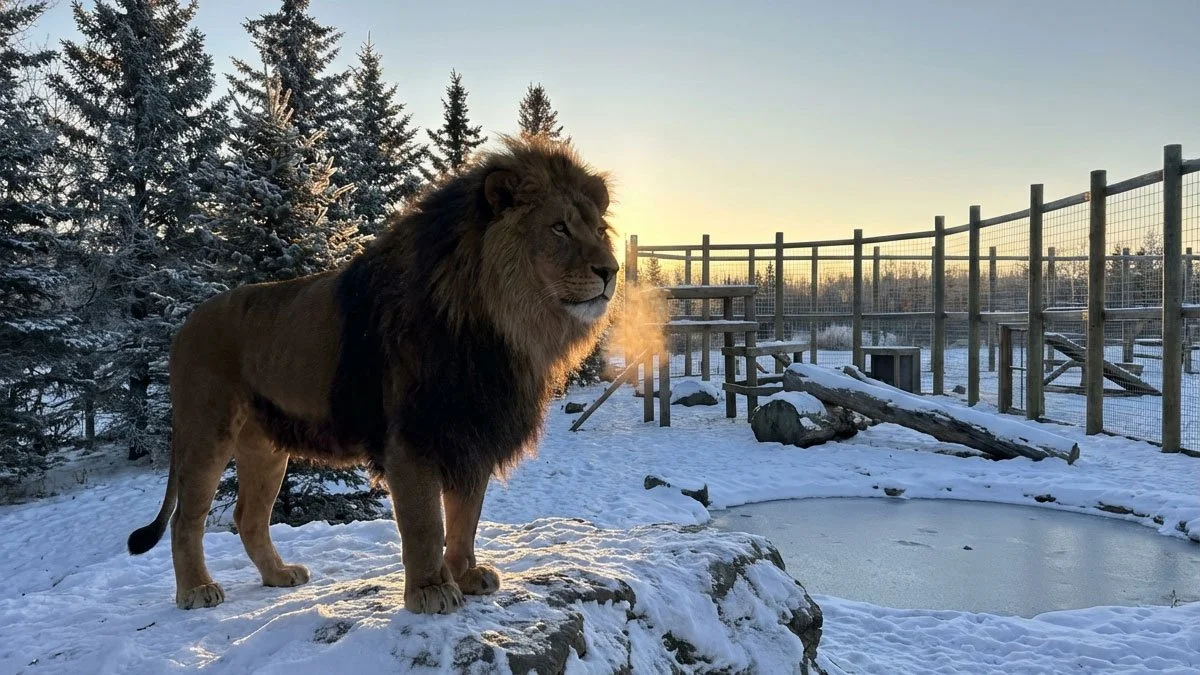
Muskoka facility becomes Canada's first big cat sanctuary as CTV investigation exposes roadside zoo abuses. New law ends private ownership of lions and tigers.
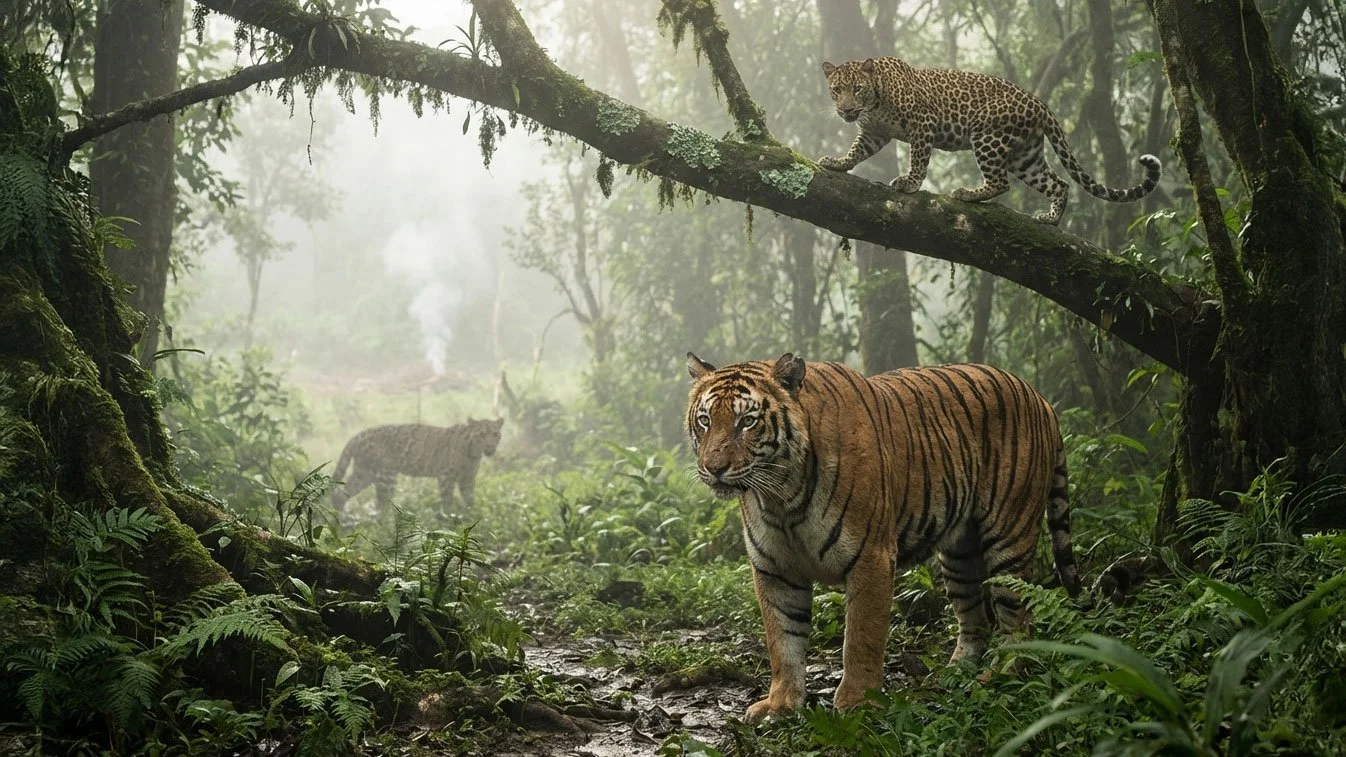
Myanmar's Big Cats Face Extinction: Only 22 Tigers Remain in Survey. Only 22 tigers remain in Myanmar protected areas. UMass research reveals urgent need to save Bengal tigers, Indochinese leopards, and clouded leopards from extinction.

GPS tracking reveals Thailand's tigers are eating unusually small prey due to habitat decline. Scientists fear this signals a critical conservation crisis.

The removal of South Africa's progressive Environment Minister Dion George marks a dangerous setback for big cat conservation and wildlife protection worldwide.

 Carole Baskin
Carole Baskin is the founder and CEO of Big Cat Rescue and author of this web page. Since 1992, she has worked to end the exploitation of exotic cats and now leads the non profit's efforts to protect wild cats in the wild by funding innovative threat mitigation programs that allow humans and wild cats to co-exist in peace.