Caged Under Conservation: The Hidden Cost of India’s Big Cat Imports

Where are all the wild cats going and why?
In the stillness of a crate being unloaded on a tarmac somewhere in India, a lion paces—frightened, confused, and thousands of miles from home. He is one of at least 540 big cats—lions, tigers, leopards, cheetahs, and jaguars—shipped into India between 2020 and 2025, not to be released into the wild where he belongs, but to disappear behind the walls of a privately funded facility called Vantara.
While Vantara calls itself the Greens Zoological Rescue and Rehabilitation Centre, and publicly claims to rescue and care for wildlife, the sheer scale and secrecy of its imports raise chilling questions: Where are these animals really coming from? And why?
An Industry Disguised as Conservation
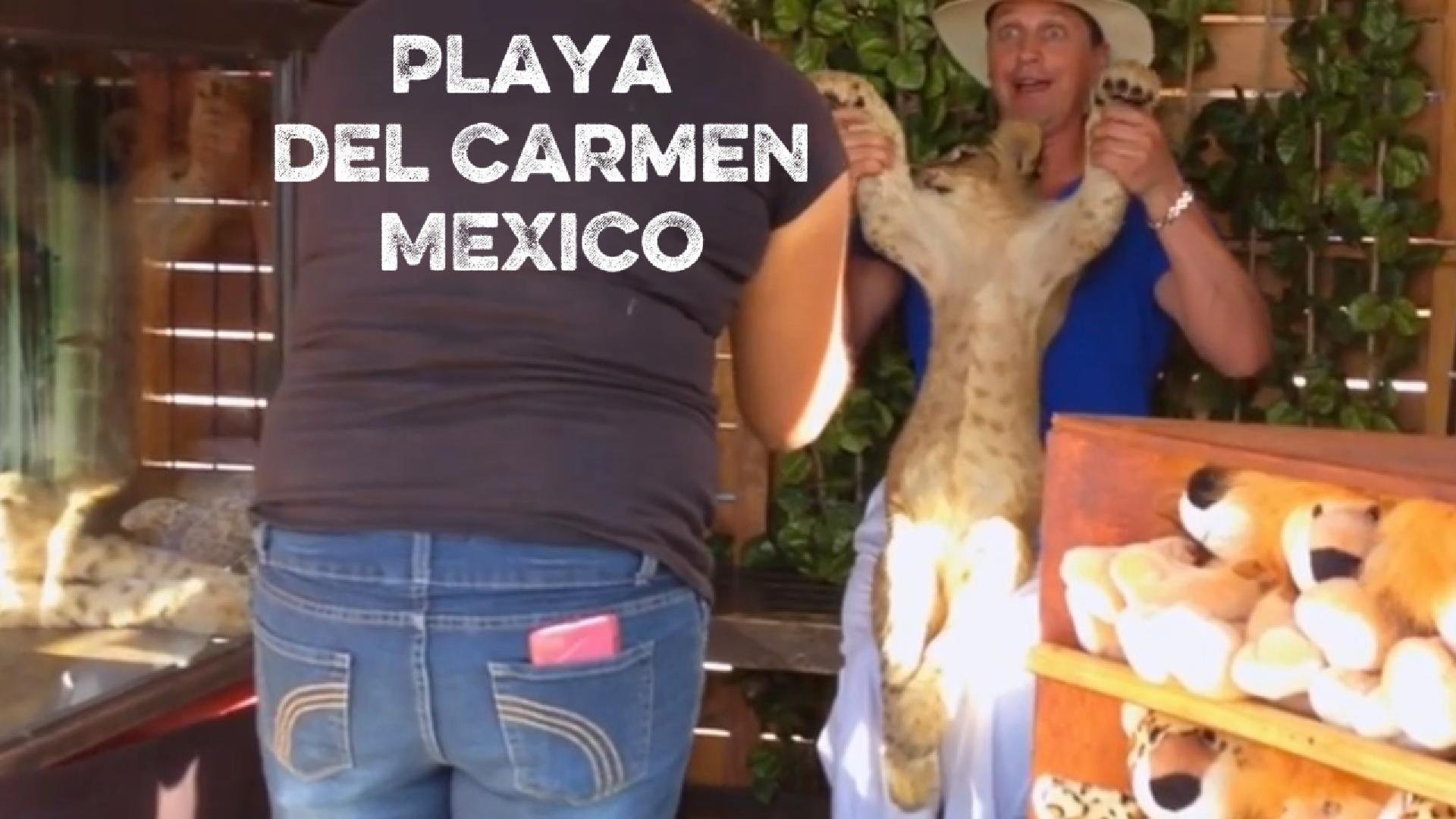
South Africa, Mexico, the UAE—even Argentina (despite Argentina reporting no such exports)—are all on the list of countries supplying big cats to India. A closer look reveals troubling discrepancies between CITES records and commercial shipping data. For instance, India claims to have imported 49 tigers from Argentina, while Argentina denies any such exports. These aren't clerical errors. These are red flags.
Worse still, many of these cats are marked with trade codes like “Z” (zoological) and “C” (captive-bred), categories meant to ensure legal and ethical sourcing. But these labels are easily manipulated. “Z” can be applied to virtually any facility that claims to be a zoo, even those offering cub-petting attractions. “C” can mean captive-bred—even if the breeder isn’t registered to handle species on the brink of extinction. These loopholes in the system allow private collectors and commercial operators to launder animals through the appearance of legality.
The Vantara Problem
Vantara stands out not only for the sheer number of animals it has acquired but also for its refusal to open its doors to independent scrutiny. While it presents itself as a rescue and rehabilitation center, there is no public evidence of reintroduction programs or long-term welfare commitments. Instead, it has become a symbol of everything broken about the global trade in wild animals.
According to trade records, India imported over 33,000 live animals between May 2022 and December 2024. Of those, 38% were CITES-listed, meaning they’re supposed to be internationally protected. Yet many came from sources previously linked to wildlife trafficking or cub-handling for entertainment—industries notorious for mistreatment and neglect.
In a just system, animals rescued from exploitation would be released into carefully managed sanctuaries or rewilded under rigorous supervision. But that’s not what’s happening here. This is not rescue. It appears to be rebranding.
A System in Crisis
What’s perhaps most disturbing is how easy it is to hide exploitation behind a veil of conservation. The very systems meant to protect these magnificent creatures—CITES permits, source codes, and export regulations—are riddled with loopholes. They’re poorly enforced, inconsistently reported, and easily gamed by those who know how to exploit the gray areas.
The result? Animals suffer. And the public is misled.
The cats at Vantara may never feel grass under their paws again. They may never chase prey, raise cubs, or reclaim the instincts their ancestors honed over millennia. Instead, they face a life of confinement and commercial utility—at best as photo props, at worst as breeding machines.
We Can Still Turn This Around
This isn’t a hopeless story. It’s a wake-up call.
FOUR PAWS is pushing for urgently needed reforms:
Clear, enforceable definitions for CITES codes.
Public access to transparent, accurate trade records.
Independent oversight for breeding and sourcing claims.
A suspension of trade where information is missing or dubious.
And they’ve urged India to halt imports to Vantara until transparency and ethical standards are guaranteed.
But real change can’t come from legislation alone. It requires global citizens like you to care.
What You Can Do
🐾 Speak Up – Add your voice to the call for wildlife trade reform.
🐾 Be Discerning – Question every facility that keeps big cats. Never support places that offer cub petting or close encounters.
🐾 Donate – Support organizations like FOUR PAWS and Big Cat Rescue that expose these injustices and fight for ethical treatment.
🐾 Share This Story – Help raise awareness by spreading the word. The more people know, the harder it becomes for bad actors to hide.
Let’s not let another generation of big cats be born into cages disguised as sanctuaries. They belong in the wild—not as props in a broken system, but as ambassadors of a world worth protecting.
2026 Anant Ambani-Linked Vantara Cleared? SC Shuts Down Fresh Explosive Wildlife Violations PIL
Anam Sayyed March 20, 2026
The Supreme Court rejected a public interest petition that accused Vantara’s animal welfare trusts of breaking international wildlife trade rules. The Court said the claims were similar to an earlier case, which had already been examined and cleared by a court-appointed investigation.
Vantara is a large animal rescue, care, and rehabilitation project set up by the Reliance Foundation in Jamnagar, Gujarat. Anant Ambani, son of industrialist Mukesh Ambani, leads the project and is closely involved in its vision and operations.
Petition By Foundation Under Article 32:
Justices Prashant Kumar Mishra and NV Anjaria refused to hear the petition, which was filed by the Karanartham Viramah Foundation under Article 32 of the Constitution. The petition relied on the Convention on International Trade in Endangered Species of Wild Fauna and Flora(CITES) Secretariat document and claimed there were issues in animal imports by Greens Zoological Rescue and Rehabilitation Center and Radha Krishna Temple Elephant Welfare Trust.
The foundation asked the Court to take several steps. It wanted details of import/export licences and CITES permits given to private players. It also asked for an independent panel to check if rules were followed, action under the Wild Life (Protection) Act, 1972, a standard process to verify permits, and a stop on further imports of certain species by private organisations.
The Court said these same issues had already been raised in CR Jaya Sukin v. Union of India, 2025 LiveLaw (SC) 913. In that case, a Special Investigation Team (SIT) had closely examined Vantara’s animal acquisitions and found no violations. The Court had accepted the SIT’s final report on September 15, 2025.
Court:No Violations Found
The bench said: “Subject matter of the petition, in substance, is the same which was the subject matter of consideration in W.P.(C) No. 783 of 2025. Those matters stood examined by the SIT constituted by this Court and the final report of the SIT has been accepted by this Court on 15.09.2025. The same categorically records that no violation of any domestic or international law was found.”
The Court also said that if imports were done with valid permissions, they cannot later be called illegal just because objections were raised later. It said : “…once an import has been effected under the valid permission, the same cannot subsequently be treated as prohibited qua the importer merely because the objections were raised thereafter.”
Referring to East India Commercial Co. Ltd. v. Collector of Customs, 1962 AIR 1893, the Court explained that once proper official permissions are given and used, they should not be easily reversed.
Court Warns Of Harm To Animals:
The judges also warned that cancelling such imports, especially when they involve live or rescued animals, could harm them. They said: “More importantly, disturbing the settled environment, custody and air of living animals, including rescued animals after lawful import, may itself result in cruelty”.
In the end, the Court dismissed the petition.



For those of you interested in Vantara, here are some 2025 news reports (including from within India), and based on the Secretariat's report on India and compliance for SC79 see https://cites.org/sites/default/files/documents/E-SC79-06-03-04.pdf
Mongabay (India): Global biodiversity assessment counters Supreme Court’s clean chit to Vantara
Northeast Now (India): CITES flags irregularities in Ambani's Vantara wildlife imports, calls for halt on Appendix-I species
The Hindu (India): After visit to Vantara, global wildlife committee recommends India pause animal import
Find out more: https://wapfsa.org/vantara/
Source: https://www.four-paws.org/campaigns-topics/topics/help-for-big-cats/behind-the-scenes-what-the-big-cat-trade-to-india-tells-us-about-a-broken-system
